The Brain-Skin Axis: How Your Nerves, Hormones, And Immune System Talk Through Your Skin
By Jacob Gordon, INHC, FMT-CYour skin is wired directly into your nervous system, your immune system, and your stress hormones, and all three are in constant conversation.
In this post, we will discuss how the skin works as a single neuro-immuno-endocrine organ, the cells and chemical signals that run it, how a stressful thought becomes a visible flare, and why this one network sits underneath almost every chronic skin condition.

The Skin Is Not Just A Barrier
Most people think of skin as a passive wrapper that keeps water in and microbes out.
It is actually one of the most sophisticated sensory and signaling organs in the body.
The skin is densely innervated by sensory and autonomic nerves, populated by resident immune cells, and capable of producing its own hormones, and these systems are physically and chemically integrated into a single unit. R
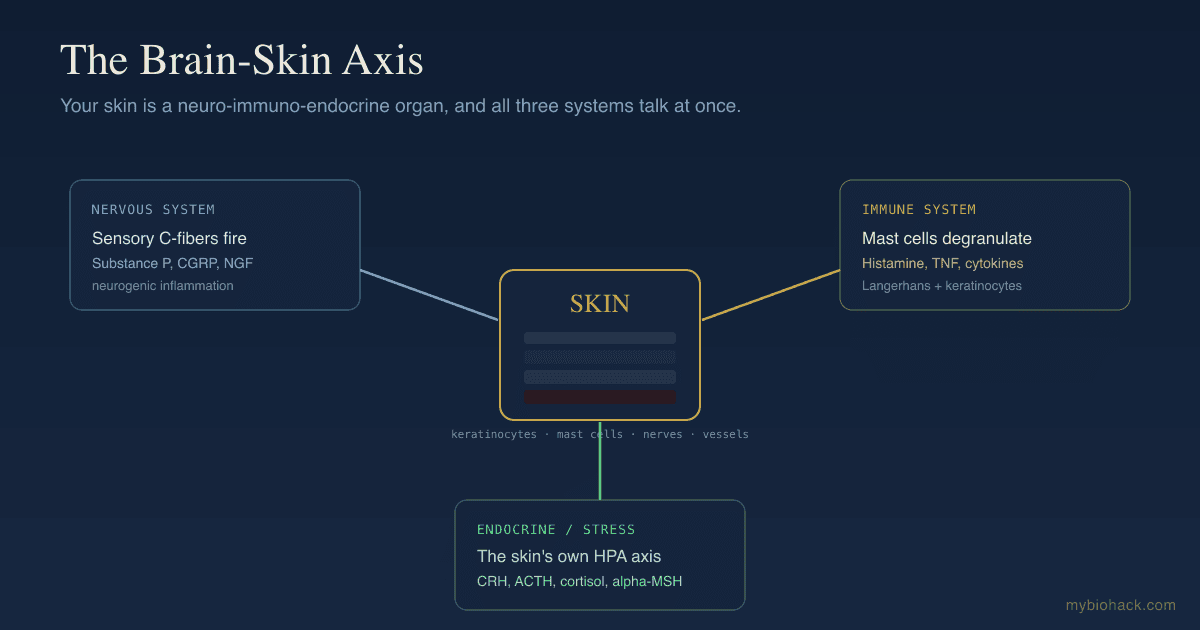
Researchers describe the skin as a neuro-immuno-endocrine organ, meaning it senses the environment, mounts an immune response, and releases stress hormones locally, often without waiting for instructions from the brain. R
This integrated network is what is meant by the brain-skin axis (or the neuroimmunocutaneous system).
Once you see the skin this way, conditions that seem unrelated start to look like different outputs of the same wiring.
Stress flares your eczema, anxiety triggers hives, a breakup precedes a bout of hair loss, and a sunburn quietly suppresses your immune system for days.
None of that is coincidence.
It is the brain-skin axis doing exactly what it evolved to do.
The Cells That Listen And Talk
Four cell types do most of the talking in the skin, and they are all within signaling distance of each other.
Keratinocytes are the structural cells of the epidermis, but they are also frontline immune sentinels.
They express toll-like receptors (TLRs) and other pattern-recognition receptors that detect microbial and damage signals, and they respond by secreting cytokines like interleukin-1 (IL-1) and tumor necrosis factor-alpha (TNF-alpha). R
They are also the body's largest source of antimicrobial peptides (AMPs) such as LL-37 and the beta-defensins, a built-in chemical defense layer. R
Langerhans cells (LCs) are the resident antigen-presenting cells (APCs) of the epidermis, the dendritic cells that decide whether to start an immune response or stand down. R
Mast cells sit in the dermis, packed with histamine, tryptase, and dozens of other mediators, positioned next to blood vessels and nerves like tripwires. R
Sensory nerve fibers, mostly thin unmyelinated C-fibers, weave through the epidermis and dermis and do far more than report pain and itch.
They actively release signaling molecules that change how every other cell behaves. R
That last point is the one most people miss.
The nerves in your skin are not just sensors.
They are secretory organs.
The Chemical Language: Neuropeptides And Neurotrophins
When a sensory nerve in the skin is activated, it releases neuropeptides from its endings directly into the surrounding tissue.
The two most important are substance P (SP) and calcitonin gene-related peptide (CGRP). R
Substance P is broadly pro-inflammatory.
It degranulates mast cells, upregulates adhesion molecules that recruit white blood cells, and drives the redness and swelling of an inflamed patch of skin. R
CGRP is more of a brake than a gas pedal.
It is one of the strongest natural suppressors of antigen presentation by Langerhans cells, biasing the local immune response away from aggressive cell-mediated immunity. R
Other neuropeptides fill out the conversation, including vasoactive intestinal peptide (VIP), pituitary adenylate cyclase-activating polypeptide (PACAP), and the opioid and melanocortin peptides.
Layered on top of the neuropeptides are the neurotrophins, the growth factors that keep nerves alive and wired.
The headline neurotrophin in skin is nerve growth factor (NGF), which is produced by keratinocytes and mast cells and which sensitizes nerve endings, sprouts new fibers, and amplifies the whole neurogenic loop. R
NGF is a recurring villain in chronic skin disease, and it is worth understanding on its own because more is not always better.
Neurogenic Inflammation: How A Thought Becomes A Flare
Here is the core mechanism that ties the whole axis together.
When a sensory C-fiber fires, it does not just send a signal up to the brain.
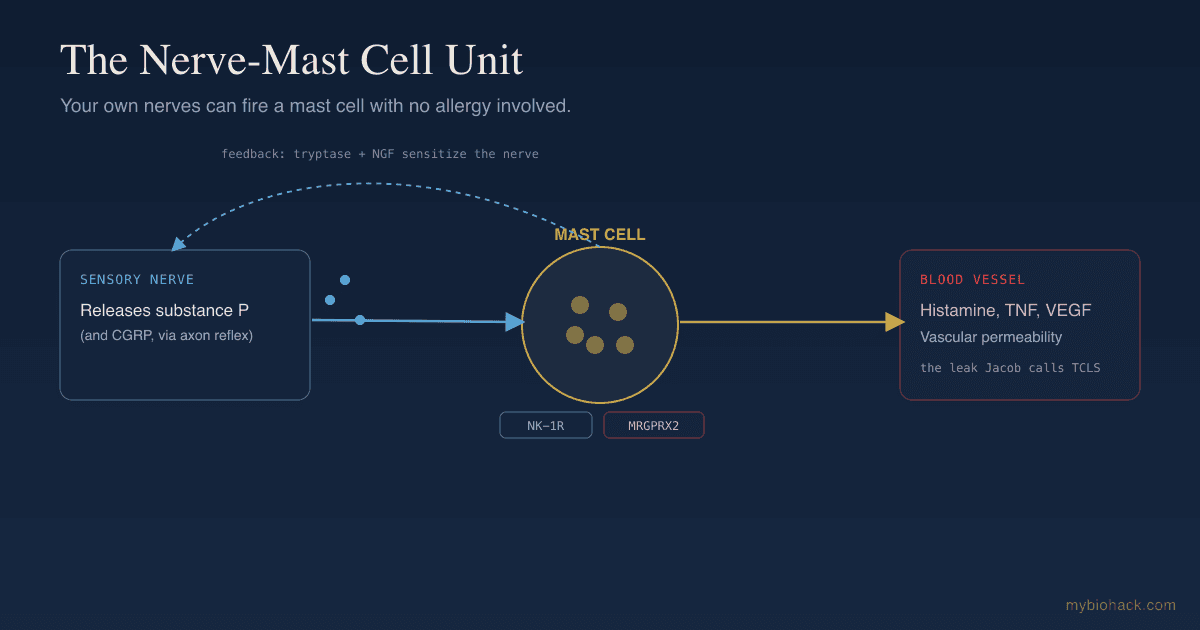
It also fires backward, releasing substance P and CGRP into the skin at the nerve ending, a process called the axon reflex.
Those neuropeptides hit nearby blood vessels and mast cells.
The vessels dilate and become leaky, and the mast cells degranulate, dumping histamine and more inflammatory mediators into the tissue. R
The visible result is the classic wheal and flare, the red, swollen, itchy patch you get from a scratch, a hive, or an allergic reaction.
This is neurogenic inflammation, inflammation initiated by nerves rather than by the immune system alone. R
The important part is that it runs in both directions and feeds itself.
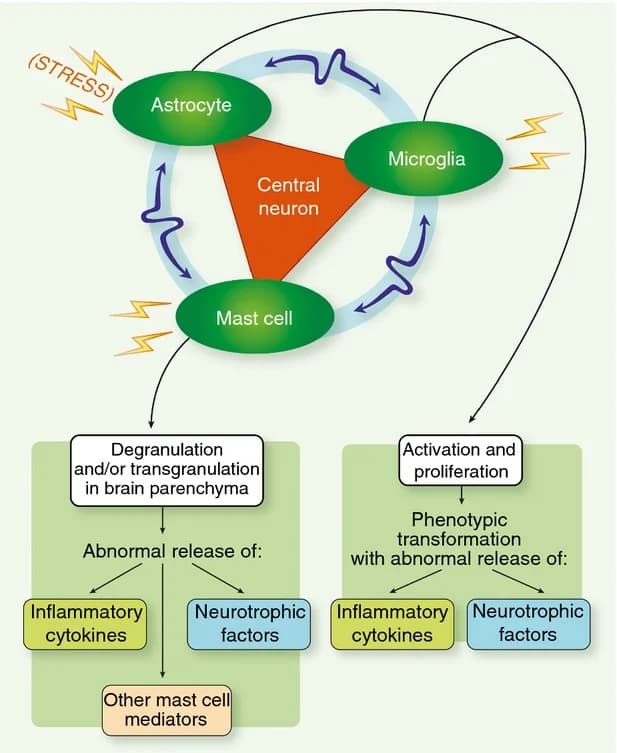
Nerves activate mast cells, mast cells release mediators that sensitize and sprout nerves, and the sensitized nerves fire more easily next time. R
That positive feedback loop is why chronic skin conditions get stickier over time, and why stress can light up skin that has been calm for months.
The Skin Has Its Own Stress Axis
This is the part that reframes everything.
When you are stressed, the classic story is that your brain runs the hypothalamic-pituitary-adrenal (HPA) axis: the hypothalamus releases corticotropin-releasing hormone (CRH), the pituitary releases adrenocorticotropic hormone (ACTH), and the adrenal glands release cortisol.
The skin has a complete, functioning copy of this entire system built into it. R
Skin cells express CRH, the precursor protein proopiomelanocortin (POMC), and POMC's products including ACTH, alpha-melanocyte-stimulating hormone (alpha-MSH), and beta-endorphin, along with the receptors for all of them. R
In other words, your skin can run its own local stress response without involving your brain at all.
And that local stress response has teeth.
When CRH is released in the skin, it triggers mast cells to degranulate and makes blood vessels leaky, an effect demonstrated directly by intradermal CRH and blocked by removing mast cells. R
Acute psychological stress does the same thing through this exact pathway, raising skin CRH, activating mast cells, and increasing vascular permeability, an effect that antihistamines can partly block. R
This is the molecular bridge between "I am stressed" and "my skin is reacting." R
It is not in your head.
It is in your skin, run by the same hormones your head uses.
The Mast Cell And Nerve Unit
If the brain-skin axis has a central hub, it is the mast cell sitting next to a nerve.
In the skin, mast cells are physically colocalized with the substance P and CGRP nerve fibers, close enough that many researchers treat the mast cell and the sensory nerve as a single functional unit. R
The two talk constantly.
Nerves release substance P, which activates mast cells, and mast cells release histamine, tryptase, and NGF, which sensitize and grow the nerves. R
For decades, the assumption was that substance P acted on mast cells through the classic neurokinin-1 receptor (NK-1R).
Then a second, more important pathway was found.
Substance P (and many drugs, dyes, and toxins) activates mast cells through a receptor called Mas-related G protein-coupled receptor X2 (MRGPRX2), which triggers degranulation completely independently of IgE antibodies. R
This matters enormously, because it means mast cells can be set off by your own nerves with no allergy involved at all.
It is the molecular basis of what gets called pseudo-allergic or neurogenic mast cell activation. R
If you have ever wondered why your mast cell symptoms flare from stress, friction, or temperature with no allergen in sight, the nerve-MRGPRX2-mast cell loop is a large part of the answer.
This is also the upstream layer most MCAS and histamine intolerance protocols underweight, because they focus on the mast cell and skip the nerve driving it.
Where This Connects To Junction Dysfunction
Notice the recurring theme in everything above.
Substance P makes vessels leaky.
CRH makes vessels leaky.
Mast cell degranulation makes vessels leaky.
Increased vascular permeability is the shared output of the entire brain-skin axis when it tips into inflammation. R
This is exactly the territory of Junction Dysfunction (JD), the framework Jacob built around what happens when the glycocalyx and the junctions between cells break down and fluid leaks from the vessels into the tissue.
Jacob coined the term Transient Capillary Leak Syndrome (TCLS) for the micro-level version of that leak.
His framing is that neurogenic inflammation in the skin, neuropeptides and CRH driving mast cells to open up the microvasculature, is one of the cleanest visible examples of TCLS in action. R
The mast cell is doing in the dermis what Jacob describes it doing throughout the body in mast cells under hypoxia: releasing mediators in response to a stressed, hypoxic, or chemically irritated environment and opening the vascular barrier.
The skin just happens to be the one organ where you can watch it happen in the mirror.
For the full mechanism, the TCLS chapter and the mast cells in hypoxia chapter in the JD guide go far deeper than this post can.
The Conditions That Live On This Axis
Once you understand the wiring, a long list of "separate" diagnoses collapses into variations on one theme.
The conditions most clearly driven by the brain-skin axis include the following (not an exclusive list):
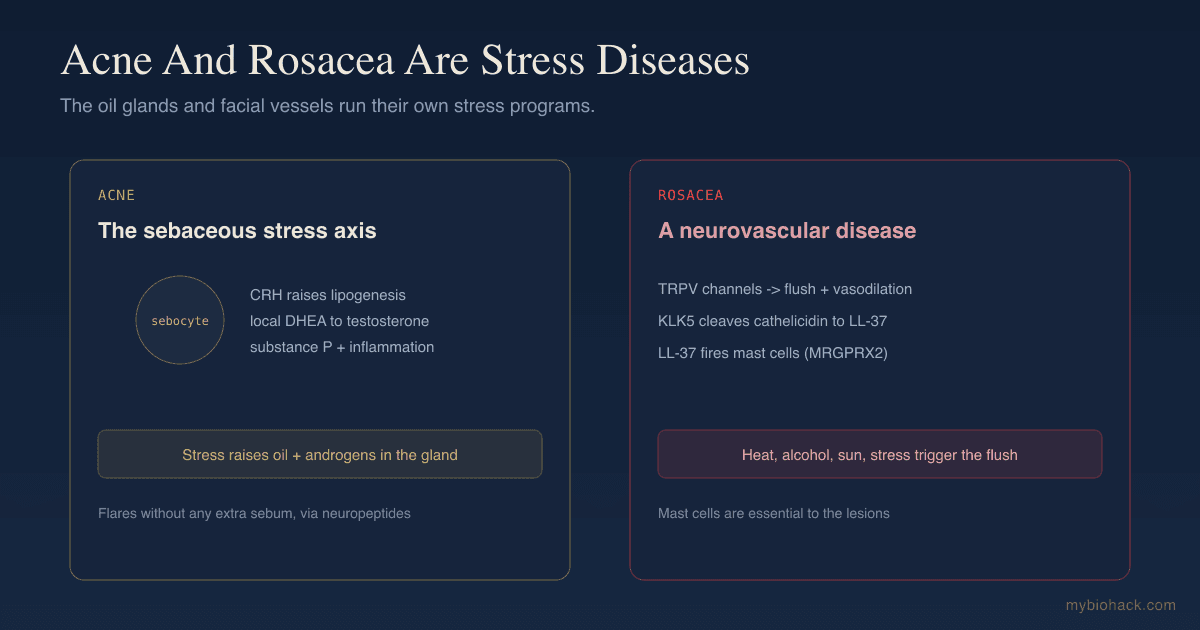
- Acne and rosacea, where the sebaceous gland runs its own CRH and substance P stress program
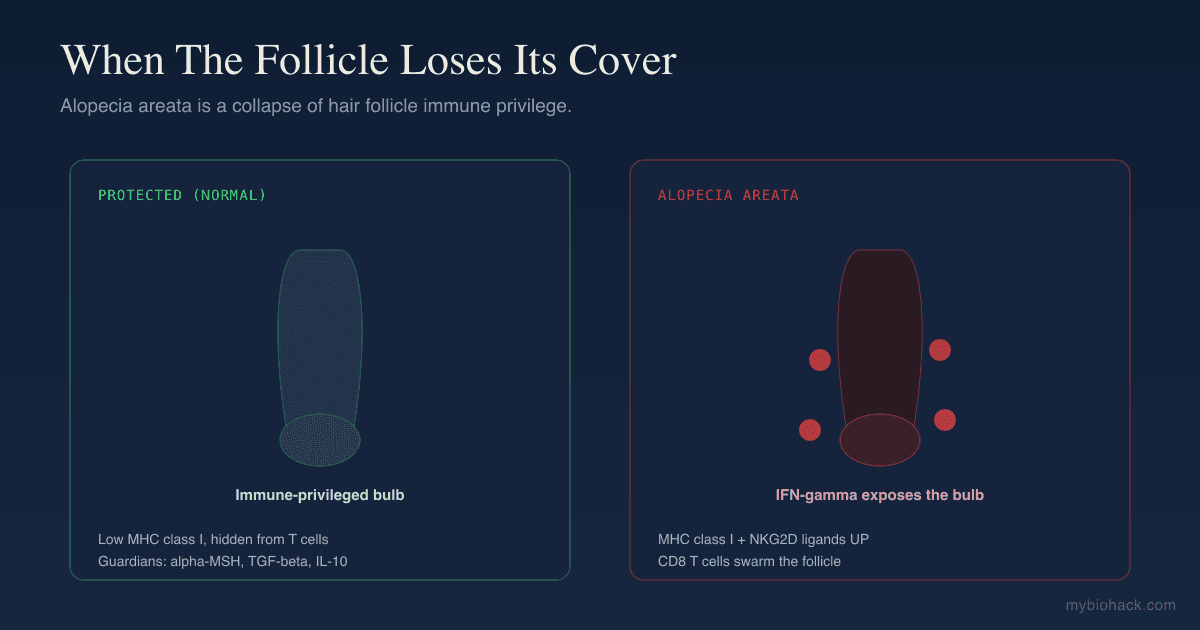
- Alopecia areata and stress hair loss, where the hair follicle loses its protected immune status
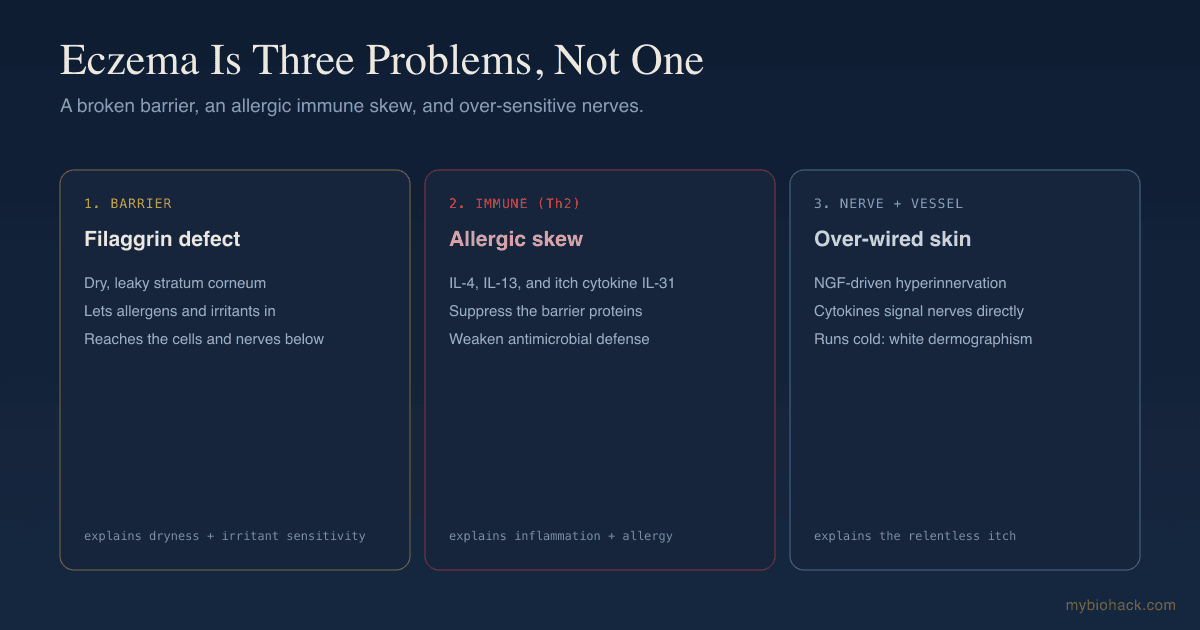
- Atopic dermatitis (eczema), where NGF, neuropeptides, and abnormal blood flow drive the itch and inflammation
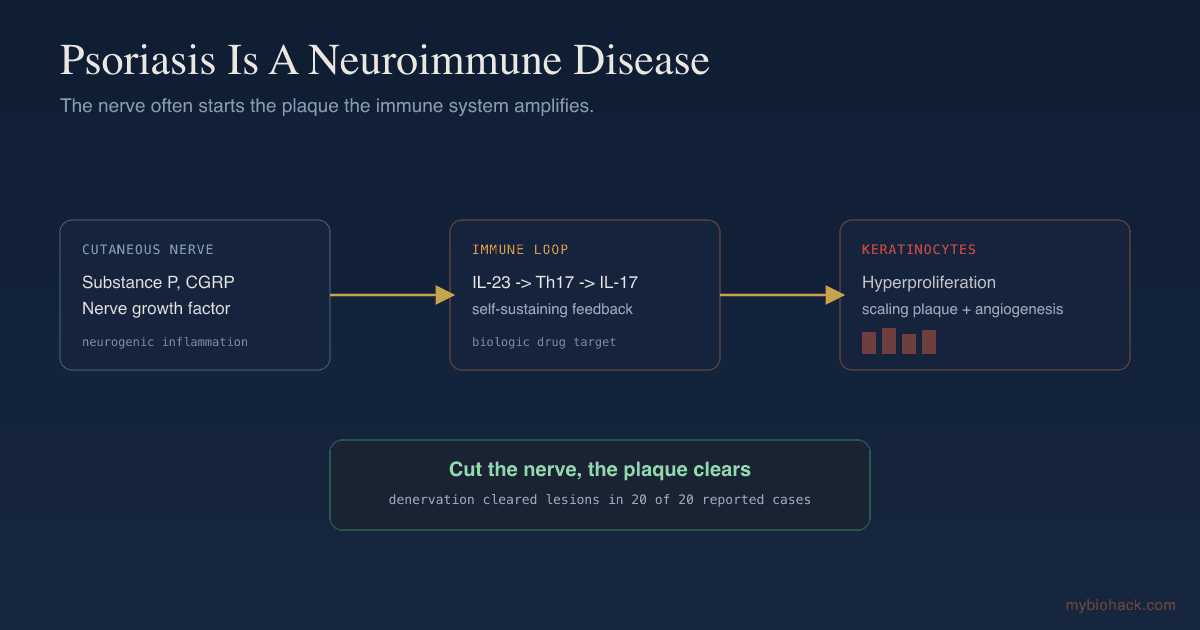
- Psoriasis, where neurogenic inflammation and NGF help explain why nerve damage can clear a plaque
- Pruritus (chronic itch), where sensitized C-fibers and mast cells lock into an itch-scratch loop
- Urticaria (hives), where CRH and mast cells produce wheals from stress alone
- Vitiligo, where the melanocortin and stress signaling that protects pigment cells fails
Each of these gets its own deep-dive in this series, because the shared axis matters less than what is specifically broken in each one.
What they have in common is the lesson of this whole post.
You cannot fully calm a chronic skin condition by treating the skin alone, because the skin is downstream of the nerves, the mast cells, and the stress hormones feeding it.
How To Measure This Axis
You can put some objective numbers on brain-skin axis activity.
Blood And Urine Markers
Plasma histamine reflects mast cell and basophil activity, though it is short-lived and best drawn during or near a flare.
Tryptase is the more stable mast cell marker and is the standard for assessing mast cell burden.
I use the Plasma Histamine (Quest) and Tryptase (Quest) tests to gauge mast cell involvement.
Functional Lab Panels
Because the skin runs on the same stress hormones as the brain, a multi-point cortisol rhythm tells you more than a single morning draw.
I use the Hormone Zoomer (Vibrant Wellness) or the DUTCH Complete (Precision Analytical) to map the cortisol curve and adrenal output across the day.
For broader mast cell and autoimmune signal, the Immune Zoomer (Vibrant Wellness) covers mast cell markers and organ-specific reactivity.
If your skin reacts to stress out of proportion to any allergen, these three panels usually tell the story.
Mechanisms Of Action
Simple:
- Nerves in your skin release chemicals that make blood vessels leak and mast cells dump histamine, which is why stress and emotion can cause a visible skin reaction with no allergen involved.
- Your skin makes its own stress hormones, so it can mount a full stress response locally without your brain.
Advanced:
- The axon reflex and neurogenic inflammation. Sensory C-fiber activation causes antidromic release of substance P and CGRP at peripheral terminals, producing vasodilation, plasma extravasation, and mast cell degranulation. Substance P acts on both NK-1R and, in an IgE-independent fashion, on MRGPRX2 to trigger histamine and TNF-alpha release. R R
- The cutaneous HPA axis. Keratinocytes, melanocytes, and immune cells express CRH, POMC, and the prohormone convertases that cleave POMC into ACTH, alpha-MSH, and beta-endorphin, plus their receptors (CRHR1, MC1R, mu-opioid). This allows autocrine and paracrine stress signaling independent of the central HPA axis. R
- CRH-driven vascular permeability. CRH activates CRHR1 on dermal mast cells, triggering degranulation and selective release of vasoactive mediators (including histamine and VEGF), increasing capillary permeability, an effect absent in mast-cell-deficient animals. R
- CGRP and immune tone. CGRP raises intracellular cyclic AMP in Langerhans cells, suppresses NF-kB activation, downregulates the costimulatory molecule B7-2, and biases the local response toward Th2 and away from Th1 cell-mediated immunity. R R
- The mast cell-nerve feedback unit. Mast cells and peptidergic nerves are anatomically apposed and reciprocally regulate each other: neuropeptides degranulate mast cells, while mast cell-derived NGF, tryptase, and histamine sensitize and sprout nerve fibers, establishing a self-amplifying loop. R
Genetics
Several genes set the gain on the brain-skin axis.
TAC1
TAC1 encodes substance P and neurokinin A, the primary pro-inflammatory tachykinins released by skin sensory nerves.
Expression is upregulated in inflamed and chronically scratched skin.
TACR1
TACR1 encodes the NK-1 receptor, the classic receptor for substance P on endothelial cells, immune cells, and keratinocytes.
NK-1R antagonists are an active drug class for itch and neurogenic inflammation.
MRGPRX2
MRGPRX2 encodes the mast cell receptor responsible for IgE-independent, neurogenic mast cell activation by substance P and basic secretagogues.
Variation here may help explain why some people have far more "pseudo-allergic" reactivity than others. R
CRHR1
CRHR1 encodes corticotropin-releasing hormone receptor 1, the receptor through which CRH triggers skin mast cell degranulation and vascular permeability. R
MC1R
MC1R encodes the receptor for alpha-MSH on melanocytes and immune cells, controlling both pigmentation and a powerful anti-inflammatory signal.
Loss-of-function variants (the classic red-hair alleles such as R151C and R160W) reduce both UV protection and the anti-inflammatory melanocortin tone in skin.
NGF and NTRK1
NGF encodes nerve growth factor and NTRK1 encodes its high-affinity receptor TrkA, the axis that sensitizes and sprouts cutaneous nerves in chronic skin disease. R
More Research
Beyond the core mechanism, several threads are worth following.
Antimicrobial peptides like LL-37 are not only antibacterial but also chemotactic and pro-inflammatory, which links the skin's chemical barrier directly to its immune and neurogenic signaling. R
CGRP's role is truly double-edged, suppressing antigen presentation (which can be protective) while also driving the vasodilation of migraine and rosacea, so it should not be reflexively blocked or boosted. R
For the toxin and barrier side of this axis, see how toll-like receptors and lipopolysaccharide prime keratinocyte and immune signaling from the outside in.
For the stress-hormone side, the JD chapter on why long haulers test low cortisol explains why a single cortisol value is so often misleading.
And because this axis is so responsive to the nervous system, limbic and stress retraining is not optional background, it is part of the treatment, which is the subject of the JD chapter on overcoming trauma's effect on the limbic system.
For biomarker testing I use the Hormone Zoomer and Immune Zoomer (Vibrant Wellness) to assess the stress-hormone and mast cell sides of this axis together.
If you want personalized help mapping your own brain-skin axis, reach out for a consultation.
Jacob Gordon
INHC, FMT-C
Integrative Nutrition Health Coach
I cover mold illness, post-viral recovery, methylation, and complex chronic disease, drawing on ten years of clinical research, work inside a functional medicine clinic, and my own recovery from all of it. Every claim here is cited.
Book a ConsultationRelated Protocols & Supplements
Deep-dive chapters and recommended supplements for this topic
Quercetin
500mg 2x/day
Vitamin D3 + K2
5000 IU + 200mcg/day
DAO Enzyme
1 cap before meals