Psoriasis As A Neuroimmune Disease: Neurogenic Inflammation, NGF, And Why Cutting A Nerve Can Clear A Plaque
By Jacob Gordon, INHC, FMT-CThis article contains affiliate links. As an Amazon Associate, MyBioHack earns from qualifying purchases at no extra cost to you. We only link products we research and stand behind.
Psoriasis is treated as an immune disease, but the nerves in the skin are not bystanders, they are drivers, and the proof is that cutting the nerve to a plaque can clear it.
In this post, we will discuss the immune engine of psoriasis, the neurogenic layer that the immune story leaves out, why nerve growth factor sits at the center, and what the denervation evidence means for treatment.
Psoriasis Is More Than An Immune Disease
The modern understanding of psoriasis is built around the immune system, specifically the IL-23/IL-17 axis, and that understanding is correct.
But it is incomplete.
Psoriasis lesions are distributed symmetrically, follow nerve patterns, flare with stress, appear at sites of trauma, and can clear when the nerve supplying them is damaged. R
None of those features are explained by immunology alone.
They are explained by the nervous system.
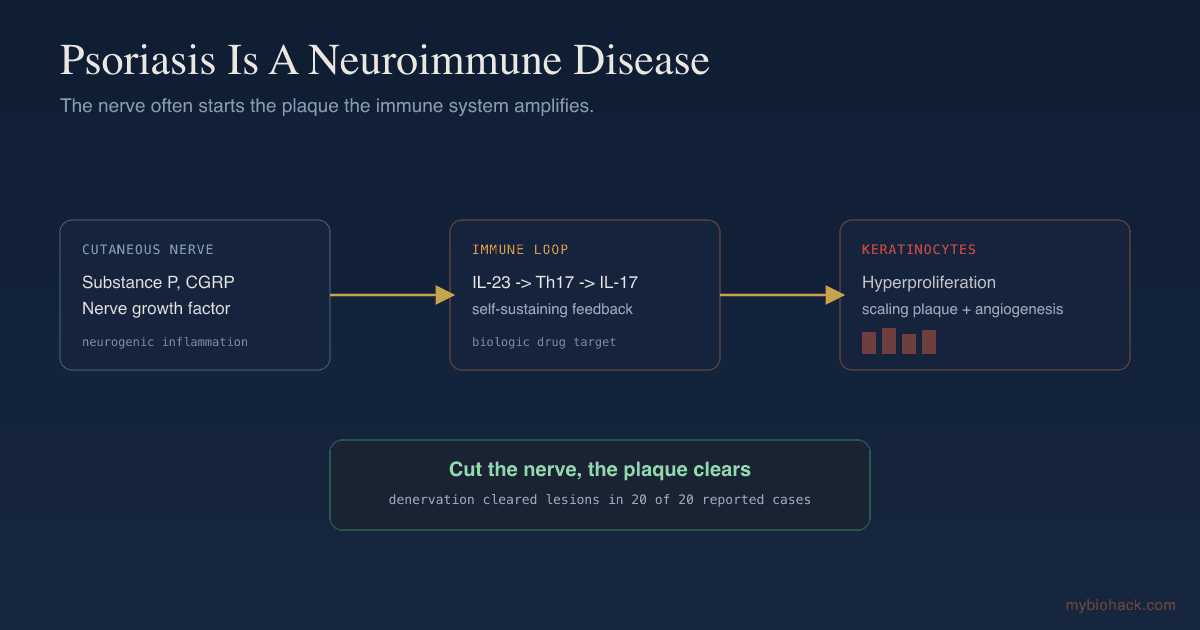
Psoriasis is best understood as a neuroimmune disease, where cutaneous nerves and the immune system drive each other, and the nerve is often the trigger that the immune system amplifies. R R
The anatomy supports this reading before any mechanism is invoked.
The epidermis and dermis of psoriatic lesions are significantly more densely innervated with neurofilament-positive fibers than lesion-free psoriatic skin or control skin. R
That difference between lesional and non-lesional skin in the same person is the important part, because it rules out a purely genetic or systemic explanation for where plaques appear.
Something local is recruiting nerves into the lesion, and the nerves are then holding it open.
This is a more complete model, and it opens up treatment angles that pure immunosuppression misses.
We already have a full protocol for naturally reversing psoriasis, so this post focuses on the neuroimmune mechanism that explains why those approaches work.
The IL-23/IL-17 Immune Engine
Start with the immune engine, because it is real and it is the target of the best modern drugs.
Activated dendritic cells in the skin produce interleukin-23 (IL-23), which drives Th17 cells to produce interleukin-17 (IL-17). R R
IL-17 then acts on keratinocytes, which respond by proliferating abnormally and pumping out antimicrobial peptides and chemokines like CCL20, which recruits even more Th17 cells and dendritic cells. R
That is a self-sustaining inflammatory feedback loop, and it is why biologics targeting IL-23 and IL-17 work so well. R R
The keratinocyte is not a passive target in this loop, which is the part most summaries skip.
Keratinocytes themselves express the IL-23 receptor, and on stimulation they secrete the S100 proteins (S100A7 through S100A9), granulocyte-macrophage colony-stimulating factor, and CXCL8, which pulls neutrophils into the epidermis and produces the micro-abscesses that define the histology. R
So the keratinocyte amplifies the signal it receives rather than simply responding to it. R
That amplification step is why psoriasis behaves like a system with a gain problem rather than a system with a single broken component.
But this raises a question the immune model struggles to answer.
What starts the loop, and what decides where it starts?
That is where the nerves come in.
The Neurogenic Layer
Psoriatic skin is not just immunologically abnormal, it is neurologically abnormal.
Psoriatic lesions contain an increased density of nerve fibers and elevated levels of the neuropeptides substance P (SP), calcitonin gene-related peptide (CGRP), and vasoactive intestinal peptide (VIP). R R
Each one contributes to the plaque.
Substance P is chemotactic for neutrophils, activates T cells, releases interleukin-1 from keratinocytes, and helps initiate the inflammatory process. R R
CGRP is a potent vasodilator and synergizes with substance P to stimulate keratinocyte proliferation, while both CGRP and VIP are potent mitogens for the endothelial cells that build the abnormal blood vessels of a plaque. R R
Substance P also drives the immune engine directly, stimulating Th17 differentiation and IL-17A production through the NK-1 receptor on T cells. R
The receptors move in step with the ligands, which is what makes this a genuine signaling change rather than incidental spillover.
Keratinocytes in psoriatic plaques show consistently increased expression of the substance P receptor, the high-affinity NGF receptor TrkA, and the CGRP receptor. R
The timing is also informative.
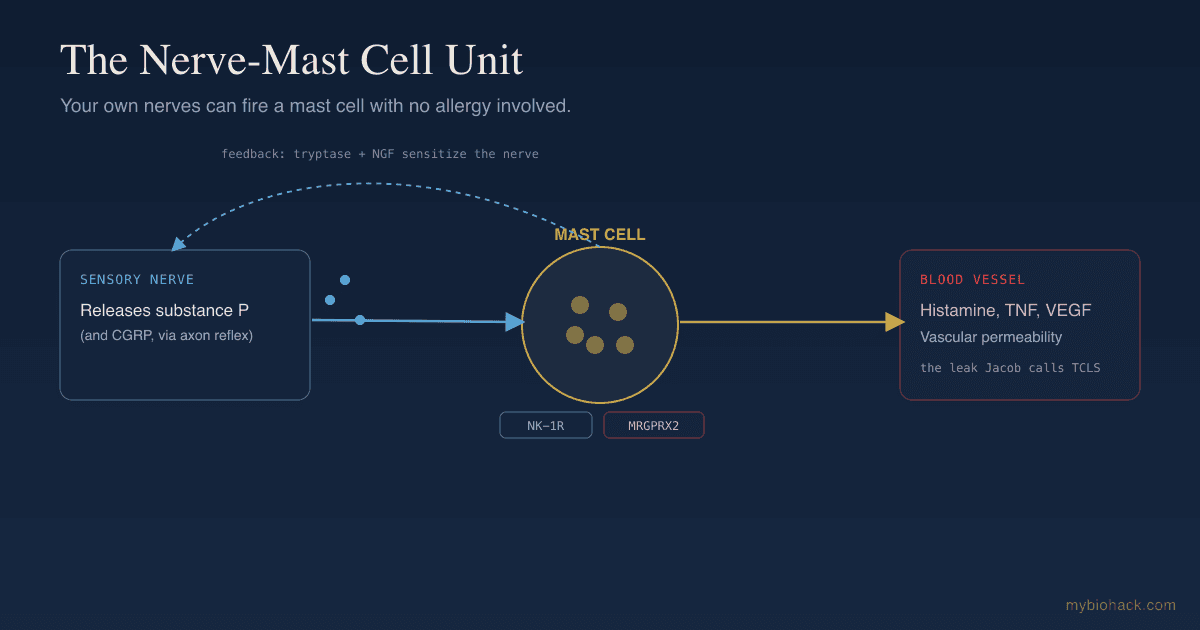
Contact between substance P and CGRP fibers and mast cells increases in developing lesions at one to three weeks and reaches statistical significance in mature lesions, so the nerve-mast cell interface builds as the plaque builds. R
The nociceptor itself is now understood as an immune-instructing cell rather than a pure sensor. R
In mouse psoriasis models, sensory neurons drive both the inflammation and the scratching behavior, and the two are separable, meaning the nerve contributes to pathology beyond simply making the skin itch. R
Even specific ion channels have been pinned down, with the acid-sensing ion channel ASIC3 driving activity-dependent CGRP release and worsening psoriatic inflammation through a neurogenic pathway. R
So the nerves are not downstream of the immune loop.
They feed it from the top.
NGF Is The Central Neuro-Driver
If one molecule ties the neurogenic story together, it is nerve growth factor (NGF).
NGF protein is markedly increased in psoriatic skin, psoriatic keratinocytes produce more of it than normal keratinocytes, and its receptors TrkA and p75NTR are upregulated on the nerves in lesions. R R
NGF does almost everything a psoriatic plaque needs.
It stimulates keratinocyte proliferation, sprouts and sensitizes nerve fibers, upregulates substance P and CGRP, activates T cells, induces the chemokine RANTES in keratinocytes, induces the adhesion molecule ICAM-1, degranulates mast cells, and promotes angiogenesis. R
Read that list again, because it is essentially the full pathology of a psoriasis plaque produced by a single neurotrophin.
The autocrine biology explains why this is so hard to interrupt.
Normal human keratinocytes both synthesize and release NGF and express its low and high affinity receptors, so the cell that proliferates is also the cell producing the growth signal. R R
That autocrine NGF also acts as a survival factor, protecting keratinocytes from apoptosis through TrkA by maintaining Bcl-2 levels. R
This matters more than it first appears, because psoriatic epidermis is not only proliferating too fast, it is also failing to die on schedule.
The loop closes in both directions.
Neuropeptide signaling drives keratinocytes to express inflammatory cytokines and NGF through the ERK1/2 and JNK MAPK pathways, so nerve activity increases the very neurotrophin that sprouts more nerve. R
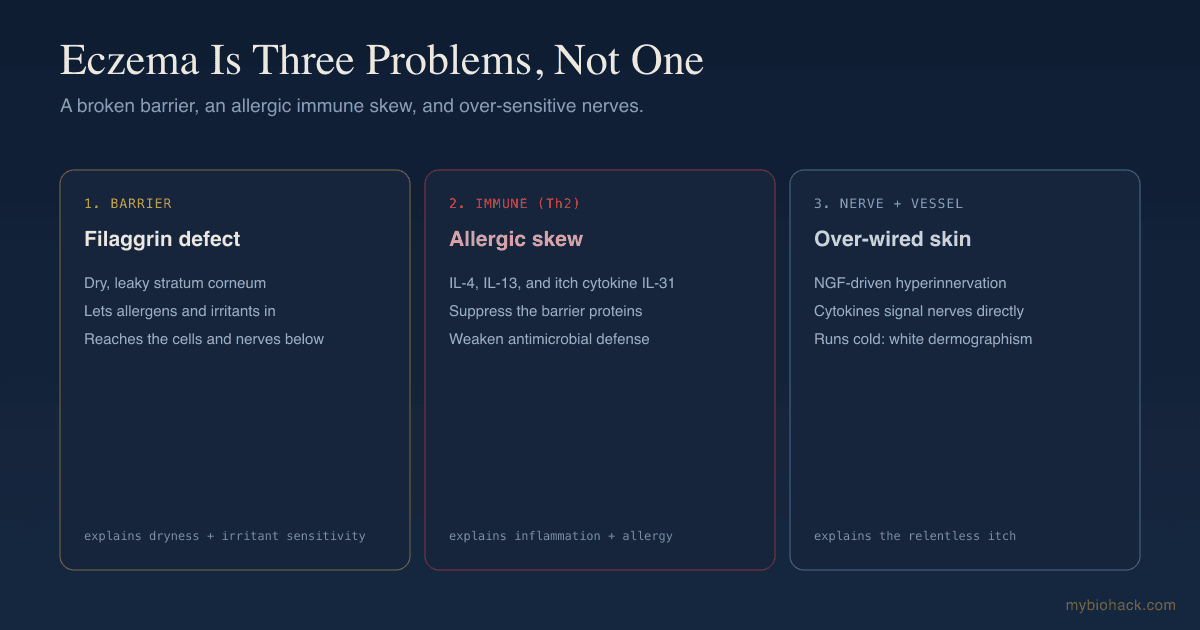
TrkA expression on keratinocytes is itself cytokine-regulated, enhanced by the Th2 cytokines interleukin-4 and interleukin-13 but not by other inflammatory cytokines, which is a useful reminder that the neuro-immune wiring differs between psoriasis and eczema. R
This is why NGF is a recurring villain across inflammatory skin disease, and why blocking NGF and its receptor improves psoriasis in models. R
NGF is the link between the keratinocyte, the nerve, and the immune cell.
The Smoking Gun: Cut The Nerve, Clear The Plaque
Here is the observation that proves nerves are causal, not incidental.
When the nerve supplying a patch of psoriatic skin is damaged, the psoriasis in that area often clears.
A review of denervation cases found that in 20 out of 20 reports, psoriatic lesions under the control of an injured nerve cleared or improved spontaneously, with only about a third experiencing partial recurrence. R
The causes of denervation included surgical nerve injury, stroke, and polio, all of which spared the affected skin from psoriasis. R
The list of qualifying injuries is worth reading in full, because its variety is the argument.
Remission has followed superficial cutaneous nerve injury, poliomyelitis-associated flaccid paralysis, loss of intercostobrachial nerve function, permanent severance of the lateral cutaneous nerve, traumatic unilateral brachial plexus palsy, loss of finger sensation from peripheral denervation, and mixed axonal and demyelinating neuropathy. R
Those injuries share nothing except the loss of sensory nerve supply.
This has been known for decades, with the classic report of psoriasis remission following cutaneous nerve section. R
A single-sided remission after traumatic nerve palsy makes the point even more cleanly, because the patient serves as their own control. R
Pharmacological nerve blockade produced remission in an older series as well, which suggests the effect follows loss of nerve signaling rather than the physical trauma of cutting. R
Animal work confirms the mechanism.
Surgically cutting the nerves to psoriasiform mouse skin reduced dendritic cells, improved the skin thickening, and lowered IL-23 and T cell numbers, in a way that depended on sensory neuropeptides. R R
The numbers give a sense of the sequence, with CD11c positive cells falling roughly 40 percent, acanthosis improving about 30 percent by day 7, and CD4 positive T cells dropping about 30 percent by day 10. R
The dendritic cell goes first and the T cell follows, which is the order you would expect if the nerve is feeding the top of the loop rather than the bottom.
Transcriptional work in human psoriatic skin points the same direction, showing altered neuritogenesis programs in the peripheral nervous system of lesional skin. R
You cannot get a cleaner demonstration.
Remove the nerve input, and the immune-driven plaque recedes.
This is also the logic behind the wider interest in neuromodulation for inflammatory skin disease. R
The Koebner Phenomenon
The neurogenic model also explains one of psoriasis's strangest features.
The Koebner phenomenon is the appearance of new psoriatic lesions at sites of skin trauma, like a scratch, a cut, or a tattoo.
In the neurogenic framework, trauma activates and damages cutaneous nerves, which release a surge of neuropeptides and NGF, which then triggers the local keratinocyte and immune cascade right at the injury site. R
This is why a wound in a person with psoriasis can heal into a plaque instead of normal skin.
The injured nerve turns a wound into a lesion.
Koebner and denervation are the same principle read in opposite directions, which is the strongest internal evidence the model has.
Add nerve signal and you create a plaque, remove nerve signal and you clear one.
It is the same nerve-driven mechanism, just triggered by physical trauma instead of stress.
Stress Flares Psoriasis
Stress is one of the most reliable psoriasis triggers, and the mechanism is the same neurogenic and neuroendocrine wiring.
Stress activates the sympathetic nervous system and the HPA axis, releasing neuropeptides and altering the cortisol response, which promotes inflammation and impairs the skin barrier. R R
Interestingly, psoriasis patients whose disease is stress-reactive show a blunted cortisol response to stress, an impaired HPA axis rather than simply high cortisol. R R
The design of that work matters, because forty patients with chronic plaque psoriasis and forty matched controls were given three randomized acute stressors (cognitive, emotional and social) with serial cortisol sampling, rather than a single artificial challenge. R
Salivary cortisol work in plaque psoriasis points the same way. R
There is a big MAYBE here, and it should be stated plainly rather than buried.
Not every study finds it, and at least one analysis of cortisol and ACTH after stress testing found no significant difference between psoriasis patients and controls. R
The comparison against atopic dermatitis is also less tidy than the neat Th1 versus Th2 split would predict. R
The honest reading is that HPA dysregulation is common in stress-reactive psoriasis and is not a universal feature of the disease.
The barrier consequence is better established than the cortisol number itself.
Psychological stress degrades skin barrier function by activating 11-beta-hydroxysteroid dehydrogenase type 1 in the skin along with the HPA axis, which means local cortisol metabolism in the tissue matters independently of what the blood level says. R
This fits the broader pattern covered in the stress and skin post, where a dysregulated rather than simply elevated stress response drives chronic skin disease.
The bidirectional traffic with mood is real too, and psoriasis and mood disorders share inflammatory wiring rather than one simply causing distress about the other. R
The takeaway is that stress is not a psychological footnote in psoriasis.
It is a direct trigger of the neurogenic cascade that builds the plaque.
The Vascular Layer Nobody Treats
Long before the immune infiltrate becomes obvious, the blood vessels in a developing plaque are already abnormal.
In psoriatic plaques the vessels are dilated, enlarged, more tortuous, and hyperpermeable, with elongated capillaries filling the papillary dermis. R
This is not cosmetic detail, since angiogenesis is now argued to drive psoriasis pathogenesis rather than merely accompany it. R R
Vascular endothelial growth factor-A (VEGF-A) is upregulated in both the plaques and the plasma of people with psoriasis, and signals through VEGFR-1 and VEGFR-2 to produce vessel dilation, endothelial proliferation, and the loss of glycocalyx integrity that shows up as hyperpermeability. R
The cellular sources tie this straight back to the neurogenic layer.
Plaque VEGF-A comes mainly from keratinocytes, fibroblasts, and immune cells including mast cells, the same mast cells that NGF and substance P degranulate. R
Mast cells sit at roughly 7,000 per cubic millimetre in the dermis and cluster near small vessels, and they release basic fibroblast growth factor, VEGF, and IL-8 when triggered. R
So the nerve degranulates the mast cell, the mast cell releases VEGF, and the vessel remodels to feed the plaque.
Blocking VEGF-A does reduce blood vessel area and endothelial cell counts in psoriatic plaques in pilot work, and anti-VEGF-A has been proposed as a personalized treatment route. R R
Angiogenesis behaves similarly across chronic inflammatory skin disorders, which suggests a shared vascular grammar rather than something specific to psoriasis. R
This is exactly where Jacob's framework parts company with the standard reading, and that disagreement is covered below.
The Gut And Metabolic Thread
Psoriasis is not confined to skin, and the systemic picture feeds back onto the plaque.
Gut microbiota in psoriasis show dysbiosis with increased heterogeneity, decreased Bacteroidota, and increased Firmicutes and Actinobacteriota. R R
Severity tracks with the composition closely enough that a Psoriasis-Microbiome Index has been proposed from metagenomic data in untreated plaque psoriasis. R
The causal direction has at least partial support from transfer experiments, where dysbiotic microbiota from psoriasis-model mice worsened disease and induced metabolic disorder in recipient mice. R
Treatment moves it in the other direction, since IL-17A inhibitors restore intestinal and skin microbiota homeostasis alongside clinical improvement. R
That is a useful piece of evidence, though it cuts both ways, because it shows the microbiome shift can be downstream of IL-17 rather than purely upstream of it.
The metabolic comorbidity is the part most worth acting on clinically.
Psoriasis carries a well-documented association with metabolic syndrome, mediated in part by the same IL-17 and TNF signaling that drives the skin, along with endoplasmic reticulum stress, reactive oxygen species, and adipocytokine shifts. R R
Addressing dysbiosis and insulin resistance, whether through an elimination approach or a metabolic one, is therefore not adjunct care in psoriasis, it is pressure removal from the same cytokine axis the biologics target.
The Brain-Skin And Junction Dysfunction Connection
Psoriasis is a clear example of the brain-skin axis.
Nerves release substance P, CGRP, and NGF, which drive keratinocyte proliferation, mast cell degranulation, T cell activation, and angiogenesis, the same neurogenic inflammation and mast cell loop seen across the skin. R
The abnormal new blood vessels of a plaque are driven by VEGF and the neuropeptide mitogens, the kind of vascular remodeling that connects to Jacob's Junction Dysfunction framework, where VEGF should not be reflexively suppressed because it is part of an adaptive response.
This is worth stating precisely, because the literature above treats anti-VEGF as a promising target and Jacob does not.
In his reading, the vessel changes are the tissue solving an oxygen and clearance problem created upstream, so suppressing VEGF removes the compensation while leaving the reason for it in place.
The vascular abnormality is a signal to interpret, not simply a lesion to erase.
There is also a framing point worth making.
Psoriasis is labeled autoimmune, but in Jacob's view the immune activity is largely a response to nerve-driven keratinocyte hyperproliferation and the resulting tissue signals, more cleanup and amplification than a random attack on self, consistent with his antibodies-as-cleanup framing.
This is Jacob's hypothesis rather than settled science, and the denervation data is the strongest evidence in its favor, since an autoimmune process aimed at a self-antigen should not care whether the sensory nerve to that patch of skin is intact.
Either way, the practical lesson is the same.
Calm the nerve and the stress driving it, and you take pressure off the immune loop.
What Helps
The full natural protocol is in the dedicated psoriasis reversal post, so this section focuses on the neuroimmune levers.
1. Deplete substance P with capsaicin
Topical capsaicin depletes substance P from cutaneous nerves with repeated use and has shown benefit in psoriasis, though the initial burning limits tolerability.
The evidence here is better than most topical natural options, and it is worth knowing the size of it.
In a double-blind trial, 98 patients applied 0.025 percent capsaicin cream and 99 applied vehicle four times daily for six weeks, and the capsaicin group showed significantly greater improvement in global evaluation, pruritus relief, and combined psoriasis severity scores. R
The mechanism is the point: capsaicin first releases substance P and then depletes the neuron of it with repeated application, so the benefit is neurogenic rather than anti-inflammatory in the conventional sense. R
The burning phase is the substance P release, which is why stopping early gives the worst of both.
2. Calm the nerve and the stress driver
Because stress and neuropeptides drive the plaque, nervous-system work is mechanistically central, covered in the JD chapter on limbic retraining.
Given that the barrier damage runs through local 11-beta-hydroxysteroid dehydrogenase type 1 activation rather than only circulating cortisol, interventions that lower sympathetic tone over weeks matter more than anything acute. R
3. Reduce mast cell and neurogenic inflammation
Mast cell stabilizers like quercetin and luteolin, and anti-inflammatory compounds like curcumin (where absorption is the limiting factor), target the shared inflammatory machinery.
The mast cell is the specific reason this lever matters in psoriasis, since it sits at the junction between the nerve that degranulates it and the VEGF it releases into the vessel bed, and quercetin's mast cell mechanisms are covered separately. R
4. Support vitamin D and resolve the gut
Vitamin D signaling is central to psoriasis (topical vitamin D analogs are standard care), and addressing gut-driven inflammation reduces systemic IL-17 pressure.
The microbiome data gives this a concrete target rather than a general instruction, with the Bacteroidota loss and Firmicutes expansion of psoriatic dysbiosis being the pattern to move. R
5. Consider medical neuro-immune options
For resistant disease, IL-17 and IL-23 biologics are highly effective, and botulinum toxin, which reduces substance P and CGRP nerve signaling, has shown benefit in most trials and is an emerging neuroimmune option. R
The honest summary of the botulinum evidence is that seven of eight trials reported improvement, all of them open-label, while the one double-blind placebo-controlled study used a smaller dose and found no healing effect. R
The strongest controlled signal so far is in nail psoriasis, where a 24-week randomized trial of 64 fingernails found a 40 percent reduction in target NAPSI score and better nail bed improvement than triamcinolone or topical vitamin D and steroid. R
Treat this as mechanistically interesting and clinically unsettled, not as an established option.
What To Stay Away From
Some of these are conventional, and some follow specifically from the neurogenic model.
Things that make psoriasis worse: (not an exclusive list)
- Abrupt systemic steroid withdrawal (a classic trigger for pustular flares, and the reason oral steroids are avoided in psoriasis)
- Alcohol (worsens severity and interferes with several treatments)
- Reflexive VEGF suppression (removes an adaptive vascular response rather than its upstream cause, per Jacob's VEGF framing)
- Skin trauma you can avoid (tattoos, aggressive exfoliation, scratching, tight friction points, all Koebner triggers) R
- Smoking (associated with risk and severity, particularly in palmoplantar disease)
- Stopping capsaicin during the burning phase (the burn is substance P release, and quitting before depletion gives the irritation without the benefit) R
- Unmanaged insulin resistance (feeds the same IL-17 and TNF axis driving the skin) R
Testing
Testing addresses both the disease and its well-known comorbidities.
Blood And Urine Markers
Psoriasis is a systemic inflammatory disease linked to metabolic syndrome and cardiovascular risk, so inflammatory and metabolic markers matter beyond the skin. R
Vitamin D, fasting insulin, lipids, and inflammatory markers are the highest-yield.
I use the Cardio Zoomer (Vibrant Wellness) for the metabolic and cardiovascular comorbidity picture and the Nutrient Zoomer (Vibrant Wellness) for vitamin D status.
The Cardio Zoomer is the one I would not skip here, because it carries ApoB, fasting insulin, and endothelial markers in one panel, and the metabolic comorbidity in psoriasis is mediated by the same IL-17 and TNF signaling driving the plaque. R
For baseline CBC, CMP, liver enzymes, and thyroid, the Foundation Zoomer (Vibrant Wellness) covers the ground that systemic therapy monitoring requires anyway.
Functional Lab Panels
Because gut inflammation feeds the IL-17 axis, I use the Gut Zoomer (Vibrant Wellness), and the Immune Zoomer (Vibrant Wellness) for the broader inflammatory and autoimmune picture.
The Gut Zoomer earns its place specifically because the psoriatic dysbiosis pattern is measurable, with reduced Bacteroidota and expanded Firmicutes tracking disease severity closely enough to build an index from. R
Zonulin and permeability markers on the same panel matter because they speak to the systemic IL-17 pressure rather than the skin alone. R
The Immune Zoomer also carries mast cell markers, which is the relevant readout if the neurogenic and vascular layer described above is active. R
For oxidative stress and mitochondrial readouts in longstanding disease, the Cellular Zoomer (Vibrant Wellness) covers the organic acid and methylation markers implicated in the metabolic side of psoriasis. R
Genotyping
HLA-C*06:02 status is genuinely actionable rather than academic, because it predicts age of onset and modifies expected response to some biologics. R R
Mechanisms Of Action
Simple:
- Psoriasis is driven by both the immune system and the nerves in the skin, and the nerves often start the process that the immune system then amplifies.
- The clearest proof is that when a nerve to a psoriasis patch is damaged, the patch usually clears.
- Nerve growth factor is the single molecule that ties it together, because on its own it can thicken skin, sprout nerves, wake up immune cells, and grow new blood vessels.
- Stress and physical injury both work through the same nerve chemicals, which is why a scratch and a bad month can each produce a new plaque.
Advanced:
- IL-23/IL-17 amplification. Dendritic-cell IL-23 drives Th17 IL-17 production, which stimulates keratinocyte hyperproliferation and chemokine output (CCL20), recruiting more Th17 cells and DCs in a self-sustaining loop. R
- Keratinocyte as amplifier, not target. Keratinocytes express IL-23R and respond by secreting S100A7-A9, GM-CSF, and CXCL8, recruiting the neutrophils that form the epidermal micro-abscesses of psoriatic histology. R R
- Neuropeptide drive. Substance P (chemotactic, T-cell-activating, Th17-promoting via NK-1R), CGRP (vasodilator, keratinocyte mitogen synergizing with SP), and VIP (endothelial mitogen) are elevated in lesional skin and feed the immune loop from the top. R R
- Receptor upregulation on the keratinocyte side. Lesional keratinocytes increase expression of the substance P receptor, TrkA, and the CGRP receptor, so the epidermis becomes more responsive to nerve output rather than merely exposed to more of it. R
- NGF as master neuro-driver. Elevated keratinocyte NGF, with upregulated TrkA and p75NTR on lesional nerves, drives keratinocyte proliferation, neuropeptide upregulation, RANTES and ICAM-1 induction, mast cell degranulation, and angiogenesis. R R
- Autocrine NGF survival loop. Keratinocytes synthesize and release NGF and express both receptors, and autocrine NGF signaling through TrkA maintains Bcl-2 and blocks apoptosis, so lesional epidermis both over-proliferates and under-dies. R R
- Neuropeptide-to-MAPK feedforward. Neuropeptide receptor activation on keratinocytes signals through ERK1/2 and JNK to induce IL-1, IL-6, TNF, and more NGF, closing a loop where nerve activity produces the neurotrophin that sprouts more nerve. R
- Ion channel contribution. ASIC3 on sensory neurons drives activity-dependent CGRP release and exacerbates psoriatic inflammation through a neurogenic pathway, identifying a specific channel upstream of the neuropeptide surge. R
- Nerve-mast cell-VEGF axis. Nerve-derived NGF and substance P degranulate dermal mast cells, which release VEGF, bFGF, and IL-8 adjacent to the papillary vessels, producing the dilated hyperpermeable capillaries characteristic of plaque. R R
- Denervation evidence. Sensory nerve injury clears lesions in human case series and reduces dendritic cells, acanthosis, IL-23, and T cells in mouse models in a neuropeptide-dependent manner, establishing nerves as causal. R R
Genetics
Psoriasis is highly heritable.
HLA-C (Highest Population Risk)
HLA-C encodes a class I major histocompatibility complex molecule that presents peptide antigens to CD8 positive T cells.
The risk allele alters which self and microbial peptides are displayed to T cells in the skin, which is the current best explanation for the autoreactive T cell response in lesions. R
HLA-C*06:02 (the PSORS1 locus) is by far the strongest genetic risk factor for psoriasis, especially early-onset and guttate forms, with carriers reported at an odds ratio of roughly 4.56. R
It also remains the single most important determinant of age of onset across the wider risk-variant panel. R
IL23R And IL12B
These genes encode components of the IL-23 pathway, the central immune driver of the plaque.
Variants shift how strongly the IL-23 signal is transmitted to Th17 cells, which changes both baseline risk and response to IL-23 targeted biologics. R
rs11209026 (IL23R R381Q) is protective rather than harmful, with the minor allele associated with reduced odds of psoriasis at roughly 0.41. R
rs3212227 (IL12B) modulates psoriasis risk and has been associated with treatment response. R
The interaction with HLA-Cw6 is much larger than either locus alone, with roughly 25-fold and 16-fold differences in risk between the highest and lowest two-locus genotype classes for IL12B and IL23R respectively. R
CARD14
CARD14 encodes a scaffolding protein expressed in keratinocytes that regulates NF-kB signaling.
Gain-of-function variants drive keratinocyte NF-kB activation and are a cause of familial and pustular psoriasis, linking the keratinocyte directly to the inflammatory cascade. R
CARD14 and IL36RN mutations both augment keratinocyte responses to proinflammatory cytokines, which is the genetic argument that the keratinocyte is an active participant rather than a bystander. R
ERAP1
ERAP1 encodes an aminopeptidase that trims peptides in the endoplasmic reticulum before they are loaded onto MHC class I molecules.
Variants change the peptide repertoire presented by HLA-C, which is why ERAP1 risk is largely conditional on carrying the HLA-C risk allele. R
PSORS1C1, PSORS1C3, And CDSN
These sit inside the PSORS1 region alongside HLA-C and contribute independently of HLA-C*06:02 itself.
Single-nucleotide polymorphisms here show gender-related associations with both risk and severity. R
NGF And NTRK1
NGF encodes nerve growth factor and NTRK1 encodes its high-affinity receptor TrkA.
Together they set the gain on the nerve-keratinocyte signaling that drives the neurogenic layer of the disease. R
TrkA expression on keratinocytes is itself cytokine-regulated, which means the functional impact of this axis differs by inflammatory context rather than by genotype alone. R
More Research
A few additional threads are worth following.
Angiogenesis may be a driver rather than a consequence in psoriasis, which is a genuinely contested position and one where Jacob's framework and the mainstream reading diverge on what to do about it. R
Botulinum toxin's benefit in psoriasis is mechanistically revealing, since it works by reducing substance P and CGRP nerve signaling rather than by immunosuppression, which supports the neurogenic model directly. R
Capsaicin remains the most accessible test of the neurogenic hypothesis a person can run at home, with a genuinely double-blind trial behind it rather than open-label enthusiasm. R
IL-17A inhibitors restore gut and skin microbiota alongside clinical improvement, which complicates the simple story that dysbiosis is purely upstream of the skin. R
Nerve-blocking agents produced remission in an older case series, suggesting the denervation effect follows loss of signaling rather than the trauma of nerve section, which is the more testable version of the hypothesis. R
Neuromodulation as a treatment category for inflammatory skin disease is still early, but it is the logical clinical translation of everything above. R
Psoriatic arthritis shares this neuro-immune biology, with elevated substance P and NGF in the joint fluid, suggesting the same mechanism extends beyond the skin. R R
The blunted cortisol response in stress-reactive psoriasis suggests the problem is a dysregulated stress axis rather than simply high cortisol, which is why supporting a healthy cortisol rhythm matters more than blanket cortisol suppression. R
Transcriptional analysis of lesional skin shows altered neuritogenesis programs, which may eventually explain why nerves sprout into plaques in the first place. R
For the full natural protocol see the psoriasis reversal post, and for the broader framework, the brain-skin axis pillar.
For biomarker testing I use the Cardio Zoomer and Gut Zoomer to assess the metabolic comorbidities and gut drivers of psoriasis.
If you have psoriasis and want help addressing the upstream neuroimmune drivers, reach out for a consultation.
Jacob Gordon
INHC, FMT-C
Integrative Nutrition Health Coach
I cover mold illness, post-viral recovery, methylation, and complex chronic disease, drawing on ten years of clinical research, work inside a functional medicine clinic, and my own recovery from all of it. Every claim here is cited.
Book a ConsultationRelated Protocols & Supplements
Deep-dive chapters and recommended supplements for this topic
Quercetin
500mg 2x/day
Vitamin D3 + K2
5000 IU + 200mcg/day
DAO Enzyme
1 cap before meals