Eczema Beyond The Barrier: The Neuroimmune And Neurovascular Drivers Of Atopic Dermatitis
By Jacob Gordon, INHC, FMT-CThis article contains affiliate links. As an Amazon Associate, MyBioHack earns from qualifying purchases at no extra cost to you. We only link products we research and stand behind.
Eczema is usually explained as a broken skin barrier, but that misses why it itches so relentlessly and why the skin runs cold and reactive.
In this post, we will discuss the three real drivers of atopic dermatitis, the breakthrough that immune cytokines talk directly to itch nerves, why eczema skin is neurovascularly abnormal, and what actually calms it.
---
- Eczema Is Three Problems, Not One
- The Barrier Defect And Filaggrin
- Barrier-First Versus Immune-First
- The Type 2 Immune Axis
- IL-31, The Dedicated Itch Cytokine
- The Breakthrough: Cytokines Talk Directly To Nerves
- NGF, Artemin, And Hyperinnervation
- The Itch Is Non-Histaminergic
- TRPV1, TRPA1, And The Ion Channels
- The Itch-Scratch Cycle Is A Feedforward Loop
- Central Sensitization: Why Chronic Itch Behaves Like Chronic Pain
- Why Eczema Skin Runs Cold
- The Neuropeptide Picture
- The Skin Microbiome And Staph Aureus
- The Gut-Skin Axis
- Stress, Cortisol, And Sleep
- Food Sensitivity, Honestly
- The Brain-Skin And Junction Dysfunction Connection
- What Helps
- What To Stay Away From
- Testing
- Mechanisms Of Action
- Genetics
- More Research
Eczema Is Three Problems, Not One
Atopic dermatitis is usually told as a single story: the skin barrier is broken, so irritants and allergens get in and cause inflammation.
That is true, but it is one third of the picture.
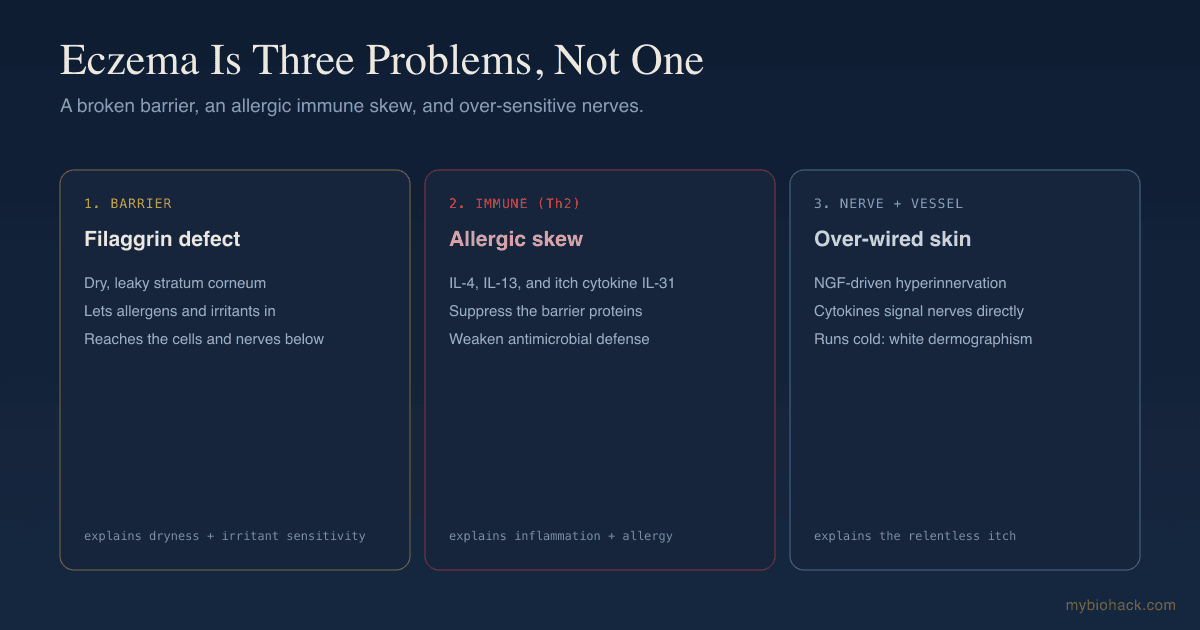
Eczema is actually three overlapping problems: a barrier defect, a type 2 skewed immune system, and a neuro-immune-vascular abnormality where the nerves and blood vessels behave abnormally.
It is also common enough that this distinction matters at population scale, since atopic dermatitis affects roughly 2 to 5 percent of adults and a substantially higher fraction of children across most surveyed countries. R
The barrier story explains the dryness and the irritant sensitivity.
The immune story explains the inflammation and the allergy.
But neither explains the defining feature of eczema, the maddening itch, or the strange way eczema skin reacts to touch and temperature.
For those, you need the nerves.
Eczema is also the usual entry point into the atopic march, the progression from infant eczema to food allergy, asthma, and allergic rhinitis, which is why treating it early is not cosmetic. R
The Barrier Defect And Filaggrin
The barrier defect is genuine and important.
Loss-of-function variants in filaggrin (the FLG gene) are the strongest single genetic risk factor for atopic dermatitis ever identified. R
These variants are not rare.
Around 8 to 10 percent of people of European ancestry carry at least one filaggrin null allele, which is an unusually high population frequency for a disease-associated mutation. R
Filaggrin does two jobs, and both fail when the gene is broken.
First it aggregates keratin filaments into the dense, flattened corneocytes that form the mechanical barrier.
Then it is proteolytically broken down into the amino acids and derivatives that make up Natural Moisturizing Factor (NMF), the internal humectant pool that holds water in the stratum corneum.
Levels of pyrrolidone carboxylic acid, the dominant NMF component, correlate with both clinical severity and measured barrier function in lesional skin. R
Even in mild atopic dermatitis, the NMF profile is already shifted, with reduced lactate and potassium in the stratum corneum. R
NMF is now measurable non-invasively, and in vivo Raman spectroscopy can identify infants carrying a filaggrin loss-of-function mutation with high accuracy from birth. R
But many people with eczema have completely normal filaggrin, and many people with filaggrin mutations never get eczema.
The penetrance depends heavily on environmental exposure, and a systematic review of gene-environment interaction found that filaggrin null carriers are disproportionately harmed by early irritant and allergen exposure rather than being uniformly destined for disease. R
So the barrier is a major contributor, not the sole cause.
Barrier-First Versus Immune-First
For two decades the field argued about direction.
The "outside-in" model says a broken barrier lets allergens in, which drives immune activation.
The "inside-out" model says type 2 inflammation comes first and destroys the barrier from within.
The field has settled on the answer that both are true and they feed each other.
The mechanism for the inside-out arm is now concrete: IL-13 suppresses the OVOL1 transcription factor that normally drives filaggrin expression, so the immune signal directly shuts down the barrier gene. R
Type 2 cytokines also act on the S100/A11 pathway to broadly downregulate keratinocyte terminal differentiation, not just filaggrin alone. R
This is why a person with completely normal filaggrin genetics can still have a filaggrin-deficient barrier once inflammation is running.
It is also why barrier repair alone helps but rarely controls moderate to severe disease.
In my experience with clients, the ones who respond well to emollients alone are almost always the mild, dry, irritant-driven phenotype.
The ones with visible inflammation and sleep-destroying itch need the immune and nerve arms addressed or nothing holds.
The Type 2 Immune Axis
The immune signature of eczema is a type 2 (allergic) skew.
Atopic dermatitis skin is dominated by the type 2 cytokines interleukin-4 (IL-4), interleukin-13 (IL-13), and the itch cytokine interleukin-31 (IL-31). R
Transcriptomic profiling of lesional skin showed that IL-13 is the dominant cytokine in atopic dermatitis, more so than IL-4, which reframed which target mattered most. R
Two epithelial alarmins sit upstream of all of it.
Thymic Stromal Lymphopoietin (TSLP) is released by damaged keratinocytes and initiates the type 2 cascade, and it also acts directly on sensory neurons to evoke itch, which makes it both an immune and a neural trigger. R
Interleukin-33 (IL-33) is the other keratinocyte alarmin, and its receptor ST2 is expressed on sensory neurons, where IL-33 signaling contributes to both chronic itch and chronic pain. R
The reason this axis is now considered causal rather than correlational is dupilumab.
Dupilumab blocks the shared IL-4 receptor alpha subunit used by both IL-4 and IL-13, and in two identical phase 3 trials it cleared or nearly cleared skin in a large fraction of adults who had failed topical therapy. R
Blocking one receptor and watching the disease resolve is about as close to a causal experiment as human dermatology gets.
Dupilumab also does something the older immunosuppressants do not.
IL-4 receptor blockade reduces Staphylococcus aureus colonization and increases microbial diversity on the skin, meaning the immune skew was partly causing the dysbiosis rather than the other way around. R
A head-to-head comparison found dupilumab shifted the microbiome toward healthy flora while cyclosporine did not, despite both suppressing inflammation. R
IL-31, The Dedicated Itch Cytokine
IL-31 deserves its own section because it is the closest thing biology has to a dedicated itch cytokine.
Mice engineered to overexpress IL-31 develop severe pruritus and dermatitis, which established the cytokine as sufficient to cause the phenotype. R
IL-31 is overexpressed in human atopic dermatitis skin and is induced by staphylococcal superantigen exposure, which links the microbiome arm directly to the itch arm. R
It does not only signal itch, it remodels the nerve supply.
IL-31 promotes the growth and branching of sensory nerves, so the itch cytokine is also building more itch hardware. R
Nemolizumab, an antibody against the IL-31 receptor A, produced rapid and substantial itch reduction in a phase 2 trial, with pruritus scores falling far faster than the visible inflammation. R
A larger trial combining nemolizumab with topical agents confirmed the itch benefit, though the effect on lesion severity was more modest than the effect on itch. R
That dissociation is the important finding.
Itch and inflammation are separable in atopic dermatitis, which only makes sense if the itch has its own dedicated circuitry.
The Breakthrough: Cytokines Talk Directly To Nerves
For a long time, the assumption was that immune cytokines caused itch indirectly, by inflaming the skin.
A landmark study showed something more direct.
IL-4 and IL-13 act directly on sensory neurons, and chronic itch depends on neuronal IL-4 receptor alpha and JAK1 signaling. R
In other words, the itch nerve has receptors for the allergic cytokines, and the cytokines speak to the nerve directly.
This explained two clinical mysteries at once.
It explained why dupilumab relieves itch faster than it clears skin, and why JAK inhibitors relieve even recalcitrant chronic itch that failed other treatments. R
Other immune cells join the same conversation.
A basophil-neuronal axis was later shown to drive acute itch flares through leukotriene signaling onto sensory neurons, adding a second direct immune-to-nerve route. R
This is the neuro-immune model in its purest form.
The immune cytokine and the sensory nerve are in direct conversation, and you can treat eczema by interrupting that conversation.
NGF, Artemin, And Hyperinnervation
Eczema skin is also physically over-wired.
Atopic dermatitis skin shows increased levels of nerve growth factor (NGF) and the related neurotrophin-4, with upregulated NGF receptors in lesional tissue. R
NGF binds TrkA on itch nerves, triggering nerve sprouting and sensitization, so the affected skin literally grows more itch fibers. R
The itch fibers involved are unmyelinated C-fibers and thinly myelinated A-delta fibers, and in lesional eczema they penetrate abnormally far into the epidermis.
Part of that is a loss of Semaphorin 3A (Sema3A), the repulsive guidance signal that normally keeps nerves out of the epidermis.
Restoring it works in models, since topical Sema3A reduced scratching behavior and improved skin inflammation in atopic dermatitis mice. R
NGF is not the only neurotrophic driver.
Keratinocytes in inflamed skin upregulate artemin through the EGR1 transcription factor, and artemin drives epidermal sensory nerve innervation after house dust mite exposure. R
Artemin also sensitizes nerves to warmth, which is a plausible explanation for the clinical pattern where a warm bed or a hot shower reliably triggers a scratching episode.
Mast cells and keratinocytes are the main local sources of these neurotrophins, which ties eczema directly to the mast cell and nerve loop. R
So the itch of eczema is not just a chemical signal.
It is a structurally over-innervated, over-sensitized skin.
The Itch Is Non-Histaminergic
This is the practical key to eczema.
The itch of atopic dermatitis is largely histamine-independent, which is why antihistamines so often fail.
The evidence here is unusually clean and unusually ignored.
A Cochrane review of oral H1 antihistamines as monotherapy for eczema found no reliable evidence of benefit. R
A second Cochrane review of antihistamines added on top of topical treatment reached the same conclusion, finding no convincing evidence that adding an antihistamine improves eczema. R
That is two systematic reviews of the most commonly prescribed eczema itch drug class, both negative.
The itch instead runs through IL-31, through TSLP acting on neurons, through Proteinase-Activated Receptor 2 (PAR-2) activation by tryptase and staphylococcal proteases, and through the IL-4 and IL-13 nerve signaling above. R
None of those are blocked by an H1 antihistamine.
Mast cells still matter here, they just are not acting through histamine.
The mast cell to nerve terminal synapse in atopic skin signals through tryptase, proteases, and neurotrophins, and the mast cell-neuron axis is now treated as a core mechanism of atopic itch rather than a side effect. R
MRGPRX2 on human mast cells is the receptor that lets neuropeptides like substance P degranulate mast cells without any IgE involvement at all, which is the molecular basis of the nerve-to-mast-cell direction of that loop. R
If you have both eczema and flushing, food reactivity, or unexplained hives, read the histamine intolerance versus MCAS breakdown, because a mast cell disorder can sit underneath an eczema diagnosis.
For the full breakdown of why this matters and what to do instead, see the dedicated post on the neuroscience of itch.
The short version is that chasing eczema itch with antihistamines is chasing the wrong pathway.
TRPV1, TRPA1, And The Ion Channels
The itch signal has to be converted into an electrical impulse somewhere, and that conversion happens at TRP ion channels on the nerve terminal.
TRPA1 is the critical one for histamine-independent itch.
TRPA1 is required for itch signaled through the Mas-related G protein-coupled receptors, the pathway that carries non-histaminergic itch. R
More specifically for eczema, IL-13-induced chronic atopic dermatitis produces pruritus that is TRPA1-dependent, connecting the dominant eczema cytokine to a specific channel. R
TRPV1 is the heat and capsaicin channel and contributes to the thermal component of eczema itch.
Blocking it clinically has been tried, and asivatrep, a topical TRPV1 antagonist, met its endpoints in a phase 3 trial in atopic dermatitis. R
That result is real but modest, and it has not displaced anything.
The honest read is that single-channel blockade helps at the margin, because the itch has too many parallel inputs for one channel to be the bottleneck.
This is also the mechanistic reason cooling and menthol work at all, since they act on the TRP channel family rather than on the immune signal.
The Itch-Scratch Cycle Is A Feedforward Loop
The itch-scratch cycle is usually described as a behavioral problem.
It is better described as a true feedforward loop, where each turn of the cycle physically worsens the substrate for the next turn.
Scratching mechanically disrupts the stratum corneum, which releases TSLP and IL-33 from damaged keratinocytes, which drives more type 2 inflammation and more itch. R
Scratching also changes the nerves themselves.
In people with atopic dermatitis, scratching increases epidermal neuronal branching and measurably alters psychophysical itch testing responses, so the behavior remodels the wiring. R
And the loop is reinforced centrally, because functional MRI shows that scratching an itch activates brain reward circuitry. R
That is the uncomfortable part.
Scratching is rewarding at the neural level, which is why willpower alone is a poor intervention and why the loop needs to be broken pharmacologically and environmentally, not just behaviorally.
Central Sensitization: Why Chronic Itch Behaves Like Chronic Pain
Chronic itch stops being a peripheral signal and becomes a central one.
Patients with chronic pruritus experience itch in response to painful stimuli, which is a direct demonstration of central sensitization for itch. R
Two clinical phenomena come out of this.
Alloknesis is itch provoked by a normally non-itchy stimulus, such as clothing brushing the skin.
Hyperknesis is an exaggerated itch response to a stimulus that would normally produce only mild itch.
Both are direct analogues of allodynia and hyperalgesia in chronic pain, and both are now formally characterized as markers of itch sensitization. R
This is why long-standing eczema itches in areas with no visible lesion, and why clearing the skin does not always clear the itch.
Once the spinal and supraspinal circuits are sensitized, the itch has partly left the skin.
In my client experience this is the single most under-explained feature of severe eczema, and naming it changes how people relate to it.
It also predicts which interventions should help, since the ones that work in central pain sensitization, including low dose naltrexone and sleep restoration, tend to be the ones that help centralized itch.
Why Eczema Skin Runs Cold
This is the most overlooked feature of eczema, and one of the most interesting.
Atopic skin is neurovascularly abnormal, with a constitutional tendency toward vasoconstriction.
The classic sign is white dermographism, where stroking the skin produces a white line from vasoconstriction instead of the normal red line from vasodilation.
This is not a subjective observation.
Non-invasive vascular measurement comparing atopic and non-atopic subjects confirmed genuinely different dermographic vascular dynamics in atopic skin. R
Atopic skin also shows a delayed blanch response to acetylcholine and abnormal vascular reactions to temperature and pressure, all pointing to a hyper-vasoconstrictive microcirculation. R
Microcirculatory studies in atopic eczema patients found the abnormality present in clinically uninvolved skin as well, which argues it is constitutional rather than a consequence of local inflammation. R
That last point is the one that should get more attention.
If the vascular abnormality is present in normal-looking skin, it is not downstream of the rash.
Jacob's framing raises a reasonable question here.
If atopic skin runs cold and over-constricted, then strategies that improve microvascular perfusion and nitric oxide signaling, rather than only suppressing inflammation, may be an underexplored angle.
This remains Jacob's hypothesis rather than established treatment, and there is no trial evidence that improving perfusion changes eczema outcomes.
It is still a different way to think about a disease everyone treats purely as inflammation.
The Neuropeptide Picture
The neuropeptide story in eczema is truly mixed, and being upfront about that matters.
Sensory nerve terminals in skin release substance P and Calcitonin Gene-Related Peptide (CGRP) when activated, producing neurogenic inflammation with vasodilation, plasma extravasation, and immune cell recruitment. R
CGRP is not only vascular, it is immunomodulatory, and CGRP-containing nerves directly regulate Langerhans cell antigen presentation in the epidermis. R
That is a nerve fiber setting the threshold for an immune decision, which is the cleanest example of why "neuroimmune" is not a loose term here.
Counterintuitively, substance P levels are measured as decreased in lesional eczema skin. R
This most likely reflects increased degradation by peptidases and accelerated release and turnover rather than substance P being unimportant, since substance P signaling still drives mast cell degranulation through MRGPRX2 in the same tissue. R
The honest summary is that eczema involves a reorganized, not simply amplified, neuropeptide environment.
That complexity is part of why single-target treatments rarely fully control it.
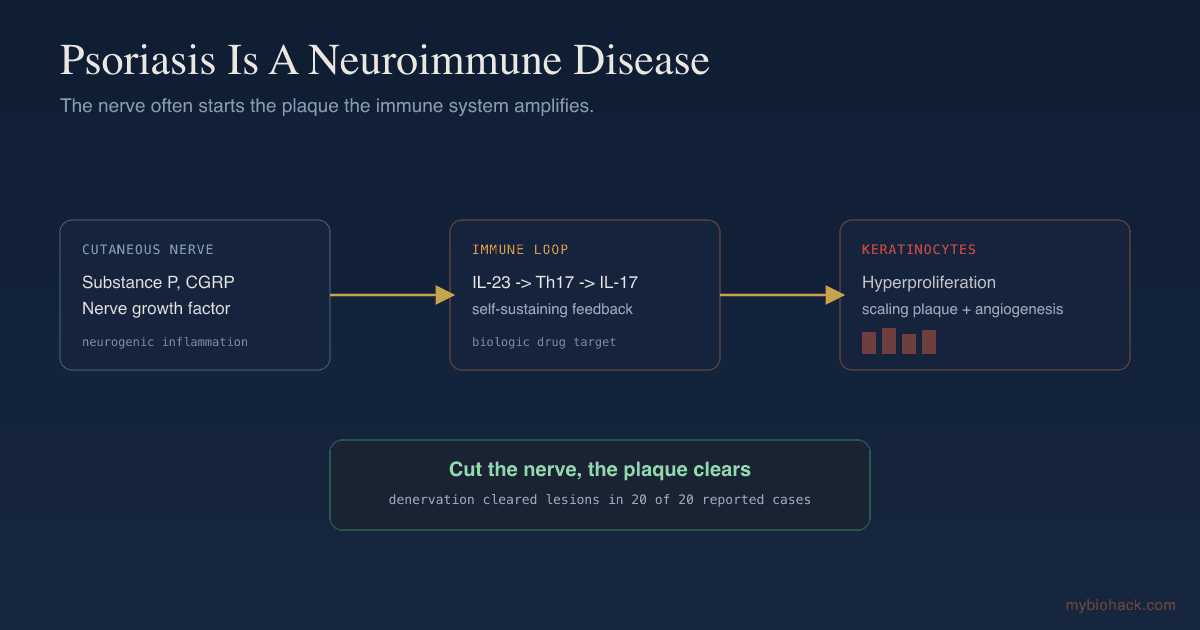
The same neurogenic pattern appears in psoriasis and alopecia areata, which is why these conditions cluster in the same patients more often than pure immunology would predict.
The Skin Microbiome And Staph Aureus
Eczema flares are microbiome events, not just immune events.
Longitudinal sequencing of children with atopic dermatitis showed that Staphylococcus aureus proportion rises sharply during flares and falls with treatment, while overall bacterial diversity collapses. R
During a severe flare, S. aureus can account for the overwhelming majority of the bacteria present on lesional skin.
The organism is not a passenger.
Staphylococcal delta-toxin directly induces mast cell degranulation and is sufficient to promote allergic skin disease in mice, and delta-toxin producing strains are recovered from atopic dermatitis patients. R
That is a bacterial product acting on a mast cell to drive the exact inflammation the disease is made of.
S. aureus proteases also cleave and activate PAR-2 on sensory nerve terminals, which is a direct microbe-to-itch-nerve route.
The commensal side of the story is equally interesting.
Infants colonized with commensal staphylococci at 2 months of age had a lower risk of developing atopic dermatitis by 1 year, suggesting that the right early colonizers are protective rather than neutral. R
Biofilm formation is part of why S. aureus persists through topical antimicrobials, and the biofilm problem in skin behaves much like it does in the gut.
The Gut-Skin Axis
The gut shapes the immune set point that the skin then expresses.
The gut-skin axis in atopic dermatitis is now well enough characterized to be a therapeutic target rather than a metaphor, with gut microbial composition, short chain fatty acid production, and barrier permeability all mapping onto skin disease activity. R
In infants, gut microbiome composition tracks with atopic dermatitis severity, not merely with its presence. R
The mechanism runs through the same barrier logic as the skin.
Increased intestinal permeability allows more antigen and endotoxin traffic into circulation, which is the same pathway covered in the zonulin and gut barrier post on acne.
Reduced short chain fatty acid production also removes a major regulatory T cell signal, and secretory IgA status is often low in the same people.
Gut mast cells and serotonin signaling form their own loop, covered in the gut serotonin and mast cell post, and in practice I find that clients with eczema plus gut symptoms do not stabilize until both are addressed.
Stress, Cortisol, And Sleep
Stress is one of the most consistent eczema triggers, and the mechanism is not vague.
Experimental psychological stress measurably delays skin barrier recovery in humans, an effect mediated by endogenous glucocorticoids. R
So stress is not "making it feel worse," it is slowing the physical repair of the stratum corneum.
The faster arm is neuropeptide-driven.
Corticotropin-Releasing Hormone (CRH) acts directly on skin mast cells through CRH receptors, triggering degranulation locally without requiring the systemic HPA axis to complete a loop. R
That is a stress signal producing a mast cell event in the skin within minutes, which matches the clinical reality that a stressful day flares eczema the same night.
The CRH and stress system post covers the receptor biology in more depth, and the broader immune consequences are in the stress and skin post.
Then there is sleep, which is where the loop closes.
A meta-analysis of objective sleep measurement in atopic dermatitis confirmed genuinely disrupted sleep architecture, not just subjective complaints. R
Sleep loss raises evening cortisol, worsens barrier recovery, and lowers itch threshold, which produces more scratching, which produces more sleep loss.
Breaking that loop is part of treatment, not separate from it.
Food Sensitivity, Honestly
This is where most eczema advice goes wrong in both directions at once.
In adults, food is over-blamed.
Most adults who attribute their eczema to food are chasing a trigger that at best modulates severity, and aggressive elimination diets in adults frequently produce nutritional restriction without meaningful skin improvement.
In infants and young children, food is under-recognized, and the direction of causality is usually backwards from what people assume.
The dominant model is that a defective skin barrier permits transcutaneous sensitization to food proteins in house dust, so the eczema causes the food allergy rather than the reverse.
The strongest support for this is the LEAP trial, where early oral peanut introduction in infants with severe eczema or egg allergy dramatically reduced peanut allergy, exactly as an oral-tolerance-versus-skin-sensitization model predicts. R
The practical consequence is important and often gets reversed in clinic.
Avoiding a food in an infant with eczema can increase the risk of true food allergy rather than protect against it.
The honest position is that food-driven eczema is real in a minority of infants, testable, and worth identifying, while blanket elimination in adults is usually a distraction from the barrier, microbiome, and nerve arms.
Salicylate sensitivity and histamine-rich foods are a separate question from IgE food allergy, and they act through mast cells rather than through classical allergy.
The Brain-Skin And Junction Dysfunction Connection
Eczema is a complete brain-skin axis disease, hitting all three arms.
The immune arm speaks directly to the nerve, the nerve sprouts and sensitizes under NGF and artemin, and the vasculature runs abnormally constricted. R
The abnormal microcirculation and barrier leak fit Jacob's Junction Dysfunction lens, where compromised endothelial and barrier function underlie chronic disease.
Jacob's hypothesis is that the endothelial glycocalyx is an underappreciated common denominator in conditions with both barrier failure and microvascular abnormality, and atopic skin with its constitutional vasoconstriction is a reasonable candidate for that framing.
The mast cell arm connects to the mitochondria and mast cells in hypoxia chapter, since a poorly perfused tissue is a mast-cell-activating tissue.
The practical implication is that eczema is not controllable from the barrier alone.
You have to address the immune skew, the sensitized nerve, and the stress driving both.
What Helps
Effective eczema care works all three arms at once.
1. Repair The Barrier Relentlessly
Emollients are the foundation, and the evidence for treatment is much stronger than the evidence for prevention.
For established disease, an updated review of non-prescription moisturizers confirmed consistent benefit on severity and flare frequency. R
Ceramide-dominant formulations have the best mechanistic case, since a ceramide-dominant barrier repair lipid mixture improved both clinical severity and measured barrier function in children with stubborn atopic dermatitis. R
I use ceramide cream as the default base layer, applied to damp skin.
Colloidal oatmeal is a reasonable adjunct, with a clinical study showing improved barrier properties and a shift in skin microbiome composition. R
The prevention story is where you should be skeptical.
The BEEP trial applied daily emollient from birth in high-risk infants and found no meaningful reduction in eczema at 2 years. R
PreventADALL, run independently, reached the same negative conclusion. R
A Cochrane review of infant skin care interventions concluded that emollients probably do not prevent eczema and may increase skin infection risk. R
So moisturize to treat, not to prevent.
2. Use Topical Anti-Inflammatories Correctly
Topical corticosteroids remain first-line, and the gap between their feared risks and their real risks is one of the biggest problems in eczema care.
A systematic review found topical corticosteroid phobia present in a substantial majority of patients and caregivers, and directly associated with poor adherence and worse outcomes. R
A separate systematic review of published trials found that long-term intermittent use of topical corticosteroids and topical calcineurin inhibitors in children had a reassuring safety profile. R
The real risks are local: skin atrophy, telangiectasia, and striae with prolonged high-potency use on thin skin.
Topical corticosteroid withdrawal is a genuine phenomenon in a small subset of long-term continuous users, mostly on the face and genitals, and it deserves acknowledgment rather than dismissal or panic. R
Topical calcineurin inhibitors (tacrolimus and pimecrolimus) are steroid-sparing and appropriate for face, eyelids, and flexures.
Their boxed warning for malignancy has not held up, and a systematic review and meta-analysis found no increased cancer risk with topical pimecrolimus or tacrolimus. R
3. Calm The Type 2 Immune Skew
Vitamin D has real but modest evidence.
A 2024 systematic review and meta-analysis found vitamin D supplementation reduced atopic dermatitis severity scores across randomized trials. R
The mechanism is plausible, since oral vitamin D increases epidermal vitamin D receptor and cathelicidin expression in children with atopic dermatitis, restoring antimicrobial peptide capacity that type 2 cytokines suppress. R
I use Vitamin D3 with K2 and test rather than guess at the dose.
Omega-3 fatty acids have weaker and more mixed evidence than most people assume.
A meta-analysis of prenatal omega-3 supplementation found a reduction in childhood eczema risk, which is a prevention signal rather than a treatment signal. R
Treatment trials in established disease are far less convincing, so omega-3 fish oil is a reasonable background intervention and a poor primary one.
Evening primrose oil is the clearest failure in this category.
A Cochrane review of oral evening primrose oil and borage oil for eczema concluded they are not effective, which should have ended their use and did not. R
4. Address The Gut And The Microbiome
Probiotics have a real prevention signal and a much weaker treatment signal, and conflating the two is the most common error.
A systematic review and meta-analysis of perinatal Lactobacillus rhamnosus found reduced atopic dermatitis incidence in infants when given to mothers in pregnancy and to the infant after birth. R
A network meta-analysis comparing strains found that mixtures and specific Lactobacillus strains outperformed others for prevention, which means strain selection is not incidental. R
A broader meta-analysis covering both prevention and treatment found the therapeutic effect in established disease considerably smaller than the preventive effect. R
I use a Lactobacillus rhamnosus probiotic where the goal is prevention in a high-risk family, and I set expectations lower when the goal is treating an established rash.
Bleach baths are the adjunct that got quietly downgraded.
An earlier meta-analysis suggested bleach baths reduced severity. R
A later meta-analysis that included unpublished data, Bayesian interpretation, and GRADE assessment found bleach baths were not clearly superior to water baths alone. R
A Cochrane review of interventions to reduce S. aureus in eczema likewise found no consistent benefit from antimicrobial approaches in non-infected eczema. R
The honest read is that bleach baths are probably a bathing benefit more than an antimicrobial one.
5. Target The Nerve And The Itch
Because the itch is non-histaminergic, the strategies in the itch post apply rather than the antihistamine reflex.
Cooling and menthol act on the TRP channels rather than the immune signal, which is why they work immediately and briefly.
Quercetin is my preferred mast cell stabilizer, since it blocked human mast cell cytokine release more effectively than cromolyn and reduced contact dermatitis in human subjects. R
The full mechanism is in the quercetin and mast cells post.
Topical magnesium is worth trying for its effect on barrier and irritation, though the evidence base is thin.
For centralized itch with alloknesis, low dose naltrexone targets the opioid balance that modulates itch centrally.
6. Reduce Stress And The Scratch Cycle
Nervous system work directly reduces the type 2 shift and the itch drive, covered in the JD chapter on limbic retraining.
Sleep is the highest-leverage single variable here, since restoring it interrupts the cortisol arm and the itch threshold arm simultaneously.
Melatonin is reasonable given the sleep disruption data, and it has antioxidant activity in skin as a secondary benefit.
7. Consider Phototherapy And The Modern Systemics
Narrowband UVB phototherapy has consistent evidence in moderate disease and remains underused. R
Part of the mechanism overlaps with sunlight and immune defense, including antimicrobial peptide induction.
For moderate to severe disease, the biologics and JAK inhibitors are genuinely effective and they validate the neuro-immune model.
Dupilumab blocks IL-4 and IL-13 signaling. R
Nemolizumab blocks IL-31 receptor A and targets itch specifically. R
Upadacitinib, an oral JAK1 inhibitor, produced high response rates in two identical phase 3 trials, with itch improvement beginning within days. R
Abrocitinib, another JAK1 inhibitor, beat placebo and reduced itch faster than dupilumab in a direct comparison. R
A head-to-head trial confirmed abrocitinib outperformed dupilumab on skin clearance at 16 weeks, at the cost of a different safety profile requiring monitoring. R
A network meta-analysis of systemic treatments ranks these agents against each other and is the best single reference if you are choosing between them. R
What To Stay Away From
Antihistamines as the primary itch strategy (two Cochrane reviews found no reliable benefit, and sedating antihistamines only work by sedating) R
Blanket food elimination in infants with eczema (avoidance can increase the risk of true food allergy) R
Evening primrose and borage oil (Cochrane found no effect) R
Hot showers and long hot baths (they strip lipids and activate the warmth-sensitized nerve population)
Prolonged high-potency topical steroids on the face without a plan (this is where withdrawal phenomena concentrate) R
Steroid avoidance out of fear (phobia predicts non-adherence and worse disease) R
Undertreating during a flare (short bursts of adequate potency beat long courses of inadequate potency)
Testing
Testing targets the immune, barrier, microbiome, and trigger drivers.
Blood And Urine Markers
Total IgE and allergen-specific IgE establish the atopic and allergic load, though a normal IgE does not rule out atopic dermatitis, since the intrinsic phenotype exists.
Eosinophils track type 2 activity, and I use the CBC with Differential (Quest Diagnostics) to follow them.
Tryptase is the mast cell burden marker, and I use the Tryptase (Quest Diagnostics) test when the picture includes flushing or unexplained hives.
Plasma histamine adds information when histamine intolerance is on the differential, via the Plasma Histamine (Quest Diagnostics) test.
25-hydroxy vitamin D is worth optimizing given the supplementation data, using the Vitamin D 25-OH (Quest Diagnostics) test.
Zinc matters for barrier and wound healing and is commonly low, via the Zinc (Quest Diagnostics) test.
Functional Lab Panels
I use the Food Zoomer (Vibrant Wellness) to map IgG and IgA food reactivity, with the caveat that this is a sensitivity map and not an allergy diagnosis.
I use the Food Sensitivity Complete (Vibrant Wellness) when the goal is a broader panel before a structured elimination and reintroduction.
Because the gut shapes the type 2 skew, I use the Gut Zoomer (Vibrant Wellness) to assess microbiome composition, zonulin, and digestive function.
The GI-MAP (Diagnostic Solutions) is the PCR-based alternative when the question is pathogen load rather than functional markers.
I use the Immune Zoomer (Vibrant Wellness) for the broader autoimmune and mast cell picture when eczema is not behaving like ordinary eczema.
The Nutrient Zoomer (Vibrant Wellness) covers vitamin D, zinc, and the fatty acid balance in one panel.
When mold exposure is in the history, the Toxin Zoomer (Vibrant Wellness) is worth running, since biotoxin-driven inflammation mimics and worsens atopic disease.
Provocation And Elimination Testing
A structured elimination and reintroduction is more informative than any food panel, and it should run 3 to 4 weeks per suspected trigger.
Skin swab culture during a flare identifies S. aureus overgrowth and antibiotic sensitivity, which matters when a flare is genuinely infected rather than merely inflamed.
Mechanisms Of Action
Simple:
- Eczema is a broken barrier plus an allergic immune system plus over-sensitive nerves, and the itch comes mostly from the nerves, which is why antihistamines do not fix it.
- The allergic cytokines that cause eczema talk directly to the itch nerves, which is why the newer injectable and JAK drugs stop the itch before they clear the skin.
- Scratching physically rewires the skin to itch more, so the cycle is a structural problem and not only a habit.
Advanced:
- Direct cytokine-neuron signaling. IL-4 and IL-13 act on neuronal IL-4Rα to sensitize sensory neurons via JAK1, and chronic itch depends on this pathway, which explains the efficacy of IL-4Rα blockade and JAK inhibition. R
- Alarmin-to-neuron signaling. TSLP released from damaged keratinocytes acts directly on TRPA1-expressing sensory neurons to evoke itch, coupling mechanical barrier damage to itch without an intermediate immune step. R
- IL-13-driven barrier suppression. IL-13 represses OVOL1, the transcription factor required for filaggrin expression, producing an acquired filaggrin deficiency in people with normal FLG genotype. R
- NGF and artemin-driven hyperinnervation. Elevated NGF and NT-4 with reduced Sema3A increase epidermal nerve density and sensitization, and keratinocyte artemin induced through EGR1 further drives epidermal innervation and warmth sensitivity. R
- IL-31 as a neurotrophic itch cytokine. IL-31 both signals itch through IL-31RA and promotes sensory nerve outgrowth, so it amplifies the signal and expands the hardware carrying it. R
- TRPA1-dependent transduction. Histamine-independent itch requires TRPA1 downstream of Mrgpr receptors, and IL-13-induced chronic dermatitis produces TRPA1-dependent pruritus specifically. R
- Mast cell to nerve terminal signaling. Mast cell tryptase activates PAR-2 on nerve terminals while neuronal substance P degranulates mast cells through MRGPRX2, forming a bidirectional loop independent of IgE and histamine. R
- Bacterial toxin-driven mast cell activation. Staphylococcal delta-toxin degranulates mast cells directly and is sufficient to induce allergic skin inflammation, linking flare-associated S. aureus expansion to the immune event. R
- Central sensitization. Chronic pruritus produces itch in response to painful stimuli, alloknesis, and hyperknesis, indicating spinal and supraspinal sensitization that persists after skin clearance. R
- Neurovascular dysregulation. Atopic skin shows a constitutional vasoconstrictive tendency including white dermographism and delayed acetylcholine blanch, present in clinically uninvolved skin, indicating abnormal microvascular and autonomic control beyond inflammation. R
- Stress-driven barrier failure. Psychological stress delays permeability barrier recovery through endogenous glucocorticoids, while CRH acts on skin mast cell CRH receptors to trigger local degranulation on a much faster timescale. R
Genetics
Atopic dermatitis is strongly heritable, and the genetics split cleanly into barrier genes and immune genes.
FLG (Highest Population Risk)
FLG encodes filaggrin, the protein that aggregates keratin and is then degraded into Natural Moisturizing Factor.
Loss-of-function variants truncate the protein and produce both a mechanical barrier defect and a hydration defect.
R501X and 2282del4 are the two most common European null alleles, and carrying them is the strongest single genetic risk factor for atopic dermatitis identified to date. R
rs61816761 is the R501X nonsense variant, and heterozygous carriers show reduced NMF and increased transepidermal water loss even without active disease. R
Penetrance is environment-dependent, and null carriers are disproportionately affected by early irritant and allergen exposure rather than uniformly destined for eczema. R
IL13
IL13 encodes the cytokine that transcriptomic work identified as the dominant driver in lesional atopic dermatitis skin. R
rs20541 is the R130Q coding variant, which increases IL-13 activity and is associated with elevated IgE and atopy.
The functional consequence is downstream barrier suppression, since IL-13 represses the OVOL1 to filaggrin axis. R
IL4R
IL4R encodes the receptor alpha subunit shared by IL-4 and IL-13, and it is the exact target dupilumab blocks. R
rs1801275 is the Q576R variant, which alters receptor signaling strength and is associated with atopic phenotypes.
The same receptor is expressed on sensory neurons, where it mediates chronic itch, so IL4R variation plausibly influences the itch phenotype independently of the rash. R
IL31 And IL31RA
IL31 encodes the itch cytokine, and overexpression alone is sufficient to produce pruritic dermatitis in animal models. R
IL31RA encodes its receptor, the target of nemolizumab, and variants in this pair influence itch intensity more than lesion severity. R
TSLP
TSLP encodes the epithelial alarmin that initiates the type 2 response and simultaneously activates itch neurons directly. R
Promoter variants that raise TSLP expression are associated with atopic dermatitis and asthma, which is consistent with its position at the top of the cascade.
SPINK5
SPINK5 encodes Lympho-Epithelial Kazal-Type Related Inhibitor (LEKTI), a protease inhibitor that restrains kallikrein activity in the stratum corneum.
rs2303067 is the Glu420Lys variant associated with atopic dermatitis.
Loss of LEKTI function increases kallikrein activity, which both degrades barrier proteins and increases PAR-2 signaling on nerve terminals, connecting a barrier gene directly to the itch pathway. R
TRPA1
TRPA1 encodes the ion channel required for histamine-independent itch transduction. R
It is the channel through which IL-13-driven chronic dermatitis produces pruritus, making it a plausible modifier of itch severity in atopic disease. R
More Research
A few additional threads are worth following.
Artemin is the newest of the neurotrophic drivers and the least discussed, and the EGR1-artemin axis in keratinocytes may explain the warmth-triggered itch pattern that NGF alone never accounted for. R
Basophils were assumed to be bystanders in atopic dermatitis until a basophil-neuronal axis was shown to drive acute itch flares, which suggests the immune-to-nerve conversation involves more cell types than the current drug targets cover. R
Bleach baths are the clearest example of an adjunct that was oversold, since the later meta-analysis including unpublished data found them no better than water baths and the earlier positive meta-analysis is still widely cited. R
Commensal colonization timing may matter more than antimicrobial treatment, given that early colonization with commensal staphylococci at 2 months was associated with lower atopic dermatitis risk at 1 year. R
Emollient prevention failed in two independent large trials, which is an unusually clean negative result and should be cited more often than it is. R
The dissociation between itch response and lesion response with IL-31 blockade is the strongest available evidence that atopic itch has partly independent circuitry, and it deserves more attention than it gets. R
The neurovascular abnormality of atopic skin is underexplored therapeutically, and whether improving microvascular perfusion adds benefit is an open question with no trial data either way. R
The mixed neuropeptide picture, with decreased lesional substance P alongside ongoing MRGPRX2-mediated mast cell activation, is a reminder that eczema involves a reorganized neuro-immune environment rather than a simple excess of one mediator. R
For the itch mechanism see the neuroscience of itch, for the gut arm see the gut-skin axis, and for the broader framework, the brain-skin axis pillar.
For biomarker testing I use the Food Zoomer and Gut Zoomer to map the allergic and gut drivers of eczema.
If you have eczema that is not controlled by barrier care and antihistamines, reach out for a consultation.
Jacob Gordon
INHC, FMT-C
Integrative Nutrition Health Coach
I cover mold illness, post-viral recovery, methylation, and complex chronic disease, drawing on ten years of clinical research, work inside a functional medicine clinic, and my own recovery from all of it. Every claim here is cited.
Book a ConsultationRelated Protocols & Supplements
Deep-dive chapters and recommended supplements for this topic
Quercetin
500mg 2x/day
SPM Active (Pro-resolving Mediators)
2 softgels/day
Curcumin (Liposomal)
500mg 2x/day