The Neuroscience Of Itch: Why You Itch, Why Antihistamines Fail, And How To Break The Scratch Cycle
By Jacob Gordon, INHC, FMT-CThis article contains affiliate links. As an Amazon Associate, MyBioHack earns from qualifying purchases at no extra cost to you. We only link products we research and stand behind.
Itch is not weak pain, it is its own sensation with its own dedicated nerves, and most chronic itch has nothing to do with histamine.
In this post, we will discuss how the itch system is wired from skin to spinal cord to brain, why antihistamines fail for chronic itch, the receptors and cytokines that actually drive it, the systemic diseases that present as unexplained itch, and what breaks the itch-scratch cycle.
---
- Itch Is Its Own Sense
- Two Itch Systems: Histamine And Everything Else
- The Pruriceptors: Mrgpr Receptors And The Channels They Open
- Why Antihistamines Fail For Chronic Itch
- The Spinal Relay: GRP, GRPR, And The Natriuretic Peptide Layer
- The Brakes: Spinal Inhibition And Why Losing It Causes Chronic Itch
- Why Scratching Helps And Then Makes Everything Worse
- Central Sensitization: Alloknesis And Hyperknesis
- The Itch Brain: Motor Drive And Reward
- The Opioid Balance: Mu Versus Kappa
- The Itch Cytokines: IL-31, IL-4, IL-13, And TSLP
- NGF, Nerve Sprouting, And Structural Itch
- When Itch Is A Systemic Disease
- Neuropathic Itch
- Psychogenic Itch And The Delusional Infestation Boundary
- The Brain-Skin And Junction Dysfunction Connection
- What Actually Helps Chronic Itch
- Testing
- Mechanisms Of Action
- Genetics
- More Research
Itch Is Its Own Sense
For most of the last century, itch was filed under pain.
The assumption was that a weak activation of pain fibers produced itch and a strong one produced pain.
That turned out to be wrong, and the correction reorganized the entire field.
Itch (medically, pruritus) has its own dedicated neuronal pathway, with specialized nerve fibers in the skin and a specific relay in the spinal cord. R
The landmark finding was that the gastrin-releasing peptide receptor (GRPR) in the spinal cord marks an itch-specific population of neurons. R
When those GRPR neurons were selectively ablated in mice, scratching collapsed in response to every pruritogen tested, histamine-dependent and histamine-independent alike, while pain behavior was completely unaffected. R
That is the labeled line model, the idea that itch travels along its own dedicated wiring rather than being a weak version of pain.
The competing model is pattern theory (also called selectivity theory), which argues that itch is encoded by the pattern of activity across neurons that also carry pain, not by a private line.
The honest answer is that the field landed in the middle rather than on one side.
Specific labeled lines clearly exist, but they talk to each other, and the sensation you actually experience is a population code built from cross-talk between those lines. R
The clearest demonstration of this compromise is a mouse experiment where TRPV1 was expressed only in itch-linked MrgprA3 neurons.
Capsaicin, which normally burns, made those mice itch instead of hurt, which means the sensation is determined by which line fires rather than by which chemical arrived. R
The distinction matters clinically, because the two senses drive opposite reflexes.
Pain triggers withdrawal, pulling you away from the source.
Itch triggers scratching, pulling you toward it. R
Different circuits, opposite behaviors, different treatments.
Chronic itch is also far more common than most people assume, with a point prevalence around 13.5% and a lifetime prevalence of 22% in a German population sample. R
Two Itch Systems: Histamine And Everything Else
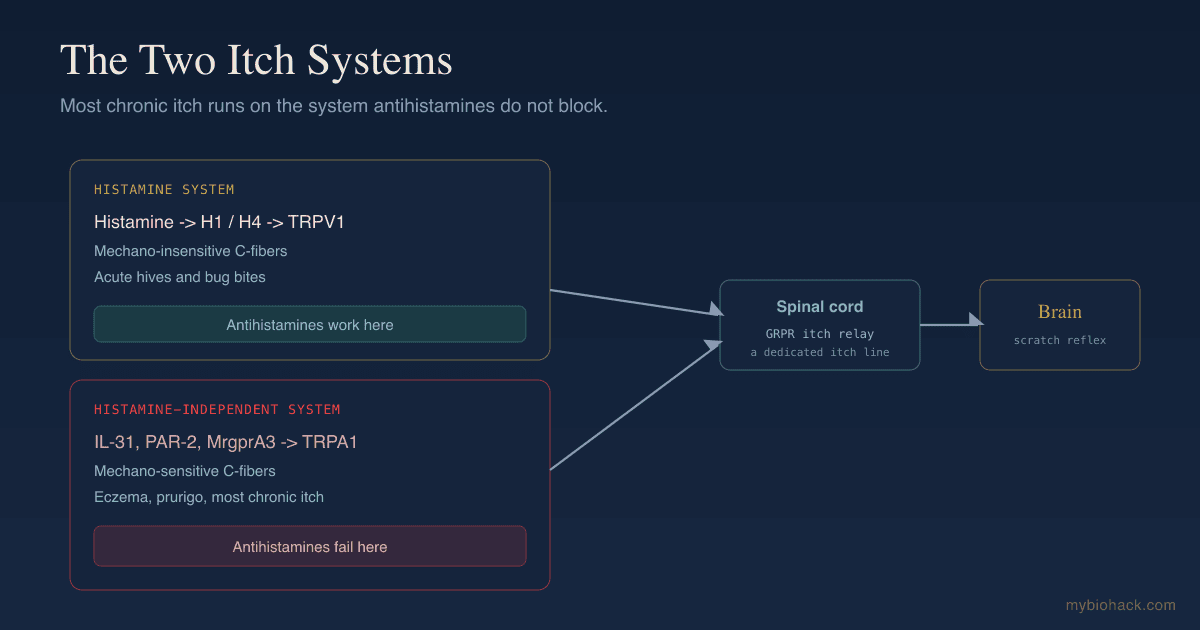
The single most useful thing to understand about itch is that there are two separate peripheral systems.
The first is the histamine system.
Histamine, released mostly from mast cells, binds histamine H1 and H4 receptors on a specific subset of nerve fibers (mechano-insensitive C-fibers) and opens the transient receptor potential vanilloid 1 (TRPV1) channel to fire the itch signal. R
This is the itch of an acute hive or a mosquito bite, and it is the one antihistamines were built for.
The second system is histamine-independent.
A separate population of mechano-sensitive C-fibers carries itch triggered by cowhage spicules, by proteases acting on proteinase-activated receptor 2 (PAR-2), and by the Mrgpr family of receptors. R
Microneurography in humans showed that cowhage and histamine activate distinct, essentially non-overlapping populations of nerve fibers while producing a similar conscious sensation of itch. R
Parallel work recording from primate afferents confirmed the same split, with cowhage-sensitive fibers that do not respond to histamine at all. R
PAR-2 is the receptor arm that matters most in atopic dermatitis, because tryptase from mast cells and proteases from house dust mite and *Staphylococcus aureus* all activate it. R
PAR-2 signaling is now a recognized therapeutic target across inflammatory skin disease precisely because it sits at the junction of protease activity, barrier damage, and itch. R
Two systems, two sets of nerves, two sets of receptors.
That single fact explains the most common frustration in all of dermatology.
The Pruriceptors: Mrgpr Receptors And The Channels They Open
The non-histaminergic system runs largely on the Mas-related G protein-coupled receptors (Mrgprs), a family that exists almost exclusively on sensory neurons and mast cells.
MrgprA3 in mice is the chloroquine receptor, and MrgprC11 is the receptor for the peptide BAM8-22, both of which produce itch without touching histamine. R
MrgprA3 neurons are the closest thing to a dedicated itch fiber that has been found, since they innervate only the epidermis, respond to multiple pruritogens, and can be ablated to remove scratching while leaving pain intact. R
Humans do not have MrgprA3, and the functional counterpart is MRGPRX1, which is the human receptor for BAM8-22 and chloroquine.
Humans also carry MRGPRX4, which turns out to be a bile acid receptor on human dorsal root ganglion neurons and appears to be the missing link in cholestatic itch. R
The Mrgpr family has a second job that matters enormously for anyone with mast cell problems.
MRGPRX2 on mast cells is the receptor for pseudo-allergic drug reactions, which means a mast cell can degranulate to vancomycin, fluoroquinolones, icatibant, and neuromuscular blockers with no IgE involved at all. R
This is the mechanistic reason a person can have a violent flushing and itching reaction to a drug with a completely negative allergy workup, and it is a recurring theme in mast cell activation syndrome.
Downstream of every one of these receptors sit two ion channels that do the actual electrical work.
TRPV1 is the transduction channel for histaminergic itch, and TRPV1-expressing afferents are required for behavioral responses to a broad set of pruritogens. R
Transient receptor potential ankyrin 1 (TRPA1) is the transduction channel for the Mrgpr arm, and TRPA1-null mice fail to scratch to chloroquine and BAM8-22 while their histamine response survives. R
I cover the wider channel family in the post on TRPV receptors.
Why Antihistamines Fail For Chronic Itch
If you have ever taken an antihistamine for a stubborn itch and gotten nothing, this is why.
Antihistamines block the histamine system, and most chronic itch does not run on the histamine system.
In atopic dermatitis, itch produced by mast cell degranulation is abolished by antihistamines in healthy controls but persists in patients, because the patient's itch is carried by the non-histaminergic route. R
The pattern repeats across every chronic itch condition that has been studied properly.
The Cochrane review of uremic itch states plainly that antihistamines have been the most common first-line treatment despite the lack of substantial evidence supporting their use in that condition. R
In the network meta-analysis of systemic drugs for uremic pruritus, hydroxyzine ranks behind gabapentin, and the drugs that actually win are the ones acting on nerve excitability and the kappa opioid system, not the H1 receptor. R
There is a reasonable counter-argument worth naming.
The histamine H4 receptor is a distinct, itch-relevant histamine receptor that classic H1 antihistamines do not block, so the failure of antihistamines might reflect the wrong receptor rather than the wrong molecule. R
H4 antagonists have been developed and tested in humans, and so far they have been safe and pharmacologically well behaved without producing a convincing clinical antipruritic effect. R
So there is a big MAYBE on H4, but the practical rule holds.
Antihistamines work for acute, histamine-driven itch like hives.
They mostly fail for chronic itch, and in my client experience much of the relief people report from sedating first-generation agents is the sleep rather than any effect on the itch itself.
Chasing chronic itch with more antihistamines is chasing the wrong pathway.
The Spinal Relay: GRP, GRPR, And The Natriuretic Peptide Layer
Itch does not simply travel up a wire.
It gets handed off through a specific chain of peptide transmitters in the dorsal horn of the spinal cord, and each link is a potential drug target.
The current model runs in three stages: primary itch-sensory neurons release glutamate and B-type natriuretic peptide (BNP, encoded by *Nppb*), those transmitters activate secondary spinal neurons, and those neurons release gastrin-releasing peptide (GRP) onto the GRPR-expressing tertiary neurons that carry itch upward. R
The GRPR layer is the one with the strongest evidence, because ablating it removes itch and spares pain. R
The BNP layer sits above it and is not just a mouse curiosity.
Plasma BNP and N-terminal pro-BNP levels correlate with itch intensity in patients with chronic itch, most strongly in chronic pruritus of unknown origin, and raising BNP pharmacologically in mice induces scratching through the natriuretic peptide receptor A in the dorsal horn. R
There is also a parallel spinal route that does not use GRPR at all.
Somatostatin-positive excitatory interneurons transmit chemical itch independently of the GRPR line, and ablating both pathways reduces itch more than ablating either alone. R
That redundancy is exactly why single-target itch drugs so often underperform.
The Brakes: Spinal Inhibition And Why Losing It Causes Chronic Itch
The itch circuit is not just an accelerator.
It is held under constant inhibitory restraint, and a large fraction of chronic itch is a brake failure rather than a signal excess.
Mice lacking the transcription factor Bhlhb5 lose a specific subset of inhibitory interneurons in the dorsal horn, and they scratch themselves into open skin lesions with no dermatologic disease at all. R
The transmitter those neurons release is dynorphin, an endogenous kappa opioid, and restoring dynorphin signaling suppresses pathological itch. R
That same study showed the B5-I inhibitory neurons receive input from menthol-, capsaicin-, and mustard-oil-responsive fibers, which is the cellular explanation for why counter-stimulation relieves itch. R
The proof that this is a genuine inhibition deficit rather than a developmental artifact is elegant.
Transplanting embryonic inhibitory interneuron precursors into the spinal cord of Bhlhb5-deficient mice substantially reduced their scratching and resolved their skin lesions, while untreated animals got worse. R
Jacob's read on this is that a large share of "unexplained" chronic itch in real patients is a loss of spinal inhibitory tone, which is why treating only the skin so often fails.
It also explains why kappa opioid agonists work, which we get to below.
Why Scratching Helps And Then Makes Everything Worse
!The itch-scratch cycle and central sensitization loop.
Scratching works, briefly, and the mechanism is gating rather than magic.
Recordings from primate spinothalamic tract neurons showed that scratching the skin actively inhibits the firing of itch-responsive neurons, and only while the itch is present. R
That is counter-stimulation gating, the same principle behind rubbing a bruise, and it is why a mildly painful or cooling stimulus quiets itch.
Then the second half of the loop takes over.
Scratching breaks the skin barrier, which lets allergens and microbial products into the epidermis, which drives more type 2 inflammation, which produces more itch mediators. R
The barrier damage also raises the density of intraepidermal nerve fibers and lowers the itch threshold, so the same trivial stimulus now produces a larger sensation. R
This is the itch-scratch cycle, and it is a genuine positive feedback loop, not a figure of speech. R
The clinical consequence is that scratch control is not a comfort measure.
It is a disease-modifying intervention, because every scratch is an input into the sensitization machinery.
Central Sensitization: Alloknesis And Hyperknesis
With enough itch input, the spinal cord and brain change their gain settings.
The nervous system becomes sensitized, so that stimuli which should not itch begin to. R
This produces two phenomena with names worth knowing.
Alloknesis is when a normally non-itchy stimulus, like clothing brushing the skin or a hair moving, is perceived as itch. R
Hyperknesis is when a stimulus that should produce mild itch produces an exaggerated one. R
The parallel to pain is deliberate and exact.
Alloknesis is the itch analogue of allodynia, where touch becomes painful, and hyperknesis is the analogue of hyperalgesia, where a mild noxious stimulus becomes severe. R
They share the same underlying central sensitization mechanism, which is why chronic itch and chronic pain respond to overlapping drugs (gabapentinoids, tricyclics, kappa agonists) and to overlapping non-drug approaches.
Once alloknesis is present, the itch has stopped being a skin problem in any useful sense.
The Itch Brain: Motor Drive And Reward
Itch has an unusually strong motor and reward signature in the brain, which is not true of most sensations.
Arterial spin labeling fMRI during active self-scratching showed recruitment of the reward system, including the ventral tegmental area, alongside deactivation of the periaqueductal gray, which is the opposite of the pattern that suppresses pain. R
The pleasurability of scratching tracks directly with reward circuit activation, and it is not a metaphor. R
In chronic itch patients specifically, scratching produces exaggerated activity in the supplementary motor area, premotor cortex, primary motor cortex, midcingulate cortex, and the caudate nucleus compared to healthy controls. R
The authors interpreted that overactivity as addictive scratching plus neural hypersensitization, and that framing is clinically useful.
A patient who cannot stop scratching is running a reinforced motor habit on top of a sensitized sensory circuit.
Telling them to stop scratching without giving them a substitute counter-stimulus and a way to downregulate the circuit is not a plan.
The Opioid Balance: Mu Versus Kappa
One of the most elegant control systems in itch is the opioid balance, and it is one of the few actually druggable levers that has nothing to do with histamine.
Mu-opioid receptor activation promotes itch, which is why intravenous and epidural morphine reliably makes people itch. R
The mechanism is unusually specific.
A splice variant of the mu receptor, MOR1D, physically heterodimerizes with GRPR in the spinal cord and cross-activates it, which is how morphine triggers itch through the itch line while producing analgesia through a separate variant. R
That finding also explains why you can, in principle, separate opioid analgesia from opioid itch. R
Kappa-opioid receptor activation does the opposite and suppresses itch, which fits the dynorphin story from the spinal inhibition section. R
Chronic itch is often associated with an imbalance, too much mu tone and too little kappa tone. R
The clinical proof is strong on the kappa side.
In the phase 3 KALM-1 trial, intravenous difelikefalin (a peripherally restricted kappa agonist) produced at least a 3-point drop in worst-itch scores in 51.9% of hemodialysis patients versus 30.9% on placebo, with a parallel improvement in itch-related quality of life. R
Nalfurafine, another kappa agonist, has been approved in Japan for the itch of kidney and liver disease on similar logic. R
The mu-antagonist side is more mixed.
A systematic review of 1,146 patients across 69 studies of mu-opioid pathway modulators (naltrexone, naloxone, nalmefene, nalbuphine) found most randomized trials showed clinically meaningful itch reductions with acceptable short-term safety, but the evidence base is heterogeneous and the optimal dosing is still undefined. R
This is one of the underappreciated mechanisms of low dose naltrexone, which transiently blocks the pro-itch mu receptor.
The Itch Cytokines: IL-31, IL-4, IL-13, And TSLP
The reason itch is a neuroimmune problem rather than a purely neurological one is that immune cytokines talk directly to sensory neurons.
Interleukin-31 (IL-31) is the clearest example, produced mostly by Th2 cells and acting on a receptor (IL-31RA paired with OSMR-beta) expressed on sensory neurons. R
IL-31 evokes itch through TRPV1 and TRPA1, which places it directly on top of the transduction machinery described above. R
Blocking the IL-31 receptor with nemolizumab reduces itch, and in the replicate phase 3 ARCADIA 1 and ARCADIA 2 trials it improved both itch and eczema severity in moderate-to-severe atopic dermatitis. R
Nemolizumab also reduced itch in hemodialysis patients with uremic pruritus in a randomized placebo-controlled phase 2 study, which is a striking result because that itch has nothing to do with eczema. R
IL-31 is not the only cytokine with a direct line to the nerve.
IL-4 and IL-13 act on IL-4R-alpha expressed on sensory neurons and signal through JAK1 to sensitize them, and neuron-specific JAK1 deletion blocks chronic itch in mice. R
That single finding is the mechanistic basis for two entire drug classes.
Dupilumab, which blocks IL-4R-alpha, produced large reductions in itch as well as eczema in the SOLO 1 and SOLO 2 phase 3 trials. R
The oral JAK inhibitors work on the same axis from inside the neuron, since neuronal JAK1 is the signaling node that IL-4 and IL-13 use to sensitize the fiber. R
Thymic stromal lymphopoietin (TSLP), an alarmin released by keratinocytes, activates sensory neurons directly through TSLPR and TRPA1 to evoke itch, which means a damaged barrier can produce itch before any immune cell arrives. R
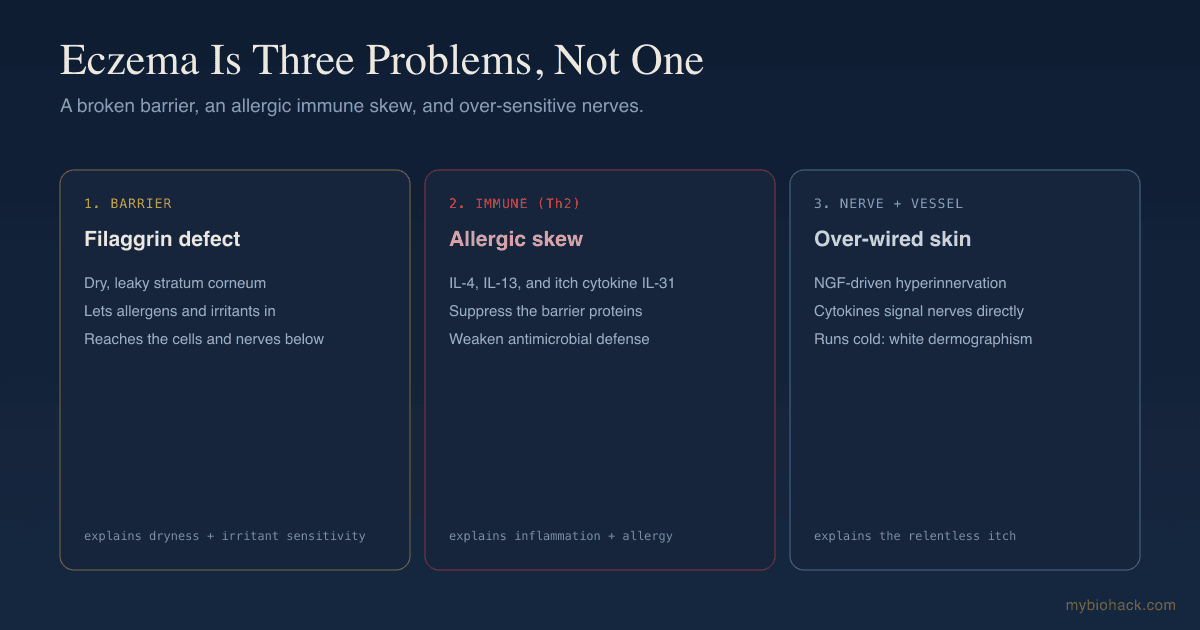
So the sequence in atopic disease is barrier damage, then alarmin release, then Th2 cytokines, then direct neuronal sensitization, then scratching, then more barrier damage. R
The same neuroimmune logic runs through psoriasis, where the cytokine set differs but the nerve-immune conversation does not.
NGF, Nerve Sprouting, And Structural Itch
Chronically itchy skin is physically different at the nerve level.
Chronic itch is associated with increased density of intraepidermal nerve fibers, driven substantially by elevated nerve growth factor (NGF). R
More nerve endings, each sensitized, means a lower threshold and a bigger signal from the same stimulus. R
NGF selectively sensitizes the non-histaminergic (cowhage) itch pathway rather than the histaminergic one, which fits chronic itch being a non-histaminergic, nerve-sprouting problem. R
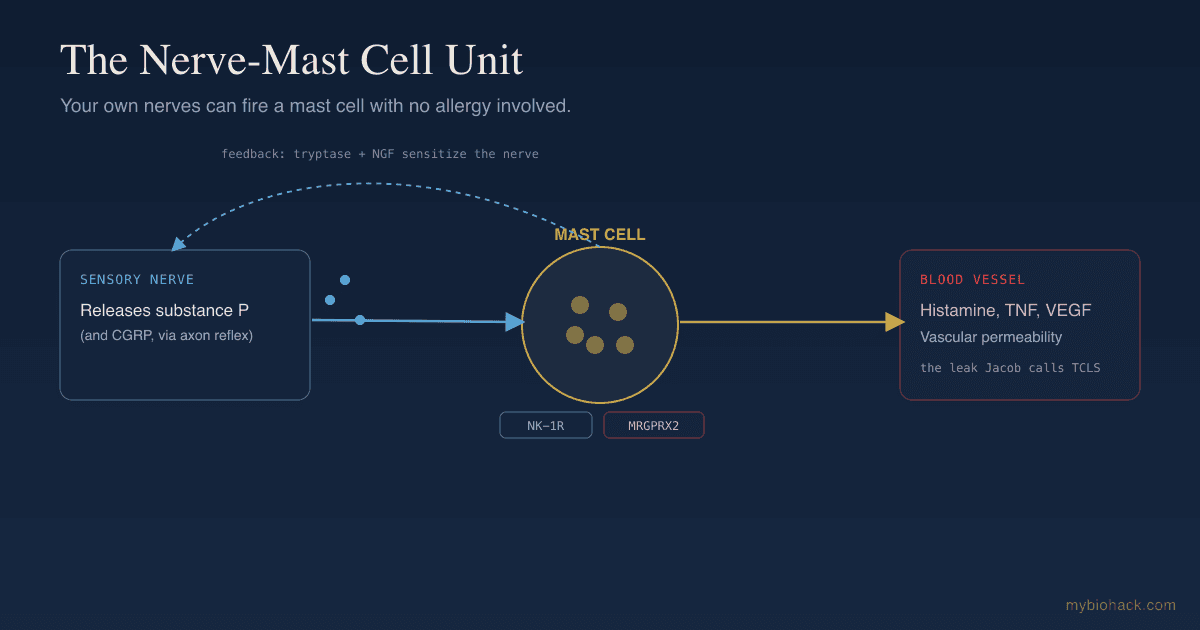
This connects itch directly to the mast cell and nerve loop, because mast cells are a major source of the NGF that sprouts and sensitizes these fibers.
So chronic itch is partly a structural problem.
The skin has literally grown more itch wiring, which is also why it takes months rather than days to reverse.
When Itch Is A Systemic Disease
Generalized itch with no rash is a differential diagnosis, not a skin complaint, and it is the situation where I see the most missed diagnoses.
The numbers are worth memorizing, because they set the prior probability for any given patient.
Roughly 60% of chronic pruritus is inflammatory (eczema, psoriasis, seborrheic dermatitis), about 25% is neuropathic or mixed, and the remaining 15% is systemic disease, drug-induced itch, or infection. R
That last 15% is where the dangerous diagnoses live, and it is why a complete blood count, a complete metabolic panel, and thyroid function testing belong in the workup of anyone with itch and few primary skin changes. R
Cholestatic itch is the classic one, and it now has real mechanisms behind it.
Serum autotaxin activity, the enzyme that makes lysophosphatidic acid (LPA), is elevated specifically in the pruritus of cholestasis and not in itch of other origins, and it falls when the itch is treated. R
LPA itself induces scratching, which made the autotaxin/LPA axis the leading candidate mediator. R
Layered on top of that, bile acids activate MRGPRX4 on human sensory neurons, and plasma bile acid levels correlate with itch in cholestatic patients. R
IL-31 is elevated in cholestatic and metabolic liver disease and correlates with pruritus severity, which is a genuine surprise given that IL-31 was discovered as an eczema cytokine. R
The treatment picture in cholestatic itch reflects all three mechanisms at once. R
If you are working on bile flow, TUDCA is worth reading about, though it is a bile acid support rather than an antipruritic.
Uremic itch is the second big one, and it is common enough to be a quality-of-life emergency.
In the Japanese arm of the Dialysis Outcomes and Practice Patterns Study, 44% of prevalent hemodialysis patients reported moderate to extreme pruritus, and moderate to extreme itch was associated with a 23% higher mortality risk. R
Polycythemia vera and the myeloproliferative neoplasms produce aquagenic pruritus, an intense itch triggered by contact with water and typically without any rash.
In a real-world cohort of 489 myeloproliferative neoplasm patients, ruxolitinib and hydroxycarbamide reduced aquagenic pruritus intensity the most, yet 61.4% still had persistent symptoms and hematologic response did not predict itch relief. R
Anyone with aquagenic itch and an abnormal blood count needs JAK2 V617F testing, not a stronger moisturizer. R
Hodgkin lymphoma is the paraneoplastic itch everyone learns about and few people actually screen for.
Cancer-associated pruritus is most common in hematologic malignancy (Hodgkin lymphoma, polycythemia vera, cutaneous T-cell lymphoma) and appears to be driven by the same type 2 pruritogenic cytokines IL-4, IL-13, and IL-31. R
Iron deficiency and iron overload both belong on the list, since iron status affects both skin and sensory nerve function, and the relationship between iron and dopaminergic sensory-motor symptoms is well established in restless legs and worth checking alongside ferritin and HFE status.
Thyroid disease rounds out the standard workup, and cutaneous findings including pruritus and xerosis are more common in autoimmune thyroid disease than in controls. R
When the workup finds nothing, the label is chronic pruritus of unknown origin, which accounts for roughly 8% to 15% of chronic itch and is the hardest group to treat. R
Neuropathic Itch
Neuropathic itch is itch generated by damage to the nerve itself rather than by anything happening in the skin, and it accounts for around 8% of chronic pruritus cases. R
Notalgia paresthetica presents as itch in a patch on the upper back, often with a hyperpigmented macule from years of rubbing, and it is linked to thoracic spine nerve compression. R
Brachioradial pruritus presents as itch on the dorsolateral forearms, is worsened by ultraviolet exposure, and is associated with cervical spine pathology. R
A comparative study of both conditions found degenerative spinal changes at the corresponding levels in the majority of patients, which is why imaging belongs in the workup of a stubborn localized itch. R
Post-herpetic itch follows shingles the way post-herpetic neuralgia does, and an analysis of 586 adults with shingles or post-herpetic neuralgia found that itch commonly accompanies both the acute phase and the chronic phase, most often at mild to moderate intensity. R
That same analysis found post-herpetic itch was more likely when the shingles affected the head, face, and neck than when it affected the torso. R
The most instructive cases are the severe ones, where facial shingles produced intractable itch in an area of dense cutaneous deafferentation, meaning the patient scratched skin that could not feel. R
That is proof that itch can be generated entirely centrally, and it is why some patients scratch through to bone without pain. R
If you have burning, numbness, or itch in a nerve distribution, read the post on small fiber neuropathy, and if the trigger was a virus, the post on herpes viruses is relevant.
Topical menthol, capsaicin, and lidocaine are used for mild neuropathic itch, with gabapentin, pregabalin, and antidepressants reserved for moderate to severe cases, and no drug is FDA-approved specifically for the indication. R
Psychogenic Itch And The Delusional Infestation Boundary
Some chronic itch is primarily psychogenic, and this deserves care rather than dismissal.
Psychogenic pruritus is a diagnosis of exclusion made after organic causes are ruled out, and it responds to psychiatric and behavioral treatment rather than to dermatologic treatment. R
The important thing is that psychogenic does not mean imaginary, because the sensation is generated by real circuits and central sensitization is a real mechanism.
The boundary case is delusional infestation (also called delusional parasitosis), the fixed belief of being infested with pathogens against all medical evidence. R
It can be primary, or secondary to a long list of other conditions including substance use, dementia, B12 deficiency, and thyroid disease, which is exactly why a medical workup still matters. R
Patients with delusional infestation avoid psychiatrists, consult dermatologists and microbiologists, and often lose faith in professional medicine entirely. R
I mention it because a person with severe unexplained itch is sometimes told they are delusional when they are not, and because the reverse also happens.
Handle it the way the literature recommends, which is a full organic workup first, a real therapeutic alliance second, and psychiatric referral without abandonment third.
The Brain-Skin And Junction Dysfunction Connection
Itch sits squarely on the brain-skin axis.
The same sensitized C-fibers that carry itch also release substance P and CGRP back into the skin, driving neurogenic inflammation and mast cell degranulation. R
That neurogenic inflammation opens the microvasculature, which in Jacob's Junction Dysfunction framework is the local expression of Transient Capillary Leak Syndrome (TCLS), covered in the TCLS chapter.
Jacob's hypothesis is that the itch of post-viral illness, mold illness, and mast cell disease is not a separate problem from the vascular and barrier disruption, but the sensory readout of it, since the same mediators that leak the capillary sensitize the fiber running alongside it.
Stress feeds this loop directly, and the relationship between psychological stress, mast cell degranulation, and skin immune function is covered in the post on stress and skin immune function.
This is also why limbic and nervous-system retraining belongs in an itch protocol rather than only creams, and the JD chapter on overcoming trauma's effect on the limbic system covers the approach.
You are trying to desensitize a hyperexcitable circuit, and that circuit is driven from the central nervous system as much as from the skin.
For the gut end of the same axis, see the post on the gut-skin axis.
What Actually Helps Chronic Itch
Because chronic itch is mostly non-histaminergic and nerve-driven, the strategy is organized by mechanism rather than by drug class.
1. Activate the counter-stimulation brake (TRPM8)
The transient receptor potential melastatin 8 (TRPM8) channel senses cold and menthol, and activating it engages the same spinal inhibitory neurons that dynorphin acts on. R
In a randomized vehicle-controlled human trial, a specific TRPM8 agonist gel significantly reduced itch intensity from every pruritogen tested, including histamine, in 30 volunteers. R
Menthol cream and cool compresses are the cheapest mechanistically correct intervention in the whole list.
2. Desensitize the fiber (TRPV1)
Topical capsaicin initially activates TRPV1, but with repeated application it depletes substance P and defunctionalizes the fiber, which is why it is used for localized neuropathic itch. R
The tradeoff is an initial burning sensation that limits tolerability, and it only makes sense for a defined patch of skin rather than for generalized itch.
3. Reduce the mediator load at the mast cell
Mast cell stabilizers reduce the tryptase, histamine, and NGF that sensitize itch fibers, which addresses the input rather than the sensation.
Luteolin and quercetin are the two I use most often, and the quercetin post covers the mechanism in detail.
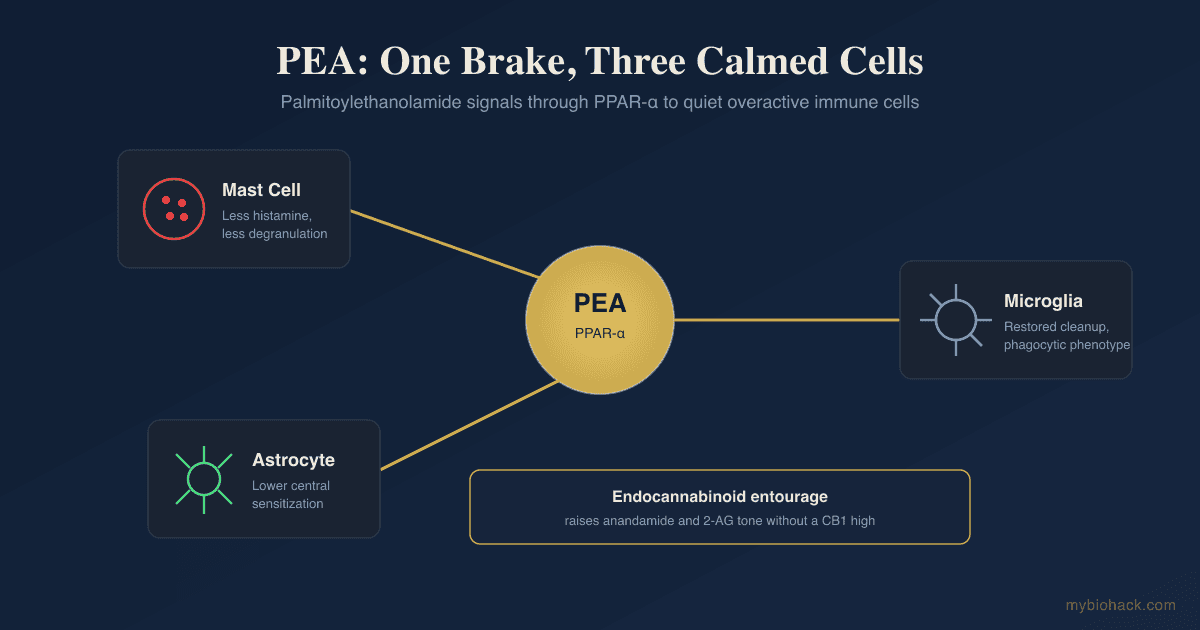
Palmitoylethanolamide is worth adding because it works on the glial and mast cell side simultaneously, and the PEA plus luteolin combination is the formulation I reach for when there is a neuroinflammatory component.
If histamine really is part of the picture, the DAO enzyme and the histamine intolerance post are the right starting points, and cyproheptadine blocks both histamine and serotonin, which can catch itch that pure H1 blockers miss.
4. Shift the opioid balance
Low dose naltrexone transiently blocks the pro-itch mu receptor and is used off-label for refractory itch, with the caveat that the trial evidence is heterogeneous. R
On the kappa side, difelikefalin is the proof of concept, and it is approved specifically for chronic kidney disease-associated pruritus rather than for itch generally. R
5. Calm nerve excitability directly
Gabapentin ranked highest for pruritus relief among systemic drugs in the uremic pruritus network meta-analysis, ahead of every antihistamine tested. R
The endocannabinoid system is the other excitability lever, covered in the posts on CBD and the endocannabinoid system and beta-caryophyllene.
6. Repair the barrier so the trigger load drops
A leaky barrier lets in the allergens and proteases that fire PAR-2 and release TSLP, so barrier repair is upstream of the whole cascade. R
Consistent moisturization with colloidal oatmeal and ceramide cream reduces the trigger load, and topical magnesium is a reasonable adjunct.
7. Interrupt the cytokine line when the itch is inflammatory
If the itch is atopic, the biologics targeting IL-4R-alpha and IL-31RA are the highest-yield interventions available, and they work by cutting the cytokine-to-neuron line rather than by suppressing inflammation broadly. R R
8. Retrain the sensitized circuit
Because chronic itch involves central sensitization and a reinforced motor habit, limbic retraining and habit-reversal work belong in the protocol, not as an afterthought. R
The JD chapter on overcoming trauma's effect on the limbic system covers how I approach this.
What to be skeptical of
Neurokinin-1 antagonists were the great hope for chronic itch, and the Cochrane review of chronic pruritus of unknown origin found only one eligible trial, of serlopitant, with low-certainty evidence of benefit and very low certainty on everything else. R
That review also found an outright absence of trial evidence for emollients, cooling lotions, topical corticosteroids, systemic antihistamines, antidepressants, anticonvulsants, and phototherapy in this population. R
Absence of evidence is not evidence of absence, but it should keep anyone honest about how much of standard itch care is habit.
Testing
Itch is a symptom, so testing is aimed at identifying the driver rather than at confirming the itch.
Generalized itch without a primary rash warrants a systemic workup before anything else. R
Blood And Urine Markers
For the mast cell and allergic contribution, I use the Tryptase (Quest Diagnostics) and the Plasma Histamine (Quest Diagnostics).
For liver and cholestatic causes, I use the Hepatic Function Panel (Quest Diagnostics), with the Alkaline Phosphatase and Total Bilirubin worth reading individually since cholestatic itch tracks with the cholestatic pattern rather than with transaminases.
For kidney causes, I use the Renal Panel (Quest Diagnostics) or the broader Comprehensive Metabolic Panel (Quest Diagnostics).
For hematologic causes including polycythemia vera and lymphoma, I use the CBC with Differential and Platelets (Quest Diagnostics) and the LDH (Quest Diagnostics), since an elevated hematocrit or an unexplained LDH changes the entire workup. R
For iron status, I use the Ferritin (Quest Diagnostics) alongside the Iron and TIBC (Quest Diagnostics), because ferritin alone is an acute phase reactant and misleads in inflammation.
For thyroid causes, I use the Thyroid Panel (Quest Diagnostics) or the TSH (Quest Diagnostics) as a screen. R
For vitamin D, which sits underneath both barrier function and immune tone, I use the Vitamin D 25-Hydroxy (Quest Diagnostics).
Functional Lab Panels
I use the Foundation Zoomer (Vibrant Wellness) as the single-panel systemic screen, since it covers CBC, CMP, liver function, and thyroid in one draw.
When the itch tracks with atopy or food reactions, I use the Food Zoomer (Vibrant Wellness) and the Immune Zoomer (Vibrant Wellness) to map the Th2 and mast cell drivers.
For gut-driven histamine load and barrier permeability, I use the Gut Zoomer (Vibrant Wellness).
When the pattern looks neuropathic rather than inflammatory, I use the Neural Zoomer (Vibrant Wellness) to assess peripheral nerve autoimmunity.
If mold or biotoxin exposure is on the table, I use the Toxin Zoomer (Vibrant Wellness).
Imaging And Provocation
For a localized itch in a dermatomal or nerve-territory distribution, spinal imaging is appropriate, because degenerative changes at the corresponding level are found in the majority of brachioradial pruritus and notalgia paresthetica patients. R
A simple bedside provocation worth doing is the cold test, since itch that responds strongly to cooling is telling you the TRPM8 brake is intact and worth using. R
Mechanisms Of Action
Simple:
- Itch has its own nerves, separate from pain, and most long-term itch runs on a system that antihistamines do not block.
- Scratching feels good because mild pain and cold shut the itch signal off in the spinal cord, but it damages the skin and grows more itch nerves, so the itch comes back worse.
Advanced:
- Labeled-line transmission with population coding. Pruriceptive C-fibers signal through spinal GRPR-expressing interneurons, and ablating GRPR neurons removes itch to every pruritogen while sparing pain. R The strict labeled-line view has been softened, since specific lines cross-talk and the final percept is a population code. R
- Two peripheral pruriceptor populations. Histaminergic itch uses mechano-insensitive C-fibers via H1/H4 receptors and TRPV1, while non-histaminergic itch (cowhage, PAR-2, Mrgpr) uses mechano-sensitive C-fibers via TRPA1, with essentially non-overlapping fiber populations in human microneurography. R
- Mrgpr receptor family. MrgprA3 and MrgprC11 transduce chloroquine and BAM8-22 itch in mice, MRGPRX1 and MRGPRX4 are the human counterparts, and MRGPRX2 on mast cells drives IgE-independent pseudo-allergic degranulation. R R
- Peptide relay chain in the dorsal horn. Primary itch neurons release glutamate plus Nppb-derived B-type natriuretic peptide, which activates secondary neurons that release GRP onto GRPR-expressing tertiary neurons, with a parallel somatostatin-positive route. R R
- Loss of spinal inhibition. Bhlhb5-dependent inhibitory interneurons release dynorphin onto the itch circuit, their loss produces pathological scratching without skin disease, and transplanting inhibitory precursors reverses it. R R
- Counter-stimulation gating. Scratching state-dependently inhibits itch-responsive spinothalamic tract neurons, and menthol relief requires the same B5-I inhibitory neurons, which is a shared cellular substrate for scratching, cold, and menthol. R R
- Central sensitization. Sustained pruriceptor input sensitizes dorsal horn neurons, producing alloknesis (touch-evoked itch) and hyperknesis (amplified itch), the itch analogues of allodynia and hyperalgesia. R
- Opioid modulation via receptor cross-talk. The MOR1D splice variant of the mu-opioid receptor heterodimerizes with GRPR and cross-activates it, which is how morphine produces itch through the itch line, while kappa activation suppresses itch. R
- Direct cytokine-to-neuron signaling. IL-31 acts on IL-31RA/OSMR-beta on TRPV1/TRPA1 neurons, IL-4 and IL-13 act on IL-4R-alpha and signal through neuronal JAK1, and TSLP acts through TSLPR and TRPA1, so type 2 immunity speaks directly to the sensory neuron without an intervening cell. R R R
- Autotaxin/LPA axis in cholestasis. Serum autotaxin activity is elevated specifically in cholestatic pruritus and falls with treatment, and its product LPA induces scratching, while bile acids independently activate MRGPRX4 on human DRG neurons. R R
Genetics
FLG
FLG encodes filaggrin, the structural protein that binds keratin filaments and generates natural moisturizing factor in the stratum corneum.
Loss-of-function variants produce a leaky barrier and are the strongest single genetic risk factor for atopic dermatitis with allergic sensitization. R
A leaky barrier predisposes to chronic itch by letting proteases and allergens reach the nerve endings that express PAR-2 and by triggering TSLP release. R
IL31
IL31 encodes the itch cytokine that acts directly on sensory neurons.
A genome-wide association meta-analysis of 4,239 prurigo nodularis cases against 583,544 controls found a genome-wide significant signal at the IL31 locus (odds ratio 1.17), located in a regulatory region active in T cells and keratinocytes. R
The same locus has been associated with psoriasis and atopic dermatitis, which is a clean genetic argument that IL31 is a shared itch gene across otherwise different diseases. R
HRH4
HRH4 encodes the histamine H4 receptor, an itch-relevant histamine receptor distinct from the H1 receptor that classic antihistamines target.
Three single nucleotide polymorphisms in HRH4 were significantly associated with atopic dermatitis in a case-control study of 301 patients and 313 controls, with odds ratios up to 4.40. R
Copy-number variation in HRH4 has separately been associated with atopic dermatitis, which supports a gene-dose effect. R
This partly explains why H1 antihistamines incompletely control even histamine-driven itch.
TRPV1
TRPV1 encodes the channel that converts histaminergic and heat signals into nerve firing, and TRPV1-expressing afferents are required for behavioral responses to multiple pruritogens. R
rs8065080 (Ile585Val) is the common coding variant used in human TRPV1 association studies, and genotype-stratified human exposure work suggests it modulates physiological responsiveness, though those analyses are explicitly exploratory and there is no solid itch-specific outcome data for this variant yet. R
TRPA1
TRPA1 encodes the transduction channel for the non-histaminergic arm.
TRPA1-null mice fail to scratch in response to chloroquine and BAM8-22 while retaining a normal histamine response, which makes TRPA1 the channel that matters most for chronic itch. R
MRGPRX4
MRGPRX4 encodes the human bile acid receptor on sensory neurons.
The human genetic evidence here is early, and it should be described as such.
In a case-control study of 36 children with cholestatic liver disease, every participant carried at least one coding variant in MRGPRX4, and no single variant reached significance for pruritus, though a co-occurring set (Phe8Leu, Asn25Lys, Tyr215Tyr) was less frequent in the itchy patients and a rare Lys11Glu variant appeared only in patients without itch. R
That is a hypothesis-generating result in 36 people, not a genetic risk factor you should act on.
JAK2
JAK2 V617F is the driver mutation in most polycythemia vera and a large fraction of the other myeloproliferative neoplasms.
Aquagenic pruritus in this population is associated with the mutation, and JAK inhibition with ruxolitinib reduces itch intensity, though 61.4% of patients still report persistent symptoms on cytoreductive therapy. R R
More Research
A few threads are worth following beyond the main narrative.
BNP as a clinical biomarker is the most immediately actionable of them, since plasma BNP and N-terminal pro-BNP correlate with itch intensity across itch types and are particularly informative in chronic pruritus of unknown origin, where nothing else is. R
Cowhage remains the essential experimental tool in this field, precisely because it isolates the non-histaminergic system that carries almost all chronic disease itch. R
MRGPRX2 deserves far more clinical attention than it gets, because it means a mast cell reaction to a drug can be entirely IgE-independent and therefore invisible to standard allergy testing. R
Nemolizumab working in uremic pruritus as well as in atopic dermatitis is the strongest single argument that IL-31 is a general itch cytokine rather than an eczema cytokine. R
The opioid balance remains the clearest reminder that itch is heavily modulated centrally, which is why centrally acting treatments and nervous-system work succeed where topicals fail. R
Transplanting inhibitory interneurons to reverse pathological itch in mice is the most interesting unexploited direction in the whole field, since it treats the brake failure rather than the signal. R
For the mast cell side of itch, see the post on the nerve-to-mast-cell loop, and for the glial side, the post on mast cells, glia, and SALI.
For biomarker testing I use the Foundation Zoomer and the Immune Zoomer to screen the systemic and immune drivers of itch.
If you have chronic itch that antihistamines do not touch, reach out for a consultation.
Jacob Gordon
INHC, FMT-C
Integrative Nutrition Health Coach
I cover mold illness, post-viral recovery, methylation, and complex chronic disease, drawing on ten years of clinical research, work inside a functional medicine clinic, and my own recovery from all of it. Every claim here is cited.
Book a ConsultationRelated Protocols & Supplements
Deep-dive chapters and recommended supplements for this topic
Quercetin
500mg 2x/day
Vitamin D3 + K2
5000 IU + 200mcg/day
DAO Enzyme
1 cap before meals