Alopecia Areata And Stress-Driven Hair Loss: How The Hair Follicle Loses Its Immune Privilege
By Jacob Gordon, INHC, FMT-CThis article contains affiliate links. As an Amazon Associate, MyBioHack earns from qualifying purchases at no extra cost to you. We only link products we research and stand behind.
The hair follicle is one of the few places in the body the immune system is told to leave alone, and hair loss happens when that protection collapses.
In this post, we will discuss why the hair follicle is immune-privileged, what maintains that privilege and what collapse looks like, how the interferon-gamma and CD8 T cell axis destroys the follicle, what the JAK inhibitor trials actually show including relapse after stopping, the genetics, how stress fits in through substance P and the follicle's own stress axis, how to tell alopecia areata apart from the other causes of hair loss, and which nutritional and autoimmune drivers are worth chasing.
---
- The Hair Follicle Is Immune-Privileged
- The Hair Cycle And Why Alopecia Areata Targets Anagen
- Alopecia Areata Is An Immune Privilege Collapse
- The IFN-Gamma JAK Loop And What The Trials Actually Show
- The Hair Follicle Has Its Own Stress Axis
- How Stress Causes Hair Loss: Substance P
- The Stress Question, Handled Honestly
- Telling Alopecia Areata Apart From Other Hair Loss
- Comorbid Autoimmunity And What Is Worth Screening
- Nutritional Contributors With Honest Evidence Grading
- The Conventional Treatment Ladder
- The Psychological Burden
- The Brain-Skin And Junction Dysfunction Connection
- What Helps
- Testing
- Mechanisms Of Action
- Genetics
- More Research
The Hair Follicle Is Immune-Privileged
A handful of sites in the body are immune-privileged, meaning the immune system is actively held back from attacking them.
The eye, the brain, the placenta, the testis, and the growing hair follicle are the classic examples.
The hair follicle is the most useful one to study, because unlike the eye or the brain it is abundantly available, easy to biopsy, and can be kept alive in organ culture. R
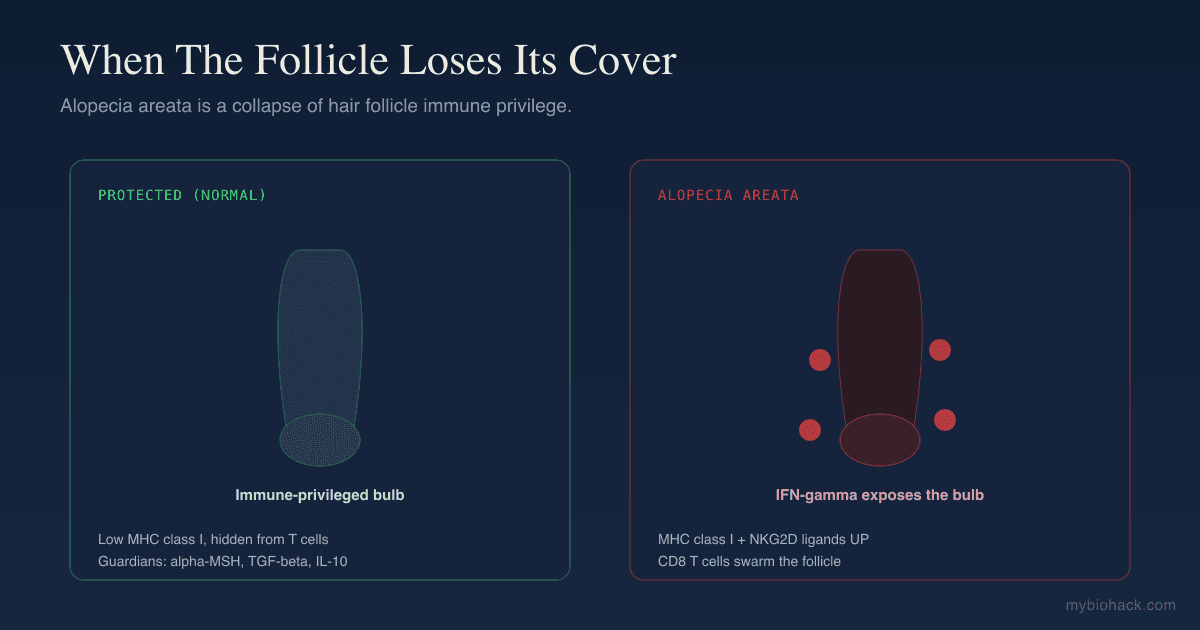
The lower part of the anagen (actively growing) hair follicle expresses little or no major histocompatibility complex (MHC) class I, which normally makes a cell visible to cytotoxic T cells. R
Without MHC class I on display, cytotoxic T cells cannot see the follicle to attack it.
That creates a second problem, because natural killer cells are built to attack exactly the cells that have lost MHC class I.
The follicle solves it by expressing macrophage migration inhibitory factor (MIF), an NK cell inhibitor, strongly in the follicular epithelium, which is why almost no NK cells are found around a healthy anagen follicle. R
On top of hiding, the follicle keeps a set of local immunosuppressive signals running, usually called immune privilege guardians.
The best-characterized guardians are alpha-melanocyte-stimulating hormone, insulin-like growth factor 1 (IGF-1), and transforming growth factor beta 1, all of which are locally produced and all of which can push ectopic MHC class I expression back down in organ-cultured human hair bulbs. R
That is worth reading twice.
Three signals the follicle makes itself will re-hide a follicle that has already been exposed.
The list of guardians has kept growing since then.
Vasoactive intestinal peptide (VIP) protects human follicles from immune privilege collapse, and its receptor-mediated signaling appears defective in alopecia areata. R
Calcitonin gene-related peptide (CGRP) gives relative protection against interferon-gamma-induced collapse. R
Interleukin-15 is the strange one, because it is usually described as a pathogenic cytokine in this disease, yet recombinant IL-15 reduces the danger signal MICA in the hair bulb, increases alpha-MSH, prevents interferon-gamma-induced collapse, and even restores a collapsed privilege. R
Even tumor necrosis factor alpha has been proposed as a conditional guardian, based on the clinical observation that TNF-alpha inhibitors can induce alopecia areata rather than treat it. R
The picture that comes out of all of this is not "the immune system attacks hair."
It is that the follicle runs an active, multi-layered, energetically expensive protection program, and hair loss happens when that program fails.
For the melanocortin half of the guardian system, I covered the biology in depth in the post on the melanocortin system and alpha-MSH, and the clinical side in the alpha-MSH post.
For the TGF-beta half, see TGF-beta1 modulation, because reflexively trying to lower TGF-beta is a mistake I see people make constantly.
The Hair Cycle And Why Alopecia Areata Targets Anagen
Hair follicles do not grow continuously.
Each follicle cycles through anagen (active growth), catagen (regression), and telogen (rest), then sheds and starts over, and the cycling is driven by hair follicle stem cells in the bulge responding to local and systemic signals. R
Immune privilege is not a permanent property of the follicle.
It is specific to the anagen hair bulb, the deep proliferating compartment that only exists during active growth.
This is why alopecia areata is described as a cytotoxic attack against anagen follicles specifically. R
Three consequences follow from that, and they explain most of what patients find confusing about this disease.
First, the attack does not destroy the follicle, it just terminates the growth phase, which is why alopecia areata is non-scarring and why regrowth remains possible even after years. R
Second, because only anagen follicles are targets and follicles cycle asynchronously, the disease shows up as patches rather than uniform thinning.
Third, anything that pushes follicles prematurely out of anagen (which is exactly what the stress mediators below do) changes the size of the vulnerable population.
Oxidative stress inside the follicle is one of the signals that biases this decision, and the follicle's antioxidant machinery is part of what keeps anagen going. R
That matters here because one of the strongest genetic hits in this disease is an antioxidant enzyme expressed in the follicle itself, which I get to in the Genetics section.
Alopecia Areata Is An Immune Privilege Collapse
Alopecia areata affects roughly 2% of people over a lifetime, which makes it one of the most common human autoimmune diseases. R
It presents anywhere from a single coin-sized patch to complete scalp loss (alopecia totalis) to complete scalp and body loss (alopecia universalis). R
Mechanistically, all of it is the same event: the anagen hair bulb loses its immune privilege.
In active disease the follicle suddenly starts expressing MHC class I and class II, adhesion molecules, and stress ligands called NKG2D ligands, making it both visible and attractive to the immune system. R
At the same time the protective guardians drop, and the NK cell containment fails, with prominent aggregations of CD56+/NKG2D+ NK cells appearing around lesional follicles where almost none should be. R
The effector arm is cytotoxic T cells.
CD8+NKG2D+ T cells are both necessary and sufficient to induce the disease in mouse models, and transcriptional profiling of human lesional skin shows the same cytotoxic T cell signature plus a strong interferon-gamma response. R
Under the microscope this is the "swarm of bees," a dense peribulbar lymphocytic infiltrate clustered around the exposed hair bulb. R
The trigger that starts it is interferon-gamma.
Interferon-gamma induces ectopic MHC class I in the normally MHC-class-I-negative hair matrix epithelium, along with beta-2-microglobulin and the antigen processing transporter TAP-2, probably through interferon regulatory factor 1. R
Once class I is on the surface, whatever the follicle is holding becomes presentable.
The candidate autoantigens are follicle-specific structural and pigment proteins, and specific epitopes have now been mapped. R
Mast cells appear to be an accomplice rather than a bystander.
Perifollicular mast cells in human lesions are increased in number, degranulation, and proliferation, and they switch phenotype, losing TGF-beta1 and IL-10 while gaining tryptase and T cell costimulatory ligands, with a measurable increase in direct physical contacts between mast cells and CD8 T cells. R
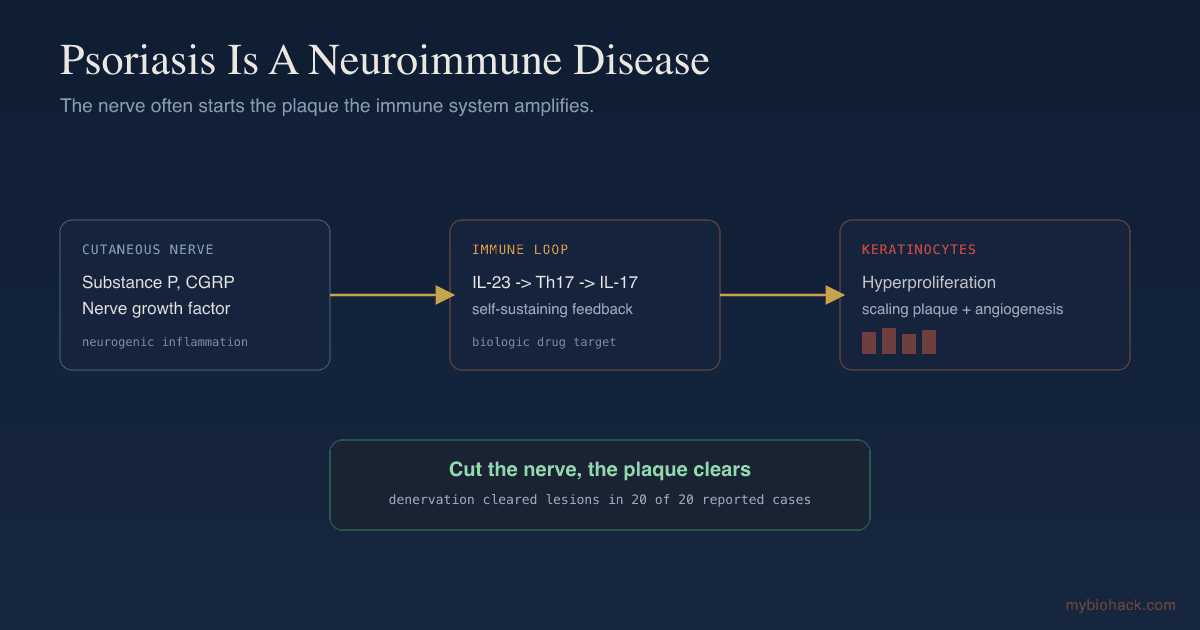
That is the same mast cell and substance P loop that runs through most of the neuroimmune skin conditions, and it is the hinge that connects the stress story to the autoimmune one.
The IFN-Gamma JAK Loop And What The Trials Actually Show
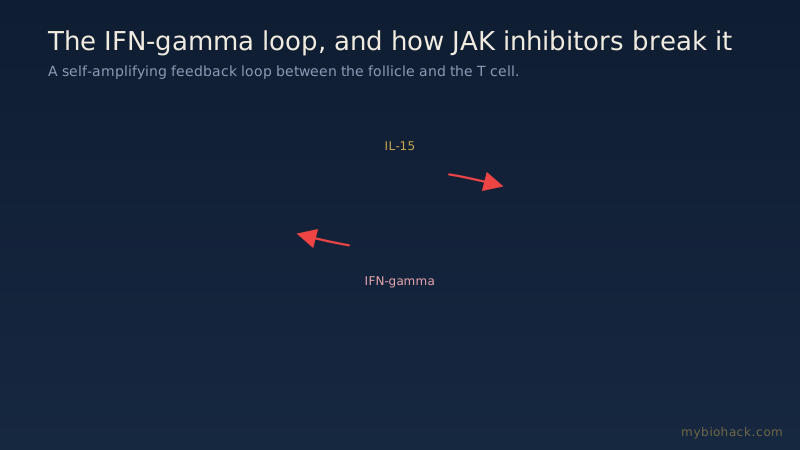
Interferon-gamma and the gamma-chain cytokines (IL-2 and IL-15 in particular) form a self-amplifying loop between the follicle and the infiltrating T cells, and both classes signal through the Janus kinase (JAK) and signal transducer and activator of transcription (STAT) pathway. R
Blocking interferon-gamma, IL-2, or IL-15 receptor beta each prevented disease in mice, and systemic JAK inhibitors eliminated the interferon signature and reversed established disease. R
That single 2014 paper is why three JAK inhibitors are now FDA-approved for severe alopecia areata, and it is one of the cleanest mechanism-to-drug translations in modern dermatology.
Here is what the pivotal trials actually found, because the marketing versions of these numbers are consistently better than the papers.
Baricitinib (JAK1/2) was tested in the BRAVE-AA1 and BRAVE-AA2 phase 3 trials in 1,200 adults with a Severity of Alopecia Tool (SALT) score of 50 or higher, meaning at least half the scalp bare. R
At week 36, a SALT score of 20 or less (roughly 80% scalp coverage) was reached by 38.8% on 4 mg, 22.8% on 2 mg, and 6.2% on placebo in BRAVE-AA1, with 35.9%, 19.4%, and 3.3% in BRAVE-AA2. R
Ritlecitinib (JAK3/TEC) was tested in ALLEGRO, a phase 2b-3 trial in 718 patients aged 12 and up across 18 countries, with the primary endpoint of SALT 20 or less at week 24. R
Three-year data from the ALLEGRO long-term extension now exist, which matters more than the 24-week result for a chronic disease. R
Deuruxolitinib (JAK1/2) hit the same endpoint in 29.6% at 8 mg twice daily and 41.5% at 12 mg twice daily versus 0.8% on placebo in THRIVE-AA1. R
THRIVE-AA2 reproduced it at 33.0% and 38.3% versus 0.8%. R
The class is still expanding, with phase 3 upadacitinib trials in severe alopecia areata reported in 2026. R
Read those numbers honestly.
The best arms get about four in ten patients to near-full scalp coverage at six to nine months, which is genuinely transformative for those patients and does nothing for the other six.
Now the part patients most need to know and are told least often.
These drugs are suppressive, not curative, and stopping them usually means relapse.
In a head-to-head open-label study of ruxolitinib versus tofacitinib in 75 patients with severe disease, both produced near-complete regrowth over six months, and then roughly two thirds of patients relapsed within three months off therapy. R
The THRIVE-AA1 investigators explicitly noted that the impact of treatment cessation was not studied. R
THRIVE-AA2 said the same thing about durability. R
The current review literature frames primary non-response, relapse during treatment, and the total absence of a reliable biomarker for when it is safe to stop as the three unsolved problems of the class. R
So the realistic framing is an indefinite medication, not a course of treatment.
That makes the safety profile matter more than it would for a short course.
A meta-analysis of 74 randomized trials and more than 29,000 patients on JAK-STAT inhibitors for inflammatory skin disease found increased risk of influenza (RR 2.12), bronchitis (RR 2.03), and herpes zoster (RR 1.67) versus placebo. R
The baricitinib trials also flagged acne, elevated creatine kinase, and increased LDL and HDL cholesterol. R
None of that makes JAK inhibition the wrong choice for severe disease.
It makes it a choice, with a real tradeoff, that a person should make with full information rather than with a before-and-after photo.
The Hair Follicle Has Its Own Stress Axis
This is the part that connects hair loss to stress at the molecular level, and it is the finding that changed how I think about the whole topic.
The human hair follicle contains a complete, functioning equivalent of the body's stress axis.
Isolated human hair follicles produce corticotropin-releasing hormone (CRH), express the CRH receptor, make the precursor proopiomelanocortin (POMC) and its cleavage products including ACTH and alpha-MSH, and secrete their own cortisol, an activity that increases with CRH stimulation and is suppressed by glucocorticoid feedback. R
The follicle is running a miniature hypothalamic-pituitary-adrenal axis inside a few millimeters of skin.
That local axis directly controls growth.
CRH inhibits hair shaft elongation and pushes the follicle prematurely into catagen. R
Notice what is happening there.
The same POMC pathway produces both cortisol (which shortens anagen) and alpha-MSH (which is one of the immune privilege guardians), so a follicle running its stress program hard is simultaneously ending its growth phase and burning through the signal that keeps it hidden.
This is the follicle-specific version of the skin's own stress axis, and the CRH signaling side is covered in more depth in the post on CRH resistance.
How Stress Causes Hair Loss: Substance P
When researchers systematically probed which stress mediator mattered most for human hair, substance P held the central position. R
Substance P attacks hair growth through several pathways at once.
It downregulates the growth-promoting NGF receptor TrkA while upregulating nerve growth factor and its catagen-promoting, pro-apoptotic receptor p75NTR. R
It degranulates mast cells in the follicle's connective tissue sheath, producing perifollicular neurogenic inflammation. R
And it enhances immune attack on the follicle, which is the mechanism that links stress shedding to the autoimmune version. R
In mouse models, psychoemotional stress prematurely terminates hair growth through substance P-dependent pathways, with mast cell activation and perifollicular inflammatory cell clusters, and blocking substance P signaling prevents it. R
Nerve growth factor itself is a required participant, and neutralizing NGF blocks the stress-induced catagen. R
So the neurogenic pathway is not a vague "stress is bad for you" claim.
It is a specific, reversible, pharmacologically blockable cascade in animal models, with the human follicle data to match.
The Stress Question, Handled Honestly
Here is where I have to slow down, because the folk model ("I had a shock and my hair fell out") is more confident than the evidence.
The association is real.
Adults with alopecia areata report significantly more lifetime and early childhood traumatic events than controls, with odds ratios around 2.46 and 2.16 respectively. R
But that study was case-control and the authors themselves flagged recall bias, since a person who has lost their hair is being asked to search their past for reasons. R
The most interesting result splits the question in a way that is easy to miss.
In children and adolescents with alopecia areata compared to their own healthy siblings, the patients had experienced more objective stressful life events and had higher 24-hour urinary catecholamine excretion, but there was no difference in self-rated anxiety or depression scores across groups. R
Environmental stress load and measurable sympathetic output tracked with the disease.
Subjective distress did not.
That is a real finding and it should change how the conversation goes, because it means "you are stressed and that caused this" is often the wrong sentence even when a stress mechanism is operating.
There is a big MAYBE in the middle of this topic, and it is about direction and magnitude, not about whether the mechanism exists.
What I am confident in: the follicle has a working stress axis, substance P and CRH shorten anagen, and neurogenic inflammation degrades immune privilege, all demonstrated in human tissue or blocked pharmacologically in animals.
What I am not confident in: that stress is the initiating cause in any individual case, or that fixing stress alone reverses established alopecia areata.
What is clearly wrong is the reverse-causality trap, since losing your hair is itself a severe stressor, which contaminates every retrospective study of stress in this disease.
I still work on the nervous system in every client with this pattern, because the mechanism is real and the intervention is low risk, but I do not sell it as the cure.
Telling Alopecia Areata Apart From Other Hair Loss
Misdiagnosis is common here, and it matters because the treatments have nothing in common.
Alopecia areata is patchy, sharply demarcated, non-scarring loss from autoimmune attack on anagen follicles. R
On trichoscopy it shows exclamation mark hairs, tapered hairs, coudability hairs, pigtail hairs, clustered vellus and regrowing hairs, and white hairs at significantly higher frequency than the mimics. R
Trichoscopic findings also correlate with SALT severity, so the scope is doing more than confirming the diagnosis. R
Telogen effluvium is diffuse shedding across the whole scalp rather than patches, triggered by a systemic insult (illness, surgery, childbirth, crash dieting, severe emotional stress) that pushes many follicles into telogen simultaneously, and it is usually self-limiting once the trigger resolves.
Mechanistically it is the CRH and substance P catagen pathway operating at scale rather than an autoimmune attack. R
Androgenetic alopecia is patterned, gradual miniaturization of follicles driven by androgen signaling (dihydrotestosterone at the follicular androgen receptor) rather than immune attack, with a completely different hormonal architecture. R
Traction alopecia is mechanical, from sustained tension on the follicle through tight braids, weaves, extensions, and chemical relaxation, and it is preventable and reversible early but becomes scarring if the traction continues. R
Trichotillomania is compulsive hair pulling, an impulse control disorder, and it is the one most often mistaken for alopecia areata because both produce localized non-scarring patches.
Trichoscopy separates them: trichotillomania shows broken hairs of differing lengths, trichoptilosis (split ends), flame hairs, and hair powder, while alopecia areata shows the exclamation mark and coudability pattern. R
The distinguishing features have been characterized specifically in pediatric trichotillomania as well. R
Getting this wrong is not a minor error.
Putting a person with trichotillomania on an immunosuppressant, or a person with alopecia areata on minoxidil alone, wastes months.
I wrote separately about the mechanical and circulatory side of the scalp in the post on scalp tension, pulling, and infrared, which is relevant to the traction pattern.
Comorbid Autoimmunity And What Is Worth Screening
Alopecia areata clusters with atopic, autoimmune, and psychiatric conditions. R
The genetic overlap explains most of it, since the risk loci are shared with rheumatoid arthritis, type 1 diabetes, and celiac disease. R
Thyroid autoimmunity is the association people ask about most, and it is where the screening question gets interesting.
Thyroid abnormalities are measurably more common in children and adolescents with alopecia areata than in the general pediatric population. R
But a 298-patient retrospective review specifically designed to build screening guidelines concluded that indiscriminate thyroid testing in every child with alopecia areata produces mostly clinically irrelevant findings and unnecessary cost. R
That is a useful piece of honesty in a field that tends toward "test everything."
My practical position: screen thyroid when there is a personal or family history of thyroid disease, when the alopecia is extensive (totalis, universalis, ophiasis), when there is Down syndrome, or when there are actual thyroid symptoms, and do not reflexively repeat it annually in a child with a single stable patch and no other findings.
If thyroid autoimmunity is present, that is its own project, and I covered it in the Hashimoto's thyroiditis root cause post.
Vitiligo is the other one worth naming, because it is the closest mechanistic cousin.
Both are diseases of an immune-privileged or melanocortin-protected cell population losing its protection and being attacked, which I covered in the vitiligo post.
Celiac disease is worth screening when there are gastrointestinal symptoms, iron deficiency that will not correct, or a family history, both because of the shared genetic architecture and because untreated celiac produces the malabsorption that drives the nutritional contributors below. R
The atopic overlap (eczema, asthma, allergic rhinitis) is real and is associated with earlier onset and worse prognosis. R
If that is the picture, the eczema and atopic dermatitis post covers the shared neuroimmune terrain, and the autoimmune protocol diet post covers the dietary end.
Nutritional Contributors With Honest Evidence Grading
This section is where most hair loss content goes wrong, so I am grading each one.
Iron and ferritin: good evidence, and the threshold is higher than most labs use.
A meta-analysis of 36 studies and 10,029 women found that women with non-scarring alopecia had ferritin values 18.51 ng/dL lower than controls, and that 21% of them had ferritin at or below 10 to 15 ng/dL. R
The authors concluded that women with hair loss can benefit from higher ferritin levels than the standard "not anemic" cutoff. R
This is the single highest-yield reversible driver in the whole list, and the standard lab reference range will call a ferritin of 15 normal.
Do not supplement iron without measuring it, because iron overload is its own disease, which I covered in the ferritin and hemochromatosis post.
Vitamin D: consistent association, weak intervention data.
A 2025 meta-analysis of 34 papers and 4,931 participants across 16 countries found significantly lower serum vitamin D in alopecia areata patients, with vitamin D deficiency associated with an odds ratio of 2.48 for the disease. R
Case-control data continues to reproduce the deficiency finding. R
What does not exist is a convincing randomized trial showing that supplementing vitamin D regrows hair, so treat this as correcting a deficiency that is probably contributing rather than as a treatment.
Cofactors matter for conversion, which I covered in the vitamin D conversion cofactors post.
Zinc: moderate evidence.
The same 2025 meta-analysis found significantly lower serum zinc in patients than controls, with no significant difference in copper. R
An earlier 2017 meta-analysis of trace elements reached a comparable conclusion. R
A broader 2025 systematic review across immune-mediated skin diseases supports the trace element association generally. R
Zinc has to be balanced against copper, which is the point of the zinc, copper, and ceruloplasmin post.
Selenium: weak, and the therapeutic window is narrow.
Trace element reviews include selenium in the general association with skin and hair health, but the alopecia areata-specific data is thin. R
Selenium toxicity causes hair loss, so this is one where more is actively worse, and I only use it when there is thyroid autoimmunity in the picture, where the evidence is much better, as covered in the selenium and thyroid post.
Biotin: almost always irrelevant, and it wrecks your labs.
A systematic review found 18 reported cases of biotin benefiting hair or nail growth, and in every single one the patient had an underlying pathology causing biotin deficiency, with no evidence supporting supplementation in people who are not deficient. R
Broader reviews of vitamins and minerals in hair loss reach the same conclusion. R
The active harm is diagnostic.
High-dose biotin interferes with any immunoassay built on biotinylated antibodies, producing falsely high free T3 and free T4 (competitive format) and falsely low TSH (sandwich format), which reads exactly like hyperthyroidism and has caused real diagnostic errors. R
So the supplement most marketed for hair does nothing for hair and can fabricate a thyroid diagnosis in the one condition you actually want to screen for here.
Stop biotin at least 72 hours before any blood draw.
The Conventional Treatment Ladder
For limited patchy disease, intralesional corticosteroids (usually triamcinolone acetonide) are first line, injected directly into the patch. R
Topical corticosteroids are used where injection is impractical, in children, and on the face.
For extensive disease that has not responded, topical immunotherapy deliberately induces a mild allergic contact dermatitis on the scalp with diphenylcyclopropenone (DPCP) or squaric acid dibutyl ester (SADBE), which appears to divert the immune attack away from the follicle. R
In a network meta-analysis of severe disease, DPCP ranked second for efficacy behind oral dexamethasone and ahead of both ritlecitinib and baricitinib, but it ranked last for safety, well behind both JAK inhibitors. R
Response to topical immunotherapy varies substantially with baseline severity and disease duration, which is worth knowing before committing to months of weekly applications. R
Minoxidil belongs on this list as an adjunct only.
It is a hair cycle drug, not an immune drug, so it does nothing about the attack, and it is used alongside an immunomodulating treatment rather than instead of one.
JAK inhibitors are the option for severe disease, with the efficacy, relapse, and safety data laid out above. R
Systemic corticosteroids work but are not a long-term answer, and the network meta-analysis that put oral dexamethasone at the top for efficacy also put it near the bottom for safety. R
There is early work on combination and sequential strategies, including tofacitinib followed by low-dose IL-2 to expand regulatory T cells, aimed specifically at the relapse problem. R
That is proof-of-concept scale, not practice-changing, but it is the right target.
The Psychological Burden
This is the most under-treated part of the disease, and I want to be specific rather than sympathetic.
Alopecia areata carries a greater mental burden than physical burden. R
A population-based study found significant associations between alopecia areata and anxiety, depression, schizophrenia, and bipolar disorder. R
The UK Alopecia + Me study of 596 patients found high levels of anxiety, depression, stigma, and impaired quality of life, and the key finding was that illness perceptions and stigma explained more of the psychological burden than self-reported disease severity did. R
Perceived stigma is measurable and substantial in US patients as well. R
Read that carefully, because it inverts the usual assumption.
How much hair a person has lost predicts their distress less well than what they believe about the condition and how stigmatized they feel.
That is a treatable target, and it is not treated by a JAK inhibitor.
It also loops back to the mechanism, because the distress is a genuine stressor feeding the same substance P and CRH pathways that shorten anagen. R
The Brain-Skin And Junction Dysfunction Connection
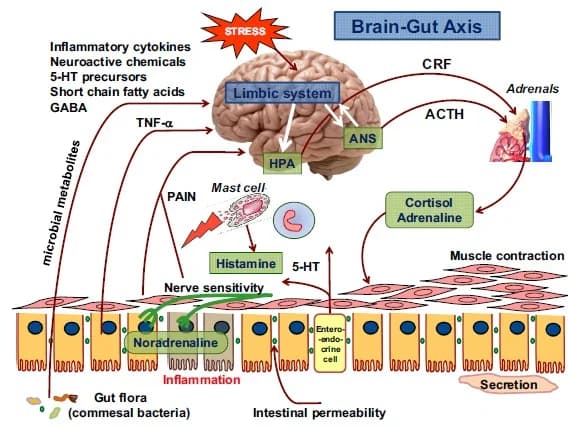
Hair loss is a clean example of the brain-skin axis in action.
A stressed nervous system releases substance P and CRH into the follicle. R
Those signals degranulate mast cells and drive perifollicular neurogenic inflammation, the same loop that runs through psoriasis and eczema. R
Those inflamed mast cells then switch out of their immunosuppressive phenotype, dropping TGF-beta1 and IL-10 precisely where the follicle needs them. R
And the guardians that keep the follicle hidden (alpha-MSH, IGF-1, TGF-beta1) are the same anti-inflammatory melanocortin and regulatory signals that get depleted by chronic systemic inflammation elsewhere. R
Jacob's hypothesis, consistent with how he frames autoimmunity throughout the Junction Dysfunction framework, is that the immune system here is responding to a tissue that has been forced to expose itself, rather than attacking healthy tissue at random.
The upstream question is always what depleted the guardians and what raised the interferon tone in the first place.
I am not claiming that framing is proven, and the published mechanism stops at "immune privilege collapsed."
But it is the question that changes what you do, because it moves the target from the T cell to the conditions that made the follicle visible.
What Helps
Alopecia areata is an autoimmune disease, so set expectations realistically.
The proven medical option for severe disease is JAK inhibition, and everything below addresses upstream drivers rather than replacing treatment.
1. Treat the nervous system as a mechanism, not a mood
Because the follicle runs on substance P and CRH, calming the nervous system is mechanistically central rather than a soft add-on. R
This is the subject of the JD chapter on overcoming trauma's effect on the limbic system, plus the stress and skin immune function post and tension and trauma releasing exercises.
Given the Alopecia + Me finding that illness perception and stigma drive burden more than severity does, addressing how a person is thinking about the condition is itself a legitimate intervention. R
2. Calm perifollicular mast cells and neurogenic inflammation
Perifollicular mast cells are increased, degranulating, and physically interacting with the CD8 T cells doing the damage, which makes them a rational target. R
Quercetin blocks human mast cell cytokine release more effectively than cromolyn and works in human contact dermatitis, and I covered its mechanisms in the quercetin and mast cells post. R
Luteolin is the other flavonoid I use for this, discussed in the PEA and luteolin post.
Low dose naltrexone is used off-label across immune-mediated conditions for its immunomodulating effect, and the evidence base is preliminary rather than definitive. R
3. Correct the nutrients that actually have data
Measure first, then correct, in this order of yield.
Ferritin is the highest-yield target, and the goal is well above the bottom of the lab range rather than merely non-anemic. R
Iron bisglycinate is the form I use when ferritin is genuinely low, and only then.
Vitamin D3 corrects a deficiency that is associated with roughly 2.5-fold higher odds of the disease, though supplementation is not proven to regrow hair. R
Zinc picolinate addresses the consistently low serum zinc, balanced against copper. R
Skip biotin, and stop it before labs. R
4. Support the guardians rather than only suppressing the attack
Alpha-MSH, IGF-1, and TGF-beta1 can each re-suppress ectopic MHC class I in human hair bulbs, which makes restoring them a distinct therapeutic concept from immunosuppression. R
There is no approved drug that does this, so in practice it means reducing the systemic inflammatory load that depletes them, covered in the melanocortin system and NRF2 posts.
Antioxidant capacity in the follicle is part of the same picture, given that oxidative stress biases the anagen-to-catagen decision, which is where glutathione status is relevant. R
5. Screen the comorbidities that change management
Thyroid autoimmunity, celiac disease, and vitiligo are the three worth actively looking for, guided by symptoms and family history rather than reflex. R
The gut-skin axis and haptens and chemical sensitivity posts cover the two upstream drivers I chase most often in this population.
6. Discuss medical options honestly for severe disease
For extensive or rapidly progressing disease, JAK inhibitors are the evidence-based option, with roughly four in ten reaching near-full coverage, an ongoing infection risk, and a high probability of relapse if stopped. R R
Testing
Testing here is aimed at confirming the pattern, finding reversible drivers, and catching the comorbidities that change management.
Blood And Urine Markers
Ferritin is the single highest-yield marker, and I want it well above the 10 to 15 ng/dL range where deficiency clusters in women with non-scarring alopecia. R
25-hydroxyvitamin D, serum zinc, and a CBC round out the reversible drivers.
I use the Nutrient Zoomer (Vibrant Wellness) for vitamin D, zinc, copper, and iron status in one panel, or individual Vitamin D 25-OH and Zinc (Quest Diagnostics) when someone only needs the two.
For the blood count and metabolic baseline I use the CBC with Differential and the Comprehensive Metabolic Panel (Quest Diagnostics).
Stop biotin at least 72 hours before any of these, because it distorts biotinylated immunoassays in both directions. R
Thyroid
Screen thyroid when there is personal or family thyroid history, extensive disease, or actual symptoms, rather than in every patient. R
I use the Thyroid Panel (Quest Diagnostics) for TSH, T3, and T4, and the Foundation Zoomer (Vibrant Wellness) when I want thyroid, CBC, and metabolic markers together.
Antibodies matter more than TSH here, since thyroid peroxidase and thyroglobulin antibodies are what mark the autoimmune overlap. R
Functional Lab Panels
For the autoimmune picture I use the Immune Zoomer (Vibrant Wellness), which covers systemic autoantibodies and mast cell markers, relevant given the perifollicular mast cell involvement. R
For the cortisol rhythm that drives the follicular stress axis I use the Hormone Zoomer (Vibrant Wellness) or the DUTCH Complete (Precision Analytical). R
When malabsorption is suspected as the reason iron will not correct, I use the Gut Zoomer (Vibrant Wellness) or the GI-MAP (Diagnostic Solutions).
Dermatologic Assessment
Trichoscopy is the non-invasive test that separates alopecia areata from trichotillomania and the other mimics, and it also tracks with severity. R R
This is a dermatology office procedure, not a mail-in kit, and it is worth doing before committing to any treatment path.
Mechanisms Of Action
Simple:
- Your hair follicles are normally hidden from your immune system, and hair loss happens when stress and inflammation strip away that protection so the immune system can attack.
- Stress makes the follicle release substance P, which shuts down hair growth and inflames the area, which is why a big stressor often comes before hair loss.
- The new JAK inhibitor drugs work by blocking the immune signal doing the damage, but the attack usually comes back when you stop taking them.
Advanced:
- Immune privilege and its collapse. The anagen hair bulb suppresses MHC class I and maintains local guardians; interferon-gamma induces ectopic MHC class I along with beta-2-microglobulin and TAP-2, likely via interferon regulatory factor 1, and alpha-MSH, IGF-1, and TGF-beta1 each reverse that induction in organ culture. R
- NK cell containment. MIF expressed by the follicular epithelium suppresses NK cells that would otherwise attack an MHC-class-I-low target, and this containment fails in lesional skin, with CD56+/NKG2D+ aggregates and increased MICA immunoreactivity. R
- The cytotoxic effector arm. CD8+NKG2D+ T cells are necessary and sufficient to induce disease in mice, with human lesional transcriptomes showing cytotoxic infiltration, an interferon-gamma response, and upregulated gamma-chain cytokines that sustain those effectors. R
- The IL-15/IFN-gamma/JAK-STAT loop. Blocking interferon-gamma, IL-2, or IL-15 receptor beta each prevents disease, and JAK inhibition downstream of both receptor families eliminates the interferon signature and reverses established disease. R
- The IL-15 paradox. Recombinant IL-15 reduces hair bulb MICA, raises alpha-MSH, prevents interferon-gamma-induced privilege collapse, restores a collapsed privilege through IL-15Ralpha-dependent signaling, and protects immunoinhibitory iNKT10 cells from interferon-gamma-induced apoptosis, so the cytokine is guardian and pathogen depending on context. R
- Follicular HPA axis. Human hair follicles express CRH and its receptor, synthesize POMC and its cleavage products, and secrete cortisol under CRH stimulation with intact glucocorticoid feedback, while CRH itself inhibits hair shaft elongation and induces premature catagen. R
- Substance P-driven catagen. Substance P downregulates pro-growth TrkA, upregulates NGF and pro-apoptotic p75NTR, degranulates perifollicular mast cells, and enhances immune attack on the follicle, terminating anagen through four parallel pathways. R
- Mast cell phenotype switching. Perifollicular mast cells in lesional skin increase in number, degranulation, and proliferation while losing TGF-beta1, IL-10, and PD-L1 and gaining tryptase, OX40L, CD30L, 4-1BBL, and ICAM-1, with increased direct mast cell to CD8 T cell contacts. R
- Neurotrophin dependence of stress-induced catagen. Stress-induced termination of murine hair growth requires nerve growth factor, and neutralizing NGF blocks the neurogenic inflammation and the premature catagen. R
Genetics
Alopecia areata is strongly heritable, and the original genome-wide association study identified 139 significant SNPs across regions covering both innate and adaptive immunity. R
HLA Region
The human leukocyte antigen (HLA) region is the strongest genetic signal, which fits an MHC-restricted T cell attack on the follicle. R
A meta-analysis of 3,253 cases and 7,543 controls fine-mapped four independent effects within the MHC, all implicating HLA-DR as the key aetiologic driver. R
ULBP3 And ULBP6
The ULBP cluster on chromosome 6q25.1 encodes activating ligands for the NKG2D receptor, and this region carried a strong association that had not previously been implicated in any autoimmune disease. R
These are the stress ligands upregulated on the follicle during privilege collapse that flag it for NKG2D-positive cytotoxic cells, which is why the genetics and the mechanism point at the same molecule. R
CTLA4, IL2/IL21, And IL2RA
These regulatory T cell genes control the threshold for T cell activation and the maintenance of tolerance, and all three carried significant association signals. R
The same paper implicated IKZF4 (Eos), another regulatory T cell gene, and these loci are shared with type 1 diabetes and rheumatoid arthritis. R
PRDX5 (peroxiredoxin 5)
PRDX5 encodes an antioxidant enzyme expressed in the hair follicle itself rather than in immune cells, and it was one of two follicle-expressed genes flagged in the original GWAS alongside STX17. R
It has also been identified as an alopecia areata autoantigen, which links oxidative stress inside the follicle directly to the autoimmune target. R
GARP (LRRC32) And ACOXL/BCL2L11
The 2015 meta-analysis added two novel loci, GARP (LRRC32) at 11q13.5 and ACOXL/BCL2L11 (BIM) at 2q13, plus a nominally significant SH2B3/ATXN2 region at 12q24.12. R
GARP is the cell surface docking receptor for latent TGF-beta on regulatory T cells, so this hit lands directly on the guardian pathway, and BCL2L11 sits in the apoptosis machinery. R
Functional annotation of the GWAS signals confirms expression of the candidate genes in both relevant immune cells and the hair follicle. R
MIF rs755622
MIF is the NK cell inhibitor that keeps NK cells away from the MHC-class-I-low follicle, and the rs755622 promoter polymorphism has been studied for a possible protective role in alopecia areata. R
This is a smaller, single-population finding, so grade it as preliminary rather than established. R
More Research
A few additional threads are worth following.
Alopecia areata genetics overlap heavily with rheumatoid arthritis, type 1 diabetes, and celiac disease, which is why it so often appears alongside other autoimmune conditions and why the broader immune environment matters more than the scalp does. R
Guardian restoration is the most interesting underused therapeutic concept in the field, since alpha-MSH, IGF-1, and TGF-beta1 all re-suppress ectopic MHC class I in human hair bulbs, meaning it is possible in principle to re-hide the follicle rather than only suppress the immune system. R
IL-15 is the cytokine to watch, because the same molecule that sustains the pathogenic CD8 T cells also functions as a privilege guardian at the follicle, and that contradiction is not yet resolved. R
Relapse after discontinuation is the unsolved clinical problem, with roughly two thirds relapsing within three months in the head-to-head JAK study and no validated biomarker to tell anyone when it is safe to stop. R R
Sequential immunotherapy combining a JAK inhibitor with low-dose IL-2 to expand regulatory T cells is an early attempt to solve exactly that problem, at proof-of-concept scale. R
Stress-induced hair loss in animal models is fully reversible by blocking substance P signaling, which underscores how central the neurogenic pathway is and why nervous system work belongs in any hair loss protocol even though it is not a standalone treatment. R
The stress causality question stays open, and the cleanest data (objective stressful life events and elevated urinary catecholamines without elevated subjective anxiety or depression) suggests physiological stress load rather than perceived distress is the relevant variable. R
Stigma and illness perception predict psychological burden better than disease severity does, which means the psychological side of this condition is a treatable target that most treatment plans ignore entirely. R
For the melanocortin guardians see the post on the melanocortin system, for the broader framework see the brain-skin axis pillar, and for the thyroid overlap see the Hashimoto's post.
For biomarker testing I use the Nutrient Zoomer and Foundation Zoomer to catch the reversible drivers of hair loss before chasing anything more exotic.
If you are dealing with hair loss and want help finding the upstream drivers, reach out for a consultation.
Jacob Gordon
INHC, FMT-C
Integrative Nutrition Health Coach
I cover mold illness, post-viral recovery, methylation, and complex chronic disease, drawing on ten years of clinical research, work inside a functional medicine clinic, and my own recovery from all of it. Every claim here is cited.
Book a ConsultationRelated Protocols & Supplements
Deep-dive chapters and recommended supplements for this topic
Quercetin
500mg 2x/day
Vitamin D3 + K2
5000 IU + 200mcg/day
DAO Enzyme
1 cap before meals