Gut Serotonin And Mast Cell Activation: The Upstream Driver Most MCAS Protocols Miss
By Jacob Gordon, INHC, FMT-CThis article contains affiliate links. As an Amazon Associate, MyBioHack earns from qualifying purchases at no extra cost to you. We only link products we research and stand behind.
Gut serotonin is one of the most underappreciated upstream drivers of mast cell activation, and most MCAS workups never look for it.
In this post, we will discuss how enterochromaffin cells make serotonin, how short-chain fatty acids and Bifidobacterium normally restrain that output, how unrestrained gut serotonin activates mast cells through 5-HT2A and 5-HT2B receptors, why H1 antihistamines and Xolair often fail this phenotype, and how to address it upstream.
Basics Of Gut Serotonin
Roughly 90% of the body's serotonin (5-HT) is produced in the gut, not the brain. R
The cells that make it are enterochromaffin (EC) cells, a class of neuroendocrine cells embedded in the intestinal epithelium. R
EC cells synthesize 5-HT from tryptophan using tryptophan hydroxylase 1 (TPH1), the gut-specific isoform.
Gut 5-HT is stored in dense-core vesicles and released into the lamina propria in response to luminal stimuli including nutrients, bile acids, mechanical pressure, and microbial metabolites.
Once released, gut 5-HT acts on enteric neurons, immune cells, and mast cells, and a fraction enters portal circulation before being cleared by the liver and lungs.
Fecal 5-HT measurement reflects EC-cell output that escaped reuptake by SERT on enterocytes, and is a reasonable proxy for elevated luminal-side 5-HT signaling.
What Causes Elevated Gut Serotonin
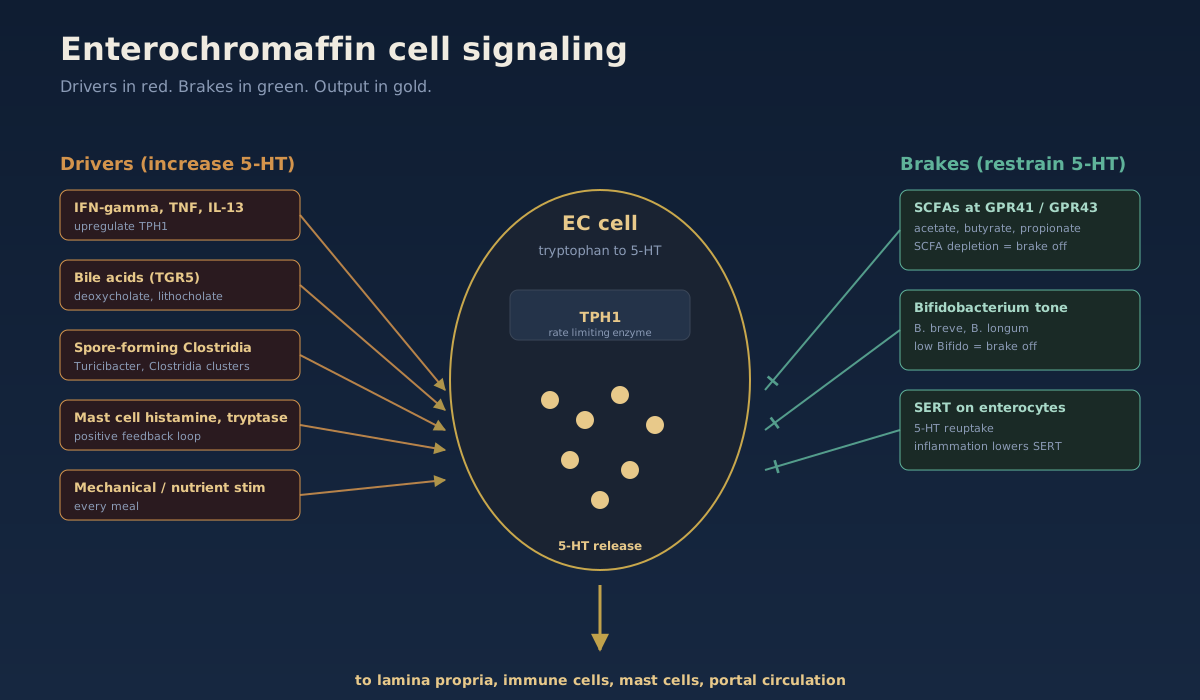
The main drivers of EC-cell overproduction include: (not exclusive list)
- Bile acid dysregulation (deconjugated and secondary bile acids activate TGR5 on EC cells, increasing 5-HT release) R
- Dysbiosis with loss of Bifidobacterium (loss of EC-cell tone signaling, particularly B. breve and B. longum) R
- High-tryptophan substrate availability with low kynurenine shunting (more substrate routed into TPH1)
- Inflammation of the mucosa (IFN-gamma, IL-13, TNF-alpha all upregulate TPH1 expression in EC cells) R
- Loss of SERT function on enterocytes (5-HT not reuptaken, accumulates in tissue) R
- Mast cell activation in the lamina propria (mast cells release histamine and tryptase that further stimulate EC cells, creating a positive loop)
- SCFA depletion (loss of the GPR41/GPR43 brake on EC-cell release) R
- Spore-forming bacterial overgrowth (specific Clostridia and Turicibacter species directly drive TPH1 expression) R
How Enterochromaffin Cells Create The Problem
EC cells are the largest endocrine cell population in the body, and they sit directly between the lumen and the lamina propria.
Their apical surface is studded with chemoreceptors and mechanoreceptors that sense the contents of the gut.
Their basolateral surface releases 5-HT in response to those signals, which then acts paracrine-style on enteric neurons, immune cells, and mast cells within micrometers.
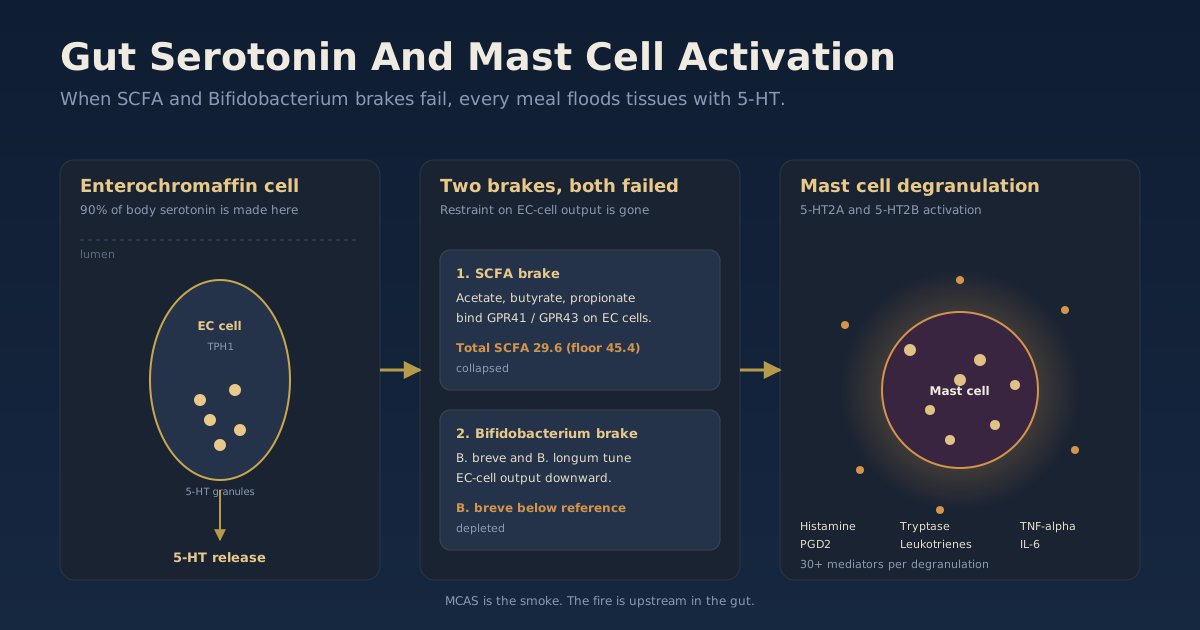
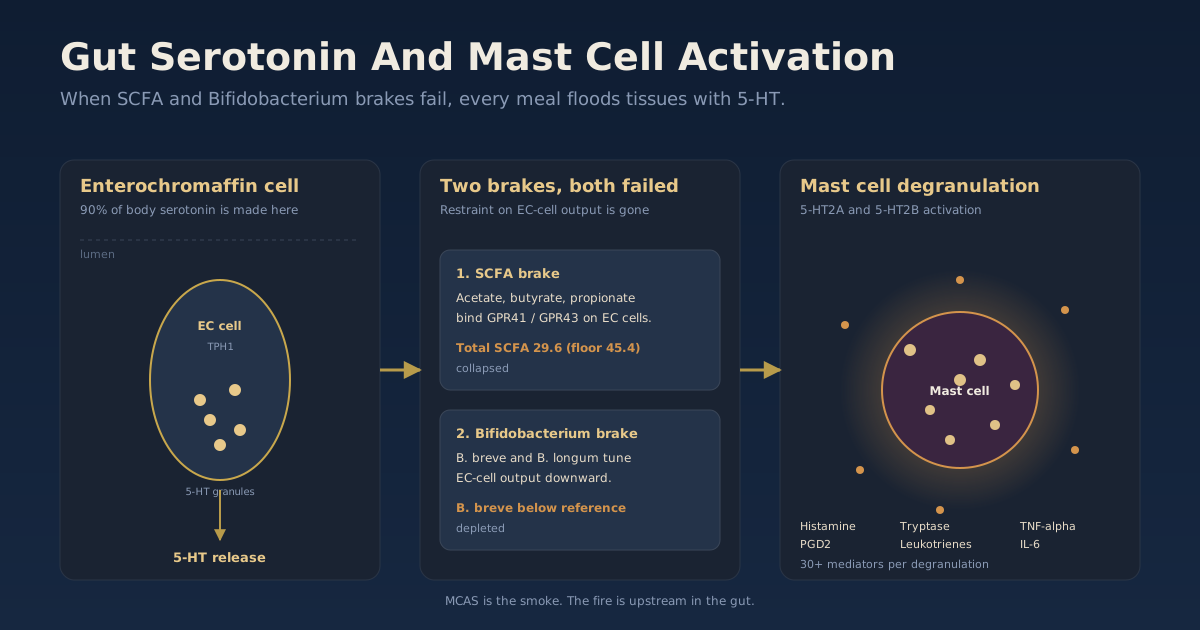
Under healthy conditions, two brakes restrain EC-cell output.
Brake one: short-chain fatty acids.
SCFAs (acetate, propionate, butyrate) bind GPR41 (FFAR3) and GPR43 (FFAR2) on EC cells, modulating release in a context-dependent way that, on net, prevents the runaway release seen in dysbiotic guts. R
Brake two: specific commensals.
Several Bifidobacterium species, B. breve in particular, tune EC-cell output downward through metabolite production and immune crosstalk. R
When both brakes fail, every meal becomes a serotonin surge.
A fecal 5-HT of 306 mcg/g against a reference ceiling of 127.9 mcg/g with simultaneously collapsed total SCFAs and low B. breve is the exact biochemical signature of a gut that has lost both brakes at once.
Gut Serotonin And Mast Cell Activation
This is the part most MCAS protocols miss.
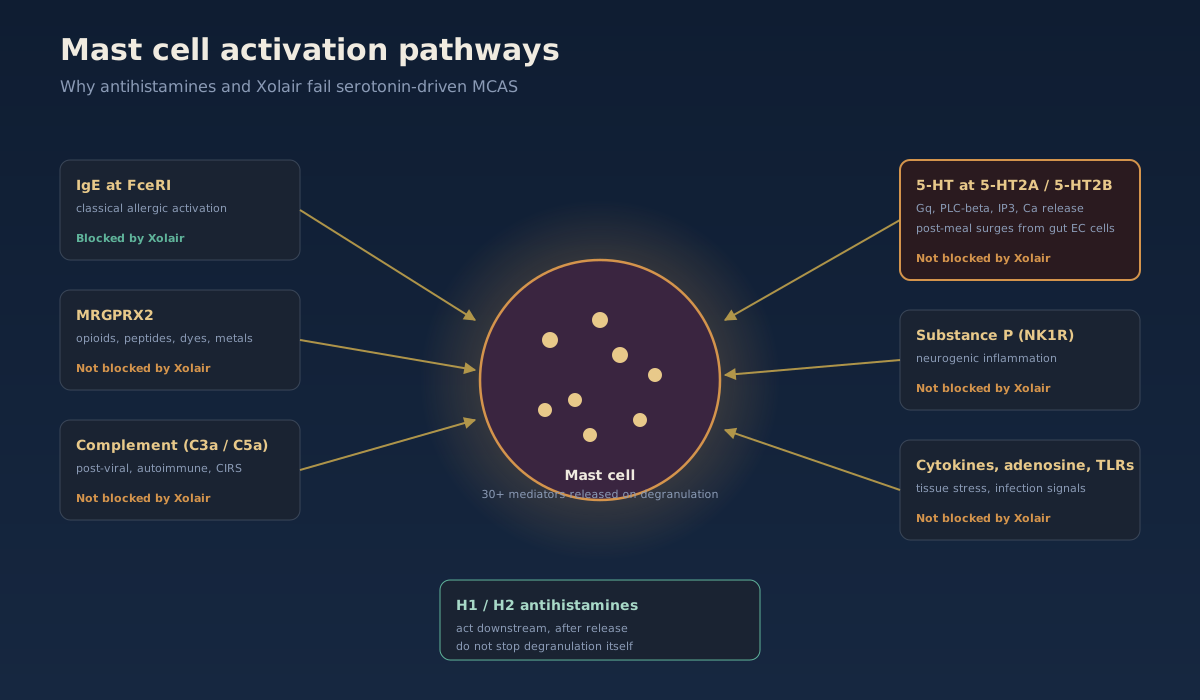
Mast cells express 5-HT2A and 5-HT2B receptors, and serotonin binding at these receptors directly triggers degranulation in connective-tissue and mucosal mast cells. R R
Mast cells themselves also synthesize and release 5-HT, which creates an autocrine amplification loop once activation begins. R
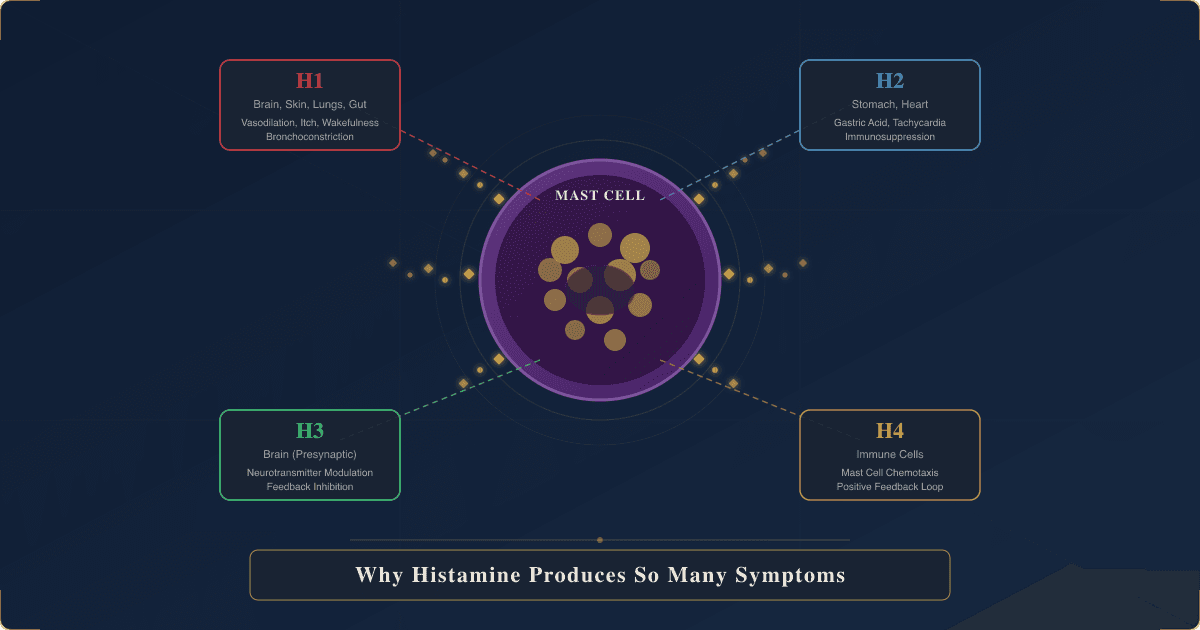
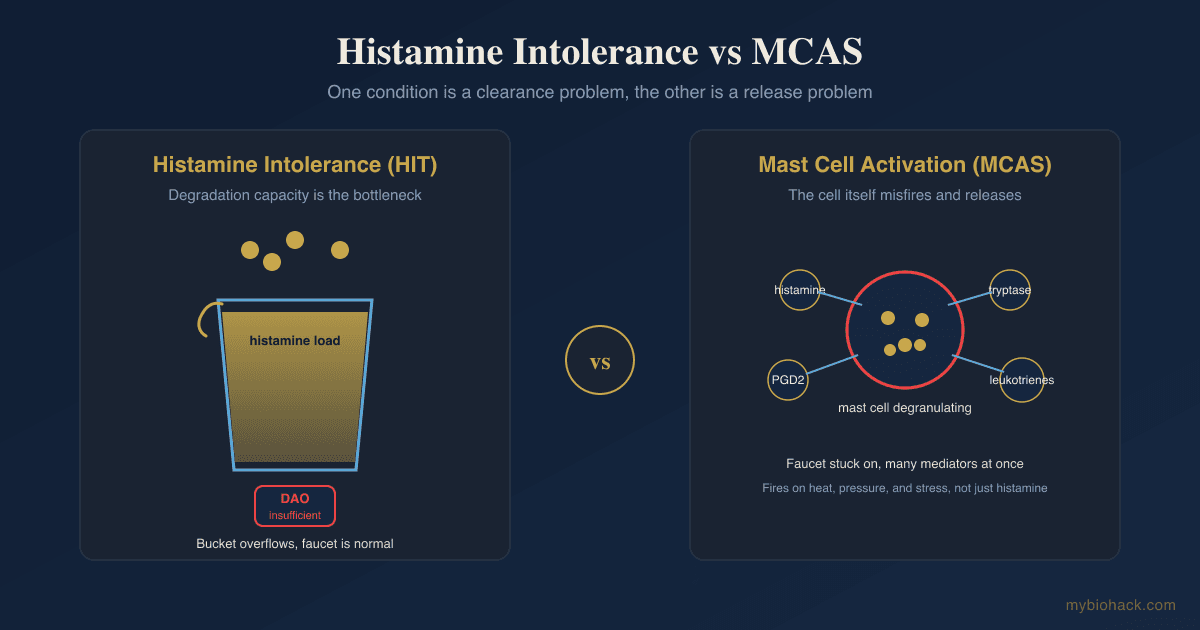
Degranulation releases over 30 mediators including histamine, tryptase, PGD2, leukotrienes (LTC4/D4/E4), heparin, TNF-alpha, IL-6, and IL-13.
The symptoms produced by this cascade are the standard MCAS clinical picture: flushing, hives, urticaria, pruritus, burning skin, food reactivity, brain fog, tachycardia, GI cramping, and diarrhea.
If the upstream signal driving degranulation is gut-derived 5-HT, every meal becomes a flare, and the patient interprets this as "I react to everything I eat" rather than "I have a single upstream trigger firing three times a day."
This phenotype overlaps heavily with mast cell activation, histamine intolerance, and dysbiosis, and it usually sits on a baseline of Junction Dysfunction with epithelial barrier compromise allowing the gut-immune crosstalk to intensify.
Why Antihistamines And Xolair Often Fail
H1 and H2 antihistamines block histamine receptors after histamine has already been released. R
They do nothing to prevent mast cells from degranulating, and they do nothing about the other mediators released alongside histamine.
If 5-HT2A/2B is the activation pathway, blocking H1 reduces one symptom (itch, some flushing) while leaving prostaglandin, leukotriene, tryptase, and cytokine release fully intact.
Omalizumab (Xolair) blocks IgE binding to the FceRI receptor, neutralizing the IgE arm of mast cell activation. R
It works beautifully in IgE-dominant disease such as chronic spontaneous urticaria and severe allergic asthma.
It is the wrong tool for serotonin-driven, MRGPRX2-driven, complement-driven, or substance-P-driven mast cell activation, because none of those pathways route through IgE.
There are case reports and clinical observations of patients with non-IgE-dominant MCAS flaring on omalizumab, likely from compensatory upregulation of the non-IgE activation pathways already carrying the signaling load.
Identifying the activation pathway before selecting the blocker is the entire game.
How To Improve Gut Serotonin Dysregulation
The goal is to restore EC-cell tone by rebuilding the brakes, not to suppress mast cells downstream.
1. Restore SCFA Production
Feed the SCFA-producing bacteria with fermentable fibers tolerated by the patient.
Partially hydrolyzed guar gum (PHGG) is one of the better-tolerated options in mast cell patients because it ferments slowly and does not produce sharp gas spikes.
Resistant starch (cooked-and-cooled potato, green banana flour) selectively feeds butyrate producers including Faecalibacterium prausnitzii and Roseburia.
Acacia fiber is another low-reactivity prebiotic that supports SCFA recovery.
Butyrate supplementation as tributyrin or sodium butyrate raises colonic butyrate concentrations directly while the bacterial population recovers.
2. Restore Bifidobacterium Populations
Bifidobacterium breve and B. longum probiotics restore the EC-cell tuning function lost in dysbiosis.
Human milk oligosaccharides (HMOs), particularly 2'-fucosyllactose (2'-FL), are Bifidobacterium-selective prebiotics that help these probiotics actually colonize rather than pass through.
3. Reduce EC-Cell Stimulation Acutely
Lower the upstream drive while the brakes rebuild.
Cromolyn sodium acts at the mucosal mast cell layer and reduces the mast-cell-to-EC-cell feedback that perpetuates the loop.
Quercetin stabilizes mast cells through PKC and calcium channel modulation, reducing the local cytokine and tryptase that drives TPH1 upregulation on EC cells.
Luteolin similarly suppresses mucosal mast cell activation.
4. Address Upstream Bile Acid And Motility Drivers
Deconjugated bile acids drive TGR5 activation on EC cells.
TUDCA supports a healthier bile acid pool composition.
Motility support to clear stasis, including ginger, reduces overgrowth of the TPH1-driving spore formers.
5. Targeted Receptor Considerations
In some patients, transient pharmacologic blockade of 5-HT3 (ondansetron) reduces GI symptoms and post-meal flare intensity while the upstream work proceeds.
5-HT2B antagonists exist but have a narrow therapeutic window and are not first-line.
What To Stay Away From
5-HTP supplementation in this phenotype is a clear no.
It bypasses tryptophan hydroxylase regulation and dumps substrate directly into the serotonin synthesis pathway, which raises peripheral 5-HT in tissues that already have too much. R
High-dose tryptophan monotherapy without addressing the upstream EC-cell environment can worsen the same loop.
SSRIs must be considered carefully in this phenotype, because blocking SERT in the gut can raise lamina-propria 5-HT concentrations further.
Aggressive inulin or FOS in the early phase can flare patients whose Proteobacteria load is high, even though these fibers are technically prebiotic.
Reflexive omalizumab in non-IgE-dominant MCAS without pathway workup.
Mechanisms Of Action
Simple:
- Bacteria in your gut tell your gut cells to make serotonin, and if the wrong bacteria are dominant, those cells make too much.
- The good bacteria and the fibers they ferment normally hold the brake on serotonin release, and if both are gone, every meal floods your tissues with serotonin.
- Serotonin sits on a receptor on mast cells called 5-HT2A and 5-HT2B, and when it binds, mast cells dump histamine and 30 other inflammatory chemicals.
- Antihistamines mop up histamine after it is released, which is downstream of the actual fire.
- Xolair blocks one specific way mast cells get activated (through IgE antibodies), but if the activation is coming from serotonin, Xolair is blocking the wrong door.
Advanced:
- TPH1 upregulation by inflammatory cytokines. IFN-gamma, IL-13, and TNF-alpha all increase TPH1 transcription in EC cells, raising the rate-limiting step of mucosal 5-HT synthesis. R
- GPR41/GPR43 modulation of EC-cell output. SCFA binding at FFAR2 and FFAR3 on EC cells regulates intracellular cAMP and calcium dynamics, restraining 5-HT exocytosis. Loss of SCFA tone unmasks tonic EC-cell hyperresponsiveness. R
- Spore-former driven TPH1 expression. Indigenous spore-forming bacteria from the Clostridia class, including Turicibacter sanguinis, produce metabolites that elevate colonic 5-HT by approximately 60% in germ-free reconstitution experiments. R
- 5-HT2A/5-HT2B-mediated mast cell degranulation. Activation of the Gq-coupled 5-HT2 receptors on mast cells drives PLC-beta, IP3, calcium release from ER stores, and granule exocytosis, independent of FceRI cross-linking. R
- Mast cell autocrine 5-HT release. Human mast cells synthesize 5-HT via TPH1 and release it during degranulation, amplifying the same receptor system that triggered them. R
- Bile acid TGR5 activation of EC cells. Secondary bile acids including deoxycholate activate TGR5 (GPBAR1) on EC cells, stimulating 5-HT release. Bile acid dysregulation from SIBO-pattern dysbiosis and slow motility raises this signal chronically. R
- SERT downregulation under inflammation. Mucosal IFN-gamma and TNF-alpha reduce SERT expression on enterocytes, lowering 5-HT reuptake from the lamina propria and prolonging receptor exposure. R
Genetics
TPH1 polymorphisms influence rate of mucosal 5-HT synthesis and are associated with IBS-D phenotypes and post-infectious functional bowel patterns.
HTR2A and HTR2B SNPs affect mast cell receptor density and downstream signaling sensitivity to 5-HT.
SLC6A4 (SERT) variants, including the 5-HTTLPR short allele, lower SERT activity and raise interstitial 5-HT concentrations.
MAO-A low-activity variants slow systemic clearance once 5-HT crosses into circulation, extending the window of receptor activity at distant tissues.
FFAR2 (GPR43) and FFAR3 (GPR41) SNPs alter sensitivity of the SCFA brake on EC cells.
More Research
The fecal 5-HT assay is not yet part of standard MCAS workups, and that is the central problem in the community.
A patient can present with classic MCAS, fail antihistamines and Xolair, and never have anyone measure the upstream signal driving their mast cells.
For biomarker testing I use the GI-MAP and Gut Zoomer to assess Bifidobacterium, SCFA-producer abundance, and dysbiosis pattern, paired with a fecal short-chain fatty acid panel and a fecal serotonin/5-HIAA measurement.
A reasonable diagnostic pattern for this phenotype is: fecal 5-HT above reference ceiling, total SCFAs below reference floor, low Bifidobacterium breve and B. longum, and a clinical history of antihistamine non-response or paradoxical flare on Xolair.
The 5-HT signaling cascade also intersects with platelet biology: platelets store 5-HT taken up via SERT, and the same gut 5-HT overflow that drives mast cells can elevate platelet 5-HT load and contribute to vascular reactivity and microthrombotic signaling seen in long COVID and vasoadaptive POTS.
In the broader Junction Dysfunction framework, this entire pathway sits downstream of epithelial barrier compromise and upstream of the mast-cell-driven cytokine load that further degrades the endothelial glycocalyx via heparanase and MMPs.
MCAS, in the vast majority of cases, is not a primary mast cell disease.
It is the smoke.
The fire is in the colonocyte bioenergetic environment, the SCFA pool, the Bifidobacterium population, and the EC-cell signaling that those upstream pieces regulate.
Treating mast cells while ignoring that upstream is holding back an ocean with a teaspoon.
Jacob Gordon
INHC, FMT-C
Integrative Nutrition Health Coach
I cover mold illness, post-viral recovery, methylation, and complex chronic disease, drawing on ten years of clinical research, work inside a functional medicine clinic, and my own recovery from all of it. Every claim here is cited.
Book a ConsultationRelated Protocols & Supplements
Deep-dive chapters and recommended supplements for this topic
Quercetin
500mg 2x/day
Vitamin D3 + K2
5000 IU + 200mcg/day
DAO Enzyme
1 cap before meals