PMDD: The Neurobiology Behind Premenstrual Dysphoric Disorder And How To Address It
By Jacob Gordon, INHC, FMT-CThis article contains affiliate links. As an Amazon Associate, MyBioHack earns from qualifying purchases at no extra cost to you. We only link products we research and stand behind.
Premenstrual dysphoric disorder (PMDD) is a severe, cyclic mood disorder that emerges in the luteal phase of the menstrual cycle and remits within days of menstruation, and it is not simply bad PMS.
In this post, we will discuss what PMDD is, how it differs from PMS, the neurobiological mechanisms that drive it (including allopregnanolone, GABA, serotonin, and the HPA axis), the overlooked role of histamine and mast cell activation in amplifying symptoms, what the evidence supports for treatment, and how to test the underlying physiology.
PMDD vs. PMS: The Clinical Distinction
PMS (premenstrual syndrome) is common, affecting an estimated 47.8% of menstruating individuals globally, with symptoms that are real but manageable. R
PMDD is not the severe end of PMS.
It is a distinct, DSM-5-TR recognized depressive disorder with neurobiological features that are categorically different from ordinary luteal phase symptoms. R
PMDD affects approximately 3-8% of menstruating individuals and causes functional impairment in work, relationships, and daily activities that is comparable to major depressive disorder during the symptomatic phase. R
DSM-5-TR criteria require at least five of the following symptoms in most menstrual cycles over the past year, with at least one being a core mood symptom: (not exclusive list)
- Affective lability (sudden tearfulness, sadness, sensitivity to rejection)
- Anxiety or tension, feeling keyed up or on edge
- Bloating, breast tenderness, joint or muscle pain, weight gain
- Decreased interest in usual activities
- Depressed mood or hopelessness
- Difficulty concentrating
- Fatigue or low energy
- Food cravings or appetite changes
- Irritability, anger, or interpersonal conflict disproportionate to usual personality
- Sense of being overwhelmed or out of control
- Sleep disturbances (hypersomnia or insomnia)
The critical diagnostic features are:
- Symptoms emerge in the luteal phase (approximately one to two weeks before menses).
- Symptoms remit within a few days of menstruation.
- Symptoms are absent in the week following menses.
- Symptoms impair functioning (not merely present).
The cyclical on-off pattern is the diagnostic anchor.
A woman who feels depressed continuously, with worsening premenstrually, likely has a primary depressive disorder with premenstrual exacerbation (PME), not PMDD.
The difference matters for treatment.
Importantly: PMDD is not caused by abnormal hormone levels.
Peripheral estrogen and progesterone levels in women with PMDD are not consistently different from controls. R
The problem is in the brain's sensitivity to normal hormonal fluctuations, specifically the CNS response to neuroactive steroid hormones that rise and fall across the cycle. R
The Core Mechanism: Allopregnanolone And GABA Sensitivity
This is the mechanism that best explains PMDD's biology and has the most research support.
Allopregnanolone (ALLO) is a neuroactive steroid (NAS) produced from progesterone in two steps: 5-alpha-reductase converts progesterone to 5-alpha-dihydroprogesterone (5alpha-DHP), and 3-alpha-hydroxysteroid dehydrogenase (3alpha-HSD) converts 5alpha-DHP to ALLO. R
ALLO is a positive allosteric modulator of the GABA-A receptor: it potentiates the effect of GABA, the primary inhibitory neurotransmitter in the CNS, by enhancing chloride ion flux through the channel.
In neurotypical individuals, rising ALLO during the luteal phase acts as a natural anxiolytic and sedating neurosteroid, providing a calming buffer during the hormonally dynamic premenstrual window.
In women with PMDD, the CNS response to ALLO is dysregulated.
Two models compete to explain this, and both are partially true:
Model 1 (ALLO resistance): The GABA-A receptor in PMDD brains has reduced sensitivity to ALLO, meaning rising ALLO fails to provide its normal inhibitory, calming effect. R
Women with PMDD show lower sensitivity to benzodiazepines and pregnanolone (a related neurosteroid), consistent with GABA-A receptor subunit changes (particularly upregulation of the delta subunit) that reflect maladaptive receptor adaptation. R
Model 2 (ALLO withdrawal): ALLO rises in the luteal phase to higher baseline levels in women with PMDD, and the GABA-A receptor adapts to this elevated ALLO by downregulating sensitivity.
When ALLO then drops in the late luteal phase (as progesterone falls toward menstruation), the receptor cannot restore normal GABA tone fast enough.
The result is a gap: falling ALLO meets an unresponsive receptor, and GABAergic inhibition collapses transiently, unleashing hyperexcitability of pyramidal neurons that manifests as anxiety, irritability, and mood instability. R
This model elegantly explains why blocking 5-alpha-reductase (the first enzyme in ALLO synthesis) reduces PMDD symptoms: less ALLO means less receptor adaptation and therefore less catastrophic withdrawal at the end of the cycle. R
It also explains why administering progesterone or ALLO supplementation in the luteal phase often worsens symptoms rather than improving them: it amplifies the ALLO exposure and thus the subsequent withdrawal. R
The key clinical implication: PMDD is not a progesterone deficiency disorder.
It is a disorder of GABA-A receptor sensitivity to the normal fluctuations of a progesterone metabolite.
Serotonin, HPA Axis, And Overlapping Systems
Serotonin
Serotonin dysregulation is the second major mechanism in PMDD, and it is the reason SSRIs are the most evidence-based pharmacological treatment.
Estradiol withdrawal in the late follicular to early luteal transition reduces serotonin synthesis and serotonin transporter expression. R
Women with PMDD show reduced serotonergic tone during the luteal phase compared to controls, contributing to the characteristic mood and cognitive symptoms.
SSRIs are uniquely effective in PMDD compared to other depressive disorders: they work within hours to days rather than weeks, even at low doses, and they are effective when dosed only during the luteal phase. R
This rapid response suggests that at least part of SSRIs' effect in PMDD is through neurosteroidogenic mechanisms (specifically, SSRIs directly increase allopregnanolone synthesis by acting on 5-alpha-reductase and 3-alpha-HSD enzymes) rather than conventional receptor downregulation that takes weeks. R
HPA Axis
Women with PMDD have impaired HPA axis regulation during the luteal phase.
Because ALLO normally dampens CRH (corticotropin-releasing hormone) signaling and reduces the cortisol stress response, deficient ALLO-GABA function in PMDD means the HPA axis is poorly controlled during the premenstrual window. R
The result is increased stress sensitivity: stimuli that would be manageable in the follicular phase become disproportionately distressing in the luteal phase.
This is not a personality trait or a low pain tolerance.
It is a measurable neurophysiological difference in HPA axis reactivity.
Dopamine And Prolactin
Vitex agnus-castus (chasteberry) is one of the most studied botanical interventions for PMDD, and its primary mechanism is dopamine D2 receptor agonism in the anterior pituitary, which inhibits prolactin secretion. R
Elevated prolactin is associated with breast tenderness, mood disturbance, and luteal phase insufficiency that can amplify PMDD symptoms.
Dopaminergic dysfunction is a component of the PMDD neurobiological picture, though less studied than the GABA and serotonin axes.
Histamine And Mast Cell Activation In PMDD
This section deserves careful attention because histamine is a significant but underrecognized driver of PMDD symptoms in a subset of women, and missing it means missing a tractable treatment target.
The estrogen-histamine cycle:
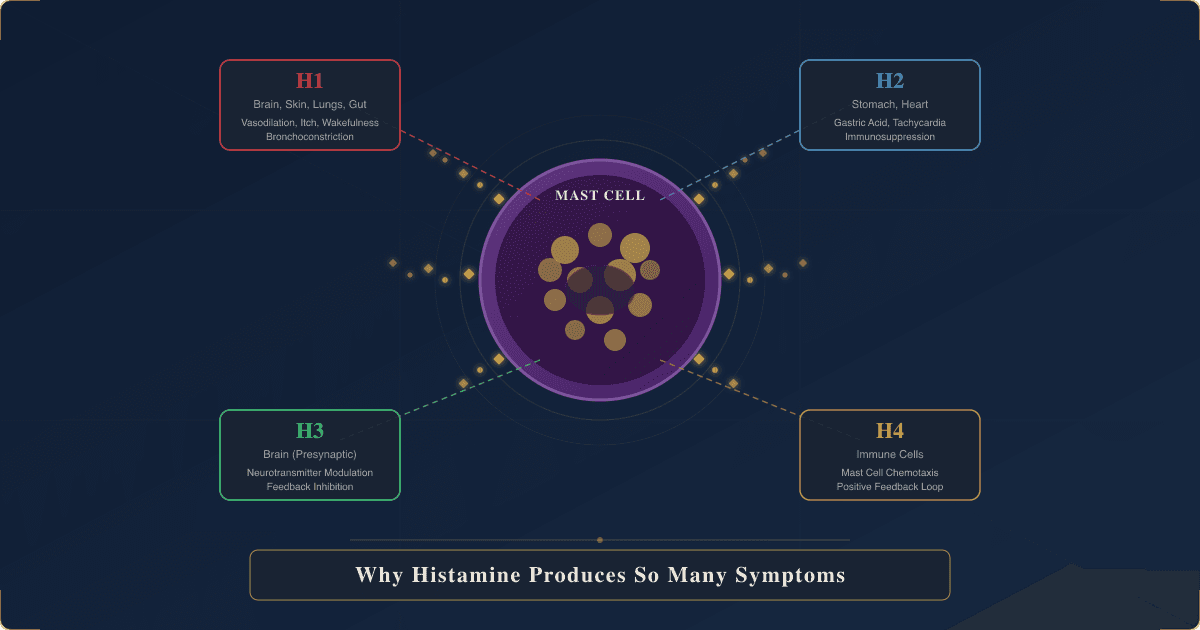
Estrogen stimulates mast cells to release histamine directly.
Mast cells have estrogen receptors, and estrogen exposure triggers degranulation, releasing histamine, prostaglandins, and inflammatory cytokines. R
This relationship is bidirectional: histamine in turn stimulates ovarian estrogen production, creating a feedback loop.
More estrogen drives more histamine, and more histamine drives more estrogen. R
Where this intersects with the menstrual cycle:
Estrogen peaks at two points: the preovulatory surge just before ovulation, and the early-to-mid luteal phase.
Histamine peaks accordingly.
During the luteal phase, mast cell proliferation occurs at its highest rate alongside the aggregately elevated estrogen and progesterone. R
Symptoms of histamine excess (anxiety, irritability, headaches, bloating, flushing, palpitations) overlap almost completely with symptoms of PMDD.
The progesterone-DAO connection:
DAO (diamine oxidase) is the primary enzyme that degrades dietary and endogenous histamine in the gut and bloodstream.
Progesterone upregulates DAO activity, meaning that when progesterone is high and functional, it provides a natural brake on histamine accumulation.
When progesterone is insufficient relative to estrogen (as in estrogen dominance or luteal phase progesterone deficiency), DAO activity is reduced and histamine accumulates further. R
Histamine as a neurotransmitter:
Histamine is not only an allergic mediator.
In the CNS, histamine acts as an excitatory neurotransmitter (via H1 receptors in the cortex and limbic system), driving arousal, anxiety, and agitation.
It is also a GABA antagonist: GABA normally dampens histamine's stimulating effects, but impaired GABAergic function in PMDD removes this brake, allowing histamine-driven excitatory tone to amplify. R
Signs that histamine is a primary driver of PMDD symptoms: (not exclusive list)
- Cyclical headaches or migraines that align with ovulation and mid-luteal phase rather than just perimenstrually
- Dermatographia (raised marks after light skin scratching)
- Dysbiosis or SIBO (gut bacteria are a major source of endogenous histamine production)
- Flushing, hives, or skin reactivity that worsens premenstrually
- Heart palpitations in the luteal phase
- Heavy or painful periods (histamine and prostaglandins are directly involved in uterine contractility)
- Histamine intolerance symptoms year-round (reactions to wine, fermented foods, leftovers, aged cheese)
- Mood symptoms that peak at ovulation (not only late luteal), when estrogen and histamine surge
- Symptoms partially relieved by OTC antihistamines during the luteal phase
The OTC antihistamine trial:
One practical way to assess whether histamine is a significant driver is to take a non-sedating antihistamine (loratadine, cetirizine) during the luteal phase and rate symptoms before and 2-4 hours after.
A meaningful symptomatic reduction confirms histamine involvement.
Absence of response does not rule it out (H2 receptors in the gut and H3 receptors in the CNS may be relevant and are not blocked by standard H1 antihistamines).
Mast cell activation (MCAS) and PMDD:
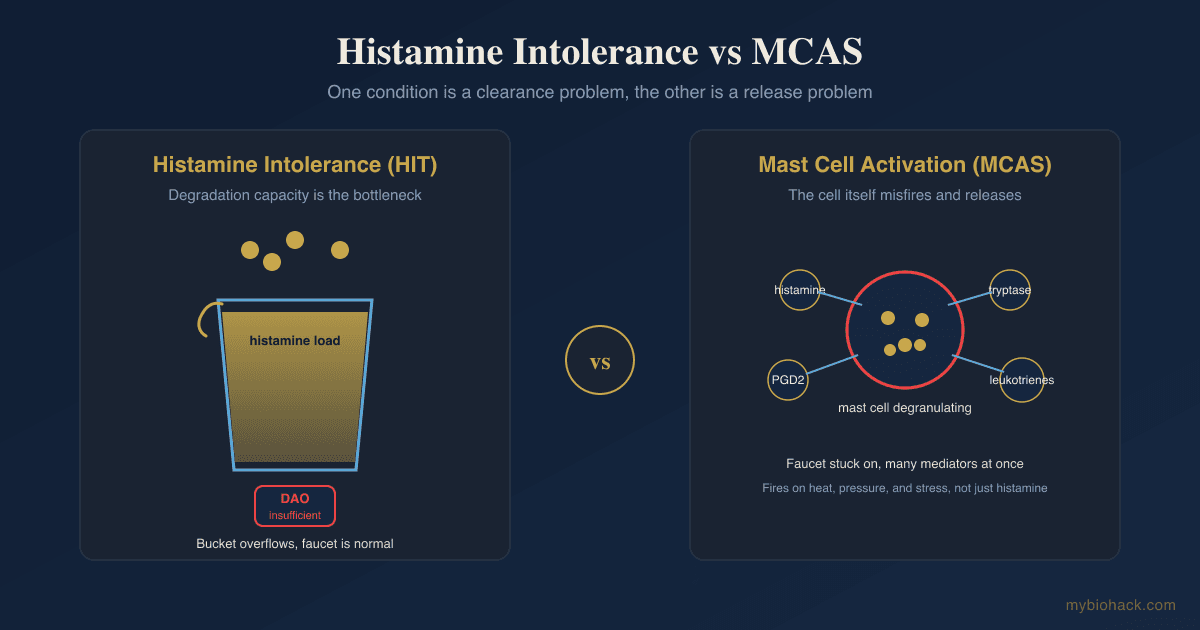
Women with MCAS consistently report that their MCAS symptoms worsen dramatically in the luteal phase, because estrogen-driven mast cell degranulation adds to an already hyperreactive baseline.
PMDD and MCAS frequently co-occur, and addressing MCAS (mast cell stabilizers, low-histamine diet, DAO support, quercetin) often substantially improves PMDD severity alongside it. R
PMDD And Overlapping Conditions
Mast cell activation (MCAS) is one of the most important co-occurring conditions in PMDD.
The estrogen-mast cell-histamine loop means that any baseline mast cell hyperreactivity is amplified cyclically, and PMDD symptoms may be primarily histamine-driven in this subgroup.
Histamine intolerance from DAO deficiency, HNMT variants, or dysbiosis-driven histamine production overlaps substantially with PMDD.
Addressing gut histamine production (SIBO treatment, low-histamine foods in the luteal phase, DAO support) reduces the total histamine burden and can meaningfully reduce PMDD severity.
Dysbiosis and SIBO are relevant through two pathways: dysbiotic bacteria produce histamine via histidine decarboxylase (HDC), and impaired gut health disrupts estrogen enterohepatic recirculation via beta-glucuronidase activity (which deconjugates estrogen for reabsorption, amplifying estrogen load).
CIRS (Chronic Inflammatory Response Syndrome) and biotoxin illness dysregulate neuroinflammatory pathways and HPA axis function in ways that interact with PMDD pathophysiology.
Women with CIRS frequently report more severe PMDD.
Hypothyroidism impairs progesterone production and estrogen clearance, amplifying the estrogen-progesterone imbalance underlying histamine burden.
Low T3 also reduces DAO activity.
ADHD and PMDD co-occur at high rates.
The dopaminergic and serotonergic dysregulation underlying ADHD may sensitize the neuroactive steroid fluctuation response that drives PMDD.
PMDD symptoms in the luteal phase can render ADHD completely unmanageable in women who are otherwise compensated.
Trauma history is associated with higher PMDD severity, likely through HPA axis sensitization and altered prefrontal cortex regulation of the limbic stress response.
The impaired ALLO-GABA control of the HPA axis in PMDD creates a vulnerability that trauma-primed HPA dysregulation amplifies.
EDS (Ehlers-Danlos Syndrome) and MCAS are frequently comorbid, and the EDS-MCAS-PMDD triad is increasingly recognized as a clinically coherent cluster. R
High progesterone in the late luteal phase increases joint laxity, worsening EDS-related pain and instability simultaneously with PMDD mood symptoms.
How To Improve PMDD
1. Confirm The Diagnosis First
Prospective symptom tracking across at least two menstrual cycles is the gold standard for diagnosis.
The IAPMD Daily Record of Severity of Problems (DRSP) or a symptom diary recording the onset, severity, and remission of symptoms relative to the cycle phase is required to confirm the luteal phase timing.
A diagnosis made solely from retrospective reporting is insufficient, because premenstrual magnification of ongoing mood disorders is a common mimic.
2. Calcium
Calcium is the most consistently evidence-supported supplement for PMDD.
Women with PMDD have lower ionized calcium levels during menstruation, lower urinary calcium excretion in the late follicular and early luteal phases, and lower vitamin D levels during the luteal phase compared to controls. R
Calcium channels are involved in neurotransmitter release including serotonin and dopamine, providing a mechanistic link between calcium deficiency and mood symptoms.
A randomized controlled trial of calcium carbonate 1,000mg daily for three months showed significant superiority to placebo across emotional and physical PMDD symptoms. R
Calcium Citrate: 600mg twice daily during the luteal phase is the evidence-based dose.
Calcium citrate is preferred over calcium carbonate for absorption, particularly in those with low stomach acid.
Always pair with Vitamin D3 + K2: vitamin D regulates calcium metabolism and its levels fluctuate across the menstrual cycle; its independent effect on mood regulation adds further rationale.
3. Magnesium
Magnesium levels are lower in women with PMS and PMDD than in controls. R
Magnesium is a cofactor for serotonin synthesis, dopamine synthesis, and GABA function.
It is also a smooth muscle relaxant, reducing cramping, headache, and breast tenderness through this mechanism independently of neurotransmitter effects.
Magnesium combined with vitamin B6 (as P5P) outperforms magnesium alone for PMDD symptom reduction. R
Magnesium Glycinate: 250-400mg daily, taken in the evening.
Glycinate form is better absorbed and less laxative than magnesium oxide or citrate.
4. Vitamin B6 (As P5P)
Pyridoxal-5-phosphate (P5P) is the active, coenzyme form of vitamin B6 and the form directly used by all B6-dependent enzymes, including those involved in serotonin, dopamine, and GABA synthesis.
It also plays a role in estrogen metabolism in the liver.
A systematic review including 9 RCTs found B6 more than twice as effective as placebo for PMS symptoms. R
One trial using 80mg B6 found improvement in PMS symptoms over three cycles.
In comparative trials, vitex outperformed B6, but B6 combined with calcium outperformed B6 alone. R
Most clinical trials used pyridoxine (the inactive storage form), which must be converted to P5P in the liver by pyridoxal kinase.
This conversion is impaired by liver dysfunction, alcohol use, riboflavin (B2) deficiency, MTHFR variants, and aging.
More importantly, pyridoxine at high doses has documented neurotoxicity risk: peripheral sensory neuropathy is well-established with chronic use above 100mg/day and has been reported at doses as low as 50mg/day with long-term continuous use.
P5P, the active form, does not require hepatic conversion and is not associated with the same peripheral neuropathy risk at equivalent or even higher doses, because it does not accumulate as free pyridoxine in peripheral neurons.
For this reason, P5P is the safer and more reliably effective form to recommend.
Vitamin B6 as P5P: 25-50mg daily as P5P.
This is a lower absolute dose than the pyridoxine trials used, but P5P's direct bioavailability means it delivers comparable functional effect.
Best taken as part of a B-complex that includes active forms of other B vitamins (methylfolate, methylcobalamin, riboflavin-5-phosphate) rather than in isolation.
5. Vitex Agnus-Castus (Chasteberry)
Chasteberry is the most studied botanical intervention for PMDD and the one with the most RCT evidence.
A 2017 meta-analysis of 17 RCTs found vitex superior to placebo, with efficacy comparable to oral contraceptives or fluoxetine for PMS/PMDD. R
In head-to-head trials with fluoxetine, vitex was superior for physical symptoms (breast tenderness, bloating, headaches) and slightly inferior for psychological symptoms. R
In trials comparing vitex with B6, vitex was superior overall. R
Mechanism: Dopamine D2 receptor agonism inhibiting prolactin secretion, with secondary effects on opioid receptors and estrogen receptor binding. R
Vitex Agnus-Castus: 400mg daily of a standardized extract, taken continuously (not just in the luteal phase).
Vitex requires 3-6 months to show full effect.
Caution: Avoid in hormone-sensitive cancers (breast, ovarian, uterine), uterine fibroids, endometriosis, and during IVF (possible hormonal overstimulation). R
Avoid combining with dopamine antagonists (antipsychotics, metoclopramide).
6. Address The Histamine Load
For women with signs of histamine involvement (cyclical headaches, skin reactivity, palpitations, symptoms peaking at ovulation):
Quercetin: 500-1000mg twice daily during the luteal phase.
Quercetin is a mast cell stabilizer that reduces degranulation-driven histamine release.
It also inhibits DAO degradation, though this effect is complex and dose-dependent.
DAO Enzyme Supplement: taken before meals containing histamine-rich foods during the luteal phase.
DAO supplements directly support histamine degradation in the gut.
Vitamin C: 1-2g daily.
Vitamin C is a histamine N-methyltransferase cofactor and supports histamine clearance.
Low-histamine dietary periods during the luteal phase: avoiding fermented foods, alcohol, aged cheeses, processed meats, and leftovers in the week before expected symptoms can meaningfully reduce the histamine burden during the highest-risk window.
Natural progesterone (bioidentical): in cases of confirmed luteal phase progesterone deficiency relative to estrogen, natural progesterone (not synthetic progestins) supports DAO upregulation and mast cell stabilization.
This is mechanistically different from the synthetic progestins in oral contraceptives, which do not have the same DAO-upregulating effects and can actually worsen PMDD in some women.
Luteolin: another mast cell stabilizer with evidence in MCAS that can be used alongside quercetin for more robust mast cell stabilization.
Address underlying dysbiosis and SIBO, which are the primary drivers of endogenous gut histamine production from bacterial HDC activity.
7. Omega-3 Fatty Acids
A meta-analysis of 8 RCTs found omega-3 fatty acids effective for reducing PMS and PMDD symptom severity. R
EPA reduces prostaglandin-driven inflammation, which is relevant for the physical symptoms (cramping, breast tenderness, bloating).
DHA supports neuronal membrane function and serotonergic signaling.
Omega-3 Fish Oil (high EPA): 2-3g EPA+DHA daily.
8. SSRIs (Pharmaceutical First-Line)
For moderate-to-severe PMDD that does not respond adequately to nutritional and lifestyle interventions, SSRIs are the most evidence-based pharmaceutical option and are FDA-approved for PMDD. R
Sertraline 50-150mg/day and fluoxetine 20mg/day are the most studied.
A uniquely effective dosing strategy for PMDD is luteal phase dosing only: starting the SSRI 14 days before expected menses and stopping with menstruation onset.
This approach reduces side effects, avoids continuous SSRI exposure, and works because of SSRIs' neurosteroidogenic effects (ALLO synthesis upregulation) rather than conventional serotonin receptor adaptation. R
9. GnRH Agonists And Surgical Options
For refractory PMDD that does not respond to first and second-line treatments, GnRH (gonadotropin-releasing hormone) agonists (such as leuprolide) suppress ovarian function and eliminate the hormonal fluctuation entirely. R
This is high-efficacy but requires add-back hormone therapy to prevent bone loss.
Bilateral oophorectomy (surgical removal of ovaries) is a last resort for severe, refractory PMDD and is curative because it eliminates the hormonal cycle driving symptom emergence.
This is an irreversible decision with lifelong consequences requiring thorough evaluation.
What To Stay Away From
- Exogenous progesterone supplementation in mid-to-late luteal phase (counterintuitive but mechanistically sound: adding progesterone raises ALLO further, amplifying receptor adaptation and making the subsequent ALLO drop worse; the existing PMDD literature does not support progesterone supplementation as a treatment and it frequently worsens symptoms) R
- Synthetic progestins in combined oral contraceptives (progestins are not progesterone and do not upregulate DAO or stabilize mast cells; some progestins, particularly levonorgestrel and NETA, can worsen PMDD symptoms by binding to androgen receptors and altering CNS neurosteroid signaling; the combined OCP can help PMDD by suppressing ovulation but the progestin component is frequently a variable)
- High-histamine foods in the luteal phase in histamine-sensitive women (wine, fermented vegetables, aged cheeses, processed meats, vinegar, leftover cooked proteins, bone broth fermented over many hours; the timing matters, continuous restriction year-round is unnecessary for most if the underlying gut and estrogen issues are addressed)
- High-dose pyridoxine (inactive B6) above 50mg/day long-term (peripheral sensory neuropathy is documented with chronic pyridoxine use above 100mg/day and reported at doses as low as 50mg with extended continuous use; this risk is specific to the unconverted pyridoxine form that accumulates in peripheral neurons, not to P5P; use P5P instead, which does not carry the same neurotoxicity profile) R
- Vitex in hormone-sensitive cancers, fibroids, endometriosis, or during IVF (vitex has direct hormonal receptor activity and its use in these contexts is not supported and potentially harmful) R
- St. John's Wort concurrent with SSRIs (serotonin syndrome risk; St. John's Wort is effective for mood symptoms but absolutely cannot be combined with serotonergic drugs) R
- Dismissing PMDD as a personality problem (it is a neurobiological disorder with measurable physiological correlates; treating it as a character flaw delays diagnosis and appropriate treatment for what is often a highly treatable condition)
- Diagnosing PMDD retrospectively without cycle tracking (premenstrual magnification of ongoing depression is the most common mimic; two cycles of prospective daily symptom tracking is required to confirm the luteal-only pattern before committing to a PMDD diagnosis and treatment plan)
- Combining alcohol and the luteal phase (alcohol is high in histamine, suppresses DAO activity, disrupts GABAergic function acutely, and depletes serotonin; the luteal phase is the worst possible time for alcohol consumption in PMDD)
Testing
First-Line: Prospective Symptom Tracking
No blood test diagnoses PMDD.
The diagnosis is established by documenting the cyclical symptom pattern prospectively across two menstrual cycles using a validated tool such as the DRSP (Daily Record of Severity of Problems) or equivalent symptom diary.
Hormone Panel
Baseline hormone testing rules out secondary causes and provides context for treatment decisions.
The Hormone Zoomer (Vibrant Wellness) measures estradiol, progesterone, testosterone, DHEA, cortisol, and SHBG and provides a comprehensive picture of the hormonal environment.
The DUTCH Complete (Precision Analytical) is the most comprehensive hormone panel for women with suspected PMDD, measuring not only sex hormones but also their metabolites (including estrogen metabolism via 2-OH, 4-OH, and 16-OH pathways), cortisol/cortisone and the DHEA-cortisol balance, and organic acid markers of neurotransmitter metabolism.
For PMDD specifically, the DUTCH test taken in the mid-luteal phase (day 20-22 of a 28-day cycle) provides the most relevant snapshot.
Key markers to evaluate:
- Progesterone and estradiol (luteal phase): while absolute levels often appear normal in PMDD, the ratio and estrogen metabolite pattern are informative
- Cortisol pattern: HPA axis dysregulation shows as flattened or dysrhythmic cortisol throughout the day
- Estrogen metabolism (DUTCH): elevated 4-OHE1 (4-hydroxyestrone) indicates genotoxic estrogen metabolism; elevated 16-alpha-OHE1 indicates stronger estrogenic activity; both increase estrogen-driven mast cell activation
- DHEA-S: low DHEA can impair neurosteroid reserve
Thyroid Panel
Hypothyroidism impairs progesterone production, estrogen clearance, and DAO activity, all of which amplify PMDD.
The Foundation Zoomer includes TSH, and a full thyroid panel including free T4, free T3, and thyroid antibodies (TPO, TG) is indicated when thyroid dysfunction is suspected as a contributor.
Histamine And Mast Cell Testing
When histamine involvement is suspected, testing helps quantify the burden.
Serum Histamine and DAO activity (available from specialty labs): a low DAO:histamine ratio confirms functional histamine intolerance.
The Immune Zoomer (Vibrant Wellness) includes mast cell markers including tryptase, IgE, and cytokine panels relevant for MCAS evaluation.
Tryptase (ideally drawn during an acute symptomatic episode) is the most sensitive marker for mast cell activation.
Gut Health
Dysbiosis and SIBO drive histamine production and impair estrogen enterohepatic recirculation via beta-glucuronidase.
The GI-MAP (Diagnostic Solutions) provides comprehensive stool PCR with bacterial profiling, beta-glucuronidase activity, and pathogen screening.
The Gut Zoomer (Vibrant Wellness) simultaneously assesses microbiome composition, intestinal permeability (zonulin, CLDN1), and parasites alongside the inflammatory picture.
Nutrient Markers
Calcium, magnesium, B6, and vitamin D deficiency all contribute to PMDD severity and are commonly suboptimal in women with PMDD.
The Nutrient Zoomer (Vibrant Wellness) provides a comprehensive baseline of vitamins, minerals, amino acids, and fatty acids in a single panel.
Vitamin D 25-OH Vitamin D: optimal range for PMDD purposes is 50-80 ng/mL; levels are typically lowest in the luteal phase in women with PMDD.
Mechanisms Of Action
Simple:
- In PMDD, the brain does not respond normally to a progesterone breakdown product called allopregnanolone; in most people this compound acts as a natural calming agent; in PMDD brains, it either fails to work (GABA receptor resistance) or the brain adapts to it and then crashes when it falls, creating a withdrawal-like excitability at the end of the cycle.
- Serotonin drops in the luteal phase under the influence of falling estradiol; women with PMDD experience this drop more severely, which is why SSRIs work for PMDD and why the effect starts within days rather than weeks.
- Estrogen directly activates mast cells, which release histamine; histamine is an excitatory neurotransmitter that drives anxiety and irritability; in the luteal phase when estrogen and mast cell numbers are both elevated, women with underlying mast cell reactivity or histamine intolerance experience a histamine surge that amplifies every mood and physical symptom of PMDD.
- Progesterone should upregulate the DAO enzyme that clears histamine; when progesterone is insufficient or the brain cannot respond to it normally, histamine clears more slowly, building up across the luteal phase.
- GABA normally suppresses histamine's stimulating effects in the brain; impaired GABA function in PMDD removes this brake, allowing histamine-driven excitatory tone to compound the neurosteroid dysregulation already present.
Advanced:
- Allopregnanolone-GABA-A receptor dynamics: GABA-A receptors contain multiple subunits with different binding sites and pharmacological properties. The synaptic (phasic) GABA-A receptor contains alpha1/2/3, beta, and gamma2 subunits and mediates fast, transient inhibitory signals. Extrasynaptic (tonic) GABA-A receptors containing alpha4/delta or alpha6/delta subunits mediate sustained inhibitory tone and are the primary site of ALLO action. ALLO potentiates chloride ion flux through both synaptic and extrasynaptic GABA-A receptors at low concentrations (allosteric potentiation) and directly activates them at higher concentrations. Chronic exposure to elevated ALLO (as in the luteal phase) triggers adaptive upregulation of alpha4 subunits, which confer reduced sensitivity to ALLO and to benzodiazepines, explaining why women with PMDD show both allopregnanolone resistance and reduced benzodiazepine sensitivity. When ALLO then falls at the end of the luteal phase, these alpha4-enriched receptors, adapted to high ALLO, cannot generate sufficient tonic inhibition, resulting in a net hyperexcitable state. R
- SSRIs as neurosteroidogenic agents: SSRIs directly alter the activity of 5-alpha-reductase and 3-alpha-HSD, the two enzymes that synthesize ALLO from progesterone. Specifically, SSRIs inhibit a step in ALLO synthesis that paradoxically reduces luteal phase ALLO production, preventing the high ALLO exposure that drives receptor adaptation and subsequent withdrawal. This is why SSRIs work for PMDD within days at lower doses than needed for antidepressant effect: the target is not serotonin receptor downregulation but neurosteroidogenesis. The luteal-phase-only SSRI dosing strategy exploits this mechanism by covering the ALLO-dynamic window without continuous serotonergic suppression. R
- Estrogen-mast cell-histamine feedback: Estradiol binds to estrogen receptor alpha (ERα) expressed on mast cell surfaces, triggering PKC-mediated phosphorylation that opens membrane calcium channels, driving calcium influx and mast cell degranulation. Released histamine then binds to H2 receptors on ovarian granulosa cells, directly stimulating CYP19A1 (aromatase) expression and estrogen biosynthesis. This creates a positive feedback loop: ERα on mast cells drives histamine release, histamine drives ovarian estrogen production, which further activates ERα on mast cells. In women with high baseline mast cell reactivity (MCAS) or impaired histamine clearance (low DAO, HNMT variants, dysbiosis-driven histamine production), this loop amplifies cyclically during the luteal phase. R
- DAO regulation by progesterone and estrogen: DAO is expressed primarily in intestinal epithelial cells and placenta. Progesterone upregulates DAO mRNA transcription through progesterone receptor binding to the DAO gene promoter. This is why DAO activity is highest in the second half of the luteal phase and dramatically elevated during pregnancy (placental DAO). Estrogen, conversely, competitively inhibits DAO activity by competing for the same binding site as histamine on the enzyme. In states of relative estrogen dominance (high estrogen relative to progesterone), the net effect is reduced DAO-mediated histamine clearance, raising systemic histamine load. R
- Beta-glucuronidase and estrogen recirculation: Beta-glucuronidase is a bacterial enzyme produced by dysbiotic gut microbiota that deconjugates glucuronidated estrogens in the intestinal lumen. Conjugated estrogens, ready for fecal elimination, are cleaved back to free estrogen by beta-glucuronidase, allowing reabsorption into portal circulation (estrogen enterohepatic recirculation). Elevated beta-glucuronidase activity from dysbiosis substantially increases effective estrogen exposure beyond what the liver and ovaries produce endogenously, amplifying the estrogen-driven mast cell activation and histamine burden that worsens PMDD. This is directly measurable on the GI-MAP as beta-glucuronidase activity in stool, and is treatable with calcium d-glucarate (a beta-glucuronidase inhibitor) and probiotic restoration. R
Genetics
ESR1 And ESR2 (Estrogen Receptor Alpha And Beta)
ESR1 encodes estrogen receptor alpha and ESR2 encodes estrogen receptor beta, the two primary nuclear receptors mediating genomic estrogen signaling.
Variants in both genes have been associated with altered sensitivity to estrogenic effects in brain tissue and potentially with PMDD susceptibility and symptom severity.
ESR1 polymorphisms (including rs9340799 and rs2234693) alter transcriptional sensitivity to estradiol in limbic and prefrontal regions, affecting estrogen's modulation of serotonin and GABA neurotransmitter systems.
SLC6A4 (Serotonin Transporter)
SLC6A4 encodes the serotonin transporter (SERT), which reuptakes serotonin from the synapse.
The 5-HTTLPR promoter polymorphism (short "s" allele vs. long "l" allele) reduces SERT transcription, resulting in lower serotonin reuptake and altered serotonergic tone.
The short allele is associated with increased anxiety, stress reactivity, and vulnerability to mood disorders in the context of life stress, and some studies associate it with greater premenstrual symptom severity.
GABRB3, GABRA4 (GABA-A Receptor Subunits)
Genes encoding GABA-A receptor subunits including GABRB3 (beta-3 subunit) and GABRA4 (alpha-4 subunit) are candidates for the dysregulated ALLO-GABA sensitivity underlying PMDD.
Variants in these genes that alter subunit expression or receptor configuration could explain why some women develop maladaptive alpha-4 upregulation in response to cyclic ALLO exposure while others do not. R
AOC1 (DAO Enzyme) And HNMT (Histamine N-Methyltransferase)
AOC1 encodes DAO, the primary histamine-degrading enzyme.
Common loss-of-function variants in AOC1 (including rs10156191 and rs2052129) reduce DAO enzyme activity by 10-40% in heterozygous carriers, creating functional histamine intolerance that amplifies luteal phase histamine burden.
HNMT encodes the secondary histamine-degrading enzyme in the CNS.
HNMT T939C (rs1050891) reduces HNMT activity, impairing central histamine clearance and potentially amplifying histamine-driven CNS excitability during the luteal phase.
MTHFR
MTHFR C677T and A1298C variants reduce 5-MTHF production, impairing serotonin, dopamine, and norepinephrine synthesis that all depend on methylation cofactors.
Impaired methylation also reduces SAM-e availability for COMT-mediated estrogen and catecholamine inactivation, amplifying estrogen exposure and catecholamine accumulation relevant to PMDD mood symptoms.
Women with MTHFR variants benefit from L-methylfolate rather than folic acid for folate repletion, and from active B12 forms alongside B6 as PMDD support.
More Research
- PMDD is classified in the DSM-5-TR as a depressive disorder, not as a variant of PMS; it has a distinct neurobiological basis involving impaired GABA-A receptor sensitivity to allopregnanolone, and treatments that target this mechanism (SSRIs, luteal phase dosing, GnRH agonists) are categorically different from those appropriate for ordinary PMS. R
- The two-cycle prospective symptom diary is not optional: it is the diagnostic standard, because premenstrual magnification of major depressive disorder is a common mimic of PMDD that responds to different treatments. R
- SSRIs dosed only during the luteal phase (day 14 through menses onset) are approximately as effective as continuous dosing for PMDD, which supports the neurosteroidogenic mechanism of SSRI action in this condition rather than conventional receptor downregulation. R
- For the DUTCH Complete (Precision Analytical) testing, mid-luteal timing (days 20-22 of a 28-day cycle) provides the most clinically relevant window for assessing the luteal phase hormonal environment in PMDD.
- Histamine, estrogen, and mast cell biology are deeply intertwined; women with overlapping MCAS, histamine intolerance, or dysbiosis should address these upstream drivers alongside PMDD-specific interventions, because cyclical mast cell activation from estrogen is mechanistically distinct from the allopregnanolone-GABA axis but compounds it significantly. R
- Chasteberry (Vitex agnus-castus) is the most evidence-supported botanical treatment for PMDD, with efficacy comparable to oral contraceptives or SSRIs in RCTs, particularly for physical symptoms; it requires 3-6 months of continuous use for full effect and should not be used in hormone-sensitive conditions. R
- Women with PMDD have lower sensitivity to benzodiazepines (consistent with alpha-4 subunit upregulation in GABA-A receptors) and to allopregnanolone during the follicular phase (consistent with a baseline dysregulation in neuroactive steroid sensitivity independent of cycle phase), suggesting that PMDD involves constitutional CNS differences, not merely cyclic hormonal effects. R
- The Gut Zoomer (Vibrant Wellness) beta-glucuronidase measurement provides a direct window into how much dietary and endogenous estrogen is being reabsorbed from the gut rather than excreted, a key upstream driver of the estrogen burden that amplifies both histamine release and PMDD severity.
Jacob Gordon
INHC, FMT-C
Integrative Nutrition Health Coach
I cover mold illness, post-viral recovery, methylation, and complex chronic disease, drawing on ten years of clinical research, work inside a functional medicine clinic, and my own recovery from all of it. Every claim here is cited.
Book a ConsultationRelated Protocols & Supplements
Deep-dive chapters and recommended supplements for this topic
Quercetin
500mg 2x/day
Vitamin D3 + K2
5000 IU + 200mcg/day
DAO Enzyme
1 cap before meals