SIFO (Small Intestinal Fungal Overgrowth): The Reason Your SIBO Treatment Did Not Work
By Jacob Gordon, INHC, FMT-CThis article contains affiliate links. As an Amazon Associate, MyBioHack earns from qualifying purchases at no extra cost to you. We only link products we research and stand behind.
Small Intestinal Fungal Overgrowth (SIFO) is an excess of fungal organisms in the small bowel that produces the exact same symptoms as bacterial overgrowth and cannot be seen on any breath test.
In this post, we will discuss what SIFO actually is as a distinct diagnosed entity, why it hides behind a negative or non-responsive SIBO workup, what drives fungal density in the small intestine, how the small bowel normally keeps fungi in check, how to test for it, and what the evidence does and does not support for treatment.
Basics Of SIFO
SIFO is defined as an excessive number of fungal organisms in the small intestine in a person who has gastrointestinal symptoms. R
This is not the same thing as systemic candida overgrowth.
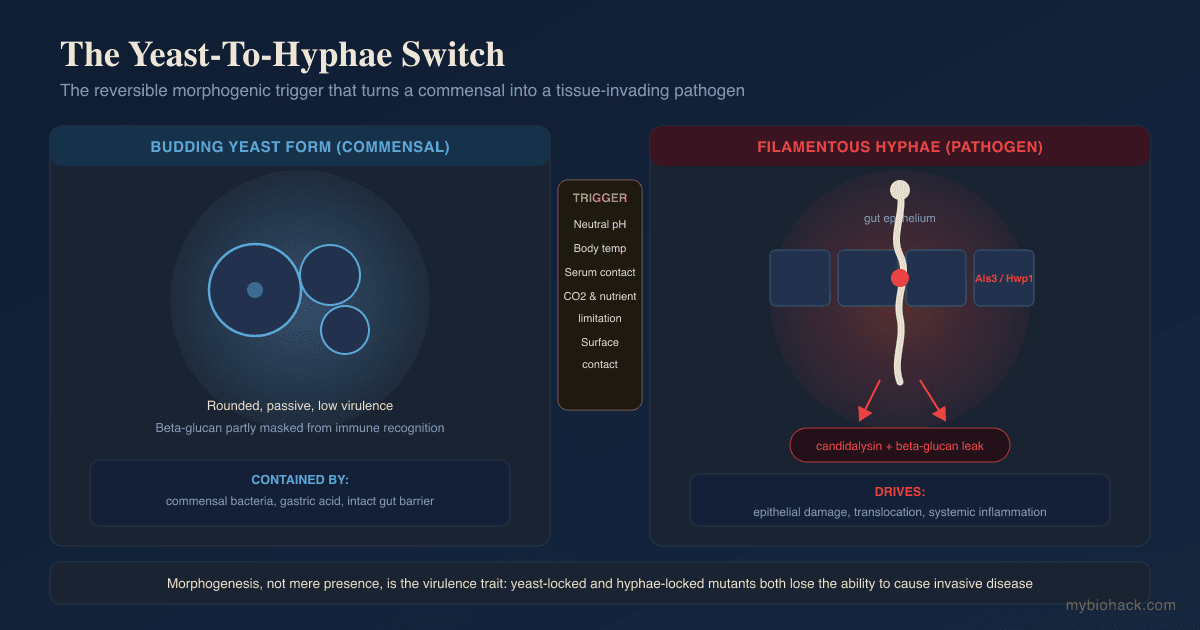
Systemic candida is about the yeast-to-hyphae switch, candidalysin, and beta-glucan crossing a compromised barrier, and I covered that entire mechanism in the systemic candida overgrowth post.
SIFO is a narrower and more clinical question: how many fungal colony forming units are sitting in the duodenum and jejunum, and are they enough to explain the symptoms.
The diagnosis is made when quantitative culture of a small bowel aspirate grows fungal organisms at a concentration greater than 103 CFU/mL. R
That aspirate has to be drawn at upper endoscopy, from the distal duodenum or proximal jejunum, which is why almost nobody actually gets tested.
The symptom list is where this gets clinically important.
Symptoms of SIFO (indistinguishable from SIBO on presentation): (not exclusive list)
- Belching (frequently reported in aspirate-confirmed cases) R
- Bloating (typically postprandial) R
- Diarrhea (can alternate with constipation when dysmotility is the driver) R
- Gas (excess flatulence) R
- Indigestion (a vague upper abdominal discomfort) R
- Nausea (often worse with meals) R
The primary study that put numbers on this looked at 150 consecutive patients with unexplained chronic GI symptoms who underwent duodenal aspiration and culture. R
94 of 150 (63%) had overgrowth of some kind.
Of those 94, 38 (40%) had bacterial overgrowth alone, 24 (26%) had fungal overgrowth alone, and 32 (34%) had both together. R
Counting the mixed cases, 56 of the 150 patients (37%) had fungal overgrowth in the small bowel.
You will see the figure "25% (38/150) had SIFO" repeated across secondary sources, and it does not match the primary paper, where 38 is the SIBO-alone count and the ~25% figure refers to the SIFO-alone share of the overgrowth subgroup. R
The number that actually matters is simpler.
In the same cohort the authors concluded that symptoms were poor predictors of which type of overgrowth a patient had, meaning you cannot distinguish SIFO from SIBO clinically. R
This is the whole clinical argument of this post.
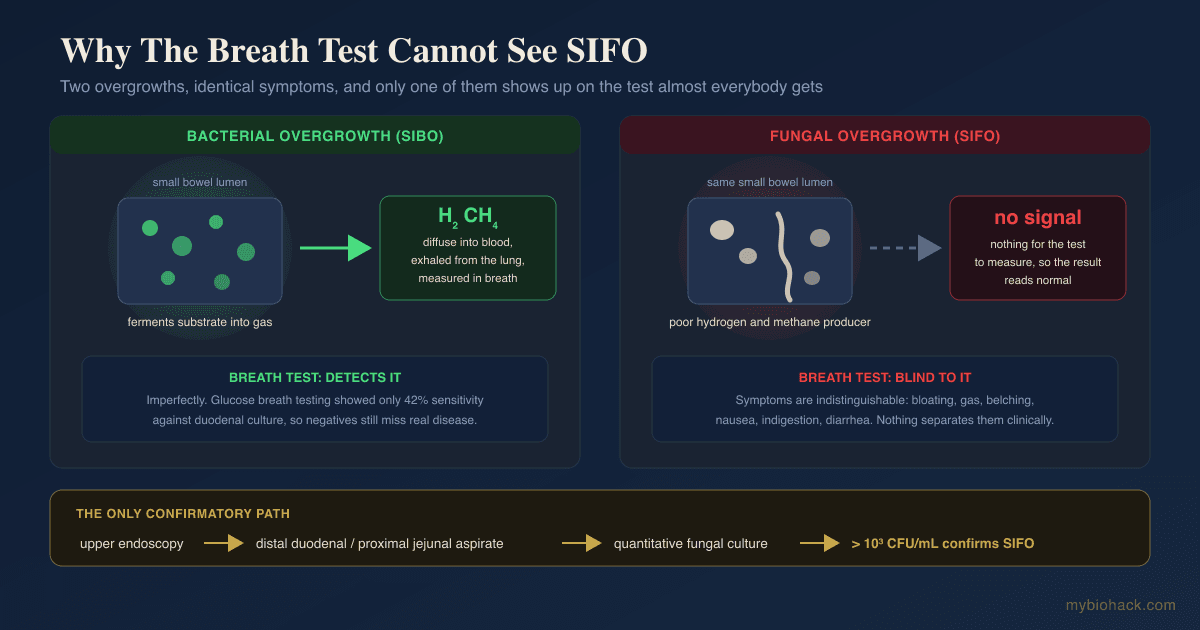
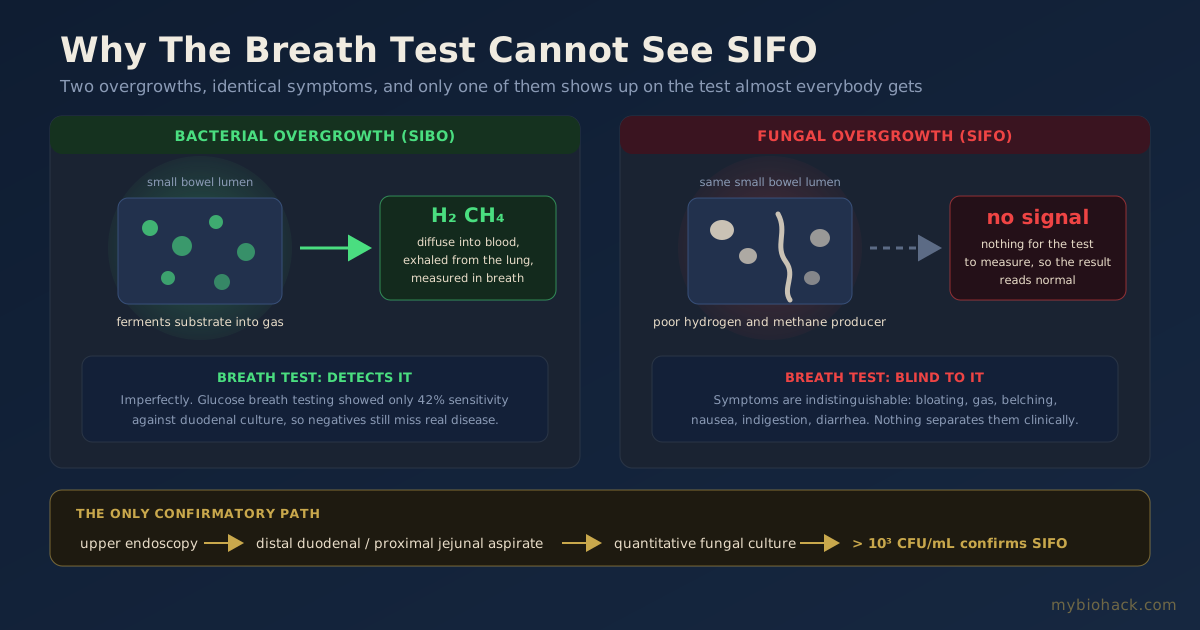
Breath testing is not capable of detecting SIFO, because fungi are poor hydrogen and methane producers relative to the bacteria the test was designed around. R
Breath testing also underperforms against aspirate for bacterial overgrowth, with glucose breath testing showing only 42% sensitivity against duodenal culture in a two-center comparison. R
So the patient who breath-tests positive, completes rifaximin, and does not improve, and the patient who breath-tests negative but is obviously sick, are both patients in whom SIFO should be considered.
That is not a fringe position given that rifaximin monotherapy normalizes the breath test in roughly half of treated patients and symptom response is inconsistent even when it does. R
The organism list matters more than most write-ups admit.
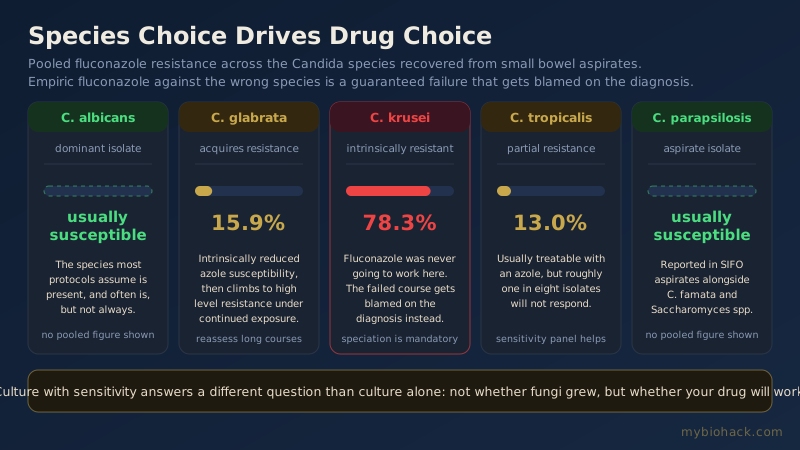
Candida albicans dominates SIFO isolates, but C. glabrata, C. tropicalis, C. krusei, C. parapsilosis, C. famata, and Saccharomyces species also appear. R R
Species identification changes the drug, because C. krusei is intrinsically fluconazole-resistant and C. glabrata has intrinsically reduced azole susceptibility plus a strong tendency to acquire high-level resistance under azole exposure. R R
The last basic point is the one that changed the field.
The older assumption was that fungal overgrowth in the gut meant HIV, chemotherapy, transplant, or uncontrolled diabetes.
The emerging literature is that fungal overgrowth in the small intestine of non-immunocompromised subjects can cause unexplained GI symptoms on its own. R
What Causes SIFO
Root drivers of small bowel fungal overgrowth: (not exclusive list)
- Antibiotics (depleting commensal anaerobes removes the competitive brake, and the antibiotics that deplete anaerobes most produce the highest fungal colonization levels) R R
- Bile acid insufficiency (bile is directly fungistatic, so cholestasis, sludge, and post-cholecystectomy states remove a real antifungal layer) R
- Beta-lactam antibiotics specifically (they release peptidoglycan fragments that directly induce invasive hyphal growth, which is a distinct insult from simply killing competitors) R
- Connective tissue disease (scleroderma and hypermobility phenotypes carry small bowel dysmotility as a structural feature) R
- Corticosteroids and immunosuppressants (blunting mucosal immune surveillance, the classic and still valid risk category) R
- Dysmotility (present in 53% of the 150-patient cohort and an independent risk factor at P = 0.0003) R
- High refined carbohydrate intake (plausible and widely repeated, but see the honest caveat below) R
- Low secretory IgA (IgA deficiency is directly associated with intestinal Candida albicans overgrowth in humans) R
- Opioids (morphine disrupts migrating motor complex cycling and produces small bowel overgrowth rapidly in animal models) R
- Pancreatic enzyme insufficiency (chronic pancreatitis carries a markedly elevated small bowel overgrowth prevalence, and impaired exocrine function shifts microbiota composition independently of digestion) R R
- Proton pump inhibitors (present in 43% of the same cohort, an independent risk factor at P = 0.0063, and shown separately to raise relative Candida abundance versus untreated reflux patients and healthy controls) R R
The PPI mechanism deserves a sentence of its own because it is dual.
Raising gastric pH removes the acid sterilization step that normally kills most swallowed organisms before they reach the duodenum, and PPIs independently associate with impaired small bowel motility and increased SIBO incidence. R
PPI use also reduces Lactobacillus, which removes the lactic acid production that suppresses fungal growth. R
If you are on acid suppression for reflux that was never actually acid-driven, read the stomach acid and hypochlorhydria post and the proton pump inhibitor post before you assume the prescription is neutral.
Notably, PPI use and dysmotility together did not add risk beyond either alone in the primary cohort, which suggests they converge on the same final pathway rather than stacking. R
How The Small Intestine Resists Fungi
The small intestine is not sterile and fungi are normal residents there.
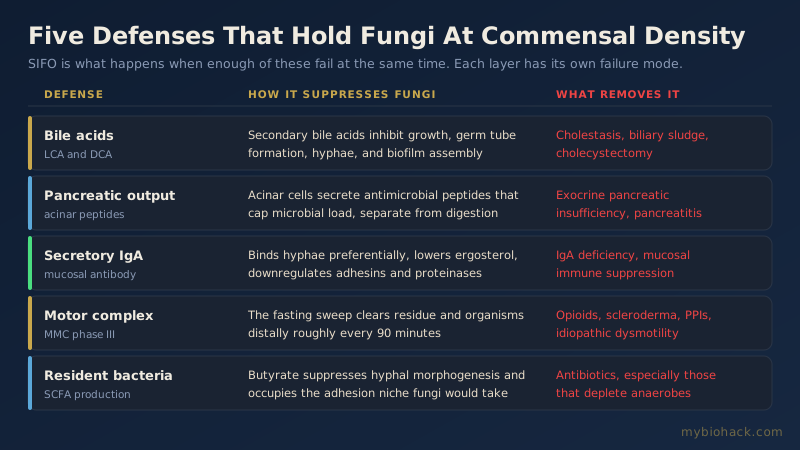
What keeps them at commensal density is a stack of overlapping defenses, and SIFO is what happens when enough of them fail at once.
Bile acids.
Secondary bile acids including lithocholic acid and deoxycholic acid directly inhibit Candida albicans growth, germ tube formation, hyphal development, and biofilm formation. R
Cholic, deoxycholic, and chenodeoxycholic acid were all shown to be fungistatic decades earlier, producing swollen abnormal cells. R
Worth noting, primary bile acids promote growth in the same experiments, so this is a bile composition story, not simply a bile volume story. R
Anything that reduces bile delivery matters here, which is why gallbladder sludge and biliary stones and TUDCA are directly relevant to a fungal problem.
Pancreatic secretions.
Pancreatic acinar cells secrete antimicrobial peptides that control small bowel microbial load through a mechanism independent of digestive enzyme activity. R
Secretory IgA.
Secretory IgA preferentially binds the hyphal morphotype, reduces ergosterol content, suppresses hyphal growth and adhesion, and downregulates the adhesins and proteinases that let Candida invade epithelium. R
Mycobiota-induced IgA responses regulate fungal commensalism in the human gut and are dysregulated in Crohn's disease. R
I wrote about the upstream drivers of IgA production in the secretory IgA post.
The migrating motor complex.
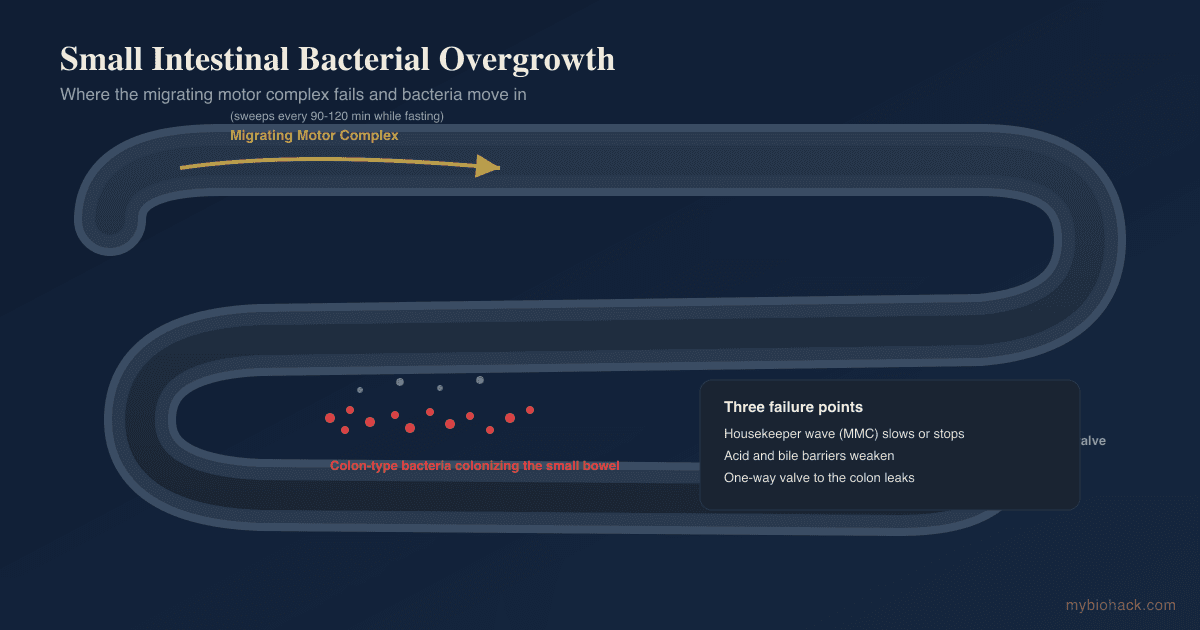
Phase III of the migrating motor complex is the fasting-state sweep that clears food residue, bacteria, and debris distally roughly every 90 minutes. R
Most subjects with small bowel overgrowth lack phase III activity entirely. R
Competitive exclusion by bacteria.
Microbiota-derived short chain fatty acids mediate colonization resistance against Candida albicans in the gut. R
Butyrate above roughly 25 mM inhibits hyphal formation, and the effect is stronger at acidic pH, while acetate and propionate were not inhibitory even at 100 mM. R
Butyrate-family SCFAs also act on histone modification to repress hypha-specific gene expression. R
This is why short chain fatty acids and general dysbiosis correction are not side quests in a fungal protocol.
Paneth cell antimicrobial peptides.
Human alpha-defensin 5 secreted by Paneth cells is active against Candida albicans and several bacterial species. R
Peptide YY was identified as a Paneth cell antimicrobial peptide whose main effect is blocking the commensal yeast to invasive hyphal transition specifically. R
Human beta-defensin 2 and 3 also protect the epithelium during Candida challenge and preserve barrier integrity. R
Dectin-1 and CARD9 sensing.
Dectin-1 is the C-type lectin receptor that recognizes fungal cell wall beta-glucan and is required for control of fungal infection. R
Recognition signals through Syk to the CARD9-Bcl10-Malt1 module, driving IL-1beta and IL-23 and the Th17 response that recruits neutrophils and induces epithelial antimicrobial peptides. R
Lose that arm and fungal density is no longer sensed at all, which is the entire pathophysiology of CARD9 deficiency. R
SIFO And Overlapping Conditions
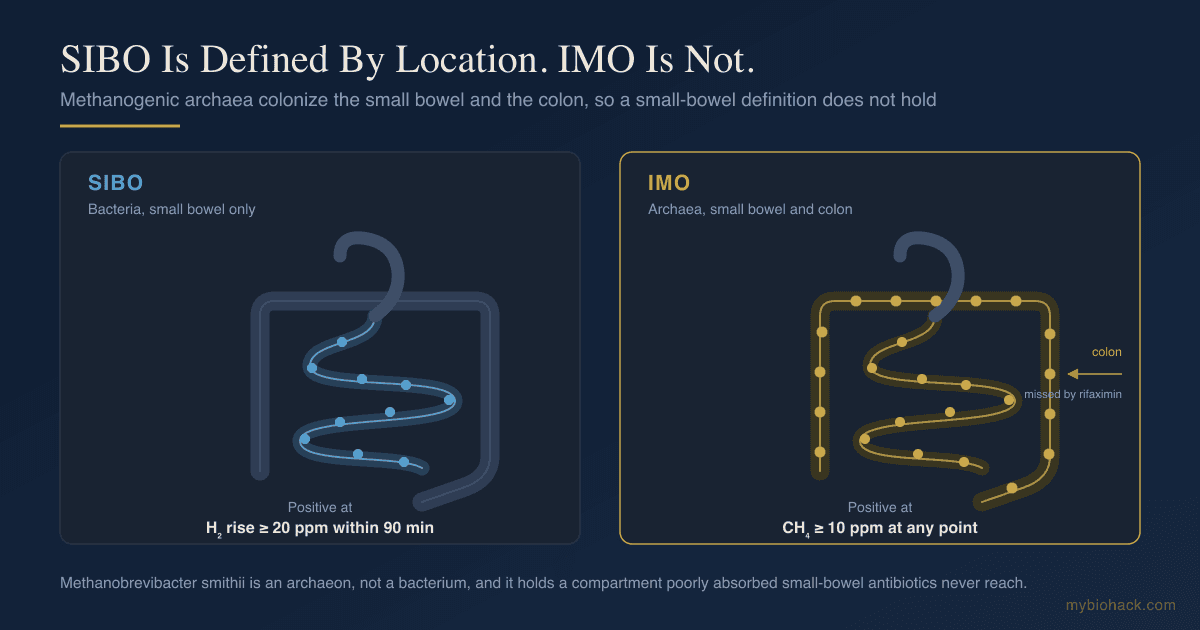
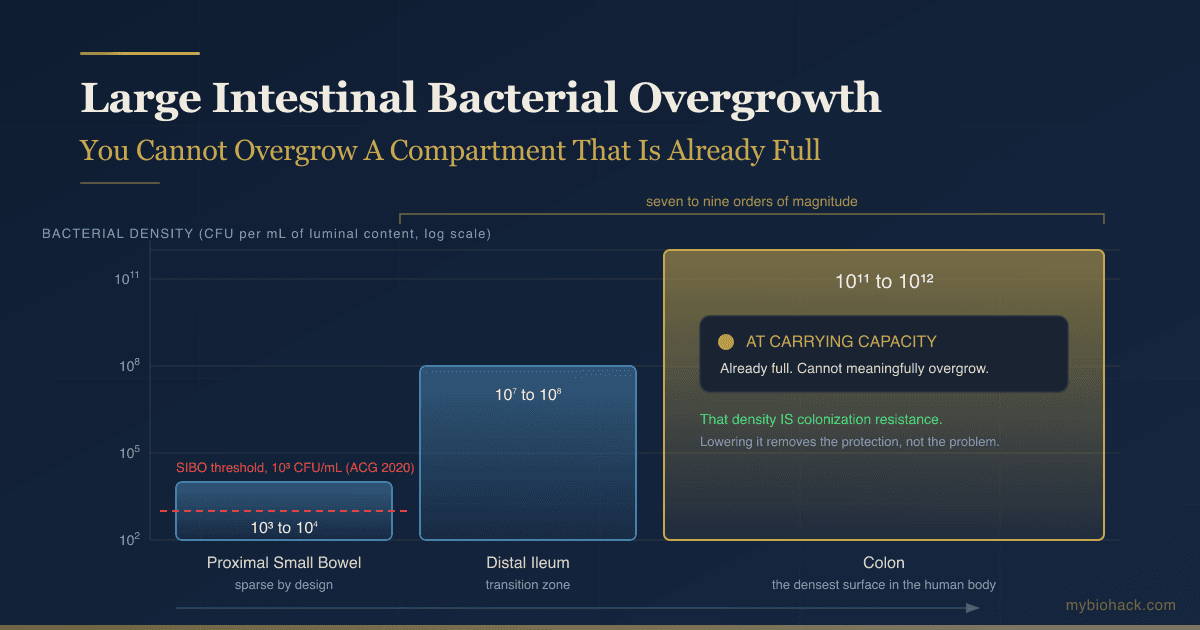
SIFO sits inside the same family of overgrowth syndromes as SIBO, intestinal methanogen overgrowth, and large intestinal bacterial overgrowth, and all four share dysbiosis as the upstream event. R
A third of the aspirate-confirmed patients had both bacterial and fungal overgrowth simultaneously, so treating one and declaring victory is a common way to stall. R
Candida albicans itself induces mucosal bacterial dysbiosis that then promotes invasive infection, so the relationship runs in both directions. R
Fungal overgrowth also intersects with barrier failure, and once beta-glucan and lipopolysaccharide are crossing an open gut barrier, you are no longer dealing with a purely luminal problem. R
That crossover is where my hypothesis of Micro-Sepsis (MSS) applies, which I cover in the Junction Dysfunction and Micro-Sepsis chapter.
Symptom overlap worth knowing about:
- Histamine problems (fungal and bacterial overgrowth both change the luminal environment that drives histamine intolerance and complicates the histamine intolerance versus MCAS distinction)
- Hypermobility phenotypes (the hEDS, MCAS, and POTS triad carries dysmotility as a structural feature, which is the strongest SIFO risk factor identified) R R
- Mast cell activation (the gut serotonin and mast cell axis is provoked by any sustained luminal microbial insult, and mast cells are direct regulators of whether Candida stays commensal in the gut) R R R
- Upper GI infection (see the H. pylori eradication post, since the antibiotic courses used there are a recognized setup for fungal overgrowth) R
Fungal density in the gut is also higher in the oral cavity of the same patients, which is why the oral microbiome chapter is a reasonable place to look when a gut protocol keeps relapsing.
How To Improve SIFO
1. Confirm What You Are Treating
The honest first step is admitting the diagnostic problem.
Aspirate culture is the only confirmatory method, and if you cannot get one, you are treating a probability, not a diagnosis. R R
Run a glucose or lactulose breath test first to establish whether bacterial or methanogen overgrowth is present, because that changes sequencing. R
2. Remove The Driver
Reversing the cause is the intervention with the best odds.
That means auditing PPI necessity, reviewing opioid and corticosteroid exposure, addressing dysmotility, restoring bile flow, and correcting pancreatic insufficiency before or alongside any antifungal. R R R
Both PPI use and dysmotility were independent risk factors present in over half of symptomatic patients, so this is not a minor step. R
3. Prescription Antifungals
A 2 to 3 week course of antifungal therapy is what the review literature recommends, and it may improve symptoms, but evidence for eradication is lacking. R
That sentence is the current state of the field, and it deserves to be read literally.
Dosing and duration are not established, which is exactly why relapse is common and why the reported courses range from 10 to 14 days up to a full month at 300 mg daily in severe cases. R R
Fluconazole is systemic and absorbed, nystatin is a non-absorbed polyene that acts luminally, and the choice between them is not settled by trial data. R R R
The case for species identification and susceptibility testing is strong: pooled fluconazole resistance is 78.3% in C. krusei, 15.9% in C. glabrata, and 13.0% in C. tropicalis. R R
Treating a C. krusei overgrowth with fluconazole is a guaranteed failure that will be misread as "the antifungal did not work." R
Prescription antifungal therapy is a physician decision, and if you need help structuring the workup, use the consultation page.
4. Natural Antifungals
Be clear about what tier of evidence each of these sits in.
Almost all of it is in vitro, which means these are reasonable adjuncts and poor substitutes for a confirmed diagnosis and a targeted drug.
-
Berberine inhibits C. albicans, C. glabrata, C. kefyr, C. krusei, C. parapsilosis, and C. tropicalis, and retains activity in fluconazole-resistant isolates. R
It also suppresses Candida biofilm at concentrations only 4 to 32 times above the planktonic MIC, which is a better biofilm-to-planktonic ratio than fluconazole achieves. R
More on the compound generally in the berberine post.
-
Caprylic acid combined with carvacrol or thymol produces a synergistic reduction in C. albicans through cell membrane disruption plus efflux pump inhibition (in vitro only). R
-
Allicin blocks fungal cell membrane function, though the strongest mechanistic work is in Cryptococcus neoformans rather than Candida, so treat the Candida extrapolation as reasonable and unproven. R
-
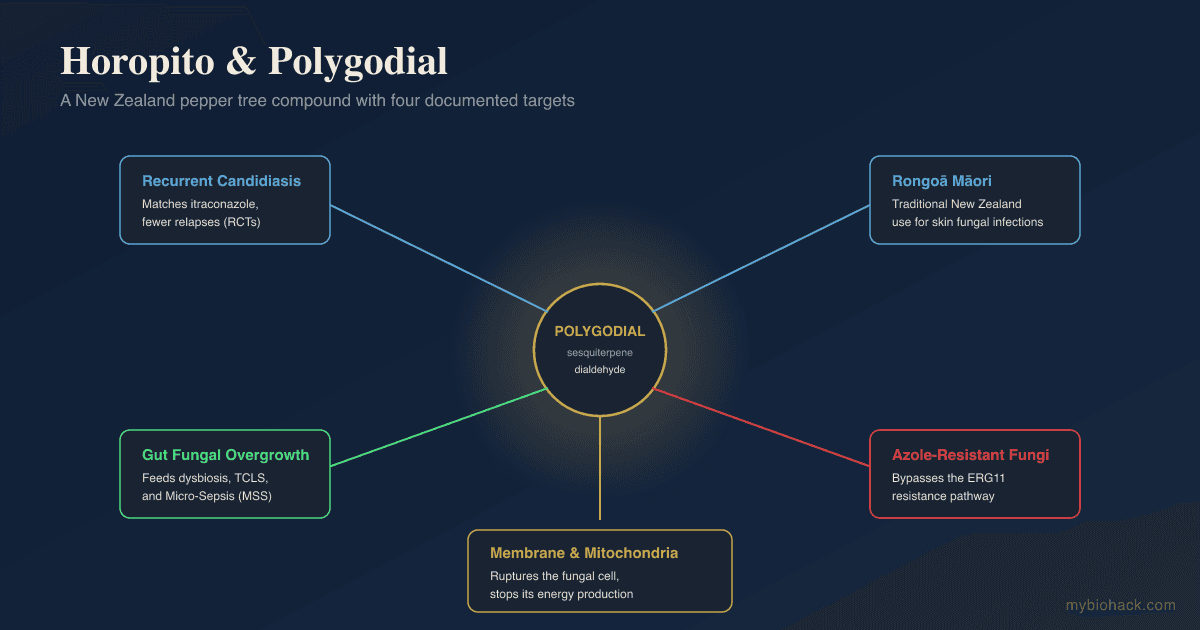
Polygodial damages the yeast permeability barrier and causes cell leakage, and sesquiterpene dialdehydes of this class potentiate other antifungals against C. albicans. R
The polygodial and anethole combination was tested for gut antifungal use specifically, with in vitro susceptibility across Candida strains plus an ex vivo mucosal candidiasis model. R R
Full detail in the horopito and polygodial post.
-
Carvacrol and thymol are fungicidal by disrupting ergosterol biosynthesis and membrane integrity, which is the same target class as the azoles. R
Carvacrol also induces C. albicans apoptosis through the calcium and calcineurin pathway with mitochondrial ROS generation. R
The carvacrol plus thymol combination kills persister cells inside established biofilms. R
-
Undecylenic acid specifically inhibits the C. albicans yeast to hyphal transition without inhibiting growth, meaning it targets the morphogenetic switch rather than acting as a general fungicide (in vitro data). R
Other compounds worth knowing about: geraniol for its membrane activity, matrine as a broader antimicrobial, and acemannan for mucosal support during a die-off period.
Quercetin is worth having on hand for the mast cell reactivity that frequently flares during antimicrobial phases, covered in the quercetin and mast cells post.
5. Address The Biofilm
Biofilm is the reason a correctly chosen antifungal can still fail. R
Candida biofilm cells are up to 1,000 times more resistant to antifungals than planktonic cells. R
The mechanism is specific and physical: matrix beta-1,3-glucan produced by Fks1p and delivered by BGL2, PHR1, and XOG1 sequesters the drug before it reaches the cell. R
That is a drug delivery failure, not a resistance mutation, and it is addressed differently. R
See the biofilms post for the full approach.
6. Restore Colonization Resistance
Killing without rebuilding is how relapse happens. R
Bile flow, pancreatic output, secretory IgA, motility, and SCFA production are the five defenses that failed in the first place, and all five are modifiable. R R
The rebuilding the gut and rebuilding the gut liver axis chapters cover the sequencing, and bacteria rule, we are just squatting here covers why competitive exclusion is the durable answer.
What To Stay Away From
Unnecessary acid suppression.
PPI use is an independent risk factor for small bowel overgrowth and raises relative Candida abundance, so an indefinite prescription with no reassessment is a real exposure. R R
Repeat empiric antibiotics.
Broad courses that deplete commensal anaerobes produce the highest fungal colonization levels, comparable to what is seen in germ-free animals. R
Empiric fluconazole without species data.
If the organism is C. krusei, fluconazole was never going to work, and the failed course will be misattributed to the diagnosis rather than the drug. R
Long azole exposure without reassessment.
C. glabrata develops high-level azole resistance under exposure and is among the most frequent species in breakthrough infection during azole prophylaxis. R
Treating a positive stool yeast result as a SIFO diagnosis.
Stool samples the wrong anatomic compartment, and Candida albicans carriage is detectable in 82.9% of healthy volunteers by quantitative PCR. R
Rigid long-term candida diets.
The rationale is defensible, the human data is not.
In a controlled two-step study of 28 healthy volunteers, a high refined carbohydrate diet did not increase C. albicans positivity rates or blastoconidia concentration, with the exception of subjects who already had elevated oral counts. R
There is a big MAYBE here.
The subjects were healthy with intact microbiota able to ferment the excess carbohydrate, which is exactly what a SIFO patient does not have, and animal models with disrupted flora do show carbohydrate-driven increases in fungal growth and mucosal invasion. R
So a carbohydrate-availability rationale survives, but the specific "candida diet" as sold is not validated, and I would not build a year of restriction on it.
If you need a structured elimination framework for symptom control, the autoimmune protocol is better characterized.
Testing
Confirmatory Testing
Quantitative culture of small bowel aspirate obtained at upper endoscopy is the only confirmatory method for SIFO, with a threshold above 103 CFU/mL. R
This is a procedure, not a mail-in kit, and it requires a gastroenterologist willing to send the aspirate for fungal culture rather than bacterial culture alone.
Use the consultation page if you need help getting that ordered.
Everything below is supportive, not confirmatory, and should be read that way.
Rule Out Bacterial And Methanogen Overgrowth First
I use the trio-smart Breath Test (Gemelli Biotech) to measure hydrogen, methane, and hydrogen sulfide, because establishing whether SIBO or IMO is present changes the entire sequencing decision.
A negative breath test in a clearly symptomatic patient is one of the two situations that should raise SIFO suspicion, and glucose breath testing has only 42% sensitivity against duodenal culture even for the bacteria it is designed to detect. R
Fungal Culture And Speciation
I use the Yeast Culture (Genova Diagnostics) when the question is simply whether fungal organisms are growing and which ones.
I use the Yeast Culture with Sensitivity (Doctor's Data) when treatment selection is the actual question, because the sensitivity panel is what tells you whether an azole is viable given the species present. R
The Fungal Count (RealTime Labs) gives a quantitative rather than presence-absence result.
The Candida Antibodies Panel (US BioTek) measures IgG, IgA, and IgM responses.
The Candida + IBS Profile and the Candida IBS Profile (Vibrant Wellness) combine fungal markers with the IBS antibody panel.
Read serology as suggestive at best.
Anti-Candida IgG assays have sensitivity around 61% to 86% and specificity around 76% to 80% even in candidemia, where the antigen load is far higher than in luminal overgrowth. R
Anti-mannan assays perform worse still, with sensitivity from 40% to 70% and specificity from 50% to 80%. R
Circulating immune complexes and antibody titers cannot distinguish colonization from overgrowth, because anti-Candida antibodies are present in healthy individuals. R
D-Arabinitol And Organic Acids
D-arabinitol is a sugar alcohol produced by Candida species, and it is the fungal metabolite marker on every organic acids panel.
I use the Organic Acids Test (Mosaic Diagnostics), the Organix Comprehensive Profile (Genova Diagnostics), or the Organic Acids panel (Vibrant Wellness) for this marker alongside mitochondrial and neurotransmitter metabolites.
The limitations are real and I will state them plainly.
Specificity is low because colonized patients without disease also show elevated D-arabinitol to creatinine ratios. R
Several pathogenic Candida species produce little or no D-arabinitol at all, so a normal result does not exclude fungal overgrowth. R
Renal function affects excretion, which is why the D-arabinitol to L-arabinitol ratio is the more defensible readout than the raw value. R
Comprehensive Stool Testing
Stool cannot diagnose SIFO because it samples the colon, not the small bowel, and because fungal carriage is close to universal. R
The small bowel microbiota is a distinct community from the stool microbiota, and stool has been shown directly not to serve as a proxy for it. R R R
It is still worth running for the dysbiosis picture that drives the fungal problem. R
I use the Gut Zoomer (Vibrant Wellness) for microbiome composition, pathogens, permeability, and digestive markers in one panel.
Alternatives include the GI-MAP (Diagnostic Solutions), the GI360 Profile (Mosaic Diagnostics), the GI Effects Comprehensive Profile (Genova Diagnostics), the Comprehensive Stool Analysis with Parasitology (Doctor's Data), and the Microbiology Profile (Doctor's Data).
Host Defense Markers
I use the Secretory IgA (Doctor's Data) to assess the mucosal antibody layer, since IgA deficiency associates directly with intestinal Candida overgrowth. R
I use the Pancreatic Elastase (Doctor's Data) to assess exocrine pancreatic sufficiency, given the elevated overgrowth prevalence in pancreatic insufficiency. R
Barrier Integrity
Candida is capable of degrading epithelial barrier integrity directly through candidalysin, which is what turns a luminal fungal load into a systemic exposure. R
I use the Intestinal Permeability Assessment (Genova Diagnostics) or the Zonulin (Diagnostic Solutions) marker when the question is whether the fungal load has become a systemic exposure rather than a luminal one.
Read zonulin cautiously, because the widely used commercial assays have been shown not to detect actual zonulin protein. R
Mechanisms Of Action
Simple:
- Fungi normally live in the small intestine in small numbers, and several separate defenses keep them there.
- Bile, pancreatic secretions, antibodies, the fasting cleaning wave, and the resident bacteria each hold fungal numbers down in a different way.
- When enough of those fail at once, fungal numbers climb past the point where they cause symptoms.
- Breath tests measure gases that bacteria make, and fungi barely make those gases, so a fungal problem is invisible on the test most people get.
- The only way to actually confirm it is to draw fluid from the small intestine during an endoscopy and count what grows.
- Which species is present determines which drug works, because some fungal species are naturally immune to the most commonly prescribed antifungal.
Advanced:
- Loss of colonization resistance. Depletion of commensal anaerobes removes SCFA production, epithelial adhesion site competition, and niche occupancy simultaneously, and antibiotic classes that deplete anaerobes most produce fungal colonization comparable to germ-free animals. R Microbiota-derived SCFAs mediate this resistance directly, with butyrate suppressing hyphal morphogenesis via histone modification and repression of hypha-specific transcription. R R
- Bile acid composition as a morphogenetic switch. Secondary bile acids (LCA, DCA) inhibit germ tube formation, hyphal elongation, and biofilm assembly, while primary bile acids promote growth, meaning impaired 7-alpha-dehydroxylation by colonic bacteria shifts the bile pool toward a permissive rather than a restrictive profile. R
- Peptidoglycan-induced hyphal induction. Beta-lactam antibiotics lyse commensal bacteria and release peptidoglycan fragments that directly signal C. albicans to switch to invasive hyphal growth, which is a mechanism entirely separate from removal of competition. R
- Secretory IgA as a virulence suppressor rather than a killing antibody. sIgA preferentially binds hyphae, reduces ergosterol biosynthesis, and downregulates Ece1-derived candidalysin, Als adhesins, and Sap proteinases, which pushes the organism back toward commensalism rather than eliminating it. R R
- Paneth cell peptide YY as a morphotype gatekeeper. PYY secreted from Paneth cells has modest antibacterial activity but is highly effective at blocking the yeast to hyphal transition specifically, making it a commensalism-maintaining rather than a pathogen-clearing peptide. R
- Dectin-1 to Syk to CARD9 to Th17 signaling. Beta-glucan recognition by Dectin-1 recruits Syk and the CARD9-Bcl10-Malt1 complex, selectively activating the NF-kB subunit c-Rel to induce IL-1beta and IL-23p19, which polarizes Th17 cells whose IL-17A and IL-17F output recruits neutrophils and induces epithelial antimicrobial peptide production. R R
- Migrating motor complex failure. Phase III propagating contractions clear the small bowel roughly every 87 minutes in the fasting state, and their absence is the shared final pathway through which opioids, connective tissue disease, PPI exposure, and idiopathic dysmotility all produce overgrowth. R R
- Biofilm matrix drug sequestration. Fks1p-derived beta-1,3-glucan is delivered into the extracellular matrix by BGL2, PHR1, and XOG1, where it physically binds antifungal drug before it reaches the cell, producing up to 1,000-fold resistance without any change in the organism's intrinsic susceptibility. R R
- Azole target and efflux resistance. Azoles inhibit lanosterol 14-alpha-demethylase in ergosterol biosynthesis, and resistance arises through ERG11 mutation, ERG11 overexpression, and upregulation of CDR and MDR efflux transporters, which is why species with baseline efflux capacity such as C. glabrata acquire high-level resistance rapidly under exposure. R
Genetics
CARD9 (Highest Population Risk)
CARD9 encodes an intracellular adaptor protein that transmits signals from Dectin-1 and Dectin-2 after fungal recognition. R
Loss of function abolishes NF-kB-mediated maturation of antigen-presenting cells and the priming of naive T cells toward Th17. R
Homozygous loss-of-function CARD9 mutations cause familial susceptibility to chronic mucocutaneous and invasive fungal infection. R R
CARD9 also protects against Candida tropicalis through a TNF-alpha dependent, IL-17 independent route, so the deficit is broader than the Th17 axis alone. R
CLEC7A (Dectin-1)
CLEC7A encodes Dectin-1, the C-type lectin receptor that recognizes fungal cell wall beta-glucan.
Variants that truncate the protein prevent it from reaching the cell surface, so fungal beta-glucan is never sensed.
rs16910526 (the early stop codon Y238X, also written c.714T>G) impairs Dectin-1 dependent production of proinflammatory cytokines including IL-17, and has been associated with familial recurrent vulvovaginal candidiasis and onychomycosis. R
Honest caveat: healthy homozygotes and heterozygotes for this variant exist, so it behaves as a risk modifier rather than a deterministic cause. R
Complete human Dectin-1 deficiency impairs macrophage-mediated antifungal defense, which is the mechanistic floor of what this variant partially reproduces. R
STAT1
STAT1 encodes a transcription factor central to interferon and IL-12/IL-23 receptor signaling.
Gain-of-function mutations cause hyperphosphorylation and defective IL-12R and IL-23R signaling, which collapses Th17 differentiation.
Heterozygous STAT1 gain-of-function variants are the most common identified cause of autosomal dominant chronic mucocutaneous candidiasis. R R
STAT3
STAT3 encodes the transcription factor downstream of IL-6 and IL-23 required for Th17 lineage commitment. R
Dominant negative mutations block that commitment. R
Heterozygous STAT3 mutations cause hyper-IgE syndrome, in which mucocutaneous candidiasis is a defining clinical feature. R R
AIRE
AIRE encodes the autoimmune regulator that drives thymic expression of peripheral self antigens. R
Biallelic loss of function produces autoimmune polyendocrine syndrome type 1. R
Chronic mucocutaneous candidiasis in APS-1 is driven by neutralizing autoantibodies against IL-17A, IL-17F, and IL-22, which is an acquired block on the same Th17 axis the other variants disrupt genetically. R R
More Research
Aspirate access is the rate-limiting step in this entire diagnosis.
Duodenal aspiration is invasive, costly, and unavailable outside specialized centers, and even the ACG guideline on small intestinal bacterial overgrowth reflects how much clinical practice defaults to breath testing for reasons of access rather than accuracy. R
That means SIFO is systematically underdiagnosed by the structure of the workup itself, not by any disagreement about whether it exists.
Fungi are normal small bowel residents, and the threshold is soft.
The 103 CFU/mL cutoff is derived from small studies and is best understood as a working convention rather than a validated biological boundary.
Fungal detection does not equal pathology, since carriage is near-universal, and a threshold set slightly differently would change prevalence figures substantially. R R
SIFO as a discrete disease entity is less established than SIBO.
The primary human evidence base is a small number of aspirate cohorts from essentially one research group, and eradication has never been demonstrated in a controlled trial. R
I write about it because the clinical pattern is real and the alternative is telling non-responders their symptoms are functional, but the confidence level here is lower than for bacterial overgrowth and should stay that way until better data exists.
The gut mycobiome is more variable than the bacteriome.
Saccharomyces and Candida were the most prevalent genera in the Human Microbiome Project healthy cohort, detected in 89% and 57% of subjects respectively, and short-term diet significantly shifts relative Candida abundance. R
That instability is part of why single time-point fungal testing is so hard to interpret.
Treatment duration is the open question that drives relapse.
The literature recommends 2 to 3 weeks, reported courses run from 10 days to a month, and nobody has established which is correct or for whom. R R
Until that is settled, removing the driver matters more than optimizing the kill.
For testing I use the Yeast Culture with Sensitivity (Doctor's Data) when drug selection is the question, the Organic Acids Test (Mosaic Diagnostics) for D-arabinitol alongside mitochondrial markers, and the Gut Zoomer (Vibrant Wellness) for the dysbiosis picture underneath it.
Jacob Gordon
INHC, FMT-C
Integrative Nutrition Health Coach
I cover mold illness, post-viral recovery, methylation, and complex chronic disease, drawing on ten years of clinical research, work inside a functional medicine clinic, and my own recovery from all of it. Every claim here is cited.
Book a ConsultationRelated Protocols & Supplements
Deep-dive chapters and recommended supplements for this topic
Spore-Based Probiotics
1 cap with food
L-Glutamine
5g 2x/day on empty stomach
Butyrate
300mg 2x/day with meals