Stomach Acid And Hypochlorhydria: When You Need Betaine HCl
By Jacob Gordon, INHC, FMT-CThis article contains affiliate links. As an Amazon Associate, MyBioHack earns from qualifying purchases at no extra cost to you. We only link products we research and stand behind.
Hypochlorhydria, the chronic underproduction of stomach acid, is one of the most overlooked drivers of digestive dysfunction, nutrient malabsorption, and gut dysbiosis in the functional medicine space.
In this post, we will discuss what stomach acid does, what causes low stomach acid, the symptoms and overlapping conditions of hypochlorhydria, how to test for it, a protocol for improving gastric acid production (including betaine HCl titration), what to stay away from, the mechanisms of action, and relevant genetics.
Basics Of Stomach Acid
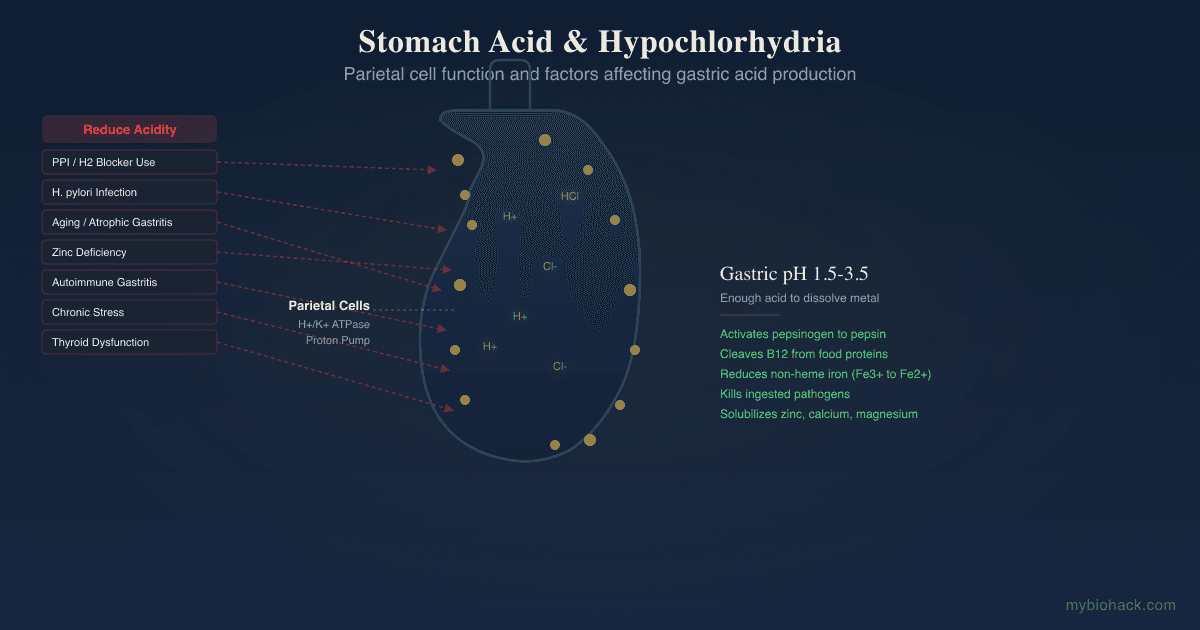
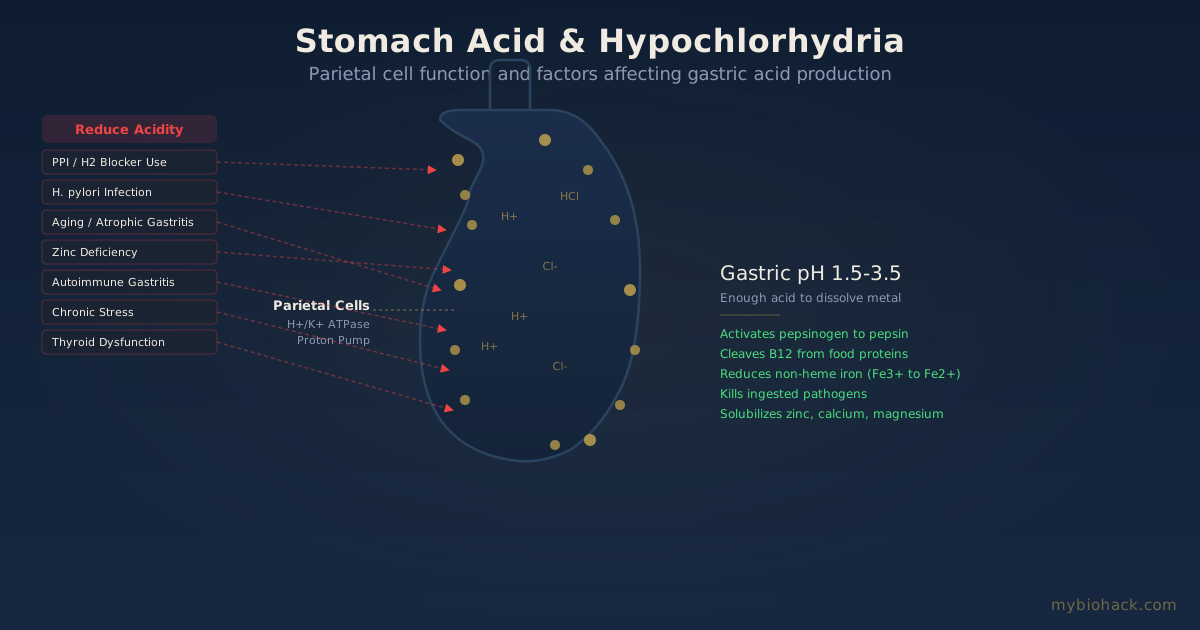
Gastric acid is produced by parietal cells in the stomach lining and is composed primarily of hydrochloric acid (HCl), potassium chloride, and sodium chloride.
Healthy gastric pH sits between 1.5 and 3.5 in a fasted state, concentrated enough to dissolve metal and activate digestive enzymes. R
The stomach secretes HCl through the H+/K+ ATPase proton pump, an enzyme that exchanges hydrogen ions for potassium ions across the parietal cell membrane.
Gastric acid serves several essential roles beyond digestion.
Acid is required to cleave vitamin B12 from food proteins so it can bind to intrinsic factor and be absorbed in the ileum. R
Non-heme iron (the form found in plants) must be reduced from ferric (Fe3+) to ferrous (Fe2+) iron in an acidic environment before it can be transported across the intestinal epithelium. R
Zinc, calcium, magnesium, and folate absorption all depend on adequate gastric acidity. R
The stomach's acid barrier kills ingested pathogens and prevents bacterial overgrowth in the small intestine. R
Pepsinogen, secreted by chief cells, requires a pH below 4 to be converted into its active form, pepsin, which initiates protein digestion. R
Without adequate stomach acid, the entire digestive cascade starting with cephalic phase through gastric phase to intestinal phase becomes compromised.
Hypochlorhydria refers to low gastric acid output, while achlorhydria is the complete absence of acid secretion.
What Causes Low Stomach Acid
Hypochlorhydria is rarely idiopathic.
Most cases trace back to one or more of the following root causes.
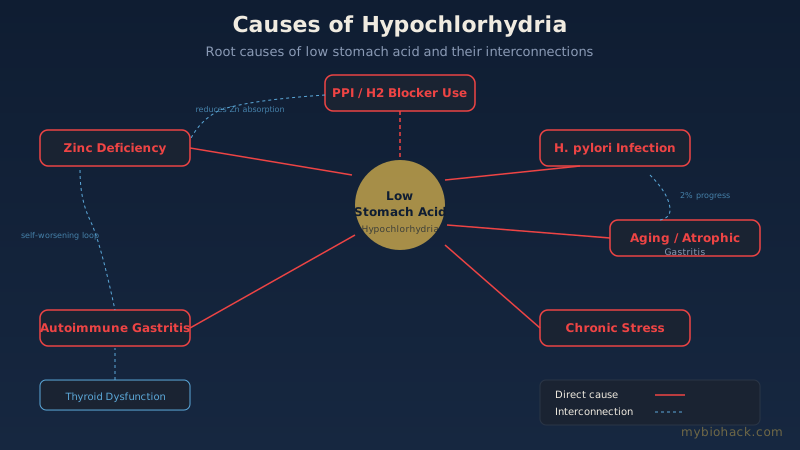
Proton pump inhibitor (PPI) use: the most common iatrogenic cause of hypochlorhydria in the developed world.
Chronic PPI use suppresses gastric acid production, and the resulting hypochlorhydria persists as long as the medication is continued. R
Even short-term PPI use (7 days) can produce small intestinal bacterial overgrowth (SIBO) in healthy volunteers. R
Meta-analyses show PPI users have a 2.1-fold increased risk of SIBO compared to nonusers, with risk increasing 4.3% per additional month of use. R
I have written extensively about the broader harms of PPIs in Proton Pump Inhibitors, Alzheimer's, Dementia And Mitochondrial Dysfunction.
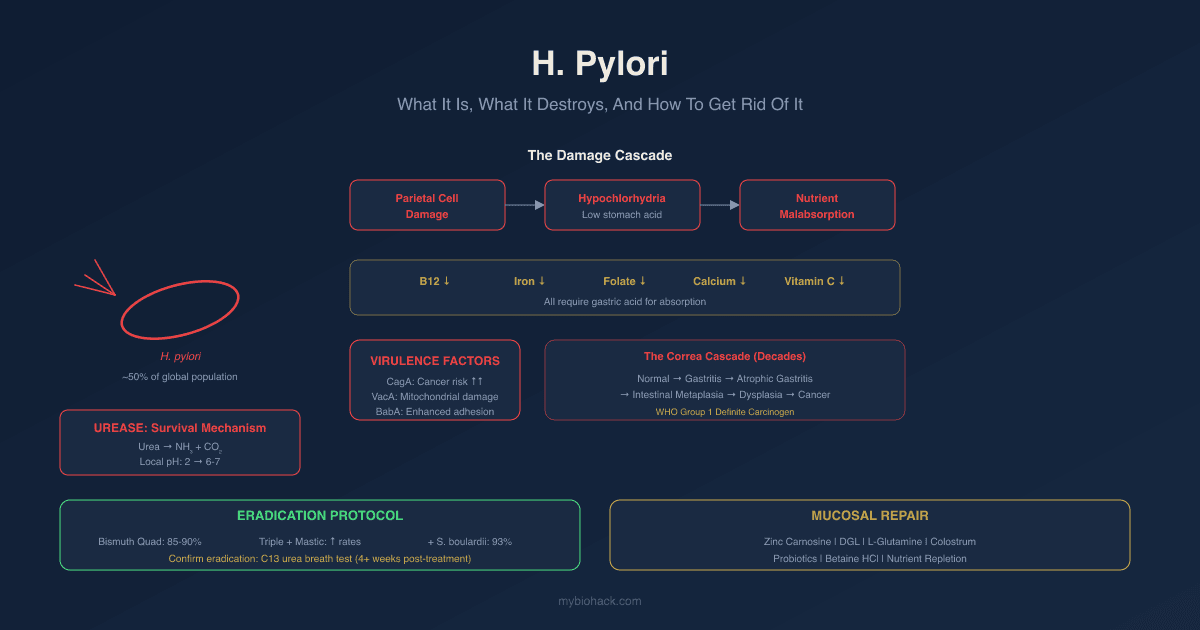
Helicobacter pylori infection: the most common infectious cause.
H. pylori actively represses gastric acid secretion as a survival strategy.
The bacteria uses its type IV secretion system (T4SS) to inject virulence factors (CagA, CagE, CagM, CagL) that activate NF-kB signaling in parietal cells, which in turn represses transcription of the H+/K+ ATPase alpha subunit (HKα). R
Acute H. pylori infection induces transient hypochlorhydria that can last weeks to months. R
In approximately 2% of patients, chronic infection progresses to atrophic gastritis with permanent loss of acid-secreting parietal cells. R
Eradication of H. pylori restores acid secretion in about 39% of patients at 7 months, with gradual recovery continuing up to 2 years post-therapy. R
I cover this extensively in H. Pylori Eradication: Protocols, Biofilm, Resistance.
Aging and atrophic gastritis: the conventional wisdom that aging causes hypochlorhydria is partially correct but misleading.
Gastric acid secretion is preserved with aging in healthy individuals without gastric atrophy. R
However, the prevalence of chronic atrophic gastritis increases with age, from about 2.7% in the 50-54 age group to 9.1% in the 70-74 age group. R
Nearly 90% of elderly individuals in one study could still acidify gastric contents normally. R
The decline in acid secretion attributed to aging is primarily driven by the higher prevalence of H. pylori-related atrophic gastritis in older populations. R
Autoimmune gastritis: a less common but more destructive cause.
In autoimmune gastritis, the immune system produces antibodies against parietal cells and intrinsic factor, leading to progressive destruction of the oxyntic mucosa. R
Prevalence in the general population is estimated at 0.5-4.5%, but it is substantially higher in patients with autoimmune thyroid disease (12-40%). R
The term "thyrogastric syndrome" describes the well-documented association between Hashimoto's thyroiditis and autoimmune gastritis. R
About 40% of patients with autoimmune gastritis also have Hashimoto's thyroiditis. R
Zinc deficiency: a bidirectional driver.
Zinc is a required cofactor for the function of carbonic anhydrase, the enzyme that generates the hydrogen ions (H+) that parietal cells pump into the stomach lumen. R
Chronic zinc deficiency reduces the parietal cell's capacity to produce acid.
Hypochlorhydria impairs zinc absorption, creating a self-worsening loop. R
PPI use reduces zinc absorption and body stores, further contributing to this cycle. R
I cover this in detail in Zinc And Copper: Ceruloplasmin, The Copper/Zinc Ratio.
Chronic stress: through HPA axis activation and altered autonomic tone.
Moderate somatic stress inhibits gastric acid secretion through endogenously released nitric oxide and altered vagal tone. R
Chronic stress shifts autonomic balance toward sympathetic dominance, which downregulates the cephalic phase of digestion and reduces gastric blood flow. R
Stress also promotes H. pylori colonization and alters gastric mucosal defense mechanisms. R
Thyroid dysfunction: both hypothyroidism and hyperthyroidism can impair acid production.
Hypothyroidism reduces gastric motility and acid secretion through decreased metabolic demand on parietal cells and associated autoimmune gastritis. R
Hyperthyroidism is associated with low acid production partly due to autoimmune gastritis with hypergastrinemia. R
I have written a full guide at Hashimoto's Thyroiditis And Autoimmune Root Cause.
Symptoms Of Hypochlorhydria
Symptoms of low stomach acid are nonspecific and overlap with many other gastrointestinal conditions, which is why hypochlorhydria is frequently missed.
Symptoms: (not exclusive list)
- **Bloating and gas** (undigested protein ferments in the gut)
- **Burping within one hour of eating** (food sits in the stomach too long)
- **GERD and heartburn** (paradoxical: low acid prevents lower esophageal sphincter closure, allowing reflux of what little acid is present) R
- **Iron deficiency anemia** (refractory to oral iron) R
- **Nausea after supplements** (particularly multivitamins or fish oil)
- **Postprandial fullness** (food sits in the stomach)
- **SIBO and dysbiosis** (the acid barrier fails, allowing oral and gastric bacteria to colonize the small intestine) R
- **Undigested food in stool**
- **Vitamin B12 deficiency** (cannot cleave B12 from food proteins) R
- **Weak or brittle nails**
- **Zinc deficiency signs** (white spots on nails, poor wound healing, loss of taste/smell)
Hypochlorhydria And Overlapping Conditions
Low stomach acid creates a permissive environment for a wide range of downstream conditions.
Small intestinal bacterial overgrowth (SIBO): the most direct consequence.
Gastric acid is the body's first line of defense against ingested bacteria.
When pH rises above 4, the stomach's bactericidal barrier fails and bacteria from the oral cavity and upper GI tract colonize the small intestine. R
SIBO prevalence in PPI users is 36.8% versus 19.9% in controls. R
I cover this in depth in SIBO: Small Intestinal Bacterial Overgrowth.
Dysbiosis: the loss of the gastric acid barrier alters the composition of the entire GI microbiome.
Hypochlorhydria allows gram-positive bacteria to colonize the stomach and proximal small intestine. R
PPI-induced dysbiosis is now considered a distinct form of SIBO. R
See my full guide on Dysbiosis: Root Causes, Testing, Protocols.
Histamine intolerance: while the connection is debated mechanistically, both conditions share overlapping symptoms.
Hypochlorhydria impairs protein digestion, which can increase histamine production from gut bacteria metabolizing undigested proteins. R
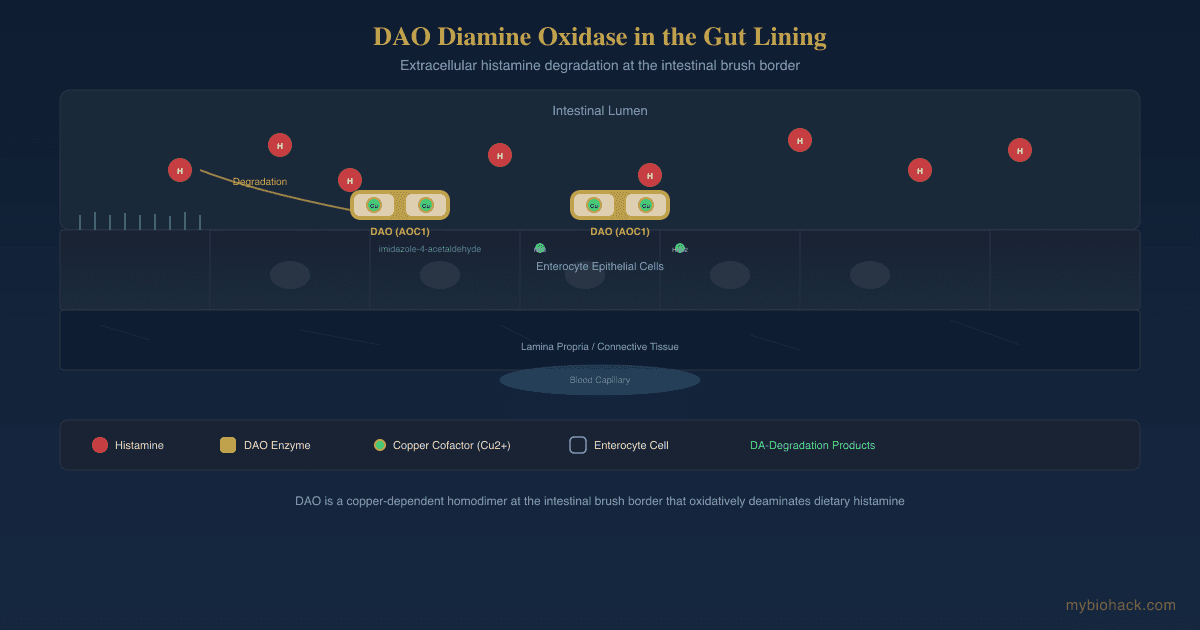
Low stomach acid reduces DAO enzyme activity in the small intestinal mucosa, possibly through mucosal inflammation. R
See Histamine Intolerance: Why Symptoms Occur And How To Fix Them.
Iron deficiency anemia: one of the most common clinical presentations of undiagnosed autoimmune gastritis.
Non-heme iron absorption requires a pH below 3 for reduction from ferric to ferrous iron. R
Up to 27% of patients with unexplained iron deficiency anemia have autoimmune atrophic gastritis as the underlying cause. R
I have written about iron overload dynamics in Iron Overload: Ferritin, HFE, Hemochromatosis.
Autoimmune thyroid disease: the thyrogastric connection is bidirectional.
Patients with Hashimoto's thyroiditis have a 12-40% prevalence of gastric parietal cell antibodies. R
Hypochlorhydria impairs levothyroxine absorption, making dose management difficult. R
Non-alcoholic fatty liver disease (NAFLD): emerging evidence links hypochlorhydria to liver fat accumulation through altered gut microbiota and increased intestinal permeability. R
See NAFLD, NASH And Chronic Liver Disease.
Parasitic infections: reduced stomach acid allows parasites that would normally be killed by gastric acid to survive transit through the stomach. R
I cover this in Parasites And Biliary Health.
How To Improve Stomach Acid
The approach to improving stomach acid depends on the root cause.
If the cause is H. pylori, eradication is the priority.
If the cause is PPI use, tapering off under medical supervision is the goal.
If the cause is zinc deficiency, zinc repletion is necessary.
If the cause is autoimmune gastritis, acid supplementation may be needed long term because the damage to parietal cells is often irreversible.
1. Address The Root Cause
H. pylori eradication: Triple or quadruple therapy per standard protocols.
Eradication restores acid secretion in roughly 39% of patients by 7 months. R
See H. Pylori Eradication for detailed protocols.
PPI tapering: Reduce dose gradually over 4-8 weeks.
Transition from PPIs to H2 blockers (famotidine), then to antacids as needed.
Sudden discontinuation can cause rebound acid hypersecretion.
Zinc repletion: Correct zinc deficiency to support carbonic anhydrase function.
2. Bitter Herbs Before Meals
Bitter compounds stimulate gastric acid secretion through activation of TAS2R bitter taste receptors on the tongue and in the gastric mucosa. R
Taking bitters 10-15 minutes before a meal primes the stomach for digestion.
Gentian (Gentiana lutea) is the most studied bitter herb for digestive stimulation.
Gentian contains the secoiridoid glycoside amarogentin, one of the most bitter compounds known, which activates TAS2R1, TAS2R4, TAS2R39, TAS2R43, TAS2R46, TAS2R47, and TAS2R50. R
In animal models, gentian decoctions stimulate acid, enzyme, and mucin production in the stomach. R
Wormwood (Artemisia absinthium) contains absinthin and other bitter sesquiterpenes that activate TAS2R10, TAS2R14, TAS2R46, and TAS2R47. R
A Swiss hospital database study found gentian and wormwood were among the most prescribed bitter preparations for digestive complaints. R
3. Ginger
Ginger accelerates gastric emptying and stimulates antral contractions in both healthy volunteers and patients with functional dyspepsia. R
A randomized trial showed ginger supplementation (2 g/day) with standard H. pylori quadruple therapy significantly reduced ulcer count and improved dyspepsia scores compared to quadruple therapy alone. R
A 12-week randomized controlled trial using 480 mg/day of steamed ginger extract significantly improved gastrointestinal symptom rating scale scores, including abdominal pain, indigestion, and reflux. R
Standard clinical dosing for gastric support is 1,000-2,000 mg of ginger root powder daily with meals.
4. Zinc Carnosine
Zinc L-carnosine (polaprezinc) is a chelated compound with direct mucosal cytoprotective and anti-inflammatory action. R
It has a high affinity for damaged mucosa and promotes healing of gastric tissue. R
In a rat model, zinc carnosine at 5 mg/ml reduced gastric injury by 75%, comparable to the potent cytoprotective agent EGF. R
Zinc carnosine (75 mg twice daily) has well-established efficacy in treating gastric ulcers regardless of the underlying cause. R
One study showed zinc carnosine prevented indomethacin-induced increases in gut permeability in human volunteers. R
5. Betaine HCl Supplementation
Betaine HCl provides direct HCl to the stomach, bypassing the need for the parietal cell proton pump to produce acid.
See the Betaine HCl Protocol section below for full titration instructions.
Betaine HCl Protocol
Betaine HCl is the hydrochloride salt of betaine (trimethylglycine).
When taken orally, betaine HCl dissociates into free betaine and hydrochloric acid. R
One 750 mg capsule of betaine HCl provides approximately 4.8 mmol of hydrogen ions (H+), which is roughly five times the acidifying power of 250 ml of Coca-Cola (pH 2.5). R
Clinical Evidence For Betaine HCl
The most rigorous data on betaine HCl comes from the UCSF research group led by Dr. Leslie Benet.
In a pilot study of six healthy volunteers with rabeprazole-induced hypochlorhydria, 1,500 mg of betaine HCl lowered gastric pH from 5.2 to 0.6 within 30 minutes. R
The onset was rapid: mean time to pH below 3 was 6.3 minutes. R
The re-acidification was temporary: pH stayed below 3 for 73 minutes and below 4 for 77 minutes. R
No significant adverse effects were observed. R
In a follow-up randomized crossover study, 1,500 mg betaine HCl completely reversed the impact of rabeprazole on dasatinib absorption, restoring drug exposure to 105-121% of baseline. R
A later study found that food buffers the effect of betaine HCl.
When administered after a light meal, 4,500 mg of betaine HCl was required to re-acidify gastric pH back to baseline, compared to 1,500 mg in the fasted state. R
This suggests betaine HCl works best when taken early in the meal, not after.
Titration Protocol
This is the standard empiric protocol used in functional medicine. R
The goal is to find the minimum dose that produces a warming sensation in the stomach, then back off by one capsule.
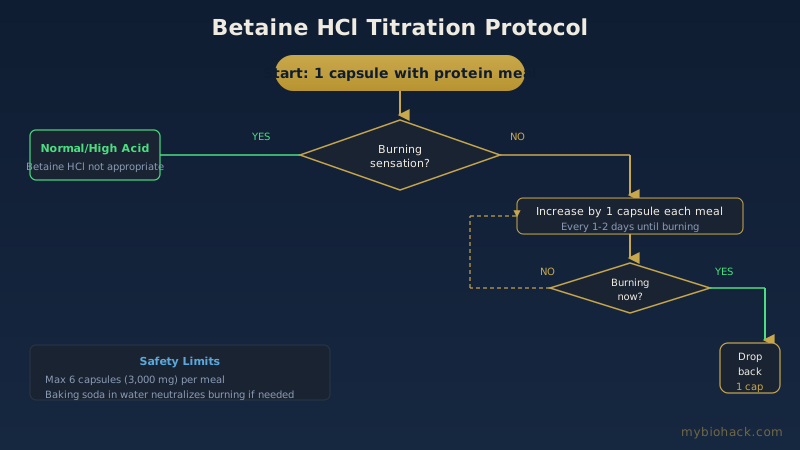
Start with one capsule of 500-750 mg betaine HCl with a protein-containing meal.
Take it mid-meal, not on an empty stomach and not at the end.
If no burning or discomfort, increase to two capsules with the next protein-containing meal.
Continue increasing by one capsule per meal every 1-2 days until you feel a distinct warming, tingling, or burning sensation in the stomach.
Once that sensation occurs, drop back by one capsule per meal.
That is your current effective dose.
If your dose requirement starts dropping over weeks to months, your natural acid production is recovering.
Do not exceed 3,000 mg (six 500 mg capsules) per meal as a safety limit. R
For smaller meals (under 500 calories or low protein), use fewer capsules.
If you feel burning at even one capsule, you likely have normal or high acid production (or active gastritis/ulcer), and betaine HCl is not appropriate for you.
Neutralize any burning with 1 teaspoon of baking soda in water.
When Not To Use Betaine HCl
Betaine HCl should not be used by anyone with active peptic ulcer disease, gastritis, or gastroesophageal reflux disease that is genuinely caused by excess acid (as opposed to the paradoxical reflux caused by hypochlorhydria). R
Always start with the lowest dose and titrate slowly.
Betaine HCl Versus Betaine (TMG)
Betaine HCl is different from betaine (trimethylglycine or TMG), which is used as a methyl donor for homocysteine metabolism.
Confusing the two is a known medication error. R
Betaine anhydrous (Cystadane) does NOT provide acid and should not be used for hypochlorhydria.
What To Stay Away From
Some interventions make hypochlorhydria worse or interfere with the stomach's ability to produce acid.
PPIs and H2 blockers: these are the most direct suppressors of gastric acid.
If you are on a PPI long term for GERD that is actually caused by hypochlorhydria, you are treating the wrong problem.
PPI-induced hypochlorhydria worsens the root cause and drives SIBO, nutrient malabsorption, and dysbiosis. R
Antacids: calcium carbonate and aluminum hydroxide-based antacids buffer stomach acid and raise pH.
Occasional use for genuine heartburn is one thing, but daily use perpetuates hypochlorhydria.
Zinc oxide: this form of zinc has poor solubility at elevated gastric pH.
In hypochlorhydric patients, zinc oxide is poorly absorbed compared to zinc acetate or zinc picolinate. R
Use zinc picolinate or zinc glycinate instead.
Excessive calcium carbonate: high-dose calcium carbonate acts as an antacid and buffering agent.
Calcium citrate or calcium malate are better options when hypochlorhydria is present.
Raw vegetables and hard-to-digest proteins: without adequate stomach acid, large amounts of raw vegetables and tough proteins can worsen bloating and fermentation.
Cooking vegetables and using slow-cooked meats or bone broth during the recovery phase reduces digestive burden.
Alcohol and NSAIDs: both damage the gastric mucosa and reduce the stomach's ability to produce and tolerate acid.
Chronic NSAID use increases intestinal permeability and reduces mucosal defense. R
Testing
Hypochlorhydria can be difficult to diagnose because standard endoscopy does not directly measure gastric acid secretion.
Multiple testing modalities exist, each with tradeoffs in accuracy, cost, and availability.
Heidelberg pH Capsule Test
The Heidelberg test is the gold standard for direct gastric pH measurement.
A small radio-telemetric capsule is swallowed with a tether, and it transmits real-time pH data from the stomach to a recorder. R
The patient drinks a sodium bicarbonate solution to neutralize stomach acid, and the test measures how quickly the stomach re-acidifies.
A healthy stomach returns to pH below 3 within 10-15 minutes.
Delayed re-acidification suggests hypochlorhydria.
The Heidelberg test is the method used in the betaine HCl clinical trials. R
Availability is limited to functional medicine clinics and some gastroenterology practices.
Betaine HCl Challenge Test
This is the most practical home test for hypochlorhydria.
It is the same as the titration protocol described above: start with one capsule of betaine HCl with a protein meal and observe for a warming sensation.
If you can take increasing doses of betaine HCl without any burning sensation, you likely have low stomach acid.
If even one capsule causes a strong burning sensation, your acid production is probably normal or high.
This is an empiric test, not a precise measurement.
Baking Soda Challenge
A simpler but less reliable home test.
Mix 1/4 teaspoon of baking soda in 4-6 ounces of cold water first thing in the morning on an empty stomach.
Time how long it takes to produce a burp.
Burping within 2-3 minutes is considered normal (acid reacts with baking soda to produce CO2 gas).
Delayed burping (over 3-5 minutes) or no burping may suggest low acid.
This test has low specificity but is harmless and easy to perform.
Serum Gastrin
Elevated fasting serum gastrin is a marker of hypochlorhydria.
When the stomach detects low acid, it signals G cells in the antrum to release more gastrin, which normally stimulates acid secretion.
If parietal cells are damaged or suppressed, gastrin rises without producing acid.
Elevated gastrin is seen in autoimmune atrophic gastritis, chronic PPI use, and H. pylori infection. R
Normal fasting gastrin is typically 25-111 pg/mL.
Values above 200 pg/mL warrant investigation for atrophic gastritis.
Pepsinogen I And Pepsinogen I/II Ratio
Serum pepsinogen I (PGI) and the PGI/PGII ratio are used to screen for gastric atrophy.
Low PGI (below 25 ng/mL) and a low PGI/PGII ratio (below 3) indicate corpus atrophy. R
These markers are more accurate than gastrin alone for identifying atrophic gastritis.
Serum Parietal Cell Antibodies (PCA) And Intrinsic Factor Antibodies (IFA)
Positive PCA and IFA confirm autoimmune gastritis.
PCA has a sensitivity of about 70-90% for autoimmune atrophic gastritis. R
IFA is less sensitive but nearly 100% specific for autoimmune gastritis with pernicious anemia.
Comprehensive Lab Panels
I use the Foundation Zoomer (Vibrant Wellness) to assess CBC, CMP, iron markers, and thyroid markers that can indicate nutrient malabsorption due to hypochlorhydria.
I use the Nutrient Zoomer (Vibrant Wellness) to assess zinc, copper, magnesium, vitamin B12, and vitamin D levels that are commonly depleted in hypochlorhydria.
I use the Gut Zoomer (Vibrant Wellness) to assess markers of SIBO, dysbiosis, and intestinal permeability that often accompany low stomach acid.
I use the Cellular Zoomer (Vibrant Wellness) to evaluate methylation status and organic acids that reflect B12 and folate sufficiency.
For individual markers, I use the Homocysteine + B12 + Folate Panel (Quest Diagnostics via Fullscript) to assess B12 status, and the Copper and Zinc Panel (Quest Diagnostics) to confirm zinc sufficiency.
Endoscopy With Biopsy
The definitive diagnostic method for identifying gastric atrophy and autoimmune gastritis.
Biopsies from the corpus and antrum are graded for atrophy using the OLGA staging system.
Endoscopy is warranted when serum markers (gastrin, PGI, PCA) suggest atrophic gastritis.
Mechanisms Of Action
Simple:
Gastric acid denatures proteins, activates pepsinogen to pepsin, solubilizes minerals, reduces non-heme iron for absorption, liberates vitamin B12 from food proteins, and kills ingested pathogens before they reach the small intestine.
Advanced:
- **H+/K+ ATPase Proton Pump**: Parietal cells express the gastric H+/K+ ATPase (also known as the proton pump), which catalyzes the electroneutral exchange of intracellular H+ for luminal K+, generating a million-fold concentration gradient of H+ across the apical membrane. This pump is the target of PPIs and the site of H. pylori-mediated repression through the CagL-ADAM17-EGFR-ERK1/2-NF-kB signaling cascade. R
- **Parietal Cell Secretory Regulation**: Acid secretion is regulated through three canonical pathways: histamine (from enterochromaffin-like cells via H2 receptors), gastrin (from G cells via CCK2 receptors), and acetylcholine (from vagus nerve via M3 receptors). All three converge on second messenger systems (cAMP and Ca2+) that activate the proton pump. R
- **Iron Absorption Physiology**: Dietary non-heme iron (Fe3+) requires reduction to Fe2+ by ferrireductase enzymes and ascorbic acid at acidic pH. The divalent metal transporter 1 (DMT1) on duodenal enterocytes transports Fe2+ using an H+ co-transport mechanism, meaning both gastric acid and brush border proton gradients are required. Intragastric pH above 3 significantly impairs iron reduction and solubilization. R
- **Microbial Barrier Function**: The gastric acid barrier maintains the proximal small bowel as a relatively sterile environment. When fasting pH rises above 4, oropharyngeal and gastric bacteria survive transit and colonize the duodenum and jejunum. This loss of colonization resistance drives SIBO. PPI use produces a pH-dependent increase in gastric and duodenal bacterial counts. R
- **Bitter Taste Receptor (TAS2R) Activation**: Bitter compounds like amarogentin (gentian) and absinthin (wormwood) bind to TAS2Rs on enteroendocrine cells, triggering a signaling cascade (gustducin, PLC-beta2, IP3) that increases intracellular Ca2+ and stimulates secretion of gastric acid, ghrelin, and GLP-1. Extracral TAS2Rs in the gastric mucosa and small intestine mediate these effects independent of taste perception. R
Genetics
ATP4A
The ATP4A gene encodes the alpha subunit of the gastric H+/K+ ATPase proton pump.
Variants that reduce expression or function of ATP4A directly impair the parietal cell's ability to secrete acid.
H. pylori exploits this by repressing ATP4A transcription through the NF-kB pathway. R
Autoantibodies against ATP4A (parietal cell antibodies) are the hallmark of autoimmune gastritis. R
MTHFR
The MTHFR gene encodes methylenetetrahydrofolate reductase, a key enzyme in the methylation cycle.
Reduced MTHFR activity increases homocysteine and can reduce substrate availability for methylation-dependent processes including gastric mucosal repair. R
rs1801133 (C677T): reduces enzyme activity by 35-70% in homozygous carriers; indirectly affects methylation capacity needed for gastric epithelial health.
I cover this in Methylation: Complete Guide.
TAS2R38
The TAS2R38 gene encodes a bitter taste receptor that detects phenylthiocarbamide (PTC)-like compounds.
Variants determine sensitivity to bitter compounds, including those in cruciferous vegetables and herbal bitters.
rs713598 (A49P): the PAV (proline-alanine-valine) haplotype confers strong bitter taste sensitivity; the AVI (alanine-valine-isoleucine) haplotype confers low sensitivity.
Individuals with the AVI/AVI genotype (nontasters) may require higher doses of bitter herbs to stimulate digestive responses. R
AOC1
The AOC1 gene encodes diamine oxidase (DAO), the primary enzyme for degrading ingested histamine in the gut.
rs10156191 (c.47C>T): reduced DAO activity; associated with histamine intolerance symptoms.
Hypochlorhydria may compound DAO deficiency by impairing protein digestion and allowing bacterial overgrowth that produces additional histamine. R
SLC23A1 / SLC23A2
These genes encode sodium-dependent vitamin C transporters that regulate ascorbic acid secretion into the gastric lumen.
Gastric ascorbic acid is essential for iron absorption and protection against N-nitroso compound formation.
Hypochlorhydria reduces ascorbic acid stability and bioavailability in the gastric juice. R
More Research
Gastric juice ascorbic acid and cancer risk: Hypochlorhydria leads to depletion of ascorbic acid (vitamin C) in gastric juice, which increases formation of carcinogenic N-nitroso compounds.
This is a proposed mechanism linking chronic hypochlorhydria to increased gastric cancer risk, independent of H. pylori. R
Betaine HCl in autoimmune gastritis: A 2024 narrative review proposed betaine HCl as a potential intervention for autoimmune gastritis to reduce hypergastrinemia, improve iron and B12 absorption, and potentially lower gastric cancer risk.
This remains theoretical and has not been tested in clinical trials for this specific population. R
Drug absorption interactions: Beyond dasatinib, at least 50+ drugs have pH-dependent solubility, including certain antifungals (ketoconazole, itraconazole), HIV protease inhibitors (atazanavir), tyrosine kinase inhibitors, and some bisphosphonates.
Hypochlorhydria (drug-induced or pathological) can significantly reduce the efficacy of these medications.
Betaine HCl may have a role in mitigating these interactions, though meal timing is critical. R
PPI-induced hypochlorhydria and dementia: The link between chronic PPI use and dementia risk is well documented.
Whether the mechanism involves B12 malabsorption, amyloid-beta clearance impairment, or direct mitochondrial toxicity (or all three) is not fully settled.
I have written more on this in Proton Pump Inhibitors, Alzheimer's, Dementia And Mitochondrial Dysfunction.
For biomarker testing I use the Nutrient Zoomer (Vibrant Wellness) to assess zinc, copper, B12, and folate status, and the Foundation Zoomer (Vibrant Wellness) to evaluate iron markers and CBC parameters that reflect nutrient absorption.
I use the Gut Zoomer (Vibrant Wellness) to assess SIBO markers, digestive function markers, and intestinal permeability that commonly accompany hypochlorhydria.
I use the Cellular Zoomer (Vibrant Wellness) to evaluate methylation status and mitochondrial function that depend on adequate B12 and folate absorption.
I use the Food Zoomer (Vibrant Wellness) when food sensitivities secondary to poor protein digestion are suspected.
Disclaimer: This article is for informational purposes only and does not constitute medical advice.
Work with a qualified healthcare provider before starting any new supplement protocol, especially betaine HCl, which is contraindicated in peptic ulcer disease and active gastritis.*
Jacob Gordon
INHC, FMT-C
Integrative Nutrition Health Coach
I cover mold illness, post-viral recovery, methylation, and complex chronic disease, drawing on ten years of clinical research, work inside a functional medicine clinic, and my own recovery from all of it. Every claim here is cited.
Book a ConsultationRelated Protocols & Supplements
Deep-dive chapters and recommended supplements for this topic
Spore-Based Probiotics
1 cap with food
L-Glutamine
5g 2x/day on empty stomach
Butyrate
300mg 2x/day with meals