Hashimoto's Thyroiditis: The Autoimmune Root Cause Behind Most "Low Thyroid" Diagnoses
By Jacob Gordon, INHC, FMT-CThis article contains affiliate links. As an Amazon Associate, MyBioHack earns from qualifying purchases at no extra cost to you. We only link products we research and stand behind.
Most people told they have a "low thyroid" are never told the real reason their thyroid is failing, which in developed countries is almost always an autoimmune attack called Hashimoto's thyroiditis.
In this post, we will discuss what Hashimoto's actually is, why it drives the majority of hypothyroidism, the immune mechanism that destroys the gland, why a normal TSH does not rule it out, the gut and infection triggers behind it, how it differs from Wilson's Temperature Syndrome, and the evidence-based interventions that lower thyroid antibodies.
Basics Of Hashimoto's Thyroiditis
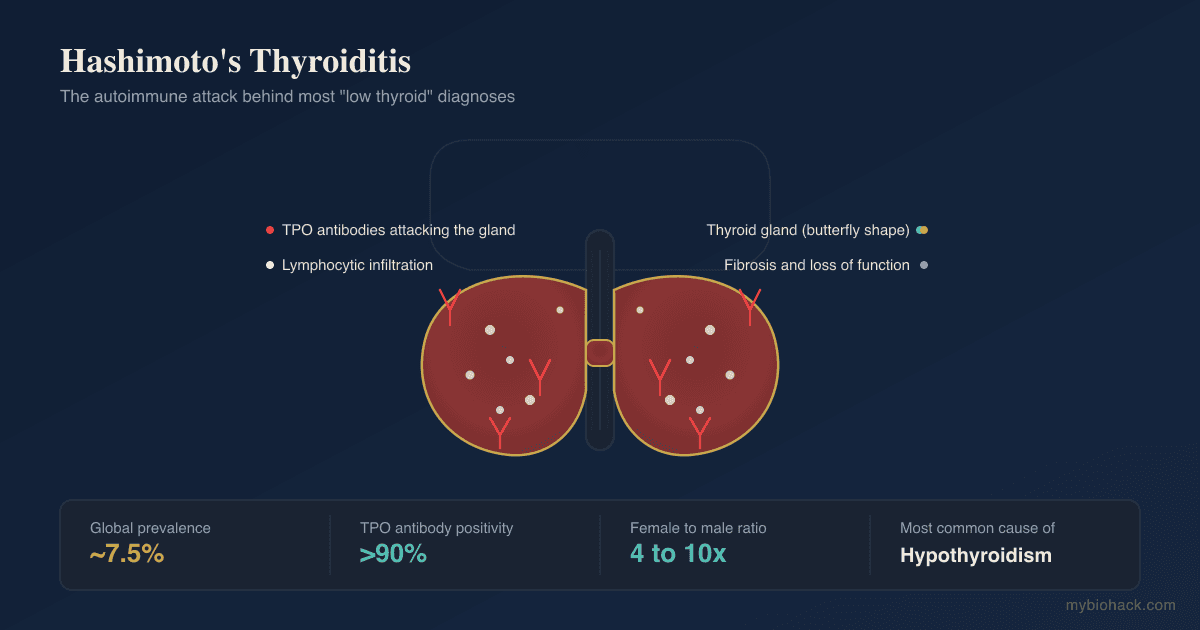
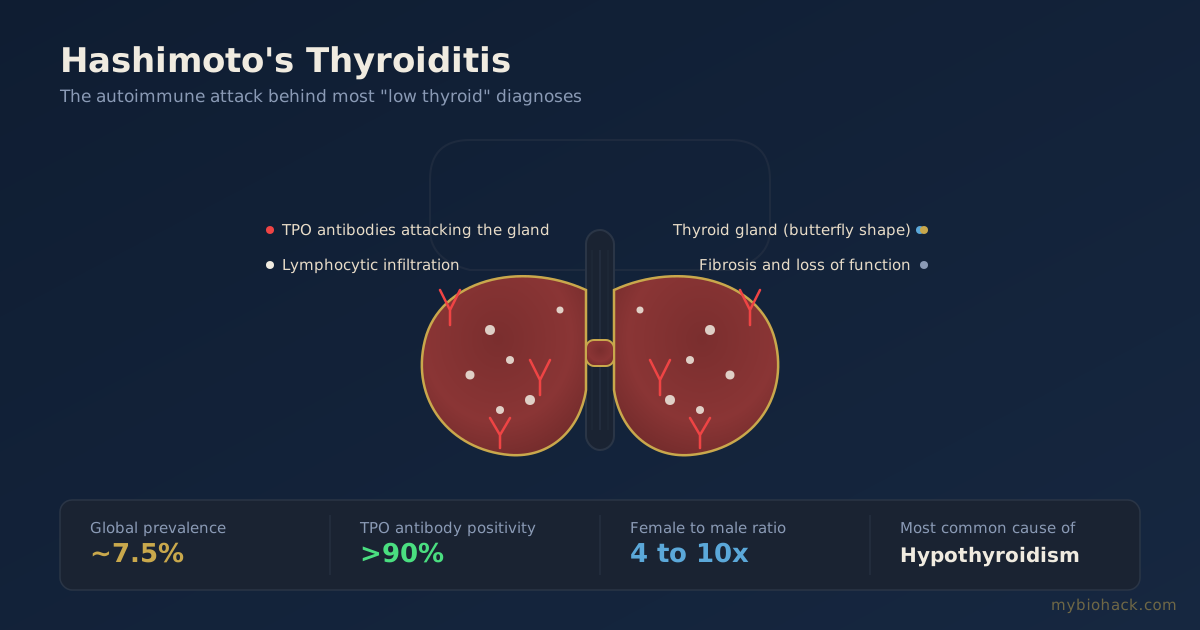
Hashimoto's Thyroiditis (HT) is a chronic autoimmune disease in which the immune system attacks the thyroid gland, gradually destroying its ability to make thyroid hormone.
It is the most common cause of hypothyroidism in iodine-sufficient regions, which includes essentially all of the developed world. R
This is the single most important fact about "low thyroid" that gets skipped: in the United States, Europe, and other iodine-replete countries, iodine deficiency is not why most thyroids fail.
An autoimmune process is.
The global prevalence of Hashimoto's is roughly 7.5%, and it runs 4 to 10 times higher in women than in men. R
The disease is defined by two features: circulating thyroid autoantibodies and lymphocytic infiltration of the gland.
Thyroid Peroxidase (TPO) antibodies are positive in over 90% of cases, and Thyroglobulin (Tg) antibodies are positive in 50 to 80% of cases. R
TPO is the enzyme that attaches iodine to thyroglobulin to build thyroid hormone, so an antibody attack on TPO is an attack on the assembly line itself.
Over time, immune cells infiltrate the gland, form lymphoid follicles inside the thyroid tissue, and drive fibrosis and loss of function. R
The result is a slow slide from normal thyroid function, to subclinical hypothyroidism, to overt hypothyroidism, often over years.
What Causes Hashimoto's Thyroiditis
Hashimoto's is a classic triple interaction of genetics, environment, and immunity. R
A genetically susceptible person meets an environmental trigger, tolerance breaks down, and the thyroid becomes a target.
Root drivers and triggers (not an exclusive list):
- Epstein-Barr Virus (EBV) and other viral infections that reactivate in thyroid tissue R R
- Genetic predisposition through HLA, CTLA-4, PTPN22, and thyroglobulin gene variants R
- Gut dysbiosis and intestinal permeability that let bacterial products and food antigens reach the immune system R
- Gluten sensitivity and the molecular mimicry between gliadin and thyroid tissue R
- Helicobacter pylori (H. pylori) infection, especially virulent CagA-positive strains R
- Vitamin D deficiency, which is more common in Hashimoto's and correlates with higher antibody titers R
- Yersinia and other enteric infections that share structural motifs with thyroid proteins R
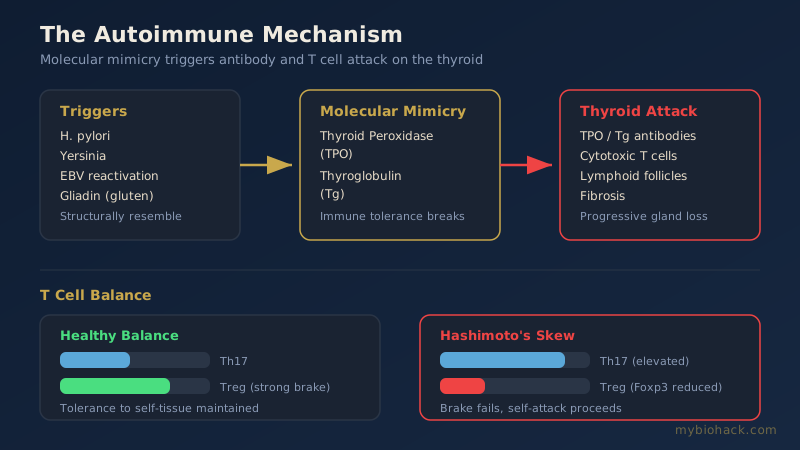
The common thread across most of these triggers is a concept called molecular mimicry, which is the same mechanism implicated in general autoimmunity throughout the body.
The immune system learns to attack a pathogen or a food protein, then cross-reacts with thyroid tissue that happens to look similar.
How The Immune System Destroys The Thyroid
The attack is both antibody-driven and cell-driven.
Antibodies against thyroid peroxidase and thyroglobulin flag the gland, while T cells infiltrate the tissue and carry out cytotoxic killing of thyroid cells. R
The T helper cell balance is central here.
In Hashimoto's, the response skews toward Th1 and Th17 activity with weakened regulatory T cell control, so the immune system loses the brake that normally prevents it from attacking self-tissue.
Direct immune profiling confirms this, with patients showing an elevated Th17/Treg ratio and reduced Foxp3 expression that tracks with thyroid autoantibody levels. R
Molecular mimicry is the leading hypothesis for how the attack starts. R
When an infection like H. pylori, Yersinia, or EBV presents proteins that structurally resemble thyroid peroxidase or thyroglobulin, the antibodies and T cells generated against the pathogen also bind thyroid tissue. R
The gut amplifies this.
Increased intestinal permeability, often measured through elevated zonulin, lets bacterial lipopolysaccharide and incompletely digested food proteins cross the gut barrier and reach immune tissue. R
Zonulin release is triggered largely by bacterial overgrowth and by gluten, which is one mechanistic reason the gut-thyroid axis keeps showing up in the research. R
This exposure can break immune tolerance, and the activated immune cells either stay in the gut or migrate to distant organs like the thyroid. R
Toll-like receptors on immune cells recognize these bacterial products and help ignite the inflammatory cascade, which is covered in depth in the post on toll-like receptors.
Why A Normal TSH Does Not Rule It Out
This is the most common way Hashimoto's gets missed.
Thyroid-Stimulating Hormone (TSH) is the pituitary signal that tells the thyroid to make hormone, and it is the only test most doctors order.
The problem is that TSH only rises after the gland has already lost enough function that the pituitary has to shout to compensate.
Thyroid antibodies appear years before TSH moves out of range.
In the twenty-year Whickham Survey, people who were euthyroid but antibody-positive had a dramatically higher risk of progressing to overt hypothyroidism than antibody-negative people. R
Women with both a raised TSH and positive antibodies had an odds ratio of 38 for developing hypothyroidism, and for men the odds ratio reached 173. R
TPO antibody positivity is the single strongest predictor of progression from subclinical to overt disease. R
The practical takeaway is that a "normal" TSH tells you nothing about whether an autoimmune attack is underway.
If you feel hypothyroid but your TSH is in range, the antibodies are the test that actually answers the question.
Catching the disease at the antibody stage, before the gland is destroyed, is the entire point of testing them.
Hashimoto's And Overlapping Conditions
Autoimmune diseases cluster, and Hashimoto's rarely travels alone.
Conditions that overlap with Hashimoto's (not an exclusive list):
- Celiac disease and non-celiac gluten sensitivity R
- Other organ-specific autoimmune diseases, reflecting shared HLA and immune-regulatory gene variants R
- SIBO and gut dysbiosis, which alter intestinal permeability and immune signaling R
- Vitamin D deficiency, both as a trigger and a consequence R
The shared thread is immune dysregulation plus a leaky gut barrier, which is why fixing the gut is a recurring theme in autoimmune protocols rather than a fringe idea.
Hashimoto's Versus Wilson's Temperature Syndrome
This distinction matters because the two are constantly confused, and treating one as the other wastes time.
Hashimoto's is a documented autoimmune disease with measurable antibodies, lymphocytic infiltration, and a clear pathology on ultrasound and biopsy. R
Wilson's Temperature Syndrome is a different and far more contested framework, built around the idea that a person can have low body temperature and hypothyroid symptoms with normal standard labs, driven by impaired T4-to-T3 conversion and elevated reverse T3.
The full breakdown of that model, including where the evidence is thin, is in the post on Denis Wilson's Temperature Syndrome protocol.
The key difference is that Hashimoto's is defined by an antibody-mediated attack on the gland, while Wilson's framework is defined by a conversion and utilization problem downstream of a structurally intact gland.
Someone can theoretically have both a real autoimmune attack and a conversion issue, which is why testing antibodies and reverse T3 together, rather than choosing one story, is the more honest approach.
How To Improve Hashimoto's Thyroiditis
The realistic goal is to lower the autoimmune attack, support conversion, and remove the triggers feeding the fire.
None of this replaces thyroid hormone replacement when the gland has already failed, and it is not a substitute for working with a clinician.
1. Selenium
Selenium is the most evidence-backed nutrient intervention for Hashimoto's.
Meta-analyses of randomized trials show that selenium supplementation lowers TPO antibodies and TSH in people not yet on thyroid hormone, with a standardized reduction in TPO antibodies that grows over 3 to 6 months. R
Selenium is a cofactor for the enzymes that convert T4 to T3 and for the glutathione peroxidases that protect the thyroid from oxidative damage.
One randomized trial also found that selenium increased regulatory T cell activity, which is the arm of the immune system that restrains autoimmunity. R
Selenium as selenomethionine is the common trial form, usually dosed around 200 mcg per day.
Do not megadose, because selenium has a narrow therapeutic window and excess is toxic.
2. Myo-Inositol Plus Selenium
Adding myo-inositol to selenium outperforms selenium alone in subclinical Hashimoto's.
In a randomized trial of patients with mildly elevated TSH, the combination significantly lowered TSH, TPO antibodies, and thyroglobulin antibodies while raising free T4 over six months. R
An earlier randomized trial found the same pairing restored a euthyroid TSH in subclinical hypothyroid patients with autoimmune thyroiditis, an effect the authors linked to the presence of autoantibodies. R
Myo-inositol improves the thyroid cell's response to the TSH signal, which is why the pairing helps the gland work more efficiently.
Myo-inositol is typically combined with selenium in these protocols.
3. Vitamin D
Vitamin D deficiency is common in Hashimoto's and correlates with higher antibody levels. R
Meta-analyses of randomized trials show that vitamin D supplementation reduces TPO and thyroglobulin antibody titers, likely by promoting regulatory T cells and dampening Th17 activity. R
Vitamin D3 is best paired with the cofactors it depends on, including vitamin K2 and magnesium.
4. Remove Gluten (If You React)
A gluten-free diet is not universally required, but the evidence in Hashimoto's is meaningfully positive.
In a pilot study of drug-naive women with Hashimoto's, a gluten-free diet lowered TPO and thyroglobulin antibodies by about 24% over six months, while antibodies rose in the group that kept eating gluten. R
A meta-analysis of gluten-free diets in non-celiac autoimmune thyroiditis found reductions in TSH and improvements in free T4. R
The mechanism ties back to gliadin's structural mimicry of thyroid tissue and to gluten's role in triggering zonulin and gut permeability, which is explored further in the posts on gluten, zonulin, and gut barrier integrity and prolamine intolerance.
5. Fix The Gut
Because increased intestinal permeability and dysbiosis feed the autoimmune process, gut repair is foundational rather than optional. R
Address dysbiosis and rule out H. pylori, which is an underappreciated Hashimoto's trigger through molecular mimicry. R
Supporting the gut barrier and reducing the antigen load reaching the immune system is a slower lever than a supplement, but it targets an actual root cause.
6. Lower Oxidative Stress
The autoimmune attack generates oxidative damage in the gland, so antioxidant support is reasonable adjunctive care.
N-Acetylcysteine raises glutathione, the thyroid's main internal antioxidant.
Magnesium and omega-3 fish oil support the broader anti-inflammatory environment.
What To Stay Away From
Things that tend to worsen Hashimoto's (not an exclusive list):
- High-dose iodine supplementation, which can accelerate the autoimmune attack in an already antibody-positive gland
- Ignoring antibodies because TSH is "normal," which delays intervention until the gland is destroyed
- Ongoing gluten intake if you have celiac disease or a demonstrated antibody response to gluten
- Untreated H. pylori and gut dysbiosis, which keep feeding the immune trigger
- Untreated vitamin D deficiency, which removes a natural brake on autoimmunity
The iodine point is worth emphasizing, because iodine is marketed as a blanket thyroid fix and it can backfire in autoimmune thyroid disease.
Excess iodine increases the immunogenicity of thyroglobulin and can trigger or exacerbate thyroid autoimmunity, which is why the risk curve for iodine is U-shaped rather than "more is better." R
Hashimoto's is not iodine deficiency, so treating it like iodine deficiency can make it worse.
Testing
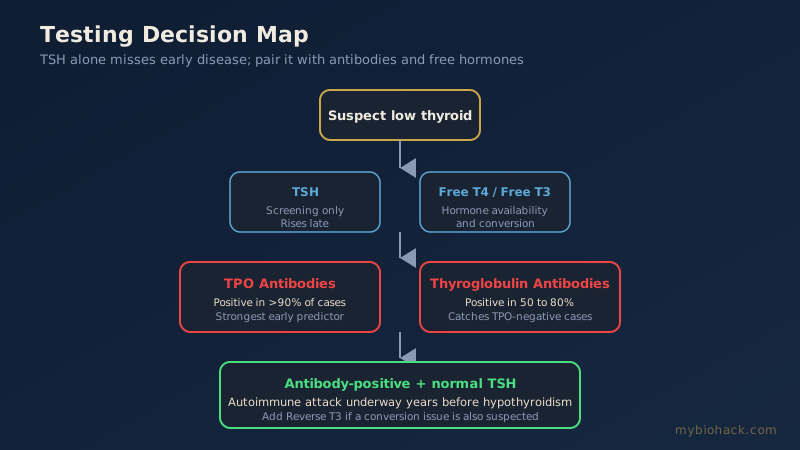
The goal of testing is to catch the autoimmune attack early, quantify how active it is, and separate an antibody problem from a conversion problem.
Blood Markers
Thyroid Peroxidase antibodies are the primary autoimmune marker and are positive in over 90% of Hashimoto's cases, so this is the single most important test the standard workup usually omits. R
I use the TPO Antibodies test (Access Labcorp) to screen for the autoimmune attack directly.
Thyroglobulin antibodies catch the additional cases where TPO antibodies are negative but the gland is still under attack, and I use the Thyroglobulin Antibodies test (Quest Diagnostics) for this.
The TPO + Thyroglobulin Antibodies combination test (Quest Diagnostics) covers both autoantibodies in one draw.
TSH is the standard screening marker, but on its own it misses early disease, so I pair the TSH test (Quest Diagnostics) with free hormones and antibodies rather than using it alone.
Free T4 measures the main hormone the gland secretes, and I use the Free T4 test (Quest Diagnostics) to see how much usable hormone is available.
Free T3 reflects how well T4 is being converted to the active hormone, which I assess with the Free T3 test (Quest Diagnostics).
Reverse T3 is the inactive metabolite that rises when conversion is shunted away from active hormone, and it is the marker that overlaps with the Wilson's Temperature Syndrome framework, so I use the Reverse T3 test (Quest Diagnostics) when a conversion problem is suspected.
Comprehensive Panels
For a complete thyroid picture in one panel, I use the Comprehensive Thyroid Panel with Antibodies (Precision Point) to assess TSH, free T3, free T4, TPO, and thyroglobulin antibodies together.
When I also want reverse T3 in the same panel, I use the Comprehensive Thyroid Panel with Antibodies and Reverse T3 (Precision Point), or the Comprehensive Thyroid Assessment (Genova) as an alternative.
The Foundation Zoomer (Vibrant Wellness) is useful when you want thyroid function alongside a full metabolic, immune, and hormonal baseline.
Root-Cause Panels
Because gut permeability and dysbiosis drive the autoimmune process, I use the Gut Zoomer (Vibrant Wellness) to assess the microbiome, zonulin, and permeability, or the GI-MAP (Diagnostic Solutions) as a PCR-based alternative that also detects H. pylori.
To evaluate the broader autoimmune picture, the Immune Zoomer (Vibrant Wellness) maps systemic and organ-specific autoantibodies.
Since vitamin D status modulates the autoimmune response, I check the Vitamin D (25-OH) test (Quest Diagnostics) as part of the workup.
For readers who want ongoing tracking of these markers over time, the Health Hub can chart antibody and hormone trends across draws, and a consultation through the contact page is the route for personalized interpretation.
Mechanisms Of Action
Simple:
- The immune system mistakes the thyroid for a threat and slowly destroys it, so the gland makes less and less hormone.
- Antibodies show up years before standard TSH testing turns abnormal, which is why the disease is usually caught late.
- Selenium, vitamin D, and fixing the gut lower the immune attack, while iodine can make it worse.
Advanced:
- Molecular mimicry and loss of tolerance Antigens from H. pylori, Yersinia, EBV, and gliadin share structural motifs with thyroid peroxidase and thyroglobulin, so adaptive immune responses raised against these triggers cross-react with thyroid tissue and break self-tolerance. R
- Th1/Th17 skew with Treg failure Hashimoto's is driven by a cell-mediated response weighted toward Th1 and Th17 cytokines with impaired regulatory T cell suppression, allowing cytotoxic T cells and lymphoid follicles to form within the gland and destroy thyrocytes. R
- Gut barrier and zonulin signaling Bacterial overgrowth and gluten trigger zonulin release, increasing intestinal permeability so that lipopolysaccharide and dietary antigens reach gut-associated lymphoid tissue, amplifying systemic autoimmune activation that can localize to the thyroid. R
- Selenoprotein-mediated protection Selenium is incorporated into glutathione peroxidases and iodothyronine deiodinases, so adequate selenium both quenches the hydrogen peroxide generated during hormone synthesis and supports T4-to-T3 conversion, which is the biochemical basis for its antibody-lowering effect. R
- Vitamin D receptor immunomodulation Vitamin D acting through its receptor promotes regulatory T cell differentiation and inhibits pro-inflammatory Th17 responses, which is the proposed mechanism behind the antibody reductions seen in supplementation trials. R
Genetics
Hashimoto's is highly heritable, and the risk genes cluster around immune regulation and thyroid-specific antigens. R
HLA
The Human Leukocyte Antigen (HLA) class II region encodes the molecules that present antigens to T cells.
Specific HLA-DR and HLA-DQ variants change which self-antigens get presented, and several alleles including DR3, DR4, DR5, and DQ7 have been associated with Hashimoto's across different populations. R
HLA-DR3 has been reported more frequently in Hashimoto's patients than in controls, though the strength of the association varies by ethnicity. R
CTLA-4
Cytotoxic T-Lymphocyte-Associated protein 4 (CTLA-4) is an inhibitory receptor that acts as a brake on T cell activation.
Variants that weaken CTLA-4 function reduce that brake and are among the most consistently replicated non-HLA risk genes for autoimmune thyroid disease. R
PTPN22
Protein Tyrosine Phosphatase Non-receptor type 22 (PTPN22) encodes a phosphatase that regulates T cell receptor signaling.
rs2476601 (the R620W variant) makes T cells hyperresponsive and has been associated with Hashimoto's susceptibility in meta-analysis, though individual studies conflict. R
Thyroglobulin (TG)
The thyroglobulin gene encodes the protein scaffold on which thyroid hormone is built and is itself a major autoantigen.
Variants in the TG gene on chromosome 8q24 are linked to autoimmune thyroid disease and likely alter how thyroglobulin is presented to the immune system. R
More Research
Antibody titers track with symptom burden and inflammation, so falling antibodies over time is a reasonable signal that an intervention is reducing disease activity, not just moving a lab value. R
For biomarker tracking I use the Comprehensive Thyroid Panel with Antibodies and Reverse T3 to follow TSH, free hormones, antibodies, and conversion in one place across repeated draws.
Selenium's benefit is most reliable in people who are not yet on thyroid hormone replacement and appears to plateau, so more is not better and the therapeutic window is narrow. R
A Cochrane review is more cautious, noting that the selenium trials to date carry unclear-to-high risk of bias, so the antibody reductions are real but the evidence base is not yet airtight. R
The gluten evidence is genuinely mixed outside of celiac disease, and there is a big MAYBE here: some trials show antibody reductions and others show no effect, so the honest position is to test whether you personally respond rather than assume gluten is universally the problem. R
The gut-thyroid axis is one of the more promising and still-maturing areas of Hashimoto's research, with consistent findings of altered microbiota and elevated zonulin in patients but not yet definitive proof that correcting the gut reverses the disease. R R
Thyroid antibodies rarely disappear entirely even when hormone levels normalize, which is why Hashimoto's is best understood as a chronic autoimmune condition to be managed rather than a deficiency to be cured. R
Jacob Gordon
INHC, FMT-C
Integrative Nutrition Health Coach
I cover mold illness, post-viral recovery, methylation, and complex chronic disease, drawing on ten years of clinical research, work inside a functional medicine clinic, and my own recovery from all of it. Every claim here is cited.
Book a ConsultationRelated Protocols & Supplements
Deep-dive chapters and recommended supplements for this topic
Quercetin
500mg 2x/day
Vitamin D3 + K2
5000 IU + 200mcg/day
DAO Enzyme
1 cap before meals