DJ-1/PARK7: How To Revive NRF2 (with 27+ Ways To Increase Protein Deglycase DJ-1)
By Jacob Gordon, INHC, FMT-CThis article contains affiliate links. As an Amazon Associate, MyBioHack earns from qualifying purchases at no extra cost to you. We only link products we research and stand behind.
Protein Deglycase DJ-1 (DJ-1), also known as Parkinson Disease Protein 7 (PARK7) is a master regulator of redox status.
In this post, we will discuss how DJ-1 increases dopamine, enhances mitochondria, and combats most oxidative-stress related diseases.
Basics Of DJ-1
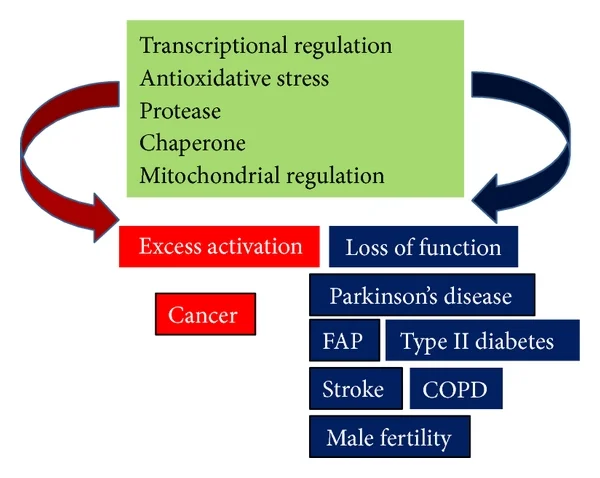
DJ-1's main abilities in a health are attributed to its ability to regulate:
Oxidative stress reactions
Signaling pathways
Low expression has been seen in diseases such as Alzheimer's Disease, Parkinson's Disease, Type 2 Diabetes, and male infertility.
Overexpression DJ-1 expression has been seen in some cancers.
Benefits Of DJ-1
1. Regulates Oxidative Stress Levels
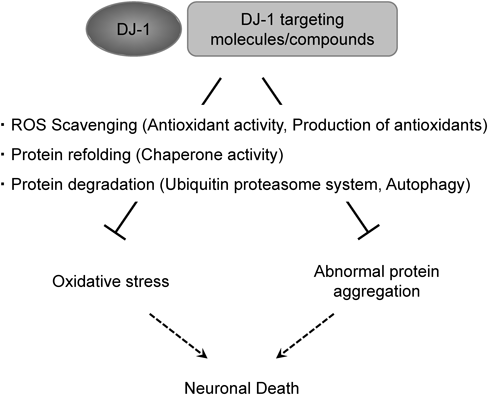
DJ-1 is a strong redox status sensor, meaning it can identify oxidative stress and:
DJ-1 senses, protects and balances oxidative stress in the body and brain for diseases such as:
ALS R
Alzheimer's Disease R
Cancer R
Dementia with Lewy Bodies (DLB) R
Huntington's Disease R
Male Infertility R
Multiple System Atrophy (MSA) R
Parkinson's Disease R
Stroke R
Sporadic Inclusion-Body Myositis (S-IBM) R
Type 2 Diabetes R
Two biggest oxidative stressors are Reactive Nitrogen Species (RNS) and Reactive Oxygen Species (ROS). R
Overproduction of Nitric Oxide (NO) can produce RNS, which is known to cause harm to neuronal function and survival. R
DJ-1 offers neuroprotection from RNS. R R
DJ-1 protects against oxidative stress by activating Superoxide Dismutase 1 (SOD1), a cleanup mechanism for ROS. R R
Loss of DJ-1 has shown to increase 8-Oxo-2'-deoxyguanosine (8-oxo-dG), a biomarker for oxidative stress of DNA. R
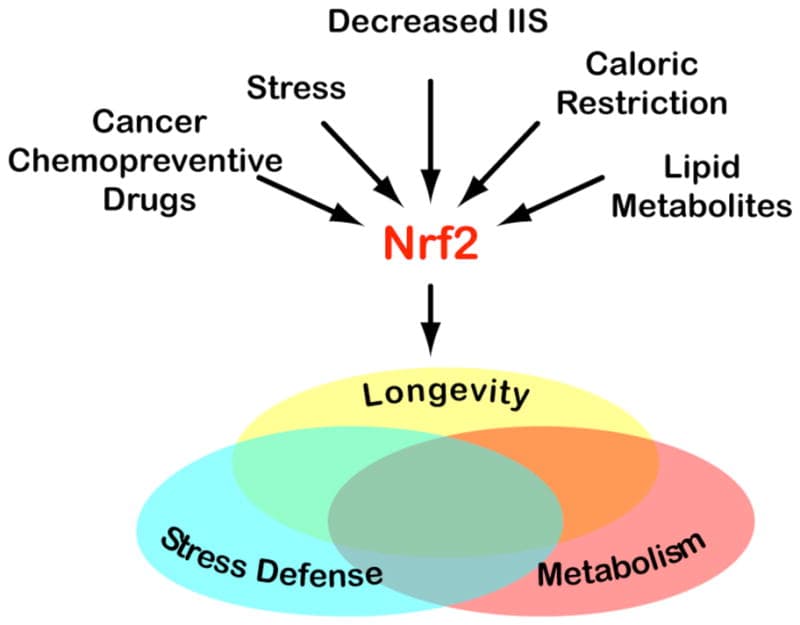
DJ-1 directly and indirectly increase NRF2 (a major transcription factor that regulates antioxidant responses). R R
DJ-1 and NRF2 can increase the antioxidants systems for Glutathione (GSH) and Thioredoxin (Trx) and increase Glutamate Cysteine Ligase (GCL), the rate limiting enzyme for glutathione production. R R R
DJ-1 is very important for antioxidant production, as when DJ-1 doesn't work, NRF2 becomes degraded faster than normal (thus NRF2 is not able to promote its antioxidant response). R
2. Combats Parkinson's Disease
PD is categorized by the increased amount of mitochondrial damage, oxidative stress and loss of dopaminergic neurons in the brain.
Low levels of DJ-1 has been shown to be a biomarker of PD. R R
Highly oxidized levels of DJ-1 have been shown to be in dopaminergic cells in the brains of Parkinson's Disease (PD) patients.
These oxidized levels of DJ-1 can cause misfolding of proteins (see proteopathy) such as α-synuclein (a commonly misfolded protein in PD). R R
Also, loss of DJ-1 function has shown to induce other misfolded proteins such as lewy bodies and tau tangles in many parts important parts of the brain such as the Substantia Nigra (SN), caudate, putamen, temporal cortex, hippocampus, and dentate gyrus. R R R
DJ-1 has shown to inhibit some of these proteins from devolping, such as α-synuclein and Microtubule Associated Protein (MAP). R R
DJ-1 also controls the production of Dopamine (DA) in the brain (especially in the SN). R
In the SN, DJ-1 inhibits oxidative stress by increasing GSH production and increases DA production by increasing Tyrosine Hydroxylase (TH) and DOPA Decarboxylase (DDC). R R
DJ-1 also works on DA in the SN by increasing Cholecystokinin (CCK) gene expression, which regulates the release of DA in the SN. R
DJ-1 can also prevent DA from oxidizing in the brain by increasing Dopamine Transporter (DAT) and Vesicular Monoamine Transporter 2 (VMAT2) activity, which brings DA back into the neuron. R R
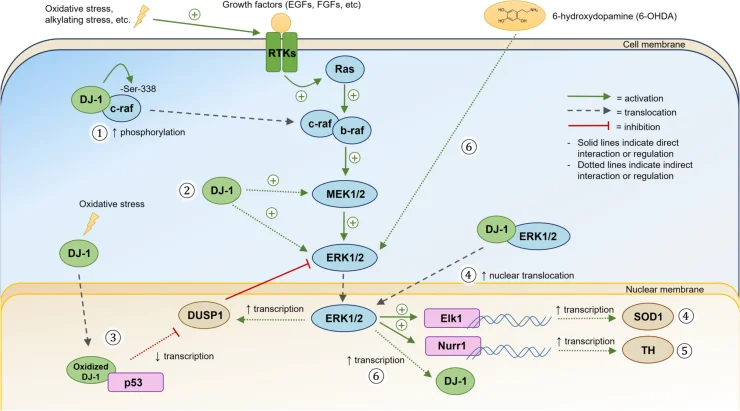
DJ-1 works on DA by increasing Nuclear Receptor Related 1 Protein (Nurr1), a transcription factor essential for DA neuron development and maturation (via Raf/MEK/ERK). R R
Loss of DJ-1 may reduce Glial-Derived Neurotrophic Factor's (GDNF) ability to restore DA neurons. R
3. May Abolish Alzheimer's Disease
DJ-1 may help with Alzheimer's Disease (AD). R
For example, UCP0054278, an inducer of DJ-1, can improve cognition, reduce Amyloid-Beta (AB) plaques, and prevent the degeneration of synaptic functions. R
4. Inhibits Neurodegeneration And Exicitoxocity
DJ-1 prevents neuroinflammation by its ability to downregulate Interferon Gamma (IFN-γ) and Signal Transducer And Activator Of Transcription 1 (STAT1). R
DJ-1 protects against Advanced Glycation Endproducts (AGEs). R R
DJ-1 may also protect against glutamate-induced excitotoxicity by increasing Excitatory Amino Acid Transporter (EAAT2) activity. R R
DJ-1 may also decrease bacterial-induced neuroinflammation. R
5. Improve Mitochondrial Function And Promotes Cell Survival
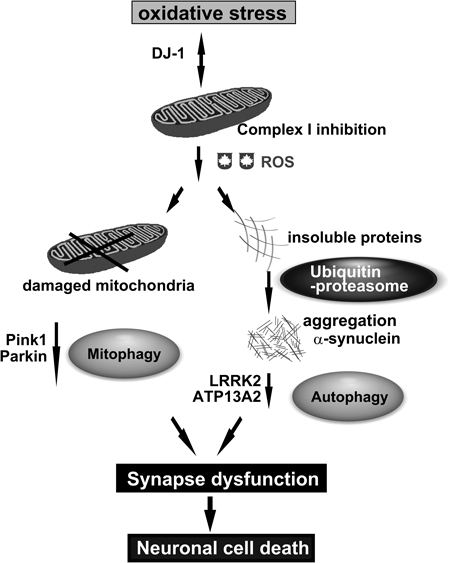
DJ-1 can enhance mitochondrial function and adaptation to stress. R
For example, DJ-1 protects cells against death in hypoxia (lack of oxygen) and improves their adaptation to it (via HIF1a/AMPK/mTOR) by upregulating antioxidant responses (via NRF2). R R R
DJ-1 is paramount for protecting mitochondria from toxic byproducts of glycolysis (by quenching ROS, etc). R
DJ-1 also regulates glucose use of Brown Adipose Tissue (BAT), fat cells with high amounts of mitochondria. R
Loss of DJ-1 leads to impaired autophagy (cell turnover) and accumulation of dysfunctional mitochondria. R R
For example, DJ-1 can directly bind to and increase Sirtuin 1 (SIRT1) activity, helping with autophagy. R
DJ-1 can also improve cell survival by activating the Extracellular Signal-Regulated Kinase (ERK1/2) pathway and inhibiting Apoptosis Signal-Regulating Kinase 1 (ASK1) activation. R
6. Protects Against Stroke And Hypoxia
DJ-1 may be a biomarker for stroke in its early stages. R R
DJ-1 is neuroprotective and upregulates during stroke. R
As said before, DJ-1 protects and adapts cells to hypoxia. R R
For example, DJ-1 can protect mitochondria in the heart during a hypoxic attack (heart attack). R
Loss of DJ-1 triggers the generation of a hypoxic state. R
7. Improves The Vascular System
DJ-1 can also promote vascular health by enhancing angiogenesis (growth of new blood cells).
It can do this by increasing Fibroblast Growth Factor Receptor-1 (FGFR1) signaling. R
DJ-1 also improves blood flow by reducing high levels of Angiotensin II (ANGII), while increasing levels of Heme-Oxidase 1 (HO-1) and Peroxisome Proliferator-Activated Receptor-gamma (PPAR-gamma). R
DJ-1 may prevent the development of atherosclerosis by regulating stem cell production of Smooth Muscle Cells (SMCs). R R
8. Plays A Role In Sporadic Inclusion-Body Myositis (S-IBM)
Sporadic Inclusion-Body Myositis (S-IBM) is characterized by muscle weakness and wasting which leads to severe disability. R
DJ-1 has been shown to by highly oxidized in muscles of patients with S-IBM as a self defense mechanism by muscles. R R R
9. Plays A Role In Amyotrophic Lateral Sclerosis (ALS)
Amyotrophic Lateral Sclerosis (ALS) affects motor neurons in the motor cortex, brainstem and spinal cord. R
In ALS patients, DJ-1 levels have been shown to be higher in the brain, but lower in muscle tissue. R
10. Plays A Role In Huntington's Disease
The pathology of Huntington’s Disease (HD) is associated with Polyglutamine (polyQ) Proteopathy. R
DJ-1 can accelerate polyQ aggregation and toxicity. R
11. Fights Multiple Sclerosis
High levels of DJ-1 is upregulated in lesions of Multiple Sclerosis (MS) patients in a possibly protective manner. R
This may help protect against the immune system from inducing a Th1 and Th17 response. R
12. Protects The Brain In Multiple System Atrophy (MSA)
Multiple System Atrophy (MSA) is a sporadic neurodegenerative disorder characterized by parkinsonism, cerebellar ataxia and dysautonomia, in various combinations. R
In models of MSA, ND-13, a peptide based off DJ-1, can protect motor neurons from damage. R
13. Regulates Bone Turnover
DJ-1 can regulate bone homeostasis by regulating the growth of bone cells. R
14. Keeps Muscles In Homeostasis

DJ-1 regulates high levels of ROS homeostasis in muscles. R
Increased ROS is beneficial for muscles and has been linked to increased lifespan. R
In animal models unable to express DJ-1, ROS and AMP-Activated Protein Kinase (AMPK) activation triggers a Warburg-like effect in muscle cells, showing higher energy expenditure without any temperature changes. R
Increasing expression of DJ-1 may increase protein accretion and muscle growth or help improve muscle mass with disease or aging. R
15. Preserves Male Reproduction
DJ-1 is found in sperm. R
DJ-1 plays a part in fertilization and is necessary for sperm to bind to the egg. R
Also, DJ-1 may be an effective biomarker for fertility. R
For example, DJ-1 is found in lower levels in patients with Asthenozoospermia (low sperm count/motility). R
16. Protects Against Metal-Induced Cell Death
DJ-1 can bind to metals such as copper and mercury and prevent their oxidative damage induced. R
17. Prevents Insulin Resistance And Diabetes
In obesity, fat cells are unable to efficiently store lipids, leading lipid accumulation in liver and muscle. R R
This buildup of excessive lipids contributes to blunting of insulin signaling to other parts of the body, thus limiting glucose uptake. R R R
This causes overexpression of insulin, which puts excessive oxidative stress on pancreatic cells, which are paramount for producing insulin. R R R
DJ-1 protects beta-pancreatic cells from dying during hyperglycemia by providing a strong antioxidant response and increasing NAD+ levels. R
DJ-1 is significantly reduced in the elderly with Type 2 Diabetes (T2D) and pancreatic cells become more susceptible to death. R
Loss of DJ-1 may increase glucose intolerance. R R
18. Plays A Role In Weight Gain And Obesity
In obesity, adipogeneis (fat cell growth and expansion) can happen from hypoxia and low-grade inflammation. R R
During inflammation, upregulated levels of DJ-1, CCAAT/Enhancer-Binding Protein-alpha (c/EBP-α), PPAR-gamma, Adipocyte Protein 2 (aP2), Lipoprotein Lipase (LPL), Glucose Transporter Type 4 (Glut4) have been seen in fat cells. R
19. May Help Chronic Obstructive Pulmonary Disease
DJ-1 activation may help with Chronic Obstructive Pulmonary Disease (COPD). R
COPD patients have less DJ-1, thus less NRF2, and thus persistent oxidative stress. R
20. May Protect Against Leaky Gut

DJ-1 is increased in Celiac Disease (CD) in response to gluten. R
DJ-1 may protect the gut barrier by acting as an antioxidant and protecting the gut lining from leaky gut. R
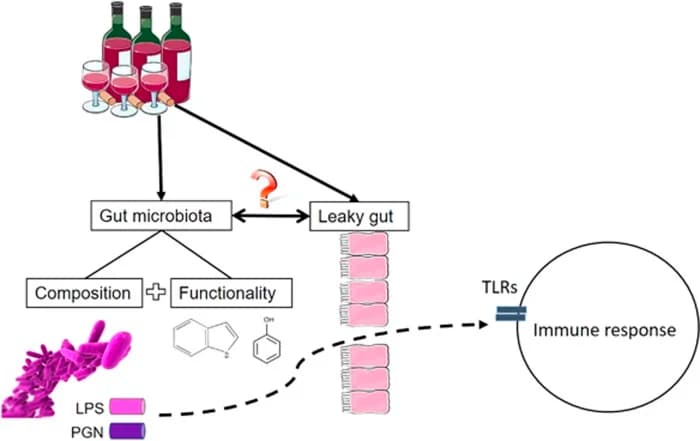
DJ-1 also protects against inflammatory responses from Lipopolysaccharide (LPS) by its ability to dampen Toll-Like Receptor 4 (TLR4) and Inducible Nitric Oxide Synthase (iNOS). R
DJ-1 may also increase oral tolerance by its ability to increase Regulatory T cells (Tregs). R
21. Protects The Skin
DJ-1 can prevent ultraviolet (UVA and UVB)-induced damage on skin and prevent collagen oxidation. R R
22. Improves Allergies
Deficiency in DJ-1 or it's overoxidation can cause IgE-mediated mast cell allergic responses, such as asthma and anaphylaxis. R R
23. May Protect Against Organophosphates
Organophosphates (OPs) such as pesticides, may cause neurological problems such as chemical sensitivities. R
DJ-1 is increased in an adaptive response from pesticide exposure and may protect against OPs. R
Paraoxonase-2 (PON2) expression may protect against loss of DJ-1 activity as seen in OP exposure in PD. R R
24. Protects Vision
DJ-1 plays an important role in protecting photoreceptors and Retinal Pigment Epithelium (RPE) from oxidative damage during aging. R
As seen with aging of the eye, loss of of DJ-1 reduces rhodopsin in the retina and increase RNS and ROS in the eyes, leading to photoreceptor damage and visual dysfunction. R R
For example, this can be seen with the pathology of Age-related Macular Degeneration (AMD). R
Downsides Of DJ-1
1. May Contribute To Cancer
DJ-1 can act as a biomarker for cancer (urine and blood). R R R
High levels of DJ-1 expression may be seen in:
Bladder Cancer R
Brain Cancer R
Cervical Cancer R
Melanoma R
Ovarian Cancer R
Pancreatic Cancer R
Prostate Cancer R
Renal Cancer R
Thyroid Cancer R
Uterine Cancer R
One way DJ-1 may promote cancer survival is by DJ-1 binding to SIRT1 and inhibiting p53 (a tumor suppressor gene). R R R
DJ-1 also inhibits Phosphatase And Tensin Homolog (PTEN), another tumor suppressor. R
DJ-1 may be an indicator for chemotherapy resistance (ie Cisplatin). R
One way it does this is by DJ-1 binding to Forkhead Box O3a (Foxo3a) and downregulating PTEN-Induced Kinase 1 (PINK1), two genes that regulates survival, growth, cell cycle, and chemoresistance. R R R
Inhibiting DJ-1 has shown to decrease chemoresistance. R
2. Plays A Role In Liver Scarring
DJ-1 expression may contribute to: R R
Cirrhosis
Hepatitis B virus infection
Hepatitis C virus infection,
Hepatocellular carcinoma
Primary biliary cirrhosis
Primary sclerosing cholangitis
Nonalcoholic Fatty Liver Disease (NAFLD)
3. May Worsen Sepsis
In response to sepsis, the body may use ROS to fight off a bacterial infection. R
As DJ-1 is a potent oxidative quencher, it may worsen sepsis. R
For example, patients with high levels of DJ-1 or IL-8 were more susceptible to septic shock from Acute Lung Injury (ALI). R
Why Does DJ-1 Stop Working?
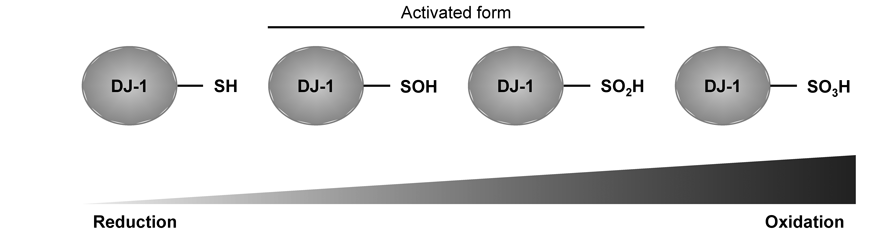
DJ-1 contains three cysteine residues (Cys106, Cys46, and Cys53) which can be oxidized to SOH, SO2H, and SO3H. R
Of the 3, Cys106 is highly sensitive to oxidative stress and enables DJ-1 to activate other pathways or shut down entirely. R
This means:
Small amounts of oxidation of DJ-1 causes DJ-1 to be activated, exerting its beneficial effects R R R R
ORComplete oxidation of DJ-1 causes the protein to be completely inactive R R R R
This full oxidation may be irreversible. R R
NRF2 is also necessary for many responses, and DJ-1 expression can restore NRF2 impairment. R
How To Increase And Stabilize DJ-1

Lifestyle/Food:
Broccoli Sprouts (sulforaphane) R
Exercise R
Supplements:
Alpha-Lipoic Acid - prevents DJ-1's downregulation R
CoQ10 (Ubisol-Q10) - protects from low DJ-1 activity in PD R
Da-Bu-Yin-Wan (DBYW) - enhances the protective effect of DJ-1 medicated Akt phosphorylation on mitochondrial function R
N-acetyl-L-cysteine (NAC) - in mitochondria R
Pyrroloquinoline Quinone (PQQ) - reduces self-oxidation of DJ-1 R
Resveratrol - reduces oxidized DJ-1 R
Sophora flavescens (ku shen) R
Hormones:
Drugs/Chemicals:
Pathways:
What Reduces DJ-1 Expression Or Overoxidizes DJ-1?
Lifestyle/Diseases:
Aging - DJ-1 oxidation is increased with aging. R
HIV R
Hypoxia R
Magnesium Deficiency R
Oxygen R
Pesticides (organophosphates) R
Supplements:
Ashwaganda - reduces DJ-1 in cancer R
Drugs:
Cocaine R
Dimethyl fumarate (DMF) - high doses R
Lovarstatin R
Ornidazole - decreases DJ-1 in sperm R
Paclitaxel R
Pathways:
Other:
MicroRNA-544 R
Mechanism Of Action
Simple:
Increases AKT R
Increases AR R
Increases ARE R
Increases BAT R
Increases CCK R
Increases DDC R
Increases ERK1/2 R
Increases FGF R
Increases GCL R
Increases GSK-3β R
Increases GSH R
Increases HER3 R
Increases HIF1a R
Increases HO-1 R
Increases HSP70 R
Increases iTregs R
Increases LDLR R
Increases PI3K R
Increases PPAR-gamma R
Increases Prdx-2 R
Increases SIRT1 R
Increases TRX R
Increases VMAT2 R
Reduces ASK1 R
Reduces a-Synuclein R
Reduces GRX1 R
Reduces IFN-gamma R
Reduces IL-4 R
Reduces KEAP1 R
Reduces Legumain R
Reduces MAP R
Reduces nTregs R
Reduces PINK1 R
Reduces PSF R
Reduces PTEN R
Reduces STAT1 R
Reduces TNF-a R
Advanced:
DJ-1 is expressed ubiquitously with high levels in the testis and brain and moderate levels in other tissues. R
DJ-1 expression increases with age in pancreatic cells. R
DJ-1 acts as a stress sensor, which enables transcription factors to translocate to the nucleus, activates survival pathways, or reduces the activity of pro-apoptotic signaling pathways. R
DJ-1 scavanges ROS by oxidizing Cys106, the activator for DJ-1. R R R
DJ-1 functions as a negative regulator of PTEN. R
DJ-1 inhibits protein inhibitor of activated STAT (PIASxa, an inhibitor of of androgen receptor, AR, activity) binding to AR and DJ-1 binds to DJ-1-binding protein (DJBP) and promotes AR transcription activity. R R
DJ-1 indirectly increases dopamine by inhibiting PSF (an inhibitor of TH), and increasing TH (directly) and DDC. R R
DJ-1 detoxifies NO via transnitrosylation to PTEN to form SNO-DJ-1 (neuroprotective role). R
DJ-1 to suppress the fibrillation of α-synuclein (via oxidation of Cys106). R R R
Cys106 can be oxidized either to the sulfinate (−SO2−) or sulfonate (−SO3−) - oxidation also causes DJ-1 to be unable to tell the difference of what kind of stress (mild or strong) as DJ-1 is biphasic. R
In brains of PD patients, DJ-1 mRNA is decreased putamen, frontal cortex, parietal cortex and cerebellum, but increased in the amygdala and entorhinal cortex; DJ-1 protein levels were lower in PD medulla, nigra, putamen, frontal cortex and cerebellum in comparison to age-matched controls. R
DJ-1 mRNA and protein levels are reduced significantly in the cerebellum (not normally associated with PD physiology). R
DJ-1 is not only susceptible to cysteine oxidation but also to methionine oxidation to methionine sulfoxide at Met-133 and Met-134 in PD. R
DJ-1 negatively regulates Von Hippel Lindau (VHL) protein ubiquitination activity of the α-subunit of hypoxia-inducible factor-1 (HIF-1α) by inhibiting HIF-VHL interaction. R
DJ-1 has regulates TRX and ASK1 - DJ-1 binds to ASK1 and prevents Trx1 from releasing ASK1, thus providing the cell with protection from apoptosis. R
DJ-1 acting on NRF2 acts in 2 ways: 1 by directly inducing NRF2; 2 reducing the ubiquitination (degredation) levels of Nrf2. R R
P53 is regulated by SIRT1 as well as Legumain. R
DJ-1 increases low-density lipoprotein receptor (LDLR) via sterol regulatory element-binding protein (SREBP). R
In the liver DJ-1 mRNA expression is not found to increase in NAFLD even though ROS rises. R
CD4+CD25+Foxp3+ thymocytes (thymic derived natural Tregs) were significantly more abundant in DJ-1−/− mice than in DJ-1+/+ mice. R
DJ-1 knockout results in an age-dependent accumulation of hexokinase 1 in the cytosol, away from its usual location at the mitochondria. R
DJ-1 knockout has increase growth hormone in lung cancer models. R
Genetics
PARK7
rs12727642 (I'm AC)
A Allele - higher risk of Celiac Disease R
rs137853051
TT Alleles - highest risk associated with Parkinson's Disease, followed by GT (moderate) then GG (no risk) R
rs161802
Unknown Allele - association with risk of Stroke R
rs17523802 (I'm AG)
AG Alleles - higher Parkinson's disease susceptibility in Italy R
rs28938172
CC Alleles - higher association to early onset Parkinson's Disease, followed by CT (moderate) then TT (no risk) R
rs35675666
rs3766606
Unknown Allele - associated risk for IBD R
C Allele - Associated risk for Ulcerative Colitis R
A Allele - higher risk for Crohn's Disease R
Unknown Allele - associated risk for Parkinson's Disease R
rs74315352
CC Alleles - higher association to early onset Parkinson's Disease, followed by CA (moderate) then AA (no risk) R
rs74315353
CC Alleles - higher association to early onset Parkinson's Disease, followed by CG (moderate) then GG (no risk) R
rs74315354
AA Alleles - higher association to early onset Parkinson's Disease, followed by AG (moderate) then GG (no risk) R
rs7517357 (I'm CT)
More Research
In bacteria, DJ-1 homologs repair DNA. R
Jacob Gordon
INHC, FMT-C
Integrative Nutrition Health Coach
I cover mold illness, post-viral recovery, methylation, and complex chronic disease, drawing on ten years of clinical research, work inside a functional medicine clinic, and my own recovery from all of it. Every claim here is cited.
Book a ConsultationRelated Protocols & Supplements
Deep-dive chapters and recommended supplements for this topic
Glutathione (Liposomal)
500mg 2x/day
Activated Charcoal
500mg away from food/meds
NAC
600mg 2x/day