9 Benefits Of TUDCA: The Bile Acid That Eases ER Stress, Protects The Liver, And Supports The Mitochondria
By Jacob Gordon, INHC, FMT-CThis article contains affiliate links. As an Amazon Associate, MyBioHack earns from qualifying purchases at no extra cost to you. We only link products we research and stand behind.
Tauroursodeoxycholic Acid (TUDCA) is a hydrophilic bile acid that behaves less like a digestive detergent and more like a cellular repair agent, calming the internal stress that sits underneath liver disease, insulin resistance, and neurodegeneration.
In this post, we will discuss what TUDCA is, how it differs from UDCA, its nine most evidence-backed benefits, where it actually comes from, how to dose it safely, and the molecular mechanisms that explain why one bile acid keeps showing up across so many unrelated conditions.

What Is TUDCA
TUDCA is the taurine conjugate of Ursodeoxycholic Acid (UDCA), which is itself a secondary bile acid made when gut bacteria act on chenodeoxycholic acid.
Conjugating UDCA with the amino acid taurine adds a charged sulfonate group, which keeps the molecule fully ionized and water-soluble across a wide pH range.
That single chemical change is why TUDCA matters.
Compared to UDCA, TUDCA is more polar, better absorbed by the intestine and liver, and less likely to sit around as an undissociated acid. R
Both molecules share the same core trick.
They are hydrophilic bile acids, which means they dilute the pool of toxic hydrophobic bile acids (like deoxycholic and lithocholic acid) that damage cell membranes and drive inflammation when bile flow slows.
The important distinction to hold onto is this.
UDCA is a prescription drug and the standard of care for primary biliary cholangitis, while TUDCA is its taurine-conjugated cousin, sold mostly as a supplement, with a smaller but genuinely interesting evidence base of its own.
Everything below is about TUDCA specifically, and where the data really belongs to UDCA or to a drug combination, this post says so.

The Nine Benefits Of TUDCA
1. It Calms Endoplasmic Reticulum Stress
This is the mechanism that ties the entire post together.
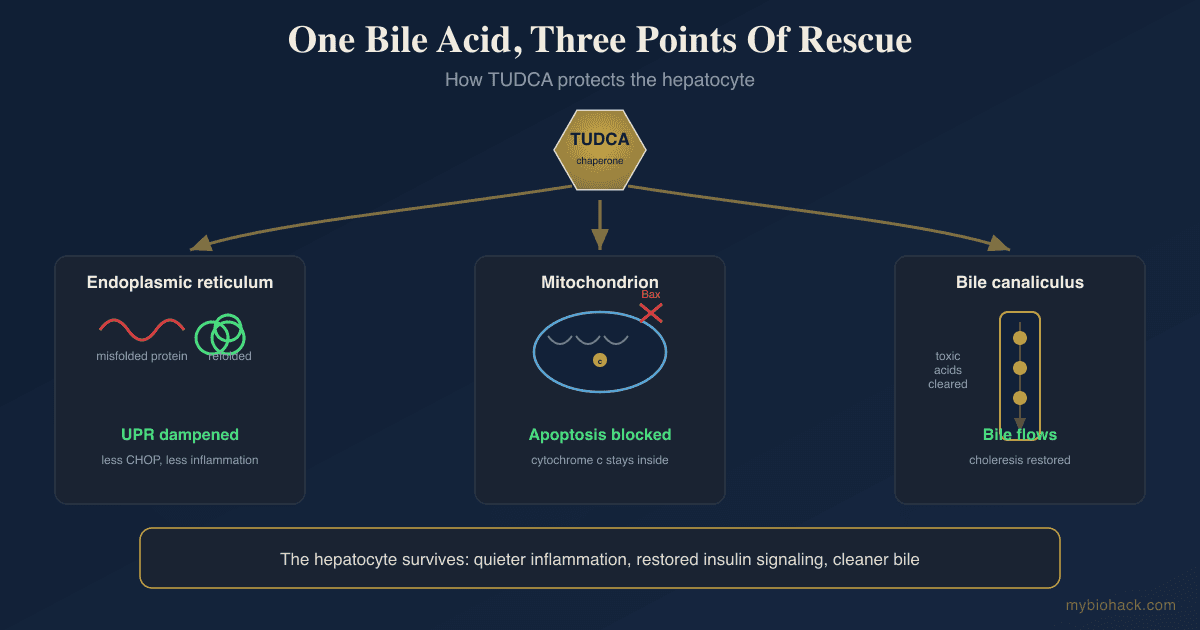
The endoplasmic reticulum (ER) is the cellular compartment where proteins are folded, and when misfolded proteins accumulate, the cell triggers the Unfolded Protein Response (UPR).
A short UPR is protective, but a chronic UPR flips into a pro-inflammatory, pro-apoptotic signal that shows up in diabetes, fatty liver, and neurodegeneration.
TUDCA acts as a chemical chaperone, meaning it helps proteins fold correctly and dampens the UPR before it turns destructive. R
In a landmark mouse study, TUDCA (alongside the related chaperone phenylbutyrate) relieved ER stress and restored glucose homeostasis in obese, diabetic animals. R
The same ER-calming effect has been shown in acute pancreatitis, where TUDCA reduced the UPR and blunted the downstream inflammatory damage. R
It also lowered ER stress markers and eased disease activity in a model of ulcerative colitis. R
If you only remember one thing about TUDCA, remember that it is an ER stress reducer, and most of the benefits below are downstream of that.

2. It Protects Mitochondria From Apoptosis
TUDCA does not only work in the ER.
It also stabilizes mitochondria, the organelles that decide whether a stressed cell lives or triggers programmed cell death.
In isolated mitochondria, TUDCA prevented Bax (a pro-apoptotic protein) from perforating the outer mitochondrial membrane and blocked the release of cytochrome c, the trigger that activates the caspase cascade. R
In neurons exposed to amyloid-beta, TUDCA suppressed Bax translocation to the mitochondria by activating the Phosphatidylinositol 3-Kinase (PI3K) survival pathway. R
This is a meaningfully different mechanism from most antioxidants.
Rather than mopping up a molecule, TUDCA interrupts the structural step of apoptosis itself, which is why it appears protective in tissues as different as liver, retina, and brain.
For readers focused on cellular energy, this pairs conceptually with strategies that raise NAD and support mitochondrial output, such as oxaloacetate.
3. It Improves Bile Flow In Cholestatic Liver Disease
This is TUDCA's oldest and best-established use.
In cholestasis, bile flow slows and toxic hydrophobic bile acids build up inside hepatocytes, damaging membranes and driving inflammation.
TUDCA is choleretic, meaning it stimulates bile flow, and it displaces those toxic bile acids from the circulating pool.
In a dose-response trial in primary biliary cirrhosis, TUDCA at 500 to 1500 mg per day improved liver biochemistry, with 1000 mg per day emerging as an effective dose. R
A pilot crossover study found TUDCA and UDCA to be roughly equivalent in improving liver enzymes in primary biliary cirrhosis. R
A later multicenter, randomized, double-blind trial reported that TUDCA matched UDCA for efficacy and tolerability in primary biliary cholangitis, with a signal toward better symptom relief. R
This is relevant to anyone dealing with sluggish bile, gallbladder sludge or biliary stones, or the anti-mitochondrial antibody (AMA-M2) picture that defines primary biliary cholangitis.
It is worth being clear that UDCA, not TUDCA, is the FDA-approved standard of care here, and TUDCA is best understood as the closely related conjugate with comparable head-to-head data.
4. It Supports Fatty Liver (NAFLD And NASH)
Non-alcoholic fatty liver disease is, at the cellular level, partly a disease of ER stress and lipotoxicity, which is exactly what TUDCA targets.
In mouse models of NAFLD, TUDCA reduced hepatic inflammation and, notably, also protected the intestinal barrier, cutting the flow of gut-derived endotoxin that fuels liver inflammation. R
Human data specific to biopsy-confirmed NASH remain limited, which is an honest gap to acknowledge.
The strongest human evidence sits one step upstream, in insulin resistance and hepatic fat handling, covered in the next benefit.
For blood sugar and liver support, TUDCA is sometimes stacked with berberine, which works through the separate AMPK pathway.
5. It Improves Insulin Sensitivity
This is the benefit with the cleanest human trial behind it.
In a randomized study, twenty obese, insulin-resistant men and women took either TUDCA at 1750 mg per day or placebo for four weeks. R
Hepatic and muscle insulin sensitivity rose by roughly 30 percent in the TUDCA group and did not change on placebo. R
The effect was tissue-specific, so liver and skeletal muscle improved while adipose tissue insulin sensitivity did not. R
The proposed reason maps directly back to benefit number one.
Obesity drives ER stress in the liver and muscle, and by relieving that stress, TUDCA appears to restore insulin signaling in those tissues, mirroring the earlier diabetic-mouse work. R
Four weeks and twenty subjects is a small, short trial, so this is a promising signal rather than a settled clinical claim.
6. It Strengthens The Gut Barrier
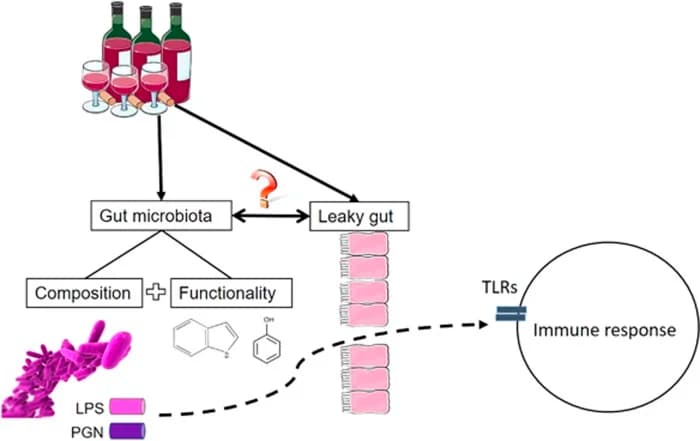
TUDCA is a bile acid, and bile acids are signaling molecules that talk directly to the gut lining through the Takeda G-Protein Receptor 5 (TGR5).
In weaned piglets, TUDCA improved intestinal barrier function through a TGR5 to myosin light-chain kinase (MLCK) pathway and shifted the gut microbiome favorably. R
In a mouse model of colitis, TUDCA reversed barrier dysfunction, restored tight-junction proteins, and corrected microbiome disruption. R
And in the NAFLD work above, TUDCA preserved tight-junction proteins like ZO-1 and occludin, which reduced the leak of inflammatory endotoxin from the gut into portal circulation. R
A tighter gut barrier is upstream of a quieter immune system, which is part of why a bile acid ends up mattering for people whose problems look nothing like liver disease.
Anyone working on bile and gut health together should also address the parasite and biliary overlap covered in parasites and biliary health.
7. It Shows Neuroprotective Signals
This benefit demands the most honesty, because it contains both the most exciting and the most sobering data on TUDCA.
TUDCA crosses into the brain, reduces ER stress and apoptosis in neurons, and has protected against amyloid and dopaminergic toxicity in animals.
In amyotrophic lateral sclerosis, a combination drug called AMX0035, pairing taurursodiol (a synonym for TUDCA) with sodium phenylbutyrate, slowed functional decline and extended survival in the phase 2 CENTAUR trial of 137 patients. R
A longer-term survival analysis of that same cohort reported a meaningful survival advantage. R
Those results led to FDA approval of the combination as Relyvrio in 2022.
Then the story reversed.
The much larger phase 3 PHOENIX trial (664 patients) failed to meet its primary endpoint, showing no significant difference from placebo on the ALS functional rating scale. R
Amylyx voluntarily pulled Relyvrio from the market in 2024, and the FDA formally withdrew its approval in 2025. R
The honest read is that TUDCA is not a proven ALS treatment, that it was tested as half of a two-drug combination and not on its own, and that the definitive trial was negative.
The Parkinson's and Alzheimer's data are earlier still.
For Parkinson's, most human trial work has used the parent compound UDCA, which was safe and well tolerated and hit a mitochondrial target of interest, while TUDCA itself remains at the animal-model stage in MPTP and rotenone models. R
For Alzheimer's, TUDCA prevented cognitive decline and reduced amyloid deposition in APP/PS1 mice, including when started after disease onset, but this is preclinical only. R R
The mechanistic case for neuroprotection is real, but the clinical case is not, and it would be dishonest to present it as more than a promising hypothesis.
8. It Protects The Retina
The retina is neural tissue, and it turns out to be one of the most consistent places TUDCA shows protection in animals.
In two different mouse models of retinitis pigmentosa, TUDCA preserved photoreceptors, thickened the outer nuclear layer, and maintained retinal electrical function on electroretinography. R
In a transgenic rat model of autosomal dominant retinitis pigmentosa, TUDCA-treated animals kept roughly three times as many photoreceptors as controls. R
TUDCA also protected photoreceptors from cell death after experimental retinal detachment. R
Part of the effect appears to run through calming the chronic microglial activation that accompanies retinal degeneration. R
This is entirely preclinical, but it is unusually reproducible across labs and models, which is why retinal disease is a leading candidate for future human TUDCA trials.
9. It Protects The Heart
The heart is another high-ER-stress, high-mitochondrial-demand tissue, so the pattern repeats.
In a model of pressure-overload cardiac remodeling, TUDCA reduced ER stress and attenuated the pathological remodeling that leads to heart failure. R
This is animal data, and it is included here as a mechanistic extension of the ER-stress story rather than a human cardiology claim.
The through-line across benefits 7, 8, and 9 is worth naming.
Wherever a tissue is failing because of chronic ER stress and mitochondrial-driven apoptosis, TUDCA tends to help in the lab, and the open question is always whether that translates to humans at tolerable doses.
Natural Sources
TUDCA is not something you meaningfully get from food.
Your own body makes small amounts, when the liver conjugates UDCA with taurine, and UDCA in turn is produced when gut bacteria transform primary bile acids using hydroxysteroid dehydrogenase enzymes. R
This means that healthy gut flora and adequate taurine are the two upstream inputs to your endogenous TUDCA pool.
The richest natural source is bear bile, which is why bear bile has been used in traditional Chinese medicine for centuries and why bears remain the reference organism for TUDCA biochemistry. R
For obvious ethical and conservation reasons, no one should pursue bear bile, and modern supplemental TUDCA is produced synthetically or by enzymatic conversion of other animal biles rather than harvested from bears.
Practically, the only way to reach the doses used in the research above is supplemental TUDCA, or a prescription for the parent compound UDCA under medical supervision.
Dosage And Safety
Doses in the human literature range from about 250 mg to 1750 mg per day.
The liver and insulin-sensitivity trials used the upper end, 1750 mg per day, for four weeks. R
The primary biliary cirrhosis dose-response work landed on roughly 1000 mg per day as an effective dose, tested from 500 to 1500 mg. R
For general liver and bile support, a common supplemental range is 250 to 500 mg per day, often taken with food, with the higher therapeutic doses reserved for specific goals and shorter runs.
Take TUDCA with fat-containing meals, since bile acids are released in response to dietary fat.
On safety, TUDCA is generally well tolerated, and the main reported side effects are gastrointestinal, chiefly loose stools or diarrhea, abdominal discomfort, and occasional nausea, which tend to be mild and dose-dependent. R
There are real limits to what we know.
No controlled human data exist for continuous use beyond about one year, and TUDCA has not been established as safe in pregnancy, so it should be avoided there.
Anyone with a complete bile duct obstruction, active gallstone disease, or an existing prescription for a bile acid drug should only use TUDCA under a clinician's guidance, because adding bile acids to an obstructed system is not benign.
If you want personalized guidance on whether TUDCA fits your situation, that is exactly the kind of thing to work through in a consultation.
Mechanisms Of Action
Simple:
- TUDCA helps stressed proteins fold correctly, which quiets the internal alarm (ER stress) that drives inflammation and cell death.
- TUDCA plugs the hole that pro-death proteins try to punch in the mitochondria, so damaged cells survive instead of self-destructing.
- TUDCA is a gentle, water-loving bile acid that pushes bile to flow and crowds out the harsh bile acids that irritate the liver and gut.
Advanced:
- Chemical chaperone activity TUDCA stabilizes protein-folding intermediates in the endoplasmic reticulum and suppresses the three arms of the unfolded protein response (PERK, IRE1-alpha, and ATF6), which lowers CHOP-driven apoptotic signaling and restores insulin receptor signaling in ER-stressed hepatocytes and myocytes. R R
- Anti-apoptotic mitochondrial stabilization TUDCA prevents Bax translocation and oligomerization at the outer mitochondrial membrane, blocking mitochondrial outer membrane permeabilization and cytochrome c release, and it does so partly by engaging the PI3K/Akt pro-survival cascade upstream. R R
- Bile acid pool modulation As a hydrophilic, taurine-conjugated bile acid, TUDCA enters enterohepatic circulation and displaces cytotoxic hydrophobic bile acids such as deoxycholic and lithocholic acid, reducing membrane damage and stimulating choleresis in cholestatic states. R
- TGR5 signaling at the gut barrier TUDCA is a TGR5 (GPBAR1) agonist, and activation of TGR5 to myosin light-chain kinase signaling upregulates tight-junction proteins like ZO-1 and occludin, reducing paracellular permeability and endotoxin translocation. R R
Genetics
TUDCA is handled by the same transporters and receptors that govern all conjugated bile acids, so a few genes shape how a given person absorbs, circulates, and responds to it.
SLC10A1 (NTCP)
SLC10A1 encodes the sodium-taurocholate cotransporting polypeptide, the main liver transporter that pulls taurine-conjugated bile acids like TUDCA back into hepatocytes from portal blood.
Loss-of-function variants reduce that uptake and raise circulating bile acid levels.
rs2296651 (the S267F variant, common in East Asian populations) lowers NTCP transport function and alters conjugated bile acid handling, which could plausibly change how TUDCA distributes.
ABCB11 (BSEP)
ABCB11 encodes the bile salt export pump, the transporter that moves conjugated bile acids out of the hepatocyte and into bile, the rate-limiting step in bile flow.
Severe mutations cause progressive familial intrahepatic cholestasis, while milder common variants nudge a person toward or away from cholestasis and gallstones.
rs2287622 (the V444A variant) is associated with altered BSEP expression and susceptibility to cholestatic conditions, which is the exact setting where TUDCA's choleretic effect is most relevant.
NR1H4 (FXR)
NR1H4 encodes the farnesoid X receptor, the nuclear bile acid sensor that controls bile acid synthesis, transport, and detoxification.
Functional variants in FXR blunt this feedback loop and are linked to intrahepatic cholestasis and altered bile acid homeostasis.
Because TUDCA reshapes the circulating bile acid pool, FXR tone helps determine the downstream signaling response to it.
GPBAR1 (TGR5)
GPBAR1 encodes TGR5, the membrane bile acid receptor that mediates TUDCA's effects on the gut barrier and on metabolic and immune signaling.
Variation in TGR5 expression and activity influences barrier integrity and inflammatory tone, which is the pathway behind benefit number six.
More Research
Anyone considering TUDCA should track its objective effects rather than guessing, and the relevant markers are cheap to measure.
For liver enzymes and bilirubin, I use the Hepatic Function Panel (Quest) or the broader Foundation Zoomer (Vibrant Wellness) to watch AST, ALT, GGT, and ALP before and after a trial.
For the insulin-sensitivity angle, I use the Fasting Insulin test (Quest) or the Cardio Zoomer (Vibrant Wellness) to track fasting insulin and HOMA-IR, the exact readouts that moved in the human TUDCA trial.
The chemical-chaperone label is not fully settled, and it deserves an honest caveat.
At least one recent study argues that some of TUDCA's protective effects in cells come from micelle formation that changes drug bioavailability rather than from direct protein chaperoning, which means the mechanism may be more layered than the tidy story implies. R
Most of the exciting TUDCA data outside of cholestatic liver disease is preclinical, small, or short-term, and the single largest rigorous human test involving TUDCA (the PHOENIX ALS trial, where it was one of two active ingredients) was negative. R
The reproducibility of the retinal findings across multiple independent models makes ophthalmology one of the more compelling directions for future human TUDCA trials. R
The strongest, most defensible use of TUDCA today remains what it has always been, supporting bile flow and hepatocyte health in cholestatic liver disease, with insulin sensitivity as the best-supported metabolic bonus. R R
Jacob Gordon
INHC, FMT-C
Integrative Nutrition Health Coach
I cover mold illness, post-viral recovery, methylation, and complex chronic disease, drawing on ten years of clinical research, work inside a functional medicine clinic, and my own recovery from all of it. Every claim here is cited.
Book a ConsultationRelated Protocols & Supplements
Deep-dive chapters and recommended supplements for this topic
Spore-Based Probiotics
1 cap with food
L-Glutamine
5g 2x/day on empty stomach
Butyrate
300mg 2x/day with meals