11 Benefits of Pentadecanoic Acid (C15:0)
By Jacob Gordon, INHC, FMT-CThis article contains affiliate links. As an Amazon Associate, MyBioHack earns from qualifying purchases at no extra cost to you. We only link products we research and stand behind.
Pentadecanoic Acid (C15:0) is an odd-chain saturated fat found mostly in dairy fat that a growing body of research argues may be the first essential fatty acid identified since the omega-3s.
In this post, we will discuss what C15:0 actually is, the evidence behind its cardiometabolic and liver benefits, where to get it, how to dose it, the mechanisms and genetics involved, and the honest limits of a field where much of the mechanistic work comes from a single company-affiliated research group.

What Is Pentadecanoic Acid (C15:0)
Pentadecanoic acid is a 15-carbon saturated fatty acid with an odd number of carbons in its chain, which is what makes it unusual.
Almost every saturated fat you eat has an even number of carbons (palmitic acid is C16:0, stearic acid is C18:0) because the body builds fat two carbons at a time.
Odd-chain fatty acids like C15:0 and its cousin heptadecanoic acid (C17:0) are made mainly by the gut bacteria of ruminant animals, then concentrated into their milk fat and meat.
That is why the primary dietary source of C15:0 is dairy fat, not fish or plants.
The reason C15:0 is getting attention is a hypothesis put forward largely by the research group behind the Fatty15 supplement, led by Stephanie Venn-Watson, who first noticed the pattern in bottlenose dolphins.
Dolphins on certain fish diets developed a metabolic-syndrome-like state, and when their diets were switched to fish higher in odd-chain fats, their circulating C15:0 rose and markers of that syndrome normalized within about three months. R
From that observation, the group proposed that C15:0 meets the classic criteria for an essential fatty acid, meaning it is dietary, biologically active, cannot be made in adequate amounts by the body, and its blood levels track directly with intake. R
That "essential" label is genuinely contested (a 2024 mini-review lays out the counterarguments, and the humans-make-some-of-it question is not settled). R
The distinction that matters most is endogenous synthesis versus diet.
Humans can make small amounts of C15:0 through peroxisomal alpha-oxidation (shaving one carbon off longer fatty acids) and possibly from gut-derived propionyl-CoA, but this internal production appears too small to maintain the levels linked to better health. R
So whether or not you accept the word "essential," the practical point holds: circulating C15:0 in most people is driven by how much dairy fat they eat, and population levels have been falling as low-fat dairy replaced whole-fat dairy. R
The Benefits Of C15:0
The benefits below are ordered roughly by strength of evidence, from human epidemiology down to mechanistic and animal work.
Read the caveats in each one, because the gap between "associated with" and "causes" is wide here.
1. Lower Type 2 Diabetes Risk
This is the best-supported finding, and it comes from large human cohorts, not the supplement maker.
A pooled analysis of 16 prospective cohorts (63,682 adults, 15,180 incident diabetes cases) found that people in the top fifth of circulating C15:0 had about 37% lower risk of type 2 diabetes than those in the bottom fifth (RR 0.63). R
An earlier multiethnic cohort (IRAS) found serum C15:0 was inversely associated with incident diabetes and with better insulin sensitivity and beta-cell function. R
The honest caveat is that C15:0 is also a biomarker of dairy intake, so some of this signal may reflect the whole dairy-fat pattern rather than the molecule itself.
2. Improved Glucose Uptake And Insulin Sensitivity
In cultured muscle cells, pentadecanoic acid raised both basal and insulin-stimulated glucose uptake in a dose-dependent way. R
It did this by activating AMPK and its downstream target AS160, which drives GLUT4 glucose transporters to the cell surface, the same low-fuel pathway targeted by metformin and berberine. R
Blocking AMPK abolished the effect, which pins the mechanism on AMPK rather than on insulin signaling itself.
3. Lower Cardiovascular Disease Risk
Higher circulating C15:0 has been repeatedly associated with lower cardiovascular disease risk in observational studies, one arm of the so-called dairy-fat paradox. R
The paradox is that a saturated fat biomarker predicts lower, not higher, cardiovascular risk, which runs against the old blanket "saturated fat is bad" model.
This is association data, so it cannot prove C15:0 protects the heart, and it does not override standard risk markers like ApoB and Lp(a).

4. Liver Protection (NAFLD And NASH)
In a rabbit model of fatty liver, daily C15:0 for 11 weeks lowered cholesterol and triglycerides, reduced liver iron deposition, and kept fibrosis from progressing from stage 2 to bridging fibrosis. R
In a small 12-week human trial in young adults with overweight or obesity, the subgroup that reached blood C15:0 above 5 µg/mL showed lower liver enzymes (ALT and AST). R
This is a plausible tool for non-alcoholic fatty liver disease, but the human data are early and were a subgroup finding, not a primary result.
5. Cell Membrane Stabilization And Ferroptosis Resistance
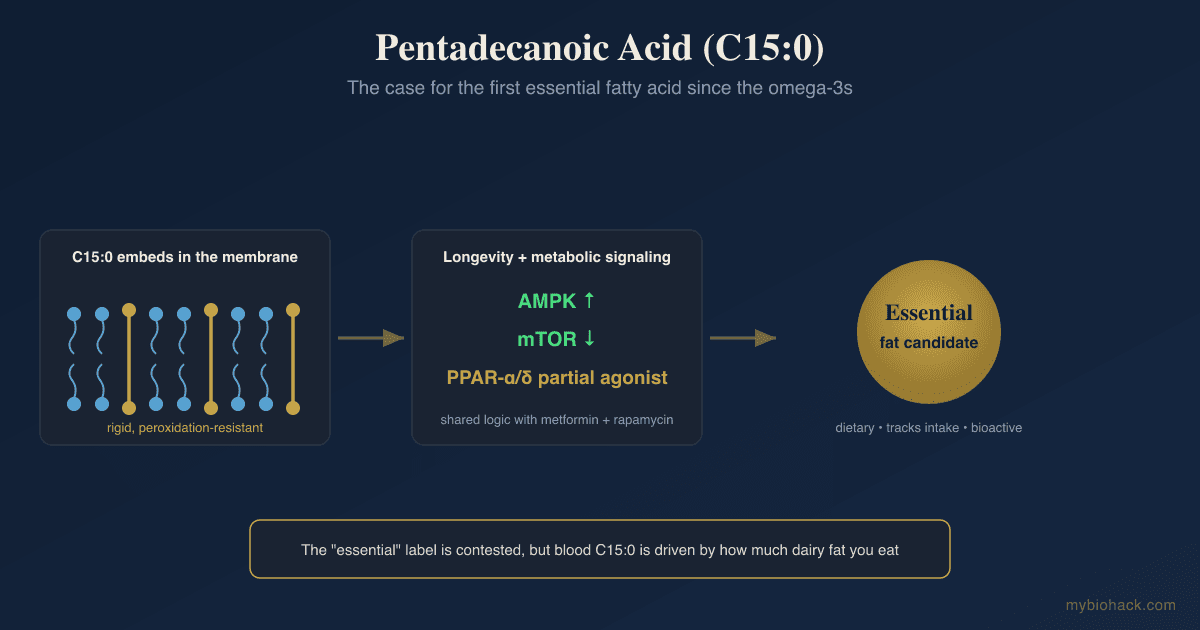
The central proposed mechanism is that C15:0 embeds in cell membranes and makes them more rigid and less prone to lipid peroxidation. R
That matters because ferroptosis, an iron-dependent form of cell death driven by peroxidation of fragile polyunsaturated fats in membranes, is implicated in diabetes, cardiovascular disease, and fatty liver. R

The group argues that below roughly 0.2% of total circulating fatty acids, membranes become fragile enough to raise ferroptosis susceptibility, and that levels above 0.4% to 0.64% are protective. R
These specific thresholds come from the company-affiliated group and have not been independently validated, so treat them as a hypothesis, not a reference range.
6. Mitochondrial Repair And Lower Oxidative Stress
C15:0 produced a dose-dependent reduction in mitochondrial reactive oxygen species in cell testing at 10 to 50 µM. R
Because mitochondrial dysfunction and oxidative stress sit upstream of most chronic metabolic disease, membrane and mitochondrial stabilization is the throughline the researchers use to connect the scattered benefits.
7. Anti-Inflammatory Activity
In obese mice, 5 mg/kg daily C15:0 lowered the pro-inflammatory chemokine MCP-1 and the cytokine IL-6, alongside lower glucose, cholesterol, and body-weight gain. R
Across a panel of human cell systems, C15:0 lowered multiple inflammatory signals including MCP-1, TNF-alpha, and IL-17. R
8. Antifibrotic Activity
The same cell-based screening found direct antifibrotic activity, which fits the liver-fibrosis findings from the animal work. R
Fibrosis (scarring) is a shared endpoint across chronic liver, kidney, and cardiovascular disease, so an antifibrotic signal is worth noting even at this early stage.
9. Anticancer Signals
In breast cancer stem-like cells, C15:0 suppressed stemness and triggered caspase-dependent apoptosis by shutting down JAK2/STAT3 signaling, with relatively lower toxicity to normal breast cells. R
In a 2025 study, dietary pentadecanoic acid was inversely associated with bladder cancer and suppressed tumor cell migration, invasion, and growth in cell and mouse models, with effects tied to the gut microbiome and lipid metabolism. R
These are preclinical anticancer signals only, and nobody should read them as a cancer treatment claim.
10. Red Blood Cell Stability, Anemia, And Iron Regulation
A recurring theme is that C15:0 stabilizes red blood cell membranes, reducing the low-grade hemolysis that can drive both anemia and iron overload.
In the rabbit fatty-liver model, C15:0 normalized hemoglobin, hematocrit, and red cell counts while lowering liver iron. R
In dolphins, raising dietary C15:0 resolved chronic anemia within three months. R
11. Mood And Endocannabinoid Tone
The body converts some C15:0 into pentadecanoylcarnitine, which acts as a full agonist at cannabinoid receptors CB1 and CB2. R
That same metabolite showed agonist activity at serotonin 5-HT1A and 5-HT1B receptors plus antihistamine activity at H1 and H2, alongside broad anti-inflammatory effects. R
This is the most speculative benefit, based on receptor binding rather than any mood outcome in people, but it is a genuinely novel mechanism.
Natural Sources
C15:0 is concentrated in ruminant dairy fat, where it makes up roughly 0.8% to 1.2% of total milk fat, with grass-fed animals producing more of it than grain-fed ones. R
Because it lives in the fat, low-fat and skim dairy have had most of it stripped out, which is part of why intake has fallen at the population level. R
Whole-fat food sources (roughly highest to lowest per serving):
- Butter and ghee (especially grass-fed)
- Full-fat cheeses (pecorino and other hard cheeses run high)
- Full-fat milk, cream, and full-fat yogurt
- Ruminant meat fat (beef, lamb)
- Some fish (mullet and catfish carry odd-chain fats similar to milkfat)
Plants and most fish oils contain negligible C15:0, so this is one of the few nutrients where whole-fat dairy is the practical dietary lever. R
Dosage And Safety
The researchers estimate that reaching the circulating levels associated with benefit takes roughly 200 to 300 mg of C15:0 per day, more than most modern low-dairy diets supply. R
The human trial that raised blood levels and moved liver-enzyme markers used 200 mg per day of pure C15:0 for 12 weeks. R
A standardized supplement is the only way to hit that dose without eating a large amount of dairy fat every day.
Fatty15 is the branded pure-C15:0 product from the group that ran most of this research.
Generic pentadecanoic acid capsules are also available and are the same molecule.
On safety, C15:0 is a normal component of the human diet and has been well tolerated in trials to date, with no significant adverse effects reported at these doses. R
It is not a replacement for omega-3s, and it has not been studied in pregnancy or in children, so those groups should stay with dietary sources.
Drug-interaction data are essentially absent, which is worth keeping in mind if you take glucose-lowering or lipid-lowering medication, given the AMPK and PPAR activity discussed below.
Mechanisms Of Action
Simple:
- C15:0 slots into your cell membranes and makes them sturdier, so they resist the peroxidation damage that ages and kills cells.
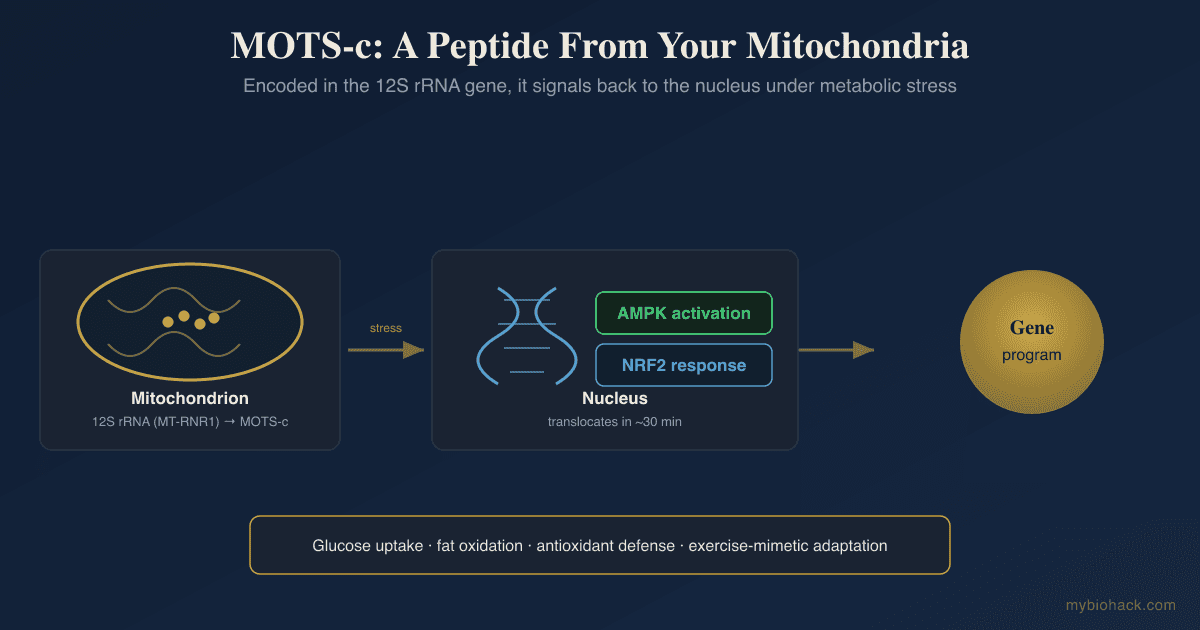
- It flips on AMPK, the cell's low-fuel repair switch, and dials down mTOR, the grow-now switch, pushing cells in the same broad direction as metformin and rapamycin.
- It calms inflammation, helps the liver clear fat, and gets partly converted into a molecule that acts on your cannabinoid and serotonin receptors.
Advanced:
- AMPK Activation And mTOR Inhibition In a screen against 12 human cell systems, C15:0 shared 24 of its activities with rapamycin, activating AMPK (the metformin-like arm) while inhibiting mTOR (the rapamycin-like arm), the two hubs of the canonical longevity pathway. R In muscle cells this ran through the AMPK-AS160 axis to translocate GLUT4 and increase glucose uptake, which is the shared logic behind AMPK-activating exercise mimetics. R
- PPAR-alpha/delta Partial Agonism C15:0 behaves as a dual, partial agonist of the nuclear receptors PPAR-alpha and PPAR-delta, which govern fat oxidation, lipid handling, and inflammation. R Partial agonism matters because it tops out before fully saturating the receptor, which in theory engages fat-burning and insulin-sensitizing pathways without the overactivation seen with full-agonist drugs. R
- Membrane Stabilization And Ferroptosis Inhibition As a rigid saturated fat, C15:0 incorporated into membranes lowers the proportion of oxidation-prone polyunsaturated fat, reducing the lipid-peroxidation substrate that iron uses to drive ferroptosis, and it lowered mitochondrial reactive oxygen species at 10 to 50 µM. R This membrane-integrity theme is the same lens Jacob uses in the endothelial glycocalyx work, where fragile barriers drive downstream disease. R
- JAK-STAT And HDAC6 Inhibition C15:0 also inhibited JAK-STAT signaling and HDAC6, established modulators of inflammation and cancer. R In breast cancer stem-like cells, suppression of JAK2/STAT3 drove loss of stemness and caspase-dependent apoptosis. R
- Endocannabinoid Signaling Via Pentadecanoylcarnitine A C15:0 metabolite, pentadecanoylcarnitine, is a full CB1 and CB2 agonist (EC50 around 3.2 to 3.7 µM) and a partial agonist at 5-HT1A/1B, making it only the second identified full-acting endocannabinoid. R
Genetics
There is no well-characterized common SNP that sets your circulating C15:0, so most of what we know about the genetics comes from rare metabolic disorders that push odd-chain fatty acids up or down.
HACL1
HACL1 encodes 2-hydroxyacyl-CoA lyase 1, the peroxisomal enzyme that carries out alpha-oxidation.
Alpha-oxidation shaves one carbon off longer fatty acids, which is the main route by which the body makes its own odd-chain fats like C15:0, so this pathway sets the small endogenous supply. R
PHYH
PHYH encodes phytanoyl-CoA hydroxylase, another alpha-oxidation enzyme.
Loss-of-function mutations cause Refsum disease, in which branched-chain phytanic acid accumulates because it cannot be alpha-oxidized, and odd-chain fatty acid handling is disturbed. R
PCCA And PCCB
These genes encode the two subunits of propionyl-CoA carboxylase.
In propionic acidemia, propionyl-CoA builds up and gets shunted into synthesis of odd-chain fatty acids, so affected patients show elevated C15:0 and C17:0, which is direct evidence that humans can make these fats endogenously. R
More Research
- Conflict of interest is the single most important caveat here, because a large share of the mechanistic and "essential fatty acid" work traces back to the founders of Fatty15 and their affiliated group, so independent replication is what will decide whether this holds up. R
- Endogenous synthesis is real but small, and the propionic acidemia and Refsum data confirm humans make some C15:0 through alpha-oxidation and propionyl-CoA, which is exactly why the "essential" label remains contested rather than settled. R
- Human trial evidence is still early, and the strongest human study so far was a 30-person, 12-week trial whose main win was raising blood C15:0, with metabolic improvements appearing only in the subgroup that crossed 5 µg/mL. R
- Testing your level is possible, because C15:0 shows up as a percentage of total fatty acids on standard plasma or red-cell fatty acid panels, which is the same kind of panel used to read an omega-3 index.
- The dairy-fat paradox is the honest frame for the epidemiology, because higher C15:0 tracks with more full-fat dairy intake, so cohort associations cannot fully separate the molecule from the food pattern that carries it. R
Jacob Gordon
INHC, FMT-C
Integrative Nutrition Health Coach
I cover mold illness, post-viral recovery, methylation, and complex chronic disease, drawing on ten years of clinical research, work inside a functional medicine clinic, and my own recovery from all of it. Every claim here is cited.
Book a ConsultationRelated Protocols & Supplements
Deep-dive chapters and recommended supplements for this topic
Electrolyte Complex
1 scoop/day
CoQ10
200mg/day
Magnesium Glycinate
400mg at bedtime