How To Run While Sitting Down: Exercise Mimetics
By Jacob Gordon, INHC, FMT-CThis article contains affiliate links. As an Amazon Associate, MyBioHack earns from qualifying purchases at no extra cost to you. We only link products we research and stand behind.
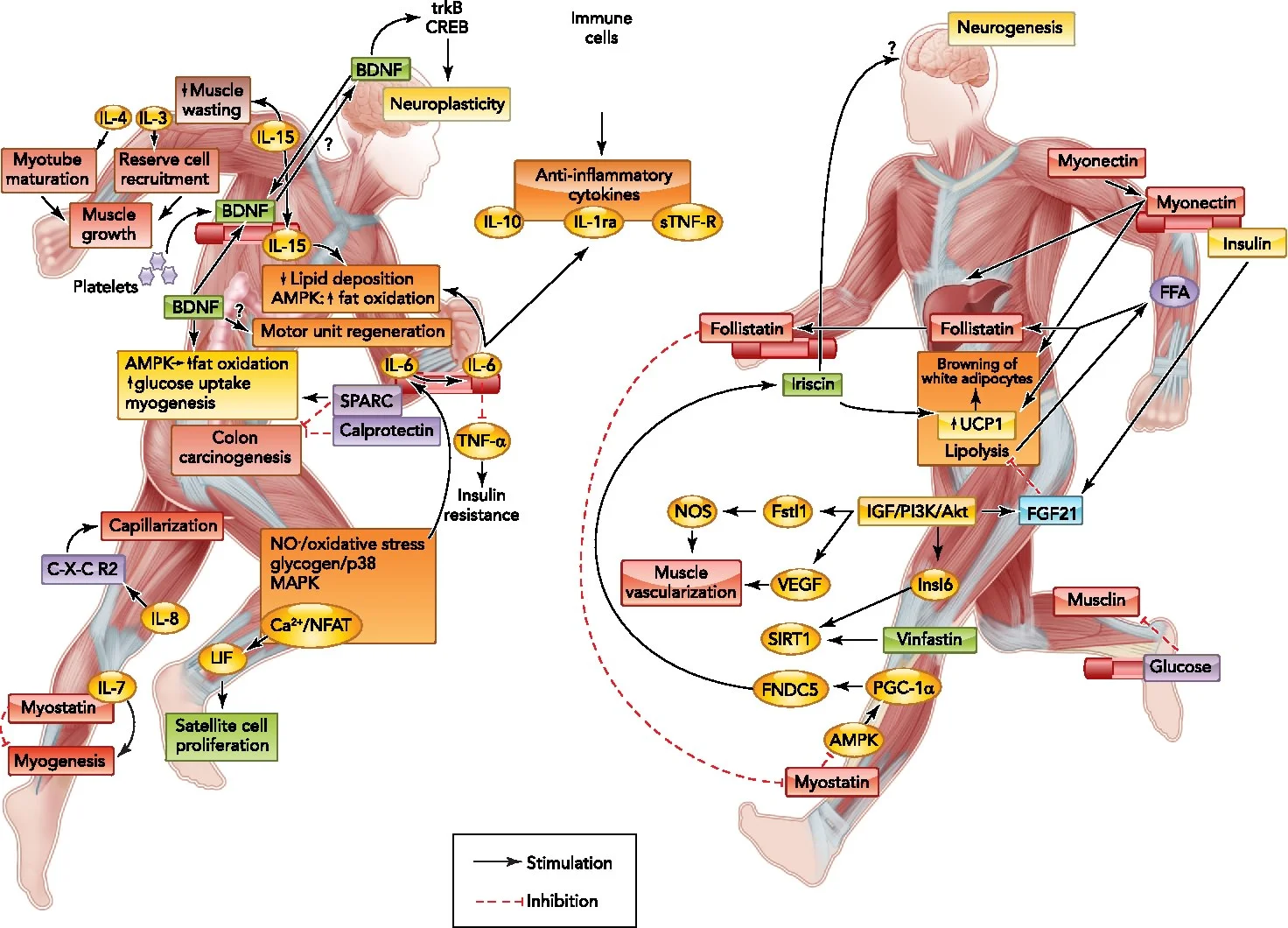
Exercise Mimetics are novel ways of getting the benefits of exercising, without having to exercise.
In this post, we will discuss the benefits and mechanisms of exercise and some possible ways to replace exercise.
Basics
Benefits Of Exercise Mimetics

Mimicking exercise may improve:
- Aging/Longevity R
- ATP and Energy levels R
- Appetite R
- Body Mass (Weight Loss/Gain) R
- Cardiovasuclar Function and Blood Pressure R
- Exercise Physiology and Performance (strength, fatigue, endurance, muscle fibers) R R
- Glucose Homeostasis (ie Diabetes) R
- Immune Function and Inflammation R R
- Insulin Sensitivity/Resistance R R
- Leptin Sensitivity R
- Lipid Metabolism (improving NAFLD) R
- Memory and Neurogenesis R R
- Mitochondrial Function (biogenesis and increased brown fat) R R R
- Muscle (improves autophagy, reduces cachexia) R R R
- NAD+ Levels R
- Obesity R
- Oxidation and Redox Status R
- Oxygen Utilization (ie Hypoxia) R R
- Sedentary Lifestyle R
List Of Exercise Mimetics
Diet:
- Cocoa - epicatechins R
- Green Tea - EGCG, ECG, and GCG R R
- Nitrates (eat your greens) - Inorganic nitrates stimulate muscular fiber-type switching and myokine and GABA release R
- Urolithin A - comes from gut bacteria metabolizing ellagitannins (eat pomegranates, strawberries, raspberries, and walnuts) R
- Ursolic Acid - Holy Basil and Apples R
Supplements:
- Alpha-Lipoic Acid R
- BCAAs R
- Berberine R
- Caffeine R
- Curcumim R
- Danshen R
- DHA - protects against muscle loss, while sedentary R
- EGCG (green tea extract) R
- Genistein R
- Ginseng R R
- HMB - protects against muscle loss, while sedentary R
- Nicotinamide Riboside R
- Quercetin R
- Resveratrol (high doses may help resistance but not aerobic exercise) R
- Thunder God Vine (Celastrol) R
Hormones:
- DPP-IV R
- Estrogen - increased catecholamine secretion, alternative M activation, AMPK activation as exercise R
- Irisin R
- Meteorin-like R
- MOTS-c R
- T2 - causes similar beneficial metabolic changes compared with T3, avoiding T3-related cardiac side effects R
- T3 - T3 production during exercise is necessary for the release of GH R
Drugs/Chemicals
- AICAR (converts into ZMP) R
- Cardarine (GW1516) R R
- Compound 14 (also converts into ZMP) R
- Cpd19 R
- Lactate R
- Metformin R
- Myostatin inhibitors - inhibitors of ActRIIB activation R
- SARMS - via partial activation of the androgen receptor (NR3C4) R
- SRT1720 R
- SR9009 R
- SR9011 R
- Thiazolidinediones (troglitazone, pioglitazone and rosiglitazone) R
Other:
- Micro RNA R
What Goes Well With Exercise Mimetics?
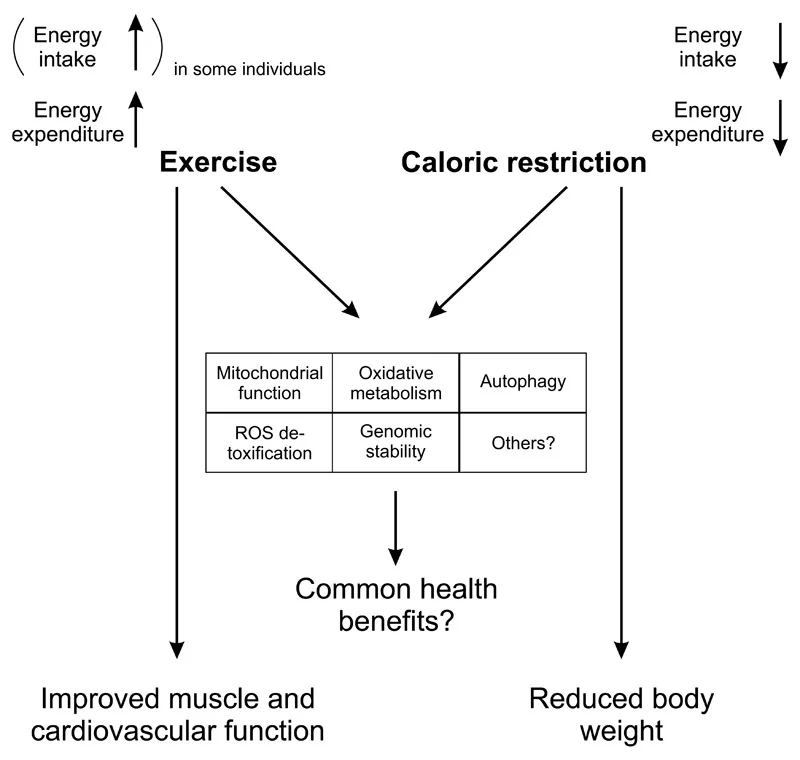
Calorie Restriction Mimetics (CRMs) may go well with exercise mimetics.
Mechanism Of Action

Some Mechanisms / Pathways Of EM Mimetics:
- Increasing Akt R
- Increasing AMPK R
- Increasing BAIBA R
- Increasing BDNF R
- Increasing eNOS R
- Increasing ERR γ R
- Increasing FGF21 R
- Increasing FNDC5 R
- Increasing GH R
- Increasing HSF1 R
- Increasing LKB1 R
- Increasing intracellular NAD+ levels R
- Increasing NRF1 R
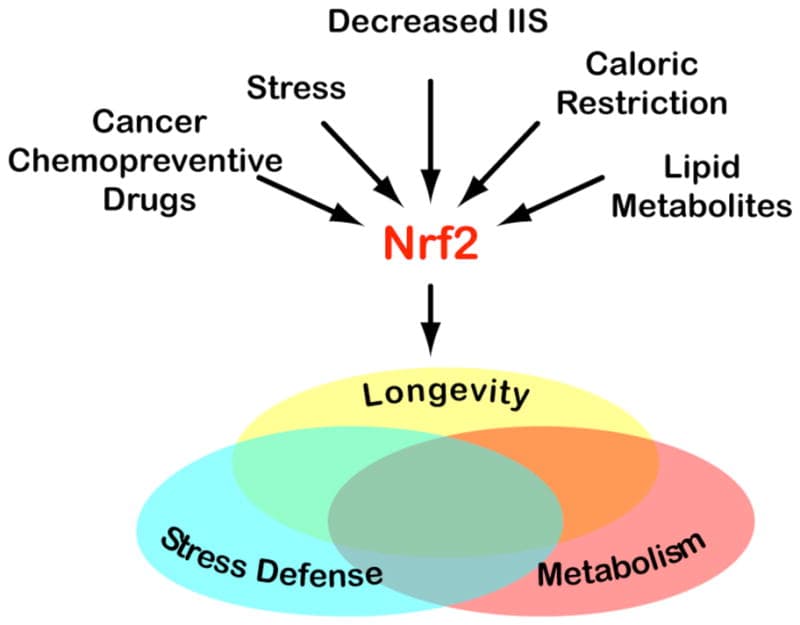
- Increasing NRF2 R
- Increasing PGC1α R
- Increasing mTOR R
- Increasing PI3K R
- Increasing PPARδ - synergistically increases oxidative myofibers and running endurance R
- Increasing PPARγ R
- Increasing REV-ERBα R
- Increasing SIRT1 R
- Increasing UCP2 R
- Increasing UCP3 R
- Inhibiting NCOR1 R
- Inhibiting PARP1 R
Advanced:
- Physical exercise activates peroxisome proliferator activated receptor δ (PPAR δ), a master transcriptional regulator of skeletal muscle oxidative metabolism, and also stimulates AMP-activated protein kinase (AMPK), a regulator of skeletal muscle glucose uptake, fat oxidation and mitochondrial biogenesis. R
- Skeletal muscle - Skeletal muscles are generally composed of oxidative slow-twitch type I myofibers and glycolytic faster-twitch type II myofibers. Aerobic exercise training mainly mobilizes type I myofibers, causing increases in the levels of oxidative enzymes and oxidative fiber-type transformation, which is more fatigue- resistant.
- O2 transport unit - Exercise increases luminal endothelial shear stress, which in turn activates phosphoinositide-3-kinase (PI3K) to phosphorylate protein kinase B (Akt) and induces Akt-mediated endothelial nitric oxide synthase (eNOS) phosphorylation, causing increased synthesis and release of NO. The levels of the phosphorylated form of eNOS are key to this process
- AMPK activation elevates the intracellular NAD+/NADH ratio and induces the activity of SIRT1 to activate PGC1a, which mediates the energetic functions of AMPK on top of its direct phosphorylation of PGC1a, so drugs that impact the NAD+/NADH ratio or target SIRT1 directly have the potential to create exercise-like effects. R
- Estrogen-related receptor γ (ERR γ) and REV-ERBα (a transcriptional factor regulating the development of skeletal muscle and other tissues) also induces PGC-1α activation. R
- PGC1a, RIP140, and NCOR1 interact with all three nuclear receptors and cooperatively control their transcriptional activities. R
- EMs should also mimic fitnesses' ability for increased mitochondrial oxidative phosphorylation (OXPHOS) and fatty acid metabolism. R
- The NRs that have been found to play crucial roles in skeletal muscle function (highlighted in red/bold) are clustered mainly in two groups: group IC, the members of which are selectively expressed in highly metabolic tissues and are involved in CNS, circadian, and basal metabolic functions, including NOR1, NUR77, NURR1, ERRβ, ERRγ, REV-ERBα, and REV-ERBβ, and groups IIB and IIC, the members of which are broadly expressed and are linked to lipid metabolism and energy homeostasis, including PPARα, PPARδ, PPARγ, and ERRα...these NRs work in concert with exercise and co-regulators to regulate many aspects of skeletal muscle physiology. R
More Research
- Some exercise mimetic drugs are banned from sports. R
Jacob Gordon
INHC, FMT-C
Integrative Nutrition Health Coach
I cover mold illness, post-viral recovery, methylation, and complex chronic disease, drawing on ten years of clinical research, work inside a functional medicine clinic, and my own recovery from all of it. Every claim here is cited.
Book a ConsultationRelated Protocols & Supplements
Deep-dive chapters and recommended supplements for this topic
Electrolyte Complex
1 scoop/day
CoQ10
200mg/day
Magnesium Glycinate
400mg at bedtime