ApoB And Lp(a): The Cardiovascular Markers That Matter More Than LDL Cholesterol
By Jacob Gordon, INHC, FMT-CThis article contains affiliate links. As an Amazon Associate, MyBioHack earns from qualifying purchases at no extra cost to you. We only link products we research and stand behind.
Most people get their cholesterol checked, see a "normal" LDL, and assume their arteries are fine, while the two numbers that actually predict heart attacks go untested.
In this post, we will discuss what apolipoprotein B and lipoprotein(a) are, why they beat standard LDL cholesterol at predicting risk, how they damage arteries, what does and does not lower them, and how to test for both.

What ApoB Is And Why It Beats LDL-C
Apolipoprotein B (ApoB) is the structural protein that wraps every atherogenic lipoprotein particle in your blood.
There is exactly one ApoB molecule on each particle of Low-Density Lipoprotein (LDL), Very-Low-Density Lipoprotein (VLDL), Intermediate-Density Lipoprotein (IDL), and lipoprotein(a).
That one-to-one relationship is the whole point.
Measuring ApoB counts the total number of particles that can lodge in your artery wall, while measuring Low-Density Lipoprotein Cholesterol (LDL-C) only estimates how much cholesterol is riding inside those particles.
Two people can have an identical LDL-C of 100 mg/dL and carry wildly different particle counts, because cholesterol content per particle varies.
The person with more particles has more chances for one to get trapped, and that person carries the higher risk regardless of what the cholesterol number says.
ApoB more accurately reflects the atherogenic burden of lipoproteins than LDL-C both before and during lipid-lowering treatment. R
A meta-analysis of 12 studies covering 233,455 subjects estimated that acting on ApoB would prevent roughly 500,000 more cardiovascular events over 10 years than acting on non-HDL-C, and more still than acting on LDL-C alone. R
The National Lipid Association now frames ApoB as the single most accurate marker of atherogenic particle number available in routine practice. R
What Lp(a) Is
Lipoprotein(a) (Lp(a)) is an LDL-like particle with a second protein bolted on.
Structurally it is an LDL particle (one ApoB and its cholesterol payload) covalently attached to a large, looping protein called apolipoprotein(a), or apo(a).
Apo(a) is a near-twin of plasminogen, the enzyme precursor your body uses to dissolve clots, which is why Lp(a) sits at the intersection of atherosclerosis and thrombosis.

The number that matters is your blood concentration, and that concentration is almost entirely set by the LPA gene you were born with.
Between 30 and 70 percent of the variation in Lp(a) levels is explained by copy number variation in the kringle IV type 2 (KIV-2) region of LPA, with smaller apo(a) isoforms producing higher blood levels. R
Roughly one in five people worldwide carries an elevated Lp(a), and most of them have never heard of it. R
Large studies free of confounding, called Mendelian randomization studies, show that people who inherit LPA variants for high Lp(a) have a genuinely higher rate of myocardial infarction, which is strong evidence that Lp(a) causes disease rather than merely tracking with it. R
Lp(a) is now recognized as an independent, genetically determined, causal risk factor for atherosclerotic cardiovascular disease and for calcific aortic valve stenosis. R
The pooled epidemiology is consistent, showing a continuous and independent association between Lp(a) concentration and both coronary heart disease and stroke. R
Elevated Lp(a) is also the strongest known risk factor for aortic valve calcification, and the LPA variant rs10455872 roughly doubles the odds of aortic-valve calcium per copy. R
Discordance And Why It Matters
Discordance is what happens when your LDL-C and your ApoB disagree.
When they line up (concordant), it barely matters which one you measure.
When they diverge (discordant), risk tracks the ApoB, not the LDL-C. R
This divergence is not rare, and it clusters in exactly the people who most need accurate risk assessment.
The pattern shows up most in metabolic syndrome, insulin resistance, type 2 diabetes, and high triglycerides, where particles become small and cholesterol-depleted.
In that state each LDL particle carries less cholesterol, so LDL-C reads reassuringly low while the actual particle count (ApoB) stays high.
The result is a person told their cholesterol is "fine" who is quietly accumulating atherogenic particles.

Atherosclerotic Cardiovascular Disease (ASCVD) risk in these discordant individuals aligns with the higher ApoB, which is precisely the residual risk a standard lipid panel misses. R
Lp(a) is its own form of hidden discordance.
A person can have a perfect ApoB and a perfect LDL-C and still carry a dangerous, inherited Lp(a) that no cholesterol number will ever reveal, because standard lipid panels do not measure it.
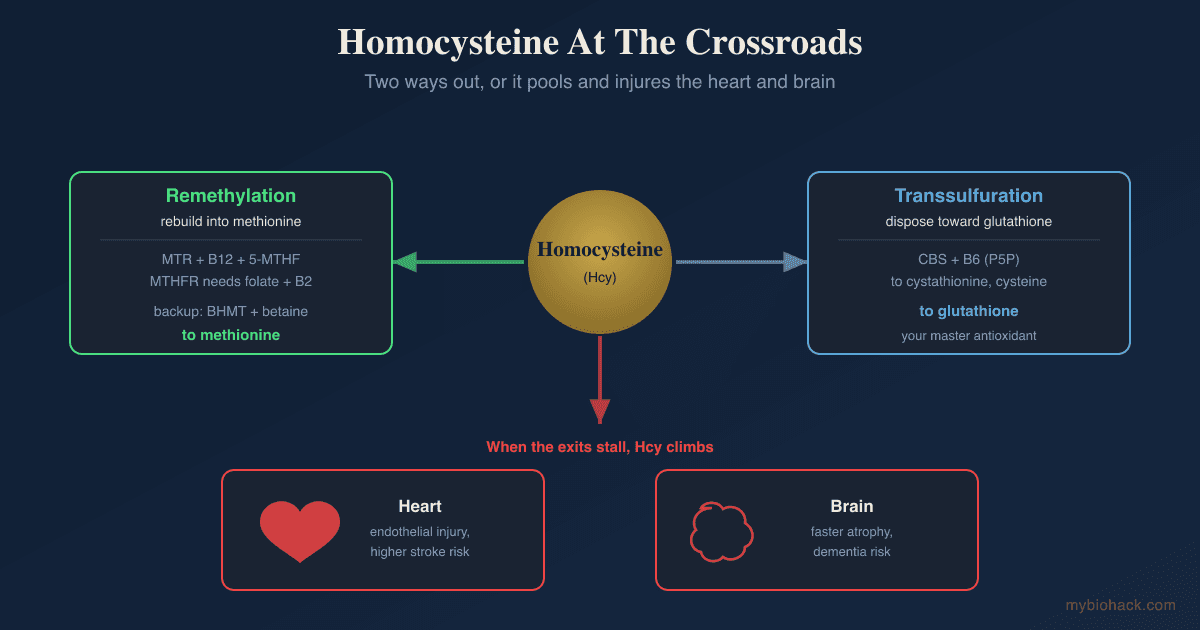
This is why the two markers belong together, and why homocysteine, another independent and frequently ignored driver of cardiovascular and brain risk, deserves the same treatment (covered in the homocysteine and methylation post).
How ApoB And Lp(a) Damage Arteries
Atherosclerosis does not begin with inflammation.
It begins with retention.
The response-to-retention model, first articulated by Williams and Tabas, holds that the initiating event in a plaque is an ApoB-containing particle getting trapped in the artery wall by binding to proteoglycans in the subendothelial matrix. R
The binding is electrostatic, between positively charged amino acids on ApoB and the negatively charged sulfate groups on artery-wall proteoglycans. R
Direct proof came from mice engineered to make LDL that could not bind proteoglycans, which developed far less atherosclerosis than mice with normal LDL despite similar cholesterol levels. R
Once a particle is retained it gets oxidized, immune cells arrive, macrophages eat the oxidized lipid and become foam cells, and the plaque is underway.
Here is Jacob's framing, and he wants it read as a hypothesis, not settled fact.
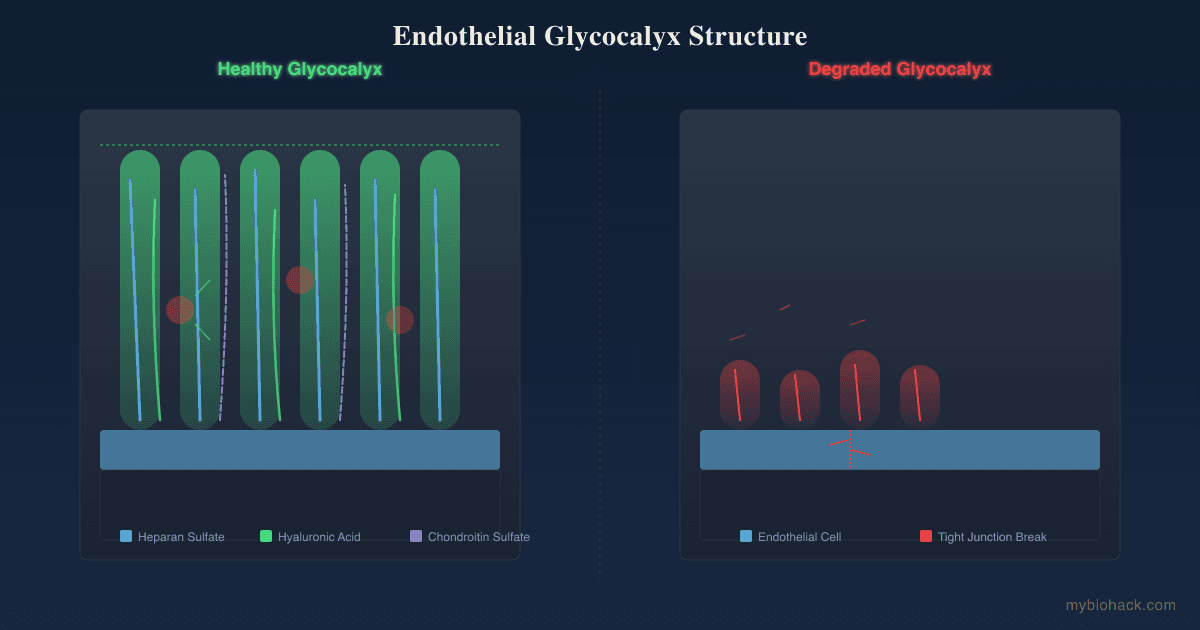
The layer that governs whether a circulating particle ever reaches those retention sites is the glycocalyx, the sulfated sugar coating on the luminal surface of the endothelium.
When the glycocalyx is intact it is part of the barrier that regulates what crosses into the subendothelial space, and when it is degraded (by infection, high blood sugar, oxidative stress, or spike protein) the artery wall becomes more permissive to particle entry and retention.
Jacob argues that particle number is the fuel and glycocalyx integrity is the gate, which is why he treats endothelial repair as inseparable from lipid management (his full argument is in the glycocalyx chapter of the Junction Dysfunction guide).
He extends this to a second contested idea, that LDL and Lp(a) behave partly as opsonins, tagging and patching damaged vessel wall as part of a wound-healing response, rather than acting as pure villains.
That does not make them safe when chronically elevated, because a repair signal running non-stop still builds plaque, but it reframes why simply crushing the number without fixing the underlying vessel damage is an incomplete strategy.
Lp(a) adds three insults a plain LDL particle does not.
It carries a heavy load of oxidized phospholipids, it is pro-thrombotic because apo(a) mimics plasminogen and blunts clot breakdown, and it drives calcification of the aortic valve. R
Spike protein is worth naming here, because it degrades the same glycocalyx that guards the artery wall, a mechanism covered in the spike protein and glycocalyx post.
How To Lower ApoB And Lp(a)
ApoB responds to diet, drugs, and a handful of supplements.
Lp(a) barely moves for anything you can currently buy, and that asymmetry should shape your expectations before you start.
Lowering ApoB
Cut the particle count first.
Dietary saturated fat raises ApoB and total LDL particle number, and in adults with atherogenic dyslipidemia a high-saturated-fat diet raised ApoB by about 9.5 percent versus a fall of 6.8 percent on the low-saturated-fat arm. R
Fixing insulin resistance shrinks the small, dense, cholesterol-poor particles that drive ApoB-LDL-C discordance, which is why the metabolic work matters as much as the lipid work.
The following supplements have human evidence for lowering LDL particle number, and each links to a browsing search rather than a single brand.
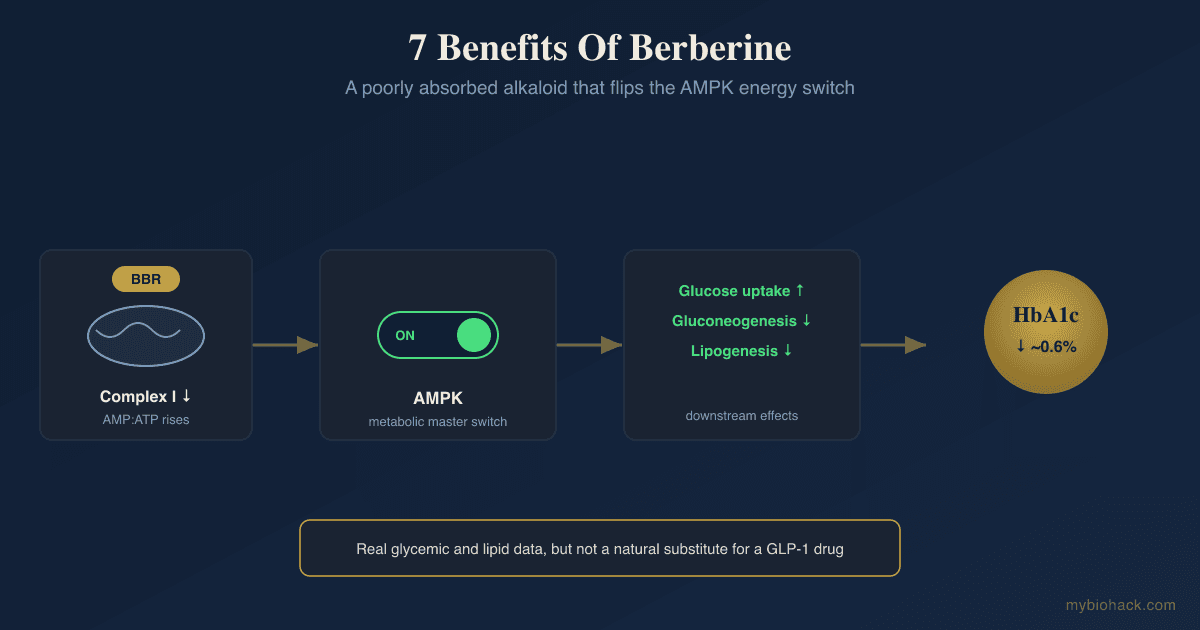
Berberine upregulates the LDL receptor and lowers LDL and ApoB, and it doubles as a metabolic and glucose-lowering tool.
Bergamot (citrus bergamot polyphenols) lowers LDL and ApoB and modestly raises HDL.
Psyllium and other soluble fibers bind bile acids and pull LDL and ApoB down while feeding the gut.
Plant sterols (phytosterols) block intestinal cholesterol absorption and lower LDL and ApoB.
Omega-3 (EPA-weighted fish oil) lowers triglycerides and VLDL, trimming the ApoB carried on triglyceride-rich particles.
For anyone with established disease or a strong family history, the prescription tools do the heavy lifting.
Statins lower ApoB substantially, and PCSK9 inhibitors (evolocumab, alirocumab) lower ApoB by roughly 40 to 50 percent on top of a statin. R
Inclisiran, a twice-yearly siRNA against PCSK9, produces a similar ApoB and LDL reduction with two injections a year.
Lowering Lp(a)
This is the honest part.
Diet, exercise, and weight loss do essentially nothing to Lp(a), because the level is genetic and set by LPA.
No supplement reliably lowers Lp(a) enough to matter for outcomes, and claims that vitamin C, lysine, or CoQ10 fix it are not backed by outcome data.
Niacin lowers Lp(a), but two large trials, AIM-HIGH and HPS2-THRIVE, found no cardiovascular benefit from adding niacin on top of a statin, and HPS2-THRIVE flagged real harms. R
A systematic review of niacin outcomes reached the same conclusion, so lowering the number on paper did not translate into fewer events. R
PCSK9 inhibitors lower Lp(a) by roughly 20 to 30 percent, which is a bonus but not a targeted therapy. R
The real Lp(a) drugs are still investigational.
Pelacarsen, an antisense oligonucleotide against apo(a), lowered Lp(a) by up to about 80 percent in its phase 2 trial and is being tested for hard outcomes in the Lp(a)HORIZON trial. R
Olpasiran, an siRNA, lowered Lp(a) by more than 95 percent in its phase 2 dose-finding study and is in the OCEAN(a)-Outcomes trial. R
Neither is approved, and neither has yet proven that lowering Lp(a) lowers events, so the correct framing today is testing and risk-factor control, not waiting for a pill.
Because Lp(a) is stubborn, the leverage in a high-Lp(a) person is to drive every modifiable risk factor as low as possible, and ApoB is the biggest of those levers.
What To Stay Away From
Avoid these traps (not an exclusive list):
- A normal LDL-C as reassurance when you have never checked ApoB or Lp(a), because both can be dangerous behind a "normal" panel
- Excess dietary saturated fat if your ApoB or LDL particle number is high, since it raises both R
- High-dose niacin bought as an Lp(a) fix, which lowers the number without lowering events and carries real side effects R
- Refined carbohydrate and chronic hyperglycemia, which drive the small dense LDL pattern and degrade the glycocalyx
- Supplement stacks marketed to "dissolve" Lp(a), none of which have outcome data
Statins deserve a nuanced note rather than a blanket warning.
They lower ApoB and events, but they raise Lp(a) by roughly 10 percent on average, which does not negate their benefit but is a reason to know your Lp(a) before and not attribute a rise to something else. R
Testing
The goal is to measure particle number and inherited risk, not just cholesterol mass.
Blood And Urine Markers
ApoB is the direct particle count and the single most useful lipid number you can order, with an optimal target under roughly 80 mg/dL and lower for high-risk individuals. R
Lp(a) should be measured at least once in your lifetime, because it is genetically stable and one reading tells you your inherited risk, with elevated commonly defined as over 50 mg/dL or 125 nmol/L. R
Fasting insulin and triglycerides help flag the metabolic state that creates ApoB-LDL-C discordance in the first place.
Functional Lab Panels
I use the Cardio Zoomer (Vibrant Wellness) to assess ApoB, the full lipoprotein profile, insulin, and endothelial markers in one panel.
For a conventional draw, the Cardio IQ Advanced Lipid Panel with Inflammation (Quest Diagnostics) reports ApoB and particle number alongside inflammatory markers.
A basic Lipid Panel (Quest Diagnostics) is the starting point but will not report ApoB or Lp(a) on its own, so treat it as a floor, not a finish line.
To characterize the metabolic-syndrome context behind discordance, I use the Insulin Resistance Panel with Score (Quest Diagnostics).
Because both markers cluster in bundles, you can also order cardiometabolic testing as part of a lab bundle rather than piecemeal.
Genetics
For inherited lipid risk beyond the single Lp(a) value, the Cardio Genetics (Vibrant Wellness) panel covers lipid metabolism variants, and the ApoE Genotype add-on identifies the E2/E3/E4 status that shifts LDL and remnant risk.
If your ApoB or Lp(a) is high and you want personalized interpretation, this is the kind of picture a consultation is built to read.
Mechanisms Of Action
Simple:
- ApoB is a headcount of every particle that can clog an artery, so one high ApoB means many particles regardless of how much cholesterol each one carries.
- Lp(a) is an LDL particle wearing a sticky, clot-blocking tail you inherited, and it delivers oxidized fat and calcium to your arteries and heart valve.
- Atherosclerosis starts when one of these particles gets stuck in the artery wall, so fewer particles means fewer chances to get stuck.
Advanced:
- ApoB as the retention ligand. ApoB-100 carries a proteoglycan-binding domain (site B) whose basic residues form ionic bonds with the sulfate groups of subendothelial glycosaminoglycans, and this binding is the rate-limiting first step of atherogenesis under the response-to-retention model. R R
- One ApoB per particle. Because each LDL, VLDL, IDL, and Lp(a) particle carries exactly one ApoB-100, plasma ApoB is a direct molar count of atherogenic particles, whereas LDL-C is a mass measurement that varies with each particle's cholesterol payload, which is the physiological basis for ApoB's superiority. R
- Lp(a) as a triple threat. Apo(a) is a plasminogen homolog built from repeating kringle domains, and its structural mimicry competitively inhibits fibrinolysis (pro-thrombotic), its cargo of oxidized phospholipids is pro-inflammatory, and it promotes valvular interstitial cell calcification (pro-stenotic). R
- The foam cell endpoint. Retained particles are oxidized, taken up by macrophage scavenger receptors, and converted to foam cells, and in Jacob's Junction Dysfunction framing this proceeds through oxidized LDL uptake and eventual RAGE-driven pyroptosis into fibrotic plaque, which is why he treats glycocalyx integrity as the upstream gate on the whole cascade. R
Genetics
LPA (Highest Population Risk)
LPA encodes apolipoprotein(a), the protein that defines Lp(a) and sets its blood concentration.
Copy number variation in the KIV-2 region drives most of the inherited variation in Lp(a) level, and smaller isoforms are secreted more efficiently and produce higher levels.
rs10455872: the G allele raises Lp(a), raises coronary disease risk, and roughly doubles the odds of aortic-valve calcification per copy. R
rs3798220: associated with a small apo(a) isoform, high Lp(a), and elevated coronary risk. R
APOB
APOB encodes apolipoprotein B-100, the scaffold protein on every atherogenic particle.
Loss-of-function or ligand-defective variants change how tightly LDL binds its receptor and how readily particles are cleared.
rs5742904: the familial defective ApoB variant (R3500Q) weakens LDL-receptor binding, so particles linger in circulation and LDL and ApoB rise.
PCSK9
PCSK9 encodes a protein that degrades the LDL receptor, so more PCSK9 activity means fewer receptors and higher LDL.
Variants push risk in both directions depending on whether they increase or decrease activity.
rs11591147: the R46L loss-of-function variant lowers PCSK9 activity, lowers LDL and ApoB, and is cardioprotective.
APOE
APOE encodes apolipoprotein E, which governs clearance of remnant and IDL particles.
The three common isoforms (E2, E3, E4), defined by rs429358 and rs7412, shift lipid handling.
rs429358: the e4 allele is associated with higher LDL and ApoB and greater cardiovascular risk, while the e2 allele can produce remnant accumulation (dysbetalipoproteinemia).
More Research
Aortic stenosis is the underappreciated Lp(a) endpoint, because genetic and epidemiologic data tie Lp(a) to valve calcification more strongly than to any competing lipid marker, and there is currently no drug proven to slow it. R
Odd-chain saturated fats are an emerging counterpoint to the "all saturated fat is equal" framing, since pentadecanoic acid tracks with better cardiometabolic markers and is being studied as a beneficial dietary fatty acid, a topic covered in the C15 (pentadecanoic acid) post.
The magnitude question for Lp(a) is unsettled, because Mendelian randomization work suggests a large absolute reduction in Lp(a) (on the order of 100 mg/dL) may be needed to match the coronary benefit seen with LDL lowering, which raises the bar for the drugs now in trials. R
The response-to-retention model keeps gaining support as the unifying mechanism, and it reframes lipid lowering as a way to reduce the supply of particles available for arterial retention rather than as cholesterol removal per se. R
Whether the endothelial glycocalyx is a true gatekeeper on particle retention is Jacob's open hypothesis, and it is why he pairs endothelial repair with lipid management, an argument he develops alongside endothelial and nitric oxide function in the nitric oxide post.
For lab work I use the Cardio Zoomer to track ApoB over time and the Cardio IQ Advanced Lipid Panel with Inflammation when a conventional draw is easier, and I treat a single lifetime Lp(a) as a non-negotiable baseline for anyone with a family history of early heart disease or stroke.
Jacob Gordon
INHC, FMT-C
Integrative Nutrition Health Coach
I cover mold illness, post-viral recovery, methylation, and complex chronic disease, drawing on ten years of clinical research, work inside a functional medicine clinic, and my own recovery from all of it. Every claim here is cited.
Book a ConsultationRelated Protocols & Supplements
Deep-dive chapters and recommended supplements for this topic
Electrolyte Complex
1 scoop/day
CoQ10
200mg/day
Magnesium Glycinate
400mg at bedtime