8 Benefits Of Oxaloacetate: The NAD+/NADH Ratio, TCA Anaplerosis, And The Fatigue Evidence
By Jacob Gordon, INHC, FMT-CThis article contains affiliate links. As an Amazon Associate, MyBioHack earns from qualifying purchases at no extra cost to you. We only link products we research and stand behind.
Oxaloacetate is a four-carbon molecule your mitochondria burn through constantly, and it sits at the exact junction where energy production meets the NAD+/NADH redox balance.
In this post, we will discuss what oxaloacetate is, the eight evidence-backed benefits of supplementing the stabilized form, where it comes from, how to dose it, the mechanisms behind it, the genetics that shape your response, and the honest limits of the research.

What Is Oxaloacetate
Oxaloacetate (OAA) is a four-carbon dicarboxylic acid that acts as one of the central intermediates of the tricarboxylic acid (TCA) cycle, also called the Krebs cycle.
It is the molecule that condenses with acetyl-CoA to start each turn of the cycle, and it is regenerated at the end of each turn, so the entire cycle literally cannot run without it.
Outside the mitochondria, OAA is a hub for three more jobs: it is the entry point for gluconeogenesis, it is a substrate in the malate-aspartate shuttle that moves reducing equivalents into the mitochondria, and it is the co-substrate that transaminase enzymes use to convert glutamate into aspartate.
The problem with OAA as a supplement is chemical, not biological.
Free oxaloacetate is unstable in water and spontaneously decarboxylates into pyruvate and carbon dioxide, with roughly half of it degrading within 24 hours at room temperature.
This is why supplemental OAA is manufactured as anhydrous enol-oxaloacetate (AEO), a freeze-dried, low-water form (water content under 2 percent) that holds the stable enol tautomer and resists decarboxylation, sold most commonly under the benaGene label.
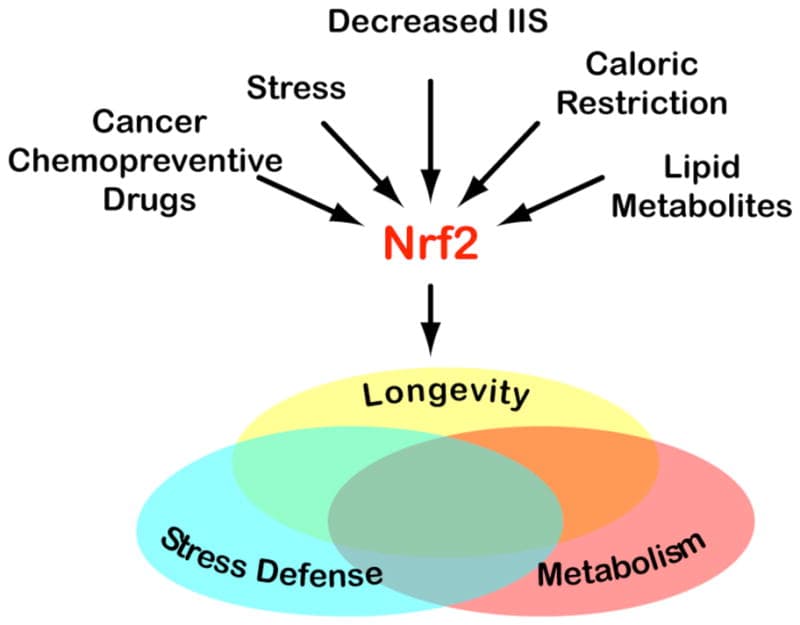
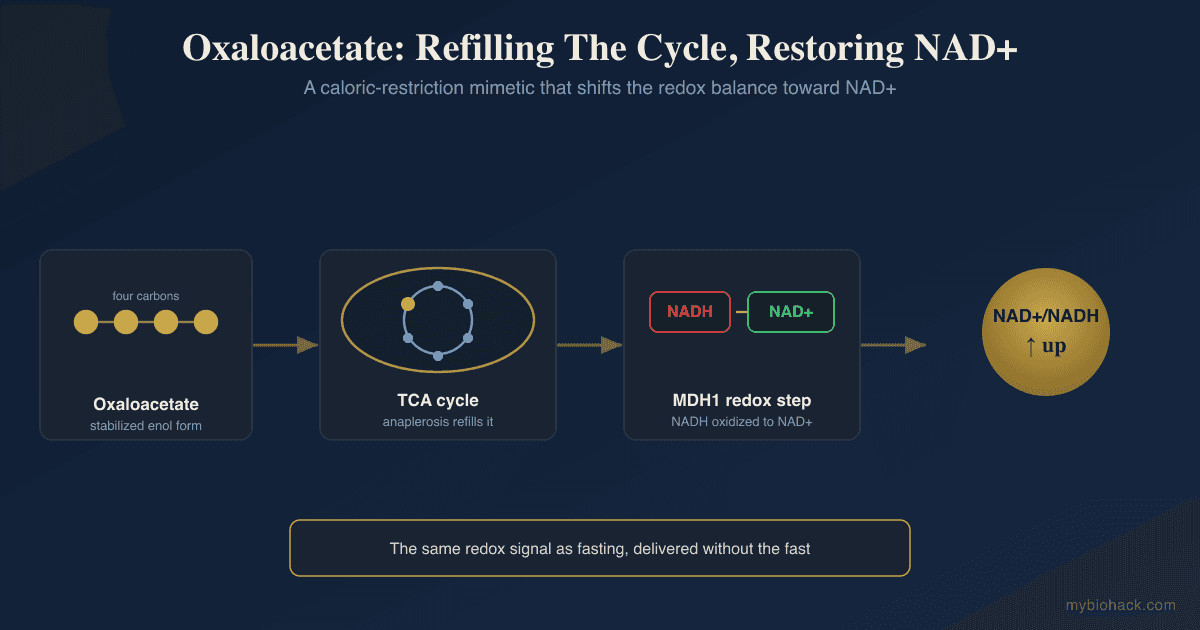
The reason biohackers care about it is that OAA behaves as a caloric restriction mimetic: supplementing it shifts the cytosolic NAD+/NADH ratio in the same direction that fasting does, without the fast. R
That single redox shift is the thread that ties together nearly every benefit below, and it connects directly to the NAD+/NADH balance I treat as the master dial for mitochondrial energy.
8 Benefits Of Oxaloacetate
1. It Raises The NAD+/NADH Ratio
The nicotinamide adenine dinucleotide (NAD+) system is the redox currency of the cell, and the ratio of oxidized NAD+ to reduced NADH is what actually reports your energetic and metabolic state to downstream sensors.
When oxaloacetate is reduced to malate by cytosolic malate dehydrogenase, that reaction oxidizes NADH back to NAD+, which pushes the NAD+/NADH ratio up.
In cultured neuronal cells, oxaloacetate treatment measurably increased the NAD+/NADH ratio and shifted cells toward an oxidized redox state. R
This matters because a higher NAD+/NADH ratio is one of the core signals that fasting and caloric restriction use to activate longevity machinery, and OAA reproduces part of that signal on a normal diet.
2. It Activates AMPK And FOXO Longevity Signaling
In Caenorhabditis elegans, oxaloacetate supplementation extended lifespan, with a mean 25 percent increase in median lifespan and a 13 percent increase in maximal lifespan. R
The effect was not generic.
It required both the energy sensor AMP-activated protein kinase (AMPK, the aak-2 gene in worms) and the transcription factor FOXO (the daf-16 gene), the same pathway that dietary restriction depends on. R
This is the same AMPK axis that metformin works through, which is why oxaloacetate is often framed as a food-derived caloric restriction mimetic rather than a stimulant.
The caveat is honest: worm lifespan is not human lifespan, and no human longevity endpoint has been measured.
3. It Reduces Mental And Physical Fatigue In ME/CFS
This is the benefit with the most human data, and it is also the one with the most conflicts of interest, so read both halves.
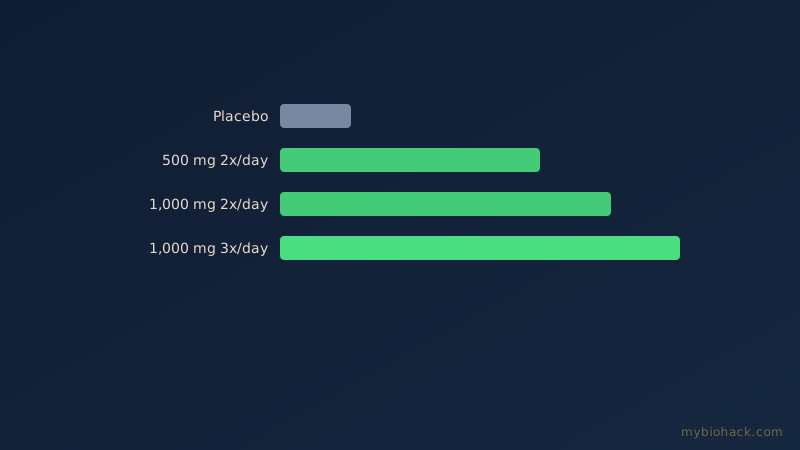
In a 2022 open-label, dose-escalating trial, ME/CFS patients taking anhydrous enol-oxaloacetate saw physical and mental fatigue drop by 21.7 percent at 500 mg twice daily, 27.6 percent at 1,000 mg twice daily, and 33.3 percent at 1,000 mg three times daily, against a historical placebo response of 5.9 percent. R
That study also reported that plasma oxaloacetate levels are significantly lower in ME/CFS patients, which is the biological rationale for replacing it. R
The stronger evidence is the 2024 RESTORE ME trial, a three-month randomized, double-blind, controlled study of 82 ME/CFS subjects taking 2,000 mg per day. R
Oxaloacetate lowered fatigue by more than 25 percent from baseline (p = 0.0039), while the control group's roughly 10 percent drop was not significant, and about 40.5 percent of the OAA group hit the greater-than-25-percent threshold versus 20 percent of controls. R
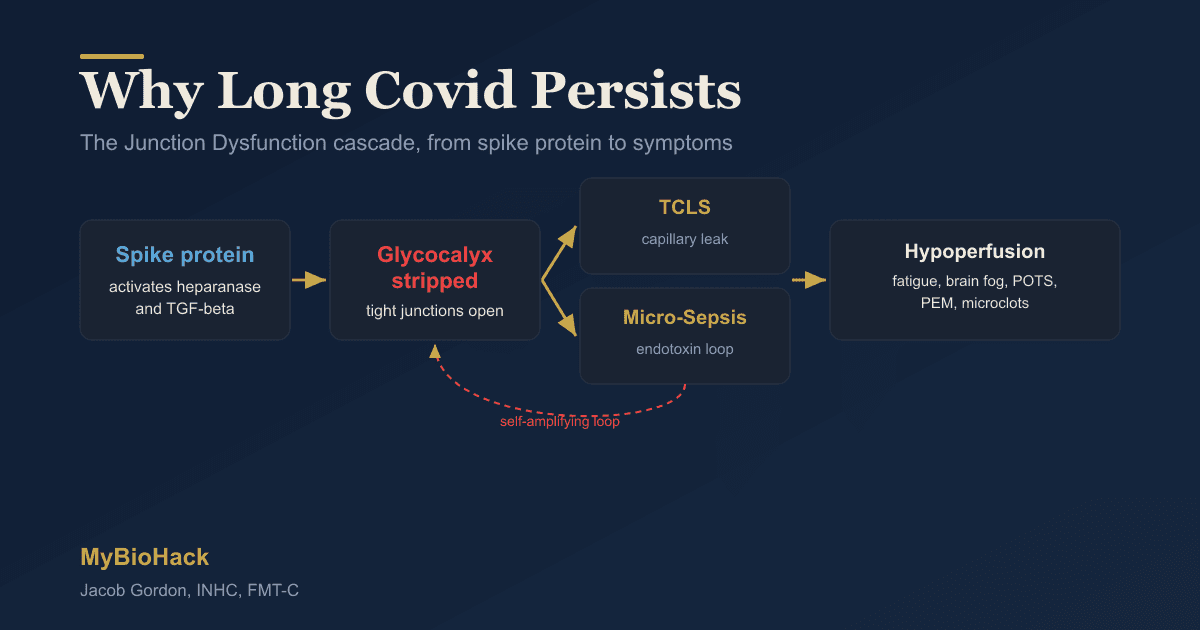
ME/CFS and post-viral fatigue are exactly the population Jacob's Junction Dysfunction (JD) framework was built for, where he hypothesizes that microcapillary leak (a process he coined Transient Capillary Leak Syndrome, or TCLS) starves mitochondria of oxygen and pins them in a low-energy state, so anything that refills the TCA cycle and restores NAD+ is mechanistically interesting here. R
4. It Improves Cognition And Symptom Burden In Long COVID
The 2025 REGAIN trial was a randomized, controlled study of 69 long COVID patients taking 2,000 mg per day for 42 days, and it is important to report it honestly because it missed its primary endpoint. R
On the primary fatigue scale (the CFQ), there was no significant between-group difference. R
On secondary measures it looked better: the oxaloacetate group had significantly greater improvement in a second fatigue and total-symptom-burden scale at day 21, and significantly better cognitive performance (procedural reaction time, Go/No-Go, total cognitive efficiency) at multiple visits. R
Symptom responders in the OAA group showed nearly 20 percent greater gains in cognitive scores than non-responders. R
The takeaway is measured, not promotional: the fatigue signal in long COVID is weaker and less consistent than in ME/CFS, and the strongest effect was on cognition rather than on the primary fatigue metric.
5. It Scavenges Blood Glutamate For Neuroprotection
Oxaloacetate is the co-substrate for glutamate oxaloacetate transaminase (GOT, also called aspartate aminotransferase), the blood enzyme that converts glutamate into aspartate and alpha-ketoglutarate.
Dosing oxaloacetate drives that reaction, lowers circulating glutamate, and steepens the concentration gradient that pulls excess glutamate out of the brain and into the blood, where it gets degraded.
In a rat model of ischemic stroke, GOT activation with oxaloacetate blocked the rise in blood and brain glutamate after arterial occlusion and produced smaller infarcts, less edema, and reduced sensorimotor deficits. R
Combining recombinant human GOT1 enzyme with low-dose oxaloacetate extended that neuroprotection even when treatment was delayed up to two hours after the stroke. R
This is directly relevant to the glutamate excitotoxicity and glymphatic feedback loop that shows up in post-viral brain fog, migraine, and the wired-but-tired presentation, though the human data here are still limited to acute injury models rather than chronic supplementation.
6. It Drives Brain Mitochondrial Biogenesis And Hippocampal Neurogenesis
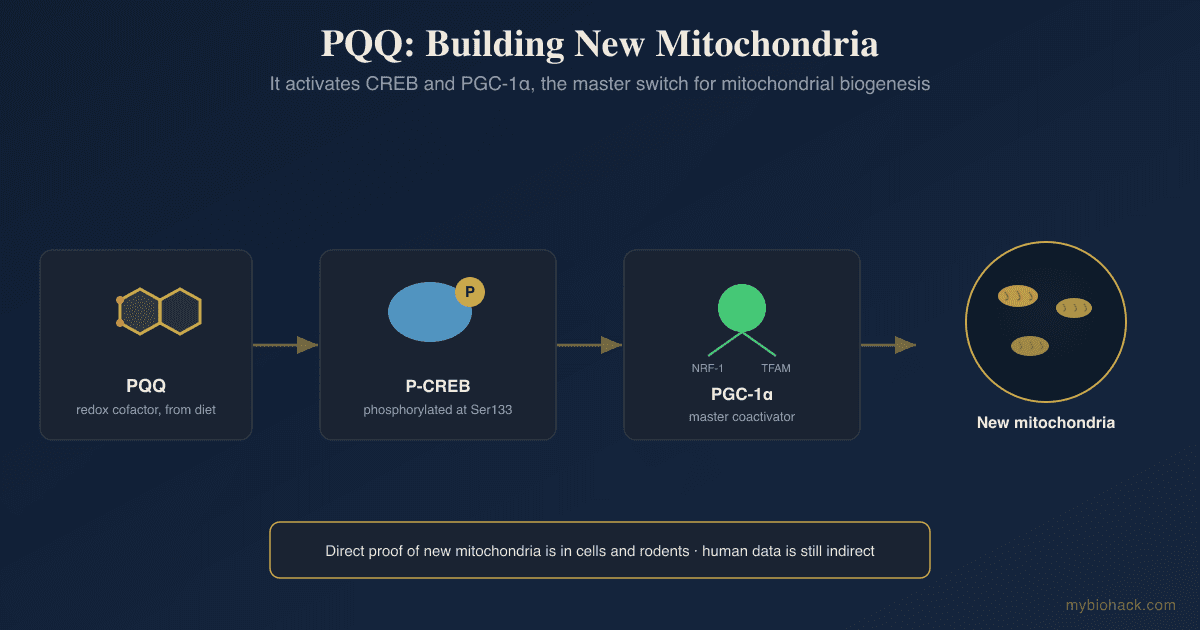
When oxaloacetate was given to mice, it activated the master mitochondrial biogenesis program, raising PGC1-alpha, PGC1-related coactivator, NRF1, and COX4I1. R
It also increased new neuron formation in the hippocampus, raising VEGF, doublecortin, and neurite length. R
Building more mitochondria is the same goal behind mitochondrial peptides like Humanin and MOTS-c and cofactors like PQQ, so OAA slots into that stack as the TCA-cycle substrate rather than a signaling molecule.
The honest limit is dose: the mouse work used 1 to 2 grams per kilogram by injection, which does not translate cleanly to an oral human capsule.
7. It Refills The TCA Cycle By Anaplerosis
Anaplerosis is the refilling of TCA-cycle intermediates that get siphoned off for other jobs (making amino acids, neurotransmitters, and glucose), and oxaloacetate is the single most important anaplerotic checkpoint.
In neuroblastoma cells, oxaloacetate supported and enhanced both glycolysis and respiration, and the authors attributed the effect to anaplerotic refilling of the cycle plus the oxidized redox shift, not to OAA acting as a simple fuel. R
Practically, this is why OAA is interesting for the low-energy, high-lactate metabolic state seen in ME/CFS and long COVID, where the cycle is running but under-supplied.
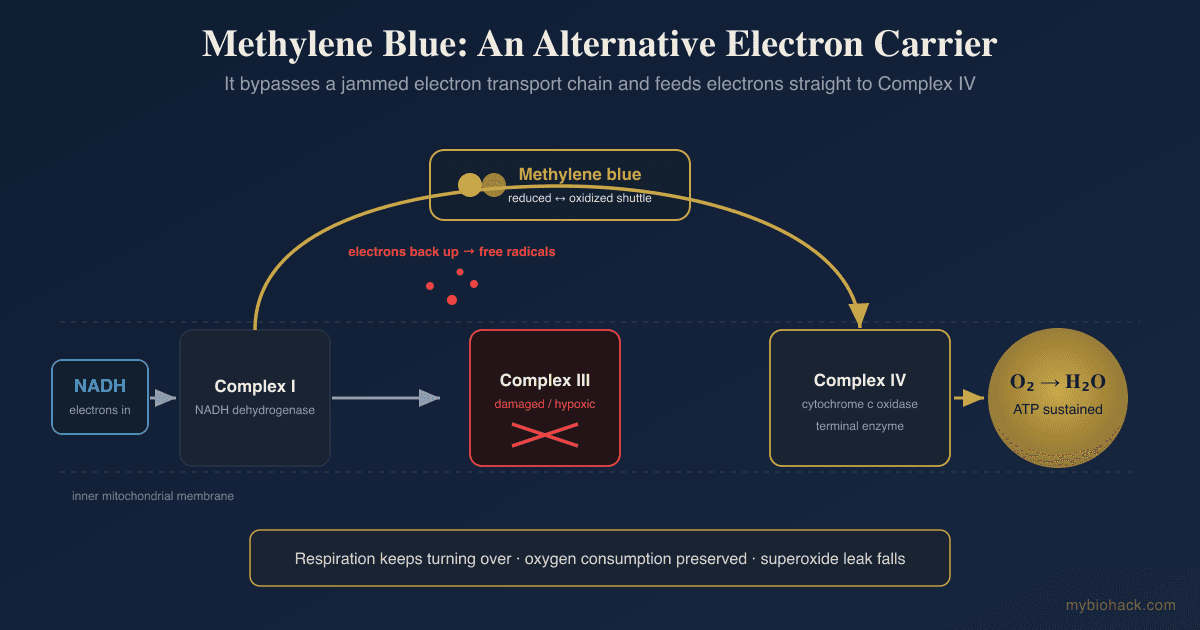
It pairs conceptually with electron-transport-chain support like methylene blue, which acts downstream at the electron carriers rather than at the substrate level.
8. It Lowers Neuroinflammation And Supports Brain Insulin Signaling
In the same mouse study, oxaloacetate lowered a marker of NF-kappaB activation and reduced the inflammatory chemokine CCL11 in brain tissue. R
It also activated the insulin signaling pathway, increasing phosphorylation of Akt, mTOR, and p70S6K. R
CCL11 (eotaxin) is one of the "aging blood" factors associated with reduced neurogenesis, so lowering it fits the broader picture of OAA as a brain-metabolic support molecule.
There is a genuine tension worth naming: activating mTOR is the opposite of what a pure caloric restriction mimetic should do, which is a reminder that OAA's effects are tissue-specific and not a clean single-lever story.
Natural Sources And Precursors
You do not meaningfully get oxaloacetate from food, because it is too unstable to survive in any appreciable quantity in the diet.
What you get from food are the precursors and cofactors your body uses to make its own OAA.
- Aspartate (from dietary protein) is transaminated directly into oxaloacetate by GOT enzymes
- Biotin (vitamin B7) is the cofactor for pyruvate carboxylase, the enzyme that builds OAA from pyruvate
- Malate (concentrated in apples and other fruit) is oxidized to oxaloacetate by malate dehydrogenase
- Pyruvate (the end product of glycolysis) is the main carbon source your mitochondria convert into OAA
- Vitamin B6 as pyridoxal-5-phosphate is the cofactor every GOT transaminase reaction depends on
The upshot is that a protein-adequate diet with fresh fruit supplies the raw material for endogenous OAA, but if you want the caloric-restriction-mimetic dose used in the fatigue trials, you are looking at a stabilized supplement, not food.
The most studied commercial form is benaGene (anhydrous enol-oxaloacetate), which pairs each 100 mg of stabilized OAA with anhydrous vitamin C to slow decarboxylation.
Dosage And Safety
The fatigue trials used 2,000 mg per day of anhydrous enol-oxaloacetate, usually split as 1,000 mg twice daily with meals, and the 2022 dose-escalation study went as high as 1,000 mg three times daily. R R
This is the practical catch: most consumer capsules are only 100 mg, so a clinical-trial dose means a lot of capsules and real cost, and cheaper high-milligram oxaloacetate products vary in how well they preserve the stable enol form.
Because the transaminase reactions that use OAA are vitamin-B6-dependent, taking it alongside P5P (pyridoxal-5-phosphate) is a reasonable cofactor pairing.
On safety, oxaloacetate was well tolerated across the trials, with no serious treatment-related adverse events and the most common complaints being mild headache and nausea. R
A one-month tolerability and pharmacokinetics study in Alzheimer's subjects found 100 mg twice daily was safe but barely raised plasma OAA above baseline, which is the origin of the ongoing bioavailability debate and the reason later trials used far higher doses. R
Two practical cautions: because OAA feeds gluconeogenesis and mimics caloric restriction, watch for additive blood-sugar lowering if you are diabetic or fasting, and because it transaminates into aspartate (an excitatory amino acid), start low if you are glutamate-sensitive or in an MCAS and POTS flare.
Mechanisms Of Action
Simple:
- Oxaloacetate hands off electrons that turn NADH back into NAD+, which is the same "I am running low on fuel" signal your body gets from fasting, so the cell switches on repair and energy-efficiency programs without you actually skipping meals.
- It also refills the engine of the mitochondria (the TCA cycle) with a part that constantly gets used up, and it helps mop up excess glutamate in the blood, which calms an over-excited brain.
Advanced:
- Cytosolic redox shift via malate dehydrogenase. Supplemental OAA is reduced to malate by cytosolic MDH1, oxidizing NADH to NAD+ and raising the cytosolic NAD+/NADH ratio, which is the compartment-specific redox change that yeast genetics tie to Sir2 activation and calorie-restriction lifespan extension through the malate-aspartate shuttle components MDH1 and AAT1. R R
- AMPK/FOXO nutrient-sensing activation. A rising NAD+/NADH ratio and falling energy charge activate AMPK (aak-2), which relieves inhibition of FOXO/DAF-16, driving the antioxidant and stress-resistance transcriptional program that is required for OAA-induced lifespan extension in C. elegans. R
- PGC1-alpha-driven mitochondrial biogenesis. OAA increases CREB and AMPK phosphorylation, which enhance PGC1-alpha coactivator function and upstream NRF1, increasing COX4I1 and mitochondrial mass, alongside VEGF-linked hippocampal neurogenesis. R
- Blood glutamate scavenging by GOT. As the amino-acceptor co-substrate for glutamate oxaloacetate transaminase, OAA drives conversion of glutamate to alpha-ketoglutarate and aspartate, lowering blood glutamate and enlarging the brain-to-blood glutamate gradient, an effect abolished when the transaminase is blocked with maleate. R R
- Anaplerotic TCA refilling. OAA restores the pool of the cycle intermediate that condenses with acetyl-CoA, supporting both respiratory and glycolytic flux in neuronal cells independent of direct glycolytic-intermediate involvement. R
Genetics
The genes that matter for oxaloacetate are the enzymes that make it, consume it, and use it to move electrons.
Common functional variants that predict supplementation response are not yet characterized for most of these, so this section is mechanistic rather than a list of actionable SNPs.
GOT1
GOT1 encodes the cytosolic form of glutamate oxaloacetate transaminase (soluble aspartate aminotransferase).
It links aspartate handling to glutamate homeostasis and is the enzyme that, supplemented with oxaloacetate, produced the blood-glutamate-scavenging neuroprotection in stroke models. R
Variation in GOT1 is the main driver of your serum AST level, the common liver-panel marker, which is a readout of transaminase capacity.
GOT2
GOT2 encodes the mitochondrial form of the same enzyme and is a core component of the malate-aspartate shuttle that governs intracellular redox homeostasis.
Rare biallelic loss-of-function variants cause a developmental and epileptic encephalopathy, which shows how central this reaction is to brain energy metabolism, even though those are severe pediatric mutations rather than common adult polymorphisms.
MDH1 / MDH2
These encode the cytosolic and mitochondrial malate dehydrogenases that interconvert oxaloacetate and malate while cycling NAD+ and NADH.
MDH1 is the specific enzyme that produces the cytosolic NAD+ regeneration behind OAA's caloric-restriction-mimetic effect, and inherited MDH2 deficiency causes an early-onset encephalopathy, again underlining how tightly OAA handling is coupled to the TCA cycle.
PC
PC encodes pyruvate carboxylase, the biotin-dependent enzyme that builds oxaloacetate from pyruvate and is the main anaplerotic source of OAA.
Loss-of-function pyruvate carboxylase deficiency presents with refractory lactic acidosis precisely because the TCA cycle cannot be refilled, which is the clearest natural experiment for why anaplerotic OAA matters.
SOD2
SOD2 encodes the mitochondrial superoxide dismutase that clears the superoxide generated during respiration.
The Ala16Val variant at rs4880 lowers enzyme efficiency and is Jacob's most commonly seen redox SNP in clients, and it is relevant here because pushing more electrons through the mitochondria (as OAA does) raises the demand on downstream antioxidant defense.
More Research
- Blood oxaloacetate is measurably lower in the plasma of ME/CFS patients, which is the strongest single argument for replacement rather than a generic "more energy" pitch, though it is one finding from one industry-linked group and needs independent replication. R
- Conflict of interest is real and must be disclosed to the reader: the fatigue and long COVID trials were conducted by researchers tied to Terra Biological, the maker of the branded anhydrous enol-oxaloacetate, and the 2022 Journal of Translational Medicine paper carries an editorial note flagging methodology and competing-interest concerns. R
- For biomarker tracking of a trial like this, the Health Hub is where I would log daily fatigue scores and any AST/glucose changes over a 6 to 12 week run, because the effect (when it shows up) is a slope over weeks, not a single dose you can feel.
- Junction Dysfunction context: in Jacob's framework, chronically inflamed people shunt tryptophan down the kynurenine pathway via IDO1, which starves the body of the raw material for NAD synthesis, so an OAA-driven rise in the NAD+/NADH ratio addresses a downstream bottleneck while the upstream drivers (the compromised glycocalyx and Micro-Sepsis, or MSS, that Jacob hypothesizes underneath post-viral fatigue) still need their own protocol. This is Jacob's hypothesis about mechanism, not a claim the trials tested.
- The bioavailability debate is unresolved: the 100 mg Alzheimer's pharmacokinetics study barely moved plasma OAA above baseline, so it is genuinely unclear how much of a 2,000 mg oral dose reaches tissue versus decarboxylating to pyruvate first, and the clinical benefit may partly come from the pyruvate and downstream metabolites rather than intact OAA. R
- The mTOR-activation finding sits awkwardly next to the AMPK-and-caloric-restriction story, and no one has cleanly resolved whether OAA is net pro-longevity or context-dependent in mammals, so treat the "fasting in a pill" framing as a hypothesis, not a settled mechanism. R R
Jacob Gordon
INHC, FMT-C
Integrative Nutrition Health Coach
I cover mold illness, post-viral recovery, methylation, and complex chronic disease, drawing on ten years of clinical research, work inside a functional medicine clinic, and my own recovery from all of it. Every claim here is cited.
Book a ConsultationRelated Protocols & Supplements
Deep-dive chapters and recommended supplements for this topic
Quercetin
500mg 2x/day
Vitamin D3 + K2
5000 IU + 200mcg/day
Magnesium Glycinate
400mg at bedtime