IMO (Intestinal Methanogen Overgrowth): Why Methane Is Not SIBO, And Why It Needs A Different Protocol
By Jacob Gordon, INHC, FMT-CThis article contains affiliate links. As an Amazon Associate, MyBioHack earns from qualifying purchases at no extra cost to you. We only link products we research and stand behind.
Methane on a breath test is still called "methane SIBO" by most clinicians, and that label is wrong in a way that changes what treatment actually works.
In this post, we will discuss what Intestinal Methanogen Overgrowth (IMO) actually is, why archaea are not bacteria, how hydrogen scavenging hides the diagnosis, the specific antibiotic and botanical combinations that clear methane, how to test for it, and where the evidence is genuinely unsettled.
Basics Of IMO
IMO is an overgrowth of methane-producing archaea anywhere along the digestive tract, and the organisms responsible are not bacteria at all. R
Archaea are a separate domain of life, as distinct from bacteria as bacteria are from you.
That single taxonomic fact is why the field moved off the term "methane SIBO," and it is the reason several standard antibacterial strategies underperform here.
The dominant organism is Methanobrevibacter smithii, which is the most prevalent and abundant methanogen in the human gut. R
A second species, Methanobrevibacter intestini, occupies the same niche and appears to mutually exclude M. smithii rather than coexist with it, which matters because most clinical discussion pretends there is only one archaeon in play. R
Methanosphaera stadtmanae is the third common human methanogen and is enriched in inflammatory bowel disease, so it is not simply a bystander either. R
The name change from "small intestinal bacterial overgrowth with methane" to "intestinal methanogen overgrowth" is not cosmetic.
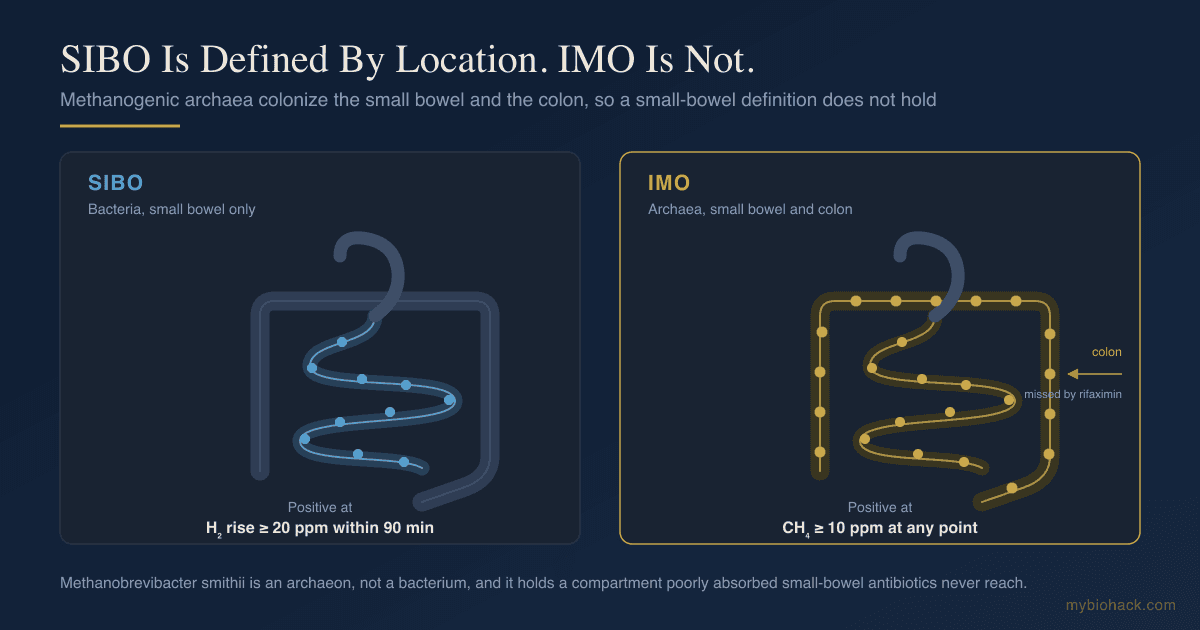
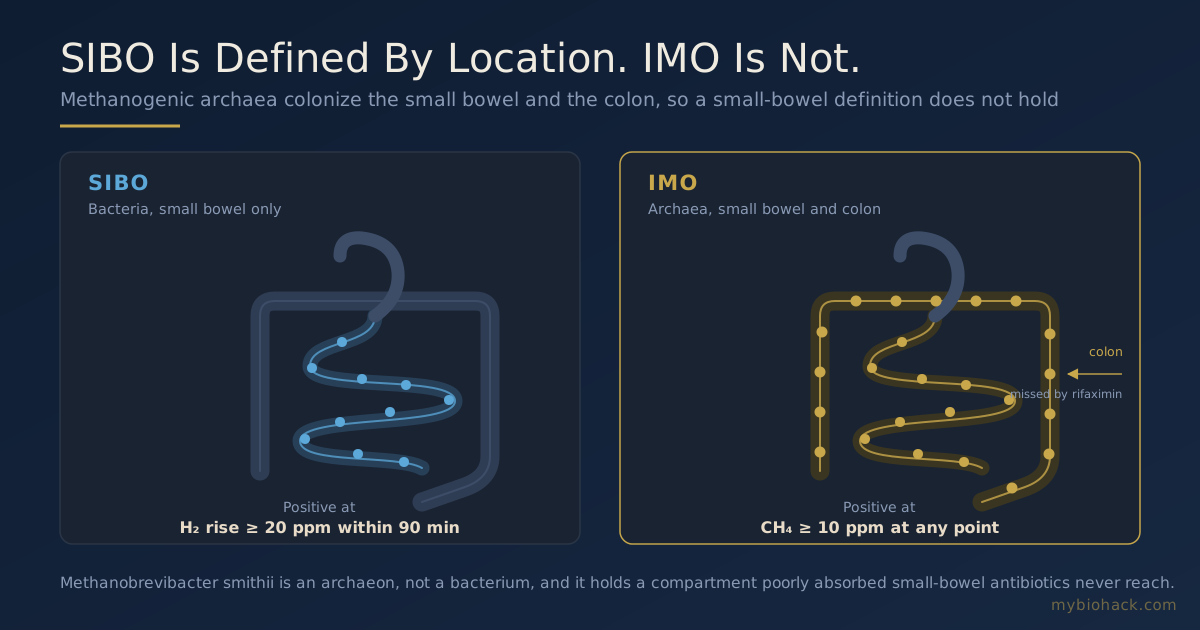
Small Intestinal Bacterial Overgrowth (SIBO) is defined by anatomic location, meaning excessive bacteria in the small bowel specifically, and you can read the full picture in the SIBO hub post. R
Methanogens colonize the colon in large numbers and have also been recovered from the duodenum, so the overgrowth is not confined to the small bowel and cannot be defined by a location that does not hold. R
That anatomic mismatch is the conceptual spine of this entire post.
If the organism lives in both compartments, then a small-bowel-targeted, poorly absorbed antibiotic is being asked to do a job it was never designed for.
The diagnostic threshold is also different.
SIBO is called positive when hydrogen rises at least 20 ppm above baseline within 90 minutes of a glucose or lactulose substrate. R
IMO is called positive when methane reaches 10 ppm or higher at any point during the test, with no rise requirement and no time window. R R
The "at any point" language exists because a flat elevated methane level is itself the abnormality.
What Causes IMO
Archaea do not ferment carbohydrate.
They are hydrogen scavengers, consuming the H2 that bacterial fermentation produces and reducing CO2 to methane, which means an archaeal bloom requires a bacterial hydrogen supply first. R
That dependency is why IMO almost never exists in isolation, and why upstream dysbiosis is nearly always part of the picture.
Contributors to methanogen overgrowth (not an exclusive list):
- Bacterial hydrogen supply (four moles of H2 are consumed per mole of methane produced, so methanogens need a high-fermentation substrate upstream) R
- Bile flow impairment (bile is antimicrobial and a major control on upper gut microbial load, covered in gallbladder sludge and biliary stones)
- Biofilm formation (archaea sit inside mixed polymicrobial matrices, and disrupting the matrix measurably improves antimicrobial results, discussed further in biofilms and quorum sensing) R
- Host genetics (methanogen carriage is one of the most heritable microbiome traits measured, with heritability estimates from 0.21 to 0.66 across cohorts) R
- Low stomach acid (the first antimicrobial barrier, see hypochlorhydria and betaine HCl and proton pump inhibitors)
- Slowed transit (methane slows transit, and slowed transit favors methanogens, which is a self-reinforcing loop rather than a one-way cause) R
The syntrophic loop is the part most protocols miss.
By pulling hydrogen out of the lumen, methanogens lower the partial pressure of H2, and lowering H2 partial pressure makes the upstream bacterial fermentation reactions thermodynamically more favorable. R
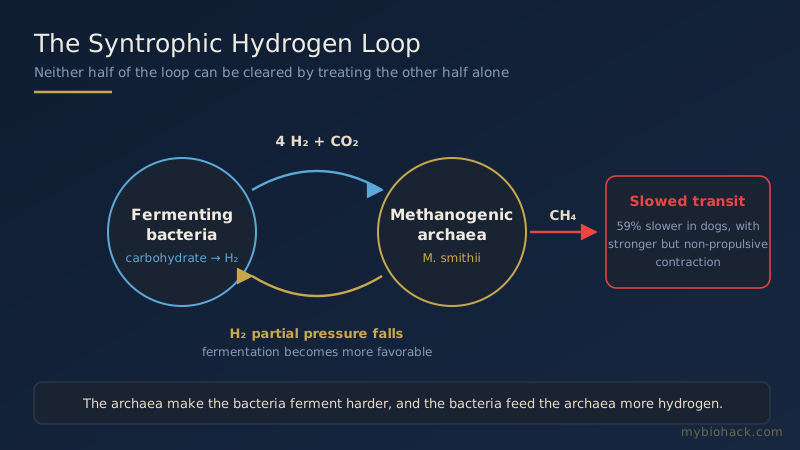
In plain terms, the archaea make the bacteria ferment harder, and the bacteria feed the archaea more hydrogen.
That is why killing only the archaea, or only the bacteria, tends to fail.
How Methanogens Slow The Gut
Methane is not an inert byproduct.
When methane was infused directly into the small intestine of dogs, transit slowed by an average of 59%, and small intestinal contractile amplitude increased rather than decreased. R
That combination, stronger non-propulsive contractions with slower net transit, is the physiologic signature of methane and it maps cleanly onto constipation.
The effect appears to run through the cholinergic pathway, since methane increased calcium fluorescence in ileal tissue and that increase was attenuated by atropine. R
The dose relationship is what makes this clinically usable.
In IBS patients with detectable methane, the quantity of methane on the breath test was directly proportional to the reported degree of constipation. R
Exhaled methane is therefore closer to a functional readout of transit than a simple yes or no marker.
Here is the diagnostic trap.
Because one mole of methane consumes four moles of hydrogen, a methane-dominant patient can produce a flat or low hydrogen curve and be called negative on a hydrogen-only test. R
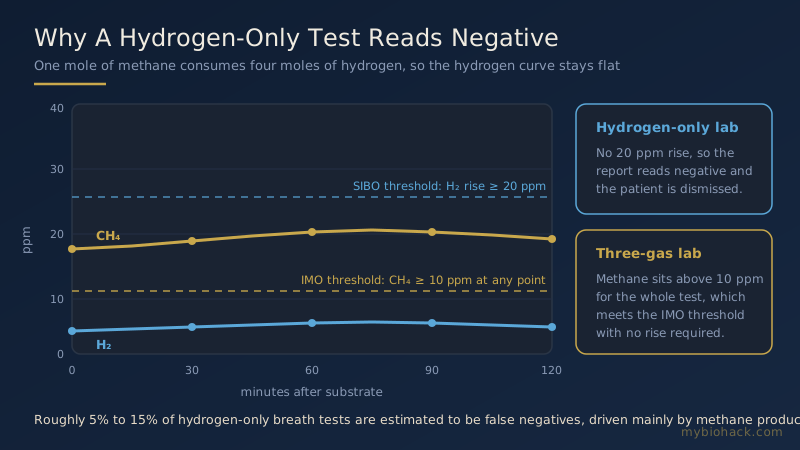
Hydrogen-only breath testing is estimated to generate roughly 5% to 15% false negatives, driven mainly by methane production. R
Methanogens are present in a substantial fraction of adults, so the number of people who could be missed by a hydrogen-only test is not small. R
If you were tested for SIBO and told you were negative, and you are constipated, the first question is whether methane was measured at all.
IMO And Overlapping Conditions
The clinical phenotype is constipation-dominant and reasonably distinct.
A systematic review and meta-analysis of 19 studies covering 1,293 IMO patients and 3,208 controls found bloating in 78% and constipation in 51%, with significantly higher constipation and significantly lower diarrhea rates than controls. R
Methane positivity is positively associated with constipation-predominant IBS and inversely associated with inflammatory bowel disease, where prevalence runs about three-fold lower than controls. R
Conditions that overlap with IMO (not an exclusive list):
- Constipation-predominant IBS (the core association, with methane quantity tracking constipation severity) R
- Functional constipation outside an IBS label (breath methane tracks slow colonic transit in children with chronic constipation, and falls when constipation is treated) R R
- Gastrointestinal malignancy screening populations (IMO and SIBO both show elevated prevalence, which is a reason not to dismiss new-onset methane in an older patient) R
- Hashimoto's and hypothyroid states (thyroid hormone is a direct driver of transit, and hypothyroidism is associated with small bowel overgrowth, covered in Hashimoto's thyroiditis) R
- Higher body mass index (overweight status is associated with increased methanogenic archaea and a shifted Bacteroidetes to Firmicutes ratio, though the direction is contested and a 1,647-patient breath test cohort found greater methane in those with lower BMI and smaller waist circumference) R R
- Diverticulosis (methane producers were significantly more frequent among people with diverticulosis on colonoscopy at 50.9% versus 34%, an association first reported in a sigmoidoscopy population in 1986) R R
- Parkinson's disease (small bowel overgrowth carries a pooled prevalence near 46% and an odds ratio above 5 versus controls, which puts the motility-first framing on firmer ground) R
- Histamine intolerance (upstream dysbiosis raises bacterial histamine production regardless of which gas dominates)
- POTS and dysautonomia (autonomic control of the migrating motor complex is a plausible shared upstream node)
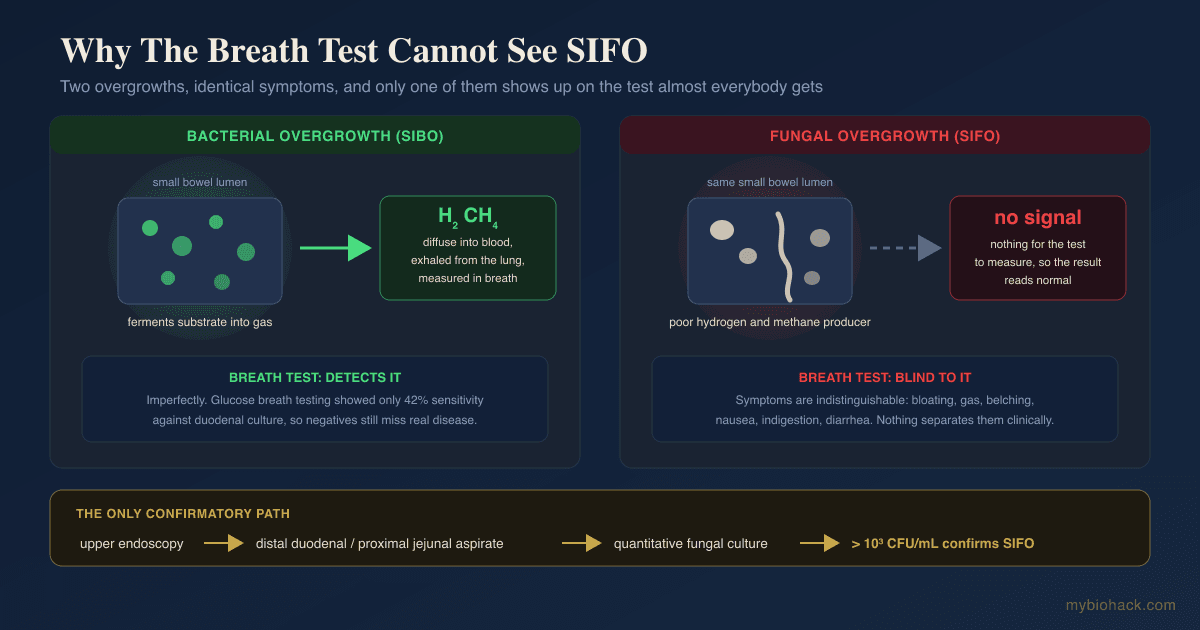
- Small intestinal fungal overgrowth (fungi ferment and produce gas without registering on a hydrogen or methane test at all)
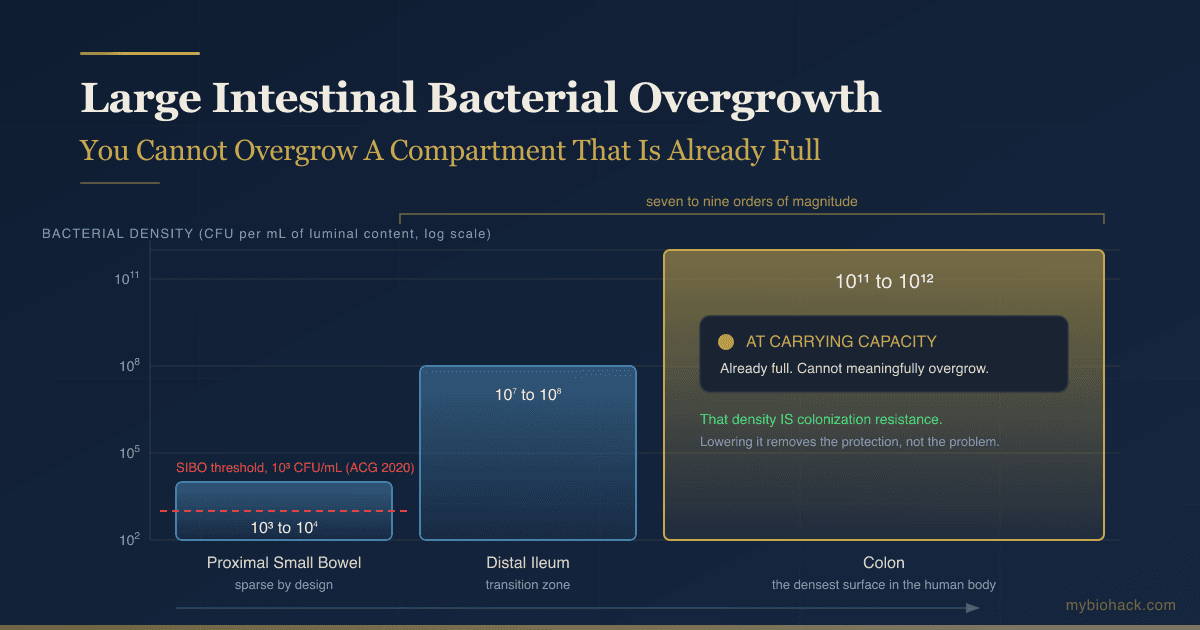
- Large intestinal bacterial overgrowth (the colonic counterpart, and the compartment IMO most often shares)
One finding cuts against expectation.
Patients with methanogenic overgrowth reported a lower frequency of vitamin B12 deficiency, and the absence of B12 deficiency was the single discriminating factor separating methanogenic from hydrogenic SIBO. R
Hydrogen-producing SIBO went the other way and was positively associated with B12 deficiency, along with gastric bypass, cholecystectomy, and diabetes. R
So a normal B12 does not rule out overgrowth, and in IMO specifically it is closer to expected than reassuring.
There is a systemic angle here as well.
Chronic small bowel overgrowth is one of the more common upstream sources of endotoxin translocation, which is the entry point to LPS and TLR4 signaling and, in my framing, to Micro-Sepsis (MSS), a term I coined for sub-lethal chronic sepsis operating below the diagnostic threshold.
That is my hypothesis, not consensus gastroenterology, and I am flagging it as such.
How To Improve IMO
1. Combine Antimicrobials Rather Than Rotating Them
The single most important treatment result in this literature is a combination result.
In IBS patients positive for methane on lactulose breath test, rifaximin 400 mg three times daily plus neomycin 500 mg twice daily for 10 days rendered methane undetectable in 87% of subjects, compared with 33% for neomycin alone and 28% for rifaximin alone. R
Clinical response followed the same ranking, at 85% for the combination versus 63% for neomycin and 56% for rifaximin. R
The mechanistic reading is that the two agents hit different halves of the syntrophic loop, with one pressuring the archaea and the other pressuring the hydrogen-supplying bacteria.
Neomycin alone also has placebo-controlled support specifically in methane producers.
In a double-blind randomized trial subanalysis, neomycin produced 36.7% global improvement versus 5.0% for placebo, and in breath-test-positive subjects constipation improved 44% with neomycin versus 5% with placebo. R
Note the honest limitation: the ACG guideline gives only a conditional recommendation at very low evidence quality for IMO treatment, because these trials are small and mostly from one research group. R
2. Consider The Statin Lever, With Caveats
Statins are the most mechanistically interesting agent in this entire space.
Archaea build their cell membranes through the mevalonate pathway, and lovastatin lactone was shown by computational docking to competitively inhibit F420-dependent methylenetetrahydromethanopterin dehydrogenase, a core enzyme in the M. smithii methanogenesis pathway. R
This is an archaea-specific lever that does not depend on the cholesterol-lowering effect and does not broadly kill bacteria.
The underlying reason is structural, since archaea build isoprenoid ether-linked membrane lipids by a route bacteria do not share. R
SYN-010 was a delayed-release lovastatin lactone designed to bypass hepatic absorption and deliver drug to the ileocecal junction and colon, which is exactly the compartment a small-bowel antibiotic misses. R
Be honest about where it landed: the phase 2 work showed methane and symptom reductions, but the investigator-sponsored phase 2b study at Cedars-Sinai was halted at a planned interim futility analysis in October 2020 and the program did not reach approval.
Ordinary immediate-release lovastatin is absorbed too proximally to reliably reach the archaeal niche, so this is a mechanism to understand rather than a protocol to self-administer.
3. Use Botanicals With Actual Methane Data
Herbal antimicrobials are not a consolation prize here.
In 104 patients with SIBO on lactulose breath test, a herbal protocol containing oregano, thyme, and berberine produced 46% normalization versus 34% for rifaximin 1,200 mg daily, a difference that was not statistically significant, and some rifaximin failures subsequently responded to the herbal arm. R
Allicin is one of the few natural agents with methanogen-relevant data, and supplementation reduced methanogenesis and shifted archaeal populations in ruminant models. R
Its antimicrobial mechanism is thiol stress, depleting the glutathione pool and S-allylmercapto-modifying protein cysteines, which is a cell-wall-independent mechanism and therefore not blocked by archaeal pseudomurein. R
The human methanogen data is still thin, and most of the evidence is rumen and in vitro.
- Atrantil (quebracho, horse chestnut, and peppermint; a quebracho and chestnut tannin combination improved IBS severity scores and quality of life versus placebo in a randomised double-blind trial) R
- Berberine (a component of the herbal arm that matched rifaximin, and covered separately in berberine, AMPK, and blood sugar) R
- Oregano oil (part of the same herbal protocol, with no methanogen-specific human trial isolating it) R
- Peppermint oil (antispasmodic, present in the Atrantil formulation, and better supported for symptom relief than for methane reduction) R
4. Disrupt Biofilm Before You Kill
Archaea live inside polymicrobial matrices, and the matrix is a real barrier.
Mucosal biofilms are not theoretical, and were endoscopically visible in 57% of IBS patients and 34% of ulcerative colitis patients versus 6% of controls in a series of 1,426 endoscopies. R
Their detection, disease relevance, and disruption have since become an area of study in their own right. R
Adding biofilm disruptors to herbal antimicrobials produced a methane reduction of 26.38 ppm versus 2.00 ppm for herbals alone, alongside a hydrogen reduction of 30.75 ppm versus 11.40 ppm. R
That methane delta is more than a ten-fold difference, and it is the largest single-variable improvement in the botanical literature.
5. Prioritize Prokinetics More Than You Would For Hydrogen SIBO
IMO is a transit-driven entity, so restoring motility is not an afterthought here.
Elevated methane on breath testing is associated with delayed small bowel and colonic transit, not just with symptom reports. R
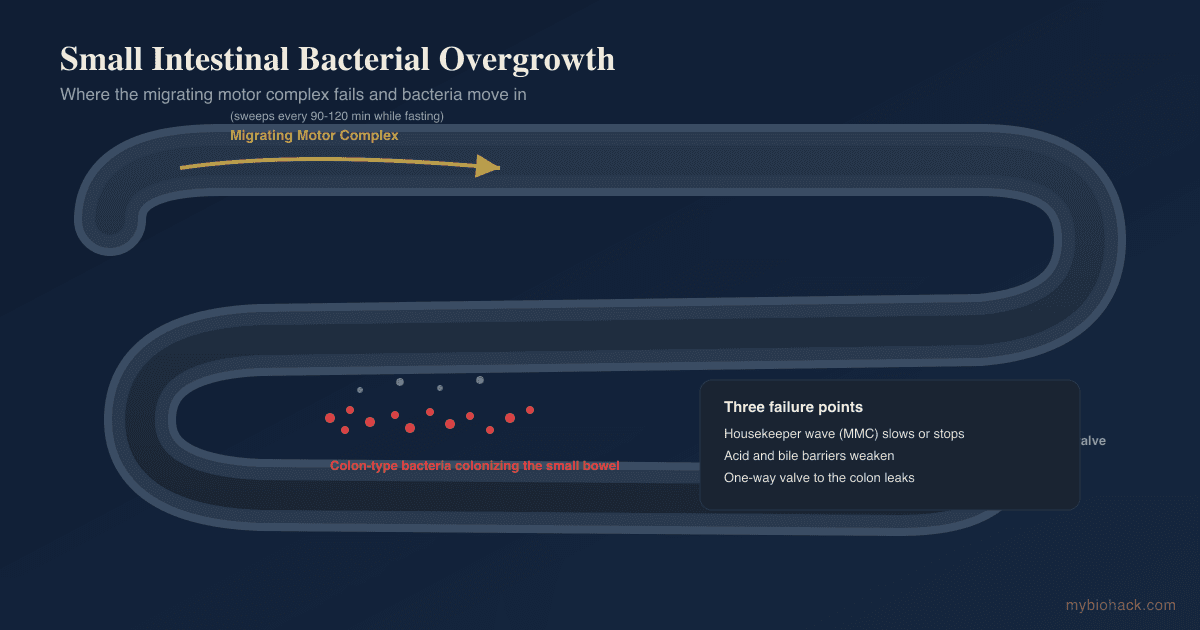
The migrating motor complex is the sweeping cleanup wave between meals, and it is covered in detail in the SIBO post rather than repeated here.
Its relevance is not new, since patients with small bowel bacterial overgrowth were shown to have a disordered interdigestive motor complex almost fifty years ago. R
The practical point is that methane both causes and is caused by slow transit, so clearing the organisms without restoring motility leaves the loop intact. R R
Prokinetic options are a prescribing decision and belong with your physician, and I discuss individual cases at /contact.
The oldest lever in that class is low-dose erythromycin, which acts as a motilin receptor agonist rather than as an antibiotic at prokinetic doses. R
6. Consider An Elemental Diet When Everything Else Stalls
A 14-day exclusive elemental diet normalized the lactulose breath test in 80% of subjects by day 15, rising to 85% by day 21, with concurrent symptom improvement. R
A more recent prospective trial of a palatable elemental diet in 30 subjects with IMO or SIBO normalized the lactulose breath test in 73%, with M. smithii abundance falling in step with average daily methane. R
The tradeoff is real, since it is nutritionally monotonous, socially difficult, and expensive, and palatability has historically been the main barrier to adherence. R
It is a reset, not a protocol, and it does nothing about the reason overgrowth happened.
7. Rebuild Rather Than Just Clear
Killing without rebuilding is how people end up on their fourth round.
Overgrowth recurs in a substantial fraction of patients within months of a successful antibiotic eradication, which is the clinical argument for treating the ecosystem rather than only the organism. R
- Akkermansia muciniphila support (a mucin-degrading resident that sits directly in the mucus layer archaea and bacteria both negotiate with, and whose administration restores mucus thickness and barrier function in mice) R R
- Butyrate and short-chain fatty acids (the primary colonocyte fuel, with delivery options covered in butyrate enemas) R R
- Fecal microbiota transplantation (the most complete ecological reset available, with meta-analysed but inconsistent results in IBS and a randomised trial in slow-transit constipation, and still investigational for this indication) R R
- Resistant starch (reintroduce cautiously, since fermentable substrate is exactly what feeds the hydrogen supply, and 28 g per day of type II resistant starch raised breath methane excretion by 93% in established methane producers) R
- Sleep repair (the bidirectional link between sleep, circadian rhythm, and microbial composition is covered in the gut microbiome and insomnia) R
The structural rebuild sequence is laid out in rebuilding the gut and rebuilding the gut liver axis.
What To Stay Away From
Approaches that reliably backfire in IMO (not an exclusive list):
- Assuming a negative hydrogen test rules out overgrowth (methane consumes hydrogen and produces exactly this false reassurance) R
- Cell-wall-targeting antibiotics used alone with archaeal intent (archaeal pseudomurein uses beta-1,3 linkages and L-amino acids, so penicillin-class transpeptidase inhibitors and lysozyme have no archaeal target) R
- Indefinite antimicrobial rotation without a motility plan (the transit defect regenerates the niche) R
- Long-term proton pump inhibitor use without review (acid suppression removes an upstream microbial barrier, discussed in proton pump inhibitors and mitochondria)
- Rifaximin monotherapy as the default (28% methane clearance versus 87% for the combination is not a rounding error) R
- Treating a detected methanogen as automatically pathological (carriage is common and the overgrowth threshold is a clinical judgment, not a microbiological one) R
Testing
Breath Testing
Breath testing is the only validated way to identify IMO, and the substrate and gases measured both matter.
The North American Consensus set the interpretive standard for both gases, and which cutoffs a lab applies materially changes who gets called positive. R R
I use the trio-smart Breath Test (Gemelli Biotech) because it measures hydrogen, methane, and hydrogen sulfide in the same run, which is the only way to see all three gas phenotypes instead of two.
A methane value of 10 ppm or higher at any point during the test meets the IMO threshold, and the ACG guideline uses the same cutoff. R R
The SIBO 3-Hour Breath Test (Genova Diagnostics) uses lactulose over three hours, which is the better choice when distal or colonic involvement is suspected.
Lactulose is not absorbed and therefore reaches the colon, which is what lets it register a distal signal, and it is also why its specificity for small bowel overgrowth specifically remains contested. R
The SIBO 2-Hour Breath Test (Genova Diagnostics) is the shorter glucose-oriented version, more specific for proximal small bowel and less likely to catch a colonic methane signal.
Glucose is absorbed proximally, and applying the consensus protocol to a glucose test changes its measured performance compared with the traditional protocol. R
The ibs-smart Test (Gemelli Biotech) measures anti-CdtB and anti-vinculin antibodies and helps identify post-infectious motility injury as the upstream reason the overgrowth keeps returning.
Those two antibodies were developed and validated as a biomarker separating diarrhea-predominant IBS from inflammatory bowel disease, celiac disease, and healthy controls. R
The Stool Testing Gap
This is worth stating plainly, because it is a real limitation and most people are not told about it.
Methanogens are archaea, and most stool PCR panels are built on bacterial 16S targets that do not report M. smithii at all.
The non-bacterial fraction of the gut microbiome, archaea included, is routinely neglected in favor of the bacterial one in both research and commercial reporting. R
Detection of M. smithii and M. stadtmanae improves dramatically with archaea-specific DNA protocols, which is exactly what a standard commercial bacterial panel does not run. R
Stool testing is still worth doing for the bacterial ecosystem that supplies the hydrogen, just not as a way to rule IMO in or out.
That ecosystem link is measurable, since small intestinal methanogen and hydrogen sulfide producer abundance correlate with the corresponding gases on a breath test. R
I use the Gut Zoomer (Vibrant Wellness) for microbiome composition, pathogens, digestion markers, and permeability in one panel.
The GI-MAP (Diagnostic Solutions) is the PCR-based alternative with strong pathogen and opportunist coverage.
The GI360 (Mosaic Diagnostics) adds a dysbiosis index derived from microbial abundance patterns.
The GI Effects 3-Day (Genova Diagnostics) samples across three days, which reduces the day-to-day variability that trips up single-sample panels.
The Microbiomix (Genova Diagnostics) is the shotgun metagenomic option and gives the best chance of species-level archaeal visibility.
Blood And Stool Markers
Vitamin B12 is the counterintuitive one, since IMO patients are less likely to be deficient than hydrogen-dominant SIBO patients, so a normal result does not exclude overgrowth. R
Order it through the Vitamin B12 test (Quest Diagnostics), and pair it with Methylmalonic Acid (Quest Diagnostics) because MMA rises in functional B12 deficiency before serum B12 falls.
Pancreatic elastase-1 identifies exocrine pancreatic insufficiency as a competing or contributing cause of maldigestion, available as Elastase (Doctor's Data).
Calprotectin separates functional overgrowth from active mucosal inflammation, available as Calprotectin (Doctor's Data), and matters here because methane positivity runs inversely with inflammatory bowel disease. R
Barrier Integrity
The Intestinal Permeability Assessment (Genova Diagnostics) uses a lactulose and mannitol challenge to measure barrier function directly rather than by proxy.
The Zonulin test (Diagnostic Solutions) measures the tight junction regulator, which is the mechanistic link between chronic overgrowth and systemic endotoxin exposure.
Mechanisms Of Action
Simple:
- Archaea are not bacteria, so antibiotics designed to break bacterial cell walls have nothing to break.
- Methanogens eat the hydrogen that gut bacteria make, and turn it into methane gas.
- Methane makes the intestine squeeze harder but move slower, which is why it causes constipation rather than diarrhea.
- Because methanogens eat hydrogen, a hydrogen-only breath test can look normal in someone who is clearly sick.
- Killing the bacteria that supply hydrogen and the archaea that consume it at the same time works far better than killing either one alone.
Advanced:
- Hydrogenotrophic methanogenesis M. smithii reduces CO2 with four moles of H2 to yield one mole of CH4 and two moles of water, and it competes with reductive acetogens and sulfate-reducing bacteria for the same electron donor. R The genome carries adhesin-like proteins and surface glycans that mimic host gut mucosal structures, plus a nitrogen acquisition advantage, which together explain how it holds its niche against faster-growing bacteria. R
- Interspecies hydrogen transfer and thermodynamic pull Fermentative and acetogenic reactions carry a positive Gibbs free energy at high H2 partial pressure, so they stall unless hydrogen is removed. R Methanogens act as a hydrogen sink, drop the partial pressure, and make the upstream reactions thermodynamically favorable, which is why archaeal overgrowth intensifies rather than competes with bacterial fermentation. R
- Pseudomurein and antibacterial escape Methanogenic archaea build cell walls from pseudomurein, which uses beta-1,3 glycosidic bonds and L-amino acid cross-links instead of the beta-1,4 bonds and D-amino acids of bacterial peptidoglycan. R Lysozyme cannot cleave beta-1,3 bonds and penicillin-class agents target transpeptidases absent from archaea, which is the structural reason antibacterial monotherapy underperforms against IMO. R
- Cholinergic augmentation of non-propulsive contraction Direct methane infusion slowed canine small bowel transit by 59% while increasing contractile amplitude, and the ileal calcium response to methane was attenuated by atropine, implicating muscarinic cholinergic signaling rather than a direct smooth muscle effect. R R
- Archaeal mevalonate pathway inhibition Archaea synthesize isoprenoid membrane lipids through the mevalonate pathway, and lovastatin lactone binds preferentially over the native F420 coenzyme ligand at F420-dependent methylenetetrahydromethanopterin dehydrogenase. R This inhibits methanogenesis at an enzyme with no bacterial equivalent, which is why a statin can suppress methane without functioning as a broad antimicrobial. R
- Thiol-stress antimicrobial action Allicin inhibits growth by depleting the glutathione pool and S-allylmercapto-modifying protein cysteine residues, lowering total sulfhydryl levels. R Because the target is intracellular redox chemistry rather than the cell envelope, the pseudomurein barrier is not protective against it. R
Genetics
Methanogen carriage is one of the most heritable traits in the human microbiome, which is unusual and worth sitting with.
Concordance for M. smithii carriage is higher in monozygotic than dizygotic twin pairs, and Methanobrevibacter forms a co-occurrence network with Christensenellaceae, the single most heritable taxon identified. R
Methanogen heritability estimates run 0.21 in UK twins by 16S data, 0.38 by metagenomic data, 0.66 in Canadians of European descent, and 0.21 in Korean twins. R
Specific causal variants remain poorly mapped, so what follows is host-side modifier biology rather than a methanogen gene list.
SLC6A4 (Highest Population Risk)
SLC6A4 encodes the serotonin transporter (SERT), which handles reuptake of serotonin in intestinal mucosal epithelial cells and enteric neurons.
The 5-HTTLPR promoter polymorphism is a 44 base pair insertion or deletion producing a long (L) or short (S) transcript, and it alters transporter expression.
5-HTTLPR (the LL genotype) is a risk factor for constipation-predominant IBS in a meta-analysis of 25 studies covering 3,443 cases and 3,359 controls, even though no association was found with IBS overall. R
Higher SERT expression means faster serotonin clearance, which reduces the serotonergic drive on peristalsis and stacks with the methane transit effect.
SLCO1B1
SLCO1B1 encodes OATP1B1, the hepatic transporter that clears statins out of circulation and into the liver.
Reduced-function variants raise systemic statin exposure and muscle toxicity risk, which is the practical constraint on any archaeal statin strategy.
rs4149056 (the C allele) reduces OATP1B1 activity, raises plasma statin concentration, and increases myopathy risk, with homozygous C carriers at elevated risk on lovastatin specifically. R
Clinical pharmacogenomics guidance recommends dose limitation or an alternative agent in C allele carriers. R
FUT2
FUT2 encodes an alpha-1,2-fucosyltransferase that fucosylates mucosal glycans and determines secretor status.
Non-secretors do not display ABH histo-blood group antigens on the intestinal mucosa, which changes the adhesion and feeding landscape microbes negotiate with.
rs601338 (the A allele, homozygous) produces the non-secretor phenotype in roughly 20% of people of European descent and is associated with lower microbial diversity and reduced Bifidobacterium and Lactobacillus abundance. R
M. smithii uses surface glycans that mimic host mucosal structures to persist, so host fucosylation status is mechanistically plausible as a modifier, though direct archaeal association data is not yet established. R
More Research
Age changes the archaeal picture, with methanogen prevalence and diversity increasing across the lifespan, so an elevated methane in a 70 year old and a 25 year old are not the same finding. R
Carriage versus overgrowth is genuinely unresolved, and this is the honest MAYBE at the center of the topic.
Methanogens are present in a large fraction of healthy people with no symptoms, and improved detection protocols push prevalence higher still. R
There is no agreed density above which carriage becomes disease, only a breath gas cutoff that correlates with symptoms.
Detected is not diseased, and anyone telling you otherwise is selling certainty the literature does not have.
Direction of the weight association is contested, which undercuts the tidy "methane makes you fat" story.
Overweight status has been associated with increased methanogenic archaea. R
Yet Christensenellaceae and its methanogen co-occurrence network are enriched in people with low body mass index, and transplanting Christensenella into germ-free mice reduced adiposity. R
Childhood colonization data points the opposite way again, associating M. smithii carriage with higher BMI z-scores. R
These findings are not reconcilable yet.
Hydrogen as a therapeutic gas is a strange and interesting inversion, since the substrate methanogens consume is the same molecule studied as a selective antioxidant, covered in molecular hydrogen benefits.
Whether supplemental H2 meaningfully feeds intestinal methanogens has not been tested and is a real open question.
Malignancy screening deserves more attention, since both SIBO and IMO show elevated prevalence in gastrointestinal malignancy populations, and new-onset methane positivity in an older patient warrants a workup rather than a supplement protocol. R
Metformin's gut-side effects overlap this space, since it shifts microbial composition and butyrate production independent of glycemic effect, discussed in metformin, AMPK, and the gut microbiome.
Methanogen abundance tracks broader ecosystem structure, not just gas output, and correlates with fecal microbiota composition and alpha diversity in both healthy adults and IBS patients. R
That supports treating IMO as an ecological state rather than a single-organism infection.
Treatment evidence quality is low across the board, and the ACG guideline says so explicitly, offering only conditional recommendations at very low evidence certainty. R
The 87% combination number is compelling and it comes from a single retrospective analysis at one center, which is exactly the kind of result that shrinks when replicated.
For diet sequencing during and after treatment, see diet transitions and the autoimmune protocol, and for the ecological framing of why the microbial layer sits upstream of so much of this, see bacteria rule, we are just squatting here.
For personalized interpretation of a breath test or a stool panel, I work with people directly at /contact.
Jacob Gordon
INHC, FMT-C
Integrative Nutrition Health Coach
I cover mold illness, post-viral recovery, methylation, and complex chronic disease, drawing on ten years of clinical research, work inside a functional medicine clinic, and my own recovery from all of it. Every claim here is cited.
Book a ConsultationRelated Protocols & Supplements
Deep-dive chapters and recommended supplements for this topic
Spore-Based Probiotics
1 cap with food
L-Glutamine
5g 2x/day on empty stomach
Butyrate
300mg 2x/day with meals