NMN (Nicotinamide Mononucleotide): NAD+ Precursor, Longevity, And Exercise
By Jacob Gordon, INHC, FMT-CThis article contains affiliate links. As an Amazon Associate, MyBioHack earns from qualifying purchases at no extra cost to you. We only link products we research and stand behind.
NMN is one of the most heavily marketed longevity supplements on the market, and most of that marketing rests on an assumption readers never see tested directly.
In this post, we will discuss what NMN actually is, how NAD+ decline is measured and whether the premise holds up, the unresolved fight over how NMN gets into cells, how NMN compares to NR and niacin on real human data, what the human trials show and do not show, the methylation cost of high-dose NAD precursors, and where the FDA and the cancer-risk question currently stand.
What Is NMN
Nicotinamide Mononucleotide (NMN) is a nucleotide built from ribose, a phosphate group, and nicotinamide, and it sits one enzymatic step upstream of nicotinamide adenine dinucleotide (NAD+).
NAD+ is a coenzyme required for mitochondrial energy production, DNA repair, and sirtuin signaling, and every living cell depends on it.
NMN itself is not new biology.
It has been part of the human salvage pathway that recycles nicotinamide back into NAD+ for as long as cells have existed.
What is new is selling it in capsule form on the premise that raising it will meaningfully slow human aging, a premise built almost entirely on rodent data that has not yet translated into a single human trial with a hard clinical endpoint.
The NAD+ Decline Premise
The entire NMN pitch rests on one claim: NAD+ falls as you age, and restoring it restores function.
The decline itself is real in the tissues where it has been measured.
A study of human skin biopsies across ages 0 to 77 found a strong negative correlation between tissue NAD+ and age, in both men and women. R
But "measured" is doing a lot of work in that sentence.
NAD+ cannot be measured with a simple blood draw the way cholesterol can.
Older assays used ultraviolet spectroscopy, which lacks the specificity to distinguish NAD+ from its many related metabolites, and modern trials rely on liquid chromatography mass spectrometry (LC-MS) panels developed specifically to fix that problem. R
Whole blood, plasma, and tissue biopsies do not track each other reliably, so a supplement that raises blood NAD+ metabolites is not automatically raising NAD+ where it matters inside muscle, brain, or liver mitochondria.
A comprehensive review of NAD+ metabolism during aging is explicit that the decline is tissue-specific, driven by both reduced synthesis and increased consumption, and that human data lag far behind the rodent literature. R
I think the decline premise is defensible.
I do not think it is proven that correcting a blood metabolite reading translates into the tissue-level, function-level outcome the marketing implies.
The Transport Controversy
Before NMN can become NAD+ inside a cell, it has to get across the cell membrane, and how it does that is genuinely unresolved.
NRK1 (nicotinamide riboside kinase 1) phosphorylates nicotinamide riboside (NR) into NMN once NR is already inside the cell, and cell biology work found that extracellular NMN itself does not cross most cell membranes intact.
Instead it appears to be dephosphorylated outside the cell to NR first, then re-phosphorylated back to NMN once inside. R
The enzyme proposed to run that extracellular dephosphorylation step is CD73 (ecto-5'-nucleotidase), which was shown to convert NMN to NR on the outside of tumor cells to sustain their NAD+ supply. R
That CD73-to-NR route would mean NMN supplements work, functionally, by acting as an NR precursor rather than by entering cells as NMN itself.
A competing 2019 paper proposed a direct route: a transporter called Slc12a8, identified in mouse intestinal cells, that was reported to move NMN across the membrane intact, sodium-dependently, without needing conversion to NR first. R
That paper was contested almost immediately.
A formal rebuttal published in the same journal argued there was no solid evidence Slc12a8 functions as an NMN transporter at all, and that the transport phenotype reported could not be attributed to Slc12a8 with the data shown. R
The original authors published a reply defending their data, and the dispute was never definitively settled in the literature.
I am not going to pretend this is resolved, because it is not.
What matters practically is that both routes converge on the same downstream chemistry, conversion to NAD+ via NMNAT enzymes, so the controversy affects how NMN works, not really whether raising NAD+ metabolites happens at all. R
NMN Vs NR Vs Niacin Vs NR-Derived Products
NMN
NMN sits one phosphorylation step closer to NAD+ than NR on paper, since NR must first become NMN via NRK1 before NMNAT converts it to NAD+.
In practice this theoretical advantage has not translated into a documented superiority in raising blood NAD+ per milligram in head-to-head human data, because most human trials test NMN and NR separately, using different assay methods, doses, and populations, which makes cross-trial comparison unreliable rather than a clean apples-to-apples result.
NR
Nicotinamide Riboside has the longer human safety record of the two.
A six-week trial in healthy middle-aged and older adults found chronic NR supplementation well tolerated, with significant increases in blood NAD+, and modest signals toward reduced blood pressure and arterial stiffness that the authors flagged as needing confirmation. R
Earlier pharmacokinetic work established that oral NR is bioavailable and dose-dependently raises NAD+ metabolites in humans, which is the foundational human data the whole NAD-precursor category leans on. R
I discuss the intranasal NR route separately in my post on Synapsin and intranasal nicotinamide riboside, which some clinicians use to try to bypass first-pass metabolism entirely.
Niacin (Nicotinic Acid) And Niacinamide
Niacin is the oldest, cheapest way to raise NAD+, because both nicotinic acid and niacinamide feed the same salvage and Preiss-Handler pathways NMN and NR eventually converge on.
Nicotinic acid reliably causes cutaneous flushing through activation of the HCA2 (GPR109A) receptor on skin immune cells, which triggers prostaglandin release. R
At the high doses used for lipid management, niacin formulations carry documented hepatotoxicity risk, which is a different safety profile than the doses used in NAD-precursor research. R
Niacinamide avoids the flush but is the substrate that most directly feeds NNMT, the enzyme at the center of the methylation drain discussed below.
CD38: The Other Half Of The Equation
Supplying more precursor only matters if consumption is not outpacing it, and CD38 is the dominant NAD+-consuming enzyme that increases with age.
CD38 knockout mice were protected from the age-related NAD+ decline and mitochondrial dysfunction seen in normal aging, establishing CD38 as a primary driver of the depletion NMN is supposed to reverse. R
That finding is the basis for a parallel strategy to precursor loading: inhibiting the enzyme that is burning through NAD+ in the first place.
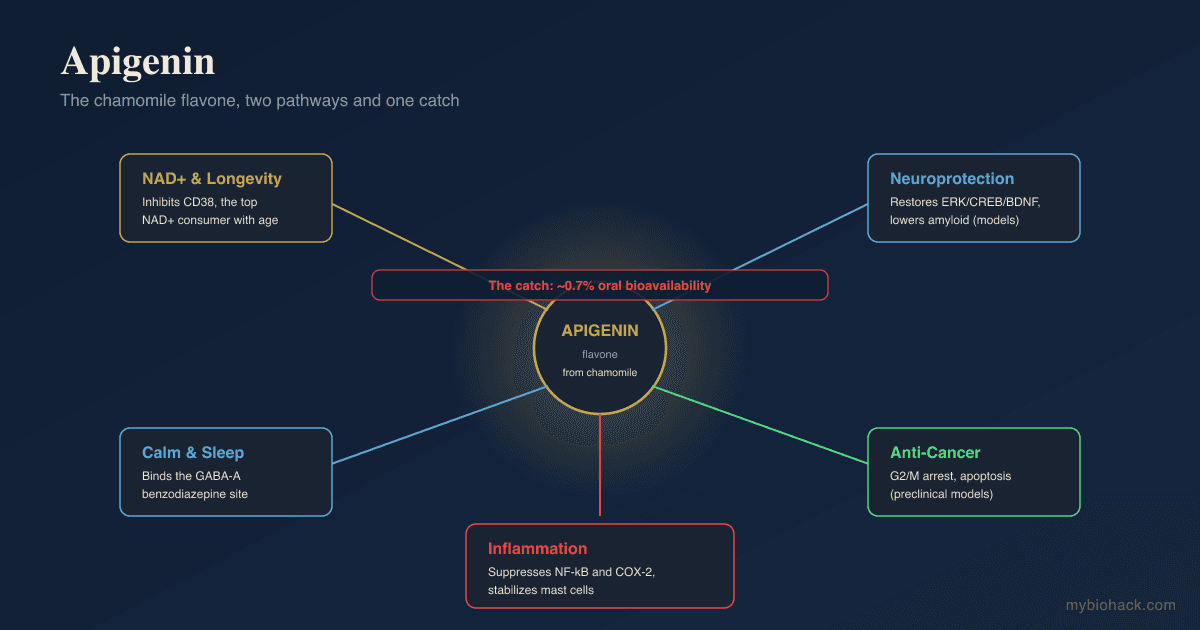
Apigenin, a flavonoid I cover in more depth in my apigenin post, was identified as a direct CD38 inhibitor that raised intracellular NAD+ and improved metabolic markers in obese mice. R
Quercetin shows overlapping CD38-inhibitory activity in the same family of flavonoid research, which is why I frequently see the two paired in NAD-support protocols rather than used alone.
I think a combined approach, modest precursor plus a consumption brake, is more defensible mechanistically than precursor-only dosing, though there is no human trial yet that has tested NMN plus a CD38 inhibitor head-to-head against NMN alone.
Human Trials
The honest summary of the human data is that it is real, small, and almost entirely on surrogate endpoints.
A 2023 review of NAD-boosting compounds in humans concluded that clinical evidence for meaningful physiological improvement remains unclear, and that small sample sizes limit how far the existing trials can be interpreted. R
No human trial, to date, has used lifespan or a validated healthspan composite as an endpoint.
Every trial below used a surrogate marker instead.
Metabolism
A 10-week trial in postmenopausal, prediabetic women found that 250 mg per day of NMN improved muscle insulin sensitivity and insulin signaling in skeletal muscle biopsies, without significant changes in body weight or body composition. R
This is the single most cited human NMN trial, and it is worth noting the effect was specific to insulin signaling, not a broad metabolic transformation.
Exercise
A six-week trial in amateur runners found that medium and high-dose NMN improved submaximal oxygen utilization and shifted ventilatory thresholds during exercise, but found no significant difference in VO2 max itself compared to placebo. R
That is a meaningfully more modest result than "NMN increases aerobic capacity" headlines suggest, since VO2 max is the standard clinical measure of aerobic capacity and it did not move.
Older Adults: Walking Speed And Fatigue
A 12-week trial in healthy older men found chronic NMN supplementation significantly raised blood NAD+ and its metabolites, with nominally significant improvements in gait speed and grip strength that the authors said needed replication in larger cohorts. R
A separate 12-week trial in older adults found NMN maintained walking speed on a 4-meter walk test better than placebo, alongside the expected rise in blood NAD+. R
A third trial in older Japanese adults found no significant improvement in overall sleep quality scores, but did find a meaningful reduction in daytime drowsiness and improved lower-limb function (5-times sit-to-stand test) specifically when NMN was taken in the afternoon rather than the morning. R
I include that dosing-timing detail because it is the kind of nuance marketing copy leaves out entirely.
Sleep
The same afternoon-dosing trial above found a moderate effect size on drowsiness reduction, and the separate 4-meter-walk trial found improved Pittsburgh Sleep Quality Index scores, specifically less daytime dysfunction, after 12 weeks of NMN. R
Two positive sleep signals from two different research groups is more consistent than a single trial, but this is still self-reported sleep data over 12 weeks, not polysomnography, and not a large sample.
The Negative Control
A large, well-controlled, multicenter, dose-ranging trial in healthy middle-aged adults confirmed NMN safely raised blood NAD+ at doses up to 900 mg per day, but reported that most secondary physical performance outcomes did not reach statistical significance across dose groups. R
A separate MIB-626 formulation trial in overweight and obese middle-aged and older adults confirmed the NAD+ rise but was explicitly a pharmacokinetic and safety study, not designed to detect functional benefit at all. R
Put together, the pattern across every trial is consistent: blood NAD+ reliably goes up, and functional outcomes are inconsistent, modest, or absent depending on which one you look at.
That is a big MAYBE, not a settled case.
For readers dealing with post-viral fatigue or low mitochondrial output, I understand the appeal of a fatigue signal in older-adult trials, and I cover the mitochondrial side of persistent fatigue separately in my post on mitochondrial psychobiology.
The Methylation Drain
This is the part of the NMN conversation I think gets skipped the most, and it matters specifically for a methylation-sensitive audience.
NNMT (nicotinamide N-methyltransferase) clears excess nicotinamide by methylating it into 1-methylnicotinamide, and it uses S-adenosylmethionine (SAM) as the methyl donor to do it. R
SAM is the same universal methyl donor your body uses for neurotransmitter synthesis, DNA methylation, phase II liver detoxification, and homocysteine clearance.
High-dose nicotinamide, and by extension high-dose niacinamide-adjacent NAD precursors, can meaningfully increase NNMT flux, which competes for the same finite SAM pool those other pathways depend on. R
Interestingly, this methylation byproduct is not purely a cost.
In C. elegans, sirtuin-driven lifespan extension itself was found to depend on this same nicotinamide methylation step generating a downstream stress signal, which complicates the simple "NNMT is just a drain" framing. R
Even so, for a person already running a sluggish methylation cycle, stacking a high-dose NAD precursor on top without supporting methyl donor status is a reasonable thing to be cautious about.
TMG (betaine) is the standard countermeasure, since betaine supplementation has been shown in a randomized trial to lower plasma homocysteine by donating a methyl group through the betaine-homocysteine methyltransferase pathway, independent of the NNMT route. R
I do not dose high-dose NMN or NR in a client without at least discussing their methylation support alongside it.
Safety, The Cancer Question, And Regulatory Status
Across the human trials cited above, NMN has consistently been reported as well tolerated at doses up to 900 mg per day for 8 to 12 weeks, with no serious adverse events attributed to treatment. R
That safety data is short-term.
None of it covers years of continuous use, which matters for the honest counter-case I want to lay out plainly.
Rapidly proliferating cells, including cancer cells, are unusually dependent on the NAD+ salvage pathway to support the biosynthesis their growth requires, which is precisely why NAD-salvage inhibitors are being developed as an anti-cancer strategy. R
Tumor NAD+ metabolism is described in the cancer literature as a determinant of cancer cell biology in its own right, not a side effect of malignancy. R
NAMPT, the rate-limiting enzyme in NAD+ salvage, is overexpressed in multiple cancer types and is itself a drug target for that reason. R
None of this proves that supplying an NAD precursor causes cancer or accelerates an existing one in humans.
No human trial has tested that question, and I am not aware of epidemiological signal either way.
But the biological logic that feeding a pathway tumors depend on could, in theory, feed an occult tumor is not fringe reasoning, it is the same logic that justifies NAMPT inhibitor drug development, run in reverse.
I would rather state that plainly than pretend the sirtuin-and-longevity story around NAD+ is more settled than it is.
The famous C. elegans and Drosophila data underpinning the broader sirtuin longevity narrative did not hold up when researchers standardized genetic backgrounds and controls, and the original lifespan effects largely disappeared. R
That does not invalidate sirtuin biology, but it should temper how much weight the word "longevity" is allowed to carry in NMN marketing copy.
On regulatory status, the FDA excluded NMN from the legal definition of a dietary supplement in November 2022, citing the DSHEA "race to market" provision, because an NMN drug candidate had been authorized for investigation before NMN was marketed as a supplement.
That determination was reversed on September 30, 2025, when the FDA published a reinstatement decision declaring NMN lawful for use in dietary supplements, after concluding NMN had in fact been marketed as a supplement in the United States as early as 2017, before the drug investigation began.
If you bought NMN during the 2022 to 2025 window, nothing about your product changed chemically.
What changed was the FDA's legal reading of when the drug exclusion clause applies, which is worth knowing if a client asks why the product briefly disappeared from some retailers.
Dosing And Forms
Human trials have used oral NMN doses ranging from 250 mg to 1,200 mg per day, with most positive functional signals clustering in the 250 to 600 mg range rather than the highest doses tested. R
Capsules and powders are the delivery form used in essentially every published trial.
Sublingual and liposomal forms are popular in the consumer market on the theory that they bypass first-pass gut metabolism, but I am not aware of a published human trial directly comparing sublingual NMN bioavailability to oral capsules, so that claim currently runs ahead of the data.
Testing
I do not treat NAD-precursor supplementation as something to dose blind.
For baseline metabolic and liver safety monitoring before and during a trial of NMN or NR, I use the Comprehensive Metabolic Panel (Quest Diagnostics) or the Foundation Zoomer (Vibrant Wellness) to confirm liver enzymes and kidney function are stable.
For the methylation side of the equation, I use Homocysteine (Quest Diagnostics) alone, or the combined Homocysteine + B12 + Folate (Quest Diagnostics) panel, to catch a rising trend before it becomes symptomatic.
For a genetic read on methylation capacity relevant to the NNMT and MTHFR discussion above, I use the Methylation Genetics panel (Vibrant Wellness).
To assess mitochondrial and oxidative stress status directly, which is the actual tissue-level claim NMN is supposed to influence, I use the Cellular Zoomer (Vibrant Wellness), or the Oxidative Stress 2.0 urine panel (Genova Diagnostics), or the Organic Acids Test (OAT) (Mosaic Diagnostics) for mitochondrial organic acid markers.
Given the Yoshino trial's specific insulin-sensitivity finding, I use Insulin, Fasting (Quest Diagnostics) to see whether that signal is relevant for a given client at all before recommending NMN for that reason.
The Nutrient Zoomer (Vibrant Wellness) covers B-vitamin and niacin status, useful context before adding another B3-family compound on top of an existing supplement stack.
Mechanisms Of Action
Simple:
- NMN is one step away from becoming NAD+, a molecule every cell needs for energy production and DNA repair.
- Whether NMN enters cells directly or is converted to NR first and back again is still debated, but either route ends at the same NAD+ molecule.
- CD38 destroys NAD+ faster as you age, so supplying more precursor without addressing that consumption may be working against a leak you have not plugged.
- Raising NAD+ this way also raises demand on your body's methyl-donor supply, through the NNMT enzyme.
Advanced:
- NMNAT Conversion. Nicotinamide mononucleotide adenylyltransferase (NMNAT), present in three compartment-specific isoforms across the nucleus, cytoplasm, and mitochondria, catalyzes the final ATP-dependent step converting NMN to NAD+, and is considered the rate-limiting enzyme in that final step. R
- Extracellular Dephosphorylation. CD73 dephosphorylates extracellular NMN to NR to sustain NAD+ biosynthesis in cells under metabolic stress, which is the mechanistic basis for the CD73-first transport model discussed above. R
- Contested Direct Transport. The Slc12a8 sodium-dependent transporter model proposes NMN crosses intestinal cell membranes intact, a claim that remains actively disputed in the literature rather than resolved. R R
- CD38 Competition. CD38 hydrolyzes NAD+ and NMN directly, and its age-related increase in expression is a primary driver of the NAD+ decline that precursor supplementation is trying to reverse, meaning consumption and supply are in direct competition for the same pool. R
- NNMT Methyl Diversion. NNMT methylates excess nicotinamide using SAM as the methyl donor, diverting methyl groups away from DNA methylation, neurotransmitter synthesis, and detoxification pathways that draw from the same SAM pool. R
- Sirtuin And PARP Competition. NAD+ is a shared substrate for sirtuins and poly-ADP-ribose polymerases, and periods of high DNA damage or inflammation can divert the NAD+ pool toward PARP-driven repair at the expense of sirtuin signaling. R
Genetics
NAMPT
NAMPT (nicotinamide phosphoribosyltransferase) is the rate-limiting enzyme in the NAD+ salvage pathway that recycles nicotinamide back into usable NAD+ precursors, and it also functions as a secreted cytokine involved in insulin secretion. R
Novel polymorphisms identified in the NAMPT gene show different frequencies between normal and tumor tissue, and some variants carry a measurable functional impact on enzyme activity. R
NNMT
NNMT (nicotinamide N-methyltransferase) methylates nicotinamide to clear it from the NAD+ salvage pathway, consuming SAM in the process.
Enzymatic activity of NNMT in human liver tissue has been shown to vary over a five-fold range between individuals, consistent with meaningful genetic regulation of how much methyl-donor demand a given person's NAD-precursor dosing will actually create. R
CD38
CD38 encodes the primary NADase responsible for age-related NAD+ consumption, breaking down both NAD+ and NMN extracellularly and intracellularly. R
A missense variant, Arg140Trp, reduces CD38's enzymatic activity by roughly half in functional testing, and has been linked to altered insulin secretion, illustrating that CD38 activity itself is not fixed across the population. R
NQO1 rs1800566
NQO1 (NAD(P)H quinone dehydrogenase 1) uses NAD(P)H as a cofactor to detoxify reactive quinones, linking it to the broader NAD(P)H and NAD+ balance rather than to NAD+ salvage directly.
The rs1800566 variant (C609T, P187S) significantly reduces NQO1 enzyme activity and has been associated with increased risk of adult acute leukemia, making it relevant context for anyone stacking multiple NAD-pathway-adjacent compounds. R
SIRT1
SIRT1 encodes the best-studied NAD+-dependent sirtuin, and it is the downstream effector most NMN marketing implicitly promises to activate.
Common SIRT1 variants, including rs7895833, rs7069102, and rs2273773, have been associated with differences in SIRT1 protein expression against oxidative stress and with longevity outcomes in elderly cohorts. R
MTHFR rs1801133
MTHFR (methylenetetrahydrofolate reductase) is not part of the NAD+ salvage pathway directly, but it governs methyl-group availability through the folate cycle, which is exactly the resource pool the methylation drain section above draws on.
The rs1801133 (C677T) variant reduces MTHFR enzyme activity and thermal stability, and homozygous carriers show meaningfully elevated plasma homocysteine, which is the same marker I recommend tracking in anyone dosing high amounts of niacinamide-adjacent compounds long term. R
More Research
- Cognitive Function. Preliminary interest in NMN for cognitive decline exists in the animal literature, but I am not aware of a robust, adequately powered human cognitive trial, so this remains a hypothesis rather than a finding.
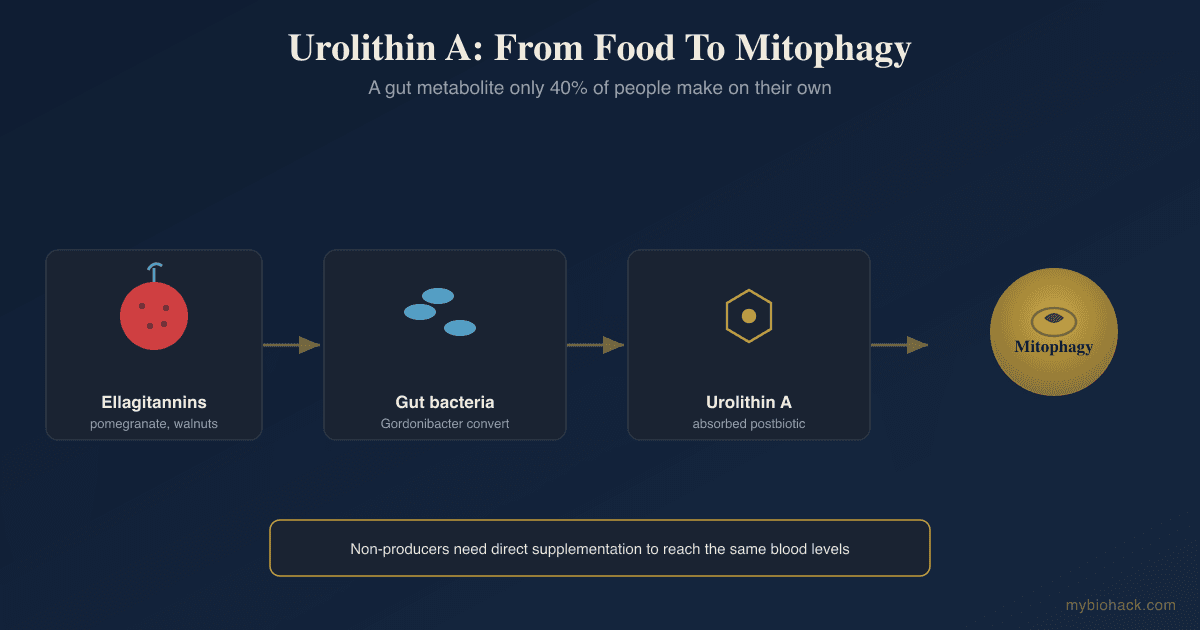
- Longevity Compound Stacking. NMN is frequently stacked with other longevity-adjacent compounds I have written about separately, including resveratrol for its sirtuin-adjacent signaling, spermidine for autophagy, fisetin as a senolytic, and urolithin A for mitophagy, though the combination itself has not been tested as a stack in a controlled human trial.
- Mitochondrial Peptide Overlap. Readers interested in the mitochondrial-longevity angle of NMN may also find my post on humanin and IGF-1 in longevity and exercise useful, since it covers a mitochondrially-derived peptide operating on an adjacent but distinct pathway.
- NAD+ And NADPH Crosstalk. I go into the broader NAD+ and NADPH relationship in a separate post, which is worth reading before assuming "more NAD+" and "more antioxidant capacity" mean the same thing metabolically.
- Sleep-Timing Effects. The finding that afternoon NMN dosing outperformed morning dosing for drowsiness and lower-limb function in one trial deserves more attention than it has gotten, since almost no consumer product or protocol currently specifies time of day. R
- Testing. For biomarker tracking relevant to NAD-precursor use specifically, I use the tests listed in the Testing section above rather than a single generic panel, since methylation status, mitochondrial function, and baseline metabolic safety are three different questions.
Jacob Gordon
INHC, FMT-C
Integrative Nutrition Health Coach
I cover mold illness, post-viral recovery, methylation, and complex chronic disease, drawing on ten years of clinical research, work inside a functional medicine clinic, and my own recovery from all of it. Every claim here is cited.
Book a ConsultationRelated Protocols & Supplements
Deep-dive chapters and recommended supplements for this topic
Quercetin
500mg 2x/day
Vitamin D3 + K2
5000 IU + 200mcg/day
Magnesium Glycinate
400mg at bedtime