7 Benefits of Spermidine (Autophagy, Longevity, And How To Get It From Food)
By Jacob Gordon, INHC, FMT-CThis article contains affiliate links. As an Amazon Associate, MyBioHack earns from qualifying purchases at no extra cost to you. We only link products we research and stand behind.
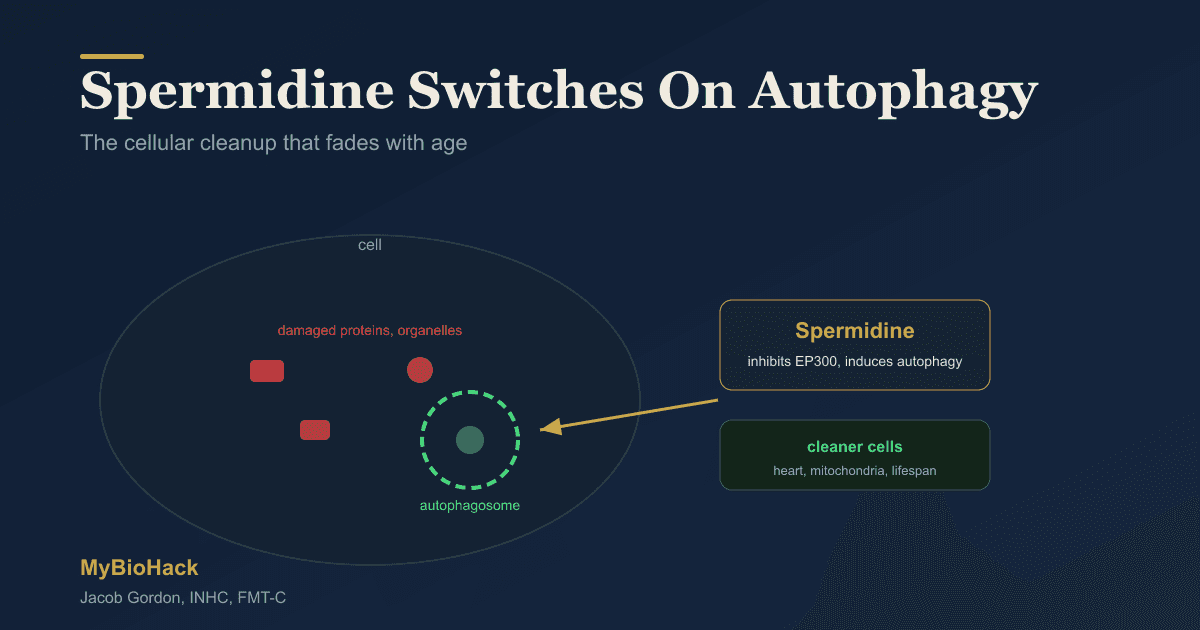
Spermidine is a natural polyamine that triggers autophagy, the cellular cleanup process that declines with age and that fasting is famous for activating.
In this post, we will discuss what spermidine is, the two distinct molecular jobs it does inside a cell, the animal and human evidence for its longevity and cardioprotective effects, where the human data is strong and where it is genuinely thin, the best food sources, and how to dose it.
---
- What Is Spermidine
- Spermidine As A Caloric Restriction Mimetic
- How Spermidine Triggers Autophagy
- Hypusination: The eIF5A Connection
- Benefits Of Spermidine
- What The Human Evidence Actually Shows
- Natural Sources
- The Polyamine And Cancer Question
- Dosage, Safety, And Pairing With Fasting And Exercise
- Testing
- Mechanisms Of Action
- Genetics
- More Research
- Where To Go From Here
What Is Spermidine
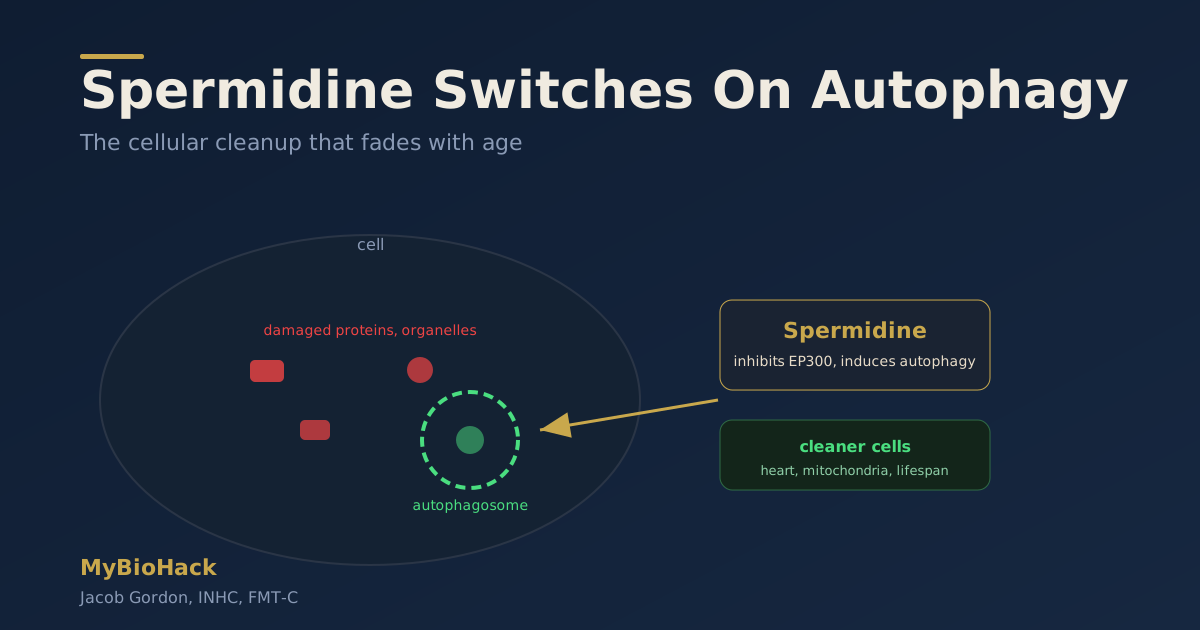
Spermidine belongs to a small family of molecules called polyamines, alongside Putrescine and Spermine.
All three are made from the same precursor, the amino acid ornithine.
Ornithine Decarboxylase (ODC1) converts ornithine into putrescine, and putrescine is then converted stepwise into spermidine and spermine.
Every cell in your body makes its own polyamines, your gut bacteria make a substantial additional supply, and you eat more of them in food.
Endogenous polyamine levels are not static.
Tissue spermidine and spermine both decline measurably with age, and that decline tracks with the same window in which autophagy itself starts to fail.
This is the entire premise of spermidine as an intervention: replace, at least partially, what aging is taking away.
The polyamine family's defining downstream action is the induction of Autophagy, the process by which a cell digests and recycles its own damaged proteins and organelles.
Autophagy decline is one of the more consistent hallmarks of aging across species, and that decline tracks with most age-related disease, which is why a compound that restores it draws this much research attention.
Spermidine As A Caloric Restriction Mimetic
Spermidine is the field's clearest example of a Caloric Restriction (CR) mimetic, a compound that reproduces the cellular signature of eating less without requiring you to actually eat less.
Fasting and caloric restriction extend lifespan in essentially every model organism tested, and one of the mechanisms behind that effect is a rise in endogenous spermidine.
A 2024 paper went further and showed this is not just correlation.
Blocking spermidine synthesis in yeast, flies, and mice blunted fasting's ability to induce autophagy and erased its lifespan and cardioprotective benefits, which means spermidine is not simply associated with the fasting response, it is required for a meaningful part of it.
The same study measured spermidine levels rising after fasting or caloric restriction in yeast, flies, mice, and human volunteers, which is a rare case of a mechanistic finding being confirmed across that many species in one paper.
This is also why spermidine gets framed as a tool for people who cannot or will not fast for extended periods.
It is not a replacement for fasting mimetics generally, it is one specific input into the same pathway that fasting activates.
How Spermidine Triggers Autophagy
This is the mechanistic core of why spermidine matters, and it is worth walking through carefully rather than waving at "it boosts autophagy."
Spermidine's primary route into the autophagy machinery is inhibition of E1A-Binding Protein P300 (EP300), an acetyltransferase that normally acts as a brake on autophagy.
EP300 keeps a set of autophagy proteins in an acetylated, less active state under normal nutrient-replete conditions.
When spermidine inhibits EP300, those proteins lose their acetyl groups, and deacetylation is the switch that turns them functionally active.
Two of the proteins in that deacetylated set are directly responsible for building the autophagosome, the double-membraned vesicle that engulfs cellular debris.
Autophagy-Related Protein 3 (ATG3) is an enzyme that conjugates Microtubule-Associated Protein Light Chain 3 (LC3) onto the autophagosome membrane, and that LC3 conjugation step is what allows the membrane to elongate and close around damaged material.
Spermidine's deacetylation of this pathway is not redundant with other autophagy inducers either.
A 2011 comparison found spermidine induces autophagy independently of Sirtuin 1 (SIRT1), the enzyme that resveratrol depends on for its own autophagy effect, and the two compounds produced synergistic autophagy induction when combined at low doses.
That is part of why resveratrol and spermidine are often stacked rather than treated as redundant.
Beyond the acetylproteome, spermidine also activates Transcription Factor EB (TFEB), the master transcriptional regulator of autophagy and lysosomal genes.
TFEB activation expands the cell's entire lysosomal and autophagic machinery rather than just triggering one round of cleanup, which is a slower but more durable effect.
Spermidine's relationship to AMP-Activated Protein Kinase (AMPK) and Mechanistic Target Of Rapamycin (mTOR), the two master nutrient-sensing switches that govern autophagy, has been demonstrated most cleanly in cardiac and liver injury models, where spermidine activates AMPK signaling while suppressing mTOR activity to enhance autophagic flux.
This puts spermidine in the same functional neighborhood as AMPK activators like berberine and metformin, though through a distinct upstream trigger.
Hypusination: The eIF5A Connection
If EP300 inhibition were spermidine's only trick, it would still be interesting, but it is arguably not even spermidine's most specific job.
Spermidine is the exclusive biological source of a highly unusual amino acid called hypusine, and hypusine has exactly one known target in the entire human proteome.
That target is Eukaryotic Translation Initiation Factor 5A (eIF5A), and no other cellular protein carries this modification.
The enzyme Deoxyhypusine Synthase cleaves spermidine and transfers its aminobutyl group onto a specific lysine residue on the eIF5A precursor, and a second enzyme then completes the conversion to mature, hypusinated eIF5A.
No spermidine means no hypusination, and no hypusination means eIF5A cannot do its job, which makes this arguably the single most spermidine-dependent process in the entire cell.
Hypusinated eIF5A is a translation factor, and its specific job is helping ribosomes read through mRNA sequences that are otherwise difficult to translate efficiently, including the mRNA for TFEB itself.
That creates a second, independent route by which spermidine drives autophagy: not only does it deacetylate existing autophagy proteins through EP300 inhibition, it also enables production of more TFEB protein through hypusinated eIF5A.
Hypusinated eIF5A also has a separate and important job in mitochondria.
It is required for efficient translation of a specific subset of mitochondrial proteins involved in the TCA cycle and oxidative phosphorylation, and blocking hypusination selectively impairs the OXPHOS-dependent metabolic programs that some immune cells rely on.
This hypusination-mitochondria link also shows up in T cell biology, where polyamine synthesis and eIF5A hypusination are required for helper T cells to correctly commit to their functional lineage identity, and blocking the pathway causes T cells to express contradictory, ectopic combinations of cytokines and transcription factors.
So the honest summary of spermidine's mechanism is that it does two structurally different things through one molecule: it deacetylates the existing autophagy machinery through EP300 inhibition, and it builds new capacity for that machinery and for mitochondrial translation through eIF5A hypusination.
Most compounds marketed as "autophagy boosters" only plausibly do one of those two things.
Benefits Of Spermidine
1. Extends Lifespan In Animals
Oral spermidine extends lifespan in yeast, flies, worms, and mice, and the effect depends on autophagy.
When core autophagy genes are knocked out, the lifespan benefit disappears, which is the strongest evidence available that autophagy is the mechanism rather than a coincidental side effect.
2. Protects The Heart
In mice, spermidine enhanced cardiac autophagy and mitophagy, improved mitochondrial respiration, reduced cardiac hypertrophy, and preserved diastolic function by increasing phosphorylation of titin, the giant spring-like protein that gives heart muscle its elasticity.
Separately, in a post-myocardial-infarction rat model, spermidine reduced infarct size and cardiomyocyte apoptosis, and blocking autophagy with chloroquine erased the protective effect entirely, again confirming autophagy as the causal mechanism rather than a bystander.
In humans, higher dietary spermidine intake is associated with lower blood pressure and a lower incidence of cardiovascular disease.
3. Reverses Markers Of Vascular Aging
In old mice, spermidine supplementation normalized arterial pulse wave velocity, restored nitric-oxide-mediated dilation, and reduced oxidative markers, advanced glycation end products, and collagen accumulation in the vessel wall.
This is animal data, but it is one of the more direct demonstrations that spermidine's autophagy effect extends beyond the heart itself into the broader vascular system.
4. Supports Brain Aging (With An Honest Caveat)
This is where the evidence splits, and it deserves its own section below rather than a glossed-over bullet point.
The short version is that food-level dietary spermidine tracks with better cognitive outcomes in observational data, while the one large, clean supplement trial found no memory benefit.
5. Preserves Mitochondrial Function Through Mitophagy
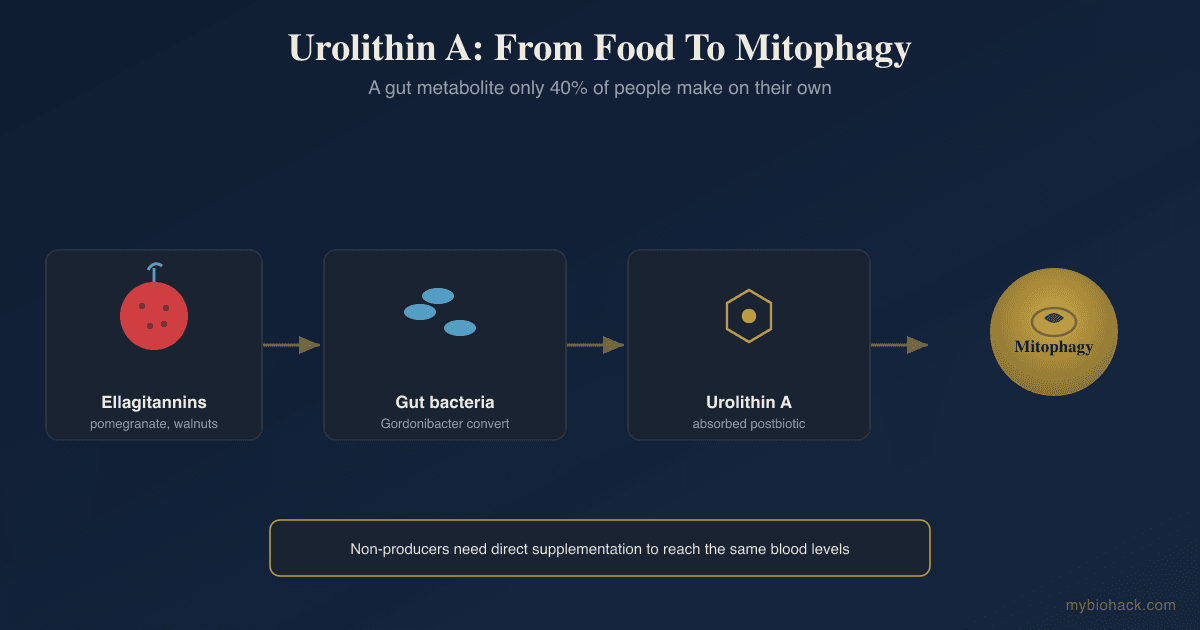
By clearing damaged mitochondria through mitophagy and by supporting mitochondrial protein translation through eIF5A hypusination, spermidine supports the quality of the mitochondrial pool rather than just the quantity.
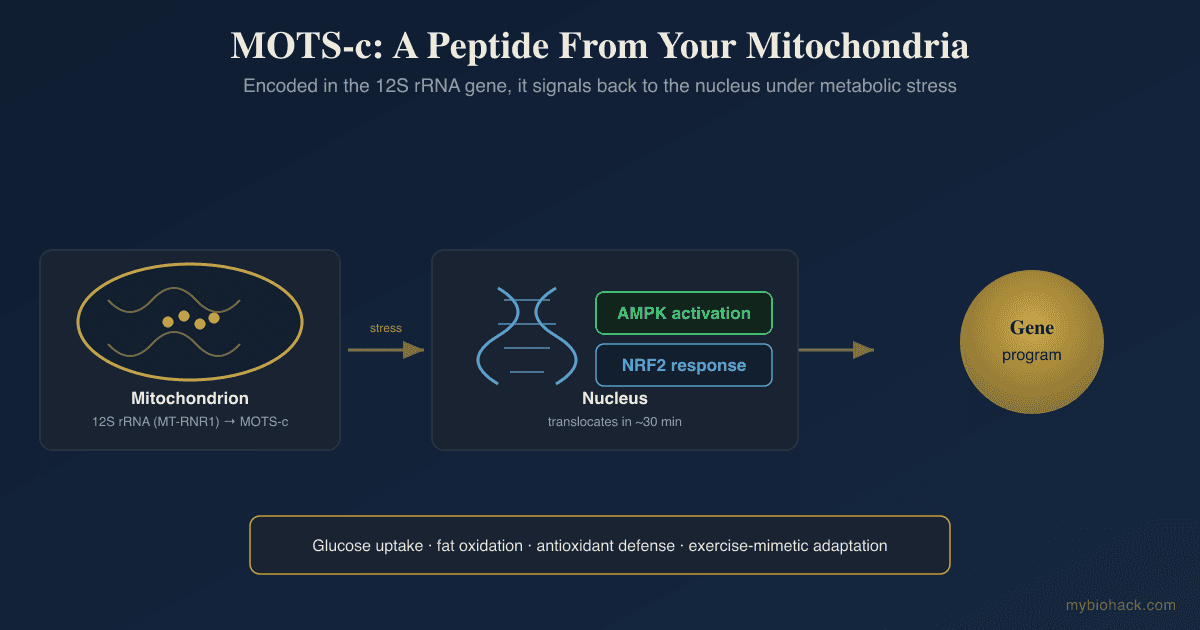
This dual mechanism is why spermidine gets grouped conceptually with other mitochondrial-support compounds and mitochondrial peptides even though its actual molecular target is different from either.
6. Promotes Hair Growth
In cultured human hair follicles, spermidine at low micromolar concentrations promoted hair shaft elongation, prolonged the active growth (anagen) phase, and increased proliferation of hair follicle stem cells, marking the first direct evidence that spermidine modulates human epithelial stem cell biology.
This is an organ-culture finding, not a clinical trial in people applying or ingesting spermidine for hair loss, so treat it as mechanistically interesting rather than a proven intervention.
7. Reduces Subclinical Inflammation
Spermidine feeding suppressed low-grade inflammation alongside its cardioprotective effects in animal models, consistent with the anti-inflammatory properties described across the broader geroprotection literature.
What The Human Evidence Actually Shows
The animal data above is deep and mechanistically consistent.
The human outcome data is much thinner, and this post would be dishonest if it did not say so plainly.
The strongest human evidence is the Bruneck cohort, a 20-year prospective study of 829 adults that found all-cause mortality fell steadily across increasing thirds of dietary spermidine intake, from 40.5 to 15.1 deaths per 1,000 person-years, with each standard deviation increase in intake associated with a 24 percent lower risk of death after adjusting for age, sex, caloric intake, and lifestyle factors.
The authors described the difference between high and low spermidine intake as comparable to being 5.7 years younger.
Here is the caveat that has to be stated plainly rather than buried.
Dietary spermidine intake is not randomly distributed across the population, it tracks closely with whole grain, legume, and vegetable consumption, and people who eat more of those foods differ from people who do not in dozens of ways that a nutrient-intake model cannot fully separate out.
This is a real limitation of every dietary-spermidine mortality finding, the Bruneck cohort included, and it means the honest reading is "a diet high in spermidine-rich whole foods is associated with lower mortality," not "spermidine itself, isolated from that dietary pattern, causes lower mortality."
The cleanest way to resolve that ambiguity is a randomized trial of the isolated compound, and that is exactly what the SmartAge trial did.
An earlier three-month pilot in older adults with subjective cognitive decline found spermidine supplementation improved memory performance and was safe and well tolerated, with no adverse effects on vital signs, weight, or blood chemistry.
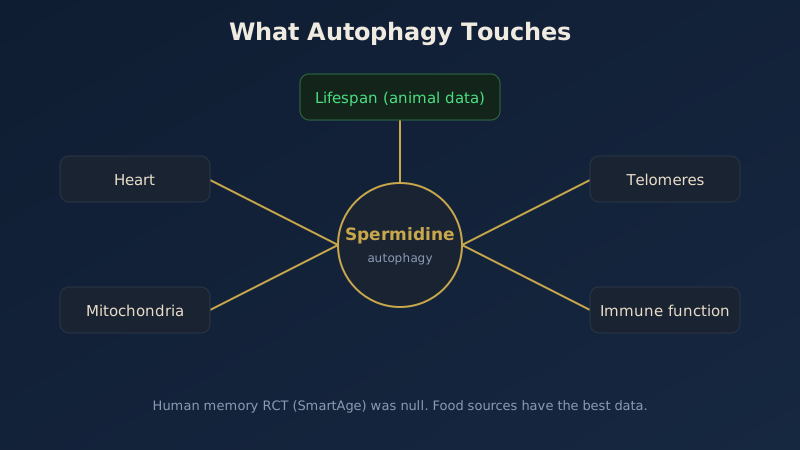
The follow-up SmartAge trial extended that work to 12 months in a larger, more rigorous randomized design, and it found no significant difference between spermidine and placebo on its primary memory outcome or on its biomarker panel.
That is a real negative result from a well-designed trial, not a trial that simply failed to reach significance on a marginal trend, and it should temper enthusiasm about wheat germ extract as a cognitive intervention specifically.
A more recent dosing study adds a further wrinkle worth knowing before you buy a supplement.
A 2024 trial gave older men 40 mg per day of high-purity spermidine, roughly ten times the dose used in the cognitive trials, and found no substantial change in circulating serum or urine polyamine levels, suggesting the body tightly regulates polyamine homeostasis and that simply taking more oral spermidine may not translate into proportionally more spermidine reaching tissue.
Put together, the honest verdict is this: the mechanistic case for spermidine is about as strong as supplement mechanism cases get, the animal lifespan and cardioprotection data is genuinely excellent, and the dietary epidemiology is consistent and large in magnitude.
The isolated supplement trial for the outcome people care about most, memory, was null, and there is now real uncertainty about whether oral supplementation meaningfully raises tissue spermidine at all.
There is a big maybe here, and food intake remains the best-supported way to raise your spermidine exposure.
Natural Sources
Because the strongest mortality data comes from dietary spermidine and not isolated supplements, food is the first-line approach.
The highest spermidine foods include: (not exclusive list)
- Aged cheese (concentration rises with aging time, driven by microbial fermentation) R
- Legumes (especially soybeans and chickpeas) R
- Mushrooms (shiitake and king trumpet are among the highest, and mushrooms were flagged as "conspicuously rich in spermidine" in one of the earliest food surveys of the compound) R
- Natto (fermented soybeans, one of the single densest food sources, with content that varies by soybean cultivar and fermentation conditions) R
- Nuts and seeds R
- Wheat germ (the most concentrated common source, and the form used in essentially every human trial to date) R
A tablespoon of Wheat Germ on cereal or in a smoothie provides an amount broadly in the range used in the human cognitive trials.
Natto and a regular rotation of mushrooms and legumes build a meaningful daily load without any supplement at all.
Your gut microbiome is itself a major independent source of spermidine, not just a passive recipient of what you eat.
Certain bacterial strains, including some Bifidobacterium species, actively synthesize putrescine and spermidine in the colon, and a randomized trial that increased this microbial production through a targeted probiotic and arginine combination improved endothelial function in healthy adults.
This is a meaningful reason fermented foods and a healthy gut microbiome matter for spermidine status independent of what shows up on a food composition table.
The Polyamine And Cancer Question
This section needs a two-sided treatment, because the polyamine literature genuinely points in two directions depending on the tissue and the health status of the person.
On one side, polyamine synthesis is not a neutral bystander in cancer.
Oncogenes and tumor suppressor genes directly regulate polyamine metabolism, and elevated ODC1 activity is a well-established feature of many tumors, to the point that transgenic mice engineered for high ODC1 expression show increased tumor susceptibility while mice with reduced ODC1 activity show decreased susceptibility.
This is the biological basis for Difluoromethylornithine (DFMO), an ODC1 inhibitor that is an actual, real-world chemopreventive drug rather than a theoretical one.
In a randomized, placebo-controlled trial, DFMO combined with sulindac cut adenoma recurrence in high-risk patients from 41.1 percent to 12.3 percent and cut advanced adenomas from 8.5 percent to 0.7 percent.
That is strong evidence that suppressing polyamine synthesis is protective in a population already at elevated risk for a specific tumor type.
On the other side, the geroprotection literature has repeatedly found that spermidine feeding does not increase cancer incidence in the animal models used to study it, and one review specifically noted no increase in tumorigenic or fibrotic findings on necropsy in mice given long-term spermidine.
The same major review of polyamine biology in cancer also notes that polyamine synthesis inhibitors have proven "generally ineffective" as treatments for existing cancer, even though they show real promise as prevention agents in specific high-risk contexts.
So the honest position is not "spermidine causes cancer" and it is not "spermidine is cancer-protective," it is genuine uncertainty that depends heavily on context.
A person with no active malignancy and a family or personal history that does not point toward elevated polyamine-driven tumor risk has a very different risk calculus than a person in active treatment for or recovery from a cancer with known dependence on polyamine synthesis, and the latter group should treat spermidine supplementation, as distinct from ordinary dietary intake of spermidine-containing foods, as a conversation to have with their oncologist rather than a default addition to a longevity stack.
Dosage, Safety, And Pairing With Fasting And Exercise
Human trials have generally used doses in the 0.9 mg to 6 mg per day range of spermidine from concentrated wheat germ extract, with most of the published cognitive and safety data clustering around 1 mg per day.
At those doses, spermidine has consistently shown no adverse effects on vital signs, body weight, or standard blood chemistry and hematology panels in older adults over periods of three to twelve months.
Spermidine (Wheat Germ Extract) is the form used in the human trials described above, for readers who want a standardized dose rather than relying on food alone.
The 2024 dose-escalation trial at 40 mg per day, roughly ten times the standard research dose, was also well tolerated over 28 days, but it produced no meaningful rise in circulating polyamine levels, which is a genuine open question about whether higher-than-trial doses buy you anything beyond cost.
Isolated spermidine at doses well beyond what has been studied has not been assessed for long-term human safety, which is another reason to anchor most of your intake in food rather than escalate a supplement dose past what the trials actually tested.
Because spermidine works through the same AMPK, mTOR, and autophagy machinery that fasting and exercise activate, it pairs mechanistically rather than competing with either one.
Fasting itself raises endogenous spermidine, and blocking spermidine synthesis blunts fasting's autophagy and lifespan benefits in animal models, which argues for treating spermidine intake and a fasting or time-restricted eating practice as complementary rather than redundant.
Exercise activates autophagy in skeletal muscle through its own acute signaling, involving calcium, AMP, and reactive oxygen species, plus a slower transcriptional program that includes TFEB, the same transcription factor spermidine activates through a different route.
None of this means spermidine substitutes for exercise as an autophagy trigger, it means the three inputs converge on overlapping machinery rather than working against each other.
Testing
Spermidine itself is not a standard clinical biomarker, so testing in this context means tracking the systems it acts through rather than measuring the molecule directly.
I use the Homocysteine test (Quest Diagnostics) to assess methylation cycle capacity, since polyamine synthesis draws its aminopropyl groups from decarboxylated S-adenosylmethionine, the same methionine-cycle intermediate that homocysteine status reflects.
A methionine cycle under strain can constrain the raw material available for endogenous spermidine production, which is one more reason methylation status matters beyond its usual cardiovascular framing.
I use the Cellular Health Zoomer (Vibrant Wellness) to assess organic acids, mitochondrial function markers, and oxidative stress, which is the closest clinically available proxy for mitochondrial and autophagic health in the absence of a direct polyamine blood panel.
For the cardioprotective angle specifically, I use the Cardio IQ Advanced Lipid Panel With Inflammation (Quest Diagnostics) to track hs-CRP alongside a full lipid and lipoprotein profile, since spermidine's cardioprotective signal in both animal and human data runs partly through reduced inflammation.
Readers tracking biological age more broadly may also find epigenetic clock testing useful as a longer-arc outcome measure, though it will not isolate spermidine's specific contribution from everything else in a longevity protocol.
Mechanisms Of Action
Simple:
- Spermidine tells your cells to clean out their own damaged parts, and it does this two separate ways rather than one.
- The first way is by turning off a brake protein called EP300, which frees up the existing cleanup machinery to switch on.
- The second way is by building a special modified building block, hypusine, that only one protein in your whole body uses, and that protein is needed both to make more cleanup machinery and to keep your mitochondria running well.
- That cleanup process, called autophagy, normally fades as you age, and it is the same process fasting switches on, which is why spermidine is a food-based way to nudge it even when you are not fasting.
Advanced:
- EP300 Inhibition And Deacetylation Spermidine inhibits the acetyltransferase EP300, which shifts the acetylproteome toward a deacetylated state that activates ATG3-mediated LC3 conjugation and downstream autophagosome formation, and this occurs independently of SIRT1. R R
- TFEB Activation Spermidine promotes nuclear activity of TFEB, the master transcription factor for autophagy and lysosomal biogenesis genes, expanding the cell's autophagic capacity rather than triggering a single cleanup cycle. R
- AMPK/mTOR Signaling In cardiac and hepatic injury models, spermidine activates AMPK while suppressing mTOR, enhancing autophagic flux, and pharmacologically blocking autophagy with chloroquine abolishes spermidine's protective effects in these models. R R
- eIF5A Hypusination Spermidine is the exclusive donor of the aminobutyl group used by deoxyhypusine synthase to convert a lysine residue on eIF5A into hypusine, the only known hypusinated protein in the human proteome, and this modification is required for eIF5A's translational function. R
- Mitochondrial Translation Hypusinated eIF5A is required for efficient translation of a specific subset of mitochondrial proteins involved in the TCA cycle and oxidative phosphorylation, linking spermidine status directly to mitochondrial respiratory capacity independent of its autophagy effects. R
- Cardioprotective Mitophagy Spermidine enhances cardiac autophagy and mitophagy, improves mitochondrial respiration, and increases titin phosphorylation to preserve diastolic function in aging and post-infarct hearts. R
- Lifespan Extension Oral spermidine extends lifespan across yeast, flies, worms, and mice in an autophagy-dependent manner, with the benefit disappearing when core ATG genes are deleted. R
Genetics
ODC1
ODC1 encodes ornithine decarboxylase, the enzyme that catalyzes the first, rate-limiting step of polyamine biosynthesis by converting ornithine to putrescine.
ODC1 activity is tightly regulated at the transcriptional, translational, and protein-turnover level, and it responds to growth factors and cellular growth signals, which is also why elevated ODC1 activity shows up so consistently in the cancer literature discussed above.
Baseline differences in ODC1 activity between individuals are one plausible source of variation in how much endogenous spermidine a person makes before diet is even considered, though this has been studied primarily in the context of cancer risk rather than longevity.
AMD1
AMD1 encodes S-adenosylmethionine decarboxylase, the enzyme that supplies the aminopropyl donor used to convert putrescine into spermidine and spermine.
Because AMD1 draws its substrate from the methionine and methylation cycle, its output is not independent of broader methylation status, which is the mechanistic link behind linking homocysteine testing to spermidine synthesis capacity in the Testing section above.
Like ODC1, AMD1 is considered a rate-limiting enzyme in the pathway, meaning its activity level, not just substrate availability, shapes how much spermidine a given cell can ultimately produce.
More Research
- A 2024 Nature Cell Biology paper is the strongest mechanistic bridge between spermidine and fasting published to date, showing spermidine synthesis is causally required for fasting-induced autophagy, lifespan extension, and cardioprotection across yeast, flies, and mice. R
- A 2022 review in Nature Aging details how spermidine induces autophagy through EP300 inhibition and situates the mechanism within the broader geroprotection literature. R
- A 2021 Cell paper found polyamine metabolism and eIF5A hypusination are required for CD4+ helper T cells to maintain correct lineage identity, with polyamine deficiency causing cells to co-express contradictory cytokines and transcription factors, which is a reminder that spermidine's immune effects go beyond simple stimulation. R
- The landmark 2016 Nature Medicine study established mammalian lifespan extension and cardioprotection from oral spermidine and remains the single most-cited paper in this field. R
- The 2024 dose-escalation trial at 40 mg per day is worth watching for follow-up work, since a supplement that does not measurably raise circulating polyamine levels at ten times the standard dose raises real questions about bioavailability and absorption that have not been resolved. R
- The 12-month SmartAge randomized trial is the most important negative result in the human literature, finding no memory benefit from a wheat germ spermidine supplement, which meaningfully tempers the supplement-specific hype relative to the dietary epidemiology. R
- For biomarker testing relevant to this post, I use the Homocysteine test (Quest Diagnostics) and the Cellular Health Zoomer (Vibrant Wellness) as described in the Testing section above.
Where To Go From Here
Spermidine is one lever in a much larger autophagy and longevity picture that also includes fasting and caloric restriction mimetics, exercise, NAD+ metabolism, and mitochondrial support compounds like PQQ and CoQ10.
If you want the full framework for how autophagy and mitochondrial quality control fit into recovery and aging, the Junction Dysfunction guide goes deep on the cleanup and cellular-energy mechanisms, and it is included with the Path plan at $120 a year.
If you are tracking your own longevity and metabolic markers over time, the Health Hub does that and comes with the Pro plan at $180 a year, along with unlimited use of the Biohacking Bot to help you build a stack around your goals.
You can also just start with a tablespoon of wheat germ, a serving of natto, and a rotation of mushrooms and legumes.
That is the part the strongest evidence actually supports.
Jacob Gordon
INHC, FMT-C
Integrative Nutrition Health Coach
I cover mold illness, post-viral recovery, methylation, and complex chronic disease, drawing on ten years of clinical research, work inside a functional medicine clinic, and my own recovery from all of it. Every claim here is cited.
Book a ConsultationRelated Protocols & Supplements
Deep-dive chapters and recommended supplements for this topic
Lion's Mane
1000mg/day
Omega-3 (DHA)
2g/day
Phosphatidylserine
100mg 3x/day