Table of Contents
Chapter 21
Chapter 21 of 47

5 min readPro Guide

Tryptophan

Tryptophan can be produced by gut bacteria and it can also be eaten through the diet. R

Tryptophan helps us create:

  • 5HT (serotonin) - multifactorial neuropeptide and vasoactive peptide

  • Vitamin B3 (like NAD+) - cofactor for respiration with vasoactive properties

  • Melatonin - clock gene hormone and major antioxidant

Interferons

Before we continue talking more about tryptophan I want to talk about the TH1 side of the immune system.

All nucleated immune cells can produce a product called interferons, specifically interferon alpha and gamma (IFNa and IFNg). R

This is a great way to defend against viruses, parasites, fungal infections, and bacteria, especially in the gut.

When IFN is activated, it helps natural killer cells take out the threat right away. R

Indoleamine 2,3-Dioxygenase (IDO)

Chronic activation of IFN can cause enterocytes to properly mishandle tryptophan via a pathway called Indoleamine 2,3-Dioxygenase (IDO). R

IDO normally is needed to create B3 isomers and Nicotinamide adenine dinucleotide (NAD+) from IDOs further downstream product call Quinolinic Acid (QUIN). R R

NAD is necessary for the electron transport chain in cellular respiration. R

IDO also helps the immune response by creating Kynurenine (KYN) and Kynurenic Acid (KYNA). R

KYN, KYA, and QUIN

Kynurenine (KYN) acts as a vasodilator to help blood vessels dilate during inflammation, promoting a healthy immune response.

Kynurenic Acid (KNYA) is awesome because it acts as an N-Methyl-D-Asparate receptors (NMDAr) antagonist, essentially blocking activation of glutamate receptors in your brain. R

When glutamate chronically binds to and chronically activates NMDAr, that leads to: R

  • neuroinflammation

  • brain fog

  • depressive moods

  • decrease motivation

  • lowered pain threshold

KYNA also antagonizes: R

  • alpha-amino-3-hydroxy-5-methyl-4-isoxazolepropionic acid (AMPA)

  • kainate glutamate receptors (KARs)

  • alpha-7 nicotinic Ach receptor (α7 nAChR)

More about nAChR later on with the Vagus Nerve.


Oxidation via K3M to 3HLK

So KYA, which as you can see above being neuroprotective on NMDARs, can be converted (oxidized) into a neurotoxin called 3-hydroxy-l-kynurenine (3HLK) via kynurenine 3-monooxygenase (K3M). R

K3M inhibition is important, as it pretty much determines whether tryptophan’s KYN/KYA will be neurotoxic or neuroprotective.

QUIN, PA, B3, And NAD

A helpful side of this pathway is called Quinolinic Acid (QUIN), which is needed to create NAD.

By being in a IFN state, this imbalance of higher KYN and lower QUIN is why people who are chronically sick need more B3 like NAD, as they're making it poorly.

QUIN is also neurotoxic, so it’s converstion to NAD is essential.

Luckily QUIN can convert into Picolinic Acid (PA), which is neuroprotective against QUIN’s neurotoxic effects. R

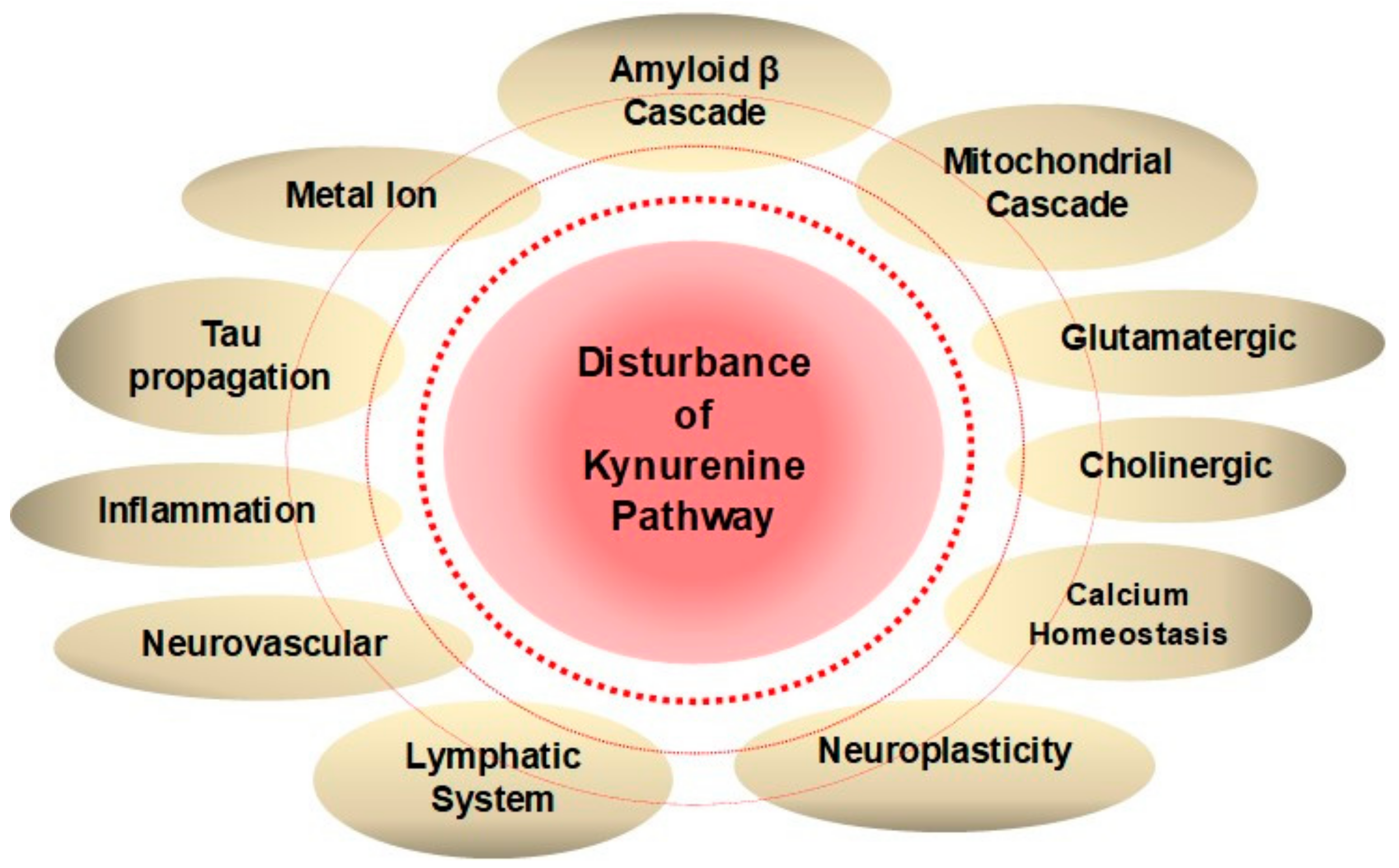
Losing all of these systems have shown high correlation to dementia spectrum pathologies (Alzheimers, Parkinsons, Dementias, Depressions, etc), and you could guess as to why for a good understanding. R R R R

Serotonin and The Vagus Nerve

On the other side of the tryptophan loss is the decrease in serotonin production. R

Serotonin like I said earlier not only being a vasodilator, and a happy hormone, is a signaling molecule to the 12th cranial nerve, aka vagus nerve, to be in a rest and digest parasympathetic state. R

If you're not producing serotonin in the gut the vagus nerve has higher chances of becoming in a sympathetic dominant state, creating feelings of stress.

The vagus nerve works multi-directionally on the brain and nervous system.

It is called “The Wanderer”, because it's split into two sides of your body and covers so many different organs.

So knowing this you can control the vagus nerve with:

  • Meditation and affirmations/incantations

  • Breath (box breathing is my favorite)

  • Your diet (bacteria producing SCFAs)

  • Bowel movements

  • Signing

  • Cold showers

  • Sex

While these exercises increase parasympathetic tone, getting IFN lowered by killing for example parasites, will make leaps in the parasympathetic tone by improving serotonin synthesis from tryptophan. R

AMPA and Autism Spectrum

To me it feels like everyone today is either neurodivergent or on the spectrum in some way.

Well, remember how we said KYNA inhibits AMPA activity? R

Well AMPA is necessary for Long-Term Potentiation (LTP) and Long-Term Depression (LTP), essentially terms that help the ability to form connective thoughts and deep memory into neurons. R

This makes it much harder to learn social cues, being stuck in this state of tryptophan/serotonin/KYNA/glutamate/AMPA dysregulation. R

I see with my clients and in other a big loss of social grammar and social flexibility, and think I will further discuss the spectrums I see in a future post, as it’s quite fascinating!

Ampakines and histone deacetylase inhibitors (HDACis) are my favorite for this pathology, especially for those lower on the spectrum.

Some of my favorites are:


NACHR, Immunity, and the Vagus Nerve

nAChRs are cholinergic receptors that as you may have guessed were discovered when they were studying nicotine’s effect on the nervous system.

Specifically, the α7-subunit of nACHRs is expressed by macrophages and its expression is crucial for the anti-inflammatory effect of vagal nerve signaling. R

Without proper a7nACHR activation, macrophages do not produce their phagocytotic ability to clean up debris, and the vagus nerve, which is highly cholinergic, cannot relax and get into a parasympathetic state. R

This is why a lot of people get tremendous benefits from nicotine, which is a cheap way to biohack this in my opinion while stuck in this loop.

We will discuss more about nerve destruction in the next post called Nerve Injury And Wallerian Degeneration.

Melatonin

So if all your tryptophan is being metabolized (through this adaptive mechanism) to create immunomodulators, then creating melatonin is really hard. R


Melatonin is necessary to start clock genes at the beginning of your sleep cycle during the circadian rhythm. R

Melatonin also acts as a major anti-oxidant/free radical scavenger. R

All mitochondria produce melatonin as a way to combat the excessive ROS it creates during it’s natural respiration. R

So loss of being able to create melatonin, creates an even worse redox balance, favorable towards being pro-oxidized and thus stuck in an inflamed, hypoxic state all the time. R

That and the terrible insomnia and inability to heal/recover at night.

End of Chapter 21
Up Next
Unlock with Pro