Fisetin: The Senolytic Flavonoid And The "Better Quercetin" Question
By Jacob Gordon, INHC, FMT-CThis article contains affiliate links. As an Amazon Associate, MyBioHack earns from qualifying purchases at no extra cost to you. We only link products we research and stand behind.
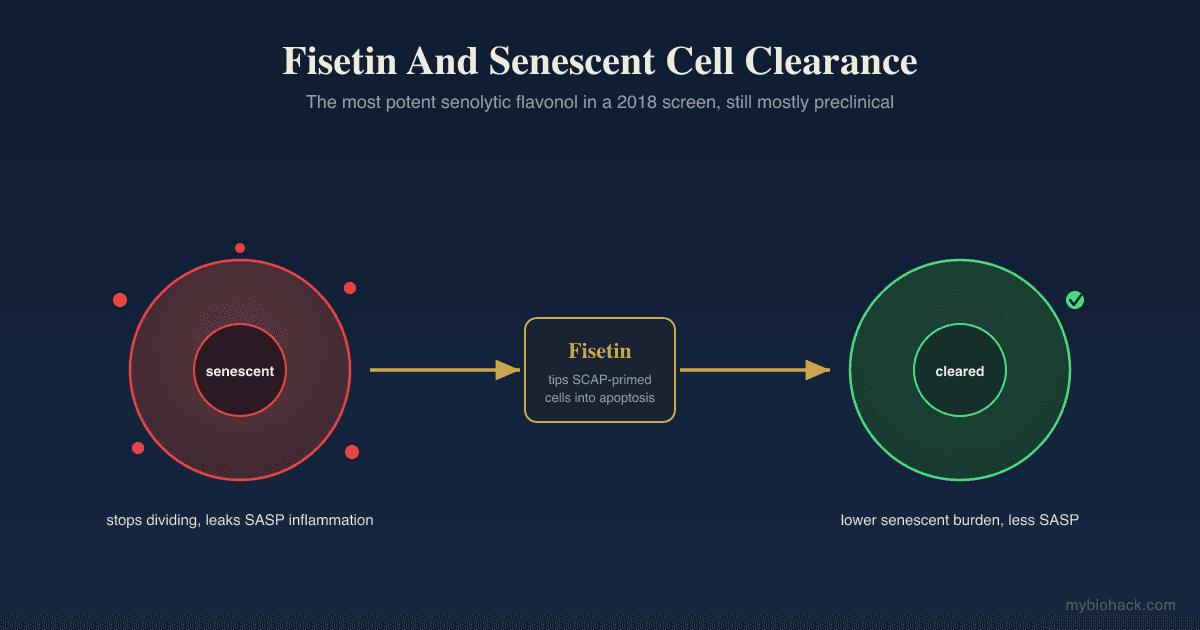
Fisetin is a plant flavonol best known as the most potent senolytic in a 2018 screen of flavonoids, though most of that evidence is still preclinical.
In this post, we will discuss what fisetin is, how it compares to quercetin, its benefits, where to get it, how to dose it safely, and the mechanisms, genetics, and open research behind it.
What Is Fisetin
Fisetin is a flavonol, a subclass of flavonoid polyphenol, with the same 3-hydroxyflavone backbone and catechol B-ring that defines quercetin.
Structurally the two differ by a single hydroxyl group, which is why their effects overlap so heavily.
It is a yellow pigment found in strawberries, apples, persimmons, onions, and cucumbers. R
Fisetin became a longevity headline in 2018, when a Mayo Clinic group screened ten flavonoids for senolytic activity (the ability to selectively kill senescent cells) and found fisetin was the most potent of the group, outperforming quercetin in their assays. R
Fisetin Vs Quercetin
This is the comparison most people actually want, so it is worth being precise about it.
In the head-to-head senolytic screens, fisetin cleared senescent cells more effectively than quercetin at comparable concentrations. R
Quercetin, by contrast, has the larger body of human anti-inflammatory and cardiovascular data, and it is the flavonoid that has been paired with dasatinib in most of the early senolytic clinical work.
So the honest framing is not "fisetin replaces quercetin."
Fisetin looks like the stronger standalone senolytic in preclinical models, while quercetin has more human outcome data, and the two are often used together rather than as substitutes.
There is a big MAYBE on the senolytic claim in humans, because nearly all of the senescent-cell-clearing data comes from mice and isolated human tissue, not from controlled human trials.
Benefits Of Fisetin
1. Senolytic Activity (Clearing Senescent Cells)
Senescent cells stop dividing but refuse to die, and they leak a pro-inflammatory mix called the senescence-associated secretory phenotype (SASP) that damages neighboring tissue.
Fisetin reduced the percentage of senescent cells and lowered SASP-related gene activity in mouse and human tissue. R
Given to wild-type mice late in life, it improved tissue homeostasis, suppressed age-related pathology, and extended median and maximum lifespan. R
This is the marquee benefit and also the one with the weakest human evidence (the lifespan and senescence-clearance data are animal and ex vivo, not human trial outcomes).
2. Anti-Inflammatory And Mast Cell Stabilizing
Fisetin suppresses Nuclear Factor kappa B (NF-κB) activation, the master switch for inflammatory gene transcription. R
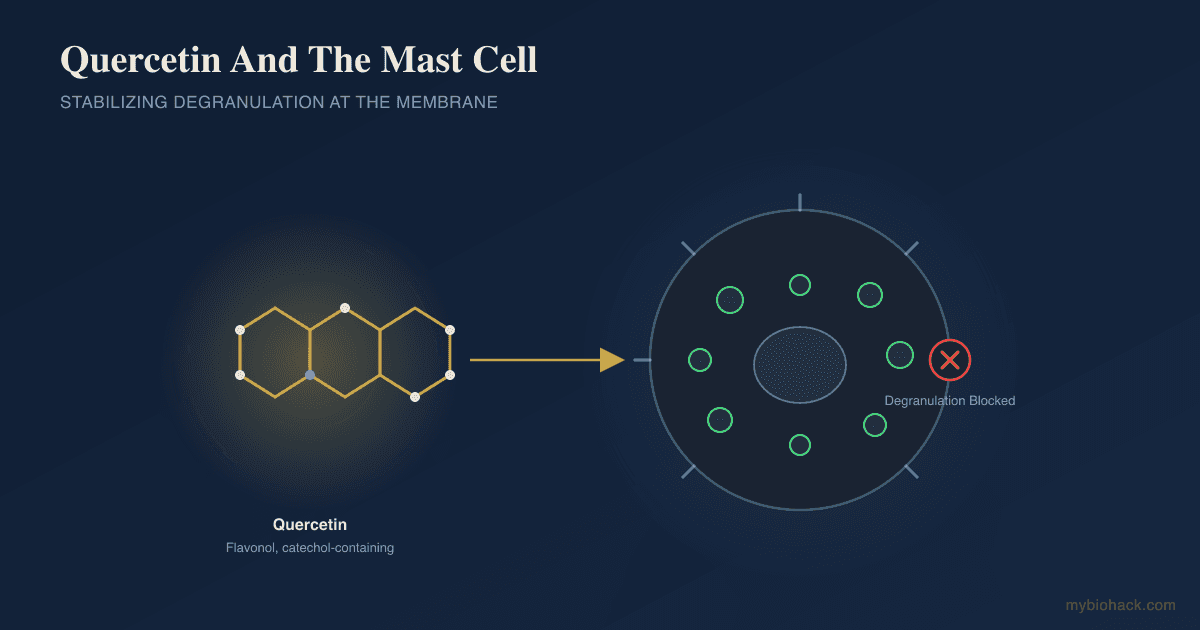
In human mast cells it lowered TNF-alpha, IL-6, IL-8, and IL-1-beta and inhibited histamine release. R
This matters for anyone dealing with histamine-driven or mast-cell-driven symptoms, which I cover in depth in the mast cell and substance P and histamine intolerance posts.
3. Neuroprotection
Fisetin crosses the blood-brain barrier and protects neurons through several overlapping routes, including antioxidant defense, anti-inflammatory signaling, and trophic support. R
Much of this traces back to its ability to maintain intracellular glutathione (GSH), the brain's primary antioxidant, under oxidative stress. R
In a traumatic brain injury model, fisetin reduced oxidative damage specifically through the Nrf2-ARE pathway. R
4. Nrf2 Activation And Antioxidant Defense
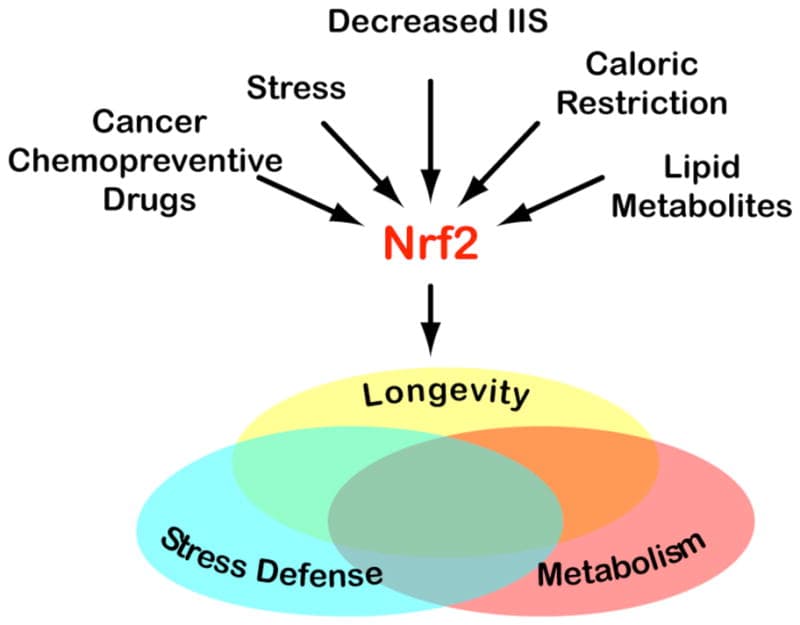
Fisetin is a direct antioxidant, but its more durable benefit comes from activating Nuclear Factor Erythroid 2-Related Factor 2 (Nrf2), the transcription factor that turns on your endogenous antioxidant and phase II detox genes. R
Through Nrf2 it raises glutathione synthesis and induces enzymes like NQO1, HO-1, and glutamate-cysteine ligase. R
This is the same family of mechanism behind sulforaphane, with an important caveat covered below in genetics and in my post on why NRF2 activation can make some people sicker.
5. Vascular And Arterial Function
In old mice, intermittent fisetin improved arterial function and reduced markers of cellular senescence in vascular tissue. R
Because senescent endothelial cells are a feature of vascular aging and post-viral vascular injury, this is mechanistically relevant to the kind of vascular dysfunction I describe in the long COVID protocol.
This remains animal data, so treat it as a hypothesis, not a vascular therapy.
6. Skeletal Muscle And Physical Function
Intermittent fisetin improved physical function and decreased senescent cell burden in aging skeletal muscle, with effects comparable to genetic clearance of senescent cells in one 2025 model. R
This points toward a frailty and sarcopenia use case, which is exactly what the human frailty trials are now testing.
Natural Sources
Fisetin is concentrated in very few foods, and strawberries dominate the list. R
The richest dietary sources by concentration are below (micrograms per gram, approximate):
- Apples (around 27 ug/g) R
- Cucumbers (low, but a measurable source) R
- Grapes (low) R
- Onions (low) R
- Persimmons (around 10.5 ug/g) R
- Strawberries (around 160 ug/g, by far the highest) R
The catch is dose.
At roughly 160 ug/g, a 150 gram serving of strawberries delivers around 24 mg of fisetin, while senolytic protocols in studies use hundreds of milligrams per day.
You cannot eat your way to a senolytic dose, which is the entire reason supplemental Fisetin exists.
Dosage And Safety
The Bioavailability Problem
Fisetin is poorly water soluble, rapidly metabolized, and pumped back out of intestinal cells by P-glycoprotein efflux, so plain fisetin powder is poorly absorbed. R
In a human crossover study, a hybrid-hydrogel formulation produced roughly 27-fold greater plasma exposure than unformulated fisetin and kept levels measurable for far longer. R
This is why liposomal fisetin and other encapsulated or phospholipid forms are worth the premium over raw powder.
Taking plain fisetin with a fat-containing meal, or stacking it with piperine, is the budget version of the same idea.
Hit-And-Run Vs Daily Dosing
There are two competing philosophies here, and they come from different goals.
The senolytic "hit-and-run" approach uses a short, high-dose pulse, then nothing for weeks.
This mirrors the Mayo Clinic protocol of roughly 20 mg/kg/day for two consecutive days, repeated every one to two months, which is the dosing the human frailty trials are built on. R
The logic is that senescent cells are cleared by a brief lethal hit, so continuous exposure is unnecessary and may even blunt the effect.
For a roughly 70 kg person that pulse works out to around 1,400 mg/day for two days, which most people approximate with 1,000 to 1,500 mg/day of supplemental fisetin for two to three days.
The daily low-dose approach (100 to 200 mg/day) treats fisetin as a general anti-inflammatory and Nrf2-activating flavonoid rather than a senolytic.
Several practitioners pair the monthly pulse with quercetin, since the two flavonols hit overlapping senescent-cell survival pathways.
Safety
Fisetin has a wide safety margin in animals, with no substantial toxicity in mice at 500 mg/kg/day and no debilitation in monkeys at 100 mg/kg/day. R
In the human bioavailability study no adverse events were reported. R
The honest caveat is that long-term human safety at senolytic doses is still being established, and like quercetin, fisetin inhibits CYP and P-glycoprotein, so it can raise levels of drugs metabolized by those routes.
Anyone on prescription medication should clear high-dose fisetin with their prescriber first, and this is exactly the kind of personalization I help with on a consult.
Mechanisms Of Action
Simple:
- Fisetin selectively kills worn-out "zombie" cells that have stopped dividing but keep leaking inflammation into surrounding tissue.
- It calms the master inflammation switch (NF-κB) while turning on the body's own antioxidant defense system (Nrf2).
- It props up glutathione, the main antioxidant inside your cells, especially in the brain.
Advanced:
- Senolysis via survival-pathway disruption. Senescent cells resist apoptosis by upregulating senescent cell anti-apoptotic pathways (SCAPs), including BCL-2 family proteins and PI3K/AKT signaling. Fisetin tips these primed cells past their apoptotic threshold while sparing normal cells, reducing senescent burden and the downstream SASP cytokine load. R
- Nrf2-ARE activation. Fisetin promotes nuclear translocation of Nrf2 and its binding to antioxidant response elements, inducing GCLC, GCLM, NQO1, and HO-1. The net effect is increased glutathione synthesis and phase II conjugation capacity rather than transient free-radical scavenging. R
- NF-κB and MAPK suppression. In mast cells and immune cells fisetin blocks IκB-alpha phosphorylation and degradation, preventing NF-κB nuclear translocation, and dampens ERK1/2 and STAT3 signaling, which lowers TNF-alpha, IL-6, and IL-8 transcription. R
- Glutathione maintenance through ATF4. Fisetin can raise GSH partly through an ATF4-dependent arm of the integrated stress response, sustaining the neuronal and glial glutathione pool that protects against oxidative cell death. R
Genetics
NFE2L2
NFE2L2 encodes Nrf2, the transcription factor fisetin activates to drive antioxidant and detox gene expression.
Promoter variants change baseline Nrf2 expression and how strongly an inducer like fisetin works.
rs6721961 (the A allele) sits in the NFE2L2 promoter and lowers Nrf2 expression, which is associated with reduced antioxidant capacity and may mean a blunted response to Nrf2 activators.
Note the counterpoint: some people with CIRS or mold illness feel worse with strong Nrf2 activation, which I unpack in why NRF2 activation can make you more sick.
COMT
COMT encodes catechol-O-methyltransferase, which methylates catechol-containing compounds, including catechol flavonols like fisetin and quercetin.
Variants change how fast you clear these flavonols and how much methyl-donor demand they create.
rs4680 (Val158Met): the Met/Met "slow" genotype has lower COMT activity, so catechol flavonols are metabolized more slowly and may also compete for methylation capacity.
ABCB1
ABCB1 encodes P-glycoprotein, the efflux pump that actively transports fisetin back out of intestinal cells and limits its oral absorption.
Variants alter pump activity and therefore how much fisetin actually reaches the bloodstream.
rs1045642 (C3435T): the T allele is linked to lower P-glycoprotein expression, which can mean higher absorption of P-gp substrates like fisetin.
More Research
For tracking the markers fisetin is supposed to move, I use the Cellular Zoomer (Vibrant Wellness) to assess oxidative stress and methylation status, and the Cardio Zoomer (Vibrant Wellness) for inflammatory and metabolic markers tied to vascular aging.
For DNA-level oxidative damage specifically, see my post on 8-OHdG, the biomarker that tracks how fast you are aging at the cellular level.
Human senolytic trials are early and small, including the Mayo Clinic AFFIRM and AFFIRM-LITE frailty trials and several COVID-era pilots, so the lifespan and senescence-clearance claims should be read as preclinical until those report. R
Intermittent dosing keeps showing up across the strongest animal studies (arterial function and skeletal muscle), which suggests the senolytic benefit may not require, and may not even favor, continuous daily intake. R R
It pairs conceptually with the other longevity flavonoids and autophagy inducers I have written about, including spermidine and ergothioneine, since clearing senescent cells works best alongside intact autophagy and redox capacity.
The biggest open question is translation: fisetin is one of the cleanest senolytics in a dish and in mice, and whether that survives contact with human pharmacokinetics and real endpoints is what the next few years of trials will decide.
Jacob Gordon
INHC, FMT-C
Integrative Nutrition Health Coach
I cover mold illness, post-viral recovery, methylation, and complex chronic disease, drawing on ten years of clinical research, work inside a functional medicine clinic, and my own recovery from all of it. Every claim here is cited.
Book a ConsultationRelated Protocols & Supplements
Deep-dive chapters and recommended supplements for this topic
Quercetin
500mg 2x/day
Vitamin D3 + K2
5000 IU + 200mcg/day
Magnesium Glycinate
400mg at bedtime