Mitochondrial Psychobiology: The Mind-Mitochondria Connection
By Jacob Gordon, INHC, FMT-CThis article contains affiliate links. As an Amazon Associate, MyBioHack earns from qualifying purchases at no extra cost to you. We only link products we research and stand behind.
Mitochondrial psychobiology is the study of how psychological experience physically changes your mitochondria, and how those changes then feed back into mood, cognition, and disease risk.
In this post, we will discuss what mitochondrial psychobiology actually is, why "powerhouse of the cell" is an outdated and incomplete model, the concept of mitochondrial allostatic load, the specific human and animal studies behind this field, the blood and saliva biomarkers that track it, how it connects to Junction Dysfunction and chronic illness, and what you can actually do about it.
What Is Mitochondrial Psychobiology
Mitochondrial psychobiology is a term coined by Martin Picard, PhD, a mitochondrial biologist and Associate Professor of Behavioral Medicine in Psychiatry and Neurology at Columbia University.
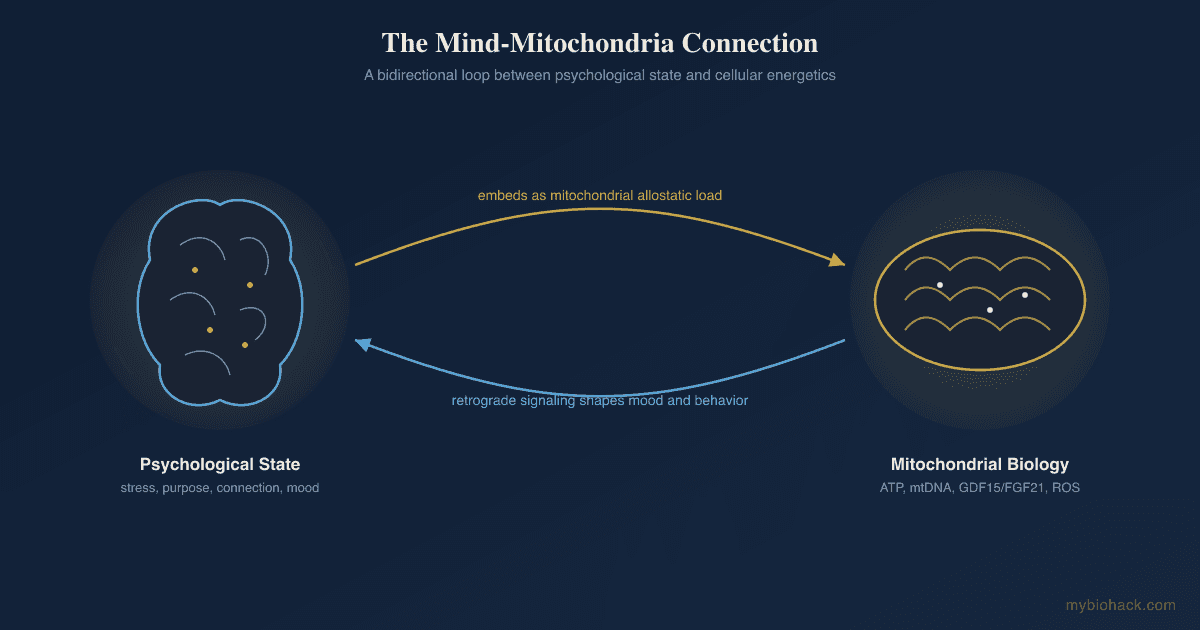
His lab, the Columbia Mitochondrial Psychobiology Laboratory, studies a genuinely bidirectional relationship.
Psychological states, stress, loneliness, purpose, and positive emotion physically change mitochondrial structure and function.
Mitochondrial energy output, in turn, shapes the brain and behavioral states that produced the psychological state in the first place.
Picard did not arrive at this from psychology.
His doctoral work was in mitochondrial biology and aging, and he later added systems biology and psychosocial oncology to that base, which is part of why the field reads as genuinely novel rather than mitochondria research with a marketing label attached.
The lab's own framing is direct: life emerges from the organized flow of energy through biological systems, and mitochondria are the site where that energy flow gets converted into the capacity to sense, integrate information, and adapt to a stressor, according to the lab's own research description.
That is a mechanistic claim, not a metaphor, and it is the reason this field is worth taking seriously if you deal with chronic stress, post-viral illness, or unexplained fatigue.
Mitochondria Are Not Just Power Plants
Every biology textbook still teaches mitochondria as "the powerhouse of the cell," a phrase that describes maybe a third of what they do.
Picard's framing, and the framing this entire field is built on, is that mitochondria are information processing organelles, not just energy factories.
Beyond producing adenosine triphosphate (ATP) through oxidative phosphorylation, mitochondria also do the following (not exclusive list):
- Apoptosis signaling: mitochondria release cytochrome c to trigger programmed cell death, meaning they decide when a cell dies
- Calcium buffering: mitochondria absorb and release calcium, shaping neuronal firing and muscle contraction
- Hormone synthesis: steroidogenesis (cortisol, estrogen, testosterone, progesterone) begins inside the mitochondrial matrix, where cholesterol is converted to pregnenolone
- Innate immune signaling: mitochondrial DNA and mitochondrial-derived peptides act as danger signals that activate the same Toll-like receptor pathways triggered by bacterial invasion, a fact directly relevant to Micro-Sepsis (MSS) R
- Retrograde signaling: mitochondria send stress signals back to the nucleus (via ROS, metabolites, and the integrated stress response) that change which genes get transcribed R
That last point is the crux of mitochondrial psychobiology.
If mitochondria can talk back to the nucleus, and if mitochondrial function itself is sensitive to psychological state, then a stressful thought is not an abstraction that stays in the brain.
It is a signal that changes mitochondrial behavior, which changes gene expression, which changes physiology, in a loop that runs in both directions continuously.
Picard has put this plainly in his own words: "genes are inert.
Mitochondria are dynamic and give us the ability to sense and perceive, integrate information, adapt, and thrive," as quoted in Columbia's profile of his work.
Mitochondrial Allostatic Load
Allostatic load is a term coined by neuroscientist Bruce McEwen to describe the cumulative wear and tear on the body from chronically activating stress response systems that were only designed for short-term use. R
Picard and McEwen extended this concept directly to mitochondria, coining Mitochondrial Allostatic Load (MAL). R
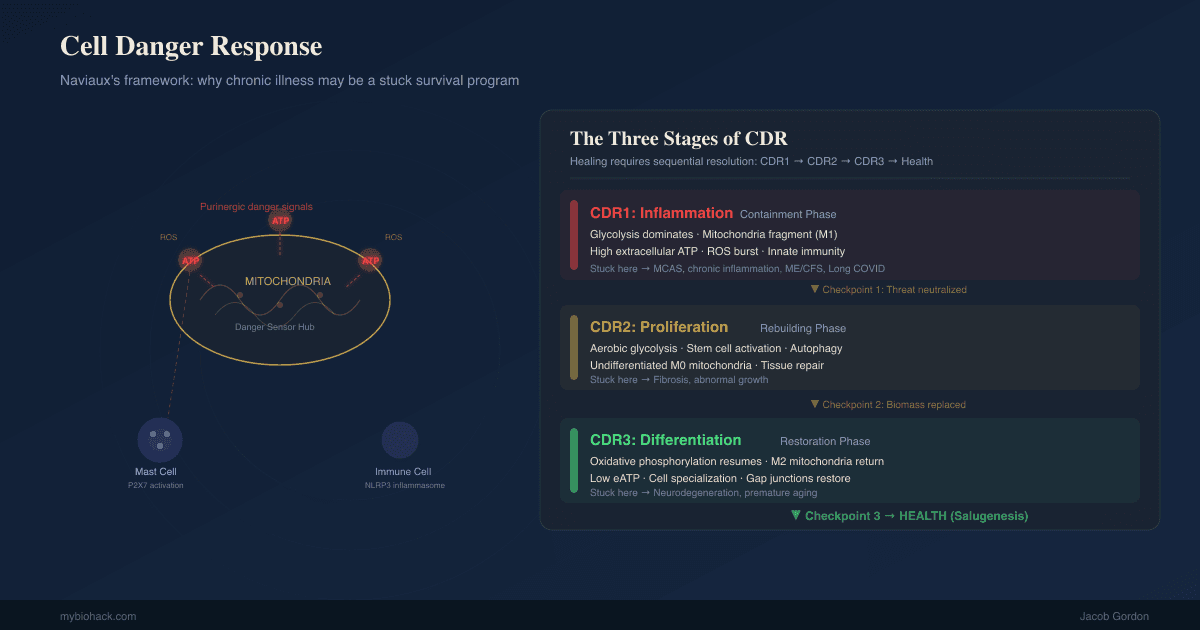
The MAL framework describes structural and functional recalibrations that mitochondria make in response to both metabolic and psychosocial stressors.
In the short term, these recalibrations are adaptive (this is the entire basis of exercise hormesis and cold exposure).
Chronically, without recovery, the same recalibrations produce wear and tear, or pathophysiology. R
MAL shows up as measurable shifts across several mitochondrial parameters, most of which can be assessed from a blood draw (not exclusive list):
- Enzymatic activity: Complex I through IV of the electron transport chain show altered activity in populations under chronic stress or with diagnosed psychopathology R
- Mitochondrial DNA copy number (mtDNAcn): chronic psychological stress is associated with changes in mtDNAcn, which likely reflects a compensatory attempt at biogenesis in response to energy deficiency R
- Morphology and network structure: mitochondria shift between fused, tubular networks and fragmented, disconnected states depending on the metabolic demand and stress signaling they are under (animal and cell model evidence) R
- Respiratory capacity: reduced cellular respiration has been documented directly in blood cells from people with major depression R
This is the piece worth sitting with if you have a chronic illness background: MAL is not a claim that stress causes disease through some vague "the mind affects the body" mechanism.
It is a claim that stress produces specific, measurable, and partially reversible changes in the actual organelles that make your cellular energy, on a timescale of days.
The Evidence: What The Studies Actually Show
This is where mitochondrial psychobiology stops being a nice hypothesis and becomes a body of actual data.
The honest caveat first: this field is young, sample sizes in the human studies are still modest, and Picard's own 2019 review states the hypothesis "has only been partially supported by animal research and indirectly by a small number of human studies." R
That caveat does not erase the following findings, but it should calibrate how much weight you put on any single result.
Mood Predicts Next-Day Mitochondrial Health
In a study of 91 women, Picard's team measured a composite Mitochondrial Health Index (MHI) in circulating immune cells and tracked morning and evening mood for several days beforehand. R
Mood on the three preceding days accounted for 12 to 15 percent of the variance in MHI, and the directional test only worked one way: mood predicted subsequent mitochondrial health, while mitochondrial health did not predict subsequent mood.
That directionality matters, because it is the first human evidence that a psychological state can precede and predict a change in mitochondrial function, rather than the two simply correlating with each other for unrelated reasons.
Brain Mitochondrial Networks Predict Anxiety-Like Behavior
A 2023 Nature Communications study out of the lab mapped mitochondrial respiratory chain activity and mtDNA content across 571 brain samples spanning 17 regions in mice. R
Multi-slice network analysis identified three large-scale mitochondrial networks in the brain.
One of them, a cortico-striatal network, accounted for up to half of the animal-to-animal variation in behavior, and only this specific network correlated with anxiety-like behavior.
The other mitochondrial networks showed little to no relationship with behavior at all, which matters because it rules out the boring explanation ("stressed animals just have worse mitochondria everywhere").
Instead it points to specific, anatomically organized mitochondrial circuits that are functionally coupled to specific behavioral outputs.
Psychosocial Experience Changes Human Brain Mitochondrial Protein Abundance
A 2024 PNAS study examined post-mortem dorsolateral prefrontal cortex tissue from 400 participants and linked lifetime psychosocial experience (positive and negative) to mitochondrial protein abundance. R
Psychosocial experience accounted for 18 percent of the variance in the abundance of Complex I, the largest and most upstream enzyme complex in oxidative phosphorylation, rising to 25 percent in cognitively unimpaired participants.
Positive experience tracked with more Complex I; negative experience tracked with less.
Single-nucleus analysis also caught something bulk tissue analysis would have erased entirely: people with higher well-being showed greater mitochondrial gene expression in glial cells (oligodendrocytes, astrocytes, microglia), but the opposite pattern in neurons.
Glial cells and neurons are not just passively along for the ride together in response to the same psychosocial history, they diverge.
Hair Greying Reverses With Stress Removal, And The Mechanism Is Mitochondrial
In an eLife study, Picard's team mapped individual hair strands at sub-millimeter resolution and matched pigment loss and regrowth to self-reported stress timelines. R
They quantified rare white and grey hairs that naturally regained pigment within days to weeks, in specific strands tied to specific documented stressors resolving (a vacation, in one case).
This is one of the cleanest human demonstrations that a stress-associated biological change previously assumed to be a one-way, permanent aging process is, at least here, reversible.
Growth Differentiation Factor 15 Tracks Both Chronic And Acute Stress
Growth Differentiation Factor 15 (GDF15) and Fibroblast Growth Factor 21 (FGF21) are "mitokines," cytokine-like signals released specifically when mitochondria are under energetic stress, downstream of the integrated stress response and its effector ATF4. R
Chronic psychosocial stressors (lower income, lower educational attainment, higher job strain) have been associated with higher circulating GDF15, and acute social-evaluative stress in a laboratory setting raises GDF15 in both plasma and saliva within minutes, with salivary GDF15 showing a diurnal awakening response similar to cortisol (this data is currently a preprint, not yet peer-reviewed, so treat the effect sizes as preliminary). R
Mitochondrial Psychobiology And Chronic Illness
I did not come to mitochondrial biology from psychology either, I came to it from watching my own Junction Dysfunction (JD) framework converge on the same organelle from a completely different direction.
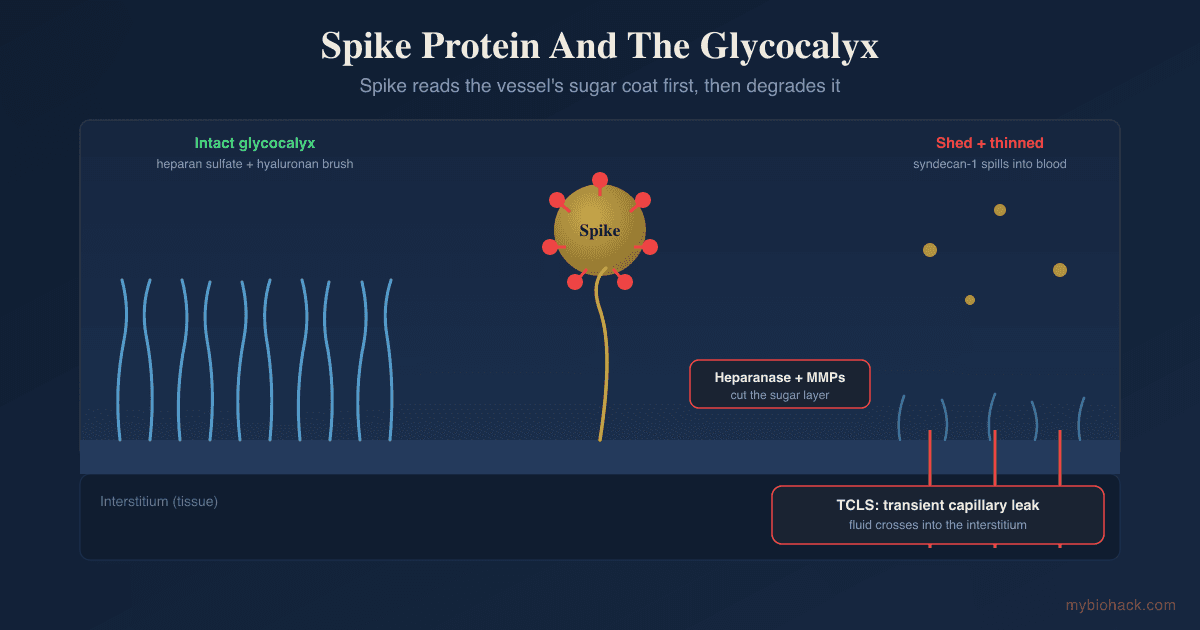
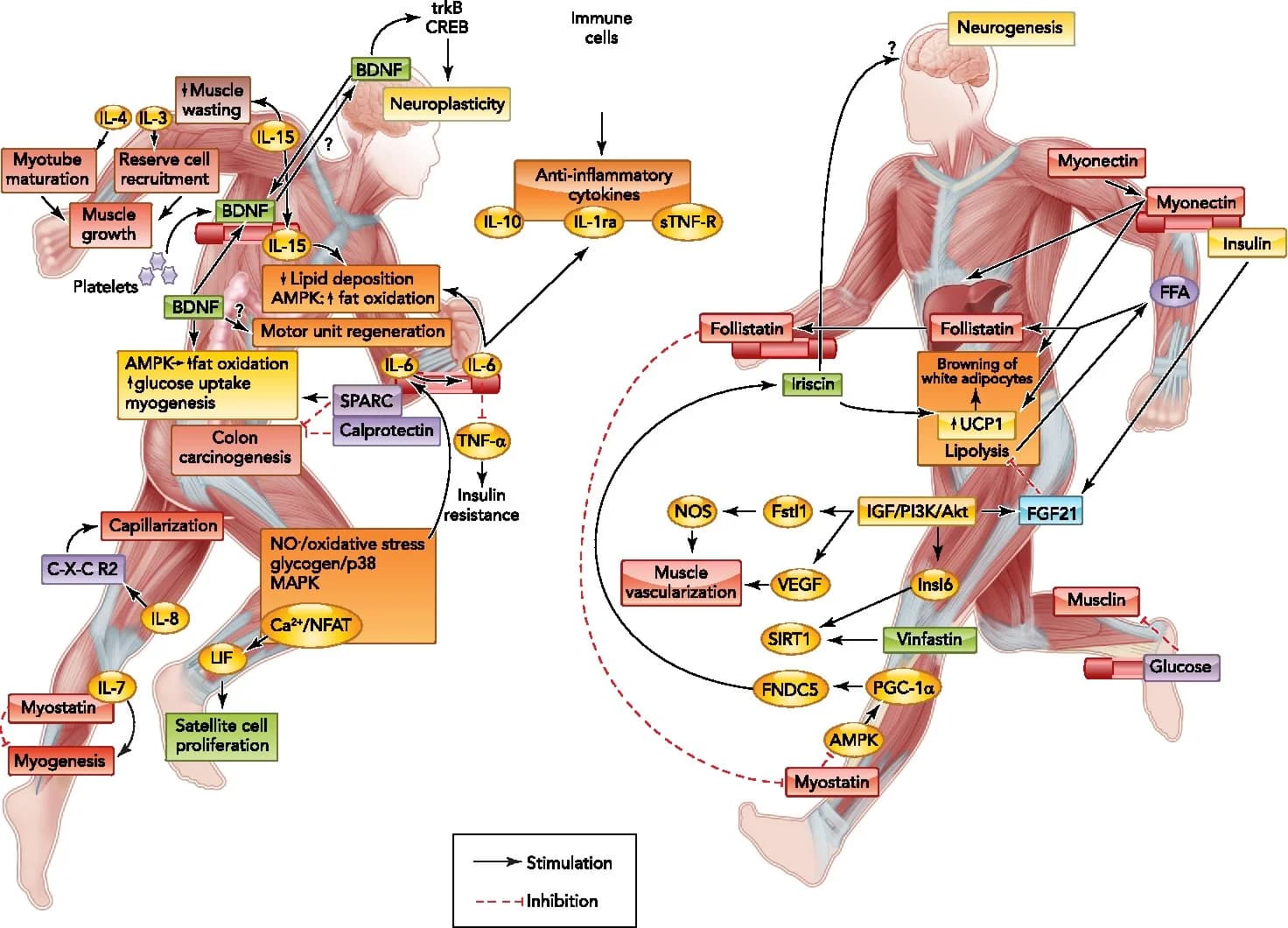
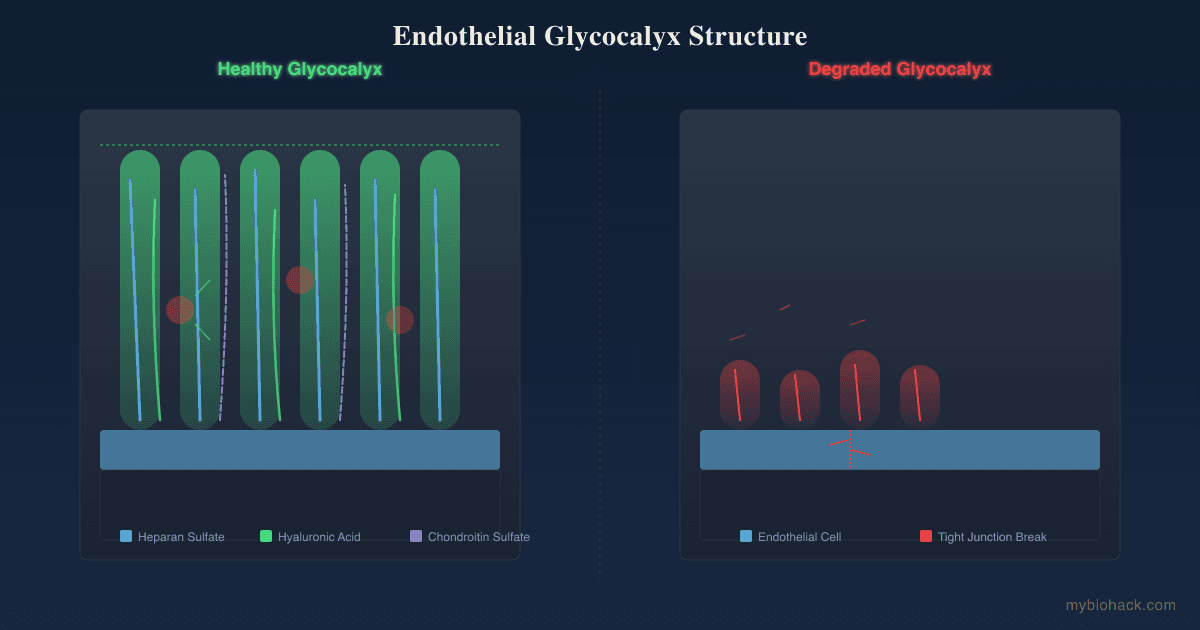
JD (a framework I coined, not established terminology) argues that a huge share of chronic illness runs through a compromised glycocalyx and the two sub-pathologies that follow from it: Transient Capillary Leak Syndrome (TCLS), my term for micro/transient capillary leak at the vascular level, and Micro-Sepsis (MSS), my term for sub-lethal, chronic sickness behavior that operates by the same mechanisms as clinical sepsis without crossing the diagnostic threshold.
One of the direct downstream consequences of TCLS I have described in the JD guide is that it disrupts mitochondrial saltatory mechanisms, meaning it interferes with the fast, coordinated way mitochondria move and cluster along cellular processes to meet local energy demand.
Picard's field independently arrives at mitochondria as the convergence point for systemic dysfunction and psychological state, from stress neuroendocrinology rather than vascular biology, and the two framings are not in conflict.
If TCLS and MSS are already degrading mitochondrial function through hypoxia, endotoxemia, and immune stasis, then a nervous system that is also chronically dysregulated (as it is in nearly every long COVID, ME/CFS, and POTS patient I have worked with) is adding a second, independent load onto the same organelle.
This is consistent with why so many long haulers show a paradoxically low cortisol pattern rather than the classic high-cortisol stress picture.
A flattened cortisol curve is what you would expect from a system that has been asked for allostatic output for too long and downregulated the axis rather than sustaining it, which is consistent with (not proof of) the mitochondrial allostatic load framework: the recalibration was adaptive at first, then became the new, lower baseline.
Mitochondria also sit at the intersection of hypoxia and mast cell activation, another JD-adjacent pathway where reduced oxygen delivery at the microcapillary level forces the same HIF1a-driven metabolic shift that chronic psychological stress independently produces.
Two separate roads (vascular and psychological) end at the same mitochondrial destination, which is part of why chronic illness protocols that only address one side (only antivirals, or only nervous system regulation, alone) tend to underperform.
How To Improve Mitochondrial Health
None of the following is exotic.
Picard, when asked directly what actually moves mitochondrial health, points to a small set of levers well before he points to any supplement: movement, controlled hunger, sleep, and positive psychosocial experience.
The order below follows that same priority.
1. Regular Movement
Exercise is the single most reliable driver of mitochondrial biogenesis through the PGC-1α pathway, increasing both mitochondrial number and respiratory capacity.
This does not require exhaustive training.
Zone 2 aerobic work (an effort level where you can still hold a conversation) is what most directly builds mitochondrial density, while brief high-intensity efforts drive a stronger acute biogenic signal.
2. Periods Of Genuine Hunger
Chronic overeating keeps mitochondria in a constant substrate-flooded state, which increases electron leak and reactive oxygen species (ROS) production without giving the cell a signal to build new mitochondrial capacity.
Allowing real hunger to occur (not necessarily prolonged fasting, just consistent gaps between meals) triggers AMPK and autophagy, clearing damaged mitochondria and creating room for newer, more efficient ones.
3. Positive Psychosocial Experience, Deliberately
This is the piece most protocols skip entirely, and it is the piece this entire field is built on.
The mood-predicts-mitochondrial-health finding above did not measure the absence of stress, it measured the presence of positive affect as an independent, forward-predicting variable. R
Practically: protecting time for relationships, meaningful work, and unstructured rest is not a soft add-on to a mitochondrial protocol, it is load-bearing.
4. Targeted Mitochondrial Support Compounds
PQQ (Pyrroloquinoline Quinone): upregulates PGC-1α expression and has been shown to stimulate mitochondrial biogenesis in animal models.
See the full PQQ breakdown for dosing and evidence quality.
MOTS-c: a mitochondrial-derived peptide that acts as an exercise mimetic through AMPK activation, covered in depth in the MOTS-c post.
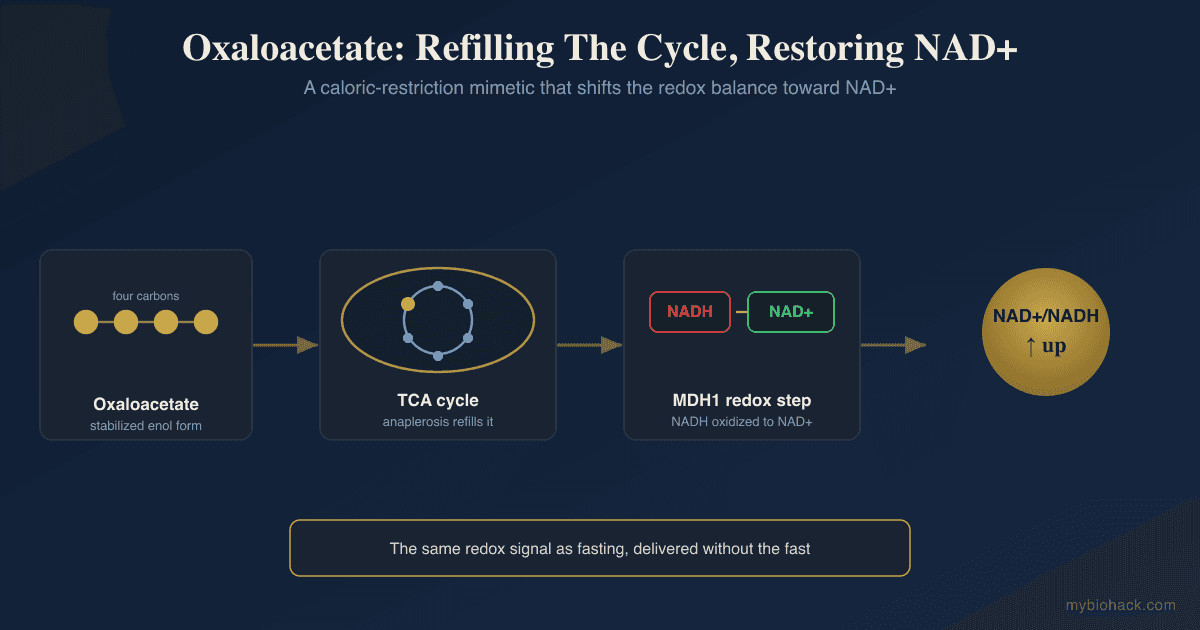
NAD+ precursors (NMN/NR): restore the NAD+/NADH ratio that mitochondrial oxidative phosphorylation depends on.
See the NAD+ deep dive for the full mechanism and the caveats around long-term dosing.
Methylene Blue: acts as an alternate electron carrier in the mitochondrial electron transport chain (although this is also why dosing precision and drug interactions matter, covered in the methylene blue article).
What To Stay Away From
(not exclusive list)
- Chronic sleep restriction: disrupts the nightly clearance of oxidatively damaged mitochondrial proteins and blunts next-day mood, compounding the mood-mitochondria loop in the wrong direction
- Isolation without deliberate counterbalance: loneliness operates as a chronic psychosocial stressor with its own inflammatory signature, not a neutral state
- Sedentary stretches longer than a few days: removes the biogenic stimulus mitochondria need and allows the network to shift toward the fragmented, lower-capacity state
- Stacking stimulants on top of unresolved chronic stress: caffeine and other stimulants raise catecholamine output on a system that, per the allostatic load model, may already be running near its adaptive ceiling
- Unbroken caloric surplus: keeps the electron transport chain in a substrate-flooded state that favors ROS generation over new mitochondrial biogenesis
Testing
Blood And Saliva Markers
GDF15: reflects acute and chronic mitochondrial energetic stress, rises within minutes of acute psychosocial stress in preliminary data, and shows a cortisol-like diurnal pattern in saliva. R
Mitochondrial DNA copy number (mtDNAcn): reflects compensatory mitochondrial biogenesis in response to either higher energy demand or reduced production capacity. R
Cell-free mitochondrial DNA (cf-mtDNA): released extracellularly and detectable in blood and saliva, it stimulates pro-inflammatory cytokine production via TLR9 and rises with acute injury and stress exposure. R
Functional Panels
I use the Cellular Health Zoomer (Vibrant Wellness) to assess organic acids, mitochondrial function markers, and oxidative stress together, since mitochondrial dysfunction rarely shows up as a single isolated number.
The Organic Acids Test (OAT) (Mosaic Diagnostics) is the alternative if you want a dedicated mitochondrial and metabolic organic acid panel rather than a broader zoomer.
For a hormonal cross-check, since steroidogenesis begins inside the mitochondrial matrix, the DUTCH Complete (Precision Analytical) or Hormone Zoomer (Vibrant Wellness) will show whether a flattened cortisol curve is part of your picture.
Genetics
The Methylation Genetics Panel covers several of the SNPs below and is worth running alongside functional testing rather than instead of it.
Mechanisms Of Action
Simple:
- Mitochondria do not just make energy, they also sense stress hormones, calcium, and oxygen, and change their behavior in response
- Chronic psychological stress produces measurable, physical changes in mitochondrial number, shape, and output, on a timescale of days
- Positive mood, connection, and purpose appear to move mitochondrial function in the opposite direction, not just remove the negative signal
- Some of this damage (like stress-induced hair greying) has now been shown to reverse when the underlying stressor resolves
Advanced:
- Glucocorticoid-mitochondrial signaling: the glucocorticoid receptor translocates into the mitochondrial matrix under stress hormone exposure and directly regulates mitochondrial gene expression, with chronic corticosterone exposure producing an inverted U-shaped effect on mitochondrial oxidation, membrane potential, and calcium holding capacity R
- Retrograde signaling via the integrated stress response: mitochondrial dysfunction triggers eIF2α phosphorylation and ATF4-mediated transcriptional programs, including induction of FGF21 and GDF15, that communicate mitochondrial status back to the nucleus and to distant tissues R
- mtDNA copy number as a compensatory biogenesis signal: PGC-1α and TFAM-driven biogenesis increases mtDNAcn in an attempt to offset reduced per-mitochondrion energetic output, meaning a higher mtDNAcn number can reflect dysfunction being compensated for rather than health R
- cf-mtDNA as a Toll-like receptor 9 agonist: circulating cell-free mitochondrial DNA, because it retains bacterial-like unmethylated CpG motifs from its endosymbiotic origin, activates TLR9 and drives neutrophil migration and degranulation, directly linking mitochondrial stress signaling to systemic inflammation R
Genetics
PPARGC1A (PGC-1α)
PGC-1α is the master transcriptional coactivator for mitochondrial biogenesis, upregulating TFAM and nuclear respiratory factors to drive new mitochondrial synthesis.
rs8192678 (Gly482Ser) — the variant allele is associated with increased obesity risk specifically in physically inactive individuals, suggesting the genetic effect on mitochondrial biogenesis is conditional on activity level rather than fixed. R
TFAM
TFAM (mitochondrial transcription factor A) packages and protects mtDNA and is required for its transcription and replication.
TFAM is the first mammalian protein shown to directly regulate mtDNA copy number, and its loss is embryonic lethal in mouse models, underscoring how tightly mitochondrial content is controlled. R
UCP2
UCP2 (uncoupling protein 2) dissipates the mitochondrial proton gradient as heat rather than ATP, functioning as a buffer against excess ROS production.
The -866G/A promoter variant increases UCP2 mRNA expression and is associated with decreased risk of obesity, consistent with a mild uncoupling effect that favors heat dissipation over fat storage. R
MTHFR — Highest Population Risk
MTHFR (methylenetetrahydrofolate reductase) is not a mitochondrial gene itself, but the methylation cofactors it controls are required for mitochondrial protein synthesis and antioxidant regeneration (glutathione).
rs1801133 (C677T) — reduces enzyme activity substantially in the homozygous state, compounding oxidative burden on an already stressed mitochondrial network. R
More Research
GDF15's diurnal pattern mirroring cortisol so closely raises the open question of whether it is downstream of HPA axis activation or an independent, parallel signal, which the current preliminary data cannot yet fully separate. R
Mitochondrial haplogroups are a plausible source of individual variation in stress resilience, but Picard's own 2019 review does not report haplogroup-resilience associations, and this remains speculative rather than established.
There is a big MAYBE here. R
The MiSBIE study (Mitochondrial Stress, Brain Imaging, and Epigenetics), the Picard lab's flagship ongoing project, is comparing people with rare, molecularly-defined mtDNA mutations against community controls to map how mitochondrial energy transformation capacity relates to neuroendocrine, immune, cardiovascular, and emotional systems simultaneously. R
Results from this cohort will likely be the strongest human evidence this field produces over the next several years.
Single-cell divergence between glial cells and neurons in response to the same psychosocial history is one of the more surprising findings in the PNAS data and suggests that whole-brain or bulk-tissue mitochondrial measurements have been averaging out, and hiding, real biological signal. R
For anyone tracking this at a personal level, the Biohacking Bot can walk through how your specific labs (GDF15, organic acids, mtDNA copy number) fit into this framework, and Pro members get the Health Hub tools to trend these markers over time rather than as one-off snapshots.
Jacob Gordon
INHC, FMT-C
Integrative Nutrition Health Coach
I cover mold illness, post-viral recovery, methylation, and complex chronic disease, drawing on ten years of clinical research, work inside a functional medicine clinic, and my own recovery from all of it. Every claim here is cited.
Book a ConsultationRelated Protocols & Supplements
Deep-dive chapters and recommended supplements for this topic
Lion's Mane
1000mg/day
Omega-3 (DHA)
2g/day
Phosphatidylserine
100mg 3x/day