What Are Anelloviruses? TTV, Chronic Disease, ME/CFS, And Long COVID
By Jacob Gordon, INHC, FMT-CThis article contains affiliate links. As an Amazon Associate, MyBioHack earns from qualifying purchases at no extra cost to you. We only link products we research and stand behind.
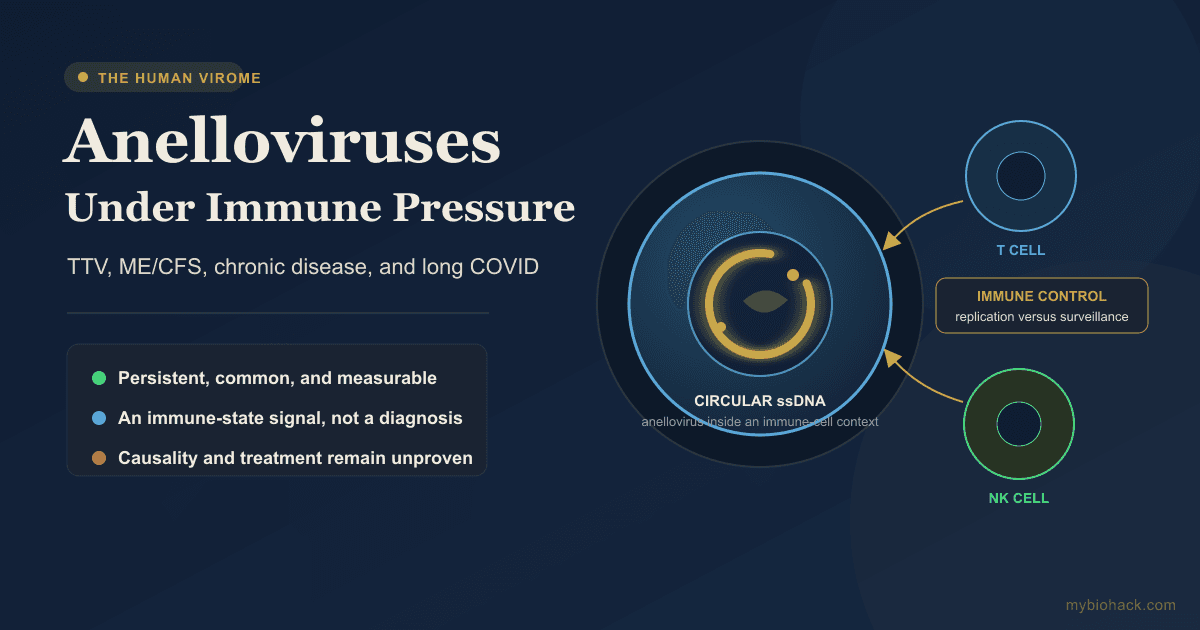
Anelloviruses are persistent viruses that almost all of us carry, and changes in their abundance may reveal an immune system under pressure more reliably than they reveal a virus causing disease.
In this post, we will discuss what anelloviruses are, what Torque Teno Virus (TTV) can and cannot tell us about immune function, the evidence in chronic disease and ME/CFS, and why the new COVID data matters without proving causation.
Basics Of Anelloviruses
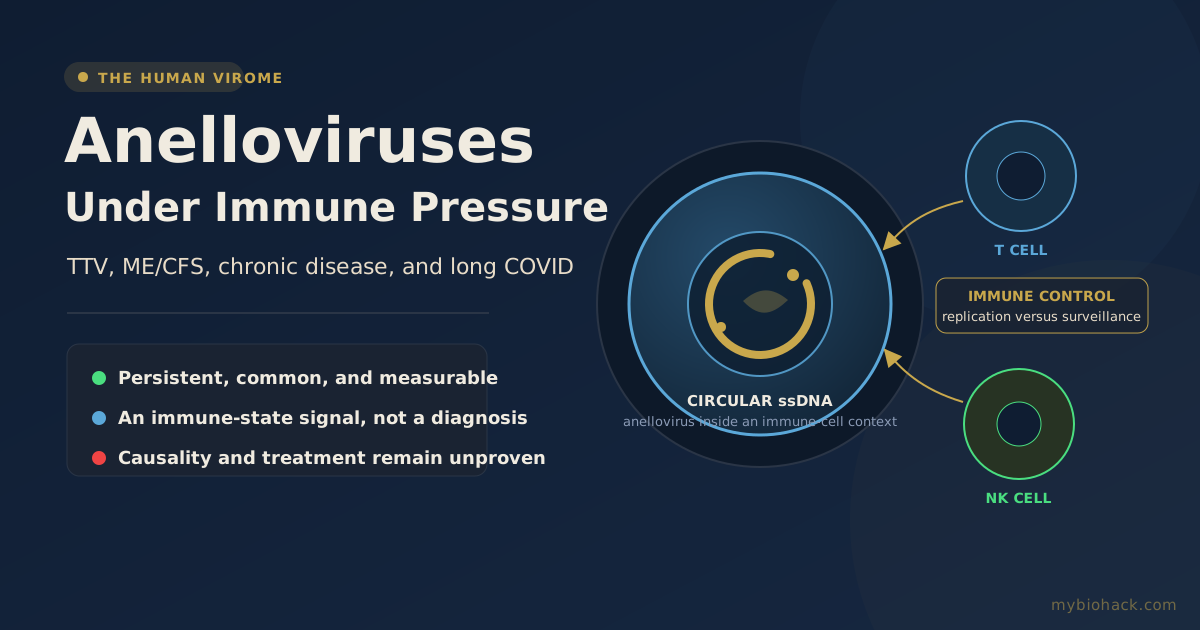
Anelloviridae are small circular single-stranded DNA viruses that are major components of the human virome. R
The three human genera most commonly discussed are Torque Teno Virus (TTV), Torque Teno Mini Virus (TTMV), and Torque Teno Midi Virus (TTMDV). R
The broader collection of anelloviruses carried by one person is called the anellome. R
This is not a rare infection that needs to be hunted down in chronically ill people.
It is a near-universal resident of the human virome. R
In a study of 107 blood samples from children, anelloviruses were detectable as early as 1.2 months of age and every sample was positive between 12 and 18 months. R
The same study found beta and gamma genera in some breast-milk samples, which makes early oral exposure biologically plausible. R
In a cohort of 1,017 healthy blood donors, plasma TTV was detected in 65% of people, while whole-blood testing detected virus in some people whose plasma was negative. R
That difference matters because anellovirus studies do not all measure the same body compartment or use the same assay.
The anellome is also intensely personal.
Global sequencing work found that people carry distinct, highly diverse lineages that can persist for months within a background of other endemic lineages. R
This diversity is driven in part by extensive recombination, which is one reason a single generic PCR result does not capture the full biology. R
The most important basic fact is also the easiest to miss.
Detecting TTV or another anellovirus is usually normal.
Current reviews describe human anelloviruses as commensal or apparently nonpathogenic because no convincing causal disease association has yet been established. R R
That does not mean they are biologically irrelevant.
It means the honest question is not, "How do I kill TTV?"
The honest question is, "What changed in the host environment that is allowing this part of the virome to expand or shift?"
Why TTV Is An Immune-State Signal
TTV has become interesting because its abundance often changes when immune control changes.
That is why transplant medicine has done most of the serious clinical work on it.
In allogeneic stem-cell transplant recipients, TTV viremia was higher than in healthy volunteers and was inversely correlated with T-cell proliferation capacity, while simple lymphocyte counts did not capture that functional deficit. R
That is a useful distinction.
A normal immune-cell count does not automatically mean that the cells are functioning normally.
In a prospective kidney-transplant cohort of 386 people, each log increase in TTV load after month three was associated with 11% higher odds of subsequent infection and 22% lower odds of rejection. R
This is the pattern that made TTV attractive as a possible measure of the net state of immunosuppression.
Higher TTV can mean that a patient is immunosuppressed enough to be more infection-prone, while lower TTV can mean stronger alloreactivity and more rejection risk in that very specific transplant context. R R
The signal is not perfect or interchangeable with an immune diagnosis.
A systematic review of 33 studies found major differences in outcomes, control groups, immune measures, and sampling times, and concluded that better prospective studies are still needed. R
In other words, TTV looks useful as an endogenous immune-state biomarker in selected populations.
It is not a validated universal measure of "immune exhaustion."
There are plausible reasons the relationship could be bidirectional.
TTV appears to replicate preferentially in activated T lymphocytes, and short-term viral kinetics after transplant immunosuppression support T cells as the main replication-competent population. R
Another study reported TTV-specific CD8 responses with an exhausted phenotype and TTV peptide effects through the HLA-E/NKG2A axis. R
Those findings show that the virus can interact with immunity.
They do not show that TTV is the upstream cause of a patient's chronic illness.
The host also pushes back.
Longitudinal sequencing of healthy people found APOBEC3-like cytosine-to-uracil editing in anellovirus genomes, with evidence that this host defense restrains lineages without clearing the entire anellome. R
This looks less like a simple pathogen versus host battle and more like a long-lived equilibrium.
A previously cited 2013 paper claiming that a TTV microRNA inhibits interferon signaling was retracted in 2021 and should not be used to build a mechanism or supplement protocol. R
Anelloviruses And Chronic Disease
Anellovirus studies show up repeatedly in chronic disease because chronic disease often changes inflammation, immune competence, medication exposure, organ function, or all four.
That makes correlation expected.
It does not make anelloviruses the cause.
In a cross-sectional aging study with an independent replication cohort, TTV viremia of at least 4 log copies per milliliter was associated with ischemic heart disease and higher inflammatory cytokines. R
The authors reported adjusted odds ratios of 2.51 in the primary cohort and 4.90 in the replication cohort. R
Those are meaningful associations, but the study cannot tell us whether higher TTV contributes to vascular disease, whether vascular and metabolic disease weakens TTV control, or whether both arise from immunosenescence and inflammation.
In geriatric inpatients, high TTV viremia was associated with seven-year all-cause mortality, higher erythrocyte sedimentation rate, lower albumin and hemoglobin, and higher osteopontin and GDF15. R
That is a prognostic signal, not proof that lowering TTV would lower mortality.
The same caution applies in respiratory disease.
In 91 people with chronic obstructive pulmonary disease, higher sputum TTV load correlated with worse airflow measures and disease severity. R
Another COPD cohort found that higher viremia was associated with more DNA damage and lower five-year survival probability. R
These studies are reasons to investigate immune context in severe disease.
They are not evidence for an anellovirus eradication protocol.
A Romanian case-control study found anellovirus DNA more often in people with common chronic pathologies and an association with type 2 diabetes, but it also found associations with hemodialysis, transfusion, surgery, and previous hepatitis A infection. R
That is exactly the confounding problem in this field.
People who are sicker have more medical exposure and more immune disruption, either of which may change virome measurements.
There is important contradictory evidence too.
In 19 people with treated HIV, researchers found no relationship between plasma anellovirus abundance or genotype burden and persistent CD4 or CD8 T-cell activation. R
That study argues against treating circulating anellovirus antigens as the dominant driver of chronic T-cell activation in that setting. R
The 2025 Nature Genetics blood-virome study adds scale but not causality.
Across 6,321 Japanese participants, high anellovirus load correlated with systemic lupus erythematosus, rheumatoid arthritis, and COVID-19 status. R
The study is important because it places the anellome inside real population-scale disease biology.
It does not establish that anelloviruses cause autoimmunity, rheumatoid arthritis, or COVID severity.
The Actual ME/CFS Evidence
The direct anellovirus literature in Myalgic Encephalomyelitis / Chronic Fatigue Syndrome (ME/CFS) is currently very small.
There is one interesting pilot study, and it should be treated as a lead rather than a conclusion.
The 2024 study measured viral RNA in immune cells from people with ME/CFS, fibromyalgia, both conditions, and healthy controls. R
It reported over-representation of TTMV9 transcripts in a subgroup of ME/CFS patients, along with abnormal endogenous retrovirus and immune profiles. R
The authors proposed that TTMV9 could help stratify a subgroup for future research. R
That is not the same thing as a replicated diagnostic biomarker.
It is not proof that TTMV9 causes ME/CFS.
It is not a reason to order consumer virome testing or take an antiviral stack.
The 2020 article you sent, published in the Journal of Translational Medicine, is even more preliminary than the pilot study. R
It is a hypothesis article arguing that anello- and circoviruses deserve investigation as possible contributors to chronic fatigue. R
The author explicitly frames the question as open. R
This is still valuable because it identifies a gap that conventional virology has mostly ignored.
ME/CFS is a heterogeneous syndrome, and a small viral subgroup could be clinically important even if it explains only a fraction of patients.
But the current literature cannot tell us how large that fraction is, whether the signal persists over time, or whether changing it improves Post-Exertional Malaise (PEM), cognition, sleep, orthostatic symptoms, or fatigue.
For now, the more defensible clinical approach is to keep using the evidence-supported tools already discussed in the ME/CFS and long COVID pacing guide, while research tests whether anellovirus measurement adds something useful.
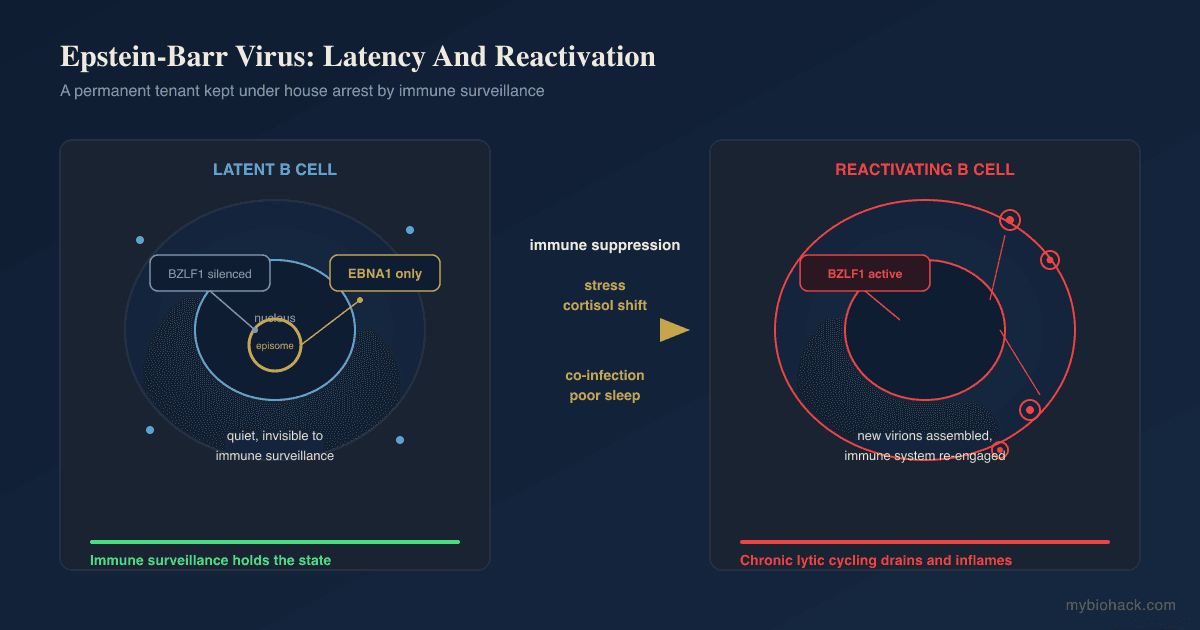
The relevant EBV reactivation post is also worth reading because herpesviruses have a much more developed latency and post-viral research literature than anelloviruses do.
COVID, Viral Reactivation, And Long COVID
COVID changed this conversation because it created a very large natural experiment in acute inflammation, immune disruption, and post-viral illness.
The 2026 Nature study you sent is the key paper.
Researchers used longitudinal multi-omic data from 1,154 hospitalized COVID-19 patients in the IMPACC cohort and found significant reactivation of Herpesviridae and Anelloviridae during acute illness. R
They reported distinct timing for different viruses, associations with disease severity, host immune effects, and clinical outcomes, persistence of viral reactivation in convalescence, and an association between Anelloviridae and long COVID. R
The authors also state plainly that the study does not establish causation between reactivation and clinical outcomes. R
That sentence should stay in every serious discussion of this result.
The study does not say anelloviruses cause long COVID.
It says that severe SARS-CoV-2 illness can be accompanied by major changes in the chronic viruses people already carry, and that these changes track with immune, transcriptomic, metabolomic, and long-COVID outcomes. R
The word "reactivation" needs a little care with anelloviruses.
Herpesviruses have a well-characterized latent and lytic program.
Anelloviruses appear persistently present and their control is less fully understood, so a rise in viral signal can represent changing replication, tissue release, or detectability rather than a simple binary dormant-to-awake switch. R R
Smaller COVID studies point in the same general direction but are not fully consistent.
In 295 people with SARS-CoV-2 infection, higher nasopharyngeal TTV load at emergency-department presentation independently predicted intensive-care admission. R
In 50 critically ill COVID patients, detectable plasma TTV was associated with later nosocomial infection, although TTV did not directly correlate with inflammatory markers in paired samples. R
In 176 hospitalized patients, salivary TTV DNA load was higher with severe disease and death. R
However, a 2026 study of 50 COVID-19 ARDS patients found that early TTV measures did not discriminate ICU mortality or secondary-infection burden. R
That disagreement is not a nuisance to hide.
It is the central reason TTV should not be used as a stand-alone long-COVID or severity test.
The most plausible shared interpretation is that severe COVID perturbs immune surveillance and the virome responds.
The Nature data makes that interpretation harder to dismiss, but it leaves the direction of causation open. R
The long COVID treatment protocol covers the broader post-viral terrain without treating anellovirus measurement as a diagnosis.
How This Fits The Junction Dysfunction Framework
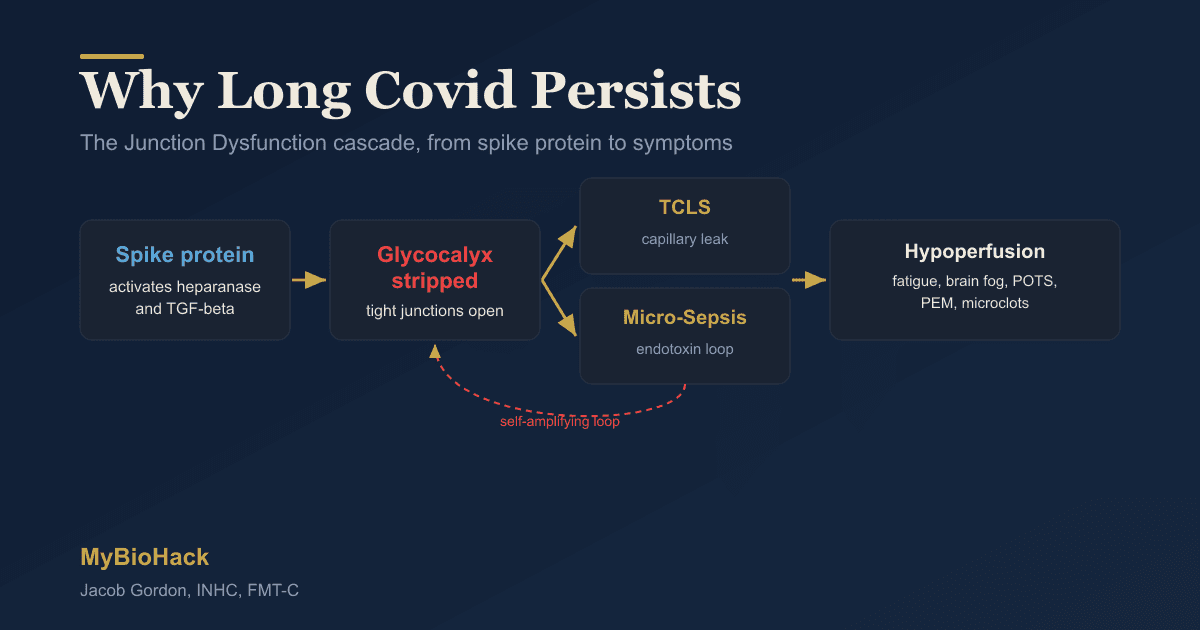
In Jacob's Junction Dysfunction (JD) framework, chronic illness can create a terrain where inflammation, impaired barrier integrity, altered microcirculation, and immune dysregulation reinforce each other.
Jacob calls one part of this hypothesis Micro-Sepsis (MSS), a chronic sub-lethal sepsis-like state in which acute immune hyperactivation is followed by a window of immune suppression.
You can read the complete proposed cascade in the Micro-Sepsis chapter.
That hypothesis is a framework, not an established clinical diagnosis.
Anellovirus data neither proves nor disproves it.
What it does provide is a measurable example of how a persistent human virus can shift when immune control shifts.
The relevant connection is modest.
If a person has ongoing inflammatory stress and weakened antiviral surveillance, a rising anellovirus load could be a downstream readout of the terrain that JD is trying to describe.
It should not be used as evidence that the entire framework is correct or that a particular patient has MSS.
This is also why the Latent Viruses chapter is a better cross-link than pretending TTV behaves exactly like EBV.
The two virus families may share the broad problem of immune control while having very different persistence biology.
How To Improve The Terrain
There is no proven anellovirus treatment protocol.
There is no trial showing that lowering TTV or TTMV load improves ME/CFS, chronic disease, or long-COVID outcomes.
The right goal is not to chase an anellovirus number.
The right goal is to identify and address the documented problem that could be disturbing immune control.
1. Do Not Treat A Research Signal As A Diagnosis
Anellovirus detection is common in healthy people, so a positive result alone does not diagnose a chronic infection. R R
If a result was obtained outside a transplant or research setting, interpret it with a clinician who understands the assay, the sample type, and the reason it was ordered.
2. Zinc Is The One Direct Supplement Signal
The only direct human supplement trial I found measured TTV after autologous hematopoietic stem-cell transplantation.
In that 18-person randomized study, nine people received 150 mg per day of zinc from day 5 to day 100 after transplant, while nine received standard antimicrobial prophylaxis alone. R
The zinc group had higher T-cell receptor excision circles and CD4-naive T cells, and the TTV rise seen in controls was not observed in the zinc group. R
A separate 38-person double-blind transplant trial later found that zinc increased recent thymic emigrant T cells and absolute lymphocyte counts, strengthening the immune-reconstitution mechanism even though that study did not measure TTV. R
This is an immune-reconstitution finding in a profoundly immunosuppressed cancer-treatment population.
It is not evidence that 150 mg of zinc treats TTV, ME/CFS, or long COVID in the general population.
It is also not a dose I would copy outside clinician-supervised care.
Long-term high-dose zinc can induce copper deficiency and hematologic toxicity, which makes copper status and total zinc exposure relevant if supplementation extends beyond a short repletion period. R R
The zinc, copper, and ceruloplasmin guide covers that balance in more detail.
For a provisional mechanism-guided plan, zinc belongs in the first tier only when dietary intake or testing suggests inadequacy.
The 10 mg per day dose used with melatonin in an ME/CFS trial is a conservative reference point for symptom research, not a proven TTV-lowering dose. R
The 150 mg per day transplant dose should not be translated into a self-treatment protocol. R
3. Map The Mechanism Before Choosing A Supplement
The activation question is more complicated than finding one inflammatory pathway and turning it down.
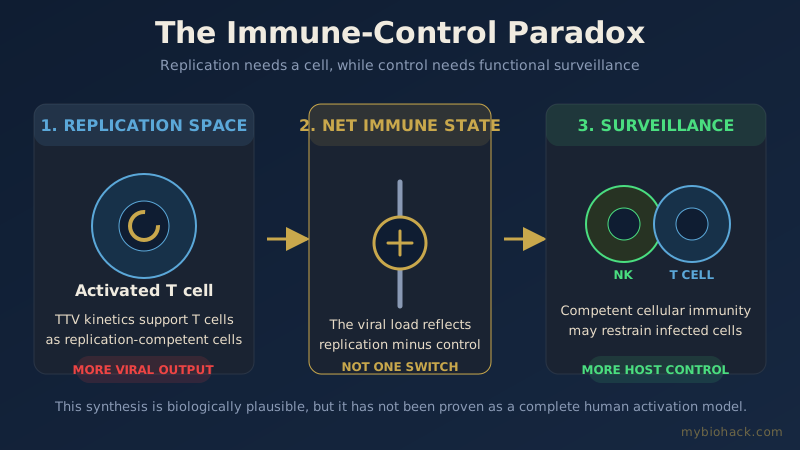
TTV replication appears concentrated in activated T cells, yet viral load also rises when net cellular immune control is weakened by transplant immunosuppression. R R R
This creates an apparent paradox.
Activated T cells may provide the cellular machinery for replication, while competent T-cell and natural-killer-cell surveillance restrains the infected-cell population.
The 2026 COVID study suggests that this cannot be reduced to medication-induced immunosuppression because only 17.4% of Anelloviridae-positive participants were receiving medication-associated immunosuppression. R
Anelloviridae transcripts were independently associated with age, COVID severity, CXCL11, IL-18, long-chain fatty acids, dimethylarginine, altered RNA processing and translation, and a physical long-COVID symptom cluster. R
Those are associations rather than a validated list of activation switches.
The current mechanism-to-supplement map therefore looks like this:
| Proposed control point | Human or mechanistic evidence | Supplement link | Evidence tier |
|---|---|---|---|
| Thymic reconstitution and naive CD4 T-cell recovery | High-dose zinc prevented the post-transplant TTV rise in one 18-person trial. R | Correct zinc inadequacy rather than copying the transplant dose. | Tier A, direct but narrow |
| NK-cell surveillance in the setting of TTV-associated HLA-E/NKG2A signaling | Beta-1,3-glucan increased NK activity in 83 healthy adults, but the trial did not measure TTV or NKG2A signaling. R | Beta-1,3-glucan, with 350 mg per day as the studied product dose. | Tier B, mechanism-matched |
| NK-cell surveillance and sulfated-glycan interaction with NKG2A/NKG2C | Fucoidan increased NK activity in small human trials, and isolated NKG2A/NKG2C receptor domains bind fucoidan in vitro. R R R | Fucoidan, with 300 mg to 3 g per day representing product-specific study doses rather than a TTV dose. | Tier B, intriguing but indirect |
| Marginal selenium status, T-cell proliferation, interferon-gamma, and viral handling | Selenium improved cellular immunity and poliovirus handling in marginal-status adults, but another trial found dose-, form-, and outcome-dependent benefits and harms. R R | Selenium, considered only when intake or status is low, with 50 to 100 micrograms per day as the marginal-status trial range. | Tier B/C, deficiency-dependent |
| Glutathione and T-cell redox competence | NAC restored glutathione in people with HIV, but it has not been tested against anelloviruses and increased T-cell-mediated graft-versus-host disease in a transplant trial. R R | N-acetylcysteine, with 600 mg per day as a conservative research reference rather than an antiviral dose. | Tier C, terrain support |
| Vitamin D deficiency and excessive T-cell activation | In deficient adults, 4,000 IU per day reduced CD4 T-cell activation, but no trial measured TTV and activated T cells are also a proposed replication compartment. R | Correct a measured vitamin D deficiency rather than using high-dose vitamin D as a TTV suppressant. | Tier C, ambiguous direction |
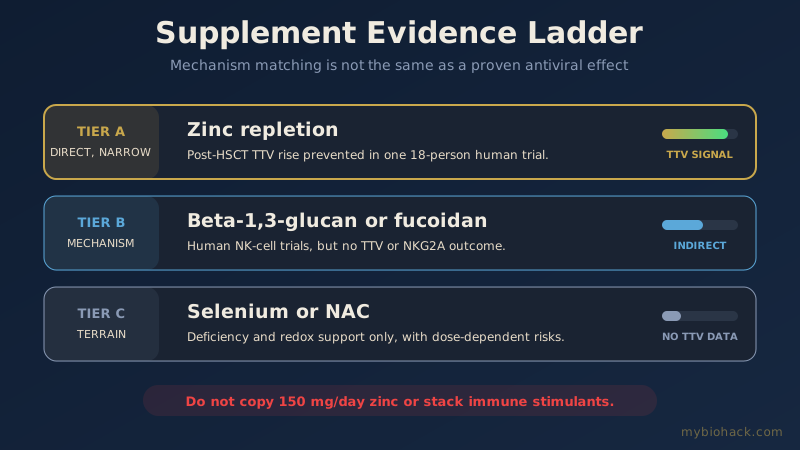
The fucoidan chapter explains why molecular weight, source, and sulfation prevent different fucoidan products from being treated as interchangeable.
The vitamin D conversion guide covers the cofactors and organ steps that make deficiency correction different from blind high-dose supplementation.
I found no human supplement study showing enhanced APOBEC3 editing of anelloviruses.
I found no human supplement study showing reversal of the TTV-associated HLA-E/NKG2A imprint.
No trial has shown that suppressing TLR9, NF-kappa-B, CXCL11, or IL-18 lowers anellovirus replication.
That last distinction matters because TTV DNA can stimulate pro-inflammatory cytokines through TLR9 in an experimental system, but blocking that response could reduce inflammatory consequences without improving viral control. R
Simply pushing one antiviral cytokine is not supported either.
A placebo-controlled interferon-gamma trial in critically ill adults did not alter respiratory anellovirus detection or composition. R
Older pegylated-interferon and ribavirin data in hepatitis C showed transient TTV suppression followed by return after treatment, which argues against equating temporary viral-load reduction with restored immune control. R
4. A Conservative, Testable Supplement Sequence
The most defensible sequence is to start with deficiency correction and add no more than one mechanism-matched experiment at a time.
- Check dietary zinc exposure and, when clinically appropriate, zinc and copper status before prolonged supplementation.
- Correct zinc inadequacy with a physiologic dose rather than the 150 mg transplant regimen.
- If a clinician agrees that an NK-support experiment fits the immune phenotype, trial either beta-1,3-glucan or fucoidan rather than stacking both immediately.
- Consider selenium only when intake or status is marginal because higher dosing is not uniformly better. R
- Treat NAC as redox support, not as an anellovirus antiviral, and use extra caution in autoimmune, transplant, or strongly immune-reactive states. R
- Track symptoms, sleep, orthostatic tolerance, PEM, infections, and laboratory abnormalities rather than assuming that feeling more stimulated means immune control improved.
This sequence is a mechanism-based research proposal, not a validated medical protocol.
The glutathione guide, NAC guide, and selenium guide provide broader context on those compounds and their tradeoffs.
5. Use ME/CFS Supplement Trials For Symptoms, Not TTV Eradication
In a 16-week randomized trial of 50 people with ME/CFS, 1 mg melatonin plus 10 mg zinc daily reduced self-reported physical fatigue and improved the physical quality-of-life score versus placebo. R
The trial did not measure anellovirus load, so it supports a symptom-level discussion only.
The melatonin guide covers its broader sleep and circadian context.
In a separate 36-week randomized trial of 65 people with ME/CFS, a daily yeast beta-glucan, vitamin D3, vitamin B6, and zinc combination improved cognitive-fatigue scores. R
That combination also did not establish any effect on TTV or TTMV.
These are reasonable leads to discuss with a clinician when fatigue, sleep, diet, medications, and deficiency status have been assessed.
They are not an anellovirus protocol.
6. Post-COVID Synbiotic Evidence Is Promising But Small
One double-blind trial in 26 people with post-COVID ME/CFS found that a three-month synbiotic containing defined Lactobacillus and Bifidobacterium strains, fructooligosaccharides, and zinc attenuated post-exertional malaise more than placebo. R
The study was small, and the product changed several variables at once, so it cannot isolate a probiotic, prebiotic, or zinc mechanism. R
It also did not test anelloviruses.
I would frame this as early post-COVID symptom evidence rather than a way to suppress viral reactivation.
7. Correct Deficiency, Do Not Chase Immune Stimulation
Human trial evidence suggests vitamin C, vitamin D, and zinc can modestly reduce the risk or duration of common acute respiratory infections, but that literature does not establish a treatment for chronic anellovirus-associated illness. R
For someone with chronic illness, the practical priority is to identify and correct documented nutrient deficiency and to avoid a rotating stack of high-dose immune stimulants based on an unvalidated TTV result.
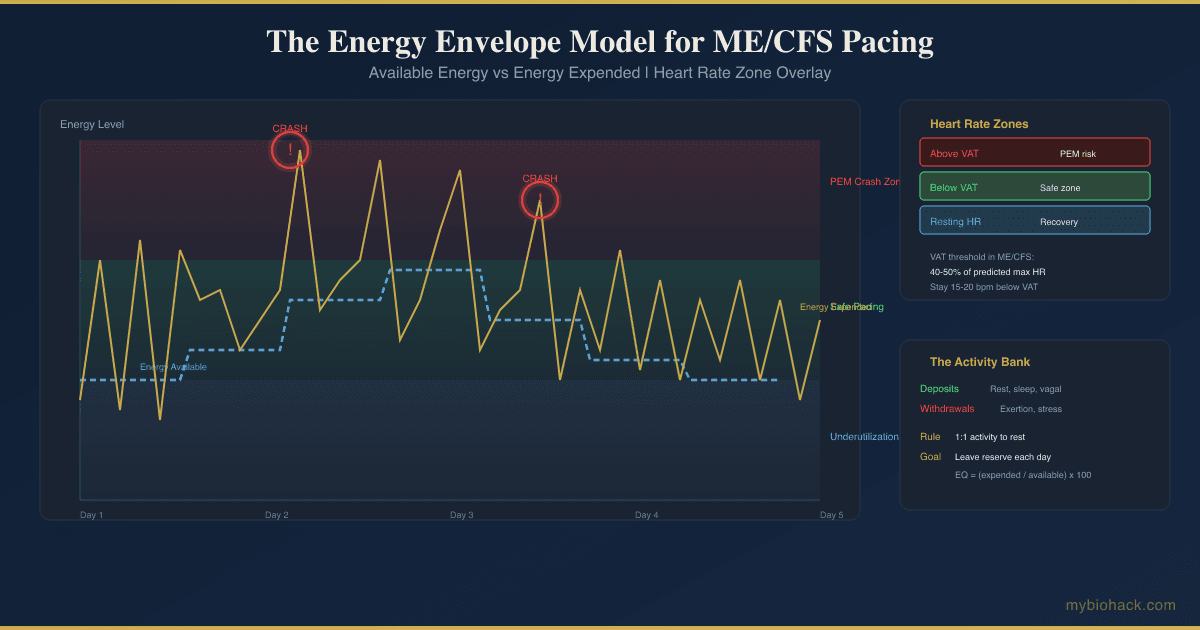
8. Protect The Energy Envelope In ME/CFS And Long COVID
The anellovirus literature does not justify pushing through PEM in the hope of "training" the immune system.
Pacing and symptom-contingent activity management remain the safer practical foundation while the virome work develops.
9. Look For Treatable Drivers Of Immune Stress
Medication-related immunosuppression, uncontrolled inflammatory disease, acute or recurrent infection, poor sleep, malnutrition, and organ disease can all matter more clinically than an anellovirus measurement.
The transplant literature supports this general framing because TTV has been most useful when interpreted alongside the real immune stressor, not in isolation. R R
10. Keep The COVID Finding In Context
The Nature study supports taking post-COVID viral and immune changes seriously. R
It does not support using unproven antivirals, high-dose immune stimulants, or a generic viral cleanse to treat long COVID.
What To Stay Away From
Avoid treating a positive TTV PCR as proof that TTV is the cause of your fatigue, autoimmune symptoms, or long COVID.
Avoid comparing viral-load numbers across plasma, whole blood, saliva, and different laboratories as if they are directly interchangeable. R R
Avoid interpreting association studies as though they prove that reducing viral load will fix the associated disease. R R
Avoid building an aggressive antiviral supplement stack around a pilot ME/CFS signal that has not yet been replicated. R
Avoid copying the 150 mg per day zinc dose from the stem-cell-transplant study without clinician oversight. R
Avoid treating beta-glucan, fucoidan, selenium, NAC, vitamin D, or AHCC as proven anellovirus antivirals.
Avoid piling together multiple immune stimulants because TTV biology involves both activated-cell replication and weakened immune surveillance.
Fucoidan deserves particular caution with anticoagulants or bleeding disorders because sulfated seaweed polysaccharides can affect coagulation assays and the clinical data are limited. R
Avoid writing off the whole field because the causal story is incomplete.
The correct position is neither "TTV is harmless and irrelevant" nor "TTV explains everything."
There is a big MAYBE here, and the data is becoming good enough to investigate properly.
Testing
There is no routine, validated chronic-disease or ME/CFS test that can diagnose illness from anellovirus detection.
TTV quantification is being developed mainly for immune monitoring in transplantation and other immunocompromised settings. R R
Assay selection matters because plasma and whole blood can give different positivity rates and viral loads. R
Compartment selection matters because saliva can carry more TTV than plasma in some clinical settings. R
For a person with ME/CFS or long COVID, a research-grade anellovirus result should currently be considered hypothesis-generating.
It can be useful to a research cohort.
It cannot yet tell an individual person whether the virus is driving their symptoms or what treatment they need.
Supplement Safety And Deficiency Context
I use the Quest Zinc Test and Quest Copper Test to assess mineral balance before prolonged zinc supplementation.
The Quest 25-Hydroxy Vitamin D Test can establish whether vitamin D correction is actually needed.
The Quest CBC With Differential And Platelets is relevant if prolonged high-dose zinc exposure raises concern for hematologic effects, although it does not diagnose the cause by itself. R
These tests do not diagnose anellovirus-driven disease or show that a supplement is lowering TTV.
Mechanisms Of Action
Simple
- Immune Control: When antiviral immune control is weaker, TTV often becomes easier to detect or rises in abundance. R
- Persistent Equilibrium: The host and anellome appear to coexist in a long-lived balance rather than clear the virus completely. R R
- Replication Compartment: Activated T lymphocytes appear to be the main replication-competent cells, which means cellular activation and cellular immune competence cannot be treated as the same variable. R
- Virome Readout: A shift in TTV may report the immune environment that changed before it reports a new disease-causing infection. R
Advanced
- APOBEC3-Mediated Genome Editing: Longitudinal sequence data indicates cytosine-to-uracil editing of anellovirus genomes in a pattern consistent with APOBEC3 activity, which can reduce a lineage without eradicating the anellome. R
- COVID-Associated Host State: In hospitalized COVID-19, Anelloviridae transcription tracked severity, age, selected cytokines, metabolites, and altered host gene programs even though most positive participants were not receiving chronic immunosuppressive medication. R
- HLA-E/NKG2A Signaling: One mechanistic study reported that polymorphic TTV peptides stabilize HLA-E and expand NKG2A-positive regulatory natural killer and T-cell populations, but the clinical consequence of this finding remains unresolved. R
- TLR9-Dependent Inflammation: A cloned TTV DNA fragment stimulated pro-inflammatory cytokines through TLR9 in murine spleen cells, which supports an inflammatory consequence but does not establish the switch that activates human viral replication. R
Genetics
There is no validated human genetic panel that predicts anellovirus-driven chronic illness.
Small studies suggest that host immune genetics can influence viral control.
In one cohort of 101 people, TTV load was related to age, CMV antibody levels, and HLA-B27 status, but not to Alzheimer disease. R
In people living with HIV, HLA-E alleles were associated with selected TTV co-infection patterns, but this is a highly confounded setting and not a clinically actionable result for the general population. R
The more useful genetics question right now is not "Which SNP causes TTV?"
It is how HLA variation, antiviral interferon biology, immune-cell function, and the personal anellome interact over time.
More Research
Assay Standardization
Future studies need to standardize specimen type, PCR targets, sequencing depth, and reporting units before thresholds can be compared across cohorts. R R
Causality
Longitudinal human studies and interventions are needed to separate a virus that contributes to disease from a virus that merely expands in an already disrupted host environment. R R
ME/CFS Replication
The TTMV9 subgroup signal needs independent replication with larger cohorts, serial samples, symptom correlation, and comparison with long COVID and fibromyalgia. R
Multi-Virus Models
The strongest COVID work studies the whole chronic virome, including Herpesviridae and Anelloviridae, rather than asking whether one virus explains every outcome. R
Tissue Biology
Healthy-tissue atlases detect TTV broadly without a clear interferon signature, which is another reason blood load alone should not be treated as a full map of what is happening in tissues. R
Jacob Gordon
INHC, FMT-C
Integrative Nutrition Health Coach
I cover mold illness, post-viral recovery, methylation, and complex chronic disease, drawing on ten years of clinical research, work inside a functional medicine clinic, and my own recovery from all of it. Every claim here is cited.
Book a ConsultationRelated Protocols & Supplements
Deep-dive chapters and recommended supplements for this topic
Quercetin
500mg 2x/day
SPM Active (Pro-resolving Mediators)
2 softgels/day
Curcumin (Liposomal)
500mg 2x/day