Glutathione: Liposomal, IV, Precursors, And The Genetics
By Jacob Gordon, INHC, FMT-CThis article contains affiliate links. As an Amazon Associate, MyBioHack earns from qualifying purchases at no extra cost to you. We only link products we research and stand behind.
Glutathione is called the master antioxidant, but most of what is sold under that name never raises the redox status it claims to fix.
In this post, we will discuss why total glutathione is the wrong number to chase, what actually depletes it, whether oral and liposomal forms work, when IV glutathione is legitimate medicine versus a cosmetic risk, which precursors and induction pathways have real human data, and the genetics that determine your baseline capacity.
What Is Glutathione
Glutathione is a tripeptide built from glutamate, cysteine, and glycine, and it is the most abundant non-protein thiol in the human cell. R
Cysteine's thiol group is what does the actual chemistry, which is why cysteine availability, not glutamate or glycine, is usually the rate-limiting input for synthesis. R
Nearly every cell makes its own glutathione intracellularly because the transporters that move intact glutathione across cell membranes are limited, so the tissue you actually have depends more on your own synthesis machinery than on what you swallow. R
The liver holds the largest reserve and exports it to the rest of the body through the conjugation detox pathways that make up Phase II. R
If you have not read the primer on how detox phases actually sequence, Phase I through Phase III is worth reading before this post, because glutathione only does its job at one specific step in that chain.
The GSH:GSSG Ratio
Reduced Glutathione (GSH) is the active form that donates an electron to neutralize a free radical, and in doing so it becomes Oxidized Glutathione (GSSG), a disulfide-linked dimer of two GSH molecules. R
Total glutathione, GSH plus GSSG combined, is the number most consumer tests report, and it is a misleading number on its own. R
A person can have a normal total glutathione pool and still be in a heavily oxidized state if a large fraction of it has already been converted to GSSG, because it is the ratio between the two, not the sum, that reflects whether the cell is winning or losing its redox fight. R
The GSH:GSSG ratio is used as a sensitive early marker of oxidative stress across a wide range of conditions, including diabetes, multiple sclerosis, mitochondrial disease, and Parkinson's disease, precisely because it moves before overt tissue damage shows up on standard labs. R
This is the number I look at clinically, not total glutathione in isolation, and it is the reason a supplement that raises total glutathione without improving the ratio has not actually fixed the redox problem.
What Depletes Glutathione
Before adding anything, it is worth knowing what is draining the tank. (not exclusive list)
- Acetaminophen overdose consumes glutathione directly, because the reactive metabolite N-Acetyl-p-Benzoquinone Imine (NAPQI) can only be neutralized by conjugating it to glutathione, and once roughly 70 percent of hepatic glutathione is used up, NAPQI starts binding liver proteins directly R
- Alcohol metabolism through Cytochrome P450 2E1 (CYP2E1) generates reactive oxygen species and directly depletes hepatic glutathione, and this is measurable in human alcoholics as markedly lower liver glutathione concentrations even before overt liver damage is visible R R
- Chronic infection keeps glutathione synthesis suppressed through sustained inflammatory signaling, and in sepsis specifically, blood glutathione synthesis rates fall by around 60 percent R
- Heavy metals, mercury in particular, bind directly to thiol groups on glutathione and on glutathione-dependent enzymes, inactivating both the antioxidant and the enzymes meant to regenerate it, which is one reason mercury detoxification protocols lean so heavily on thiol support R
- Mold and mycotoxins deplete glutathione on two fronts at once: each mycotoxin conjugated for clearance consumes a glutathione molecule, and mycotoxins like ochratoxin A and aflatoxin simultaneously downregulate the genes that make new glutathione, which is a double hit that helps explain why mycotoxin-related dopamine and CIRS presentations are so oxidative-stress-heavy R R
- Oxidative load from any chronic source, exercise included, shifts the GSH:GSSG ratio toward the oxidized side faster than synthesis can keep up, which is adaptive in short bursts but corrosive when it never resolves R
Oral Glutathione: The Contested Case
The negative pharmacokinetic data on oral glutathione is real and it is old.
In 1992, Witschi and colleagues gave healthy adults up to 3,000 mg of oral glutathione and found no significant rise in plasma glutathione, cysteine, or glutamate over the following four and a half hours, and concluded that the systemic availability of oral glutathione is essentially negligible. R
The mechanistic explanation holds up: intact glutathione is a tripeptide, and gamma-glutamyltransferase on the intestinal brush border along with gastric peptidases break it apart before meaningful amounts cross into circulation. R
That is the whole basis for the decades-long claim that oral glutathione "doesn't work."
The tension is that a longer trial contradicts the single-dose pharmacokinetic story.
Richie and colleagues ran a six-month, randomized, double-blinded, placebo-controlled trial of oral glutathione at 250 mg or 1,000 mg per day in 54 non-smoking adults, and body stores rose anyway. R
At six months, the high-dose group showed 30 to 35 percent increases in erythrocyte, plasma, and lymphocyte glutathione, and a 260 percent increase in buccal cell glutathione. R
Both things are true at once: a single dose does not spike plasma glutathione the way you would expect from a well-absorbed nutrient, and sustained daily dosing over months does raise measured body stores by a mechanism that is not fully mapped, possibly through slow intact absorption, amino acid recycling that feeds synthesis, or gut microbial handling that has not been well characterized. R
My take: the Witschi data is why I do not expect oral glutathione capsules to do much for an acute redox crisis, but the Richie trial is why I do not dismiss long-term, modest daily oral dosing as pure marketing either.
Liposomal Glutathione
Liposomal Glutathione wraps the tripeptide in a phospholipid bilayer to shield it from gastric and intestinal breakdown before it reaches the small intestine for absorption. R
The best available human data on this specific delivery method is a one-month pilot trial in healthy adults dosed at 500 or 1,000 mg per day, and it showed real, fast movement: whole blood glutathione rose as early as one week and peaked around 40 percent higher by two weeks, with erythrocyte glutathione up 25 percent, plasma up 28 percent, and intracellular levels in peripheral blood mononuclear cells up to 100 percent higher. R
The same trial found natural killer cell cytotoxicity elevated by up to 400 percent and lymphocyte proliferation up by 60 percent at two weeks, which is a meaningfully larger and faster immune signal than anything reported for standard oral glutathione. R
The honest caveat is that this is a single small pilot study (12 subjects) without a placebo comparator arm dosed the same way, so it demonstrates that liposomal delivery outperforms the pharmacokinetic ceiling of unmodified oral glutathione, not that it matches IV levels or that every liposomal product on the market is formulated well enough to replicate it. R
Marketing copy routinely cites this trial as proof liposomal glutathione "works," which is a fair read of the data, but it is one 30-day study in healthy volunteers, not a chronic-illness outcomes trial.
IV Glutathione
Intravenous Glutathione bypasses gut breakdown entirely and is legitimate medicine in a specific, narrow context: Parkinson's disease research.
An early open trial in nine untreated Parkinson's patients used 600 mg IV twice daily for 30 days and reported a 42 percent decline in disability scores over four months of follow-up. R
A later randomized, double-blind, placebo-controlled pilot trial gave 1,400 mg IV three times weekly for four weeks in patients with inadequately controlled motor symptoms, and while it confirmed the infusions were safe and well tolerated with no withdrawals for adverse events, it was underpowered to establish efficacy on its own. R
A separate trial using a lower total weekly dose failed to reproduce the disability improvement seen in the earlier open study, so the Parkinson's evidence base is a real signal that has not converged into a confirmed, reproducible effect size. R
That is the legitimate use case.
The much more common use case, off-label skin lightening, is a different story entirely.
There are no published clinical trials evaluating injectable glutathione for skin lightening, and no published dosing guidelines. R
The safety signal that does exist is bad: reported adverse effects include potentially fatal Stevens-Johnson syndrome and toxic epidermal necrolysis, renal dysfunction, thyroid dysfunction, hepatotoxicity, anaphylaxis, and, when administered by unsterile technique, air embolism and sepsis. R
The Philippines FDA has formally warned the public against IV glutathione for skin lightening after multiple adverse events, and no regulatory body has approved an injectable glutathione product for this indication. R
One more point that gets lost in the marketing: IV glutathione is a medically administered procedure, not a mail-in kit or an at-home injection, and it should only be done under direct medical supervision by someone who can manage an adverse reaction in real time.
If you are looking into IV therapy, the Myers Cocktail and IV vitamin C chapter in the JD guide covers the Fenton reaction risk that applies to any high-dose IV antioxidant protocol, glutathione included, and /contact is where to find a practitioner consult rather than sourcing this yourself.
Precursors And Induction
Raising glutathione by feeding its inputs, rather than supplying the finished molecule, has the strongest mechanistic case.
N-Acetylcysteine (NAC)
N-Acetylcysteine (NAC) is the most studied glutathione precursor because it delivers cysteine, the rate-limiting substrate for synthesis, in a form that survives oral dosing far better than glutathione itself does. R
NAC is the actual antidote used in acetaminophen overdose for exactly this reason: it restores the hepatic glutathione pool faster than the liver can regenerate it on its own. R
The full mechanism, dosing ranges, and the evidence outside of overdose treatment (respiratory, psychiatric, fertility) are covered in the dedicated NAC post.
NAC is typically dosed between 600 and 1,800 mg per day split across two doses for general antioxidant support.
Glycine And Glutamine
Glycine and glutamine are the other two amino acids in the glutathione tripeptide, and for most of nutrition science's history they were assumed to be abundant enough that they were never the limiting input.
That assumption did not survive testing in older adults.
Sekhar's group at Baylor ran the first randomized clinical trial of combined Glycine And N-Acetylcysteine (GlyNAC) supplementation in humans, comparing older adults to younger controls and to older adults on placebo. R
Sixteen weeks of GlyNAC corrected glutathione deficiency, reduced oxidative stress, and improved mitochondrial fatty-acid oxidation, inflammation, insulin resistance, endothelial function, genomic damage, physical strength, gait speed, and cognitive measures relative to placebo, effects that reversed several markers typically classified as hallmarks of aging. R
An earlier open-label pilot from the same group had already shown the same pattern in older adults and in an aging HIV population, which is a population with chronically elevated oxidative stress that maps onto the kind of persistent inflammatory load I see in post-viral clients. R
Glycine specifically also shows up throughout the glyphosate, zonulin, and collagen discussion because it is displaced from collagen synthesis under the same toxic load that depletes glutathione, so a glycine deficit can be doing double duty against you.
Glutamine's role is more about supply than a documented deficiency state in healthy people: it is an obligatory substrate in critical illness, where plasma glutamine drops and glutamine supplementation has been tied to reduced infection and mortality in ICU settings, partly through its role feeding glutathione synthesis. R
Glycine and glutamine are both inexpensive and well tolerated at 3 to 5 grams per day each.
Alpha-Lipoic Acid
Alpha-Lipoic Acid (ALA) is not a substrate for glutathione synthesis at all, it works differently: its reduced metabolite, dihydrolipoic acid, directly regenerates oxidized glutathione back to its active reduced form and supports mitochondrial-specific glutathione pools. R
Most of the direct mitochondrial glutathione data is animal-model work rather than a dedicated human RCT isolating ALA's effect on glutathione status specifically, so treat the mitochondrial claim as mechanistically plausible and well-supported in animals, not as a proven human outcome. (animal model data)
The full case for ALA, including its use in neuropathy and metabolic conditions, is in the alpha-lipoic acid post.
Sulforaphane And NRF2 Induction
The fourth strategy is not to supply an ingredient at all, but to turn on the enzyme that makes glutathione.
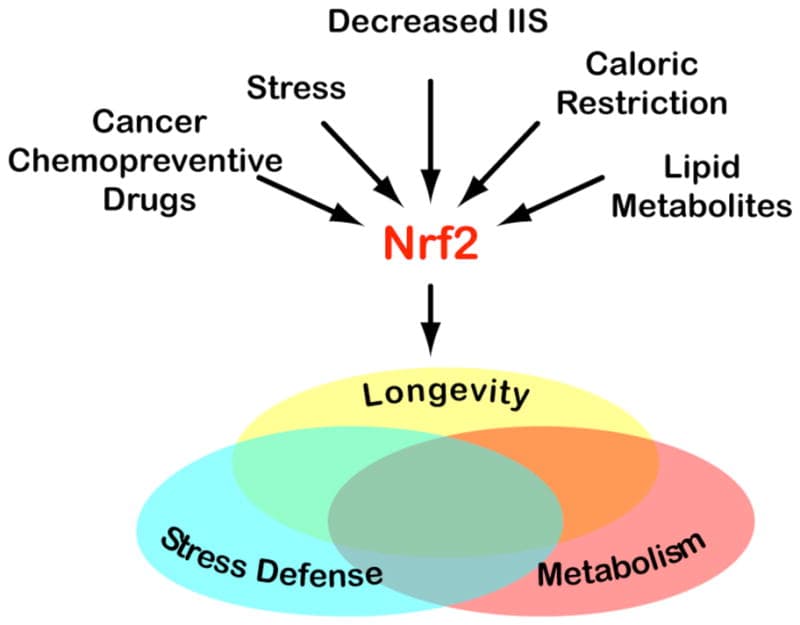
Nuclear Factor Erythroid 2-Related Factor 2 (NRF2) is the master transcription factor that, once released from its inhibitor Keap1, moves into the nucleus and upregulates the entire Antioxidant Response Enzyme system, including the glutathione synthesis machinery itself. R
Sulforaphane, the isothiocyanate concentrated in broccoli sprouts, is the best-studied dietary NRF2 activator, and it is metabolized specifically through conjugation to glutathione by glutathione S-transferases before being cleared. R
In a randomized trial of a broccoli sprout beverage run in Qidong, China, a region with heavy air pollution exposure, twelve weeks of daily dosing produced a sustained 61 percent increase in urinary excretion of glutathione-conjugated benzene metabolites and a 23 percent increase for acrolein, direct evidence that NRF2 induction was accelerating glutathione-dependent detoxification in real time in real people. R
An earlier bioavailability trial from the same research group found that roughly 70 percent of an administered sulforaphane dose was excreted as glutathione-derived conjugates within 24 hours, confirming the pathway is fast and active in humans. R
This is the induction route I generally prefer over direct glutathione supplementation for people with intact NRF2 signaling, because it raises the body's own synthesis rate rather than trying to force an external supply past a gut that is not built to absorb it.
The full sulforaphane writeup, including dosing and glucoraphanin content by source, is in the 15 benefits of sulforaphane post, and the broader NRF2 picture in chronic illness, including why this pathway itself can become blunted, is covered in NRF2 in CIRS and sensitivities and recipes built around NRF2 activation.
NRF2 activation itself is downstream of a functioning DJ-1/PARK7 protein, and when that step is blocked, sulforaphane has less to work with no matter how much you take.
Glutathione S-Transferase And Phase II Detox
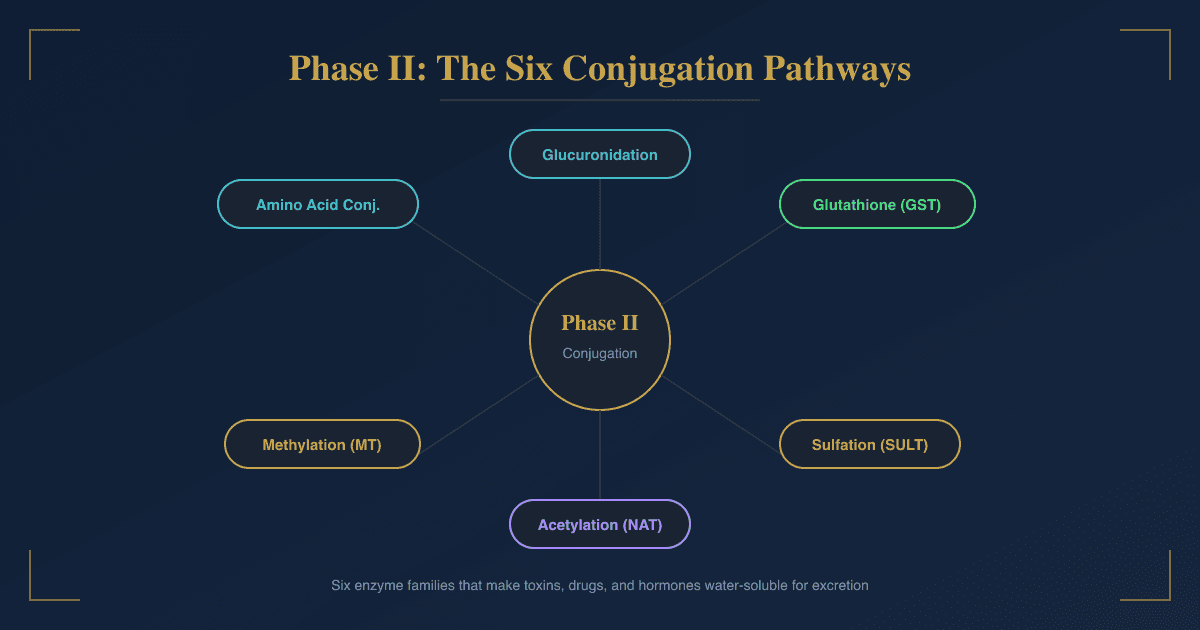
Glutathione S-Transferases (GST) are the enzyme family that actually does the conjugation work: attaching reduced glutathione to an electrophilic toxin so the resulting complex is water-soluble enough for the kidney or bile to remove it. R
This conjugation step is the defining reaction of Phase II detoxification, and it sits downstream of Phase I, where cytochrome P450 enzymes often make a compound more reactive before Phase II can neutralize it, which is why a fast Phase I paired with a slow Phase II (the exact scenario a GST-null genotype creates) is a worse combination than either slow, mismatched phase alone. R
Sixteen human GST genes across seven classes handle this, with different isoforms specializing in different toxin classes, and the ones most relevant to daily exposure load and to the JD priority genetics list are covered in the Genetics section below.
Once conjugated, the glutathione-toxin complex still has to clear the non-conjugation pathways downstream (renal filtration, biliary excretion, and ultimately the gut), so a GST bottleneck upstream and a sluggish excretion pathway downstream compound each other.
The Honest Counter-Case
More glutathione is not universally better, and this is where the "master antioxidant" marketing breaks down.
Elevated glutathione is a defining feature of chemoresistant tumor cells: cancer cells upregulate glutamate-cysteine ligase and gamma-glutamyltransferase to keep intracellular glutathione high, which inactivates electrophilic chemotherapy drugs like cisplatin and alkylating agents before they can do damage, and export pumps then flush the deactivated drug-glutathione complex out of the cell entirely. R
This is not a reason to fear glutathione if you do not have cancer, but it is a reason to be skeptical of any framing that treats "more antioxidant capacity" as an unconditional good, especially in someone with an undiagnosed malignancy.
Reductive Stress is the second, less-discussed counterweight: pushing the GSH:GSSG ratio, or the broader NADH/NAD+ and NADPH/NADP+ redox couples, too far toward the reduced side has its own pathology. R
Excess reducing equivalents impair protein folding in the endoplasmic reticulum, disrupt mitochondrial electron transport, and have been implicated in cardiomyopathy, muscular dystrophy, pulmonary hypertension, and metabolic syndrome. R
There is a big maybe here: chronic high-dose antioxidant supplementation, glutathione and its precursors included, has been associated with a pro-oxidant paradox effect in some populations rather than a straightforward benefit, and the honest position is that redox status has an optimal middle range, not a "more is better" slope. R
This is consistent with Jacob's broader Junction Dysfunction (JD) framing of the body as a Self-Reorganizing Complexification System: pushing any single Antioxidant Response Enzyme output high without addressing the upstream driver of oxidative load tends to create a new imbalance rather than solve the original one, and the glycocalyx chapter goes deeper into why single-lever interventions underperform in this framework.
Dosage And Safety
Oral glutathione in the Richie trial was dosed at 250 to 1,000 mg per day for six months with no reported adverse effects. R
Liposomal glutathione has shown effects at 500 to 1,000 mg per day, with measurable change as early as one week. R
NAC has been studied safely across a wide range from 600 mg to 6 grams daily, with the most common general antioxidant dosing at 600 to 1,800 mg per day, and nausea, vomiting, or diarrhea are the most frequently reported side effects at higher doses. R
GlyNAC dosing in the Baylor trials scaled to body weight, roughly 0.1 g/kg glycine and 0.081 g/kg NAC daily, and was well tolerated over 16 weeks. R
IV glutathione for its studied indication, Parkinson's disease, was well tolerated at 1,400 mg administered three times weekly under medical supervision, with no treatment withdrawals for adverse events in the controlled trial. R
That tolerability profile does not transfer to unsupervised, unsterile, high-dose IV glutathione sourced for cosmetic use, which carries the Stevens-Johnson syndrome, renal, and hepatic risks already described above. R
Testing
Total glutathione alone is not enough.
Ask for the GSH:GSSG ratio specifically, or use a panel that reports it directly.
Functional Panels
I use the Oxidative Stress Profile (Genova Diagnostics) to get GSH:GSSG ratio, lipid peroxides, and CoQ10 status in one draw, which is the single most useful panel for deciding whether someone needs precursor support, NRF2 induction, or neither.
The Cellular Health Zoomer (Vibrant Wellness) covers organic acids, oxidative stress markers, and methylation status together, which matters because methylation and transsulfuration share upstream cofactors with glutathione synthesis.
For DNA-level oxidative damage specifically, the DNA Oxidative Stress Panel (Doctor's Data) measures 8-OHdG, a marker of oxidized guanine that rises when antioxidant defenses, glutathione included, are losing the fight at the genomic level.
Liver And Detox Capacity
The Hepatic Function Panel (Quest Diagnostics) is the baseline check for AST, ALT, GGT, and bilirubin, and elevated GGT specifically is worth watching because it is itself part of the glutathione salvage pathway and rises when glutathione turnover is under chronic strain.
For a deeper functional read on detox capacity itself, the Hepatic Detox Profile (Doctor's Data) assesses Phase I and Phase II conjugation pathways using a caffeine and acetaminophen challenge, which is a direct functional test of how well your GST system is actually conjugating in practice, not just what your genes predict.
The Organic Acids Test (Mosaic Diagnostics) includes pyroglutamate, a urinary marker that rises specifically when the glutathione synthesis cycle is bottlenecked, making it one of the few markers that points at synthesis capacity rather than just downstream oxidative damage.
Nutrient And Toxin Load
The Micronutrient And Antioxidant Panel (Quest Diagnostics) covers the cofactor nutrients, selenium in particular, since selenium is required for glutathione peroxidase function and is frequently overlooked in glutathione-focused protocols.
If mercury or another heavy metal is suspected as the depletion driver, the Comprehensive Heavy Metals Panel (Quest Diagnostics) or the Toxin Zoomer (Vibrant Wellness) both cover metals alongside environmental chemical burden.
If mold exposure is on the table, the Mycotoxins Profile (RealTime Labs) or the same Toxin Zoomer cover mycotoxin body burden directly, which is the piece most CIRS-labeled protocols skip in favor of treating symptoms without ever confirming the exposure.
For a baseline nutrient status read, the Nutrient Zoomer (Vibrant Wellness) covers B6, B12, C, and D alongside the trace minerals that feed antioxidant enzyme function generally.
Mechanisms Of Action
Simple:
- Glutathione neutralizes free radicals by donating an electron, and the ratio of its active to spent form tells you more about your redox status than the total amount does.
- The liver uses glutathione to grab onto toxins and drugs and make them water-soluble enough to leave the body.
- Immune cells need adequate glutathione to divide, activate, and mount a proportionate response, not an exhausted or an overblown one.
- Sulforaphane and other NRF2 activators work by turning up your own glutathione factory rather than shipping in the finished product.
Advanced:
- Thiol Redox Buffering. The cysteine thiol on glutathione's gamma-glutamylcysteinylglycine backbone donates an electron to reactive oxygen and nitrogen species, forming glutathione disulfide (GSSG), and glutathione reductase, using NADPH as a cofactor, regenerates GSH from GSSG to close the cycle. R
- Phase II Conjugation. Glutathione S-transferases catalyze nucleophilic attack of the glutathione thiolate anion on electrophilic centers of xenobiotics, forming a mercapturic acid precursor that is further processed by gamma-glutamyltranspeptidase and cysteinylglycinase before renal or biliary excretion. R
- NRF2/Keap1 Induction. Under basal conditions, Keap1 tags NRF2 for proteasomal degradation, but electrophilic activators like sulforaphane modify reactive cysteines on Keap1, releasing NRF2 to translocate to the nucleus and bind antioxidant response elements that upregulate glutamate-cysteine ligase, glutathione synthetase, and glutathione S-transferases as a coordinated transcriptional program. R
- Mitochondrial Compartmentalization. Mitochondria maintain a separate glutathione pool, imported from the cytosol since mitochondria cannot synthesize glutathione de novo, and this pool is disproportionately important because it protects the electron transport chain from the reactive oxygen species that chain itself generates. R
- Immune Modulation. T-cell proliferation, cytokine production, and antigen presentation all require an intact intracellular glutathione pool, and glutathione depletion has been shown to impair lymphocyte function and skew immune responses toward a less effective phenotype. R
Genetics
GSTM1
GSTM1 encodes Glutathione S-Transferase Mu 1, an enzyme responsible for conjugating a broad range of environmental carcinogens and xenobiotics to glutathione for clearance.
A common gene deletion produces a null genotype with zero functional enzyme, and this null variant is extremely frequent in the general population, with estimates ranging from roughly 20 to over 60 percent depending on ethnicity, and as high as 100 percent in some isolated populations. R
Homozygous null carriers cannot perform this conjugation reaction at all and show measurably higher susceptibility to toxin-related disease, including atherogenesis when combined with a GSTT1 null genotype. R
GSTT1
GSTT1 encodes Glutathione S-Transferase Theta 1, which handles a different, smaller class of substrates than GSTM1, including certain solvents and epoxides.
Like GSTM1, GSTT1 has a common homozygous deletion producing a null genotype, present in roughly three quarters of some populations, and the combined GSTM1/GSTT1 double-null genotype carries a substantially higher risk profile than either null genotype alone. R R
GSTP1 Ile105Val (rs1695)
GSTP1 encodes Glutathione S-Transferase Pi 1, the dominant GST isoform in many extrahepatic tissues and a major detoxifier of reactive aldehydes from lipid peroxidation.
The Ile105Val variant (rs1695) sits in the substrate-binding pocket, and the valine variant reduces catalytic activity relative to the isoleucine wild type, with heterozygotes showing intermediate activity. R
SOD2 Ala16Val (rs4880)
SOD2 encodes mitochondrial manganese superoxide dismutase, which works one step upstream of glutathione peroxidase, converting superoxide to hydrogen peroxide before glutathione peroxidase can reduce that hydrogen peroxide to water.
The Ala16Val variant (rs4880) changes the secondary structure of the mitochondrial targeting sequence, and the valine form folds into a less efficient beta-sheet structure that impairs mitochondrial import of the enzyme, effectively lowering the amount of active SOD2 that reaches the mitochondria where it is needed. R
This is the SNP I see most often in clients presenting with redox imbalance, and I carry it myself.
That is a clinical observation from my own practice rather than a published finding, so treat it as a pattern worth checking in your own data, not as an established prevalence figure.
CBS
CBS encodes Cystathionine Beta-Synthase, the enzyme that commits homocysteine to the transsulfuration pathway rather than recycling it back through methionine.
Transsulfuration is what ultimately produces cysteine, the rate-limiting glutathione precursor, so CBS activity determines how much of your sulfur amino acid pool gets diverted toward glutathione synthesis versus staying in the methylation cycle. R
CBS variants that increase activity can pull the methylation cycle toward transsulfuration too aggressively, which is part of why CBS status is read alongside homocysteine rather than in isolation.
GCLC And GCLM
GCLC (catalytic subunit) and GCLM (modifier subunit) together form Glutamate-Cysteine Ligase, the enzyme that performs the actual first and rate-limiting step of glutathione synthesis: joining glutamate to cysteine.
Promoter polymorphisms in both genes (GCLC -129T/C and GCLM -588C/T) alter transcriptional activity of the enzyme, and specific variants have been associated with increased ischemic stroke risk and larger measured brain infarct size, consistent with reduced glutathione synthesis capacity translating into worse outcomes under acute oxidative stress. R
GPX1 Pro198Leu (rs1050450)
GPX1 encodes Glutathione Peroxidase 1, the selenium-dependent enzyme that actually uses glutathione to reduce hydrogen peroxide and lipid peroxides to water, the step that closes the loop on everything upstream in this article.
The Pro198Leu variant (rs1050450) reduces enzyme activity, and the T allele has been associated with diabetic peripheral neuropathy and altered cardiovascular risk, and it is also selenium-sensitive, meaning adequate selenium status can partially compensate for reduced enzyme efficiency in carriers. R
More Research
- Aging. Glutathione declines with age in most tissues studied, but a subset of long-lived, high-function elderly individuals maintain elevated glutathione relative to age-matched peers, raising the open question of whether glutathione status is a marker of healthy aging, a cause of it, or both. R R
- Alzheimer's And Cognitive Decline. A meta-analysis of central and blood glutathione in Alzheimer's disease and mild cognitive impairment found consistent reductions relative to healthy controls, and a separate prospective study found plasma glutathione declining alongside cognitive decline over a two-year follow-up in people with mild cognitive impairment. R
- Neurodegeneration Broadly. Dysregulated glutathione homeostasis shows up across Parkinson's, Alzheimer's, Huntington's, amyotrophic lateral sclerosis, and Friedreich's ataxia, which makes it one of the more consistent shared findings across an otherwise mechanistically diverse group of diseases. R
- JD Framing (Jacob's Hypothesis). Jacob's Junction Dysfunction (JD) framework treats chronic glutathione depletion as one of the downstream consequences of sustained Micro-Sepsis (MSS) and the glycocalyx degradation that follows it, not as an isolated nutrient deficiency, because the same inflammasome activation and hyperoxidation that drives long COVID, CIRS, and post-viral illness is what keeps burning through Antioxidant Response Enzyme capacity faster than it can regenerate. This is Jacob's hypothesis about sequencing, not a settled causal claim, and the practical implication is that rebuilding the glycocalyx and lowering the upstream inflammatory load tends to matter more than chasing glutathione numbers in isolation. The long COVID protocol and mold illness protocol both cover this sequencing in more depth.
- Methylene Blue And Mitochondrial Redox. For readers stacking mitochondrial support alongside glutathione work, methylene blue acts on a related but distinct part of the electron transport chain and is worth understanding as a separate tool, not a substitute.
- Milk Thistle And Bile-Dependent Clearance. Glutathione-conjugated toxins still need functional bile flow to actually leave the body, which is why milk thistle and TUDCA come up so often alongside glutathione protocols rather than as unrelated liver supplements.
- PON1 And Downstream Detox Capacity. Paraoxonase-1 works downstream of glutathione conjugation on a different toxin class (organophosphates), and low PON1 activity in someone who is also GST-null compounds total detox burden rather than adding to it independently.
- Sensitivities. Chemical and mold sensitivity presentations track more closely with blunted NRF2 signaling than with any single toxin exposure, which is the reasoning behind favoring NRF2 induction over brute-force glutathione loading in this population; see NRF2 in CIRS and sensitivities for the full mechanism.
- Taurine And Sulfur Amino Acid Balance. Taurine sits at the end of the same transsulfuration pathway that feeds glutathione synthesis, and testing sulfur amino acid status as a whole picture, rather than glutathione alone, gives a more complete read on where a bottleneck actually is.
- Vitamin C Synergy. Vitamin C and glutathione regenerate each other in a shared antioxidant network, so a vitamin C deficit can present as apparent glutathione insufficiency even when GST and GCL genetics are unremarkable.
Jacob Gordon
INHC, FMT-C
Integrative Nutrition Health Coach
I cover mold illness, post-viral recovery, methylation, and complex chronic disease, drawing on ten years of clinical research, work inside a functional medicine clinic, and my own recovery from all of it. Every claim here is cited.
Book a ConsultationRelated Protocols & Supplements
Deep-dive chapters and recommended supplements for this topic
Methylated B Complex
1 cap/day with food
SAMe
400mg on empty stomach
Resveratrol
250mg/day