Microplastics And Your Health: Where They Accumulate, What The Evidence Shows, And How To Lower Exposure
By Jacob Gordon, INHC, FMT-CThis article contains affiliate links. As an Amazon Associate, MyBioHack earns from qualifying purchases at no extra cost to you. We only link products we research and stand behind.
Micro- and Nanoplastics (MNPs) are now measurable in human blood, placenta, lung, arterial plaque, testes, and brain tissue, and the human data has moved from novelty to a real exposure question.
In this post, we will discuss what these particles are, how they get into you, where they accumulate, what the strongest human evidence actually shows versus what is still animal or mechanistic extrapolation, how to lower your exposure with a practical protocol, and why there is no proven way to "detox" plastic that is already embedded in tissue.

What Micro- And Nanoplastics Are
Microplastics are plastic fragments smaller than 5 millimeters.
Nanoplastics are the sub-micron fraction, generally defined as smaller than 1 micrometer, and they are the ones that matter most for human biology because they are small enough to cross cell membranes and biological barriers.
They come from two sources.
Primary microplastics are manufactured small, like the microbeads in some cosmetics and the fibers shed by synthetic textiles.
Secondary microplastics are the far larger category, formed as larger plastic items weather and break down into progressively smaller pieces that never fully mineralize.
The most common polymers found in human samples are Polyethylene Terephthalate (PET), polyethylene, polypropylene, polystyrene, polyvinyl chloride, and polyamide (nylon). R
The health conversation is really two overlapping problems.
The first is the plastic particle itself acting as a physical, biopersistent foreign body that generates Reactive Oxygen Species (ROS) and mechanical irritation.
The second is the chemical cargo the particles carry, because plastics are rarely pure polymer.
They contain plasticizers, stabilizers, and additives like Phthalates and Bisphenol A (BPA) that leach out and act as endocrine disruptors, and they also adsorb other environmental pollutants onto their surface. R
Separating these two problems matters, because much of what gets blamed on "microplastics" is really the endocrine activity of co-travelling plasticizers, which is a better-established science than the particle toxicology itself.
How You Are Exposed
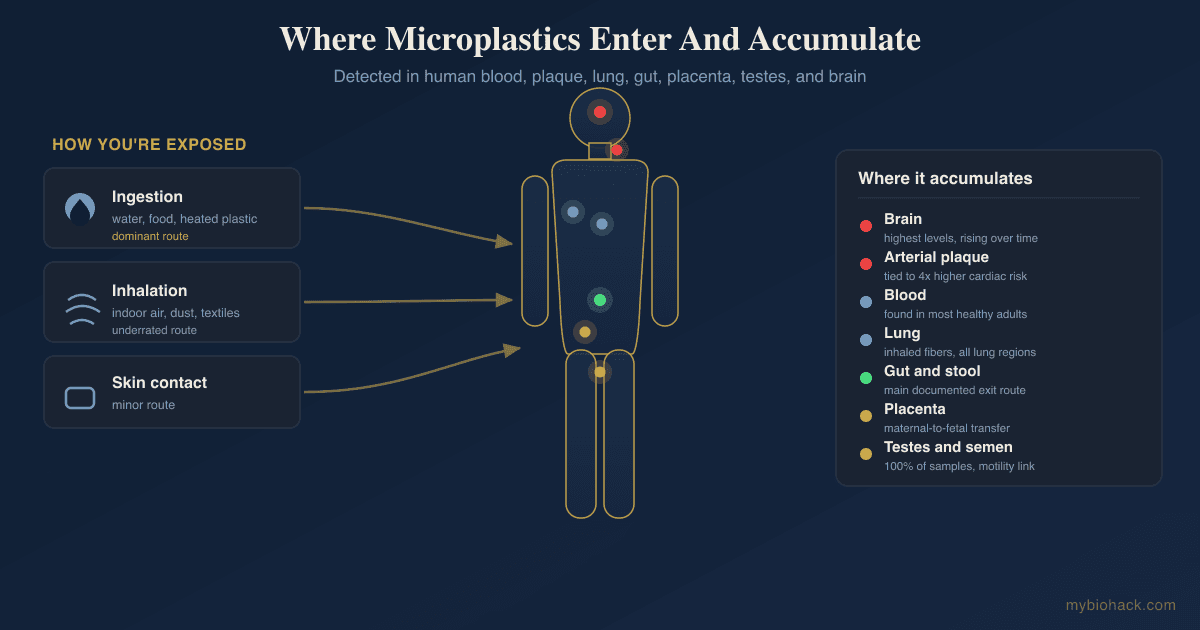
You take in MNPs by three main routes: ingestion, inhalation, and to a lesser degree skin contact.
Ingestion is the dominant route, and drinking water is a major contributor.
A 2024 study using stimulated Raman scattering microscopy found that a single liter of bottled water contained roughly 240,000 detectable plastic particles on average, about 90 percent of which were nanoplastics, which is 10 to 100 times higher than older estimates that only counted larger microplastics. R
Food is the next big contributor, especially food that has been stored, packaged, or heated in plastic.
Heat is the key variable, because heating plastic containers dramatically accelerates particle release.
One study found that microwaving certain plastic containers could release millions of microplastic and billions of nanoplastic particles from a single square centimeter of surface in three minutes, and that heating also drives release of bisphenols and phthalates. R
Inhalation is an underappreciated route, and indoor air is usually worse than outdoor air because of synthetic textiles, carpet, and furnishings.
Airborne microplastics have been recovered from human lung tissue in every region of the lung, confirming that we inhale and deposit these fibers in the respiratory tract. R
Other well-documented dietary sources include ultraprocessed and packaged foods, canned foods (where the can lining is a plastic resin), shellfish, tea bags made from plastic mesh, and table salt.
Where They Accumulate In The Body
The last few years have produced a steady stream of studies detecting MNPs in human tissue that was previously assumed to be protected.
Blood: A 2022 study was the first to quantify plastic particles in human blood, detecting them in 17 of 22 healthy adults, with PET, polyethylene, and polystyrene the most common. R
Placenta: Microplastics have been measured in human placental tissue by pyrolysis gas chromatography mass spectrometry, confirming maternal-to-fetal exposure potential. R
Lung: Microplastic fibers have been found throughout human lung tissue, consistent with inhalation as a route. R
Gut and stool: Every stool sample in an early human case series contained microplastics, at a median of 20 particles per 10 grams, confirming that ingested plastic reaches and passes through the gut. R
Testes and semen: A 2024 analysis measured microplastics in 100 percent of human testis samples at an average of about 329 micrograms per gram of tissue, and separate work has detected them in human semen. R
Arterial plaque: The landmark 2024 study discussed below found MNPs embedded in the carotid artery plaque of most patients sampled. R
Brain: A 2025 study measuring MNPs in decedent human brain, liver, and kidney found the highest concentrations in brain tissue, with concentrations rising roughly 50 percent between samples from 2016 and 2024, tracking environmental plastic accumulation. R
The honest framing here is that detection is not the same as harm.
Finding a particle in a tissue tells you exposure and deposition are real, but it does not by itself tell you the particle is causing disease in that tissue.
The health-effects question is where you have to separate strong human evidence from mechanism and animal work.
Health Effects
I am going to grade the evidence honestly, because this is a field where headlines routinely outrun the data.
The Strongest Human Signal: Cardiovascular
The single most important human study to date is a 2024 report in the New England Journal of Medicine.
Researchers examined carotid artery plaque surgically removed from patients undergoing endarterectomy, and detected MNPs in the plaque of most of them.
Patients whose plaque contained MNPs had a more than fourfold higher risk of a combined endpoint of heart attack, stroke, or death from any cause over about 34 months of follow-up compared with patients whose plaque had no detectable MNPs. R
This is the strongest human data we have, but it is still an observational association, not proof of causation.
MNP burden could be a marker of something else (heavier overall pollutant exposure, more advanced disease) rather than the direct cause, and the authors were careful to say so.
It is a serious signal that justifies concern, not a closed case.
Gut Barrier And Microbiome
The gut is where the most coherent mechanistic story exists, and it increasingly has human support.
A 2025 analysis of human-relevant studies found consistent microbiome shifts with microplastic exposure: increases in pro-inflammatory and pathobiont genera such as Escherichia-Shigella and Clostridium, with reductions in beneficial genera such as Bifidobacterium, Faecalibacterium, and Lactobacillus. R
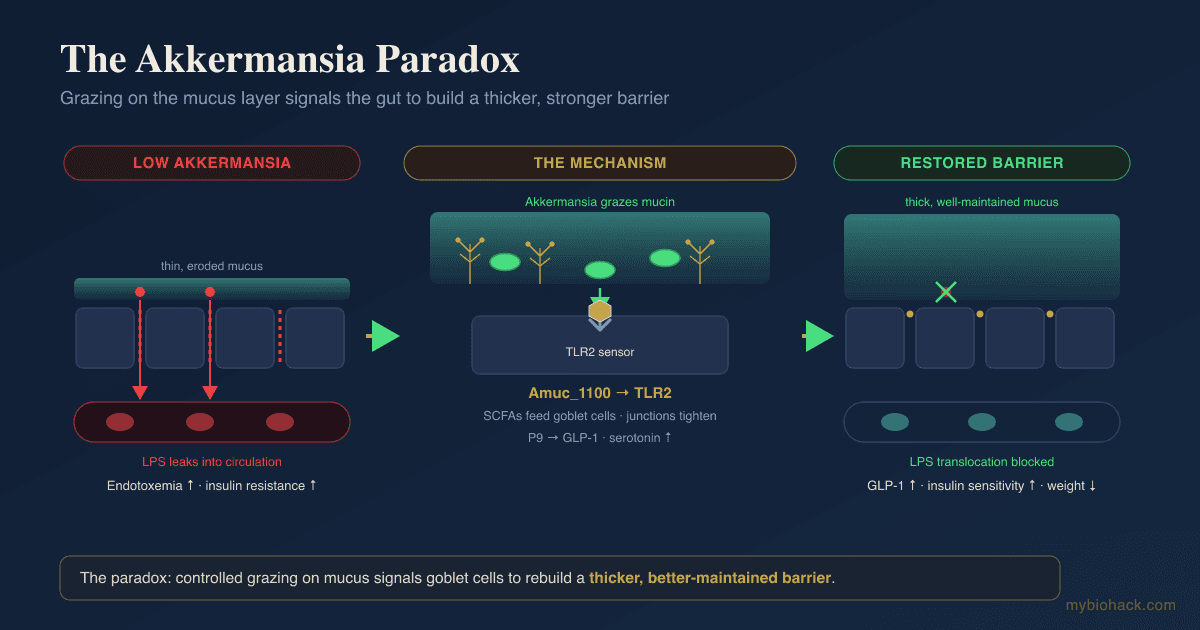
In cell and animal models, microplastics increase intestinal permeability by generating ROS, downregulating tight junction proteins, and reducing mucin secretion, which allows more Lipopolysaccharide (LPS) to translocate into circulation and drive systemic inflammation. R R
This connects microplastics to the same dysbiosis and endotoxin mechanisms that show up across chronic illness.

Reproductive And Endocrine
This is where the particle findings and the plasticizer science converge.
Microplastics are physically present in testis and semen, and human studies associate higher microplastic exposure with reduced sperm progressive motility, though not consistently with sperm count. R
Most of the endocrine damage, though, is best attributed to the co-travelling plasticizers rather than the particles alone.
BPA binds estrogen receptors ERα and ERβ, estrogen-related receptor gamma, and the membrane estrogen receptor GPER, and it antagonizes the androgen receptor, while phthalates lower testosterone synthesis. R
I cover this endocrine machinery in depth in the phthalates and xenoestrogens post and in the write-up on fragrance and the endocrine system.
Bisphenols and phthalates are also linked to cardiometabolic risk in human epidemiology, which is a separate and fairly robust line of evidence from the particle work. R
Brain And Neuro
This is the newest and most preliminary area, so treat it with the most caution.
MNPs accumulate in human brain tissue at higher concentrations than in liver or kidney, and one decedent study observed greater accumulation in brains with a documented dementia diagnosis, with deposition in cerebrovascular walls and immune cells. R
That is a correlation in end-stage tissue, not evidence that plastic causes dementia, and reverse causation (a damaged, leaky blood-brain barrier admitting more particles) is at least as plausible.
Proposed neurological mechanisms from ingestion (neuroinflammation, oxidative stress, gut-brain signaling) are still largely mechanistic and animal-based. R
Summary Of Evidence Strength
- Cardiovascular association (strong human signal, observational, from the NEJM plaque study)
- Endocrine disruption via plasticizers (well-established mechanism and human epidemiology, largely attributable to BPA and phthalates rather than particles alone)
- Gut barrier and microbiome disruption (coherent mechanism, growing human microbiome data, translocation shown mostly in models)
- Neurological harm (preliminary, correlational, mostly mechanistic and animal work)
- Reproductive harm (particles present in tissue, motility associations in humans, causation not established)
How Microplastics Connect To Junction Dysfunction
This section is a hypothesis, not settled science, so I am flagging it as my own framing.
Two of the better-supported microplastic mechanisms map cleanly onto the Junction Dysfunction (JD) framework I use across this site.
The first is the gut angle.
When microplastics degrade the intestinal barrier and push LPS into the portal circulation, they add to the chronic gut-derived endotoxin load that my framework links to the states I call Transient Capillary Leak Syndrome (TCLS) and Micro-Sepsis (MSS). R
I keep the full mechanism behind those coined terms in the TCLS and Micro-Sepsis chapters, so here I am only flagging microplastics as one more input into that cascade rather than restating the pathway.
The second is the vascular angle.
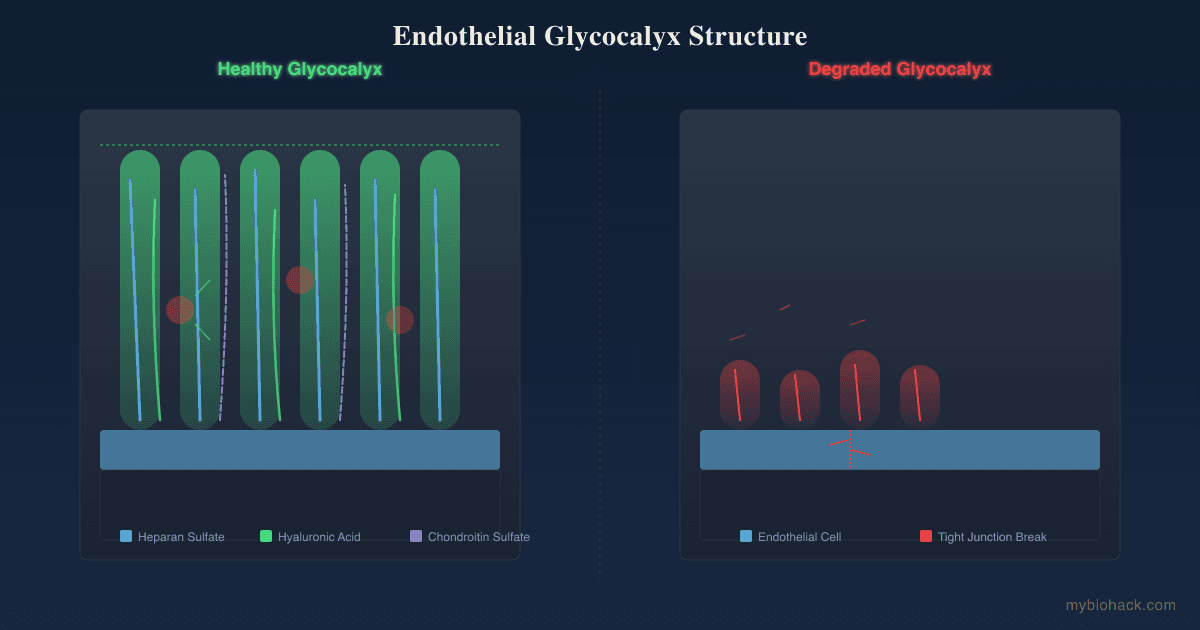
Finding MNPs embedded in arterial plaque, associated with worse cardiovascular outcomes, is consistent with particle-driven oxidative stress contributing to the endothelial and glycocalyx damage that sits at the center of JD. R
I would frame microplastics as a plausible chronic contributor to junction and glycocalyx stress rather than a primary cause, and I go deeper on that barrier layer in the glycocalyx chapter and on fluid handling in the interstitium post.
Again, this is a mechanistic hypothesis worth testing, not a proven pathway.
How To Reduce Exposure
You cannot get exposure to zero, and you should not try to, because the stress of chasing perfection is its own health cost.
The goal is to remove the largest, easiest sources first.
The steps below are ordered by impact-per-effort.

1. Filter Your Drinking Water
Water is one of the largest and most controllable sources.
A reverse osmosis (RO) system is the most effective consumer option for removing nano and microplastics, because the membrane pore size physically excludes them.
Reverse Osmosis Water Filter: An under-sink RO unit is the highest-leverage single purchase for lowering ingestion.
If RO is not available, boiling then filtering hard tap water helps.
A 2024 study found that boiling hard water and pouring it through a simple filter removed up to about 80 to 90 percent of nano and microplastics, because dissolving calcium carbonate forms limescale that traps the particles. R
2. Stop Heating Food In Plastic
Never microwave food in plastic, and do not pour hot liquids into plastic.
Heat is the biggest accelerator of particle and plasticizer release, so this one change removes a large fraction of dietary exposure. R
Transfer leftovers to glass or ceramic before reheating.
3. Switch Storage And Bottles To Glass Or Stainless
Replace plastic food containers and plastic water bottles with inert materials.
Glass Food Storage Containers: Use these for leftovers, meal prep, and anything acidic or fatty.
Stainless Steel Water Bottle: A reusable stainless or glass bottle removes a recurring daily source.
4. Reduce Canned And Ultraprocessed Foods
Can linings are plastic resins, and ultraprocessed foods have more contact with plastic processing equipment and packaging.
Shift toward whole foods stored in glass, jars, or paper wherever practical.
5. Clean Your Air And Dust
Because inhalation is a real route, indoor air quality matters.
HEPA Air Purifier: A High-Efficiency Particulate Air (HEPA) purifier captures airborne microplastic fibers, and damp-dusting plus vacuuming with a HEPA vacuum lowers the fiber load you inhale.
Ventilate when you can, since indoor concentrations often exceed outdoor ones.
6. Choose Natural Fibers
Synthetic textiles (polyester, nylon, acrylic) shed microfibers into your air and water.
Favoring cotton, wool, linen, and other natural fibers for clothing and bedding reduces both what you inhale at home and what enters the water supply through laundry.
What To Stay Away From
- Bottled water as a daily habit, which is among the most concentrated single sources of nanoplastics R
- Canned foods and drinks with plastic resin linings, especially acidic contents
- Heating, microwaving, or dishwashing food in plastic, and reusing single-use plastic that is scratched or old, since worn plastic sheds far more R
- Plastic-mesh tea bags and single-use plastic coffee pods steeped in hot water
- Plastic cutting boards, which shed particles directly into food as you cut
- Synthetic fragrance and personal care products, a common phthalate source R
- Synthetic-fiber clothing and bedding worn and washed daily
Supporting Clearance
Here is the part most articles get wrong, so I want to be blunt.
There is no proven way to "detox" microplastics that are already embedded in tissue.
No supplement, binder, chelator, or protocol has been shown in humans to remove particles from your brain, arteries, or organs, and anyone selling a "microplastic detox" is ahead of the evidence.
What you can reasonably do is support the elimination pathways the body already uses, and stop adding to the load, which is where nearly all the leverage actually is.
The main documented exit route for ingested plastic is fecal excretion, which is why the particles show up in stool in the first place. R
That makes normal bowel regularity and bile flow the most defensible "clearance" targets, alongside general antioxidant and gut-barrier support to blunt the oxidative and inflammatory response to particles you have already absorbed.
Psyllium Husk: Soluble fiber increases fecal bulk and supports regular elimination and healthy bile handling, which is the honest, evidence-aligned version of "moving things out."
Beyond fiber, the sensible supporting moves are the same ones I recommend for general toxin handling: eat for a diverse microbiome to keep the gut barrier intact, support the detox phases and conjugation pathways that clear the plasticizers (BPA is cleared largely by glucuronidation), and use NRF2 activators like sulforaphane to upregulate antioxidant defenses.
On binders specifically, oral binders such as zeolite and chitosan have a rationale for adsorbing lipophilic contaminants in the gut, but there is no human evidence that they meaningfully lower microplastic body burden, so I would not oversell them.
Sweating is often promoted for plastics, and the honest answer is that the evidence that sauna clears microplastics or their plasticizers is weak, so I would use sauna for its real cardiovascular and recovery benefits, not as a plastic-removal strategy.
The general framework for how the body stores and offloads persistent compounds is covered in the bioaccumulation post.
Testing
There is no validated consumer test that measures microplastic particle burden in your body, so be skeptical of any service claiming to quantify "your microplastics."
What you can measure are the downstream and co-exposure markers.
I use the Toxin Zoomer (Vibrant Wellness) to assess environmental chemical exposure including plasticizers, PFAS, and the oxidative and detox-capacity markers that reflect total pollutant load.
For the gut-barrier side of the mechanism, I use the Gut Zoomer (Vibrant Wellness) to assess intestinal permeability (zonulin), dysbiosis, and LPS-driven inflammation, which is where microplastic harm is most actionable.
For the endocrine side, I use the Hormone Zoomer (Vibrant Wellness) to assess estrogen, androgen, and estrogen-metabolism markers that the co-travelling plasticizers disrupt.
If you want help interpreting these in context, that is exactly the kind of thing I work through on a consult.
Mechanisms Of Action
Simple:
- The plastic particle acts as a foreign body the immune system cannot break down, so it sits in tissue and generates oxidative stress and low-grade inflammation.
- The chemicals stuck to and inside the plastic (BPA and phthalates) leak out and imitate or block your hormones.
- In the gut, particles damage the barrier and let bacterial toxins slip into the bloodstream, which drives inflammation elsewhere.
Advanced:
- Oxidative stress and inflammasome activation: Internalized MNPs generate ROS and lipid peroxidation, activate the NLRP3 inflammasome, and drive NF-κB signaling, producing a chronic pro-inflammatory state at the tissue level rather than acute toxicity. R
- Endocrine receptor interference: Co-eluting bisphenols and phthalates act on ERα, ERβ, estrogen-related receptor gamma, and GPER, antagonize the androgen receptor, and perturb thyroid hormone signaling, which is why the endocrine effect is better attributed to plasticizers than to the polymer itself. R
- Barrier disruption and endotoxin translocation: MNPs downregulate tight junction proteins and mucin, raise intestinal permeability, and increase translocation of LPS into portal and systemic circulation, feeding TLR4-driven inflammation and dysbiosis. R R
- Biopersistence and cellular uptake: Nanoplastics are small enough to cross membranes and biological barriers and are not enzymatically degraded, so unlike most xenobiotics they accumulate as physical particles rather than being metabolized and excreted, which is why body burden appears to rise over time. R
Genetics
No gene governs "microplastic clearance," because the particles are not metabolized like a drug.
What genetics modulates is your handling of the oxidative stress the particles create and your metabolism of the plasticizers they carry.
SOD2
SOD2 encodes manganese superoxide dismutase, the enzyme that quenches superoxide inside mitochondria.
Variants reduce the efficiency of that quenching, leaving you more vulnerable to the ROS that MNPs generate.
rs4880 (Ala16Val) is the most studied variant and is common in the chronically ill population.
GSTM1 And GSTT1
These genes encode glutathione S-transferases that conjugate reactive electrophiles and oxidized byproducts for excretion.
A large fraction of people carry a full-gene deletion (the null genotype) of one or both.
Null-genotype carriers have reduced capacity to detoxify oxidative and xenobiotic load, which is relevant to both the particles and their additives.
PON1
PON1 encodes paraoxonase, an antioxidant enzyme on HDL that hydrolyzes oxidized lipids and organophosphate-type compounds.
Lower-activity variants blunt this defense against oxidized-lipid stress.
rs662 (Q192R) and rs854560 (L55M) shift enzyme activity, and I go deeper in the paraoxonase post.
NFE2L2 (NRF2)
NFE2L2 encodes NRF2, the master transcription factor for the antioxidant response.
Promoter variants lower baseline NRF2 activity and the induction of glutathione, SOD, and detox enzymes, which sets your resilience to particle-driven oxidative stress.
rs6721961 in the promoter is associated with reduced NRF2 expression.
More Research
Causation remains the central open question, since almost every alarming human finding to date is a detection study or an observational association rather than a controlled demonstration that particles cause the disease they are found in.
Dose-response is unresolved, because we do not yet know the internal concentration at which MNPs shift from measurable to harmful, and reverse causation (damaged, leaky barriers admitting more particles) confounds the tissue-accumulation findings, especially in brain.
Nanoplastics are likely the more important fraction than microplastics for human biology, given that they cross membranes, but they are also the hardest to measure, so most older studies undercounted them and the true exposure numbers keep rising as methods improve. R
Placental and early-life exposure is a priority area, because microplastics reaching the placenta raise questions about developmental windows that current data cannot yet answer. R
Separating the particle from its chemical cargo is the methodological problem the whole field has to solve, since so much of the measured endocrine harm tracks with BPA and phthalate co-exposure rather than the polymer, and untangling the two will decide how much of the "microplastics" story is really a plasticizer story. R
For biomarker and exposure testing in a clinical context I use the Toxin Zoomer and the Gut Zoomer to assess pollutant load and barrier integrity, which are the actionable handles while the particle science matures.
Jacob Gordon
INHC, FMT-C
Integrative Nutrition Health Coach
I cover mold illness, post-viral recovery, methylation, and complex chronic disease, drawing on ten years of clinical research, work inside a functional medicine clinic, and my own recovery from all of it. Every claim here is cited.
Book a ConsultationRelated Protocols & Supplements
Deep-dive chapters and recommended supplements for this topic
Spore-Based Probiotics
1 cap with food
L-Glutamine
5g 2x/day on empty stomach
Butyrate
300mg 2x/day with meals