Activation And Detoxification 101
By Jacob Gordon, INHC, FMT-CThis article contains affiliate links. As an Amazon Associate, MyBioHack earns from qualifying purchases at no extra cost to you. We only link products we research and stand behind.

In this post, we will discuss a brief, technical basic explanation of activation and detoxification - two major mechanisms in oxidative homeostasis.
In the future, I will update this post with more references, a MOA section, genetics, and clearer plans of action.
Basics Of Detox Phases

Phases I, II, and III do not need to happen in a linear order.
Phase I Basics
Phase I uses something called functionalization (which is adding a functional group) of a toxin to make it more water soluble.
This reaction (through bioactivation/metabolic activation) can create a toxic metabolite that may be more toxic than the original toxin, thus it needs to be handled (more on this described later).
This is where Phase II comes into play...
Phase II Basics
Phase II uses conjugation or non-conjugation methods, which essentially makes everything more water soluble and less toxic (less reactive).
Phase II is the largest and most complex stage of detoxification, involving at least eight distinct enzyme families.
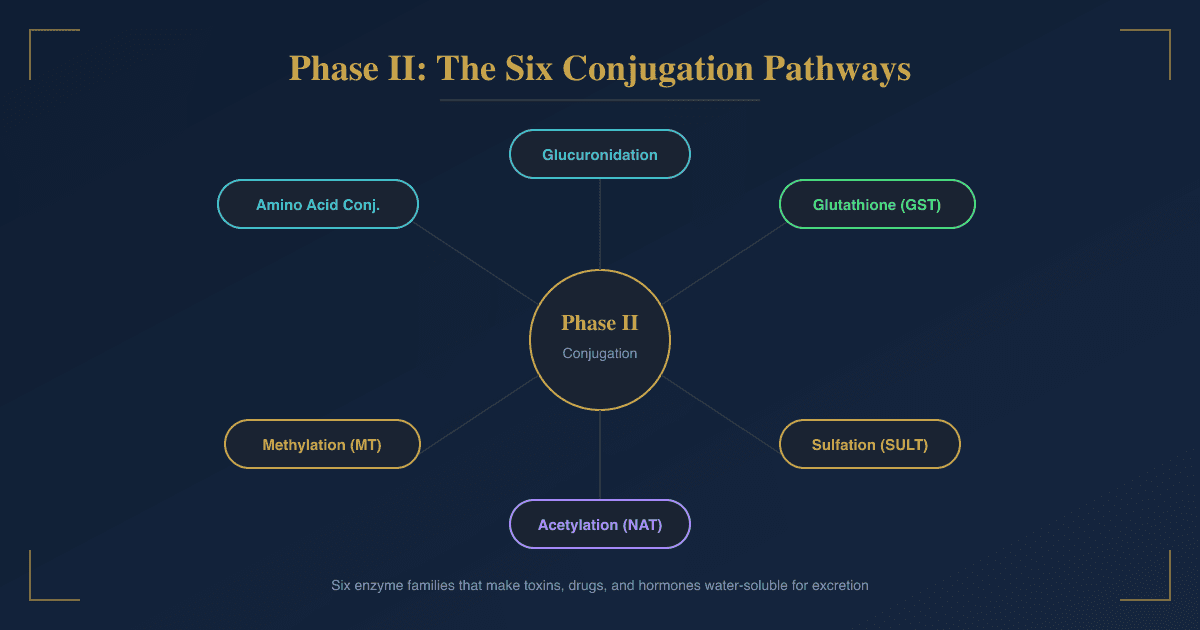
The six conjugation pathways (glucuronidation, glutathione conjugation, sulfation, acetylation, methylation, and amino acid conjugation) attach water-soluble tags to reactive metabolites so they can be excreted. For the full breakdown of each pathway, including genetics, cofactors, and how to support them, see the Phase II Conjugation deep dive.
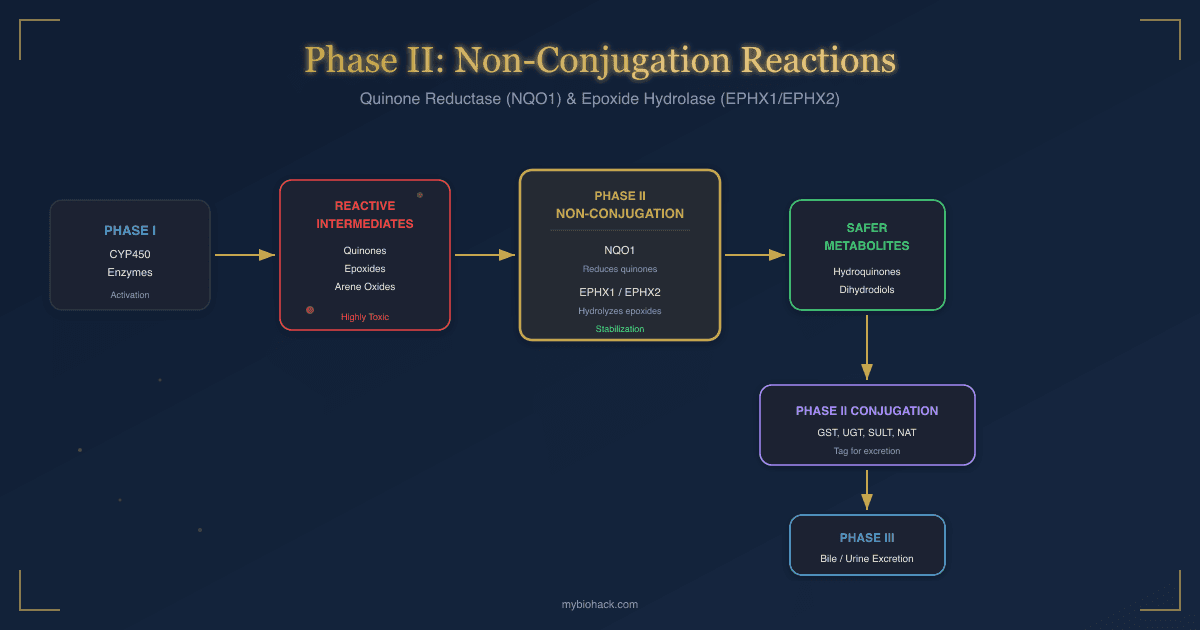
The non-conjugation pathways (quinone reductase and epoxide hydrolase) directly neutralize reactive intermediates without attaching anything, making them safer for downstream conjugation. For the full breakdown, see the Phase II Non-Conjugation deep dive.
Phase III Basics
Phase III helps with excretion using export pumps to transfer hydrolyzed metabolites out through the kidneys (urine), stool (bile), or sweat.
Activation Vs Detoxification
What Is Activation?
Activation is the ability for toxins (foreign substances) from the environment to turn on genes and enzymes (mostly in the liver and kidneys).
Foreign substances that are Lipophilic (fat soluble) need to be made more Hydrophilic (water soluble) for excretion.
Lipophilic substances get into the cell through;
Passively - higher levels of toxins in Extracellular Matrix (ECM) create a “pressure” to get into the cell
Facilitated - uses transporters that require no energy to get into the cell
Active - similar to facilitated but uses energy for primary (catalyzed by Na+, K+- ATPase) or secondary (electrochemical exchange) transporters
Foreign substances that are already hydrophilic may bypass Phases I and II and go straight to Phase III for excretion.
During activation, toxic metabolites (such as ROS) are created in the process and, for example, are responsible for many of the problems we see from alcohol-induced.
What Is Detoxification?
Detoxificaiton is the process by which taking foreign compounds and making them more water soluble and less reactive.
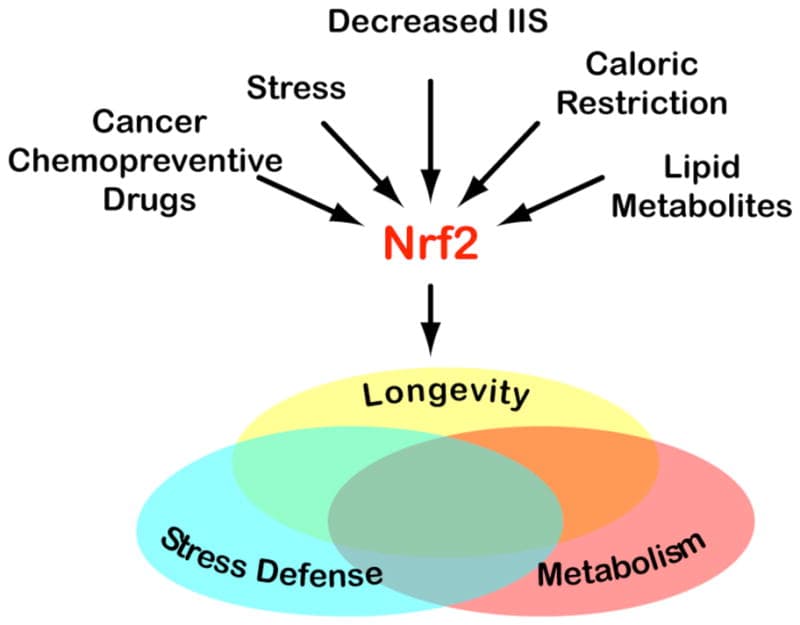
That means you have to take foreign compounds (or their toxic metabolites from Phase I) and make them more stable (with antioxidant responses, such as NRF2), so they can be readily excreted.
This usually takes place during Phase II with conjugation or non-conjugation enzymes.
Too Much Of One
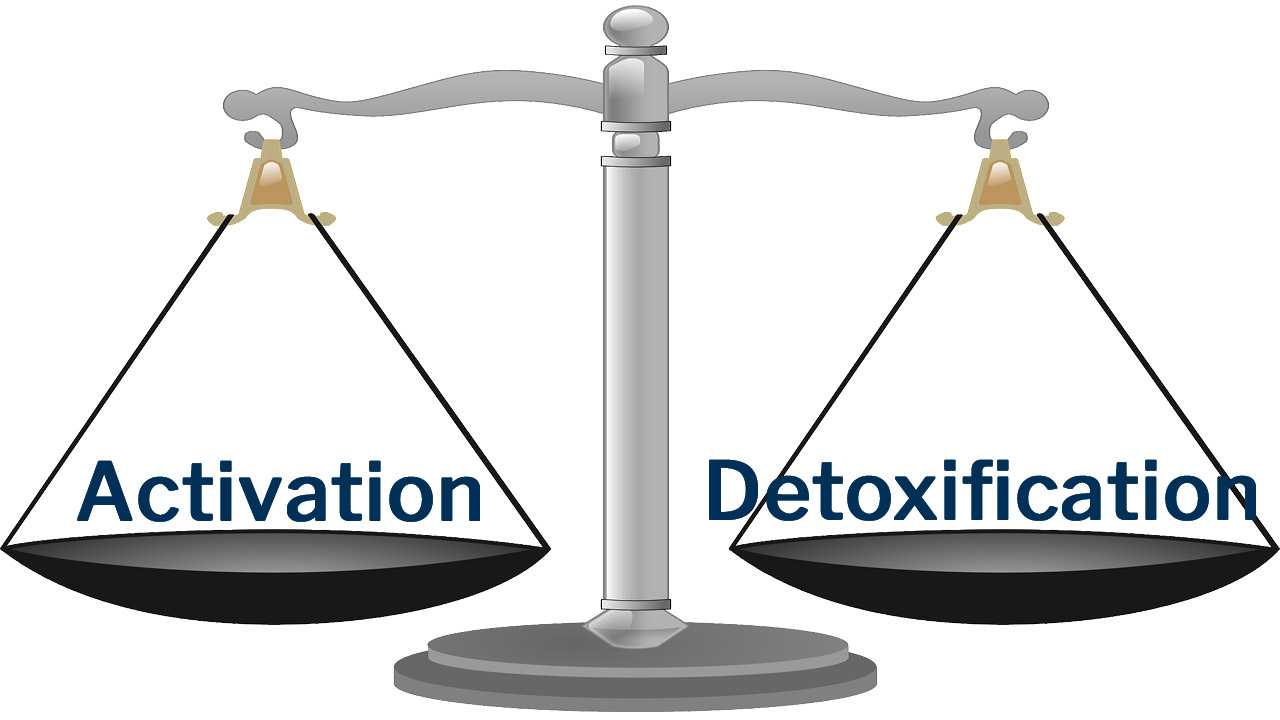
Healthy people have a proper balance of activation and detoxifciation, as too much of one thing would be bad.
For example, too much activation with little detoxification, and you have the buildup of damaging free radicals.
Too much detoxification has been implicated in cancers.
Some things that can cause this is:
Loss of conjugations factors (i.e. no more GSH)
Epigenetics - something that is:
Causing too much activation
Inhibition of the start of deactivation
Phase I Enzymes
Functionalization enzymes consist of:
N-dealkylation
O-dealkylation
Aliphatic Hydroxylation
Aromatic Hydroxylation
N-oxidation
S-oxidation
Epoxidation
Hydrolysis
Let's go more in depth...
Enzymes
Oxidative enzymes:
CYP450 group - heme protein that metabolizes a lot of drugs (see post on CYPs)
FMO groups - generally converts foreign compounds into harmless, polar metabolites
Amine Oxidases - such as MAO-A and MAO-B
breaks down tyramine, phenylethylamine, benzylamine, and phenylpropanolamine
byproducts are ammonia, hydrogen peroxide and aldehyde
Lipoxygenases - metabolize chemicals, pesticides, and drugs
Alcohol Dehydrogenase - ADHs break down alcohols to to aldehydes (toxic) or ketones
Aldehyde Oxidase - oxidizes aliphatic and aromatic aldehydes
Xanthine Oxidase - oxidizes aliphatic and aromatic aldehydes
Peroxidase - Found in tissues with low CYP450 to oxidize phenols and aromatic amines
Reductive Enzymes:
Nitroreductases - reduces nitro (−NO2) groups to hydroxyl amines then to amines (−NH2)
Azoreductases - reduces azo-compounds to produce two amines
Hydrolytic Enzymes:
Carboxylesterase - hydrolizes esters and amides
Epoxide Hydrolase - detoxes electrophilic epoxides generated from oxidative activation
Catalytic Actions:
Oxidative reactions
Reductive reactions
Hydrolytic reactions
Phase II Enzymes
Conjugation
Uridine-Diphosphate-Glucuronosyltransferases (UGTs)
Makes things more polar (more stable in water/less toxic)
Transfers glucuronic acid to functionalized metabolites
Accounts for about 35% of drug conjugations
Glutathione S-Transferases (GST):
Bind to electrophiles (instead of allowing them to bind to oxygen to make ROS)
Helps transfer glutathione (GSH is produced from g-glutamic acid, cysteine, and glycine) to electrophiles
Make electrophiles more water soluble
Can create cysteine or NAC
from GSH (sulfur) + electrophile (carbon or nitrogen)
Detoxes aflatoxin B1
Sulfotransferases:
Conjugates really small lipophilic xenobiotics
Transfer of a sulfonate group (SO3−) to nucleophilic group of foreign compounds
May make more toxic metabolites though (in some instances)
Acetyltransferases:
Use an acetyl group, which doesn’t make it more water soluble, but does help in excretion
Acetyl-coa is involved and via PY540, it can cause activation
Methyltransferases:
Can be dependent on S-adenosyl-methionine (SAM)
O-methylation, N-methylation, and S-methylation
Types of methyltransferases
COMT, TMT, HMNT
Doesn’t (usually) make xenobiotics more water soluble, but also helps with activation
Amino-Acetytransferases:
Found in mitochondria
Use Acetyl-CoA
Work on glycine, glutamine, arginine, and taurine
Each of these six enzyme families has its own cofactor requirements, genetic variants that affect activity, and targeted supplementation strategies. For the complete protocol on supporting all six conjugation pathways (including calcium-d-glucarate for glucuronidation, NAC for glutathione conjugation, molybdenum for sulfation, and glycine/taurine for amino acid conjugation), see Phase II Conjugation: The Six Pathways That Make Toxins Water-Soluble.
Non-Conjugation
Quinone Reductase (QR):
Uses NADPH, H+, and quinone to make quinones hydrophilic
Epoxide Hydrolase (EH):
Detoxes compounds containing unsaturated carbon–carbon bonds
Reduce epoxides, which are unstable metabolites from Phase I (CYP450) reactions
Epoxides are turned into dihydrodiols, which are easily conjugated and excreted
Quinone reductase is one of the most important NRF2-inducible enzymes and plays a critical role in CoQ10 metabolism. Epoxide hydrolase comes in two forms (microsomal and soluble) with very different clinical implications, particularly for inflammation. For the full deep dive into both enzymes, their genetics (NQO1 C609T, EPHX1/EPHX2 variants), and how to support them with sulforaphane, CoQ10, and omega-3s, see Phase II Non-Conjugation: Quinone Reductase and Epoxide Hydrolase.
What Are Some Sources Of Foreign Compounds?

Food
Veggies and fruits are normally healthy.
Meat:
chemical derivatives are produced when meat or fish is cooked at high temperature.
Residues of antibiotics and hormones used to raise chickens, cattle, pigs, and sheep remain as contaminants in meat.
Molds:
produce secondary metabolites (mycotoxins)
Mycotoxins - represent a diverse group of chemicals that can occur in a variety of plants used as food such as grains and fruits.
Others in food:
pesticides from crop sprays
fungi from storage
phthalate esters from packaging
styrene from containers
Fish:
contaminated with industrial wastes (e.g., mercury, PCBs, and dioxin)
Other Ways
Drugs and smoking are foreign compounds.
Environmental Chemicals:
Industrial combustions in refinery, incineration, and coal plants produce industrial pollution including polycyclic aromatic hydrocarbons, dioxins, and PCBs.
Heterocylclic Amines:
they are formed when amino acids react with creatine in muscle when meats (beef, pork, or fish) are cooked at high temperature by frying, broiling, or barbecuing.
Induces CYP1A2
Nitrosamines:
May be related to cancer, esp when cooked/smoked (such as cigarettes or frying bacon)
also found in mushrooms, fermented and smoked fish, and pickled foods
PAHs are mutagenic and consumed by eating grilled, charred meats and contaminated foods.
Dyes:
Dyes are usually nontoxic but the byproducts from breaking it down in the body can be
a,b-Unsaturated Aldehydes:
4-Hydroxylnonenal comes from oxidation of lipids or fatty acids
4-Hydroxylnonenal can also be produced in foods during processing or storage.
Mycotoxins can get into food.
common ones are:
Patulin (in apples)
Aflatoxin (meats, chicken, turkey)
Diallyl sulfide helps with this by inhibiting CYP450 and increasing GST
Dialyl disfulfie helps by increasing GST
What else?
Green tea may help with acetaminophen UDP-GST down regulation
Phase II inducers (resveratrol) increase resistance to xanthine-mediated effects.
Benzene causes immune suppression and anemia…phase II inducers help with phenol byproduct but not hydroquinone
DEHP (a pthalate ester found in PVC vinyl plastics etc) causes human reproductive harm and is metabolized by both Phase I and II
phase II may help more
Phase II (sulforaphane) blocks diesel exhaust particles to enhance IgE production (via GST)
Some PCBs can be excreted via conjugation but some persist in the body - major problem
Bioactivation Protection And What To Do
As discussed before high amounts of bioactivation (toxic intermediates) can cause more damage than the original foreign toxic compound.
To protect the body against reactive intermediates we use:
Conjugation reactions - make more water soluble
Glutathione - is an antioxidant and helps facilitate excretion (via bile/urine)
Antioxidant enzymes:
SOD → converts super-oxide radical to H2O2 + O
Catalase + glutathione peroxidase → H2O2 + O → H2O + O2
Vitamin E, C, and b-carotene are small antioxidant molecules can neutralize free radicals by accepting or donating an electron
What To Do?
Inducing Phase II while inhibiting Phase I is usually the best way to protect against activation and enhance detoxification.
Phase I Inducers
Diet
Veggies:
Brussels sprouts
Mustard seed
Onion (has shown to induce and inhibit)
Fruit:
Grapefruit (induces and inhibits)
Oroblanco (induce)
Highly Reactive
Stay away from these:
Acetaminophen - creates highly reactive compounds
Aflatoxin - creates highly reactive compounds
Bifunctional Inducers
Bifunctional Inducers raise both Phase I and II:
Azo dyes
Flavonoids
Polycyclic aromatic hydrocarbons
Phase I Inhibitors

Phase II Inducers
Diet
Vegetables:
Broccoli
Brussels Sprouts
Cabbage
Cauliflower
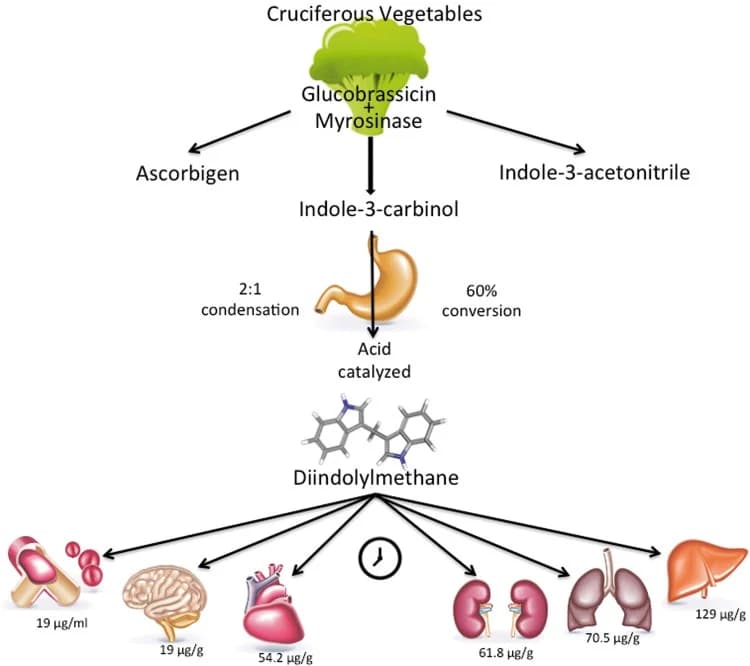
Cruciferous Vegetables (in general)
Garden Cress
Garlic
Green leaf veggies
Horseradish
Juices (usually)
Mustard Seed
Onion
Soy/Soybeans
Sprouts
Tropical Ginger
Tonka Beans
Watercress
Fruit:
Citrus Fruit (in general)
Grapes
Grapefruit
Musa x paradisiacal
Oroblanco
Herbs:
Drinks:
Monofunctional Inducers
Monofunctional Inducers only raise Phase II:
Cinnamates
Coumarins
Flavonoids and Isoflavones
Geniposide
Polyphenols and Phenols
Organosulfur
Garlic - Diallyl sulfide
Terpenes
Carotene
Limonene (Lemon and citrus)
Terpenoids
Thiocarbamates
1,2 -Dithiol-3-thiones
Pathways:
Quinone reductase is exclusively induced by monofunctional inducers
Phase II Inhibitors
Some Phase II inhibitors
Blueberry
Cigarette Smoke
Mold - e.g. Aflatoxins
Jacob Gordon
INHC, FMT-C
Integrative Nutrition Health Coach
I cover mold illness, post-viral recovery, methylation, and complex chronic disease, drawing on ten years of clinical research, work inside a functional medicine clinic, and my own recovery from all of it. Every claim here is cited.
Book a ConsultationRelated Protocols & Supplements
Deep-dive chapters and recommended supplements for this topic
Electrolyte Complex
1 scoop/day
CoQ10
200mg/day
Magnesium Glycinate
400mg at bedtime