Intermittent Reinforcement And Codependency: The Slot Machine Wiring Behind Why You Can't Let Go
By Jacob Gordon, INHC, FMT-CCodependency is not about caring too much, it is a learned behavior pattern kept running by the same reward schedule that makes a slot machine harder to walk away from than a vending machine.
In this post, we will discuss what intermittent reinforcement actually is, what causes codependency, how an unpredictable reward schedule builds and maintains the bond at a mechanistic level, how codependency overlaps with addiction and other conditions, and how to break the cycle.
Basics Of Intermittent Reinforcement And Codependency
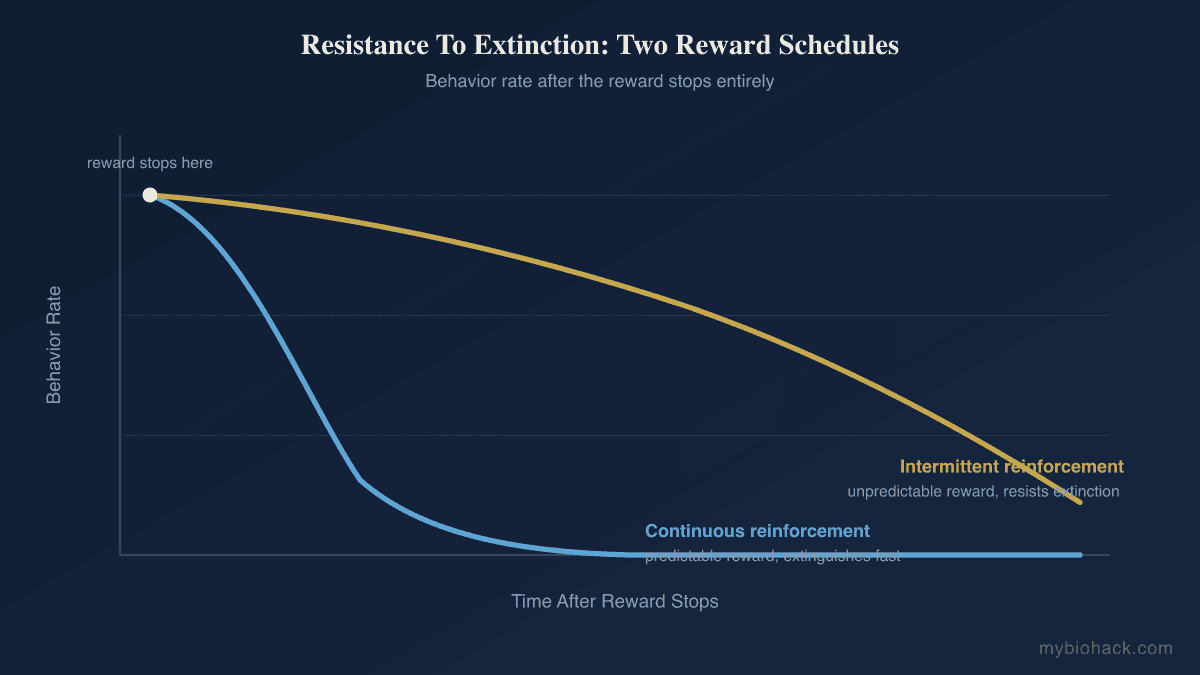
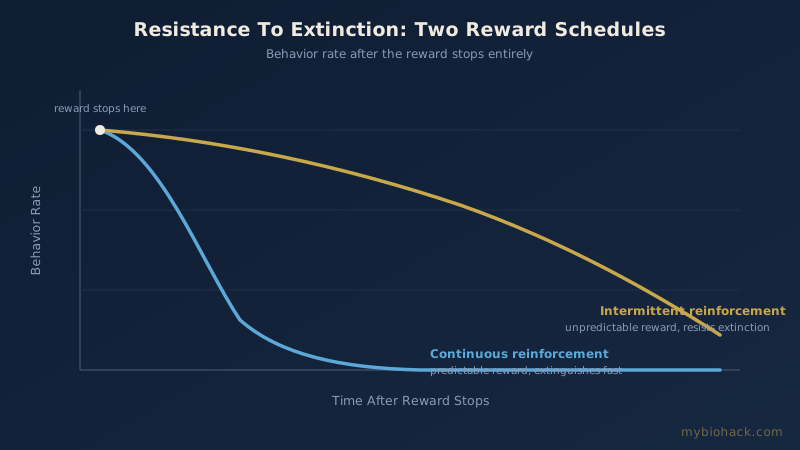
Intermittent reinforcement is a reward schedule where a behavior is rewarded unpredictably instead of every time, and it is one of the most robust and replicated findings in behavioral psychology.
B.F. Skinner first noticed it by accident in his operant conditioning lab, when a pellet shortage forced him to reward pigeons on an irregular schedule instead of a continuous one, and the pigeons kept pecking the lever long after the food stopped, more persistently than pigeons that had been rewarded every single time.
Modern, tightly controlled replications confirm the same effect with precise measurement.
Rats trained on a variable-interval schedule kept pressing a lever during extinction in direct proportion to how lean and unpredictable their training reinforcement had been, the leaner the schedule, the longer the behavior persisted after the reward stopped entirely. R
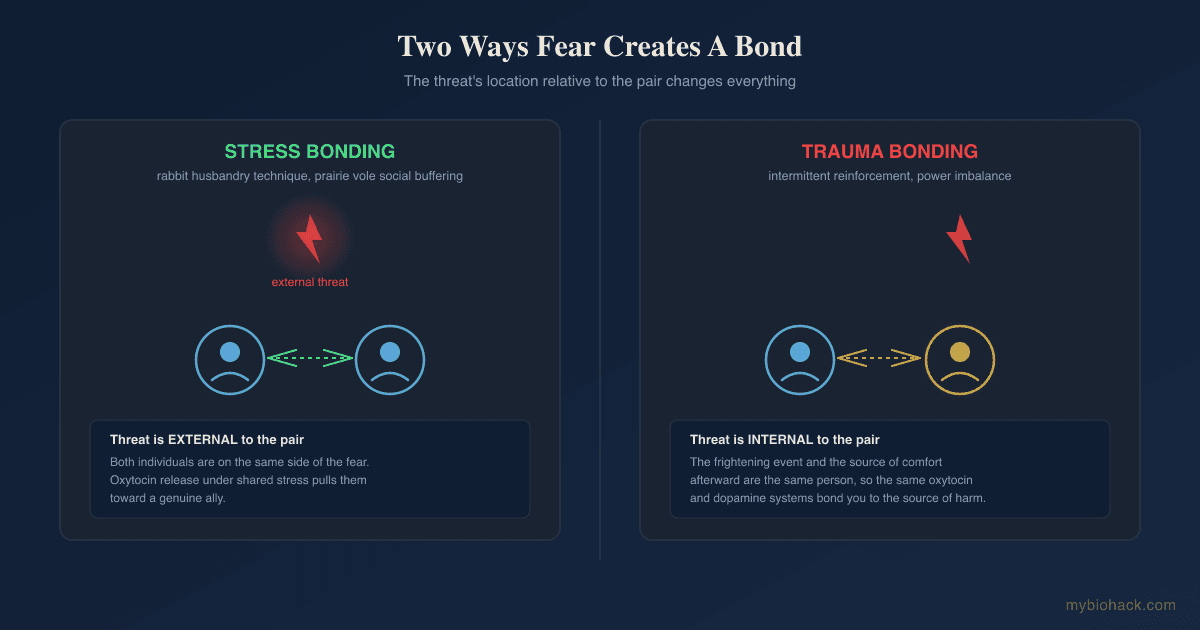
This is called the partial reinforcement extinction effect, and I covered its role in the no-contact phase of ending a trauma bond in Trauma Bonding vs. Stress Bonding.
This post is about a related but distinct problem: what happens when the same reward schedule runs underneath a relationship that is not necessarily abusive at all, just unreliable.
A parent who is warm some days and checked out on others, a partner who is affectionate in bursts and distant in between, a friend whose attention is genuinely wonderful when you have it but is not something you can count on, all of these run the identical variable-ratio wiring a slot machine runs on, built out of attention and approval instead of coins and jackpots.
Codependency is the behavioral residue of living inside that schedule long enough that seeking someone's attention, approval, or presence stops being optional and becomes compulsive.
I want to be direct about the evidence quality here before building anything on top of it, the same way I was in Twin Codependency.
Codependency has no entry in the DSM or the ICD, no consensus operational definition, and a 2026 integrative review of 30 studies described the construct as conceptually fragmented and contested, recommending it be reframed as a relational process rather than a fixed trait. R
A 1990 critique argued the concept was never empirically grounded in the first place, having been imported wholesale from an outdated disturbed-personality model. R
The measurement literature is thin enough to be a real problem, the most-cited psychometric instrument behind it was validated on 95 undergraduates. R
What later work does support is that codependent traits correlate heavily with ordinary personality dimensions and general psychological distress rather than forming a separate, freestanding syndrome. R
So treat codependency the way I treat it everywhere else on this site, as a clinically useful description of a behavior pattern, not a validated diagnosis with an established physiology.
What is well established, and is the actual subject of this post, is the learning mechanism underneath the label.
What Causes Codependency
Codependency is not a fixed personality trait a person is born with, it is a learned response to an unpredictable relational environment, and the pattern is usually established early. (not exclusive list)
- Attachment insecurity from inconsistent caregiving (a meta-analysis of 66 studies covering more than 4,000 infant-mother pairs found that how consistently, not just how warmly, a caregiver responds predicts whether an infant develops secure attachment) R
- Family history of substance use disorder (adult children of alcoholics score higher than adults from other dysfunctional, non-alcoholic families on most codependency-linked traits, which suggests general household unpredictability drives the pattern more than alcohol specifically) R
- Parentification (being cast into a caregiving role for a parent as a child predicts adult codependency, and that link runs through maladaptive early schema patterns, particularly a chronically unmet "vulnerable child" mode) R
- Trauma bonding in a prior relationship (the intermittent reward schedule that built the bond does not reset just because the relationship ends, see Trauma Bonding vs. Stress Bonding for the mechanism)
Notice that none of those four causes are about the unpredictable person themselves.
They are about a nervous system that learned, early and repeatedly, that reward is scarce and irregular, which makes any later relationship running the same schedule feel intensely, almost chemically familiar.
How Intermittent Reinforcement Creates The Bond
Operant conditioning describes four basic reinforcement schedules: fixed ratio, a reward every fixed number of responses, fixed interval, a reward after a fixed amount of time, variable ratio, a reward after an unpredictable number of responses, and variable interval, a reward after an unpredictable amount of time.
Variable ratio is the slot machine schedule, and it produces the fastest response rate and the strongest resistance to extinction of all four.
The mechanism underneath that resistance is dopaminergic, not emotional.
Reward prediction error (RPE) is the finding that dopamine neurons do not simply fire in proportion to how good a reward is, they fire in proportion to how unpredicted it was.
Electrophysiology in monkeys found that dopamine neurons show a brief burst tied to reward probability, plus a separate, slower-ramping signal that tracks the uncertainty of the reward itself, and that ramping uncertainty signal peaks when the odds of getting rewarded sit at exactly 50%. R
Human neuroimaging shows the same split.
During a gambling task, ventral striatum activity separately tracked expected reward and reward risk, with the two signals showing distinct timing, confirming that a human brain codes uncertainty about a reward as its own dedicated variable, not just as noise around the expected value. R
None of that is specific to gambling.
The closest direct test of whether this same uncertainty signal shows up in a real relationship, rather than a casino task, comes from an fMRI study in which participants were asked, in real time, to predict how their actual romantic partner felt about them, and those predictions were then confirmed or violated by real partner feedback roughly 42% of the time.
Reward-system prediction-error activity showed up specifically in response to that social uncertainty, and going through the uncertainty-inducing task was followed by an increase in attachment anxiety. R
That is the single most important study in this section.
It shows the exact bridge from a Skinner box to a relationship: an unpredictable partner produces the same reward-system uncertainty signature a slot machine does, and that signal was measurably linked to more anxious attachment afterward, not less.
Falling for one specific person recruits this same dopaminergic reward circuitry independent of uncertainty.
An fMRI study of people intensely in love found activation specific to images of their beloved in the ventral tegmental area and caudate nucleus, both dopamine-rich reward structures, and people who had recently been rejected by that person showed even stronger activation in these same regions than people whose love was reciprocated. R
Rejection did not turn the reward circuitry off, it turned it up.
The same wiring shows up outside romance entirely.
An fMRI study of adolescents viewing a simulated social media feed found that photos with more "likes" produced greater nucleus accumbens activation, and teens were more likely to like a photo themselves the more likes it already had, a variable, socially-mediated reward loop running on the identical circuitry. R
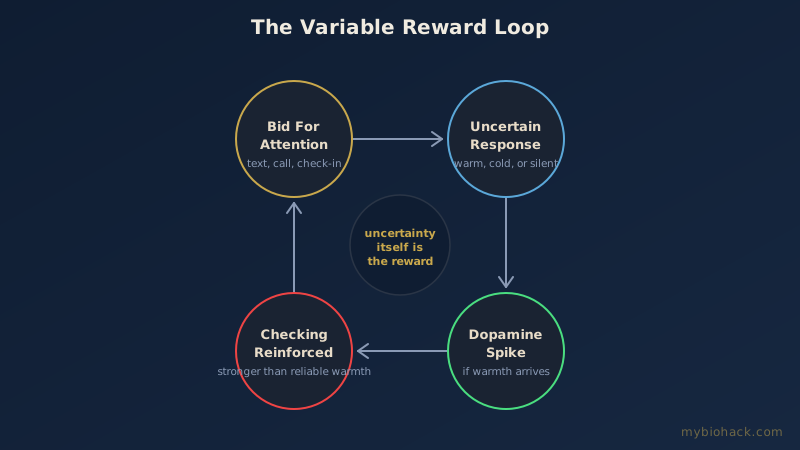
Put the four findings together and the mechanism is complete: an unpredictable person, parent, partner, or feed, produces stronger and more persistent reward-seeking behavior than a predictable one, because uncertainty itself is what the dopamine system is built to chase.
Codependency And Overlapping Conditions
Codependency rarely shows up in isolation. (not exclusive list)
- Addiction (substance use disorder): family members of people with substance use disorders who score high on codependency measures also show altered prefrontal cortex functioning in preliminary neuroimaging work, which fits codependency and substance addiction sharing overlapping reward-circuit wiring rather than being unrelated problems that happen to run in the same families R
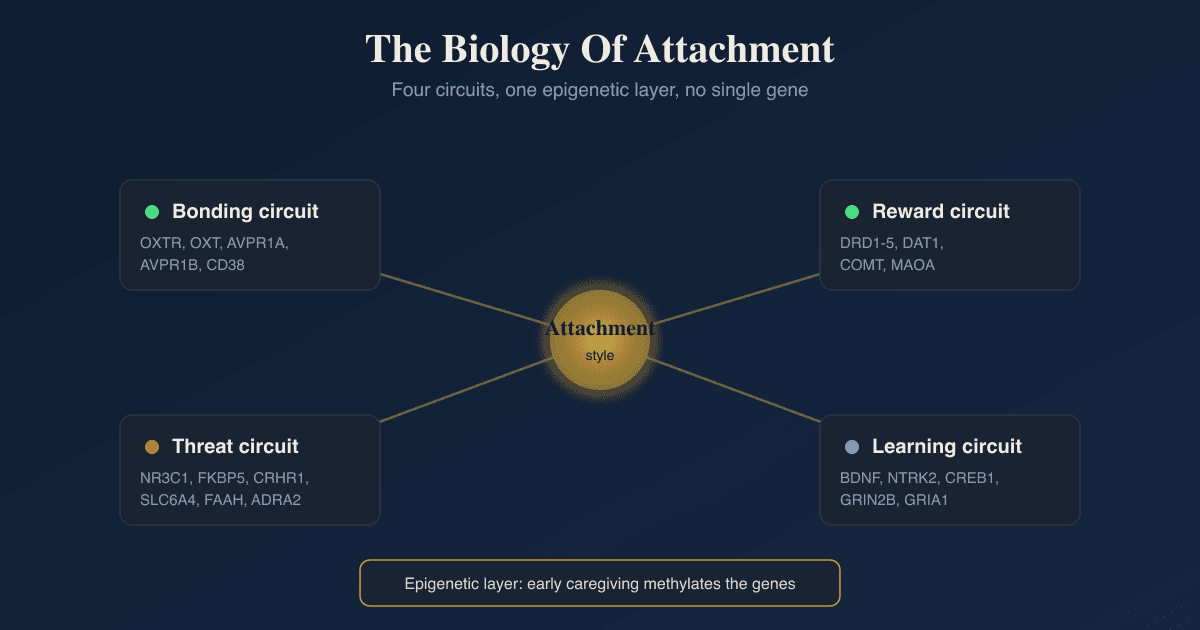
- Anxious attachment style: I map the genetics and biology of this attachment pattern in The Epigenetics Of Attachment Style and Coregulation And Attachment Style
- Narcissistic and borderline personality traits in a partner (clinical observation): a partner high in these traits is more likely to supply exactly the alternating warmth-then-withdrawal pattern this post is about, which is the personality-disorder side of the same dynamic covered in Trauma Bonding vs. Stress Bonding
- Trauma bonding: trauma bonding is intermittent reinforcement plus a power imbalance plus real harm, codependency is the same reward schedule without the harm being a required ingredient, so a codependent pattern can exist with a person who has never been cruel, only unreliable
How To Break The Cycle
1. Move Onto A Continuous, Or No, Reinforcement Schedule
Extinction happens fastest when reinforcement stops completely and consistently, not when it is reduced gradually or intermittently, because a gradually-thinned schedule is still, by definition, a variable one. R
There is a counterintuitive finding worth knowing here from pediatric behavioral intervention research, not directly tested in adult relationships, so treat it as a mechanistic hint rather than a guarantee.
Briefly switching a behavior to continuous, fully predictable reinforcement immediately before stopping reinforcement altogether shortened resistance to extinction compared to going straight from an intermittent schedule to zero reinforcement. R
Practically, this is one more argument for a clean, full stop in contact rather than a slow taper, a taper keeps the schedule variable for longer instead of shortening it.
2. Expect Resurgence, Not A Clean Line
Old, previously extinguished behavior can resurface when a newer replacement behavior itself stops being reinforced, a phenomenon called resurgence. R
In practice, this means the urge to check on the old unpredictable person can come back weeks or months later, especially if a newer coping behavior, a new friendship, a hobby, a routine, goes through its own dry spell.
That resurgence is not a relapse of feeling, it is a predictable feature of how extinguished behavior works, and expecting it in advance makes it far less destabilizing when it happens.
3. Build Self-Referenced Validation
Codependency scores correlate with lower self-esteem, though the literature has not directly tested whether it is specifically contingent self-esteem, self-worth that rises and falls with someone else's reaction, that is doing the work, only that overall self-esteem runs lower. R
That is a real gap in the research, and I would rather say so than imply a tighter mechanism than the data supports.
Practically, this step means building a source of self-regard that does not depend on another person's mood on a given day, journaling, a therapist, a values-based practice, anything that supplies internal reference points strong enough to compete with the external ones.
4. Practice Coregulation With Reliable People
A nervous system trained on unpredictability recalibrates faster around people who are consistently, boringly safe than it does in isolation.
I cover the biology of this directly in Coregulation And Healthy Relationships and Coregulation, Nervous System Dysregulation, And PTSD.
5. Get Professional Support For Extinguishing The Pattern
Schema therapy specifically targets the early maladaptive modes, like a chronically unmet "vulnerable child" mode, that link parentification to adult codependency, and is one of the more evidence-informed approaches for this pattern specifically.
A consultation is useful for mapping which of the causes in this post apply to your specific history before choosing a therapeutic approach.
What To Stay Away From
(not exclusive list)
- Checking their social media or phone as a self-soothing habit (this is the exact same variable-reward loop running through a different device, and it will keep the underlying pattern reinforced even after you have gone no-contact with the person themselves)
- Interpreting inconsistency as romantic intensity or passion (an unpredictable response produces a bigger dopamine spike than a reliable one, that is a description of a reward schedule, not evidence of a deeper connection)
- Mistaking relief when they finally respond for genuine attraction (relief after anxiety is its own reward, distinct from actually liking who the person is)
- Partial or "just to see" contact after deciding to stop (this restarts the variable schedule from the point of view of your reward system, see Trauma Bonding vs. Stress Bonding for why partial contact undoes progress faster than people expect)
Testing
There is no blood test for codependency, but two adjacent things are worth measuring.
Heart Rate Variability
Heart Rate Variability (HRV) is the most accessible ongoing window into how activated your autonomic nervous system is running, and it is more useful tracked as a weekly trend on a wearable than as a single number. R
A rising baseline in the weeks after cutting contact with an unpredictable person is one of the more honest signals that your physiology is decoupling from the old reward schedule, independent of how you feel emotionally on any given day.
Genotype
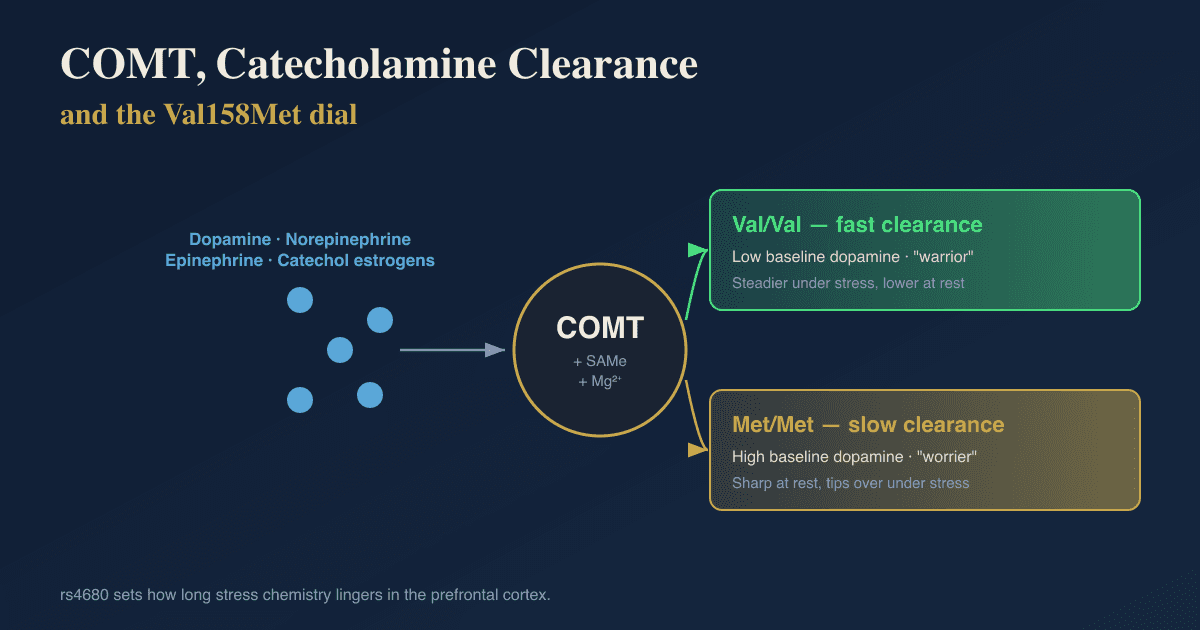
I use the Methylation Genetics Panel to check COMT genotype, which affects how quickly dopamine is cleared from the prefrontal cortex and shapes how strongly reward and stress signals linger after a social interaction, covered further in the Genetics section below.
Clinical Instruments
The Composite Codependency Scale is the most recent validated self-report instrument in the field, and a clinician can use it alongside your history to distinguish a genuine intermittent-reinforcement pattern from general relationship anxiety. R
If you want any of this interpreted against your full picture, that is what a consultation is for, and the Biohacking Bot can help you think through which cause in this post best matches your own history.
Mechanisms Of Action
Simple:
- An unpredictable reward creates a stronger urge to keep checking than a predictable one does, which is why a text that only sometimes gets a reply is harder to stop waiting for than one that never or always does
- Dopamine spikes more to a surprise than to an expected reward, and a relationship built on inconsistency produces surprise on a near-daily basis
- Breaking this pattern takes longer than an ordinary habit change because the nervous system was trained on scarcity, not on regular reward
- Old checking behavior can resurface later even after it seems gone, which is a normal feature of how extinction works, not a sign of failure
Advanced:
- Reward prediction error in midbrain dopamine neurons scales with how unpredicted a reward is rather than with its absolute value, and a separate, slower-ramping signal specifically tracks reward uncertainty itself, peaking at 50/50 odds, which is the computational basis for why a variable-ratio schedule outcompetes a continuous one at driving persistent reward-seeking behavior R R
- Social reward-system prediction error has been directly measured in real romantic relationships, where violated expectations about a partner's feelings activated reward-related prediction-error signaling and were followed by increased attachment anxiety, the direct human bridge between an operant conditioning chamber and a relationship R
- Behavioral momentum describes how a history of reinforcement, especially a lean, intermittent history, makes a behavior more resistant to disruption and extinction, functioning like physical momentum for behavior rather than a simple habit strength model R
- Mesolimbic reward circuitry, specifically the ventral tegmental area and caudate nucleus, activates in response to a specific bonded person rather than to reward in general, and this activation intensifies rather than fades after that person becomes inconsistent or rejecting R
Genetics
DRD2
DRD2 encodes the dopamine D2 receptor, the primary receptor mediating dopamine's inhibitory, reward-modulating signaling in the striatum.
Polymorphisms in DRD2 modulate reward and emotion processing along with measurable differences in dopamine neurotransmission itself, not just downstream personality traits. R
COMT
COMT encodes catechol-O-methyltransferase, the enzyme primarily responsible for clearing dopamine out of the prefrontal cortex.
I cover this gene in more depth, specifically for attachment style, in COMT Genetics, Catecholamine Metabolism, And Attachment Style.
Val158Met (rs4680) is the key functional variant, and the slower-clearing Met allele is associated with greater ventral striatal activation during reward anticipation on fMRI, meaning reward and stress signals linger longer in the prefrontal cortex before being cleared. R
Met/Met carriers also show greater behavioral reward responsiveness than Val carriers in direct behavioral testing, not just in brain imaging. R
DRD4
DRD4 encodes the dopamine D4 receptor, a gene popularly linked to novelty-seeking personality traits.
That popular link is weaker than its reputation, a meta-analysis of the specific 7-repeat variant and novelty seeking found no reliable support for the association. R
Where DRD4 genotype does show a real effect is at the level of reward circuitry itself rather than a personality label, moderating how strongly the brain's reward system responds to a cue, which is the more precise and better-supported way to think about this gene's role in this post's mechanism. R
More Research
(not exclusive list)
- Adolescent social media "likes" produce the identical variable-reward neural signature seen in romantic uncertainty, in a context that has nothing to do with romance, which argues the mechanism in this post is domain-general rather than specific to relationships R
- Contingent self-worth specifically tied to codependency has not, as far as I could find, been studied with a validated contingent self-esteem instrument, only with general self-esteem measures, which is a real and specific gap rather than a settled finding R
- Resurgence of extinguished behavior is quantitatively modeled well enough now to predict, in principle, when an old coping pattern is most likely to reappear after a newer one stops being reinforced R
For tracking your own patterns, mood, and HRV trend over the weeks after changing a relationship's reinforcement schedule, the Health Hub keeps journal entries and biomarker trends in one place, which is more useful for spotting a real decoupling curve than relying on memory alone.
Jacob Gordon
INHC, FMT-C
Integrative Nutrition Health Coach
I cover mold illness, post-viral recovery, methylation, and complex chronic disease, drawing on ten years of clinical research, work inside a functional medicine clinic, and my own recovery from all of it. Every claim here is cited.
Book a ConsultationRelated Protocols & Supplements
Deep-dive chapters and recommended supplements for this topic
Lion's Mane
1000mg/day
Omega-3 (DHA)
2g/day
Phosphatidylserine
100mg 3x/day