9 Benefits Of Vitamin C (Ascorbic Acid): Collagen, Immunity, And The Redox Buffer Humans Can't Make
By Jacob Gordon, INHC, FMT-CThis article contains affiliate links. As an Amazon Associate, MyBioHack earns from qualifying purchases at no extra cost to you. We only link products we research and stand behind.
Vitamin C is the only vitamin that most animals make for themselves but humans cannot, which is why a nutrient your dog synthesizes in its own liver is a daily requirement for you.
In this post, we will discuss what vitamin C actually does at a mechanistic level, why the human lineage lost the ability to make it, its non-negotiable role in collagen and immune function, why oral megadosing hits a wall, how liposomal and IV forms differ, and the genetics that shape how much of it you carry.
What Is Vitamin C
Vitamin C (ascorbic acid, or the ionized form ascorbate) is a water soluble six carbon lactone that acts as both an antioxidant and an enzyme cofactor.
Its defining chemical trick is that it donates electrons.
By handing off electrons, ascorbate neutralizes reactive oxygen species and, just as importantly, keeps the iron and copper atoms buried inside a whole family of enzymes in their reduced, working state.
That single property is why one molecule shows up in collagen construction, immune defense, iron handling, neurotransmitter synthesis, and gene regulation.
Ascorbate is not a "boost your immune system" novelty.
It is a foundational cofactor, and the absence of it (scurvy) kills by dissolving connective tissue and blood vessel walls.
Why Humans Can't Make Vitamin C: The GULO Gene
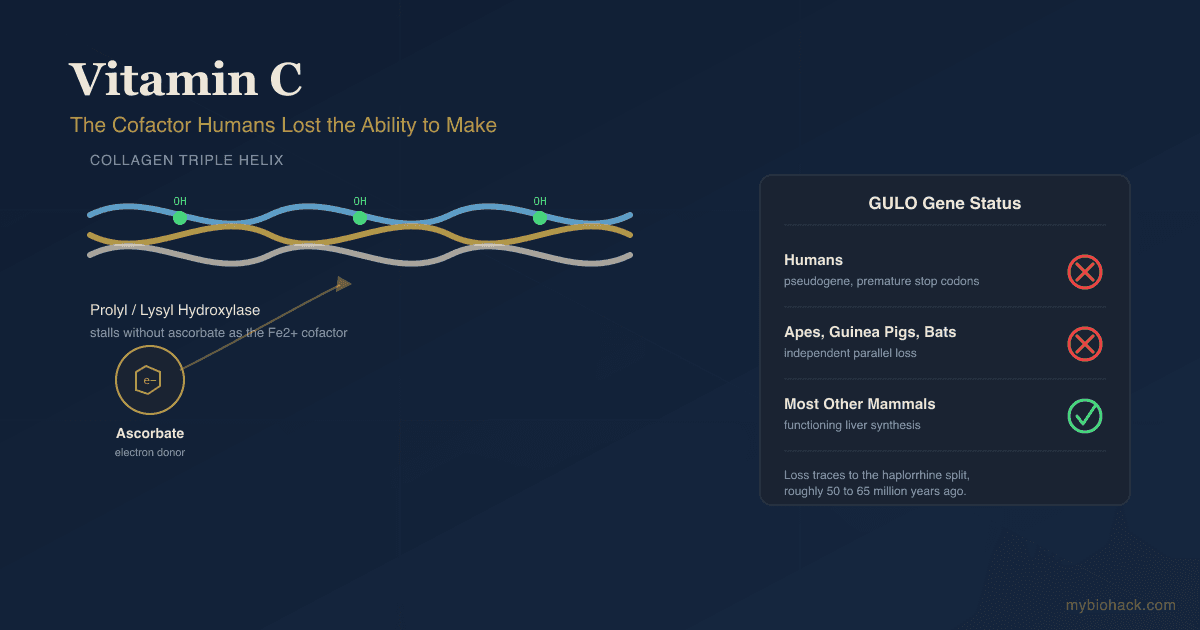
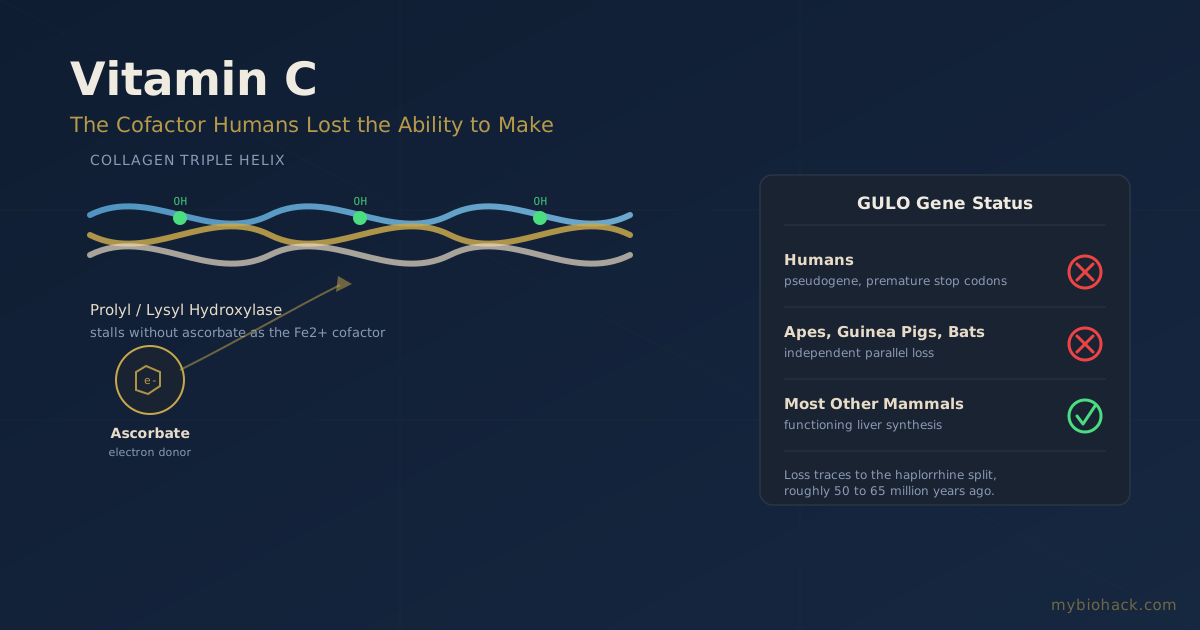
Most mammals synthesize their own vitamin C in the liver from glucose, in a four enzyme pathway whose final step is run by L-gulonolactone oxidase (GULO).
Humans carry the GULO gene, but it is a pseudogene, meaning it is broken by accumulated mutations and premature stop codons and no longer produces a working enzyme. R
We are in narrow company.
The species that independently lost GULO function are the anthropoid primates (humans, apes, monkeys, and tarsiers), guinea pigs, and most bats. R R
The primate loss traces back roughly 50 to 65 million years, around the time the haplorrhine lineage split off. R
The usual explanation is that early primates ate a fruit heavy diet, so the mutation carried no penalty and simply drifted to fixation.
There is a big MAYBE in the tidy "we didn't need it" story, because losing an endogenous antioxidant source is a strange thing to be neutral.
One competing idea is that outsourcing vitamin C to the diet freed up glucose and reduced oxidative byproducts of the synthesis pathway itself, making the loss mildly adaptive rather than merely tolerated.
Whatever the reason, the practical consequence is fixed.
A goat makes the human equivalent of thousands of milligrams of vitamin C per day, scaling up under stress, and you make zero.
9 Benefits Of Vitamin C
1. It Builds And Cross-Links Collagen
This is the benefit that scurvy makes undeniable.
Ascorbate is the required cofactor for prolyl hydroxylase and lysyl hydroxylase, the enzymes that hydroxylate proline and lysine residues on newly made collagen chains. R
Those hydroxyproline residues are what let the collagen triple helix become thermally stable and cross-link into strong fibers. R
Without vitamin C, the hydroxylases stall, the helix stays unstable, and the collagen is degraded before it can be deposited.
In cultured human skin fibroblasts, sustained ascorbate exposure raised collagen synthesis roughly eight fold, acting at the level of collagen specific messenger RNA rather than just enzyme speed. R
This is why vitamin C sits underneath skin, tendon, cartilage, bone matrix, gums, and the collagen scaffolding of every blood vessel.
If you are working on skin and wound repair, this pairs directly with the copper peptide story in GHK-Cu, since collagen remodeling needs both the cofactor and the signal.
2. It Powers Immune Cells, Especially Neutrophils
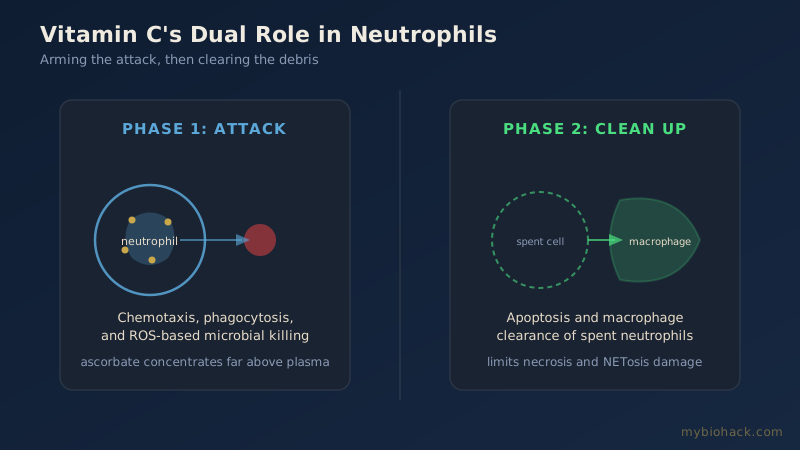
Neutrophils actively concentrate vitamin C to levels far above plasma, and they use it. R
Ascorbate enhances neutrophil chemotaxis (their migration toward an infection), phagocytosis (engulfing microbes), and the generation of the reactive oxygen species used to kill what they eat. R R
It then does the opposite job at the end of the fight.
Vitamin C is needed for the apoptosis and macrophage clearance of spent neutrophils, which lowers the tissue damage from necrosis and uncontrolled NETosis. R
In scorbutic (vitamin C deficient) animals, neutrophil killing collapses and is restored by repletion, which is about as clean as mechanistic evidence gets. R
That dual role, arming the attack and then cleaning up the debris, is why ascorbate matters for resolving inflammation rather than just starting it.
3. It Unlocks Non-Heme Iron Absorption
Iron from plants and supplements (non-heme iron) is mostly in the ferric (Fe3+) state, which your gut absorbs poorly.
Ascorbate reduces ferric iron to the ferrous (Fe2+) form that the DMT1 transporter actually moves into enterocytes, and it chelates iron into a soluble complex that survives the shift into the alkaline duodenum. R R
It is the most potent dietary enhancer of non-heme iron uptake, and roughly 50 mg with a meal meaningfully improves absorption. R
This is genuinely useful for plant based eaters and menstruating women fighting low ferritin.
It is a double edged benefit worth flagging (if you carry an iron overload condition like hemochromatosis, deliberately pairing vitamin C with iron rich meals is the wrong move).
4. It Recharges The Rest Of Your Antioxidant Network
Vitamin C does not work alone.
It sits in a redox relay, regenerating the oxidized (tocopheroxyl) form of vitamin E back into active antioxidant, and supporting glutathione recycling. R
This is why thinking of any single antioxidant in isolation is a mistake, a point covered more fully in the post on tocopherols and vitamin E.
Because it is water soluble and fat soluble vitamin E is not, the two guard different compartments and hand electrons back and forth at the membrane interface.
5. It Is A Cofactor For Catecholamine And Carnitine Synthesis
Ascorbate is the cofactor for dopamine beta-hydroxylase, the enzyme that converts dopamine into norepinephrine, so vitamin C sits directly in catecholamine production. R
It is also a cofactor for the two hydroxylases in carnitine biosynthesis, which is part of why profound deficiency brings fatigue.
There is honest conflict here.
In vitamin C depleted knockout mice engineered to be unable to make their own ascorbate, carnitine synthesis was maintained, suggesting vitamin C enhances but is not strictly essential for that pathway. R
So treat the carnitine claim as "supportive cofactor," not "hard requirement."
6. It Supports The Glycocalyx And Vascular Wall
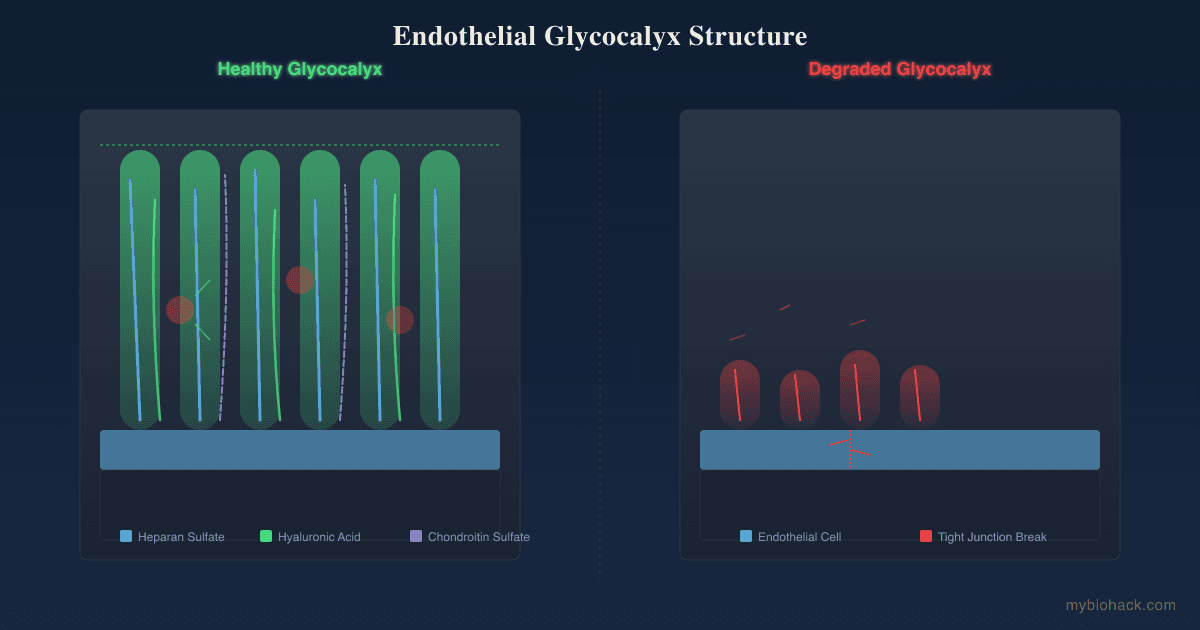
Every blood vessel is a collagen tube lined by the glycocalyx, and both depend on vitamin C.
The collagen scaffolding of the vessel wall needs ascorbate driven hydroxylation to hold together, which is why advanced scurvy causes the perifollicular hemorrhages and bleeding gums of failing vessels. R
Vitamin C also protects the endothelium from the oxidative shedding that strips the glycocalyx.
This is where the general nutrient meets Jacob's framework.
For the deeper, vascular specific case, see Jacob's hypothesis on IV vitamin C and the glycocalyx, which digs into the Fenton chemistry and Myers cocktail context that this general post deliberately leaves alone.
The foundational glycocalyx biology lives in the glycocalyx chapter.
7. It Regulates Gene Expression Through The TET Enzymes
This is the benefit almost no supplement label mentions.
Ascorbate is a cofactor for the Ten-Eleven Translocation (TET) family of dioxygenases, which drive active DNA demethylation by oxidizing 5-methylcytosine. R
By keeping the iron center of these enzymes reduced, vitamin C tunes the epigenetic state of immune cells and stem cells. R
It also supports genomic stability through the same Fe2+ dependent dioxygenase chemistry. R
The takeaway is that vitamin C status is not just about scurvy prevention, it is a dial on which genes your cells keep switched on.
8. It Recycles Folate And Methylation Cofactors Indirectly
Because ascorbate keeps the same class of dioxygenase and reductive reactions running, adequate vitamin C is part of the background that supports one carbon and methylation chemistry.
This intersects with the homocysteine story, since oxidative stress and cofactor depletion push methylation off balance. R
If methylation is your area of interest, the mechanics are laid out in the post on homocysteine, methylation, and cardiovascular and brain health.
9. At Pharmacologic (IV) Doses It Becomes A Selective Pro-Oxidant
This is the strangest benefit, and the one that flips vitamin C's usual identity.
At the millimolar plasma levels only reachable by intravenous infusion, ascorbate stops behaving as a pure antioxidant and starts generating hydrogen peroxide in the extracellular fluid. R
That peroxide flux is largely harmless to normal cells but can be cytotoxic to certain tumor cells that carry high pools of redox active iron. R
You can measure this pro-oxidant chemistry directly, since high dose vitamin C rapidly oxidizes peroxiredoxin 2 inside red blood cells, a sensitive marker of peroxide generation. R
This antioxidant at low dose and pro-oxidant at high dose duality is the entire reason oral and IV vitamin C are different tools, not the same tool at different sizes.
Dr. Thomas Levy discusses this high dose vitamin C landscape in depth in the podcast conversation on vitamin C, calcium, iron, and root canals.
Natural Sources
Whole food sources deliver ascorbate alongside bioflavonoids that food based studies suggest slightly improve retention.
Highest per serving, roughly alphabetical:
- Acerola cherry (one of the densest natural sources)
- Bell peppers, especially red
- Blackcurrants
- Broccoli and Brussels sprouts
- Camu camu
- Guava
- Kale and other leafy greens
- Kiwifruit
- Papaya
- Rose hips
- Strawberries
Citrus is the cultural symbol, but weight for weight, red bell pepper, guava, and blackcurrant outclass an orange.
Vitamin C is heat labile and water soluble, so prolonged boiling leaches and destroys much of it, while raw or lightly steamed preparation preserves more.
Forms, Dosage, And The Absorption Ceiling
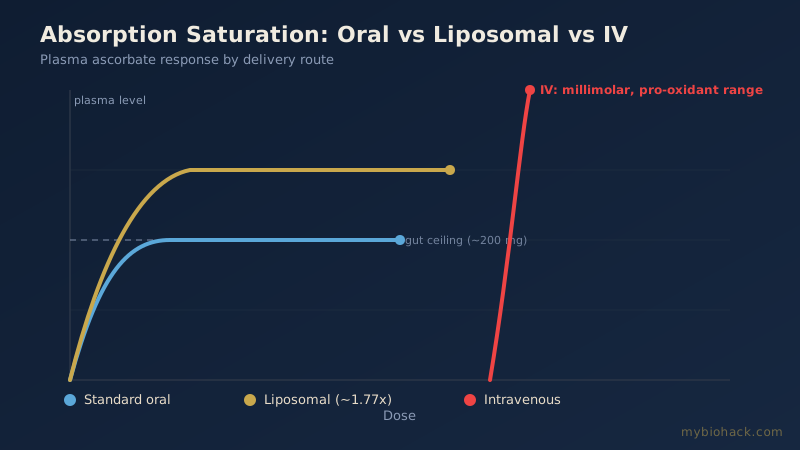
The most important dosing fact about oral vitamin C is that absorption saturates, and it saturates early.
In the landmark controlled depletion and repletion study, bioavailability was complete for a single 200 mg dose, plasma concentration followed a sigmoid curve that flattened above 200 mg per day, and immune cells were already saturated at about 100 mg per day. R
At single oral doses of 500 mg and above, fractional absorption falls and the excess is dumped into urine. R
This is why swallowing a single 3,000 mg tablet is mostly expensive urine.
Standard ascorbic acid: the cheapest and best studied form, best taken as divided doses across the day rather than one large bolus to work around the absorption ceiling.
Buffered ascorbate (sodium, calcium, or magnesium ascorbate): gentler on a sensitive stomach at the cost of the extra mineral load.
Liposomal vitamin C: encapsulating ascorbate in phospholipid vesicles partly bypasses the intestinal transporter bottleneck.
A clinical comparison found liposomal vitamin C about 1.77 times more bioavailable than a non-liposomal form. R
A double-blind randomized trial showed liposomal delivery raised ascorbate levels in both plasma and leukocytes. R
A 2025 scoping review found nine of ten studies reported higher bioavailability for liposomal forms, though it flagged that formulation quality varies widely and the field needs better standardization. R
Intravenous vitamin C: the only route that reaches the millimolar, pro-oxidant plasma levels described in benefit 9, because it skips the gut and renal control entirely. R
For general health, divided oral doses in the few hundred milligram range keep tissues saturated.
Megadosing orally for a systemic pro-oxidant effect does not work, the gut simply will not pass it, which is the whole reason the IV route exists.
What To Be Careful With
G6PD deficiency and high-dose IV: this is the one caution that matters most.
Glucose-6-Phosphate Dehydrogenase (G6PD) deficient red blood cells cannot regenerate enough glutathione to handle a peroxide load, so the same pro-oxidant chemistry that makes IV vitamin C interesting can trigger acute hemolysis. R
Reported cases of massive hemolysis, methemoglobinemia, and acute kidney injury have followed grams-scale IV vitamin C in G6PD deficient patients, usually within 72 hours. R R
Anyone considering high-dose IV vitamin C should be screened for G6PD deficiency first.
Ordinary oral doses do not carry this risk, and even moderate IV doses around 6 g per day are generally not considered contraindicated, but the grams-per-kilogram protocols absolutely require screening. R
Iron overload: as noted above, if you have hemochromatosis or high ferritin, do not deliberately stack vitamin C with iron rich meals.
Kidney stones: very high chronic oral doses raise urinary oxalate in susceptible people, so stone formers should stay conservative.
Rebound and abrupt cessation: coming off a very high chronic dose suddenly can transiently drop plasma levels, so taper rather than stop cold.
Mechanisms Of Action
Simple:
- Vitamin C is an electron donor, and by giving away electrons it both neutralizes free radicals and keeps the metal atoms inside key enzymes in the working state they need to do their jobs.
Advanced:
- Cofactor for Fe2+/2-oxoglutarate dioxygenases: prolyl and lysyl hydroxylases decarboxylate 2-oxoglutarate while hydroxylating collagen, and ascorbate reduces the enzyme's iron center back to Fe2+ after occasional uncoupled cycles, preventing the enzyme from locking in an oxidized inactive state. R
- Reductant in iron handling: at the enterocyte brush border, duodenal cytochrome b and ascorbate reduce Fe3+ to Fe2+ for DMT1 uptake, and in the gut lumen ascorbate forms a soluble chelate that keeps iron bioavailable as pH rises. R
- Catecholamine and epigenetic dioxygenases: the same reductive maintenance chemistry keeps dopamine beta-hydroxylase and the TET DNA demethylases functional, tying vitamin C status to both norepinephrine output and the methylation landscape of the genome. R R
- Concentration dependent redox flip: at physiologic micromolar levels ascorbate quenches radicals, but at pharmacologic millimolar levels it autoxidizes, reducing protein bound transition metals and driving a high extracellular flux of hydrogen peroxide, which is the basis of its selective activity against iron loaded tumor cells. R R
Genetics
GULO: The Broken Gene Everyone Shares
GULO encodes L-gulonolactone oxidase, the final enzyme in vitamin C biosynthesis.
In humans every copy is a pseudogene, disabled by multiple mutations and premature stop codons, so no human makes any endogenous vitamin C. R
This is a fixed, universal knockout, which is why dietary intake is non-negotiable for our species.
SLC23A1 (SVCT1)
SLC23A1 encodes the sodium-dependent vitamin C transporter 1, which handles intestinal absorption and renal reabsorption of ascorbate.
Variants here shift how much vitamin C you keep in circulation for a given intake.
rs33972313: a missense variant that is the single strongest genetic predictor of circulating vitamin C, with carriers of the minor allele running lower plasma levels. R
rs11950646: an additional SLC23A1 variant associated with plasma vitamin C concentration. R
SLC23A2 (SVCT2)
SLC23A2 encodes the sodium-dependent vitamin C transporter 2, which moves ascorbate into most tissues, including neurons and immune cells.
rs6053005 and rs6133175: variants associated with plasma vitamin C levels in large cohort analysis. R
People with less efficient SVCT2 transport may keep plasma in range while tissues run relatively lower.
G6PD: Highest-Consequence Variant For High-Dose Use
G6PD encodes glucose-6-phosphate dehydrogenase, the enzyme that regenerates NADPH to keep red blood cell glutathione reduced.
Deficiency variants (X-linked, most common in males of African, Mediterranean, and Southeast Asian descent) leave red cells unable to buffer an oxidative load.
In this genotype, high-dose IV vitamin C can trigger acute hemolysis, methemoglobinemia, and kidney injury, which is why screening precedes any grams-scale infusion. R
More Research
Carnitine synthesis is the clearest example of vitamin C's mechanistic role outrunning its clinical necessity, since the hydroxylases involved use ascorbate as a cofactor yet knockout mice unable to make vitamin C still synthesized carnitine, so read older "vitamin C is essential for carnitine" claims with that caveat. R
Epigenetic dosing is an open question, because the TET enzyme cofactor role is well established in cell and animal work but the human dose needed to meaningfully shift DNA methylation in a healthy person is not defined. R
Liposomal quality varies enormously between products, and the 2025 scoping review specifically called for standardized formulation reporting before the "1.77 times better" figure can be treated as universal across brands. R
The evolutionary reason for GULO loss remains debated, ranging from the neutral "fruit diet made it unnecessary" model to the adaptive "losing the synthesis pathway reduced its own oxidative cost" model, and the honest answer is that nobody has settled it. R
Tissue saturation and plasma level diverge, since immune cells saturate near 100 mg per day while the plasma curve keeps climbing modestly to about 1,000 mg per day, which means "optimal intake" depends on whether you are optimizing plasma antioxidant capacity or leukocyte function. R
Jacob Gordon
INHC, FMT-C
Integrative Nutrition Health Coach
I cover mold illness, post-viral recovery, methylation, and complex chronic disease, drawing on ten years of clinical research, work inside a functional medicine clinic, and my own recovery from all of it. Every claim here is cited.
Book a ConsultationRelated Protocols & Supplements
Deep-dive chapters and recommended supplements for this topic
Electrolyte Complex
1 scoop/day
CoQ10
200mg/day
Magnesium Glycinate
400mg at bedtime