The 6+ Benefits of Chaga Mushroom (Inonotus obliquus): Antioxidants, Immunity, and the Oxalate Caution
By Jacob Gordon, INHC, FMT-CThis article contains affiliate links. As an Amazon Associate, MyBioHack earns from qualifying purchases at no extra cost to you. We only link products we research and stand behind.
Chaga is a parasitic fungus that grows on living birch trees, and much of what makes it interesting comes from the tree it feeds on rather than the fungus itself.
In this post, we will discuss what chaga actually is, where its betulinic acid and polysaccharides come from, how it modulates antioxidant and immune pathways, the honest gap between the lab data and human evidence, and two cautions most articles skip: its oxalate load and its blood-thinning interaction.
What Is Chaga
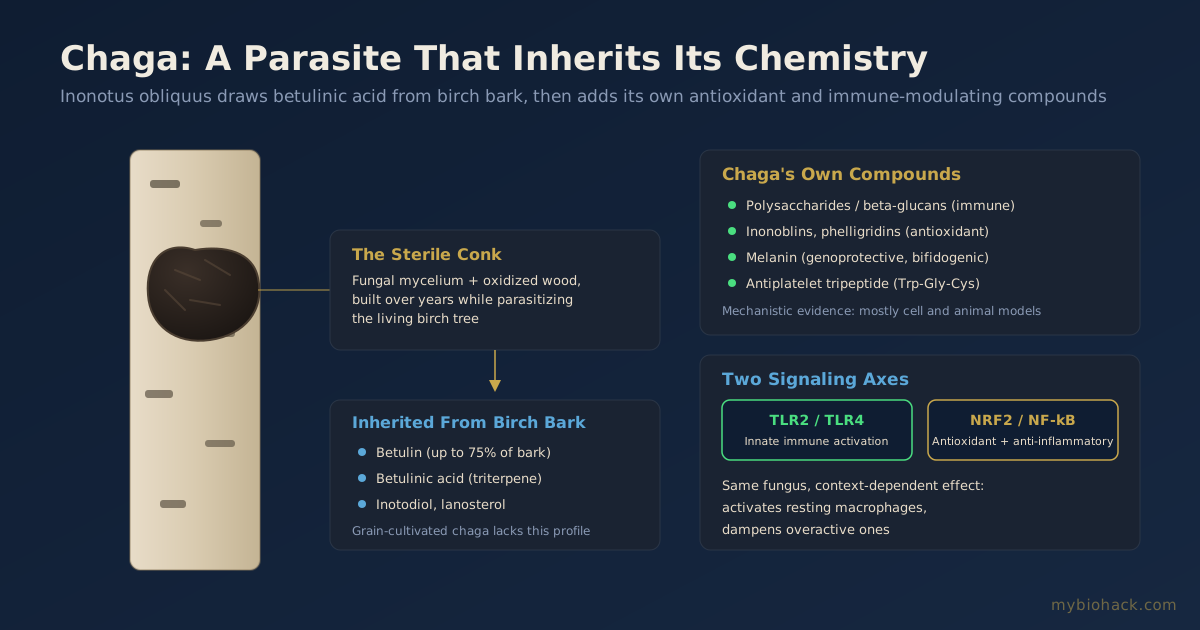
Chaga (Inonotus obliquus) is a slow-growing fungus in the Hymenochaetaceae family that parasitizes birch and, less often, other hardwood trees across the cold forests of Siberia, Northern Europe, Asia, and North America.
The black, cracked, charcoal-looking mass you see on a birch trunk is not a normal mushroom cap.
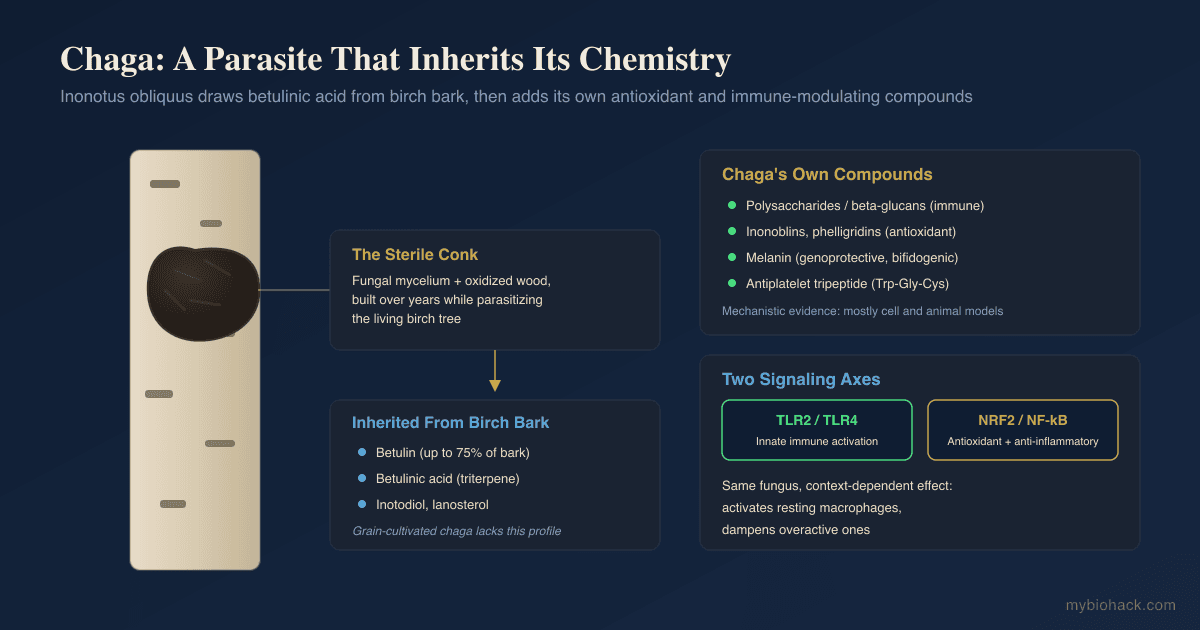
It is a sterile conk, a dense mass of fungal mycelium and oxidized wood that the fungus builds over years while it slowly consumes the tree.
That growth pattern matters, because the fungus concentrates compounds from the birch bark into itself.
The best example is betulinic acid, chaga's most cited "anticancer" molecule, which is a pentacyclic triterpene formed from betulin.
Betulin makes up as much as 75 percent of the extractable content of white birch bark, and betulinic acid a few percent, so a birch-grown conk inherits a triterpene profile that a fungus grown on any other substrate simply would not have. R
This is why cultivated chaga (grown on grain or without a birch host) is not chemically identical to wild birch chaga, a point most supplement labels quietly skip.
Chaga has been used since at least the 16th century as a Siberian and Russian folk medicine for gastrointestinal cancer, cardiovascular disease, diabetes, and tuberculosis, and the traditional record notes minimal toxicity at food-like doses. R
The problem, which the rest of this post keeps returning to, is that almost all of the modern mechanistic evidence is preclinical (cell culture and animal models), with essentially no randomized human trials to confirm the effects. R
If you want a medicinal mushroom with a cleaner human-outcome story for the nervous system, Lion's Mane is a useful comparison point on this site.
The Benefits Of Chaga
1. One Of The Highest Measured Antioxidant Capacities
Chaga is routinely described as one of the most powerful antioxidant foods measured, and the mechanistic data behind that reputation is real even if the marketing numbers are inflated.
Novel polyphenols isolated from chaga (inonoblins A, B, and C, plus phelligridins D, E, and G) show strong scavenging of the ABTS radical cation and the DPPH radical, with moderate activity against the superoxide anion. R
Whole chaga extract reduces intracellular reactive oxygen species (ROS) and protects cells against oxidative stress in vitro. R
When directly compared with other medicinal fungi, chaga showed the strongest superoxide and hydroxyl radical scavenging of the group, outperforming reishi, Agaricus blazei, and Phellinus linteus. R
A caveat on the widely quoted Oxygen Radical Absorbance Capacity (ORAC) figure: the very high ORAC number attached to chaga in marketing comes from commercial assay testing, not from a peer-reviewed human trial, and ORAC has limited relevance to what actually happens inside your body.
For an antioxidant comparison with a better-studied whole food, see Spirulina.
2. Polysaccharide-Driven Immune Modulation
The water-soluble polysaccharides and beta-glucans in chaga are the compounds most responsible for its "immune" reputation, and unlike the ORAC story, the mechanism is well characterized.
Two purified chaga polysaccharides (AcF1 and AcF3) act as strong agonists of Toll-like receptor 2 (TLR2) and Toll-like receptor 4 (TLR4), and weak agonists of Dectin-1, driving macrophages to secrete nitric oxide, tumor necrosis factor alpha, and interleukin-6. R
A separate polysaccharide fraction from the chaga fruiting body drove macrophages to produce nitric oxide, ROS, and TNF-alpha through the same MAPK and NF-kB signaling, pushed mouse splenocytes toward a balanced Th1/Th2 cytokine response, and suppressed melanoma tumor growth when fed to tumor-bearing mice. R
In other words, chaga polysaccharides are recognized by the same pattern-recognition receptors your innate immune system uses to detect microbes, which is what "immune stimulation" means at a molecular level.
Chaga extracts also shift macrophage behavior in a context-dependent way, activating resting macrophages while dampening overactive ones. R
This is immunomodulation rather than blanket stimulation, which matters if you already have an overactive immune system.
3. Anti-Inflammatory Signaling
Beyond stimulating immune cells, chaga polysaccharides can lower excessive inflammatory output.
In infected macrophages, chaga polysaccharide reduced the excess secretion of tumor necrosis factor alpha, interferon gamma, interleukin-1 beta, and interleukin-6 by acting on the nuclear factor kappa B (NF-kB) and MAPK pathways. R
The pairing of NF-kB suppression with nuclear factor erythroid 2-related factor 2 (NRF2) activation is the same anti-inflammatory, pro-antioxidant axis that shows up with many plant polyphenols. R
One of chaga's triterpenes, inotodiol, reduced mast cell numbers and mast cell protease release in animal models of allergic inflammation while showing no organ toxicity over 13 weeks of dosing, which is relevant if your problem is an overactive mast cell system rather than a sluggish immune one. R
There is a real caveat here, which is that reflexively driving NRF2 up is not always a good idea in chronically ill people, and I cover why in Why NRF2 Activation Can Make You More Sick.
4. Betulinic Acid And Preclinical Anticancer Activity
The triterpenes chaga inherits from birch (betulin, betulinic acid, inotodiol, lanosterol, and trametenolic acid) are the reason chaga shows up in oncology screening.
Betulinic acid and related chaga triterpenes are cytotoxic to human lung adenocarcinoma cells while sparing normal bronchial epithelial cells in the same assay. R
This tumor selectivity is a consistent theme across the betulinic acid literature, where normal cells resist the compound and melanoma and ovarian xenograft mice tolerate high doses without weight loss or systemic toxicity. R
Mechanistically, betulinic acid kills by acting directly on the mitochondria, triggering the permeability transition that releases apoptogenic factors independent of the caspase machinery. R
Chaga triterpenoids also inhibit dihydrofolate reductase and act synergistically with conventional therapy in breast cancer cell lines. R
This is genuinely interesting, but it is cell-line and animal data, and there is a big MAYBE here: no human cancer trial has shown that eating chaga tea or capsules reproduces these effects.
5. Blood Sugar And Metabolic Support (Preclinical)
Chaga was a traditional diabetes remedy, and the animal data is consistent even though human data is missing.
In streptozotocin-induced diabetic mice, chaga polysaccharides lowered fasting blood glucose, improved glucose tolerance, raised hepatic glycogen, and reduced insulin resistance through the PI3K-Akt pathway. R
A chaga extract in high-fat-diet plus streptozotocin diabetic mice reproduced the glucose-lowering and insulin-sensitizing effect. R
The relevant practical point is not "chaga treats diabetes," it is that this glucose-lowering activity is exactly why chaga can stack unpredictably with diabetes medication (see Cautions).
6. Melanin And Genoprotection
The black pigment that gives chaga its charcoal appearance is melanin, and it is bioactive in its own right.
Chaga melanin has antioxidant, genoprotective (DNA-protecting), and bifidogenic (gut-supporting) effects, and reduces nitric oxide production in the models studied. R
Genoprotection is worth flagging because oxidative DNA damage is measurable, and I track it with the biomarker described in 8-OHdG: The DNA Damage Biomarker.
Natural Sources And Forms
Chaga is not something you eat like a culinary mushroom, because the raw conk is woody and its key compounds need extraction.
The forms you will actually encounter are:
- Alcohol (dual) extract: needed to pull out the water-insoluble triterpenes like betulinic acid and inotodiol, which hot water alone will not extract
- Dried chunks or "tea": a hot-water decoction that captures the polysaccharides and melanin but leaves most triterpenes behind
- Powdered whole conk (capsules): convenient, but raw powder is poorly extracted, so a lot of it passes through undigested
- Wild birch-grown vs cultivated: wild birch conks carry the betulinic acid profile, while grain-cultivated mycelium does not
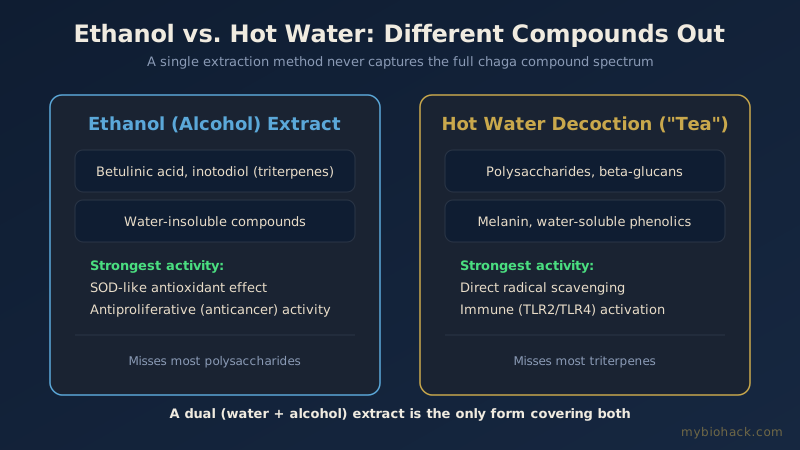
This is not a marketing distinction: a head-to-head comparison found the ethanol extract carried the strongest SOD-like and antiproliferative activity while the hot-water extract had the strongest direct radical scavenging, so the two methods genuinely pull different compounds. R
If you want the full compound spectrum, a dual-extract (water plus alcohol) from wild birch-grown chaga is the only form that captures both the polysaccharides and the triterpenes.
You can browse Chaga extract options, prioritizing a dual extract that states its source tree.
Dosage And Safety
There is no established clinically validated dose for chaga, because the human trials that would set one do not exist. R
Traditional and supplement-label use of dual extracts typically lands in the range of a few hundred milligrams to about two grams per day of extract.
The single most important safety fact in this entire post is that the documented human harms came from high-dose raw powder taken daily for months, not from occasional tea (see Cautions).
Chaga has minimal recorded toxicity at food-like doses in the traditional record, but "traditional record" is not the same as a safety trial. R
Practical guardrails:
- Choose a dual extract over raw powder, because raw powder concentrates oxalate and is poorly absorbed
- Cycle it rather than dosing high every single day for months
- Do not treat "natural" as a synonym for "harmless" here, because the kidney cases below were in otherwise healthy people
- Hydrate well and keep the dose moderate if you are prone to kidney stones
Cautions And Interactions
This is the section most chaga articles either bury or omit, and it is the reason to read to the end.
Oxalate Content And Kidney Risk
Chaga is unusually high in oxalate, and oxalate is the same compound that forms the most common kidney stones.
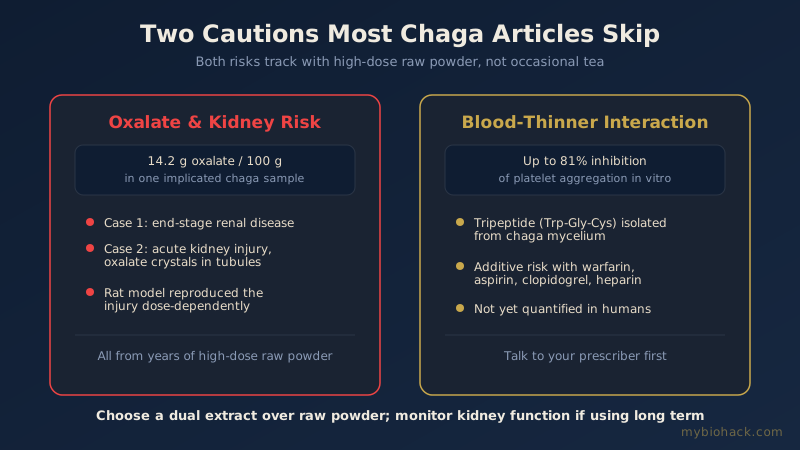
In one documented case, a 49-year-old man developed end-stage renal disease (ESRD) after taking chaga powder daily for years, and the specific chaga sample tested at an extremely high 14.2 grams of oxalate per 100 grams, pushing his estimated oxalate intake to several times normal. R
In a second case, a 69-year-old man taking 10 to 15 grams of chaga powder daily for three months developed acute kidney injury (AKI) with nephrotic syndrome, and his biopsy showed calcium oxalate crystals deposited directly in the kidney tubules. R
The pattern in both cases is the same: high-dose raw powder, taken daily, for a sustained period.
This is not just anecdotal human case data anymore, because a controlled rat study dosing chaga at the human-case-equivalent level reproduced the oxalate crystal deposition, tubular injury, and oxidative DNA damage in the kidney, and it was dose-dependent. R
If you are a known kidney stone former, have reduced kidney function, or already eat a high-oxalate diet, chaga powder is a genuine risk and not a theoretical one.
Blood-Thinning And Anticoagulant Interaction
Chaga can inhibit platelet aggregation, which means it can add to the effect of blood thinners.
Researchers isolated a novel tripeptide (Trp-Gly-Cys) from chaga mycelium that inhibited platelet aggregation by up to 81 percent in vitro and remained active in mice. R
This antiplatelet effect has not been quantified in humans, but it is a plausible mechanism for increased bleeding risk if you combine chaga with warfarin, aspirin, clopidogrel, heparin, or other anticoagulant and antiplatelet drugs.
If you take a blood thinner, talk to your prescriber before adding chaga.
Diabetes Medication Interaction
Because chaga lowers blood glucose in animal models (benefit 5), it can theoretically stack with insulin or oral hypoglycemics and push blood sugar too low. R
If you are on glucose-lowering medication, monitor rather than assume.
Testing
If you are going to use chaga at meaningful doses, the two things worth objectively tracking are kidney function and oxidative stress.
I use the Comprehensive Metabolic Panel (Quest) to watch creatinine and estimated glomerular filtration rate, which is the direct readout of the kidney risk described above.
The Foundation Zoomer bundles the same metabolic and kidney markers with a CBC and thyroid baseline if you want a broader starting picture.
For the antioxidant side, the Cellular Zoomer covers oxidative stress and mitochondrial markers, which is the more relevant panel if your reason for taking chaga is redox support.
Oxidative DNA damage specifically is tracked with 8-OHdG, described in 8-OHdG: The DNA Damage Biomarker.
Mechanisms Of Action
Simple:
- Chaga's polysaccharides look like microbe fragments to your immune system, so they wake up immune cells the way a mild infection would, without the infection.
- Its triterpenes and polyphenols mop up free radicals and can be toxic to some cancer cells in a dish.
- The same molecules that lower blood sugar and thin the blood are also what make chaga interact with diabetes and blood-thinner medications.
Advanced:
- Innate immune sensing via TLR2/TLR4. The water-soluble polysaccharides AcF1 and AcF3 act as pattern-associated molecular patterns, binding TLR2 and TLR4 (and weakly Dectin-1) on macrophages to trigger nitric oxide, TNF-alpha, and IL-6 release, which is the molecular basis of chaga's immunostimulant reputation. R
- NF-kB and MAPK suppression. In activated macrophages, chaga polysaccharide down-regulates the NF-kB and MAPK cascades, lowering TNF-alpha, IFN-gamma, IL-1 beta, and IL-6, which explains why the same compound can look both stimulatory and anti-inflammatory depending on the baseline state of the cell. R
- NRF2 antioxidant induction. Chaga polyphenols and polysaccharides activate NRF2, up-regulating downstream antioxidant enzymes, while direct radical scavengers (inonoblins, phelligridins) neutralize ABTS, DPPH, and superoxide species independent of gene transcription. R R
- Triterpene cytotoxicity and DHFR inhibition. Betulinic acid and related triterpenes drive apoptosis in tumor lines and inhibit dihydrofolate reductase, an antifolate mechanism that runs synergistically with conventional chemotherapy in breast cancer models. R
- PI3K-Akt insulin sensitization. In streptozotocin diabetic mice, chaga polysaccharides restore PI3K-Akt signaling, increasing hepatic glycogen synthesis and reducing insulin resistance, which is the mechanistic root of both the metabolic benefit and the hypoglycemic drug interaction. R
- Antiplatelet peptide activity. A low-molecular-weight tripeptide (Trp-Gly-Cys) inhibits platelet aggregation, the mechanism behind chaga's additive bleeding risk with anticoagulants. R
Genetics
NFE2L2 (NRF2)
NFE2L2 encodes NRF2, the master transcription factor for the antioxidant and phase II detox response that chaga polyphenols activate.
Variants that raise or lower baseline NRF2 tone change how much benefit (or how much harm) an NRF2-activating supplement like chaga produces.
rs6721961: a promoter variant that reduces NRF2 expression and antioxidant capacity, meaning carriers may in theory get more from NRF2 activators, while people already running high NRF2 tone may do worse (the reason NRF2 activation is not universally good is covered in that post). R
AGXT
AGXT encodes alanine-glyoxylate aminotransferase, the liver enzyme that clears glyoxylate before it becomes oxalate.
Loss-of-function mutations cause primary hyperoxaluria and dramatically raise the risk of oxalate kidney stones.
Carriers of reduced-function AGXT variants have less headroom to handle a high-oxalate load, which makes high-dose chaga powder a poor choice for them specifically. R
More Research
Cultivated versus wild sourcing remains the single biggest quality variable, because betulinic acid is inherited from the birch host and grain-cultivated mycelium does not carry the same triterpene profile. R
Ergothioneine, the mushroom-derived antioxidant amino acid, is present in many fungi and is worth understanding alongside chaga's antioxidant story, covered in Ergothioneine.
Human trials are the missing piece across essentially every chaga claim, and until they exist the honest framing is "promising preclinical mechanism, unproven human benefit." R
Melanin from chaga has genoprotective and bifidogenic effects that are underexplored, and may turn out to be as important as the triterpenes for gut and DNA protection. R
Sustainability is a real constraint, because wild chaga grows slowly over years and over-harvesting birch forests is depleting the supply that makes the good material good.
Jacob Gordon
INHC, FMT-C
Integrative Nutrition Health Coach
I cover mold illness, post-viral recovery, methylation, and complex chronic disease, drawing on ten years of clinical research, work inside a functional medicine clinic, and my own recovery from all of it. Every claim here is cited.
Book a ConsultationRelated Protocols & Supplements
Deep-dive chapters and recommended supplements for this topic
Quercetin
500mg 2x/day
Vitamin D3 + K2
5000 IU + 200mcg/day
Magnesium Glycinate
400mg at bedtime