The 8+ Benefits Of Sophoraflavanone G (with Mechanisms and Natural Sources)
By Jacob Gordon, INHC, FMT-CThis article contains affiliate links. As an Amazon Associate, MyBioHack earns from qualifying purchases at no extra cost to you. We only link products we research and stand behind.

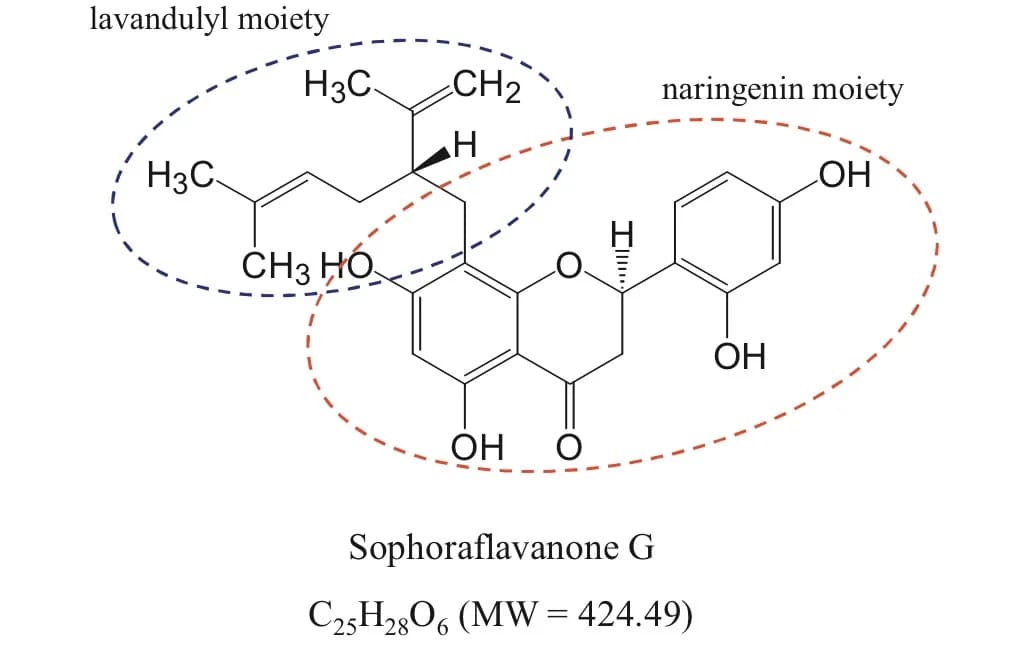
SG contains both lavandulyl and naringenin moieties. https://www.ncbi.nlm.nih.gov/pubmed/23962443
Sophoraflavanone G (SG) is a flavonoid and phytoncide with powerful effects on quenching inflammation and fighting microbes.

Basics Of Sophoraflavanone G
Sophoraflavanone G (SG) is a prenylated flavonoid and volatile phytoncide isolated from the Sophora genus.
It is also known as: R
8-lavandulyl-20-hydroxynaringenin
Norkurarinone
Kushenin
Vexibinol
As a phytoncide, many scientific efforts have been made to use SG in conjunctions with antibiotics to combat antibiotic resistance.

Benefits Of Sophoraflavanone G
1. Inhibits Inflammation
Sophoraflavanone G (SG) can stop Lipolysaccharide (LPS)-induced inflammation by inhibiting Cyclooxygenase-1 (COX-1) and COX-2, as well as 5-Lipoxygenase (5-LOX). R
SG can also reduce inflammatory cytokines such as IL-1b, IL-6, and TNF-a. R
2. Has Antioxidant Properties
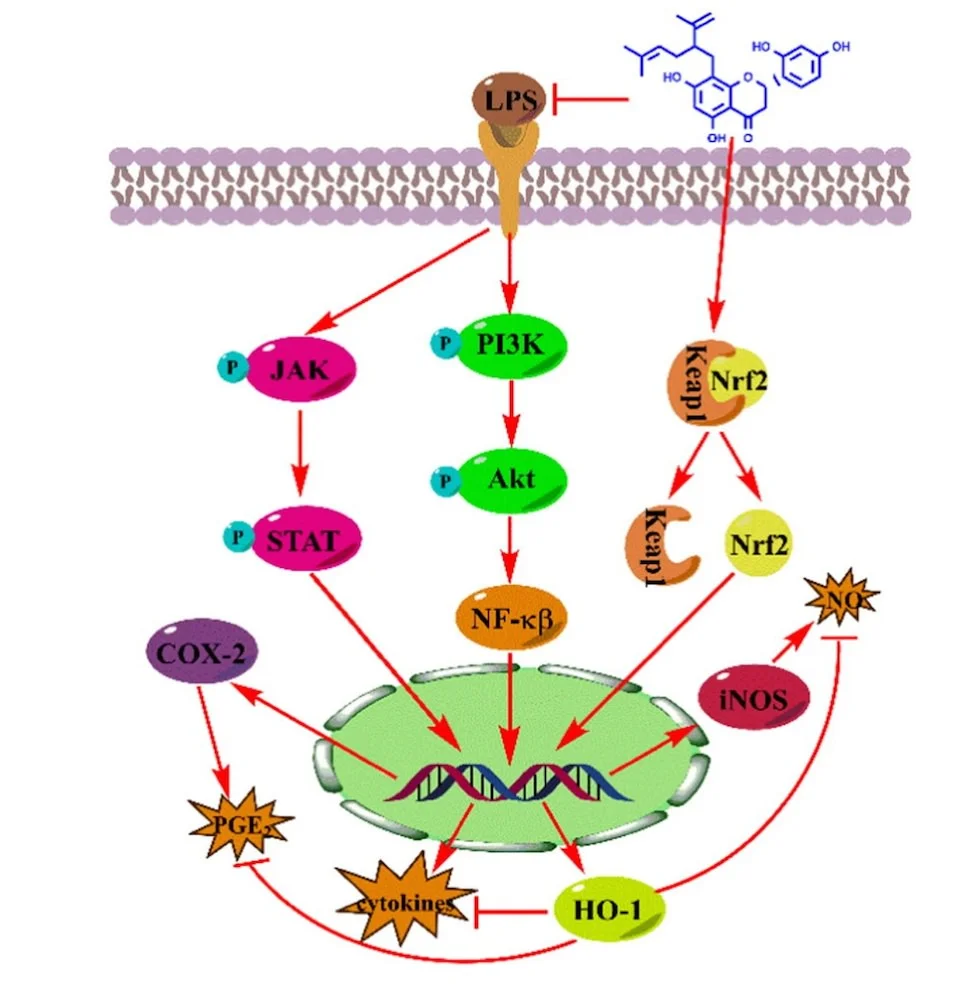
Sophoraflavanone G can induce NRF2 and increase Heme Oxygenase-1 (HO-1) expression. R
This may be beneficial for reducing neuroinflammation in Alzheimer's Disease (AD) and other neurodegenerative conditions. R
3. Enhances The Skin
Eczema - By reducing inflammation, Sophoraflavanone G may be beneficial for treating atopic dermatitis. R
Skin Whitening - By reducing tyrosinase activity, Sophoraflavanone G may help may help with lightening skin. R
4. Combats Cancer
Sophoraflavanone G works on many cancer-fighting mechanisms (e.g. JAK/STAT; ERK/MAPK) and may be beneficial against:
5. Has Antimicrobial Properties

Sophoraflavanone G (SG) has antimicrobial properties.
SG has antibiotic effects on:
Propionibacterium acnes R
Salmonella typhimurium (KCTC 1926) R
Staphylococcus aureus (KCTC 1621) R
Staphylococcus epidermis (ATCC 12228) R
Streptococcus anginosus R
Streptococcus sanguinis R
Streptococcus sobrinus R
VRE (vancomycin-resistant enterococci) R
SG also has biofilm inhibiting properties and can enhance the antibiotic effects of some antibiotics (e.g. gentamicin). R R R R
SG has anti-fungal effects on:
SG has anti-parasitic effects on:
Plasmodium falciparum (anti-malarial) R
SG also has properties to combat Flavi viruses (including Zika, Dengue and Hepatitis C virus). R
6. Enhances Vasodilation
SG also has some vasodilatory properties and can (weakly) inhibit histamine- and serotonin-induced contractions. R
7. Improves Blood Sugar And Fights Diabetes
SG may be beneficial for controlling blood sugar it can as both a-glucosidase and b amylase inhibitors. R
Compared to the diabetes drug Metformin, SG could significantly improve antioxidant levels and reduce blood glucose in diabetic rats. R
8. Protects The Gut
SG can protect against ulcer formation and gastric acid secretion. R R
My Experience With Sophoraflavanone G
...currently sophora extracts...
Natural Sources Of Sophoraflavanone G
Caveats
SG may interact with drugs that inhibit CYP1A2 and CYP2E1 enzymes. R
Mechanism Of Action
Simple:
Increases Caspase-9 R
Increases SOD R
Reduces ALT R
Reduces AST R
Reduces a-glucosidase R
Reduces b-amylase R
Reduces COX1 R
Reduces ERK1/2 R
Reduces Glucose R
Reduces JAK1 R
Reduces JAK2 R
Reduces JAK3 R
Reduces JNK R
Reduces IKKα R
Reduces IKKβ R
Reduces IL-1b R
Reduces IL-6 R
Reduces Insulin R
Reduces Lyn R
Reduces Mcl-1 R
Reduces MDA R
Reduces P38 R
Reduces SGLT R
Reduces Src R
Reduces STAT1 R
Reduces STAT5b R
Reduces Survivin R
Reduces TNF-a R
Reduces Trx R
Reduces Txnip R
Reduces TYK2 R
Reduces 5-LOX R
Advanced:
In cancer cells, sophoraflavanone G inhibited tyrosine phosphorylation of STAT proteins in Hodgkin's lymphoma and tyrosine phosphorylation of STAT3 in solid cancer cells by inhibiting phosphorylation of the Janus kinase (JAK) proteins, Src family tyrosine kinases, such as Lyn and Src, Akt, and ERK1/2...Sophoraflavanone G also inhibited nuclear factor-κB (NF-κB) signaling in multiple myeloma cells...sophoraflavanone G inhibited cancer cell proliferation and induced apoptosis by regulating the expression of apoptotic and anti-apoptotic proteins. R
In leukemia, SG activated caspase-3 and caspase-9, and downregulated Bcl-2 and Bcl-xL...SG also upregulated Bax and released cytochrome c from the mitochondria into the cytoplasm, enabling apoptosis via the mitochondrially-mediated "intrinsic" pathway. R
SG can bind to Estrogen Receptors (ERs) in rat uterus. R
SG was able to inhibit the neuroinflammation by MAPKs, PI3K/AKT, JAK/STAT and Nrf2/HO-1 signaling pathways. R
SG can also bind to GABA receptors. R
Sophoraflavanone G is considered to exert an antibacterial effect by reducing the fluidity of cellular membranes. R
More Research
Activated carbon fiber (ACF) filters with extract from S. flavescens has natural antibacterial activity against various pathogens. R
Jacob Gordon
INHC, FMT-C
Integrative Nutrition Health Coach
I cover mold illness, post-viral recovery, methylation, and complex chronic disease, drawing on ten years of clinical research, work inside a functional medicine clinic, and my own recovery from all of it. Every claim here is cited.
Book a ConsultationRelated Protocols & Supplements
Deep-dive chapters and recommended supplements for this topic
Electrolyte Complex
1 scoop/day
CoQ10
200mg/day
Magnesium Glycinate
400mg at bedtime