Magnesium: Forms, Dosing, And What Each One Actually Does
By Jacob Gordon, INHC, FMT-CThis article contains affiliate links. As an Amazon Associate, MyBioHack earns from qualifying purchases at no extra cost to you. We only link products we research and stand behind.
Magnesium is a cofactor for more than 600 enzymatic reactions, but the single most under-explained fact about it is that free ATP is not the molecule your cells actually run on, Mg-ATP is.
In this post, we will discuss what magnesium does at the cellular level, why subclinical deficiency is more common than most doctors admit, why the standard blood test for it is close to useless, how the major forms differ in absorption and use case, what the evidence actually shows across a dozen conditions, how magnesium interacts with drugs, potassium, and vitamin D, and how to dose it without wasting money or your bowel tolerance.

What Magnesium Actually Does In The Body
Magnesium is the second most abundant intracellular cation in the body, and it is required as a cofactor for over 600 enzymes, with another 200 or so needing it as an activator. R
Those reactions span energy metabolism, protein synthesis, DNA repair, RNA transcription, and neuromuscular signaling, which is why deficiency shows up as a grab bag of symptoms rather than one clean syndrome. R
The fact I think gets skipped in almost every magnesium article I have read is what magnesium is actually doing at the enzyme's active site.
ATP does not float around your cells as a free anion.
It is chelated to a magnesium ion, forming Mg-ATP, and Mg-ATP, not free ATP, is the true substrate that kinases, ATPases, and nucleic-acid-synthesizing enzymes recognize and bind. R
Without enough magnesium in the cytosol, ATP-dependent enzymes are not just short on fuel, they are short on the correctly shaped substrate they evolved to grab, which is a meaningfully different problem than simple energy insufficiency.
Inside the mitochondria specifically, magnesium activates the terminal complex of oxidative phosphorylation, F0/F1-ATP synthase, so magnesium status sits directly upstream of how much ATP your mitochondria can actually produce, not just how it gets used afterward. R
Roughly half to sixty percent of total body magnesium lives in bone, another quarter or so in skeletal muscle, and the rest is distributed across soft tissue and the small extracellular pool.
That extracellular pool, the part a standard blood draw measures, is well under one percent of the total, which is the root of nearly every diagnostic headache covered later in this post. R
Why Subclinical Magnesium Deficiency Is So Common
I want to be honest about this section rather than run the usual scare-copy version of it, because the subclinical deficiency argument is real but it is also overstated in a lot of supplement marketing.
Using NHANES data, one analysis found that 46 percent of Americans have total usual magnesium intake, food plus supplements combined, below the estimated average requirement. R
A separate review puts the figure higher, estimating that 56 to 68 percent of Americans do not meet the RDA for magnesium through diet alone, and lists agricultural soil depletion, food processing, and low intake of magnesium-dense foods like leafy greens, nuts, seeds, and whole grains as the main drivers. R
Both of those numbers describe intake shortfalls, not clinical deficiency, and that distinction matters, because a diet that is short of the RDA is a real problem worth fixing but it is not the same claim as "most people are magnesium deficient," which is the sloppier version of this argument you will see in ads.
Modern refined grains lose most of their magnesium in milling, since the mineral concentrates in the germ and bran that get stripped out. R
On top of low intake, several extremely common exposures increase magnesium loss or blunt absorption on their own, independent of diet, including chronic psychological stress, heavy sweating, alcohol, and a handful of widely prescribed medications I cover in detail later in this post. R
Subclinical magnesium deficiency is also increasingly framed in the cardiology literature as a driver of cardiovascular risk in its own right, not just a downstream marker of poor diet, though this framing is more contested than the intake statistics above. R
If you want a broader look at how magnesium sits alongside the other minerals people typically run short on, I go through the interactions and testing logic in my mineral balancing post.
Why Serum Magnesium Is A Nearly Useless Test
This is the part of the magnesium conversation that gets glossed over the most, and it is the reason I do not trust a "normal magnesium" result on a standard metabolic panel to rule anything out.
Less than one percent of total body magnesium sits in the blood, and the body defends that extracellular concentration aggressively by pulling magnesium out of bone and muscle to keep serum levels stable even as intracellular stores run low. R
A comprehensive review on this specific problem, bluntly titled around the challenge of diagnosing magnesium status at all, points out that serum magnesium stays inside the normal range until deficiency is already advanced, and that no single test currently available is a validated gold standard across every tissue compartment. R
That review still lays out the best available alternatives, in rough order of how commonly they are actually used clinically.
Red blood cell magnesium (RBC magnesium) reflects intracellular stores far more closely than serum, since erythrocytes hold their magnesium inside the cell rather than in plasma, and it is the test I use first when I suspect deficiency despite a normal serum result. R
The magnesium loading test, also called the magnesium retention or tolerance test, is the closest thing the research literature has to a gold standard, and it works by giving an intravenous magnesium load, then measuring how much of it the kidneys excrete over the next 24 hours versus how much the body retains. R
A magnesium-replete person excretes most of the load, while a deficient person retains a disproportionate share of it because the tissues are pulling it in, but the test requires IV access and a full day of urine collection, which is why almost nobody actually runs it outside of research settings. R
Ionized magnesium, the free, biologically active fraction not bound to protein or complexed with anions, is theoretically the most physiologically meaningful number, but it requires ion-selective electrode equipment that most commercial labs do not run, so access is the limiting factor rather than the science. R
The honest summary is that RBC magnesium is the best test you can actually get without a research protocol, serum magnesium is worth ordering because it is free and can catch severe deficiency, but a normal serum result should never be read as "magnesium status is fine."
Magnesium Forms Compared
The salt or chelate magnesium is bound to changes solubility, absorption, gut tolerance, and in a couple of cases, tissue targeting.
Magnesium Glycinate (Bisglycinate)
Magnesium glycinate, also sold as magnesium bisglycinate, binds magnesium to two molecules of the amino acid glycine.
In patients with ileal resection and documented malabsorption, a group at genuinely high risk for poor mineral uptake, magnesium diglycinate produced meaningfully better absorption than magnesium oxide and was tolerated by every patient in the trial. R
Because the chelate does not depend on stomach acid the way some inorganic salts do, and because it tends to cause less osmotic diarrhea than citrate or oxide at comparable elemental doses, magnesium glycinate is the form I reach for most often with clients, particularly for sleep and anxiety, since glycine itself is an inhibitory neurotransmitter at its own receptor.
Magnesium Citrate
Magnesium citrate pairs magnesium with citric acid, and roughly two thirds of it stays complexed as soluble magnesium citrate in solution rather than dissociating, which is part of why it outperforms magnesium oxide on absorption in head-to-head human testing. R
At higher doses the unabsorbed fraction pulls water into the bowel by osmosis, so magnesium citrate is a reasonable choice when constipation is part of the picture, but it is also the form most likely to cause loose stools if you push the dose for repletion rather than laxative effect.
Magnesium L-Threonate
Magnesium L-threonate is the newest widely marketed form, developed specifically to raise brain magnesium rather than just serum or muscle magnesium.
The foundational evidence is a rodent study, and it is worth being precise about what it actually showed, magnesium-L-threonate raised brain magnesium and improved learning, working memory, and short and long-term memory in rats, along with increases in hippocampal synaptic density markers. R
That is animal data, not human data, and the extrapolation to human cognition is where most of the marketing gets ahead of the science.
The one human randomized controlled trial, conducted in older adults with cognitive impairment using the proprietary formulation MMFS-01, did find a significant improvement in overall cognitive ability versus placebo, but the trial had only 44 participants total, one author was affiliated with the company that makes the compound, and the secondary sleep and anxiety outcomes were confounded by a strong placebo effect. R
I think magnesium L-threonate is a reasonable choice for brain fog or cognitive complaints given the mechanism, but "proven brain-penetrant superiority" is not where the human evidence currently sits, and it is the most expensive form per milligram of elemental magnesium by a wide margin.
Magnesium Malate
Magnesium malate binds magnesium to malic acid, a Krebs cycle intermediate involved in the same ATP-generating pathway magnesium itself is a cofactor for.
The main human trial, a pilot study of magnesium plus malic acid ("Super Malic") in fibromyalgia, is a good example of honest mixed evidence rather than a clean win.
In the blinded, fixed low-dose crossover phase, there was no clear treatment effect over placebo, but in the subsequent open-label phase, where dosing was escalated and treatment continued for six months, participants had significant reductions across all three primary pain and tenderness measures. R
Read plainly, that means the fixed low dose used in the controlled arm was not enough to show a signal, and the positive result came from a design that could not rule out a placebo effect building over time.
I still use magnesium malate with fatigue-heavy clients given the plausible mechanism, but I am upfront that the fibromyalgia trial is a big MAYBE, not a settled result.
Magnesium Taurate
Magnesium taurate combines magnesium with taurine, and the pairing is a deliberate one built on a specific hypothesis rather than a random combination.
Taurine and magnesium each independently lower blood pressure, resist cholesterol-driven atherogenesis, stabilize platelets, and reduce arrhythmia risk, so the proposed rationale for combining them is complementary vascular protection through overlapping but distinct mechanisms. R
I want to flag that this rationale comes from a hypothesis paper, not a randomized trial of the combined compound itself, so magnesium taurate is a mechanistically sound choice for cardiovascular-focused clients, but it is riding on the individual trial data for magnesium and taurine separately more than on dedicated trials of the taurate salt.
Magnesium Chloride, Sulfate, And Whether Topical Actually Works
Magnesium chloride and magnesium lactate both showed meaningfully better fractional absorption than magnesium oxide in a controlled comparison of commercial US preparations, magnesium oxide absorbed at only about 4 percent while chloride, lactate, and aspartate were roughly equivalent to each other and clearly superior. R
Oral magnesium chloride can be acidic and irritating to some people's stomachs, which is the tradeoff for its solid absorption.
Magnesium sulfate (Epsom salt) is different from the rest of this list, because its main clinical use is intravenous, for preeclampsia, severe asthma exacerbations, and certain arrhythmias, not oral repletion, since oral magnesium sulfate acts mainly as a strong osmotic laxative rather than a meaningful magnesium source.
The topical version of this question, whether magnesium from Epsom salt baths or magnesium sprays crosses the skin in amounts that matter, deserves an honest answer rather than a dismissive one, and I have written the full biophysics of it separately in Topical Magnesium Cannot Cross Your Skin.
The short version is that the one rigorous pilot trial of transdermal magnesium cream did find a larger percentage rise in serum and urinary magnesium in the treatment group than placebo over two weeks, but statistical significance only held in a non-athlete subgroup with a sample this small, so the evidence is a genuine maybe rather than either a clean yes or a clean no. R
I would not rely on Epsom salt baths or magnesium oil as your primary repletion strategy, but I also would not tell someone to stop using them if they find the ritual relaxing.
Magnesium Oxide
Magnesium oxide is the cheapest and most widely sold form on shelf, and it is also the worst absorbed, with fractional absorption around 4 percent in direct testing against other salts. R
It has a real clinical use, as a first-line agent for chronic constipation, where a randomized trial found a 68.3 percent response rate for overall symptom improvement against 11.7 percent for placebo, with no severe treatment-related adverse events. R
For raising tissue magnesium rather than moving your bowels, oxide is close to the worst form you could pick.
Magnesium Orotate
Magnesium orotate pairs magnesium with orotic acid, and its clinical use case is fairly narrow and cardiac-specific, orotic acid appears to support myocardial energy status by stimulating glycogen and ATP synthesis in injured heart tissue, and the compound has been studied in coronary patients, heart failure, angina, arrhythmias, and post-bypass magnesium depletion. R
It is not a form I would reach for outside of cardiac-specific goals, and it is one of the pricier options relative to elemental magnesium delivered.
Magnesium Lactate And Magnesium Aspartate
Both magnesium lactate and magnesium aspartate absorbed as well as magnesium chloride, and clearly better than magnesium oxide, in the same head-to-head bioavailability comparison covering all four salts. R
Neither is heavily marketed on its own, largely because they are less differentiated from a use-case standpoint than glycinate, citrate, or threonate, but the underlying absorption data is solid.
Evidence By Outcome
Anxiety And Depression
A systematic review of magnesium supplementation for subjective anxiety and stress found signals of benefit, particularly in more vulnerable populations, but was explicit that "the quality of the existing evidence is poor," which is the honest state of this literature rather than the confident tone most anxiety-supplement marketing uses. R
On the depression side, a randomized clinical trial of over-the-counter magnesium chloride found it produced a clinically significant improvement in depression symptom scores within two weeks, with effects sustained through a six-week follow-up. R
A broader review of magnesium in neurological disorders concludes there is comparatively strong data supporting a role in depression and migraine, with only emerging evidence for anxiety, chronic pain, and stroke, so I would not weight anxiety and depression evidence equally even though they get bundled together constantly. R
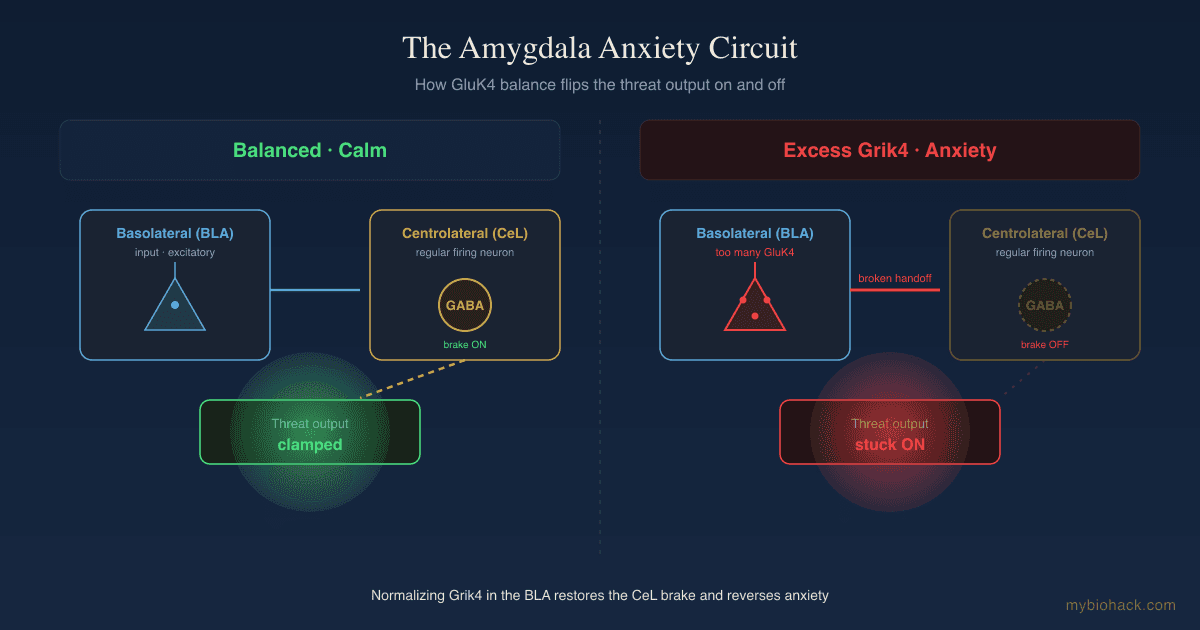
The NMDA-blocking mechanism behind magnesium's anxiety effect is one input into a much larger glutamate circuit, which I go through in more depth in Grik4, The Amygdala, And The Glutamate Circuit Behind Anxiety.
Asthma
Intravenous magnesium sulfate has an actual guideline-supported role here, and this is one of the few uses on this list where the evidence is genuinely strong rather than "promising."
In adults with acute severe asthma that has not responded adequately to first-line bronchodilators and steroids, a Cochrane review found IV magnesium sulfate reduced hospital admissions and improved lung function. R
The companion Cochrane review in children found a similar benefit, supporting IV magnesium as an add-on therapy in severe pediatric exacerbations. R
This is an emergency-department intervention, not a rationale for oral magnesium in stable asthma, and I want to be clear those are not interchangeable claims.
Atrial Arrhythmia
A meta-analysis of seven double-blind, placebo-controlled trials found that intravenous magnesium significantly reduced the incidence of atrial fibrillation after coronary artery bypass grafting, the most common complication of that surgery. R
This is a specific, well-studied perioperative use case, and it should not be generalized into a claim that oral magnesium supplementation prevents arrhythmia broadly, since that is a different question with much thinner data.
Blood Pressure
A meta-analysis of 34 randomized, double-blind, placebo-controlled trials covering just over 2,000 participants found that oral magnesium supplementation, at a median dose of 368 mg per day for about three months, produced a modest but statistically significant reduction in both systolic and diastolic blood pressure, roughly 2 mmHg systolic and under 2 mmHg diastolic. R
That effect size is real but small, and it is dose-dependent, with higher doses associated with larger reductions across the pooled trials. R
I go into the broader nitric oxide and vascular tone picture, of which magnesium is one input among several, in my post on blood pressure regulation.
Constipation
Beyond the standalone trial referenced above under magnesium oxide, magnesium's laxative effect is dose-dependent and mechanistic rather than a side benefit, since unabsorbed magnesium in the bowel pulls water in osmotically. R
This means the line between "therapeutic for constipation" and "unwanted diarrhea" is the same osmotic mechanism at different doses, which is worth keeping in mind when choosing a form and dose for a non-constipation goal.
Migraine Prevention
This is the outcome with the most formal backing of anything on this list.
The American Academy of Neurology and American Headache Society's evidence-based guideline rates magnesium as "probably effective" for migraine prevention, a Level B recommendation, in the same tier as several NSAIDs and feverfew. R
A subsequent systematic review specifically evaluating the evidence base concluded that prophylactic treatment with high-dose magnesium dicitrate, around 600 mg, appears to be a safe and reasonably cost-effective strategy in clinical practice, based on the strongest trial in the pool showing a significant reduction in attack frequency versus placebo. R
Migraine sufferers also show a higher rate of magnesium deficiency than the general population, which is part of the mechanistic rationale for why repletion helps a subset of patients specifically. R
If your migraine pattern overlaps with vertigo or positional symptoms, I cover that specific overlap in Vestibular Migraine And Chronic Vertigo.
Muscle Cramps
This is the outcome where I think the supplement industry has most overpromised relative to the trial data.
The updated Cochrane review on magnesium for skeletal muscle cramps concludes it is unlikely that magnesium supplementation provides a clinically meaningful benefit, and the negative signal is strongest specifically in older adults, the population most commonly told to take magnesium for night cramps. R
Magnesium still plausibly helps when a cramp is genuinely driven by deficiency, dehydration, or an electrolyte imbalance, for example in athletes or pregnancy-associated cramps, which is a narrower claim than "magnesium fixes cramps" and is consistent with why the pooled older-adult data comes back flat.
POTS And Dysautonomia
Magnesium is relevant to postural orthostatic tachycardia syndrome (POTS) mechanistically, since it participates in vascular tone regulation, nerve conduction, and cardiac rhythm, all systems implicated in dysautonomia, but I want to be direct that large POTS-specific clinical trials of magnesium do not exist. R
Jacob's hypothesis, laid out in the Junction Dysfunction framework, is that magnesium supports vaso-adaptation in the vascular subtype of POTS by stabilizing endothelial and neuromuscular signaling under the capillary stress that framework describes, though this remains a working clinical model rather than a published finding, covered further in Microcapillaries And Vascular POTS.
If you are working through POTS specifically, my root causes of POTS post covers the broader picture magnesium is one piece of.
Premenstrual Syndrome (PMS)
In a randomized, double-blind trial, magnesium (as magnesium pyrrolidone carboxylic acid, 360 mg three times daily from day 15 of the cycle through menstruation) significantly improved total premenstrual symptom scores compared with placebo, with the strongest effect on the "negative affect" symptom cluster specifically. R
This is an older trial with a small sample, so I would treat it as a genuine positive signal rather than a definitive answer, but the mechanism (magnesium's role in GABA tone and neuromuscular excitability across the luteal phase) is coherent with the finding.
Sleep
Magnesium supports GABAergic tone and interacts with melatonin regulation, which is the mechanistic story behind its reputation as a sleep aid. R
The actual trial evidence is weaker than the marketing around it.
A 2021 systematic review and meta-analysis in older adults, pooling only three randomized controlled trials with 151 total participants, found magnesium reduced the time it took to fall asleep by about 17 minutes versus placebo, but did not significantly improve total sleep time, and the review authors rated the underlying evidence quality as low to very low by GRADE criteria, explicitly stating the literature is "substandard for physicians to make well-informed recommendations." R
I still use magnesium for sleep clinically because the risk is low and the mechanism is sound, but I do not oversell it as a proven insomnia treatment, and I go through the fuller sleep supplement stack, magnesium included, in my sleep supplements guide.
Type 2 Diabetes And Insulin Sensitivity
A systematic review and meta-analysis of 18 double-blind randomized controlled trials, 12 in people with diagnosed diabetes and 6 in people at high risk, found magnesium supplementation reduced fasting glucose in the diabetic group and improved glucose tolerance measures in the at-risk group. R
Magnesium is a required cofactor for enzymes in glucose metabolism and insulin signaling, which is a plausible mechanistic basis for the finding rather than a coincidental association. R
If you are managing insulin resistance more broadly, the mechanisms around AMPK and metabolic signaling overlap with what I cover in my metformin post.
Drug Interactions And Depletion
Proton pump inhibitors (PPIs) are one of the best-documented causes of drug-induced hypomagnesemia, serious enough that the FDA issued a specific safety communication about it, and an analysis of that FDA adverse event data confirmed hypomagnesemia as a real, if uncommon, PPI-associated risk. R
If you are on a PPI long-term, I would treat that as a standing reason to periodically check magnesium status, and I cover the broader tradeoffs of long-term acid suppression in my proton pump inhibitors series.
Loop diuretics and thiazide diuretics both cause magnesium wasting, but through different mechanisms, loop diuretics reduce the passive reabsorption that normally happens in the thick ascending limb of the kidney, while thiazides specifically downregulate the TRPM6 magnesium channel in the distal nephron, a mechanism confirmed directly in both drug-treated and TRPM6-knockout animal models. R R
Metformin has a genuinely paradoxical relationship with magnesium worth knowing about if you use it.
In a large diabetes cohort, patients on metformin had lower serum magnesium than those managed with diet alone, and low magnesium was independently associated with worse cardiovascular outcomes in that same population, yet metformin itself showed no independent association with cardiovascular disease, which is the paradox the study's authors flagged directly. R
The practical takeaway is not "avoid metformin," which has strong benefits of its own I cover separately, but that magnesium status is worth monitoring in long-term metformin use rather than assuming it is unaffected.
Alcohol depletes magnesium through several compounding routes, including direct renal wasting, reduced dietary intake, and gastrointestinal losses, and the effect is well established enough to have its own dedicated review literature going back decades. R
This is one of several reasons magnesium status tends to run low in people who drink regularly, a topic I address more broadly in why I don't drink alcohol.
Magnesium can also reduce the absorption of several oral medications if taken at the same time, through direct chelation in the gut.
Fluoroquinolone antibiotics form chelate complexes with magnesium (and other divalent cations) that measurably reduce antibiotic absorption and bioavailability, an effect demonstrated in human pharmacokinetic studies and confirmed computationally across multiple fluoroquinolone drugs. R R
Bisphosphonates and tetracycline antibiotics are subject to the same chelation chemistry, since they share the same divalent-cation-binding vulnerability as fluoroquinolones.
Levothyroxine absorption is also impaired by co-administered aluminum or magnesium hydroxide, along with several other interfering drug classes, which is part of why levothyroxine is generally dosed away from mineral supplements and antacids. R
As a practical rule, separate magnesium from any of these medications by at least two to four hours in either direction.
Magnesium, Potassium, And Vitamin D
Two interdependencies get missed constantly in how magnesium is discussed, and both are clinically important enough that I want to spell them out directly rather than mention them in passing.
Refractory hypokalemia, potassium that will not correct despite adequate potassium repletion, is very often actually a magnesium problem.
Magnesium normally inhibits the ROMK potassium channel in the kidney, and when intracellular magnesium drops, that inhibition is released, so the kidney keeps secreting potassium regardless of how much you replace, which is the mechanistic reason potassium supplementation alone frequently fails until magnesium is corrected first. R
If you or a client have persistently low potassium that will not budge, checking and correcting magnesium is a more useful move than escalating potassium dosing further.
Vitamin D activation is the second dependency, and it runs in the other direction, vitamin D needs magnesium, not the reverse.
Every enzyme that metabolizes vitamin D, including the hepatic and renal hydroxylation steps that convert it to its active hormonal form, requires magnesium as a cofactor, which means someone who is magnesium-deficient can supplement vitamin D at high doses and still fail to raise their functional vitamin D status the way they expect. R
This is a genuinely underappreciated interaction, and it is part of why I generally check magnesium alongside vitamin D rather than treating them as unrelated line items, a distinction I go through in more depth in Vitamin D Is Not One Thing.
Dosing, Timing, And The Diarrhea Ceiling
The RDA for magnesium ranges from 310 to 420 mg per day depending on age and sex, and the tolerable upper intake level for supplemental magnesium specifically (not counting food sources, which do not cause this problem) is set at 350 mg per day, based on the risk of osmotic diarrhea rather than any toxicity concern. R
That upper limit is a soft ceiling defined by gut tolerance, not a hard safety cutoff, which is why many clinicians, myself included, use higher elemental doses under supervision when documented deficiency justifies it, and why the right approach is to start low and titrate up against your own bowel tolerance rather than jumping straight to a target number.
Diarrhea, cramping, and nausea are the practical signal you have exceeded what your gut can absorb at that dose, not a sign of toxicity, and the fix is simply to back off the dose or split it across more, smaller doses through the day.
For sleep or anxiety-focused use, I generally have people take their dose one to two hours before bed, since the GABAergic and calming effects are the ones you want on board as you wind down, while doses aimed at constipation are better taken with food to blunt the speed of the osmotic effect.
Renal Impairment: The Real Contraindication
Nearly everything in this post assumes normal kidney function, because the kidneys are what keep serum magnesium from climbing when intake goes up.
In chronic kidney disease (CKD), especially stage 4 to 5, that excretory capacity is impaired, and a large nationwide cohort study found magnesium oxide use in CKD patients was associated with increased risk of acute kidney injury, progression to end-stage renal disease, arrhythmia, and myocardial infarction. R
That is not a reason to withhold magnesium from every CKD patient reflexively, since deficiency carries its own real risks in this population, but it is the actual contraindication that deserves attention, not the vague "check with your doctor" line most articles default to.
If you have any degree of kidney disease, magnesium supplementation belongs under direct medical supervision with periodic serum magnesium monitoring, not self-directed dosing.
Testing
For a first-pass look at magnesium status, I use the Magnesium serum test (Quest Diagnostics) because it is inexpensive and can catch frank deficiency, understanding its real limitation is sensitivity, not accuracy.
For a more meaningful read on tissue status, I use the Magnesium, RBC test (Quest Diagnostics), which reflects intracellular stores far better than serum and is my default when a client's symptoms do not match a normal serum result.
I use the Nutrient Zoomer (Vibrant Wellness) to assess magnesium alongside the other vitamins, minerals, and amino acids it competes and interacts with, since magnesium status rarely moves in isolation from zinc, copper, B6, and vitamin D.
For a functional read on whether magnesium-dependent energy pathways are actually keeping up, the Cellular Zoomer (Vibrant Wellness) covers organic acids that shift when ATP-generating pathways are under strain.
The magnesium loading test is the closest thing to a gold standard in the research literature, but it requires IV access and 24-hour urine collection, so it stays in research settings and specialist clinics rather than being something I order routinely. R
Mechanisms Of Action
Simple:
- Magnesium is the cofactor cells need to actually use ATP, their energy currency, not just to make it.
- It calms the nervous system by blocking excess calcium signaling at a key receptor involved in overexcitation.
- It relaxes blood vessels and muscle by competing with calcium at the same binding sites.
Advanced:
- Mg-ATP as the true substrate. Magnesium chelates ATP to form Mg-ATP, the actual molecular species that kinases, ATPases, and nucleotide-processing enzymes bind, meaning cytosolic magnesium availability, not just ATP concentration, gates the rate of ATP-dependent reactions throughout the cell. R
- Mitochondrial ATP synthase activation. Magnesium directly activates F0/F1-ATP synthase, the terminal enzyme complex of oxidative phosphorylation, positioning magnesium status upstream of mitochondrial ATP output itself. R
- NMDA receptor voltage-dependent block. Magnesium sits inside the NMDA receptor's ion channel pore and blocks it in a voltage-dependent manner, limiting excessive calcium influx during neuronal excitation, the foundational mechanism behind magnesium's calming and neuroprotective reputation. R
- Calcium channel antagonism. Oral magnesium functions as a natural calcium channel blocker, increasing nitric oxide availability, improving endothelial function, and producing both direct and indirect vasodilation in vascular smooth muscle. R
- ROMK channel inhibition. Magnesium normally suppresses the ROMK potassium channel in the distal nephron, and loss of that inhibition during magnesium deficiency drives excess renal potassium secretion, the mechanism behind magnesium-refractory hypokalemia. R
Genetics
TRPM6
TRPM6 encodes a magnesium-permeable ion channel that handles intestinal magnesium absorption and renal reabsorption in the distal convoluted tubule, and it is the single most studied gene in human magnesium homeostasis.
Loss-of-function mutations in TRPM6 cause hereditary hypomagnesemia with secondary hypocalcemia, a rare but severe autosomal-recessive condition identified through positional cloning of the gene itself. R
Beyond rare disease mutations, common variation near TRPM6 also associates with normal population-level differences in serum magnesium in genome-wide association studies. R
Thiazide diuretics acquired their magnesium-wasting side effect through this same channel, since thiazide use downregulates TRPM6 expression directly. R
CNNM2
CNNM2 encodes a basolateral membrane protein required for renal magnesium handling, expressed primarily in the kidney's distal convoluted tubule.
Mutations in CNNM2 cause a dominant form of hypomagnesemia, and in some patients the presentation extends beyond electrolyte disturbance to seizures and intellectual disability, reflecting how central magnesium transport is to neurological development and function. R
A genome-wide association study also found common CNNM2 variants associated with population-level serum magnesium differences, alongside CNNM3 and CNNM4, suggesting this transporter family matters for common variation, not just rare disease. R
SLC41A1
SLC41A1 encodes a sodium-magnesium exchanger involved in cellular magnesium efflux, and it is a gene I find genuinely interesting because of its disease associations beyond classic mineral-wasting syndromes.
A specific gain-of-function variant, p.A350V, enhances the exchanger's magnesium efflux activity by roughly 69 percent in functional testing, and this variant has been proposed as a Parkinson's disease risk factor, on the hypothesis that excess magnesium efflux could drive the chronic intracellular magnesium deficiency documented in Parkinson's brain tissue. R
This is preliminary mechanistic work, not an established causal pathway, but it is a useful example of how a magnesium transporter gene can matter well outside the electrolyte panel.
More Research
Common genetic variation and serum magnesium. A genome-wide association study identified six genomic regions, near MUC1, ATP2B1, DCDC5, TRPM6, SHROOM3, and MDS1, significantly associated with normal population variation in serum magnesium, which is a useful reminder that magnesium status has a real heritable component even outside of rare familial mutations. R
Fibromyalgia and chronic fatigue. Beyond the malate trial covered above, magnesium's plausible role in fatigue-associated conditions rests more on its ATP-cofactor mechanism than on a deep bench of positive human trials, and I would treat this as an area to watch rather than a settled indication.
For biomarker testing I use the Magnesium, RBC test (Quest Diagnostics) as my default clinical screen, and the Nutrient Zoomer (Vibrant Wellness) when I want the fuller mineral and vitamin picture magnesium sits inside of, rather than a single isolated number.
SLC41A1 and neurodegeneration. The Parkinson's association covered in the genetics section above is worth watching as this line of research matures, since it would reframe SLC41A1 variants as a mechanistic contributor to intracellular magnesium deficiency in neurodegenerative disease, a much bigger claim than the current preliminary data supports.
Jacob Gordon
INHC, FMT-C
Integrative Nutrition Health Coach
I cover mold illness, post-viral recovery, methylation, and complex chronic disease, drawing on ten years of clinical research, work inside a functional medicine clinic, and my own recovery from all of it. Every claim here is cited.
Book a ConsultationRelated Protocols & Supplements
Deep-dive chapters and recommended supplements for this topic
Electrolyte Complex
1 scoop/day
CoQ10
200mg/day
Magnesium Glycinate
400mg at bedtime