Mineral Balancing
By Jacob Gordon, INHC, FMT-CThis article contains affiliate links. As an Amazon Associate, MyBioHack earns from qualifying purchases at no extra cost to you. We only link products we research and stand behind.
Mineral dysregulation is a hidden driver of fatigue and cellular dysfunction that standard blood tests rarely detect.
In this post, we will discuss what mineral balancing is, how key mineral ratios dictate cellular energy, which conditions overlap with mineral depletion, and how to improve your status.

Basics Of Mineral Balancing
Mineral balancing is the process of restoring the delicate physiological ratios of macrominerals and trace minerals inside our tissues.
Standard clinical lab work usually assesses serum levels, which are tightly regulated by the body to maintain blood homeostasis and do not accurately reflect intracellular reserves.
Magnesium is the clearest example, since direct measurement of erythrocyte intracellular ionized magnesium diverges from the serum value in both physiological and pathological states. R
Minerals act as the essential cofactors for nearly every enzyme in the body.
Without the correct absolute amounts and relative ratios of minerals, fundamental processes like ATP production and methylation stall.
The four primary macrominerals that govern energy metabolism and stress response are calcium, magnesium, sodium, and potassium.
When tracing back complex symptom webs, I often find that attempting to force biochemical pathways with isolated vitamins fails unless the underlying mineral foundation is stabilized first.
The reason is that most of the enzymes those vitamins feed are metalloenzymes, so the vitamin is the substrate and the mineral is the machine.
Adding substrate to a machine that is missing a part produces no output and a lot of frustration.
What Causes Mineral Dysregulation
The primary drivers of intracellular mineral depletion include: (not exclusive list)
- Chronic psychological stress (stress hormones raise extracellular magnesium, which is then excreted renally, and a persistent stressor turns that into depletion) R R
- Diuretic medications (thiazides specifically, which downregulate the TRPM6 channel in the distal tubule) R R
- Heavy metal bioaccumulation (cadmium and zinc compete for the same binding residues on metallothionein) R
- High phytic acid diets (binds tightly to zinc, iron, and calcium in the gut, and reducing it measurably raises their bioaccessibility) R
- Mast cell degranulation (histamine handling and zinc status are linked at the epithelium, though the human evidence here is thinner than the rest of this list) R
- Poor soil quality (USDA composition data for 43 garden crops shows measurable declines between 1950 and 1999) R
- Refeeding after prolonged fasting (insulin drives potassium, phosphate, and magnesium into cells, dropping serum levels sharply) R R
- Reverse osmosis water (removes the calcium and magnesium that drinking water normally contributes, which is why remineralization matters) R R
The refeeding entry deserves a note, because it is the one most often stated backwards.
Fasting itself does not strip electrolytes so much as the meal that ends it does, since the insulin surge pushes potassium, phosphate, and magnesium intracellularly and drops their serum concentrations. R
Hypophosphatemia is the cardinal biochemical feature of that shift rather than a footnote to it. R
The water question also needs stating carefully.
The defensible claim is that demineralized water removes a real dietary contribution of calcium and magnesium, and that higher drinking water calcium and magnesium associate with lower stroke risk in population cohorts. R
Low mineral water intake has also been linked to reduced bone and tooth mineral density. R
How Mineral Burn Rate Works
Our bodies use minerals at different rates depending on our autonomic nervous system state.
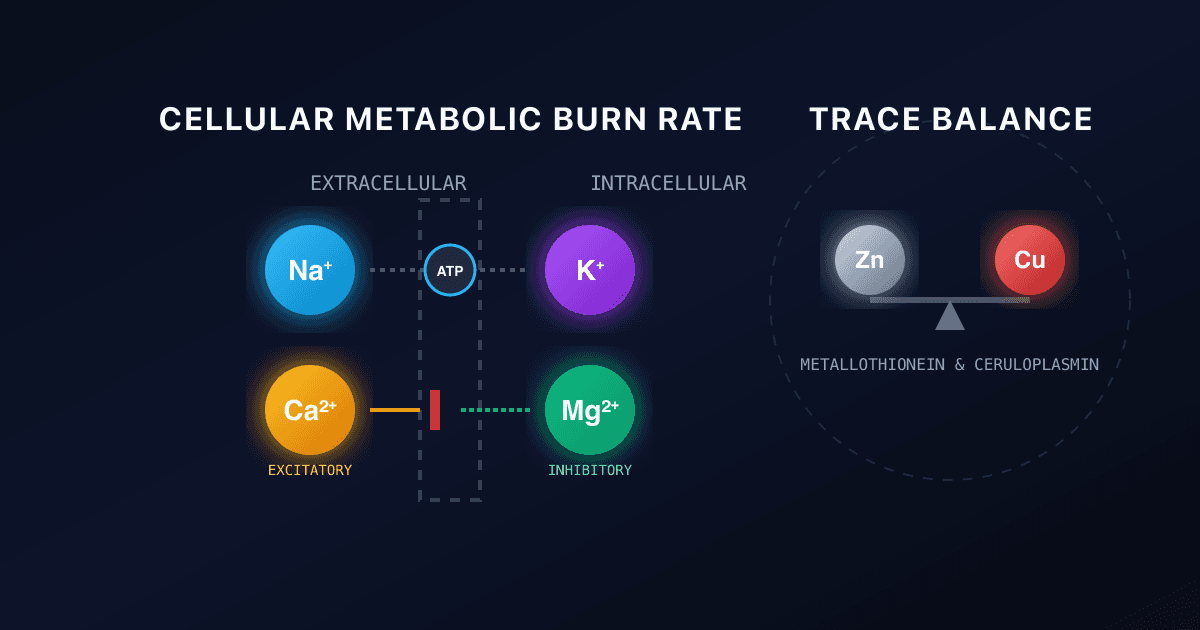
When we are pushed into a chronic sympathetic (fight-or-flight) state, the adrenal glands demand higher levels of sodium to elevate blood pressure.
This adrenal compensation depletes magnesium, which acts as the body's primary brake pedal against over-excitation. R
The relationship runs in both directions, which is why it is described in the literature as a vicious circle rather than a one-way drain. R
Low magnesium raises stress reactivity, and the resulting stress response excretes more magnesium.
There is direct human evidence for the excretion half of that loop, with anxiety during exam periods associating with increased urinary magnesium output. R
Individual reactivity differs, and Type A subjects show a larger catecholamine response to stress alongside a small but significant fall in red blood cell magnesium. R
As magnesium falls, intracellular calcium is allowed to rise unopposed, keeping the cell in a rigid, excited, and energy-demanding state. R
The resulting high "burn rate" eventually exhausts the metabolic reserve, leading to the parasympathetic collapse known as "adrenal fatigue" or HPA axis dysfunction.
Reversing this process requires understanding the interconnected web of minerals, because supplementing one exclusively will always displace another.
This is also why the burn rate concept is more useful clinically than a static deficiency label.
Two people can have the same magnesium number while one is stable and the other is running through their reserve every day, and only the second one will relapse the moment supplementation stops.
The Ratios That Matter More Than The Numbers
A single mineral value in isolation is close to meaningless, because these elements compete for the same transporters, the same binding proteins, and the same enzymes.
Zinc to copper.
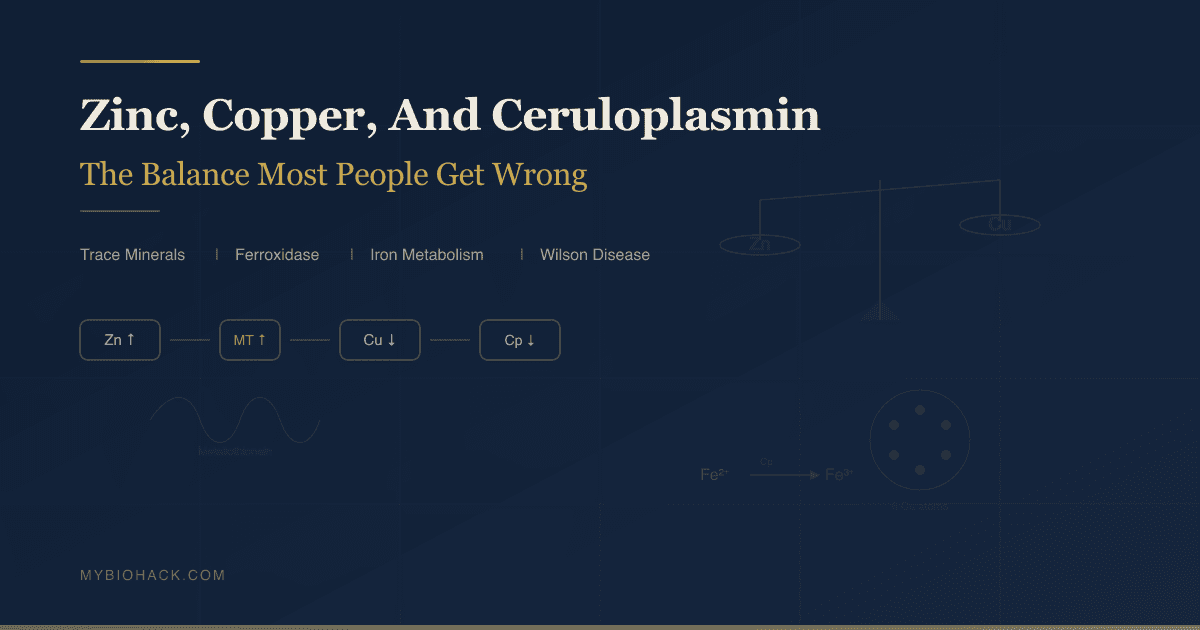
Zinc induces intestinal metallothionein, which binds copper more avidly than zinc and traps it in the enterocyte to be shed with the cell. R
This is the mechanism behind zinc-induced copper deficiency, and it is why a zinc supplement taken alone for months is a copper problem waiting to happen.
Dietary combinations of zinc and copper affect mitochondrial energy metabolism directly rather than only affecting the two minerals themselves. R
Calcium to magnesium.
Magnesium restrains calcium entry, so the ratio between them sets cellular excitability rather than either value alone. R
Minerals as a group carry a documented relationship to ischaemic heart disease, which is the clinical end of that same excitability and vascular story. R
Copper to iron.
Ceruloplasmin is a copper-dependent ferroxidase, and it oxidizes ferrous iron to the ferric state, which is precisely the step that prevents iron from driving the Fenton reaction. R
Without adequate functional copper, iron is not safely handled, and iron and copper dysregulation travel together in conditions like fatty liver. R
This is the single most useful idea in mineral work, because it explains why supplementing the deficient mineral often fails.
If iron is low because copper is not functional, iron will not correct until copper does.
If magnesium keeps falling because the stress axis is running hot, magnesium will not hold until the stress load changes.
The mineral that shows up low on a test is often the symptom rather than the target.
This is also the reason mineral protocols are slow.
Correcting a ratio means moving two things in opposite directions without overshooting either, and the tissue compartment that actually matters refills far more slowly than the serum number moves.
Mineral Dysregulation And Overlapping Conditions
Mineral imbalances are frequently a root cause or perpetuating factor in: (not exclusive list)
- Dysbiosis (gut microbial state and mineral handling influence each other, though the human causal direction is not settled) R
- Depression and anxiety (lower serum magnesium and disturbed copper to zinc relationships appear repeatedly, with important caveats below) R R
- Hypothyroidism (inadequate selenium and zinc impair the conversion of T4 to active T3) R
- Panic disorder (serum manganese, zinc, calcium, copper and magnesium differ from controls) R
- POTS (Postural Orthostatic Tachycardia Syndrome) (driven heavily by inadequate sodium and potassium handling at the renal level) R
The depression association needs an honest caveat rather than a confident headline.
Unipolar depressed patients show significantly lower serum magnesium than controls, and the magnesium to copper ratio correlates with severity. R
Low dietary intake of zinc, copper, and manganese also associates with depression and anxiety symptoms in working populations. R
But there is a big MAYBE here, because at least one large sample of older adults found that greater circulating copper and higher copper to zinc ratios associated with lower psychological distress, which is the opposite of the usual claim. R
Treat the copper to zinc ratio as a signal worth measuring, not as a settled explanation for mood.
ME/CFS deserves a correction.
This post previously stated that chronic fatigue syndrome is characterized by profound intracellular potassium and magnesium exhaustion, and that overstates a genuinely contested literature.
Early work reported low red cell magnesium and benefit from intramuscular magnesium. R R
Later work using red cell magnesium concentrations and magnesium loading tests in 89 patients found no evidence of deficiency. R
Magnetic resonance work found higher resting free magnesium in the skeletal muscle of patients than in sedentary controls. R
The honest position is that magnesium status in ME/CFS is unresolved and should be measured in the individual rather than assumed from the diagnosis.
That is not a reason to ignore magnesium in fatigue, it is a reason to test rather than presume.
How To Improve Mineral Balance
You cannot fix mineral dysregulation purely by guessing and taking indiscriminate multi-mineral supplements.
Proper remineralization is a slow process that requires bioavailable forms and synergistic pairings.
1. Build The Magnesium Foundation
Magnesium must be optimized before aggressively pushing other minerals, as it regulates the ion channels that allow other minerals to enter the cell.
The differences between magnesium forms and their dosing matter more than the total milligrams on the label.
It is also the mineral most directly drained by the stress state that brought most people to this topic. R
-
Highly bioavailable and calming, it provides the amino acid glycine to support the nervous system.
-
Best used in the morning because malic acid feeds directly into the Krebs cycle for ATP production.
2. Balance Zinc And Copper
Zinc and copper compete for absorption in the gut via the protein metallothionein.
The full picture of how these two interact with ceruloplasmin and copper status is covered separately.
If you supplement zinc without copper, you will eventually induce a severe copper deficiency, which can cause histamine intolerance and neutropenia. R
-
A highly absorbable form of zinc that supports stomach acid production and immune function.
-
The most bioavailable, complex food matrix source of bioavailable ceruloplasmin and copper.
3. Stabilize Electrolytes
Adrenal recovery demands adequate sodium and potassium.
-
My preferred potassium supplement, as most pills are capped at a negligible 99mg per serving by law.
-
Contains all naturally occurring trace minerals, unlike stripped table salt.
4. Provide Trace Minerals
Cells require trace minerals like boron, molybdenum, and manganese to act in concert with the macrominerals.
-
A low-sodium liquid concentrate that supplies a broad spectrum of ionic trace elements.
5. Remineralize Filtered Water
If you filter by reverse osmosis, put the minerals back rather than abandoning the filter.
The calcium to magnesium ratio used for remineralization is itself worth attention, since it influences calcium oxalate crystal formation and renal stress. R
What To Stay Away From
Things that sabotage mineral balancing: (not exclusive list)
- Calcium Carbonate (poorly absorbed, and the calcium to magnesium balance of what you take in influences soft tissue crystal formation) R
- Copper IUDs (measurably shift copper and ceruloplasmin along with thiol disulfide balance) R
- High-dose Vitamin D (mobilizes calcium from the gut, which without sufficient magnesium and Vitamin K2, calcifies arteries)
- Indiscriminate Iron Supplementation (iron catalyzes reactive oxygen species through the Fenton reaction, and ceruloplasmin's ferroxidase activity is what normally restrains it) R
- Unremineralized reverse osmosis water (removes a real dietary source of calcium and magnesium) R
- Zinc taken alone for months (induces metallothionein and drives copper out through the enterocyte) R
Testing
Intracellular And Tissue Analysis
Since serum blood tests regulate tightly and do not diagnose true depletion, we have to look inside the cells and tissues.
I use the Cellular Zoomer (Vibrant Wellness) to assess intracellular nutrient levels, organic acids, and mitochondrial performance.
The Hair Elements (Doctor's Data) panel is a clinical tool used to look at mineral excretion patterns extending back over three months, helping to identify the tissue burn rate and oxidation type.
Blood And Urine Markers
Ceruloplasmin is the protein that safely binds copper in the blood, indicating whether your circulating copper is bioavailable or causing oxidative stress. R
Free copper is genuinely difficult to measure well, which is worth knowing before over-reading a single result. R
Magnesium RBC (Quest Diagnostics) measures the magnesium specifically inside red blood cells, which is meaningfully more informative than standard serum magnesium. R
Zinc (Quest Diagnostics) gives a better picture of circulating zinc availability than whole blood levels.
Copper (Quest Diagnostics) is useful alongside ceruloplasmin to estimate unbound copper.
For comprehensive baseline evaluation, I use the Nutrient Zoomer (Vibrant Wellness) to assess a massive panel of extra and intracellular vitamins and minerals.
How To Read These Together
Single values mislead here more than in almost any other area of testing.
Serum magnesium sits inside a tight regulatory band, so a normal result is compatible with meaningful intracellular depletion, which is the entire reason the red cell measurement exists. R
Copper is the opposite problem, since total copper can look adequate while the fraction that is safely bound to ceruloplasmin is not, and free copper is analytically difficult to pin down. R
Read copper and ceruloplasmin as a pair, never separately.
Hair analysis is an excretion pattern rather than a status measurement, which is a distinction worth holding onto.
A mineral appearing high in hair can mean the body is successfully mobilizing and dumping it, or that exposure is high, and those two situations call for opposite responses.
Retest on a timescale that matches the tissue rather than the supplement bottle, since red cell measures reflect roughly the lifespan of the cell and hair reflects the preceding months.
Mechanisms Of Action
Simple:
- Minerals act like keys that unlock the enzymes needed to make energy and detoxify the body.
- When one mineral is too high, it pushes out other essential minerals, creating a cascade of deficiencies.
- Heavy metals take up the "parking spots" where healthy minerals belong, preventing your cells from functioning even if your diet is perfect.
- Stress makes you urinate magnesium, and low magnesium makes you more sensitive to stress, so the problem feeds itself.
Advanced:
- Metallothionein Induction. Zinc heavily upregulates the synthesis of intestinal metallothionein, a protein whose binding chemistry favors copper over zinc, effectively trapping copper in enterocytes and sloughing it into the feces. R
- The Na+/K+-ATPase Pump. This electrogenic transmembrane pump consumes a large share of resting cellular ATP to maintain the crucial gradient of high potassium inside the cell and high sodium outside the cell. R
- The Stress-Magnesium Vicious Circle. Stress hormones raise extracellular magnesium and increase renal excretion, while low magnesium status increases stress reactivity, producing a self-reinforcing loop rather than a one-way depletion. R
- Thiazide-Induced Magnesium Wasting. Chronic thiazide administration reduces renal TRPM6 abundance in the distal convoluted tubule, which is the specific channel-level mechanism behind the hypomagnesemia, and notably loop diuretics do not carry the same association. R R
- Ceruloplasmin As An Iron Safety Valve. Ceruloplasmin's ferroxidase activity oxidizes ferrous to ferric iron, inhibiting lipid peroxidation and the Fenton reaction, so functional copper status governs how safely iron is handled. R R
- Insulin-Driven Electrolyte Shift. Refeeding raises insulin, which drives potassium, phosphate, and magnesium into cells and drops their serum concentrations, with hypophosphatemia as the cardinal feature. R
Genetics
ATP7A And ATP7B (Copper Transport)
These genes encode two homologous copper-transporting P1B-type ATPases that move copper across membranes and into the Golgi for incorporation into ceruloplasmin. R
ATP7A localizes to the trans-Golgi network, and ATP7B delivers copper to the ferroxidase ceruloplasmin, which links this gene pair directly to the iron handling described above. R R
Defective variants severely impair the body's ability to utilize and excrete copper.
Mutations in these genes are associated with:
- Menkes Disease (ATP7A loss of function, producing systemic copper deficiency and widespread inactivation of cuproenzymes) R
- Wilson's Disease (ATP7B mutation, producing copper accumulation from defective biliary copper excretion) R
These are rare monogenic disorders rather than common variants, so they are context for how the pathway works rather than something most readers are carrying.
More Research
- Higher calcium and magnesium in drinking water associate with lower risk of ischemic and hemorrhagic stroke in population cohorts. R
- Minerals as a class have a documented role in ischaemic heart disease, which is the clinical end of the ratio story. R
- Reverse osmosis water consumption has been associated with vitamin B12 deficiency in a cross-sectional study, an unexpected link worth watching rather than acting on. R
- The zinc to copper relationship affects mitochondrial energy metabolism directly, which is the mechanistic reason the ratio matters more than either value. R
- Ceruloplasmin oxidation inhibits its ferroxidase activity and promotes cellular iron retention, a feature described in Parkinson's disease cerebrospinal fluid. R
- For biomarker testing I use the Foundation Zoomer to assess standard metabolic panels in the context of broader health tracking.
If you are working through a stubborn mineral picture and want help interpreting it, reach out for a consultation.
Jacob Gordon
INHC, FMT-C
Integrative Nutrition Health Coach
I cover mold illness, post-viral recovery, methylation, and complex chronic disease, drawing on ten years of clinical research, work inside a functional medicine clinic, and my own recovery from all of it. Every claim here is cited.
Book a ConsultationRelated Protocols & Supplements
Deep-dive chapters and recommended supplements for this topic
Quercetin
500mg 2x/day
Vitamin D3 + K2
5000 IU + 200mcg/day
Magnesium Glycinate
400mg at bedtime