All The Different Strains Of Lactobacillus: A Complete Guide To The Species That Used To Be One Genus
By Jacob Gordon, INHC, FMT-CThis article contains affiliate links. As an Amazon Associate, MyBioHack earns from qualifying purchases at no extra cost to you. We only link products we research and stand behind.
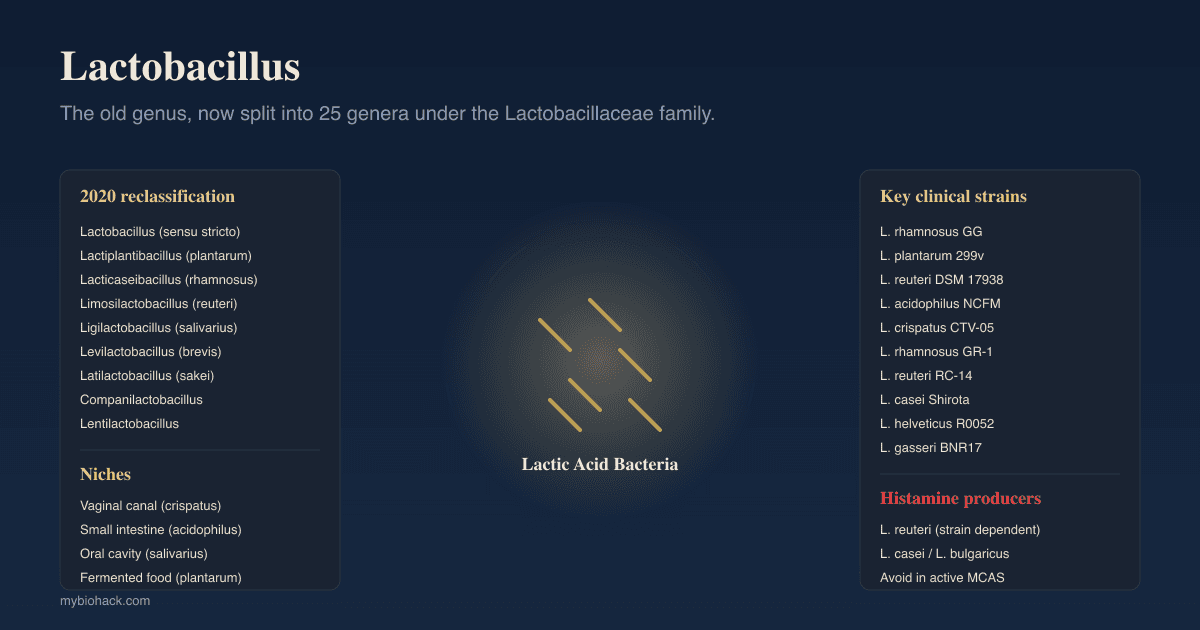
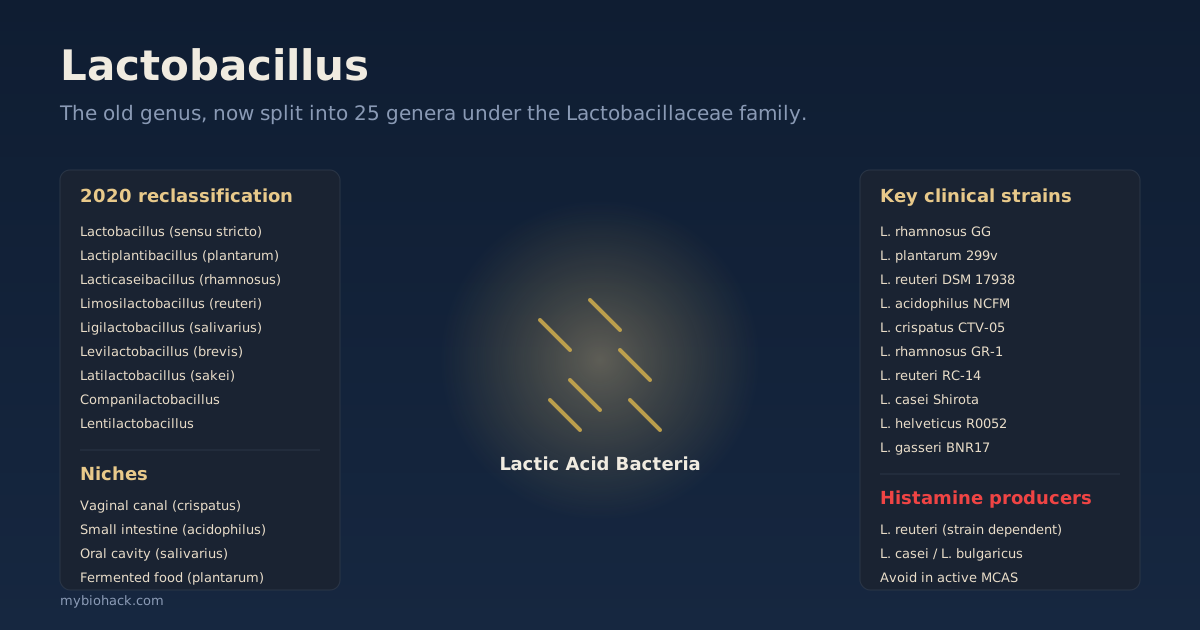
Lactobacillus used to be one genus that covered everything from vaginal flora to sauerkraut bacteria, and in 2020 it was formally split into 25 genera because the old genus was genetically more diverse than an entire family of mammals.
In this post, we will discuss what Lactobacilli actually are, the 2020 taxonomic split, the major species and their clinical strains, the histamine problem, niche specialization, how to increase them, and how to test them.
What Lactobacillus Is
Lactobacillus is a genus of gram-positive, non-spore-forming, rod-shaped bacteria in the phylum Firmicutes, order Lactobacillales, family Lactobacillaceae. R
They are the defining members of the group known as Lactic Acid Bacteria (LAB), named for their signature metabolic output of lactate from sugar fermentation.
The old genus contained over 260 species and was used for decades as the taxonomic home for everything from human vaginal dominant flora to the cultures in yogurt, kefir, sauerkraut, sourdough, wine, and silage. R
Lactobacilli are aerotolerant anaerobes (they tolerate oxygen but metabolize fermentatively) and produce no catalase, which is one of the classical clinical microbiology tests used to distinguish them from Staphylococci and related genera.
They colonize the human small intestine, colon, vaginal canal, oral cavity, and breast milk, and are present in most animal guts and nearly all traditional fermented foods on earth.
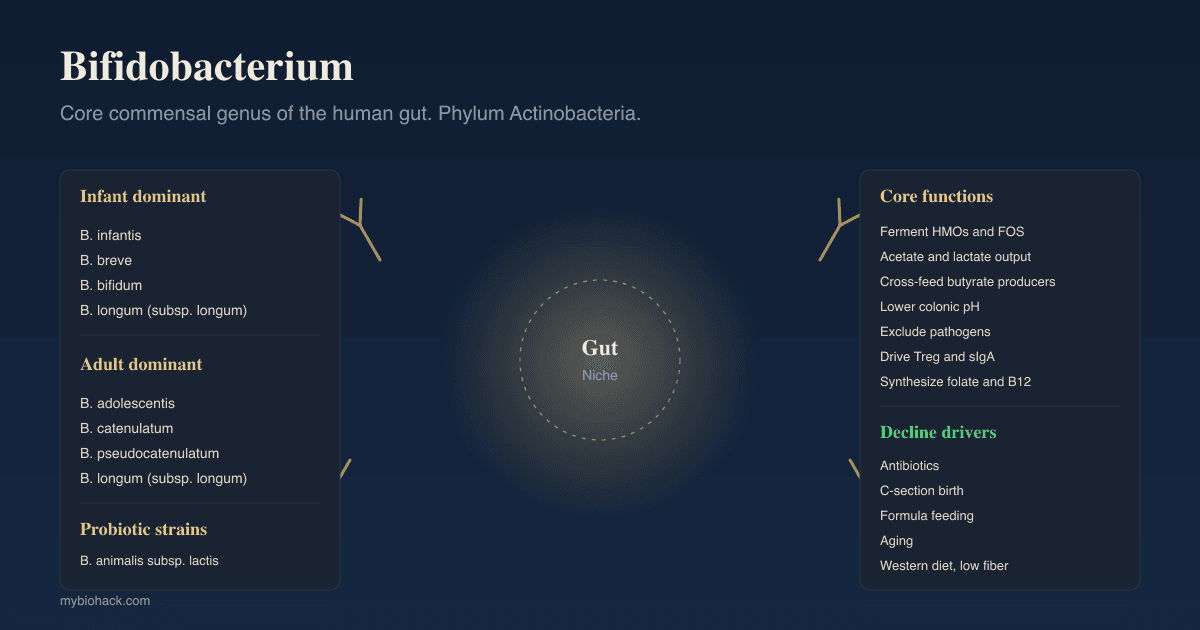
Unlike Bifidobacteria, Lactobacilli are not particularly dominant in any part of the healthy adult gut except in transient peaks after fermented food intake.
Their biggest human niche is actually the vagina.
The 2020 Reclassification
In April 2020, Zheng et al. published a sweeping reclassification of the genus Lactobacillus in the International Journal of Systematic and Evolutionary Microbiology. R
They split the old single genus into 25 new genera, all within the family Lactobacillaceae (which also includes the closely related Pediococcus, Leuconostoc, and Weissella).
The split was driven by average nucleotide identity analysis showing that members of the old Lactobacillus genus were as genetically distant from each other as members of an entire mammalian order, which violates the genus-level taxonomic norm. R
This is the taxonomy you will now see on stool tests, probiotic labels, and new research papers.
The important old-to-new mappings you should recognize:
- L. acidophilus, L. crispatus, L. gasseri, L. helveticus, L. johnsonii, L. delbrueckii stay in genus Lactobacillus (sensu stricto)
- L. brevis becomes Levilactobacillus brevis
- L. casei, L. paracasei, L. rhamnosus become Lacticaseibacillus species
- L. fermentum, L. reuteri become Limosilactobacillus species
- L. plantarum becomes Lactiplantibacillus plantarum
- L. sakei becomes Latilactobacillus sakei
- L. salivarius becomes Ligilactobacillus salivarius
For clarity, this post uses the old "L." nomenclature since that is what persists on commercial probiotic labels and is what most clinicians and readers still recognize.
Whenever the new name matters for reading current literature, the new genus is noted in parentheses.
The Major Lactobacillus Species
The species below are the ones actually relevant to human health, in alphabetical order by the old name.
Lactobacillus acidophilus
L. acidophilus (now still Lactobacillus acidophilus in the narrow genus) is the classical "acid-loving" bacterium isolated from the small intestine. R
It is obligately homofermentative and produces DL-lactate (a roughly equal mix of L- and D-isomers), which is worth knowing for small intestinal bacterial overgrowth (SIBO) patients where D-lactate can accumulate and cause neurological symptoms. R
The strain L. acidophilus NCFM is one of the best-studied probiotic strains in commercial use, with documented benefits in lactose intolerance, IBS, and cold/flu reduction in children. R
L. acidophilus La-5 is the standard strain in Chr.
Hansen's yogurt and probiotic products.
L. acidophilus DDS-1 is another well-characterized commercial strain with bile tolerance and acid survival advantages.
Lactobacillus brevis (Levilactobacillus brevis)
L. brevis is a heterofermentative species widely used in sauerkraut, kimchi, sourdough, and pickles. R
Some strains produce GABA via glutamate decarboxylase, which is one mechanism probiotic formulations with L. brevis claim for anxiolytic effects. R
Some L. brevis strains also carry the histidine decarboxylase gene and produce histamine, so strain selection matters for histamine-intolerant patients. R
Lactobacillus bulgaricus (Lactobacillus delbrueckii subsp. bulgaricus)
L. bulgaricus is one of the two standard yogurt starter cultures (alongside Streptococcus thermophilus) and has been used in Balkan and Eastern European dairy fermentation for centuries. R
It is thermophilic (optimum growth around 43-45C), strictly homofermentative, and produces L-lactate.
L. bulgaricus carries the histidine decarboxylase gene in many strains and is a notable histamine producer in aged dairy.
This is a key reason why some MCAS patients tolerate raw milk but react to yogurt. R
It does not persistently colonize the human gut and is best thought of as a transient fermentative species.
Lactobacillus casei (Lacticaseibacillus casei)
L. casei is the famous "Yakult" bacterium and one of the most commercially promoted probiotic species globally.
L. casei Shirota is the Yakult strain with over 80 years of clinical research including defense against respiratory and gastrointestinal infection, stress-induced immunity loss, and bladder cancer recurrence in Japanese cohorts. R
Some L. casei strains produce histamine and biogenic amines in aged cheese, which is a caveat for histamine-intolerant consumers. R
Lactobacillus crispatus
L. crispatus is the dominant species of a healthy vaginal microbiome (community state type I in the Ravel classification). R
A L. crispatus-dominated vaginal canal correlates with lower rates of bacterial vaginosis (BV), yeast infection, urinary tract infection, HIV acquisition, preterm birth, and cervical cancer progression. R
The strain L. crispatus CTV-05 (marketed as Lactin-V) received FDA fast-track status after a 2020 NEJM trial showed significant reduction in BV recurrence when delivered vaginally. R
It is homofermentative, produces only L-lactate, and also produces hydrogen peroxide, both of which contribute to its pathogen-exclusion function at the vaginal pH of 3.5 to 4.5.
Lactobacillus fermentum (Limosilactobacillus fermentum)
L. fermentum is a heterofermentative species associated with sourdough, kefir, and some traditional fermented grain products. R
Certain strains (L. fermentum ME-3, CECT 5716) have documented antioxidant and anti-inflammatory activity. R
L. fermentum CECT 5716 is a breast milk isolate used in infant probiotic formulations for colic and mastitis.
Lactobacillus gasseri
L. gasseri colonizes both the human small intestine and the vaginal canal, bridging two niches. R
The strain L. gasseri BNR17 has evidence for modest reductions in visceral fat and waist circumference in overweight Korean adults. R
The strain L. gasseri SBT2055 has similar body fat data in Japanese cohorts.
Standard yogurt-style L. gasseri strains may contribute to SIBO in susceptible patients because they overgrow in the small intestine under conditions of low motility or low stomach acid.
Lactobacillus helveticus
L. helveticus is the traditional Swiss and Italian cheese culture and is also used in commercial probiotic formulations for mood.
The strain L. helveticus R0052 combined with Bifidobacterium longum R0175 reduced psychological distress and salivary cortisol in a randomized human trial. R
L. helveticus is a strong producer of bioactive peptides during casein fermentation, including the tripeptides IPP and VPP that inhibit ACE and may modestly lower blood pressure.
Lactobacillus johnsonii
L. johnsonii is a gut-derived species closely related to L. gasseri and L. acidophilus. R
The strain L. johnsonii La1 (LJ-1) was one of the original Nestle probiotic strains with documented survival through the GI tract and mild immune-modulating effects.
Lactobacillus paracasei (Lacticaseibacillus paracasei)
L. paracasei is closely related to L. casei and often appears in multi-strain probiotics.
Specific strains have documented benefits in allergic rhinitis (L. paracasei GMNL-133), atopic dermatitis, and immune modulation in pediatric and adult populations. R
Lactobacillus plantarum (Lactiplantibacillus plantarum)
L. plantarum is one of the most versatile species in the old genus, with an unusually large genome (up to 3.3 Mb, larger than most Lactobacilli), and is found in plant ferments, silage, kimchi, sauerkraut, and the human gut. R
The strain L. plantarum 299v is one of the best-studied IBS probiotics, with documented reductions in bloating, abdominal pain, and improved iron absorption in women with non-anemic iron deficiency. R R
L. plantarum DR7 has a stress and cognition trial program.
L. plantarum generally does not carry the histidine decarboxylase gene and is considered a histamine-safe species, which makes it a reasonable choice for MCAS and histamine-intolerant patients.
Lactobacillus reuteri (Limosilactobacillus reuteri)
L. reuteri is an ancient human commensal that has co-evolved with humans for tens of thousands of years, though the Western gut has largely lost it.
The strain L. reuteri DSM 17938 is the best-studied probiotic for infant colic, with multiple RCTs showing reduced crying time in breastfed colicky infants. R R
L. reuteri ATCC PTA 6475 has animal and limited human data on bone density, testosterone, oxytocin, wound healing, and social behavior via a vagus-dependent mechanism. R
L. reuteri is the most notorious histamine-producing Lactobacillus in the human microbiome literature, though the histamine effect is strain-specific and dose-dependent. R
Some L. reuteri strains produce histamine that actually suppresses TNF-alpha via H2 receptor signaling, which is an anti-inflammatory mechanism in certain gut contexts, but in systemic histamine-loaded patients it can worsen symptoms.
The direction of benefit depends on the patient.
Lactobacillus rhamnosus (Lacticaseibacillus rhamnosus)
L. rhamnosus is arguably the most studied probiotic species in existence, driven by the strain L. rhamnosus GG (LGG, ATCC 53103), isolated in 1983 by Gorbach and Goldin at Tufts University. R
LGG has over 800 published clinical trials covering antibiotic-associated diarrhea, traveler's diarrhea, atopic eczema prevention in infants, acute pediatric gastroenteritis, and respiratory infection defense.
L. rhamnosus GR-1, combined with L. reuteri RC-14, is the standard probiotic for vaginal and urinary tract health. R
L. rhamnosus HN001 has evidence for perinatal depression and anxiety reduction and for infant atopic eczema prevention.
L. rhamnosus is generally considered histamine-safe, which is a significant advantage for sensitive patients.
Note the 2007 report of rare endocarditis in severely immunocompromised patients (the risk is restricted to that specific population).
Lactobacillus salivarius (Ligilactobacillus salivarius)
L. salivarius is an oral cavity and GI tract commensal that produces bacteriocins with broad-spectrum activity against enteric pathogens. R
Strains like L. salivarius UCC118 and L. salivarius CECT 5713 have specific clinical trial programs for IBS, oral health, and mastitis. R
Lactobacillus sakei (Latilactobacillus sakei)
L. sakei is classically a meat and sake fermentation species and is generally not a core gut commensal.
The strain L. sakei proBio65 has intranasal spray trials for chronic rhinosinusitis and atopic dermatitis in the Korean literature, worth mentioning because of the unusual delivery route.
How Lactobacilli Metabolize Food
Lactobacilli split into two metabolic groups, and the group a species belongs to determines its output profile and clinical implications.
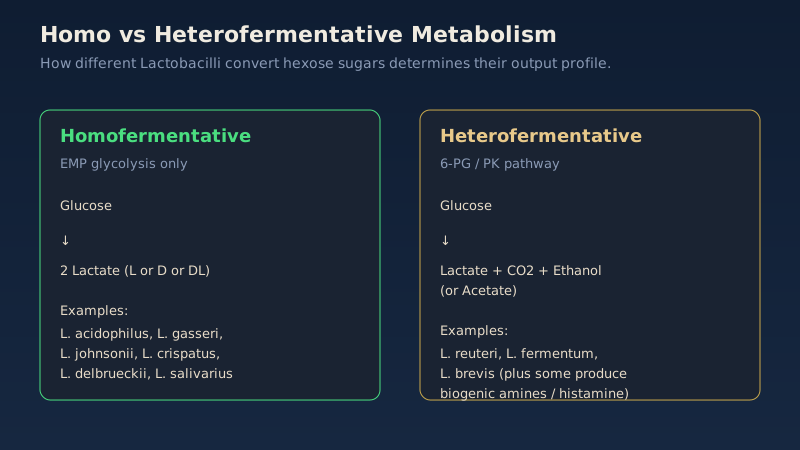
Homofermentative species (L. acidophilus, L. delbrueckii, L. gasseri, L. johnsonii, L. crispatus, L. salivarius, some L. plantarum) use the Embden-Meyerhof-Parnas (EMP) glycolytic pathway and produce essentially only lactate from hexose sugars, yielding up to 2 moles of lactate per mole of glucose. R
Heterofermentative species (L. brevis, L. fermentum, L. reuteri, Leuconostoc) use the 6-phosphogluconate/phosphoketolase pathway and produce lactate plus CO2 plus ethanol (or acetate) in roughly equimolar amounts. R
The L-isomer of lactate is metabolized rapidly by mammalian mitochondria.
The D-isomer is metabolized much more slowly and can accumulate to pathological levels under certain conditions.
D-lactic acidosis is a recognized complication of SIBO, short bowel syndrome, and occasionally probiotic overuse, where D-lactate-producing Lactobacilli overgrow the small intestine and cause neurological symptoms (ataxia, confusion, slurred speech) that mimic intoxication. R
L-lactate-only producers include L. crispatus, L. bulgaricus, and L. helveticus.
These are safer choices for SIBO-prone patients.
Histamine And Biogenic Amines
This is the most important section in this post for patients with mast cell activation, histamine intolerance, or MCAS.
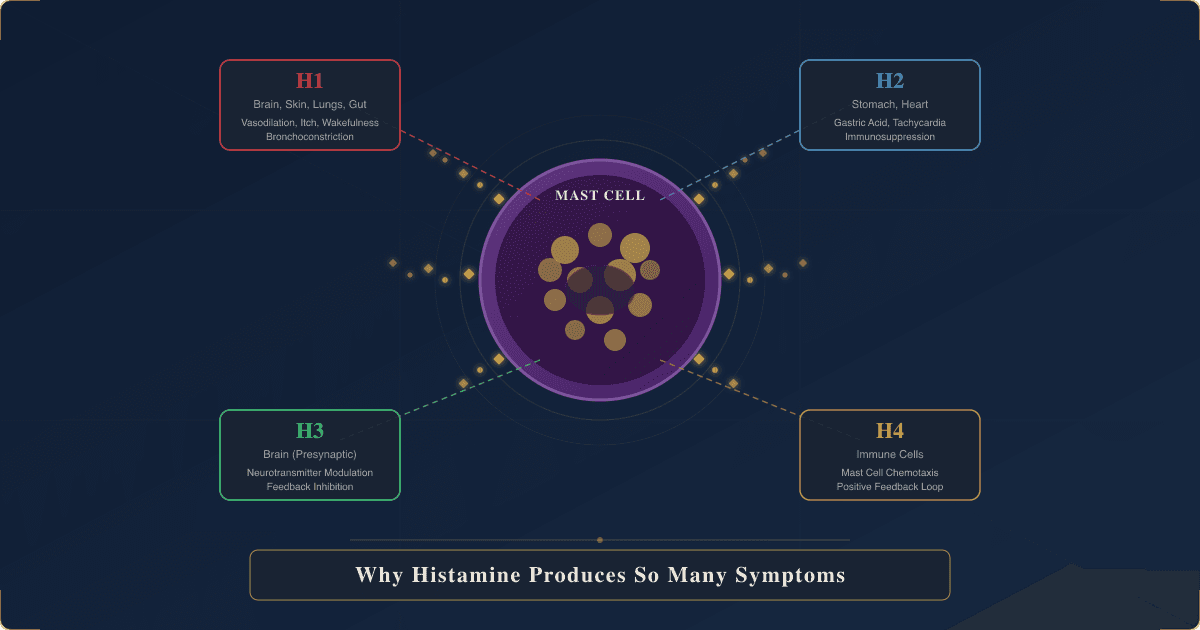
Histamine in the gut comes from two sources: degranulated host mast cells, and microbial decarboxylation of the amino acid histidine.
Bacteria produce histamine by expressing histidine decarboxylase (HDC), which converts L-histidine into histamine plus CO2. R
Different Lactobacillus species (and different strains within the same species) vary in whether they carry a functional HDC gene.
Known histamine-producing Lactobacilli: (not exclusive list)
- L. bulgaricus (the yogurt starter, a strong HDC carrier) R
- L. casei (strain-dependent HDC activity, notable in aged cheese) R
- L. delbrueckii subsp. lactis (dairy fermentation, HDC-positive) R
- L. hilgardii (wine fermentation, tyramine and histamine production)
- L. reuteri (the best-characterized HDC producer in the human microbiome) R
Generally histamine-safe Lactobacilli: (not exclusive list)
- L. acidophilus (most commercial strains HDC-negative; watch strain designation)
- L. crispatus
- L. gasseri
- L. helveticus
- L. johnsonii
- L. paracasei
- L. plantarum
- L. rhamnosus GG (the flagship histamine-safe option)
- L. salivarius
For MCAS or active histamine intolerance, I start with multi-strain formulations built around L. rhamnosus, L. plantarum, L. gasseri, L. helveticus, and Bifidobacteria, and I keep L. reuteri and L. bulgaricus off the list until the patient stabilizes.
There is a big MAYBE on L. reuteri, because some strains anti-inflammatorily suppress TNF-alpha through H2 signaling and produce colonic histamine that is paradoxically protective against inflammation in mice.
In systemically loaded humans the story is different.
Start low and titrate.
Lactobacillus And Overlapping Conditions
Bacterial Vaginosis And Vaginal Dysbiosis
The healthy vaginal microbiome is numerically dominated by Lactobacilli, and depletion of L. crispatus, L. jensenii, L. gasseri, or L. iners predisposes to BV, yeast overgrowth, preterm birth, HIV acquisition, and HPV persistence. R
Vaginal delivery of L. crispatus CTV-05 (Lactin-V) reduces BV recurrence in a large NEJM trial. R
Oral L. rhamnosus GR-1 plus L. reuteri RC-14 has repeatable evidence for BV and UTI reduction when taken daily. R
IBS And Functional GI Disorders
L. plantarum 299v and L. rhamnosus GG are the two best-studied Lactobacillus strains for IBS symptom reduction. R R
Multi-strain formulations generally outperform single-strain in IBS trials.
Infant Colic And Pediatric Disease
L. reuteri DSM 17938 reduces crying time in breastfed colicky infants by about 50 minutes per day in meta-analysis. R
L. rhamnosus GG given to pregnant women and breastfeeding mothers reduces atopic eczema in their infants at 2 and 4 years. R
Depression, Anxiety, And The Gut-Brain Axis
L. helveticus R0052 plus B. longum R0175 reduced psychological distress in healthy adults over 30 days. R
See the gut-brain axis series for the vagal afferent mechanism.
H. Pylori
Adjunctive L. rhamnosus GG or multi-Lactobacillus probiotics added to triple therapy reduce antibiotic side effects and may modestly improve eradication rates for H. pylori.
Immune And Allergic Disease
Specific strains shift Th1/Th2 balance, induce Tregs, and raise sIgA.
See the sIgA post.
SIBO And D-Lactic Acidosis
Overgrown D-lactate-producing Lactobacilli in the small intestine can generate D-lactic acidosis, presenting with intermittent neurological symptoms that mimic intoxication. R
In a known SIBO context, favor L-lactate-only strains (L. crispatus, L. helveticus) or spore-based probiotics and Bifidobacteria instead.
How To Increase Lactobacillus
1. Fermented Foods
Traditional fermented foods remain the most effective and evolutionarily appropriate way to feed Lactobacilli back into the human food supply.
- Kefir (dairy or water; dozens of Lactobacillus and yeast species, tolerated better than yogurt by many)
- Kimchi (L. plantarum, L. brevis, L. sakei)
- Lacto-fermented pickles (not vinegar-pickled; cucumbers, carrots, beets in brine)
- Natto (Bacillus subtilis, not Lactobacillus, but synergistic)
- Raw milk cheese (aged traditional European cheeses contain native Lactobacillus communities; histamine caveat applies)
- Sauerkraut (L. plantarum, Leuconostoc mesenteroides, L. brevis)
- Sourdough bread (L. sanfranciscensis and other LAB during fermentation)
- Tempeh (Rhizopus plus lactic acid bacteria)
2. Targeted Probiotic Strains
Match the strain to the goal.
L. rhamnosus GG (Culturelle) is the default evidence-based general probiotic.
L. plantarum 299v (Jarrow's IBPLus or similar) is the best-evidenced IBS strain.
L. reuteri DSM 17938 (BioGaia) is the infant-colic and mild bowel regulation strain.
L. acidophilus NCFM is a well-studied general-use strain with lactose intolerance data.
L. rhamnosus GR-1 + L. reuteri RC-14 (Jarrow Fem-Dophilus) is the vaginal and urinary tract duo.
L. crispatus CTV-05 (Lactin-V, prescription only) is the vaginally delivered strain for BV recurrence.
L. gasseri BNR17 has data for visceral fat and abdominal weight reduction.
L. helveticus R0052 + B. longum R0175 (sold as ProbioMood or Cerebiome) is the gut-brain axis formula with anxiety/depression data.
3. Feed Them With Prebiotics
Most Lactobacilli prefer simpler sugars than Bifidobacteria, but some still respond to prebiotic fibers.
- GOS (galactooligosaccharides) (boosts both Lactobacilli and Bifidobacteria)
- Inulin (selectively boosts L. paracasei and some strains)
- Partially Hydrolyzed Guar Gum (PHGG) (well tolerated in SIBO, boosts Lactobacilli and Bifidobacteria)
- Resistant starch (RS2 and RS3 feed L. reuteri and L. ruminis in some populations)
4. Topical And Intravaginal Delivery
Capsule-based oral probiotics are poor colonizers of the vaginal canal.
For vaginal dysbiosis, intravaginal probiotic delivery via dedicated vaginal capsules or compounded products is a better delivery route than oral probiotics, although oral L. rhamnosus GR-1 + L. reuteri RC-14 do reach the vaginal canal through GI tract transit and perianal migration. R
5. Reduce Lactobacillus Killers
See the next section.
What To Stay Away From
- Antibiotics (broad-spectrum) (clindamycin, metronidazole, amoxicillin, fluoroquinolones, and most beta-lactams collapse Lactobacilli in the gut and vagina for weeks to years) R
- Artificial sweeteners (sucralose, aspartame, saccharin shift Lactobacillus abundance in multiple rodent and limited human trials)
- Chronic stress (elevates catecholamines, which shift vaginal and gut microbiota toward dysbiotic patterns)
- High-dose oral estrogen and OCPs (altered vaginal mucus and pH can shift Lactobacillus dominance, though the direction varies)
- Intrauterine device (IUD) and douching (douching reduces L. crispatus and increases BV risk)
- Low-fiber Western diet (starves substrate-dependent Lactobacilli)
- Proton pump inhibitors (raise gastric pH and allow oral Lactobacilli to migrate to the small intestine, a potential driver of SIBO)
- Spermicides (nonoxynol-9) (disrupt vaginal Lactobacilli and increase BV and UTI risk)
- Unnecessary probiotic overuse in SIBO (D-lactate producing strains can worsen symptoms; favor Bifidobacteria, spore-based, or L-lactate-only Lactobacilli instead)
- Vaginal antibiotics and antifungals without follow-up Lactobacillus restoration (high BV recurrence rates are driven by failure to rebuild the Lactobacillus community after metronidazole or clindamycin)
Testing
Culture-based testing is unreliable because many Lactobacilli are fastidious and require specific media.
DNA-based sequencing or qPCR is the modern standard.
Stool Testing
I use the Gut Zoomer (Vibrant Wellness) to assess Lactobacillus abundance alongside Bifidobacterium, Akkermansia, and Faecalibacterium, plus SIBO markers, zonulin, beta-glucuronidase, and sIgA.
This panel also captures the key histamine-producing and D-lactate-producing species if they are overgrown.
The GI-MAP (Diagnostic Solutions) uses PCR and includes Lactobacillus at the genus level plus strong pathogen detection.
The Comprehensive Stool Analysis + Parasitology (Doctor's Data) reports Lactobacillus with other commensals and adds full digestive function markers.
Vaginal Testing
For vaginal dysbiosis, sequencing-based panels like the Juno or Evvy are the clinical standard because they actually identify L. crispatus vs L. iners vs BV-associated bacteria.
Wet mount and pH alone cannot distinguish healthy Lactobacillus dominance from a transitional state.
Urine And SIBO
The Organic Acids Test (Mosaic Diagnostics) reports D-lactate and D-arabinitol (yeast) markers, which is useful for detecting overgrown D-lactate-producing Lactobacilli or mixed SIBO with fungal components. R
A breath test (hydrogen and methane) confirms upper-GI bacterial overgrowth in SIBO workup.
Ancillary Blood Markers
The CBC with Differential (Quest Diagnostics) and Comprehensive Metabolic Panel (Quest Diagnostics) provide a baseline.
For patients with suspected histamine intolerance driven partly by gut-derived histamine, I use the Plasma Histamine (Quest Diagnostics) and Tryptase (Quest Diagnostics) to separate mast cell-driven histamine from microbial-derived histamine.
Food Sensitivity
The Food Zoomer (Vibrant Wellness) is useful when suspected food reactions are actually mediated by dysbiosis-associated permeability rather than true IgE-mediated allergy.
Mechanisms Of Action
Simple:
- Lactobacilli ferment sugars into lactate, lowering local pH enough to inhibit many pathogens.
- They compete with pathogens for mucin adhesion sites and nutrients in the gut and vagina.
- Specific strains talk to immune cells and bias them toward Tregs and sIgA.
- Specific strains talk to the brain through the vagus nerve.
- Some strains produce histamine, which is why strain selection matters for sensitive patients.
Advanced:
- Lactate-mediated pH reduction is the primary vaginal defense mechanism. L. crispatus drops vaginal pH to 3.5 to 4.5, which selectively inhibits most BV-associated anaerobes. L-lactate specifically (not D-lactate) is associated with the lowest BV risk. R
- Hydrogen peroxide production by certain Lactobacilli (L. crispatus, L. jensenii) adds oxidative pressure against anaerobic pathogens. The in vivo importance has been debated because local oxygen is low, but the in vitro antimicrobial effect is well documented.
- Bacteriocin production (e.g., L. salivarius Abp118, L. plantarum plantaricins) provides direct narrow-spectrum antimicrobial activity against specific enteric pathogens. R
- S-layer and pilus adhesins mediate binding to intestinal and vaginal epithelium and mucin, which is why certain strains (L. rhamnosus GG via its SpaCBA pilus) adhere strongly while others transit without adhering. R
- TLR2/NOD2 signaling via Lactobacillus cell wall components induces regulatory dendritic cells that drive Treg differentiation and IL-10 release. R
- Vagal signaling has been demonstrated for L. rhamnosus JB-1 (rodent studies) and L. reuteri (rodent oxytocin and social behavior), with vagotomy abolishing the effect. R
- Histidine decarboxylase (HDC) expression is the mechanism by which some Lactobacilli produce histamine from dietary histidine. HDC is pH-activated (more active at low pH), which is why aged ferments produce disproportionate histamine. R
- Exopolysaccharide (EPS) production by strains like L. rhamnosus GG contributes to mucus layer maintenance, immune modulation, and biofilm formation on the epithelium. R
- Bile salt hydrolase (BSH) activity deconjugates bile acids, altering FXR and TGR5 signaling and bile acid pool composition, which connects Lactobacilli to lipid and glucose metabolism.
- D-lactate accumulation in SIBO occurs because mammalian mitochondria metabolize D-lactate approximately 10-fold slower than L-lactate due to limited D-lactate dehydrogenase activity. Under SIBO conditions with carbohydrate excess and slow transit, D-lactate reaches neurotoxic levels. R
Genetics
HLA-DR and Immune Response Genetics
Vaginal Lactobacillus community state appears to be partly heritable, with HLA haplotype associations reported in preterm-birth-risk vaginal microbiome studies.
This is still an active research area rather than clinically actionable.
LCT (Lactase Persistence)
LCT lactase-persistence variants (rs4988235 in Europeans) allow adult lactose digestion and reduce the amount of lactose reaching the colon.
Lactase non-persistent adults actually route more lactose to the colon, which can preferentially feed Lactobacilli and Bifidobacteria, although at the cost of gas and bloating.
rs4988235: T allele confers lactase persistence.
FUT2 (Secretor Status)
FUT2 non-secretors (rs601338 A/A) have altered mucin glycosylation patterns that shape which commensals can adhere and colonize.
Non-secretor status has been associated with different Lactobacillus community composition and altered vaginal microbiome, although the direction and clinical significance are not yet consistent across studies.
rs601338: A/A is the non-secretor variant in European ancestry.
DAO And HNMT (Histamine Metabolism)
Host histamine degradation via DAO (diamine oxidase) in the small intestine and HNMT (histamine N-methyltransferase) intracellularly determines how much microbial-derived histamine becomes systemic.
DAO deficiency (AOC1 SNPs) amplifies the clinical impact of histamine-producing Lactobacilli, which is why strain selection matters more for patients with low DAO activity.
rs10156191 and rs1049742 in AOC1 are associated with reduced DAO activity.
MTHFR
MTHFR C677T and A1298C reduce methylation capacity and raise histamine clearance demand, since HNMT requires SAMe as a methyl donor.
MTHFR carriers may be more symptomatic from histamine-producing Lactobacilli even at low exposure levels.
rs1801133 (C677T) and rs1801131 (A1298C).
More Research
- L. iners is a vaginal Lactobacillus species whose role is genuinely ambiguous: it dominates many vaginal microbiomes but is associated with transitional states that can shift toward BV. It has a small genome (about 1.3 Mb) and a less protective lactate profile than L. crispatus. R
- L. reuteri appears to be ancestral to humans but nearly absent from Western guts. Reintroduction experiments with DSM 17938 and PTA 6475 are an active research area, with animal data on bone, testosterone, oxytocin, and social behavior. R
- L. rhamnosus GG does not persistently colonize the gut. Transit time averages 1 to 3 weeks after discontinuation. This is why daily dosing (not loading) is the correct protocol. R
- L. plantarum 299v improves non-heme iron absorption by about 50% in women with non-anemic iron deficiency when taken with an iron-containing meal. R
- L. crispatus CTV-05 delivered vaginally reduced BV recurrence from 39% to 30% at 12 weeks in a placebo-controlled trial (NEJM 2020). R
- For biomarker testing I use the Gut Zoomer to track Lactobacillus abundance and D-lactate risk, and the Organic Acids Test to check for D-lactic acidosis and yeast overgrowth when SIBO-type symptoms are present.
- Histamine production by Lactobacilli is sometimes anti-inflammatory in rodents via H2 receptor suppression of TNF-alpha. The translation to systemically loaded human patients is not the same. R
- Most commercial probiotics do not permanently colonize the human gut. They behave more like drugs than ecosystem rebuilders, which is why prebiotic feeding of resident Lactobacilli and Bifidobacteria matters more for long-term microbiome stability than intermittent probiotic dosing.
- Spore-based probiotics (Bacillus subtilis, B. coagulans, B. clausii) are not Lactobacilli but are an alternative route for patients who react poorly to Lactobacillus-based products or have active SIBO. They survive stomach acid 100% and germinate in the small intestine.
- The old genus Lactobacillus is a teaching case in taxonomy of how phenotype-based classification (gram stain, morphology, fermentation type) can group genuinely different organisms under one name for a century before sequencing forces a correction. R
Jacob Gordon
INHC, FMT-C
Integrative Nutrition Health Coach
I cover mold illness, post-viral recovery, methylation, and complex chronic disease, drawing on ten years of clinical research, work inside a functional medicine clinic, and my own recovery from all of it. Every claim here is cited.
Book a ConsultationRelated Protocols & Supplements
Deep-dive chapters and recommended supplements for this topic
Spore-Based Probiotics
1 cap with food
L-Glutamine
5g 2x/day on empty stomach
Butyrate
300mg 2x/day with meals