Iodine And Thyroid Health: Benefits, Safety, Breast Tissue, And Genetics
By Jacob Gordon, INHC, FMT-CThis article contains affiliate links. As an Amazon Associate, MyBioHack earns from qualifying purchases at no extra cost to you. We only link products we research and stand behind.
Iodine sits at the center of one of the more polarizing debates in functional medicine, with one camp pushing high-dose protocols and mainstream endocrinology warning those same protocols can trigger the exact disease they claim to prevent.
In this post, we will discuss how iodine actually builds thyroid hormone, why both too little and too much of it cause hypothyroidism, why deficiency is quietly re-emerging in developed countries, what the evidence for breast tissue and breast cancer really shows, and why I am cautious about high-dose iodine in anyone with Hashimoto's.
What Iodine Does In The Body
Iodine is a trace element the thyroid gland uses to build thyroid hormone, and it has no other required biological role in humans.
It does not act alone, and trace minerals like zinc and copper also shape thyroid hormone metabolism, which is one reason I look at the whole trace mineral picture rather than iodine in isolation.
Thyroid hormone synthesis happens in a fixed sequence, and every step depends on the one before it.
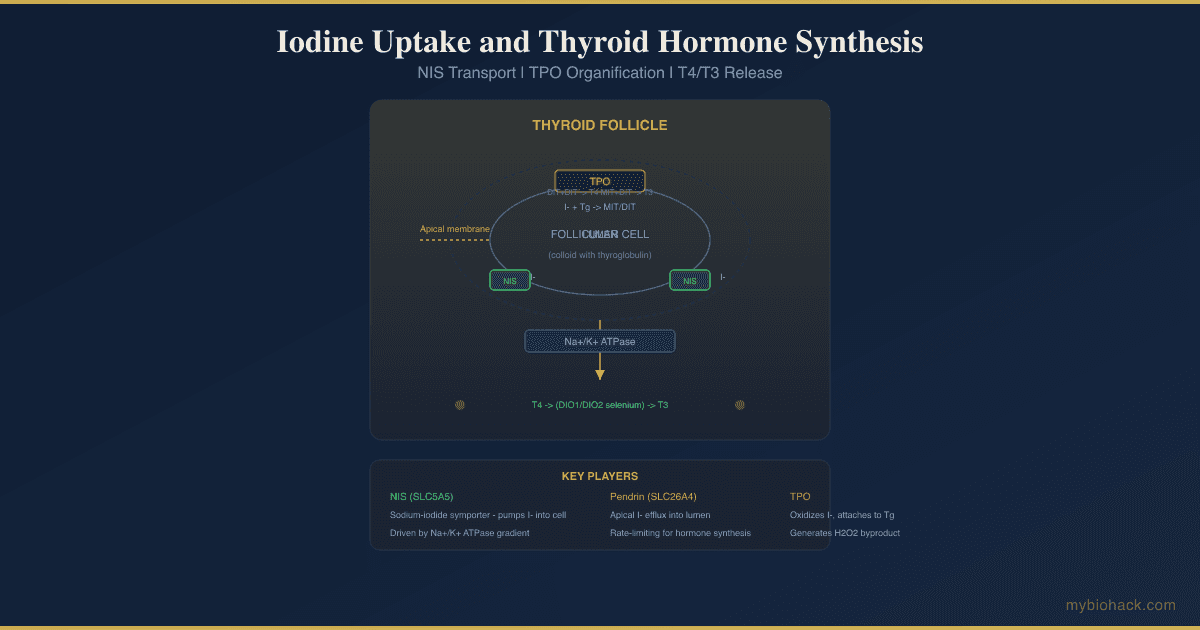
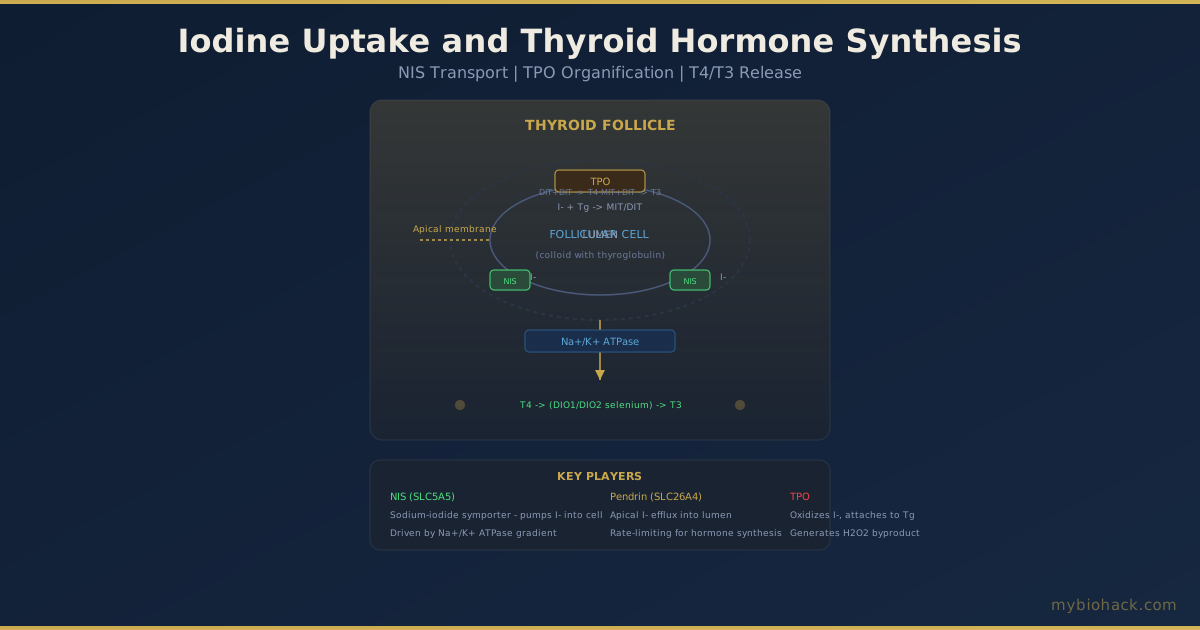
First, the thyroid pulls iodide out of the bloodstream against a steep concentration gradient using the Sodium-Iodide Symporter (NIS), a transmembrane protein that co-transports two sodium ions for every iodide ion using the gradient built by the sodium-potassium pump.
Second, thyroid follicular cells produce Thyroglobulin (TG), a large protein studded with tyrosine residues that gets stored in the follicular lumen and acts as the scaffold for the entire synthesis process.
Third, Thyroid Peroxidase (TPO), an iron-dependent enzyme, oxidizes iodide into a reactive form.
Fourth, that reactive iodine is attached to tyrosine residues on thyroglobulin in a step called organification, producing Monoiodotyrosine (MIT) and Diiodotyrosine (DIT).
Fifth, TPO couples two of those iodinated tyrosines together to form Thyroxine (T4) and Triiodothyronine (T3), which are then cleaved off thyroglobulin and released into circulation.
Most circulating thyroid hormone is T4, and peripheral tissues convert it to the more biologically active T3 using selenium-dependent deiodinase enzymes, which is one reason selenium status matters as much as iodine status.
NIS is not exclusive to the thyroid.
It is also expressed in the salivary glands, gastric mucosa, and the lactating mammary gland, which is the physiological basis for iodine concentrating in breast tissue that I cover later in this post.
The U-Shaped Curve
Thyroid function versus iodine intake is not a straight line where more is always better.
It is a U-shaped curve: too little iodine causes hypothyroidism, and too much iodine also causes hypothyroidism, with the safest range sitting in a fairly narrow middle band.
The landmark demonstration of this came from a five-year prospective study of over 3,700 people across three Chinese communities with different iodine intakes (mildly deficient, more than adequate, and excessive).
Both the more-than-adequate and excessive intake groups had higher rates of subclinical hypothyroidism and autoimmune thyroiditis than the mildly deficient group over the follow-up period.
At the low end, iodine deficiency remains the leading preventable cause of intellectual impairment worldwide, and it drives goiter, overt hypothyroidism, and developmental harm in the fetus and infant.
At the high end, chronic excess intake produces the same downstream picture (elevated TSH and reduced thyroid hormone output) but through a different mechanism, and a 20-year prospective Chinese follow-up study found chronic iodine excess and aging acted synergistically to raise TSH over time.
The U.S. Institute of Medicine sets the tolerable upper intake level for adults at 1,100 mcg per day, and the American Thyroid Association has flagged that some iodine, potassium iodide, and kelp supplements contain up to one hundred times that amount per serving.
The Wolff-Chaikoff Effect And Why Escape Fails In Hashimoto's
When the thyroid is exposed to a large acute iodine load, it responds by transiently shutting down hormone synthesis for a period of roughly 24 to 48 hours.
This is the Wolff-Chaikoff Effect, and Jacob Wolff and Israel Chaikoff first described it in the 1940s as a protective mechanism against acute iodine-induced hyperthyroidism.
In a healthy thyroid, this suppression is temporary.
The gland downregulates NIS expression at the cell membrane, which lowers intracellular iodide back below the threshold that triggers the block, and hormone synthesis resumes within a few days.
This normal recovery is called escape, and most healthy people escape reliably.
The people who fail to escape are the ones who matter clinically, and the literature is specific about who they are: people with underlying Hashimoto's Thyroiditis, prior Graves' disease treated with radioactive iodine, a history of postpartum thyroiditis, or a history of subacute thyroiditis.
In these groups, an iodine load can produce a hypothyroidism that does not resolve in the usual two to three weeks, and a meaningful fraction of these cases become permanent primary hypothyroidism on long-term follow-up.
The genetic and structural reasons some thyroids fail to escape and others do not are still being mapped, and a 2018 mouse study found that failure of iodine autoregulation could produce hypothyroidism through a strain-specific mechanism that did not require thyroid autoimmunity at all, which tells you escape failure is not a single pathway.
This is the mechanistic reason I treat Hashimoto's Thyroiditis as a hard stop sign before recommending iodine loading of any kind, not a soft caution.
Why Iodine Deficiency Is Re-Emerging
Iodine deficiency looked like a solved problem after decades of salt iodization programs, and in the United States it largely was through the late twentieth century.
That trend has reversed.
A 2025 review documented a resurgence of iodine deficiency in United States pregnancy populations, with real implications for fetal cognitive development given how iodine-sensitive the developing brain is.
Several dietary shifts are converging to drive this.
Fewer households use iodized table salt as processed and restaurant food (which typically uses non-iodized salt) makes up more of total intake.
Dairy consumption, historically a major iodine source because of iodine-containing sanitizers used on dairy equipment and cattle feed supplementation, has declined.
Plant-based milk alternatives have filled some of that gap, and they are not a like-for-like substitute: a 2025 UK analysis of dairy products and plant-based imitations found substantially lower iodine content in the plant-based versions, and a 2025 mapping study of Portuguese milk and plant-based alternatives reached the same conclusion.
Some manufacturers have started fortifying plant-based dairy and seafood alternatives with iodine, and a five-year tracking study found the fortification landscape is shifting, though coverage is still inconsistent across brands and products.
None of this means everyone drinking oat milk is iodine deficient.
It means the population-level cushion that iodized salt and dairy used to provide is thinner than it was a generation ago, which is exactly the setting where mild deficiency becomes clinically relevant again, particularly in pregnancy.
For most people without thyroid autoimmunity, simply switching to iodized sea salt for home cooking closes most of this gap without touching a supplement bottle at all.
Pregnancy And Neurodevelopment
Iodine's clearest, least contested evidence base is in pregnancy.
The fetal thyroid does not become capable of making its own hormone until around the twelfth week of gestation and cannot organify iodine until roughly the twentieth week, so before that point the fetus depends entirely on maternal T4 crossing the placenta.
Severe maternal iodine deficiency during this window is the cause of endemic cretinism, a historically documented and largely preventable form of intellectual disability and growth failure.
Even mild to moderate maternal iodine insufficiency, well short of the severe deficiency that causes cretinism, is associated with measurable deficits in offspring.
A 2024 study found mild iodine insufficiency during pregnancy was associated with adverse child neurodevelopment specifically in mothers who also had subclinical hypothyroidism or hypothyroxinemia.
A separate cohort study found preconception maternal iodine status was positively associated with offspring IQ, though it did not find the same association with measures of executive function, which is a useful reminder that "iodine helps the brain" is not a blanket claim covering every cognitive domain equally.
A 2016 pilot study similarly linked maternal iodine nutrition and thyroid status to offspring cognitive development.
Because most of this evidence is observational, a randomized controlled trial (the SWIDDICH study) is currently underway specifically to test whether iodine-containing prenatal multivitamins causally improve children's brain function, which is the kind of trial this literature has needed for a long time.
This is also why the requirement jumps in pregnancy.
The World Health Organization recommends approximately 250 mcg per day for pregnant and lactating women, the U.S. Institute of Medicine recommends 220 mcg during pregnancy and 290 mcg during lactation, and the American Thyroid Association specifically recommends 150 mcg per day as a potassium iodide supplement on top of dietary intake during pregnancy and lactation.
Excess iodine in pregnancy is not benign either, and the same U-shaped risk applies to the fetus, so this is not a rationale for high-dose supplementation beyond what these bodies recommend.
Iodine And Breast Tissue
Breast tissue is one of the few non-thyroidal sites where NIS is functionally active, particularly in the lactating mammary gland.
This is the physiological hook for the idea that iodine status affects breast health, and it is real physiology, not a fringe claim.
A 2018 study found acute iodine deficiency triggered a transient VEGF-dependent microvascular response in mammary glands involving HIF-1 signaling and oxidative stress, showing the tissue actively senses and responds to iodine availability.
Where the evidence gets thinner is the clinical extrapolation to fibrocystic breast disease and breast pain.
The foundational trial in this space, a 1993 uncontrolled study of iodine replacement in fibrocystic breast disease, reported symptom improvement, but its design (no placebo arm) limits how much weight it can carry.
A better-designed 2004 randomized, double-blind, placebo-controlled trial tested molecular iodine at 1.5, 3.0, and 6.0 mg per day in 111 euthyroid women with cyclic mastalgia, and found a dose-dependent, statistically significant reduction in breast pain, with more than half of the 6.0 mg group reporting clinically meaningful relief.
That is a genuinely positive trial, and I do not want to undersell it.
I also want to be precise about what it does and does not show: it tested molecular iodine specifically, at doses well above the RDA, under physician supervision, for a benign pain condition, not for cancer prevention or treatment.
The breast cancer hypothesis is where I want to be the most blunt.
Iodine's mechanistic story in breast tissue (antioxidant effects, influence on estrogen receptor signaling, and preclinical work showing molecular iodine can modulate the immune component of the breast cancer tumor microenvironment) is genuinely interesting.
It is not the same thing as clinical proof that iodine supplementation prevents or treats breast cancer in humans, and no trial has established that.
The American Thyroid Association's own public health statement calls the breast disease data "equivocal" and states there is no established thyroid or cancer benefit to routine supplemental iodine above the recommended daily allowance.
If a wellness practitioner tells you high-dose iodine prevents breast cancer, that claim is running well ahead of what the evidence supports, and I would treat it as marketing, not medicine.
I also think anyone weighing iodine for breast health should look at their broader estrogen metabolism picture, since Xenoestrogens and endogenous estrogen dominance interact with the same tissue iodine is being asked to protect.
Goitrogens: Do They Matter At Real Intakes
Goitrogens are compounds that interfere with iodine uptake or thyroid hormone synthesis, and cruciferous vegetables (broccoli, Brussels sprouts, cabbage, cauliflower, kale) are the most commonly cited dietary source through their glucosinolate content.
In animal models fed structurally different glucosinolates, measurable goitrogenic metabolites appear in serum, which is the mechanistic basis for the concern.
The question that matters clinically is whether this translates into a real problem at the amount of broccoli or kale a person actually eats, and the honest answer is that iodine status is the deciding variable, not the vegetable.
A population-based case-control study in New Caledonia found high cruciferous vegetable consumption was associated with increased thyroid cancer risk, but specifically and only among women with low iodine intake (below roughly 96 mcg per day).
Among women with adequate iodine intake in the same study, the association did not hold.
In other words, cruciferous vegetables are not goitrogenic in a vacuum.
They become a problem layered on top of existing iodine deficiency, which is a very different clinical message than "avoid broccoli if you have thyroid disease."
I do not restrict cruciferous vegetables in clients with adequate iodine status and no active thyroid autoimmunity, and I do not think the current evidence supports doing so.
The Selenium Interaction
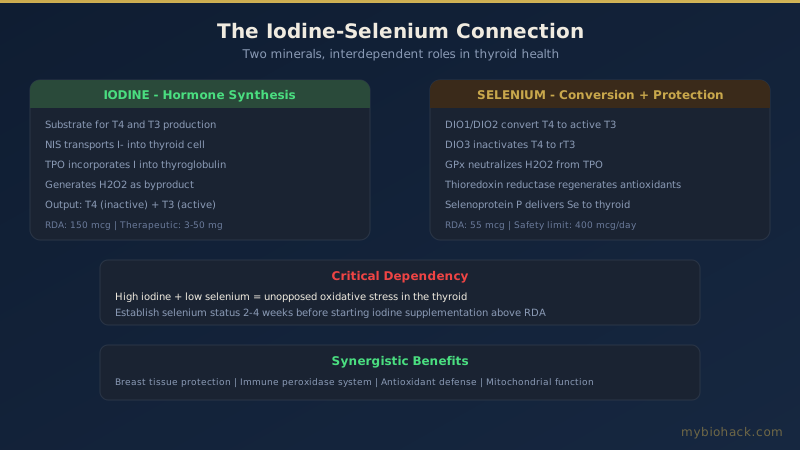
This is the single most important safety point in this entire post, and it is the one the high-dose iodine community talks about the least.
Selenium is required to make glutathione peroxidase and the deiodinase enzymes that both convert T4 to T3 and detoxify the hydrogen peroxide that thyroid peroxidase generates as a byproduct of organification.
When iodine is repleted in a person who is simultaneously selenium deficient, that hydrogen peroxide byproduct is not adequately cleared, and it accumulates as oxidative stress inside the thyroid follicular cell.
The foundational data for this came from selenium- and iodine-deficient populations in central Africa, where selenium deficiency was documented in pregnant women alongside endemic iodine deficiency.
Animal studies clarified the mechanism: selenium deficiency causes thyroid necrosis, fibrosis, and cellular proliferation, driven in part by macrophage infiltration and transforming growth factor beta signaling.
A separate rat model found that thiocyanate (a goitrogenic compound) specifically induces necrosis and fibrosis in thyroids that are already both selenium- and iodine-deficient, showing these variables compound each other rather than acting independently.
This is also part of the classic biochemistry of endemic cretinism, where combined iodine and selenium deficiency, sometimes layered with dietary goitrogens, produced worse outcomes than iodine deficiency alone.
The clinical translation is straightforward: correcting iodine deficiency without first confirming adequate selenium status can worsen thyroid autoimmunity rather than help it, and this is precisely the population (already selenium-marginal, already autoimmune-prone) that high-dose iodine protocols tend to attract.
I do not recommend iodine repletion above the RDA in anyone with Hashimoto's Thyroiditis or positive thyroid antibodies without first confirming selenium sufficiency, and I discuss the deiodinase and glutathione peroxidase side of this in more depth in my Selenium post.
When selenium status is low, I use selenomethionine specifically rather than sodium selenite, since it is the form best retained in tissue and the form most of the interaction research above was modeling.
High-Dose Iodine Protocols And Why I Am Cautious
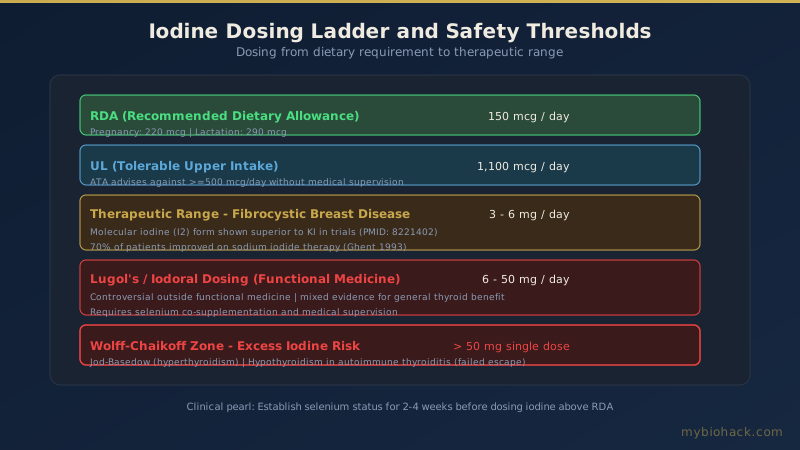
There is an entire corner of the internet built around the idea that "everyone is iodine deficient" and that gram-per-day (not milligram) doses of Lugol's solution are safe and even necessary, often citing Japanese dietary intake as the benchmark.
I am skeptical of this framing for several reasons that are not just about the raw milligram number.
First, the RDA for adults is 150 mcg per day, and the tolerable upper limit is 1,100 mcg, meaning gram-dose protocols are running at multiples of one hundred to one thousand times the upper limit, not a modest overshoot.
Second, undiagnosed Hashimoto's is common, and the Wolff-Chaikoff escape failure mechanism I described above means the people most likely to be harmed by a large iodine load are often the ones who do not yet know they have a reason to be cautious.
Third, the selenium interaction above is rarely addressed in these protocols at all, and I have seen clients start high-dose iodine without any selenium testing or co-supplementation.
Fourth, kelp supplements, a common entry point into high-dose iodine, have iodine content that varies enormously between brands and even between batches of the same product, and a 2021 analysis of commercially available kelp and seaweed products found some servings delivered iodine amounts far exceeding the tolerable upper limit while others were negligible.
That means a person following a "safe" labeled dose can still be unknowingly overshooting by a wide margin.
The two other forms this community reaches for are potassium iodide tablets and Lugol's solution, a liquid mixture of elemental iodine and potassium iodide originally formulated in 1829 and still used medically today for short-term, physician-supervised indications like pre-surgical thyroid preparation.
Both are precise and easy to dose accurately in milligrams, which is actually an argument for using them under supervision rather than kelp, but precision does not make a gram-per-day protocol safe on its own.
None of this means iodine is dangerous, and I am not arguing for deficiency-level intake either.
It means iodine is a hormone precursor with a genuinely narrow therapeutic range in susceptible people, and I treat any dose meaningfully above the RDA as something to do with testing and monitoring in place, not as a wellness default.
If you want to explore iodine forms and dosing beyond the RDA, do it with your Thyroid Peroxidase Antibodies (TPO) and selenium status checked first, and ideally with a practitioner, not from a protocol you found online.
Readers who want more structured support around Hashimoto's specifically, including dietary approaches like the Autoimmune Protocol (AIP) Diet, can also work through it with me directly at Contact or use the Biohacking Bot inside Pro to walk through their own labs.
Iodine-Induced Hyperthyroidism (Jod-Basedow)
The mirror image of Wolff-Chaikoff failure is Jod-Basedow Phenomenon, iodine-induced hyperthyroidism, and it happens in a different population: people with pre-existing autonomous thyroid nodules or subclinical Graves' disease living in a previously iodine-deficient area.
In a chronically iodine-deficient thyroid, some follicular cells can become autonomous, meaning they produce hormone independent of TSH regulation.
When iodine supply suddenly increases (through supplementation, a fortification program, or iodinated contrast dye), those autonomous nodules suddenly have the substrate to overproduce hormone, and the person swings into hyperthyroidism.
This is a well-documented complication of amiodarone, a heavily iodine-containing antiarrhythmic drug, and also of iodinated contrast media used in CT scans and cardiac catheterization, particularly in older adults and in infants and children where thyroid monitoring after contrast exposure is now a specific area of clinical research.
The takeaway is the same one that runs through this whole post: iodine's effect on your thyroid depends entirely on what your thyroid looked like before you took it, not on the dose alone.
Testing
I do not recommend high-dose iodine, or even meaningful iodine repletion, without baseline testing.
For a general thyroid function baseline, I use the Thyroid Panel (Quest Diagnostics), which covers TSH, T3, and T4.
For autoimmune risk before any iodine repletion, I check Thyroid Peroxidase Antibodies (TPO) (Quest Diagnostics) and Thyroglobulin Antibodies (Quest Diagnostics), since positive antibodies are the clearest available signal for who is at risk of failing to escape the Wolff-Chaikoff effect.
For selenium status, which I consider non-negotiable before iodine repletion for the reasons covered in my Selenium post, I use Selenium, RBC (Quest Diagnostics) rather than serum selenium, because RBC selenium reflects longer-term tissue status instead of a single recent meal.
For direct iodine status, there are a few options, and none of them is perfect.
A single Urine Iodine (24hr or Random) (Doctor's Data) spot sample is convenient, but a 2015 study found spot urinary iodine reasonably reflects true 24-hour excretion only when it is scaled to urinary creatinine, and without that adjustment a spot sample can mislead.
A separate comparison of repeated spot versus full 24-hour urine collection in premenopausal Chinese women reached a similar conclusion: single spot samples are noisy for individual assessment even when they are adequate for population-level screening.
Because halide competition is real, I sometimes use the Urine Halides (Iodine, Fluoride, Bromine) (Doctor's Data) panel instead of iodine alone, since fluoride and bromine compete with iodide for the same NIS transporter and thyroid uptake.
I want to be direct about the iodine loading test specifically, sold as the Urine Halides Pre & Post Loading Combo (Doctor's Data), which is used across the functional medicine world to estimate "whole-body iodine sufficiency" from how much of a large oral iodine dose gets excreted in urine over the following 24 hours.
This test is not validated against any recognized clinical standard, its physiological rationale (that a deficient body will retain more of a load) has not been demonstrated in controlled studies, and taking the large iodine dose it requires is itself the exact acute load that triggers Wolff-Chaikoff suppression in a susceptible thyroid.
I do not use the loading test in clients with any history of thyroid autoimmunity, and I think readers should know it is a popularized protocol, not an established diagnostic, before they take it.
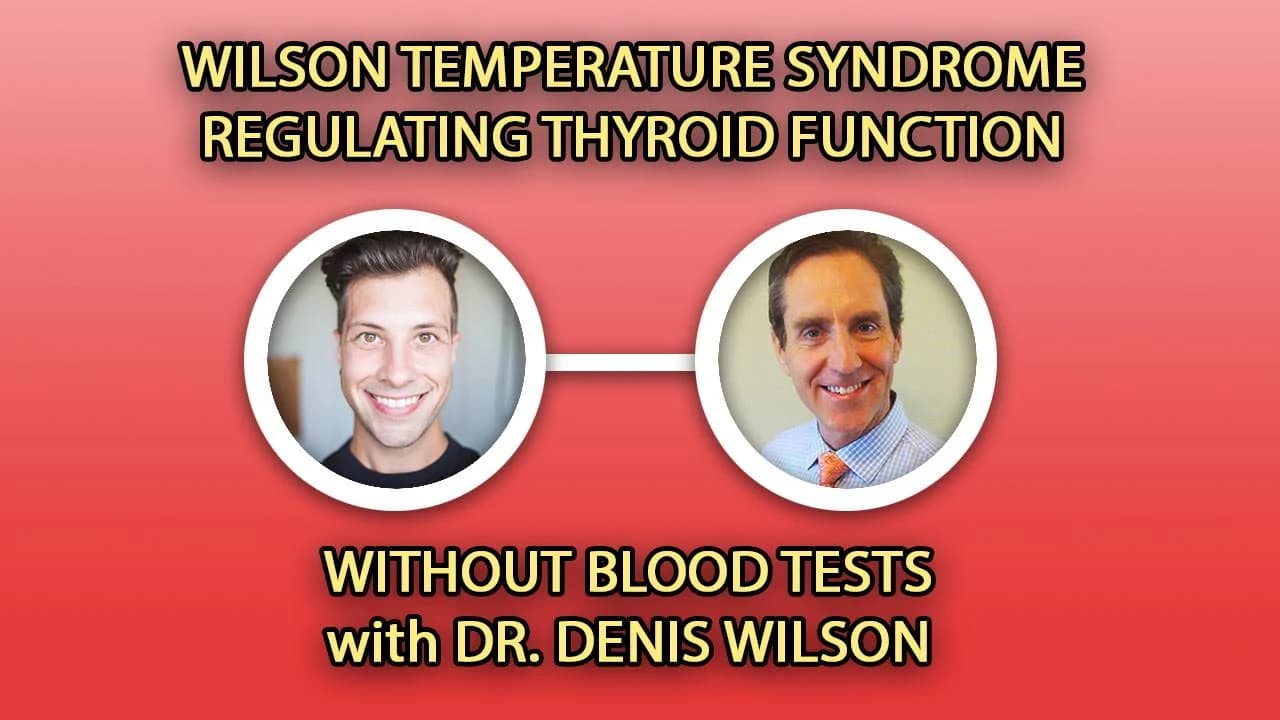
The same caution applies to basal temperature approaches like the Wilson Temperature Syndrome protocol, which I find useful as a symptom log alongside labs, not as a replacement for TSH, TPO antibodies, and selenium testing.
For patients already on high iodine-containing medications like amiodarone, or before iodinated contrast imaging in someone with a nodular thyroid, Serum Iodine, Plasma (Quest Diagnostics) can be a useful direct check alongside TSH.
Mechanisms Of Action
Simple:
- Iodine is a raw material the thyroid uses to make T4 and T3, and nothing else in the body strictly requires it.
- The thyroid actively pulls iodide out of the blood using a transporter called NIS, then a second enzyme called TPO welds it onto a protein scaffold to build the hormone.
- Both too little and too much iodine break this process, and it takes a functioning selenium system and a healthy immune system to handle iodine safely in either direction.
Advanced:
- Sodium-Iodide Symporter (NIS). NIS is a twelve-transmembrane-domain glycoprotein that co-transports iodide with sodium against an electrochemical gradient, using the gradient generated by Na+/K+-ATPase, and its expression is regulated transcriptionally and post-transcriptionally by TSH and by iodide itself as a negative feedback signal.
- Thyroid Peroxidase (TPO) And Organification. TPO is a heme-containing, iron-dependent enzyme that oxidizes iodide at the apical membrane and catalyzes both the iodination of thyroglobulin tyrosine residues (organification) and the oxidative coupling of MIT and DIT into T4 and T3.
- Selenoprotein-Dependent Deiodination. Peripheral conversion of T4 to the more active T3, and the inactivation of excess thyroid hormone, is carried out by selenium-dependent deiodinase enzymes (DIO1, DIO2, DIO3), which is why selenium deficiency can produce a hypothyroid clinical picture even with normal iodine and TSH.
- Wolff-Chaikoff Escape Via NIS Downregulation. Escape from acute iodide-induced suppression depends on the thyroid downregulating NIS expression at the basolateral membrane, which lowers intracellular iodide concentration back below the inhibitory threshold, and amiodarone (a heavily iodinated drug) has been shown to directly reduce NIS mRNA expression at therapeutic concentrations, which is one proposed reason it so often disrupts escape.
- Oxidative Injury In Selenium-Deficient Thyroid Tissue. Thyroid peroxidase generates hydrogen peroxide as an obligate byproduct of organification, and in a selenium-deficient gland this peroxide is not adequately neutralized by glutathione peroxidase, producing follicular cell necrosis, macrophage infiltration, and TGF-beta-driven fibrosis rather than normal hormone synthesis.
- Halide Competition At NIS. Fluoride, bromide, and perchlorate can competitively inhibit iodide transport through NIS, which is the mechanistic basis for testing halide ratios rather than iodine in isolation when thyroid uptake is in question.
Genetics
SLC5A5
SLC5A5 encodes the sodium-iodide symporter (NIS), the transporter responsible for the first and rate-limiting step of thyroid iodide uptake.
Biallelic loss-of-function mutations cause congenital iodide transport defect, a form of congenital hypothyroidism, and two novel SLC5A5 variants (Q263L and G350D) causing this defect were characterized as recently as 2025.
TPO
TPO encodes thyroid peroxidase, the iron-dependent enzyme responsible for both organification and coupling in thyroid hormone synthesis.
Missense variants in TPO are a well-documented cause of thyroid dyshormonogenesis, and functional characterization of TPO variants found in an Asian Indian population showed distinct patterns of enzymatic impairment depending on which domain of the protein was affected.
TPO is also the primary autoantigen in Hashimoto's Thyroiditis, which is why TPO antibody testing (not the TPO gene itself) is the clinical marker I use to screen for autoimmune risk before iodine repletion.
TG
TG encodes thyroglobulin, the large glycoprotein scaffold onto which iodine is organified during thyroid hormone synthesis.
Targeted next-generation sequencing of congenital hypothyroidism patients found unexpected thyroglobulin gene variants specifically in patients who had been classified as having an iodide transport defect, suggesting some cases attributed to NIS problems are actually downstream TG synthesis problems.
DUOX2
DUOX2 encodes dual oxidase 2, the enzyme that generates the hydrogen peroxide TPO requires to oxidize iodide, making it an essential upstream partner in organification rather than a redundant backup system.
DUOX2 variants are among the more common genetic causes of thyroid dyshormonogenesis, and genotype-phenotype correlation studies show the severity of hypothyroidism tracks with how completely the variant disrupts hydrogen peroxide generation.
More Research
- Amiodarone And Thyroid Dysfunction. Amiodarone's iodine content (roughly 37% by weight) means a single tablet delivers many times the daily iodine requirement, and it can cause either iodine-induced hyperthyroidism (Jod-Basedow, more common in iodine-deficient regions) or iodine-induced hypothyroidism (more common in iodine-sufficient regions with underlying autoimmune thyroiditis), which is a clean real-world illustration of the U-shaped curve running through this entire post.
- Iodinated Contrast In Children. Because pediatric thyroid physiology is more sensitive to iodine load, thyroid monitoring after intravascular iodinated contrast is now being studied specifically in infants and children through age three, and I think this is a space worth watching for parents of young children undergoing imaging.
- Iodine In Non-Toxic Goiter. A matched cohort study found people with pre-existing non-toxic goiter carry an elevated risk of post-contrast thyroid dysfunction compared to people without goiter, reinforcing that baseline thyroid anatomy, not just baseline thyroid labs, matters when iodine exposure is unavoidable (such as before contrast imaging).
- Molecular Iodine Versus Iodide. Several of the more positive breast tissue trials used molecular iodine (I2) specifically rather than iodide salts, and it is not yet clear from the human literature whether this is a meaningfully different compound for breast tissue or simply the form that happened to get studied, which is a gap I would like to see addressed directly.
- Selenium Testing Before Iodine, Not After. I test selenium status before recommending any iodine repletion above the RDA, not after starting it, because the oxidative injury mechanism described above happens during the repletion window itself, and testing after symptoms appear is testing too late.
For biomarker testing I use the Thyroid Panel (Quest Diagnostics), Thyroid Peroxidase Antibodies (TPO) (Quest Diagnostics), and Selenium, RBC (Quest Diagnostics) together as my standard pre-iodine workup, and I walk clients through interpreting all three inside Pro.
Jacob Gordon
INHC, FMT-C
Integrative Nutrition Health Coach
I cover mold illness, post-viral recovery, methylation, and complex chronic disease, drawing on ten years of clinical research, work inside a functional medicine clinic, and my own recovery from all of it. Every claim here is cited.
Book a ConsultationRelated Protocols & Supplements
Deep-dive chapters and recommended supplements for this topic
Ashwagandha (KSM-66)
600mg/day
Vitamin D3 + K2
5000 IU + 200mcg/day
Zinc
30mg/day with food