Ashwagandha (Withania somnifera): Benefits, Mechanisms, And What The Adaptogen Evidence Actually Shows
By Jacob Gordon, INHC, FMT-CThis article contains affiliate links. As an Amazon Associate, MyBioHack earns from qualifying purchases at no extra cost to you. We only link products we research and stand behind.
Ashwagandha is the most heavily studied adaptogen in the supplement market, and most of what gets claimed about it runs well ahead of the actual trial data.
In this post, we will discuss what ashwagandha is, its withanolide chemistry, the real randomized-trial evidence for cortisol and stress, its thyroid effects and who should be cautious, the sleep and anxiety data, the weaker-than-advertised testosterone story in men, and the rare but real reports of ashwagandha-associated liver injury.
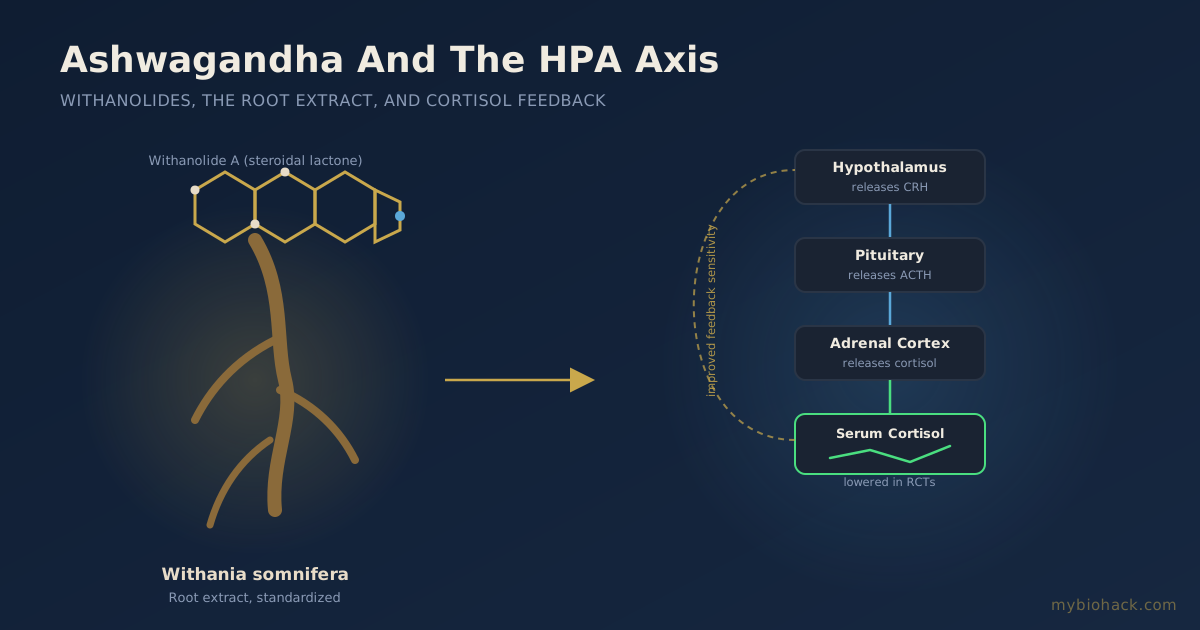
What Is Ashwagandha
Ashwagandha (Withania somnifera) is a nightshade-family shrub used in Ayurvedic medicine, classed pharmacologically as an adaptogen.
An adaptogen is a compound proposed to buffer the stress response and help physiology return toward baseline rather than to stimulate or sedate in one direction.
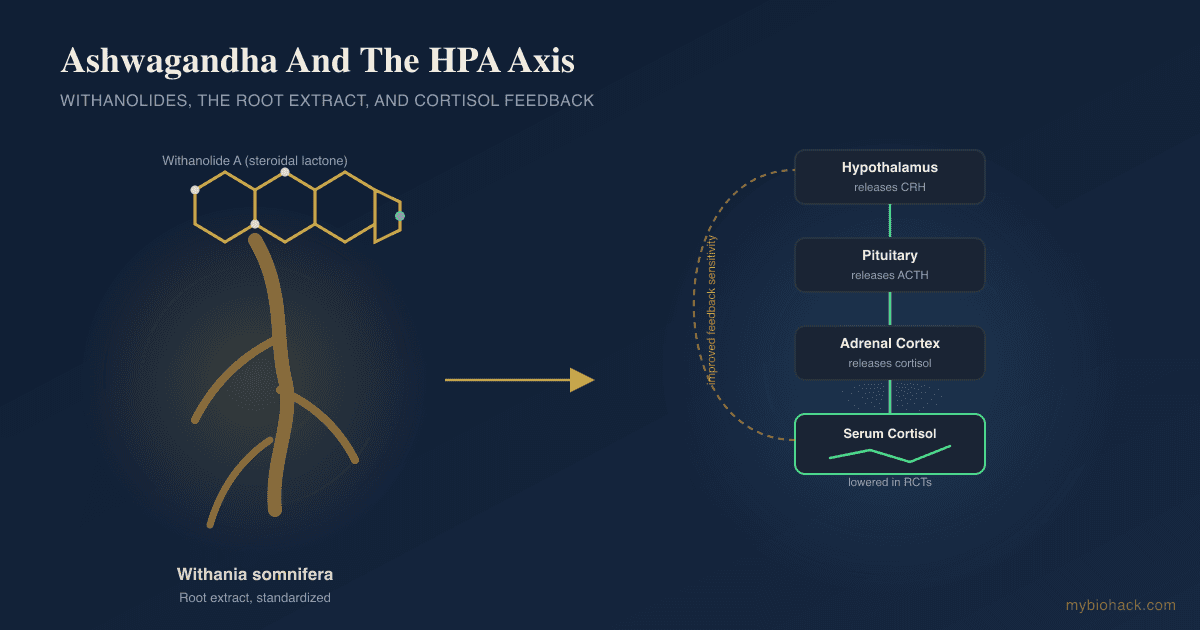
The active constituents are a family of steroidal lactones called withanolides, principally withaferin A and withanolide A. R
Most of the human trial evidence uses standardized root extracts, and the two most-studied are KSM-66 (a root-only extract standardized to at least 5% withanolides) and Sensoril (a root-and-leaf extract standardized to around 10% withanolides).
This matters more than the marketing admits, because the two extracts have different withanolide profiles and are not interchangeable when you read a study.
If you are new to this category, it sits alongside other stress-axis botanicals like rhodiola, adaptogenic roots such as maral root, and more stimulating options like catuaba.
The Benefits Of Ashwagandha
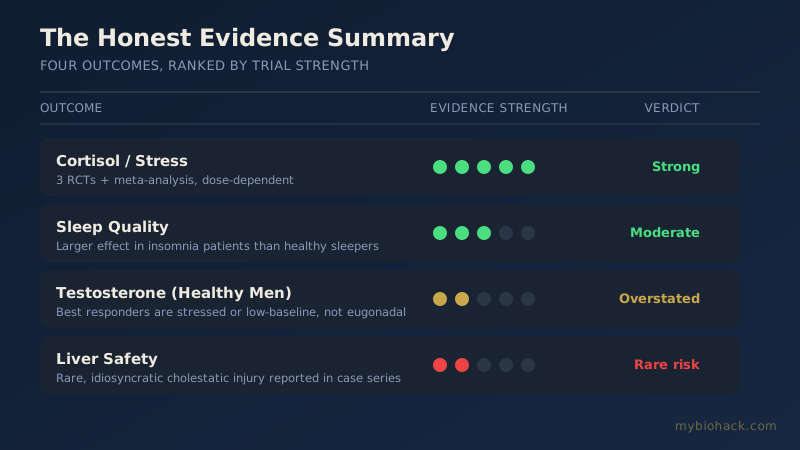
The benefits below are ordered roughly by how strong the human evidence is, from strongest (stress and cortisol) to most oversold (testosterone in healthy men).
1. Lowers Cortisol And Perceived Stress (Strongest Evidence)
This is the one claim ashwagandha has genuinely earned.
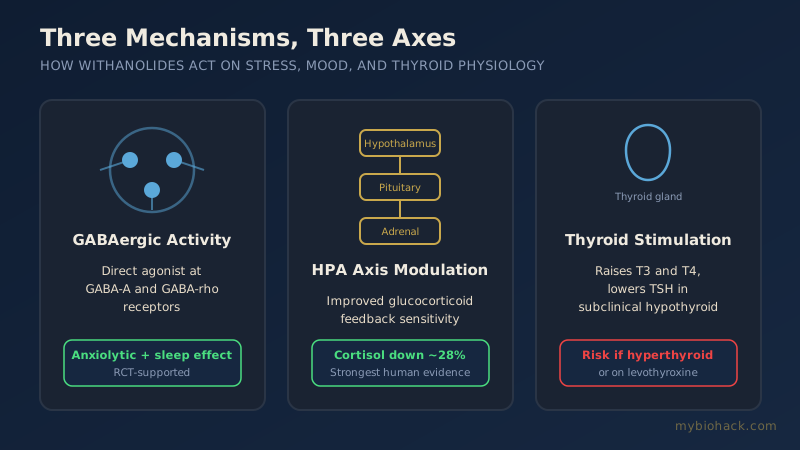
In a randomized, double-blind, placebo-controlled trial, 300 mg of KSM-66 twice daily for 60 days reduced serum cortisol by roughly 28% versus placebo, alongside large drops in perceived-stress scores. R
A separate placebo-controlled dose-response study found cortisol fell in a dose-dependent way at 250 mg and 600 mg per day, with the higher dose performing best. R
A third trial using a different standardized extract reported lower morning cortisol and improved stress and wellbeing measures over 60 days. R
Three independent RCTs pointing the same direction on a hard biomarker is about as good as botanical evidence gets.
A systematic review and meta-analysis of nine placebo-controlled trials confirmed that ashwagandha significantly lowers cortisol and self-reported stress across the pooled data. R
2. Reduces Anxiety
The anxiety data track closely with the stress data, which makes mechanistic sense given the GABAergic activity discussed below.
A double-blind, placebo-controlled study of 300 mg twice daily improved both anxiety and sleep in patients with insomnia and anxiety. R
A separate meta-analysis of randomized trials found ashwagandha reduced both anxiety and stress scores versus placebo. R
The effect sizes are meaningful but the trials are small and mostly industry-adjacent, so treat this as promising rather than settled.
3. Improves Sleep
Ashwagandha modestly improves sleep, and the effect is larger in people who actually have insomnia than in healthy sleepers.
A parallel-group placebo-controlled study found ashwagandha root extract improved sleep onset latency and sleep quality in both healthy volunteers and insomnia patients, with the insomnia group benefiting more. R
The signal is real but small, and it shows up most reliably at doses of 600 mg per day taken for at least eight weeks. R R
4. Raises Thyroid Hormones In Subclinical Hypothyroidism
This is a genuine effect and also the reason some people should avoid ashwagandha entirely.
In a double-blind, randomized, placebo-controlled trial in subclinical hypothyroid patients, 600 mg of root extract daily for eight weeks lowered TSH and raised T3 and T4 significantly versus placebo, with T3 rising over 40% from baseline. R
For a sluggish thyroid that is a benefit.
For anyone hyperthyroid, or with Graves' disease, or on thyroid replacement, pushing T3 and T4 higher is a liability, not a perk (see the thyroid caution in the safety section).
If low body temperature and thyroid symptoms are your entry point, the pattern is worth reading about in the context of a temperature-syndrome thyroid approach.
5. Modestly Increases Testosterone In Men Under Stress Or With Low Baselines
Here the marketing outruns the data.
In men doing resistance training, KSM-66 produced a larger rise in testosterone and better strength and muscle gains than placebo over eight weeks. R R
A placebo-controlled crossover in aging, overweight men found ashwagandha raised salivary testosterone by roughly 15% and DHEA-S by 18% over eight weeks. R
The catch is that the men who respond best tend to be stressed, subfertile, or starting from a low baseline, not eugonadal healthy men expecting a large hormonal jump.
6. Improves Semen Quality And Sperm Parameters In Subfertile Men
The fertility evidence is more specific and more consistent than the general testosterone claim.
In oligospermic (low sperm count) men, 675 mg of extract daily for 90 days raised sperm count and motility and increased serum testosterone by roughly 17%. R
A separate study found improved semen quality in men whose infertility was linked to psychological stress, which points back to the cortisol mechanism rather than a direct androgenic one. R
7. Blunts Inflammatory Signaling
Withaferin A, the most bioactive withanolide, is a direct inhibitor of NF-kB, the master transcription factor for pro-inflammatory cytokines. R
This is largely preclinical, so I would not sell ashwagandha as an anti-inflammatory on this basis alone, but it plausibly contributes to the whole-body stress-buffering effect.
8. Supports Neuronal Repair (Preclinical)
Withanolide A promotes regrowth of axons and dendrites and reconstruction of synapses in neuronal models. R
This is animal and cell-model data only, so it belongs in the "interesting, unproven in humans" column, not on the benefits label.
The closest human signal is cognitive rather than structural, with a randomized placebo-controlled trial of 300 mg twice daily reporting improved memory, attention, and executive function in adults with mild cognitive impairment. R
Natural Sources
Ashwagandha is not a food you eat, so there is no meaningful dietary source.
The withanolide content sits in the root, and to a lesser and more variable degree the leaf, which is why standardized extracts exist in the first place. R
Raw powder ("churna") is traditional but withanolide content varies wildly between suppliers, which is the case for a standardized extract.
Ashwagandha (KSM-66) is the extract used in most of the stress and testosterone trials cited here.
Ashwagandha (Sensoril) is the higher-withanolide root-and-leaf extract used in several of the stress and cortisol studies.
Dosage And Safety
The trial-backed dose range is 300 to 600 mg of standardized root extract per day, usually split into two doses, taken for at least eight weeks. R
Higher is not obviously better, and the cortisol dose-response data top out around 600 mg per day. R
Who Should Be Cautious
Thyroid caution (this is the big one): because ashwagandha raises T3 and T4, anyone with hyperthyroidism, Graves' disease, or on levothyroxine can be pushed toward overmedication, so this group should avoid it or use it only with thyroid labs monitored. R
Pregnancy: ashwagandha has a traditional reputation as an abortifacient and is not something to take while pregnant.
Autoimmune disease: as an immune modulator it can theoretically provoke autoimmune activity, so it deserves caution in autoimmune thyroid and other autoimmune conditions.
The Liver Injury Signal
Ashwagandha is generally well tolerated in trials, but a real, if rare, safety signal has emerged in the case-report literature.
Multiple published case reports describe ashwagandha-associated liver injury, typically a cholestatic or mixed pattern with jaundice appearing 2 to 12 weeks after starting the supplement. R R
A scoping review of these cases found that most were mild-to-moderate and self-limited after stopping, but rare instances progressed to acute liver failure. R
This appears to be an idiosyncratic reaction rather than a dose-dependent one, which means it is unpredictable, so new jaundice, dark urine, or right-upper-quadrant discomfort while taking ashwagandha is a reason to stop and get liver enzymes checked.
If you are running ashwagandha for stress or thyroid support, baseline and periodic liver enzymes and a thyroid panel are worth tracking, which is exactly the kind of longitudinal biomarker tracking the Health Hub is built for.
I use the Hepatic Function Panel (Quest Diagnostics) to assess liver enzymes before and during a course, the Thyroid Panel (TSH, T3, T4) (Quest Diagnostics) to track thyroid response, and the DUTCH Complete (Precision Analytical) to see whether cortisol output is actually moving.
Mechanisms Of Action
Simple:
- Ashwagandha calms the body's stress response by lowering cortisol output from the HPA axis.
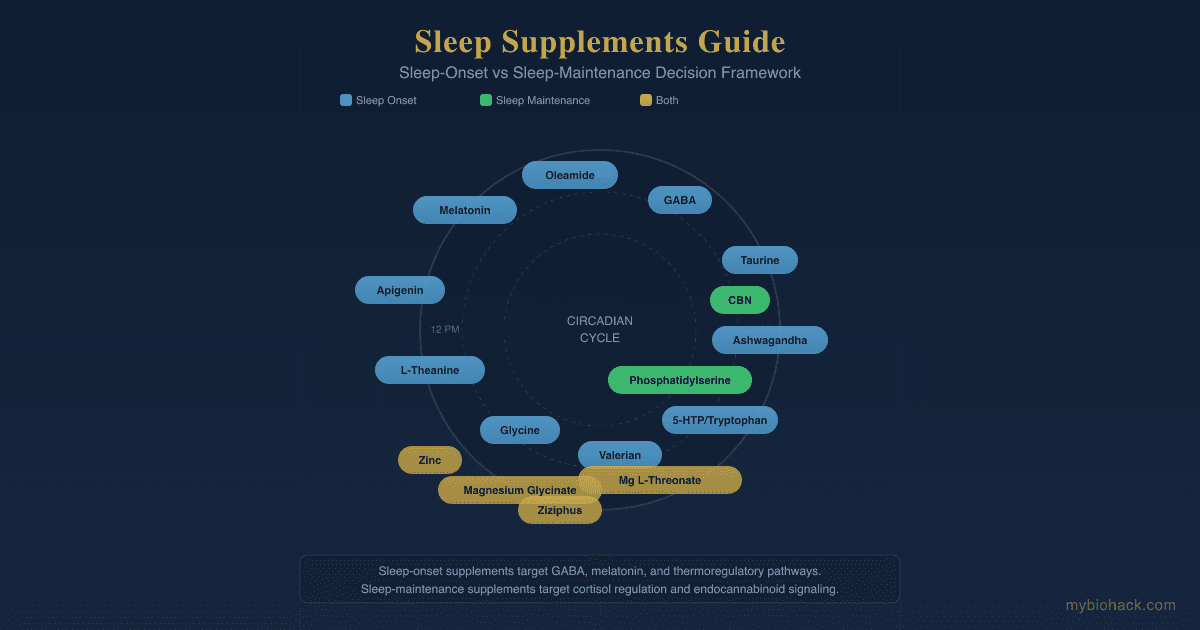
- It nudges the brain's main calming (GABA) system, which is why it eases anxiety and helps sleep.
- It gently raises thyroid hormone output, which helps a sluggish thyroid but can overshoot a fast one.
Advanced:
- HPA Axis Modulation Withanolides dampen output along the hypothalamic-pituitary-adrenal axis, reflected as lower serum and salivary cortisol across multiple placebo-controlled trials, likely through improved glucocorticoid feedback sensitivity rather than adrenal suppression. R R
- GABAergic Activity Constituents of Withania somnifera show direct agonist activity at mammalian ionotropic GABA-A and GABA-rho receptors, giving a GABA-mimetic mechanism that plausibly underlies the anxiolytic and sleep-promoting effects. R
- NF-kB Inhibition Withaferin A directly inhibits nuclear factor kappa B, suppressing transcription of downstream pro-inflammatory cytokines, which links the adaptogenic effect to reduced inflammatory tone under chronic stress. R
- Thyroid Stimulation In subclinical hypothyroidism, root extract raises circulating T3 and T4 and lowers TSH, an effect attributed to modulation of the hypothalamic-pituitary-thyroid axis and reduced thyroid oxidative stress (the same mechanism that makes it risky in hyperthyroidism). R
- Neuritogenesis Withanolide A promotes axonal and dendritic regeneration and synaptic reconstruction in neuronal models, a preclinical mechanism proposed for its nootropic reputation. R
Genetics
FKBP5
FKBP5 encodes a co-chaperone protein that regulates how sensitively the glucocorticoid receptor responds to cortisol.
Risk variants blunt the negative feedback loop, so cortisol stays elevated longer after a stressor, which is precisely the state ashwagandha's HPA-modulating effect is aimed at.
rs1360780: the risk allele is associated with impaired glucocorticoid feedback and higher vulnerability to stress-related disorders. R
COMT
COMT encodes catechol-O-methyltransferase, the enzyme that breaks down catecholamines like dopamine and norepinephrine.
The Val158Met (rs4680) Met allele produces a slower enzyme, leaving catecholamines around longer and associating with heightened stress reactivity in some contexts.
rs4680: Met carriers tend to show altered cortisol and stress-reactivity patterns, which may shape who feels the calming effect most. R
DIO2
DIO2 encodes type 2 deiodinase, the enzyme that converts the storage hormone T4 into active T3 inside tissues.
The Thr92Ala (rs225014) variant reduces local T3 generation, which is relevant because it helps explain why some hypothyroid people feel undertreated on T4 alone and why a T4-and-T3-raising botanical might help them.
rs225014: the Ala allele is associated with reduced deiodinase efficiency and lower local T3 availability. R
More Research
Extract identity is the single biggest confound in this literature, because KSM-66 (root only) and Sensoril (root and leaf) have different withanolide profiles, so pooling their trials as if they were the same compound overstates consistency. R
Long-term safety data are thin, since most trials run 8 to 12 weeks, and the liver-injury case reports are the main reason to keep courses time-limited and monitored rather than open-ended. R
The stress-buffering effect likely sits upstream of the more specific claims, since improvements in sleep, semen quality, and even testosterone in stressed men all plausibly flow from lowering cortisol rather than from independent mechanisms. R
The testosterone story is real but narrow, and the strongest responders are stressed, subfertile, or low at baseline, not healthy men chasing a supraphysiologic boost. R
For readers stacking adaptogens, ashwagandha's cortisol-lowering, downregulating profile contrasts with the more stimulating end of the category, so it does not automatically combine well with strongly activating roots, and the sensible move is to match the tool to whether your stress axis is overactive or already showing signs of CRH resistance and blunted responsiveness.
Jacob Gordon
INHC, FMT-C
Integrative Nutrition Health Coach
I cover mold illness, post-viral recovery, methylation, and complex chronic disease, drawing on ten years of clinical research, work inside a functional medicine clinic, and my own recovery from all of it. Every claim here is cited.
Book a ConsultationRelated Protocols & Supplements
Deep-dive chapters and recommended supplements for this topic
Magnesium Threonate
144mg elemental at bedtime
Glycine
3g before bed
Apigenin
50mg before bed