Benefits Of Uridine And The Mr Happy Stack
By Jacob Gordon, INHC, FMT-CThis article contains affiliate links. As an Amazon Associate, MyBioHack earns from qualifying purchases at no extra cost to you. We only link products we research and stand behind.
Uridine is a pyrimidine nucleoside that most people encounter only in biochemistry textbooks, but it plays a direct role in building synaptic membranes, releasing dopamine, and supporting brain phospholipid synthesis in ways that no other common supplement replicates.
In this post, we will discuss what uridine is, its documented benefits, natural sources, the bioavailability problem, dosing and safety, the Mr Happy Stack protocol, and the mechanisms behind all of it.
What Uridine Is
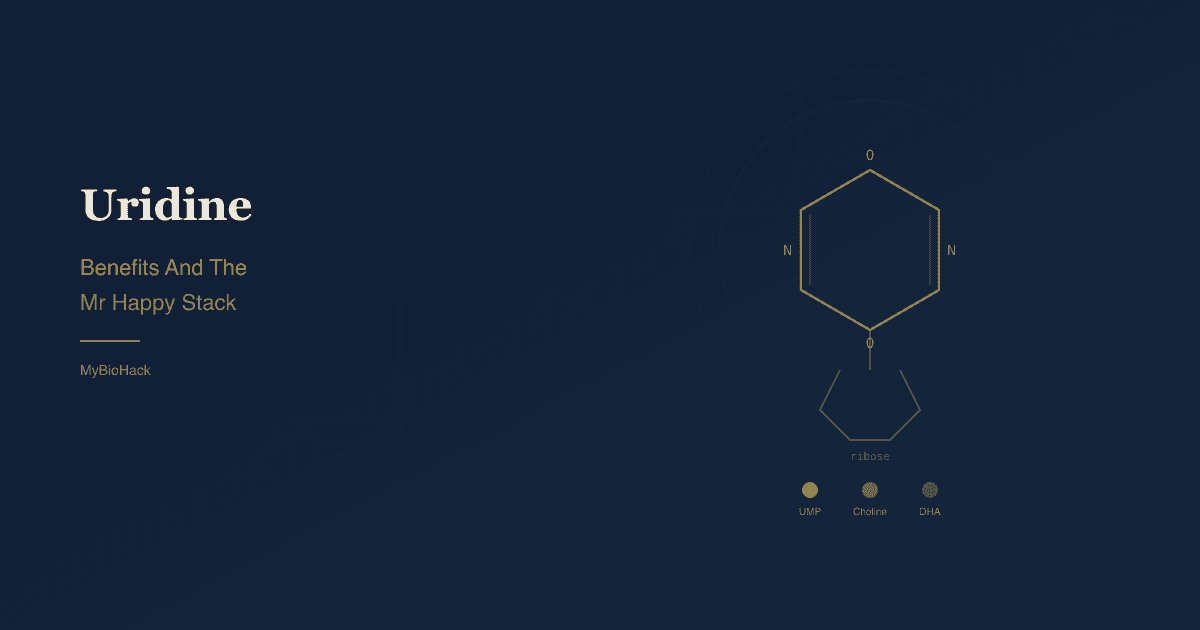
Uridine (symbol U or Urd) is a glycosylated pyrimidine nucleoside consisting of uracil attached to a ribose ring via a beta-N1-glycosidic bond. R
It is one of the four repeating nucleotides in RNA (ribonucleic acid), the molecule that translates genetic instructions into proteins. R
Beyond its role in RNA synthesis, uridine is the primary circulating pyrimidine in human plasma and cerebrospinal fluid, present at higher concentrations than any other nucleoside. R
It is produced by the liver in the form of uridine monophosphate (UMP) and secreted into the blood, where baseline plasma concentrations in healthy adults are approximately 3 to 6 micromolar. R
Uridine is essential to multiple biological processes beyond RNA:
- CDP-choline synthesis via the Kennedy Cycle, which determines the rate of membrane phospholipid production R
- Glycogen synthesis through formation of uridine diphosphate glucose (UDPG) R
- O-GlcNAcylation, a critical post-translational protein modification, through the hexosamine biosynthetic pathway R
- Purinergic signaling as a ligand for P2Y receptors that control neuron differentiation and synaptic protein synthesis R
Most of the research that applies to supplementation has been conducted by Richard Wurtman's laboratory at MIT, whose work established the three-precursor model of synaptogenesis: uridine, choline, and DHA are all required simultaneously for the brain to build new synaptic membrane. R
Benefits Of Uridine
1. Increases Brain Phospholipid Synthesis And Synaptogenesis
Phosphatidylcholine (PC) is the dominant phospholipid in brain synaptic membranes, and its synthesis rate determines how many new synapses the brain can construct. R
PC is produced via the Kennedy Cycle, which requires CTP (cytidine triphosphate) as an obligate substrate.
In humans, there is little free cytidine circulating in blood, so the brain must generate CTP from circulating uridine. R
Uridine is phosphorylated to UTP (uridine triphosphate), which is then converted to CTP.
CTP combines with phosphocholine in the rate-determining step of the Kennedy Cycle (catalyzed by CTP:phosphocholine cytidylyltransferase) to form CDP-choline, and CDP-choline then combines with diacylglycerol to produce PC. R
This means that circulating uridine is a rate-limiting substrate for brain membrane phospholipid synthesis in adults, and raising it raises the ceiling on how much synaptic membrane the brain can build. R
Oral UMP supplementation in healthy adults for seven days significantly increased brain phosphomonoester (PME) levels as measured by 31-phosphorus magnetic resonance spectroscopy at 4T, confirming that dietary uridine does reach the brain and elevate membrane phospholipid precursors in humans. R
When uridine, choline, and DHA are given together to animals, the combination increases brain levels of PC and other phosphatides, increases synaptic proteins, and increases the number of dendritic spines on hippocampal neurons, the immediate anatomical precursor for new synapse formation. R
2. Increases Striatal Dopamine Release
Dietary supplementation with uridine monophosphate (UMP) significantly increased potassium-evoked dopamine release from the striatum of aged rats, as measured by in vivo microdialysis. R
The mechanism is indirect: elevated UMP raises brain CDP-choline levels, which drives membrane phospholipid synthesis and supports the structural integrity of dopaminergic synaptic terminals. R
Membrane phospholipid composition directly affects the density of dopamine release sites and the efficiency of vesicle exocytosis. R
This effect is clinically relevant for people with dopamine-related symptoms (poor motivation, anhedonia, cognitive sluggishness), where the problem is not dopamine production per se but the capacity of synaptic terminals to release and repackage it efficiently.
3. Supports Neurite Outgrowth
In PC12 rat pheochromocytoma cells, exogenous uridine elevated intracellular CDP-choline levels and enhanced the neurite outgrowth (axon and dendrite extension) produced by nerve growth factor (NGF). R
Neurite outgrowth requires large-scale membrane synthesis at the growth cone.
By supplying the Kennedy Cycle substrate needed for that membrane construction, uridine directly supports the physical process of neurons extending new connections. R
This is particularly relevant for neuroplasticity: the brain's ability to rewire itself after injury or in response to learning depends on neurons physically growing new processes, and that growth requires phospholipid precursors that uridine helps supply.
4. Antidepressant-Like Effects (Potentiated By Omega-3s)
Uridine alone produced antidepressant-like effects in the forced swim test (FST) in rats, a standard preclinical model used in depression research. R
Omega-3 fatty acids (fish oil) alone also produced antidepressant-like effects.
When sub-effective doses of uridine and omega-3s were combined, the combination produced antidepressant-like effects equivalent to standard antidepressant drugs (desipramine, fluoxetine, citalopram), demonstrating pharmacological synergy between the two compounds. R
In an open-label case series of seven depressed adolescents with bipolar disorder treated with uridine for 6 weeks, uridine was associated with decreased depressive symptoms on the Children's Depression Rating Scale-Revised and was well tolerated. R
The proposed mechanism involves normalization of membrane phospholipid metabolism in brain regions implicated in mood disorders, as altered phospholipid composition is a documented feature of bipolar disorder. R
There is a big MAYBE here on clinical translation: the animal data is compelling and the phospholipid mechanism is biologically plausible, but there are no large randomized controlled trials in human depression populations.
5. Neuroprotection In Parkinson's And Huntington's Disease Models
In Parkinson's disease mouse models, uridine supplementation (as PN401) reduced the loss of dopamine neurons induced by MPTP, a mitochondrial complex I inhibitor that selectively destroys dopaminergic cells. R
PN401 also prevented motor impairment, neurodegeneration, and death induced by complex II inhibitors in two Huntington's disease mouse models. R
The neuroprotective mechanism relates to uridine's role in mitochondrial function and pyrimidine nucleotide pools: neurons under oxidative stress deplete their pyrimidine nucleotide reserves rapidly, and exogenous uridine replenishes these pools and supports mitochondrial respiratory chain function. R
(These are animal models only.
Human neuroprotection trials have not been completed.)
6. Cognitive Support In Aging And Mild Cognitive Impairment
In aging and mild cognitive impairment (MCI) associated with Alzheimer's disease, there is evidence for a pathological shortage of uridine, choline, and DHA, the three Kennedy Cycle precursors needed for synapse formation. R
This shortage cannot be corrected by normal diet in affected individuals, making uridine a conditionally essential nutrient in this population. R
Multinutrient interventions combining uridine (as UMP), choline, and DHA have been evaluated in randomized controlled trials covering a spectrum of dementia.
A randomized controlled trial in subjects with prodromal Alzheimer's disease showed that multinutrient intervention slowed brain atrophy and improved some measures of cognition, though the evidence base for cognitive endpoints is still developing. R
Natural Sources And The Bioavailability Problem
Dietary sources that contain uridine: (as RNA, not bioavailable in adults)
- Beer (RNA-rich due to yeast; elevated plasma uridine after beer ingestion has been observed but may be partly explained by ethanol's independent effect on uridine metabolism)
- Brewer's yeast
- Liver
- Mushrooms
- Oats
- Tomatoes
The critical caveat: Uridine present in food in the form of RNA is not bioavailable in adults.
Research from Handschumacher's laboratory at Yale established that dietary RNA-form uridine is destroyed in the liver and gastrointestinal tract, and no food when consumed has been reliably shown to elevate blood uridine levels in adults. R
In infants, uridine is present in breast milk and infant formulas as its monophosphate (UMP), which is both bioavailable and able to enter circulation from the digestive tract.
This is why synaptogenesis peaks in infancy and slows dramatically in adulthood: infants have a reliable dietary supply of bioavailable uridine, and adults do not. R
The supplement bioavailability problem:
Plain oral uridine also has poor bioavailability in adults, with bioavailability ranging from only 5.8% to 9.9% in single-dose studies at high doses. R
Triacetyluridine (TAU) is a prodrug form of uridine with dramatically superior bioavailability.
TAU achieved peak plasma uridine concentrations of 150 to 160 micromolar in human volunteers, four-fold higher Cmax and AUC than equimolar pure uridine, with peak levels occurring 1 to 2 hours after dosing. R
Uridine monophosphate (UMP) as found in infant formulas is also well-absorbed and is the form used in most of the MIT research establishing synaptogenic benefits.
For supplementation purposes: TAU or UMP are the forms that reliably raise plasma and brain uridine.
Plain uridine powder will produce some effect at higher doses but is significantly less efficient.
The Mr Happy Stack
Credit: The Mr Happy Stack was created by a user known as Mr. Happy on the Longecity forum (Immortality Institute / ImmInst) in a thread started around 2011 titled "GPC (choline), Uridine, DHA" in the Brain Health subforum.
The original thread can be found at longecity.org/forum/topic/51802-gpc-choline-uridine-dha/.
Mr. Happy compiled the MIT/Wurtman research on phosphatide precursors, connected it to the Souvenaid clinical nutrition drink developed for Alzheimer's patients, and designed a DIY supplement protocol around the same three core precursors.
The thread ran for 95+ pages, accumulated one of the largest discussion records in nootropics community history, and gave the combination its now-widely-used name.
Scientific basis: The stack is grounded in Richard Wurtman's research at MIT establishing that uridine, choline, and DHA are the three circulating precursors the brain requires simultaneously to synthesize phosphatidylcholine and build new synaptic membrane. R
When only one or two precursors are provided, a different rate-limiting step is created.
When all three are provided together, multiple Kennedy Cycle bottlenecks are removed at once, producing synergistic rather than additive effects on brain membrane phospholipid synthesis. R
Mr. Happy's original core protocol:
1. Uridine (as UMP or TAU)
Mr. Happy's original recommendation was 250 mg of uridine monophosphate twice daily (500 mg total), taken sublingually.
Sublingual administration was emphasized because it bypasses the gastrointestinal degradation that limits oral bioavailability of plain UMP.
TAU (triacetyluridine) was later adopted by many users as an alternative because of its four-fold superior oral bioavailability compared to plain uridine. R
TAU achieves peak plasma uridine concentrations of 150 to 160 micromolar in human volunteers without requiring sublingual administration. R
2. Alpha-GPC (choline source)
Mr. Happy specified Alpha-GPC as his preferred choline source, starting at 50 mg and slowly ramping to approximately 300 mg.
He explicitly advised against rushing the choline introduction because excessive choline can cause depressive symptoms in sensitive individuals.
If depressive symptoms occurred from choline, he recommended switching to Acetyl-L-Carnitine (ALCAR) as an alternative.
Alpha-GPC supplies the choline moiety that combines with CDP to form CDP-choline in the Kennedy Cycle's penultimate step. R
CDP-choline (citicoline) is also an acceptable alternative and has the practical advantage of releasing both choline and cytidine on absorption (cytidine converts to uridine in the body), making it technically a source of two Kennedy Cycle precursors at once.
Alpha-GPC or CDP-Choline (Citicoline)
3. Fish Oil (high DHA + EPA)
Mr. Happy specified a large dose of fish oil with more than 700 mg DHA and more than 300 mg EPA.
For vegetarians he allowed flaxseed oil or ALA at 3000 mg as an alternative, though ALA conversion to DHA is inefficient.
DHA incorporates into phospholipid acyl chains and increases the number of dendritic spines when combined with uridine and choline in animal models. R
Mr. Happy's Original Adjuncts
The following were included in Mr. Happy's original stack as supporting cofactors, not optional extras:
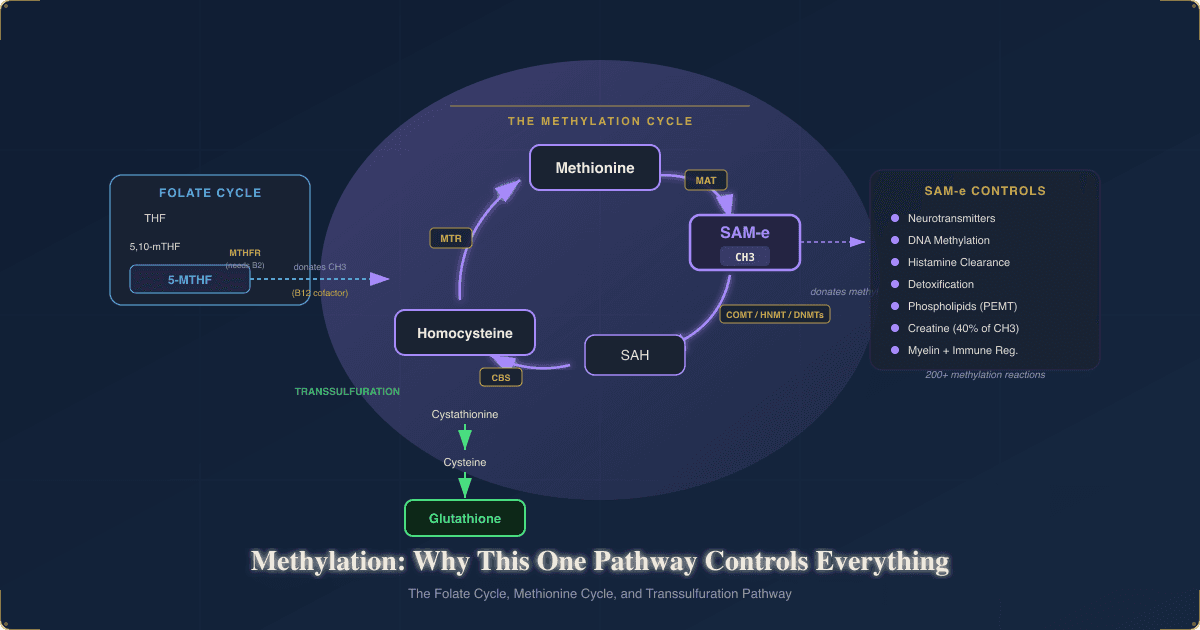
- Folate (B9) and B12: Mr. Happy flagged that uridine accelerates RNA synthesis and this process consumes additional B9; the rationale was to prevent a folate deficit from limiting the stack's effects; he recommended a good multivitamin covering B6, B9, and B12 at minimum; methylfolate (L-5-MTHF) is the preferred bioavailable form
- Vitamin E (500 IU mixed tocopherols): included for membrane antioxidant protection; DHA-rich membranes are especially vulnerable to lipid peroxidation and vitamin E is the primary fat-soluble antioxidant protecting membrane phospholipids
- Magnesium: included for general nerve health and to support the enzymatic steps in phospholipid synthesis; Mr. Happy noted benefits emerged faster when magnesium was included
Why The Combination Works And Why Choline Dosing Matters
Uridine and choline supplementation stimulates CDP-choline synthesis and phospholipid production without depleting acetylcholine synthesis or release from brain tissue. R
Direct measurement in striatal brain slices showed cytidine or uridine at 25 to 800 micromolar enhanced CDP-choline formation by 61 to 89% without affecting acetylcholine levels or release, confirming the two pathways do not cannibalize each other's choline supply. R
However, choline sensitivity is real and individual.
The depressive symptoms some people experience from high-dose choline are a documented anecdotal pattern in the Longecity thread and the nootropics community.
Mr. Happy's slow-ramp choline protocol (start 50 mg, titrate to 300 mg) reflects this.
ALCAR as a choline substitute makes sense mechanistically: ALCAR supplies acetyl groups that support acetylcholine synthesis via a different pathway, partially decoupling neurotransmitter support from the phospholipid synthesis pathway that requires choline.
Dosage And Safety
Uridine monophosphate (UMP):
Doses in the clinical literature range from 1 g/day in depressed adolescents to 2 g/day in healthy adults. R
A common starting dose is 500 mg daily, taken with meals to reduce gastrointestinal effects.
Triacetyluridine (TAU):
TAU is approximately four-fold more bioavailable than pure uridine, so lower doses are used, typically 50 to 100 mg of TAU delivering equivalent exposure to 200 to 400 mg of plain uridine.
Safety:
Uridine has been used as a medical treatment for hereditary orotic aciduria for over 40 years at doses up to 300 mg/kg per day, and no significant long-term adverse effects at therapeutic doses have been documented. R
In patients with hereditary orotic aciduria treated for over 20 years, the only side effects were abdominal cramps and diarrhea at high doses. R
Important caveats:
Long-term uridine supplementation in mice increased blood glucose levels and triggered insulin resistance. R
Short-term supplementation (under 4 weeks) improved glucose tolerance; the long-term picture inverts. R
This glucose/insulin interaction has not been studied in humans at supplement doses, but people with insulin resistance or diabetes should monitor accordingly and consult a clinician.
Uridine may also support feeding behavior via P2Y6-dependent AgRP neurons in the hypothalamus at high plasma levels, which could influence appetite. R
Omega-3 (VITAL-DEP caveat):
A large randomized trial (VITAL-DEP, n = 18,353 adults, median follow-up 5.3 years) found that omega-3 supplementation at 1 g/day did not reduce depression risk and was associated with a small but statistically significant increase in depression risk (HR 1.13, P = 0.03) in adults aged 50 and over without baseline depression. R
No differences in mood scores were observed.
This is in tension with the earlier antidepressant meta-analyses and the uridine-omega-3 synergy animal data.
The evidence for omega-3 as a standalone antidepressant in older adults without existing depression is not as clean as commonly stated.
Mechanisms Of Action
Simple:
- Uridine is the primary substrate the adult brain uses to generate CTP, the obligate co-substrate in the Kennedy Cycle's rate-determining step; raising uridine raises CTP and raises the rate of brain phosphatidylcholine (PC) synthesis R
- More PC means more synaptic membrane, which translates to more dendritic spines and ultimately more synapses; this is why uridine alone, and especially with choline and DHA, increases synapse numbers in animal brains R
- Elevated uridine increases striatal dopamine release, not by making more dopamine, but by improving the membrane integrity and vesicle-release efficiency of dopaminergic terminals R
- The Mr Happy Stack (uridine + choline + DHA) removes three simultaneous bottlenecks in the Kennedy Cycle, producing synergistic rather than merely additive effects on membrane phospholipid synthesis R
- Sub-effective doses of uridine and omega-3s together produce antidepressant-like effects equivalent to standard antidepressants in animal models, a synergy driven by complementary mechanisms: uridine raises CTP for membrane synthesis, omega-3s incorporate into membranes and regulate fluidity R
Advanced:
The Kennedy Cycle and CTP as bottleneck:
The Kennedy Cycle (CDP-choline pathway) converts choline to PC through three sequential reactions. R
The second reaction, catalyzed by CTP:phosphocholine cytidylyltransferase (CCT), combines CTP with phosphocholine to form CDP-choline.
This step is rate-limiting because CCT is a low-affinity enzyme whose activity depends directly on CTP concentration. R
In adult humans, there is negligible free cytidine in blood.
The brain generates CTP through two routes: the ATP-dependent de novo synthesis pathway, and the less energy-intensive salvage pathway that converts circulating uridine to UTP and then to CTP via CTP synthetase. R
This means plasma uridine level is the primary determinant of brain CTP availability, which in turn controls the rate of the Kennedy Cycle's rate-determining step.
Supplemental uridine, by elevating plasma uridine, shifts CTP synthesis toward the salvage pathway, economizing ATP while increasing CTP output. R
Phospholipid synthesis does not compete with acetylcholine:
A critical concern with raising CDP-choline is whether enhanced phospholipid synthesis would deplete the choline supply needed for acetylcholine synthesis.
Direct measurement in striatal brain slices showed that cytidine or uridine at 25 to 800 micromolar concentrations enhanced choline utilization to form CDP-choline by 61 to 89%, but failed to affect acetylcholine release or levels, and did not affect choline uptake into striatal synaptosomes. R
The acetylcholine and phospholipid synthesis pathways draw from different choline pools and operate independently enough that stimulating one does not cannibalize the other. R
P2Y receptor signaling:
Extracellular UTP (derived from uridine) acts as a ligand for P2Y2 receptors on neurons. R
P2Y2 activation controls neuron differentiation and stimulates synaptic protein synthesis.
This receptor-mediated signaling role of uridine is distinct from its metabolic role as a Kennedy Cycle substrate and represents a separate pathway through which elevated uridine can promote synaptogenesis. R
Mitochondrial protection:
Uridine supports mitochondrial function by maintaining intracellular pyrimidine nucleotide pools.
Neurons under oxidative or metabolic stress deplete pyrimidine nucleotide reserves rapidly, impairing mitochondrial respiratory chain function.
Exogenous uridine replenishes these pools through the salvage pathway, bypassing the energy-expensive de novo synthesis route.
This is the mechanism behind uridine's neuroprotection in MPTP-induced dopaminergic neuron death in Parkinson's disease models. R
Genetics
PCYT1A (CTP:phosphocholine cytidylyltransferase alpha):
The rate-determining enzyme of the Kennedy Cycle is encoded by PCYT1A.
Rare loss-of-function PCYT1A mutations cause a syndrome of combined lipodystrophy, fatty liver, and intellectual disability, confirming this enzyme's importance for membrane synthesis across tissues.
Common PCYT1A variants affecting enzyme efficiency would be expected to influence how much benefit an individual derives from uridine supplementation: lower baseline CCT activity means the Kennedy Cycle is more substrate-constrained and therefore more responsive to uridine.
CMPK1 (UMP-CMP kinase):
The conversion of UMP to UDP and then to UTP is catalyzed by CMPK1 (UMP-CMP kinase).
Variants reducing CMPK1 activity would slow the conversion of supplemental UMP to UTP and ultimately to CTP, blunting the downstream Kennedy Cycle effect.
This enzymatic step is a potential pharmacogenomic determinant of inter-individual variability in uridine supplementation response.
DHODH (dihydroorotate dehydrogenase):
The de novo pyrimidine synthesis pathway, which produces UMP from scratch, uses DHODH as a mitochondrial enzyme.
DHODH inhibition (notably by the drug leflunomide used in rheumatoid arthritis) depletes pyrimidine nucleotide pools and can cause mitochondrial toxicity.
Individuals with reduced DHODH activity (whether genetic or drug-induced) may have lower baseline pyrimidine reserves and therefore greater dependence on dietary/supplemental uridine for the salvage pathway to maintain adequate CTP levels.
MTHFR and methylation:
Elevated homocysteine, commonly associated with MTHFR C677T and A1298C variants, impairs the PEMT pathway of phosphatidylcholine synthesis (the alternative to the Kennedy Cycle in liver).
In individuals with impaired PEMT activity due to MTHFR-driven homocysteine accumulation, the Kennedy Cycle becomes a more critical route for hepatic and neuronal PC production, potentially increasing the sensitivity of these individuals to uridine and choline supplementation.
More Research
- Human clinical trials for neuroplasticity: The strongest data for uridine's synaptogenic effects comes from animal studies and one human 31P-MRS trial showing elevated brain PME after 7 days of supplementation. R The missing piece is a randomized controlled trial measuring cognitive endpoints, dendritic spine density by imaging, or synaptic protein biomarkers in healthy adults or in mild cognitive impairment. The mechanistic rationale is strong enough that such a trial is warranted, and the safety profile of UMP is well-established enough that it should not be a barrier.
- The omega-3 depression contradiction: The VITAL-DEP trial finding of no depression benefit (and a small increased risk) in older adults given 1 g/day omega-3 for 5 years contrasts with the earlier animal synergy data and smaller human trials. R One interpretation is that the benefit of omega-3 for mood is dose-dependent and combination-dependent (requiring the full uridine-choline-DHA triad), not replicated by omega-3 alone at moderate doses. Another is that EPA-enriched formulations perform better than DHA-enriched ones for mood, as suggested by some meta-analyses. The mechanistic distinction between EPA's signaling effects and DHA's structural effects on membranes is worth exploring in future trials designed around the uridine-omega-3 synergy hypothesis.
- Glucose and insulin: the long-term uridine question: Short-term uridine improves glucose tolerance in mice; long-term uridine worsens it and induces insulin resistance. R This is a dose- and duration-dependent effect that has not been studied in humans at supplement doses. For cognitively healthy adults using uridine for neuroplasticity purposes, this is a monitoring gap worth tracking, particularly in those who are already metabolically compromised.
- Uridine and Alzheimer's disease: The shortage of uridine, choline, and DHA in MCI and early Alzheimer's disease is documented, and multinutrient interventions including these three have showed signals of slowing atrophy in prodromal Alzheimer's. R The Souvenir II trial evaluated a multinutrient drink (Fortasyn Connect) containing UMP, choline, DHA, EPA, folate, vitamins B12, B6, C, and E, and selenium in mild Alzheimer's disease patients and showed meaningful signals in some cognitive domains with an excellent safety profile. Whether uridine is the primary driver of benefit or whether the full multinutrient combination is necessary remains to be resolved. For biomarker testing in people concerned about cognitive aging, I use the Cellular Zoomer as a starting point to assess metabolic and mitochondrial status.
Jacob Gordon
INHC, FMT-C
Integrative Nutrition Health Coach
I cover mold illness, post-viral recovery, methylation, and complex chronic disease, drawing on ten years of clinical research, work inside a functional medicine clinic, and my own recovery from all of it. Every claim here is cited.
Book a ConsultationRelated Protocols & Supplements
Deep-dive chapters and recommended supplements for this topic
Lion's Mane
1000mg/day
Omega-3 (DHA)
2g/day
Phosphatidylserine
100mg 3x/day