8 Steps to Naturally Treat Mold Illness And CIRS (Science-Based Protocol)
Back to Research Library
Inflammation

8 Steps to Naturally Treat Mold Illness And CIRS (Science-Based Protocol)

|8 min read|0 likes

This article contains affiliate links. As an Amazon Associate, MyBioHack earns from qualifying purchases at no extra cost to you. We only link products we research and stand behind.

Mold illness is what happens when biotoxins from a water-damaged building trigger a chronic immune activation that does not switch off after you leave the building.

In this post, we will discuss what mold illness and CIRS actually are, why I think the standard model gets the mechanism backwards, how mold drives illness through Junction Dysfunction, the protocol I use, and how to test for it without falling for unvalidated lab marketing.


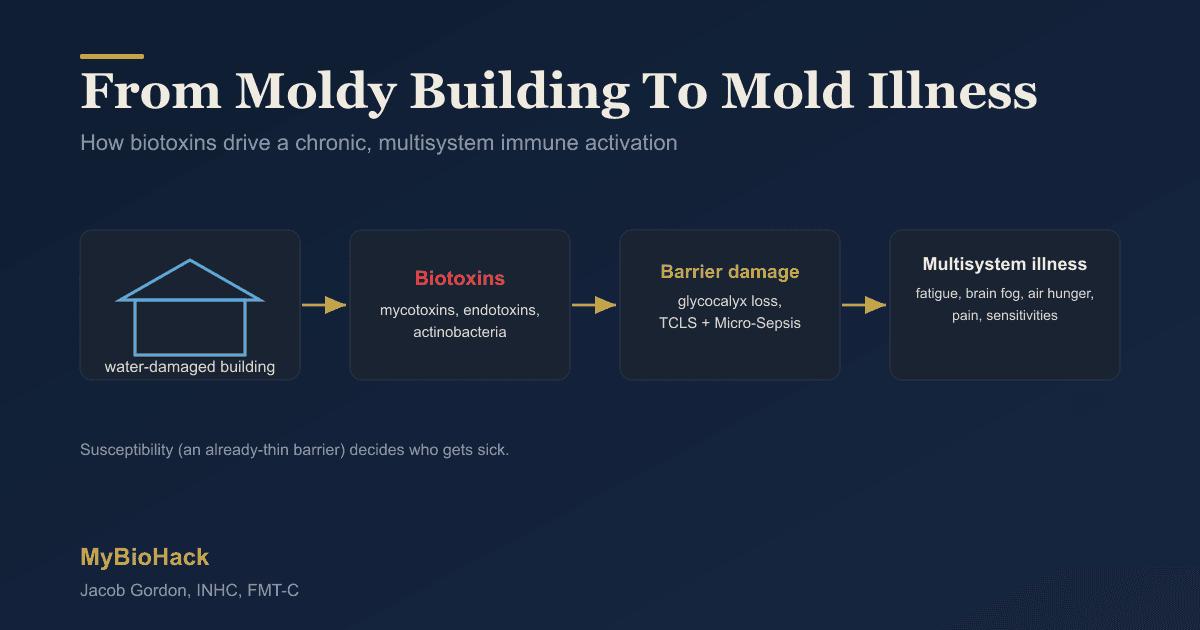
How mold biotoxins drive chronic inflammatory illness through barrier damage and micro-sepsis

Basics Of Mold Illness

Mold illness is a chronic, multisystem condition driven by exposure to biotoxins in water-damaged buildings.

The relevant exposures are not just mold spores but mycotoxins, bacterial endotoxins, actinobacteria, and other inflammagens that accumulate in damp indoor environments.

The mainstream label for this is Chronic Inflammatory Response Syndrome (CIRS), popularized by Ritchie Shoemaker.

Common mold illness symptoms include: (not exclusive list)

  • Air hunger (shortness of breath without lung disease)
  • Brain fog (poor recall, word-finding trouble, slowed thinking)
  • Fatigue (unrefreshing, often post-exertional)
  • Ice-pick pain and headaches
  • Light sensitivity and red eyes
  • Mood changes (anxiety, depression, irritability)
  • Static shocks and temperature dysregulation
  • Vertigo and balance issues

The symptom list is large because the problem is systemic inflammation and poor perfusion, not one organ.

What Causes Mold Illness

The trigger is biotoxin exposure, usually from a building you cannot see is damaged.

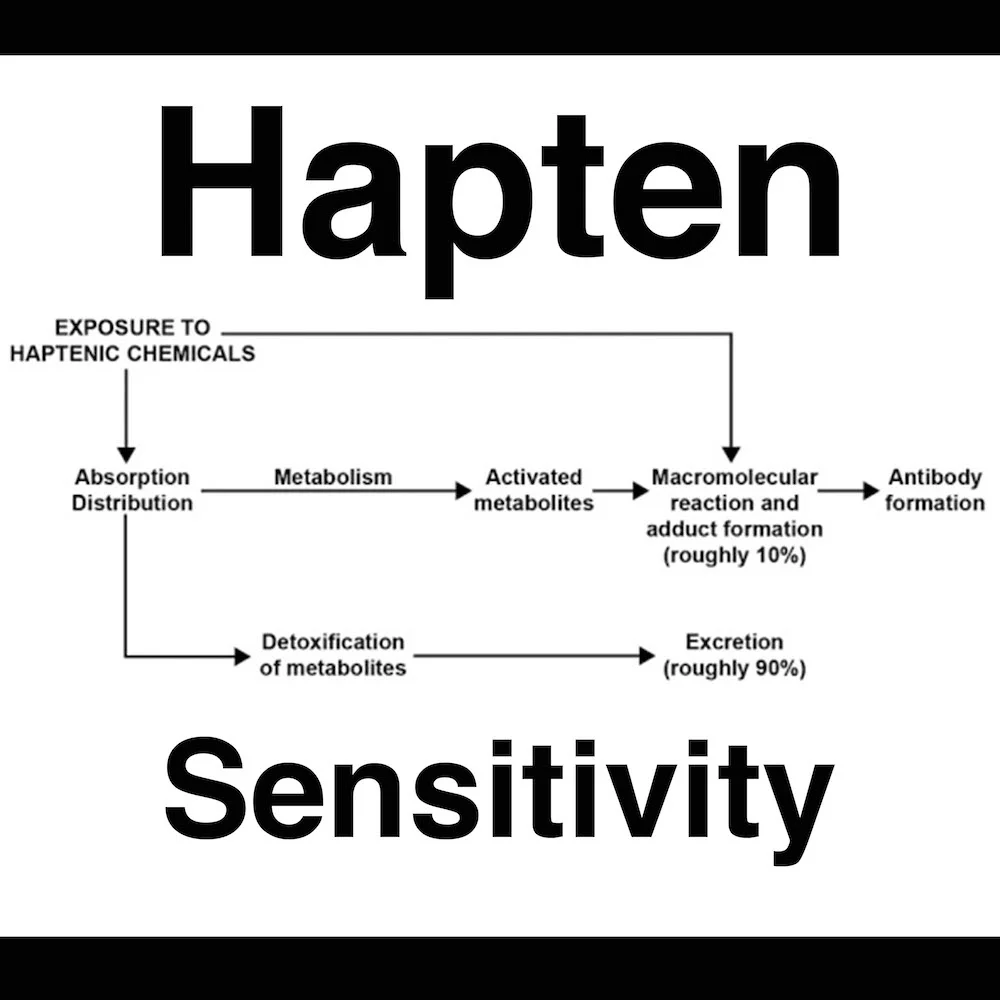
Mycotoxins activate multiple innate immune pathways and generate specific cytokine and chemokine responses. R

But exposure alone does not explain why one person in a moldy house gets sick and another does not.

Susceptibility is the second half.

Mold and mycotoxin exposure matters most in people with pre-existing immune dysregulation, where it exacerbates underlying inflammatory and autoimmune processes. R

In my framework, that susceptibility is usually an already-compromised barrier system.

When the glycocalyx and gut lining are already thin, biotoxins translocate and activate the immune system far more easily, which is the bridge from mold exposure to Junction Dysfunction.

How Mold Drives Illness (And Why I Reframe CIRS)

How biotoxins drive barrier damage, TCLS, and Micro-Sepsis. HIF activation is the adaptive response, not the defect.

Here is where I diverge from the standard CIRS model, so I will be direct about it.

The Shoemaker framework treats biotoxin-driven immune activation as the primary disease and builds a fixed multi-step protocol around it.

I think that model overfits the data.

It is worth noting that the treatment-effect evidence for the standard protocol comes largely from one group, and independent large-scale trials are limited or absent.

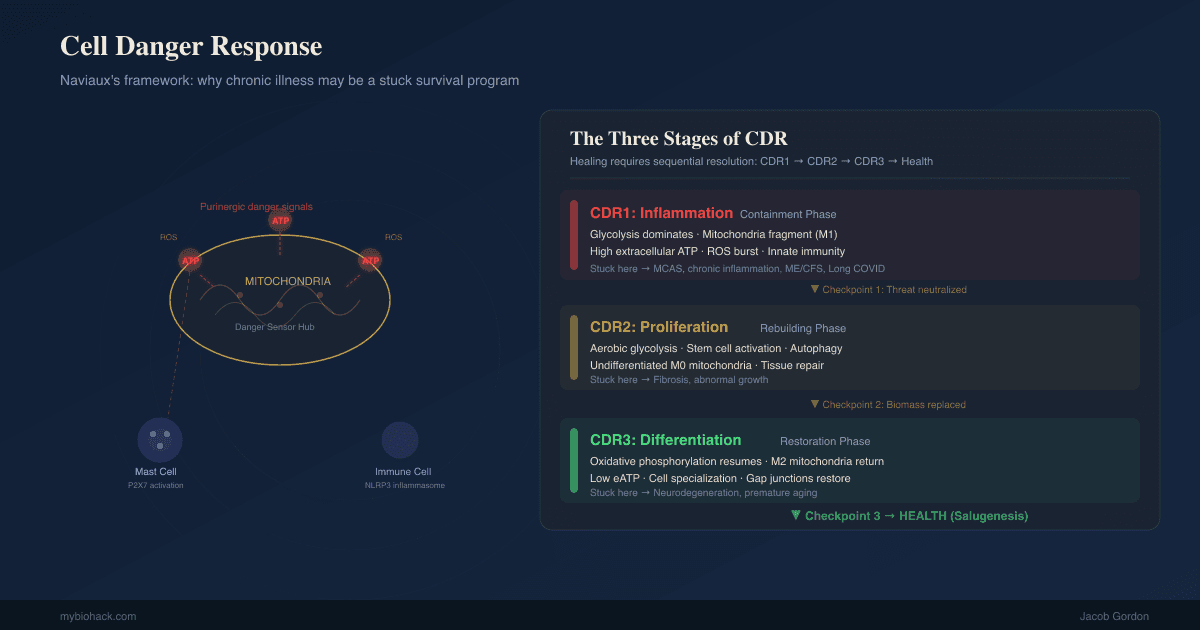
My reframe is that mold illness runs through the same machinery as every other chronic post-injury illness.

Biotoxins drive immune cells to release hyaluronidase and matrix metalloproteinases, which degrade the glycocalyx, open tight junctions, and produce Transient Capillary Leak Syndrome (TCLS).

The leaky barrier lets microbial products recirculate, producing the chronic sub-lethal immune activation I call Micro-Sepsis.

Mycotoxins compound this by damaging mitochondria directly, since aflatoxin, ochratoxin, and citrinin impair mitochondrial enzymes and ATP production. R

They also prime mast cells and microglia, which is the source of the brain fog and sensitivity. R

The capillary hypoperfusion that follows produces tissue hypoxia, which stabilizes HIF1a and HIF2a.

The standard model treats that HIF activation as pathology to suppress.

I read it as the body's appropriate adaptive response to low oxygen, which means the target is the upstream perfusion problem, not the HIF response itself.

This matters because it changes the protocol from a rigid biotoxin checklist into restoring barriers, drainage, and mitochondria.

Mold Illness And Overlapping Conditions

Mold illness rarely travels alone, and I have written about the pieces separately.

It also overlaps heavily with mast cell activation, dysautonomia, and post-viral illness, because all of them share the same barrier and perfusion mechanism.

How To Improve Mold Illness

This protocol is sequenced, and the order is not optional.

Binding and detox before you leave the exposure is wasted effort.

1. Remove The Exposure

Nothing else works while you are still breathing the biotoxins.

This means identifying and remediating the water-damaged building, or leaving it.

Professional inspection and remediation come before any supplement.

2. Open Drainage Before Binding

Toxins you mobilize must have a way out, or you will feel worse.

That means a working gut, bile flow, and bowel regularity first.

TUDCA: thins bile and supports biliary excretion.

Milk Thistle (Silymarin): supports liver conjugation.

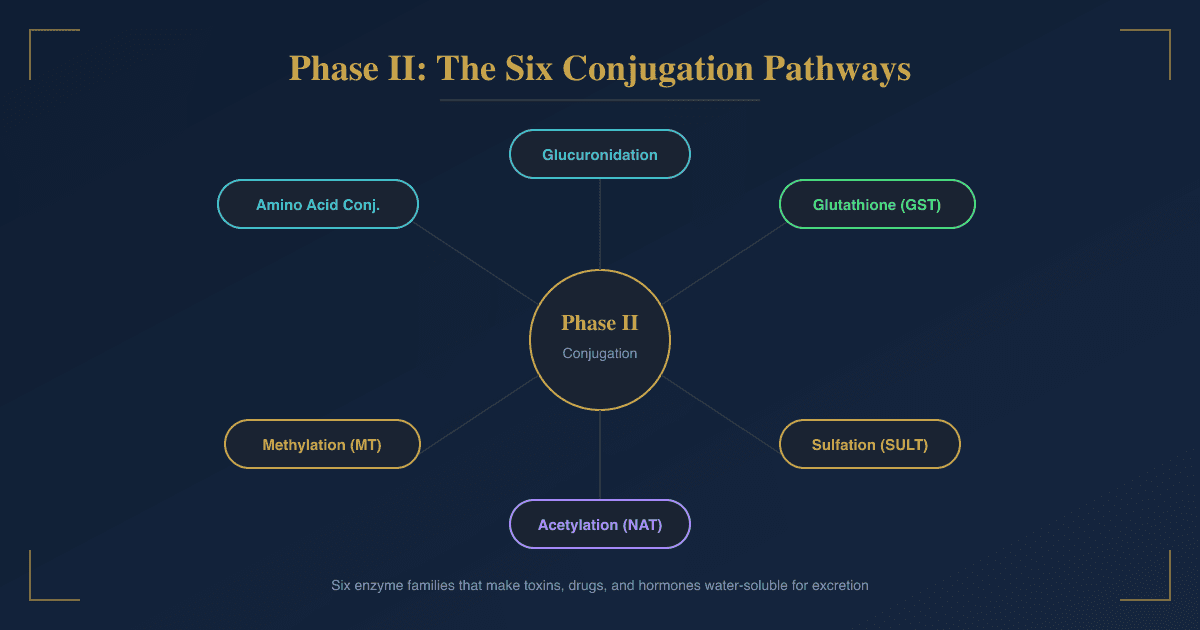
See my posts on detox phases and conjugation pathways for the full logic.

3. Bind The Toxins

Binders capture mycotoxins in the gut so they are not reabsorbed through enterohepatic recirculation.

Activated Charcoal: a broad binder taken away from food and supplements.

Modified Citrus Pectin: binds toxins and also inhibits galectin-3.

Chitosan: a binder I cover in depth in my post on chitosan and biotoxins.

The conventional prescription binder is cholestyramine, which I do not link because it is a drug, and it binds some mycotoxins but not all.

4. Restore Glutathione And NRF2

This is the antioxidant capacity mold depletes.

Liposomal Glutathione: the master antioxidant central to Phase II detox.

NAC: the precursor that lets you make your own glutathione.

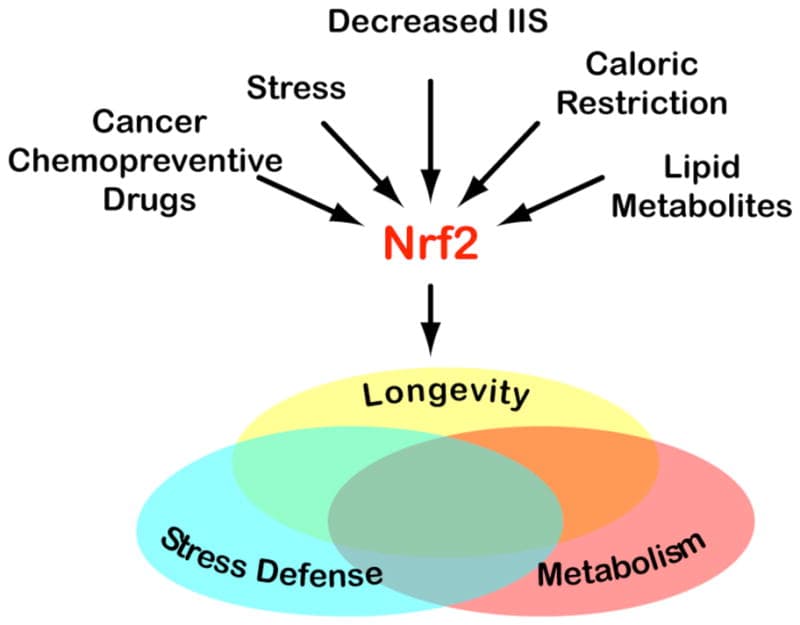
Sulforaphane (Broccoli Sprout Extract): activates the NRF2 antioxidant response.

5. Rebuild The Gut And Barrier

A leaky gut keeps the endotoxin loop running.

Saccharomyces boulardii: supports the barrier and crowds out opportunists.

Butyrate: fuels the gut lining and seals it.

6. Sweat It Out

Once drainage and binding are in place, sweating mobilizes stored lipophilic toxins.

Infrared Sauna: a practical way to sweat consistently, and it also supports mitochondria through near-infrared light.

7. Address Sulfite And Sulfur Handling

Many mold patients cannot process sulfites, which drives mast cell reactions.

Molybdenum: the cofactor for the SUOX enzyme that clears sulfites.

8. Do The Limbic Work

Mold illness wires a powerful threat response, and chemical sensitivity is often locked in by the limbic system.

In my clinical experience, people rarely fully recover from mold without retraining the subconscious threat loop.

Programs like DNRS and the Gupta Programme, plus meditation and time in nature, build the plasticity to exit it.

What To Stay Away From

  • Aggressive binders before drainage is open (this mobilizes toxins you cannot excrete and causes a crash)
  • Forcing detox while still in the moldy building (you cannot outrun ongoing exposure)
  • High-intensity exercise during a flare (it deepens the perfusion and glycocalyx problem)
  • Rigid one-size protocols (the right sequence depends on your drainage, gut, and barrier status)

Testing

Testing for mold illness is where a lot of money gets wasted, so be careful.

Mycotoxin Testing (With A Caveat)

Urine mycotoxin tests can detect mycotoxins, but no FDA-approved test exists and the CDC has flagged unvalidated urine mycotoxin testing for clinical diagnosis. R

A positive result can reflect dietary mold as easily as building exposure, so I treat it as one data point, not proof.

I use the Toxin Zoomer to assess mycotoxins alongside heavy metals and environmental chemicals for a fuller toxic-load picture.

Inflammation And Immune Markers

I use the Immune Zoomer to assess autoantibodies and mast cell markers driven by the immune activation.

Neurological Involvement

I use the Neural Zoomer to assess brain autoimmunity and blood-brain-barrier integrity when neurological symptoms dominate.

The Building

The most important test is of the environment, through professional inspection and dust analysis, because removing exposure is step one.

Mechanisms Of Action

Simple:

  • Mold in water-damaged buildings releases toxins that switch your immune system on and keep it on.
  • Those toxins damage the lining of your blood vessels and gut, so more toxins get in.
  • They also poison your mitochondria, which is why the fatigue is so deep.
  • Recovery means leaving the building, opening your drainage, binding the toxins, and rebuilding the barriers.

Advanced:

  • Innate immune activation Mycotoxins trigger specific cytokine and chemokine responses through multiple innate pathways. R
  • Mitochondrial impairment Aflatoxin, ochratoxin, and citrinin inhibit mitochondrial enzymes and reduce ATP production. R
  • Barrier degradation Biotoxin-driven enzyme release degrades the glycocalyx, producing TCLS and the endotoxin recirculation behind Micro-Sepsis. R

Genetics

HLA-DR

HLA-DR encodes immune-presentation molecules, and the Shoemaker model emphasizes certain "dreaded" HLA haplotypes as a reason patients cannot clear biotoxins.

I treat HLA-DR as one susceptibility factor among many rather than a life sentence, because barrier and drainage status matter more in practice.

GSTM1 / GSTT1

These genes encode glutathione S-transferases central to Phase II detox.

Null variants reduce conjugation capacity and are common in people who handle toxins poorly.

PON1

PON1 encodes an enzyme that clears organophosphates and influences oxidative detox capacity.

I cover it in depth in my post on paraoxonase and detox.

More Research

  • Environmental mold and mycotoxin exposure elicits specific cytokine and chemokine responses, supporting an immune-mediated mechanism. R
  • Mycotoxins have been detected in human samples from patients exposed to environmental molds, confirming systemic uptake. R
  • The CDC has cautioned against unvalidated urine mycotoxin testing for clinical diagnosis, which is the key testing caveat. R

Where To Go From Here

Mold illness is the clearest example of why I treat chronic illness through barriers and drainage rather than a single biotoxin checklist.

The full mechanism, including the glycocalyx, TCLS, and the case against the standard CIRS model, lives in the Junction Dysfunction guide, included with the Path plan at $120 a year.

If you are tracking your own toxin, immune, and inflammatory markers over time, the Health Hub does that and comes with the Pro plan at $180 a year, along with unlimited use of the Biohacking Bot to interpret your results in this framework.

If your case is complex, which mold cases usually are, a consultation is where we build the sequence around your specific drainage and exposure.

The first step costs nothing and is the most important.

Get out of the building.

JG

Jacob Gordon

INHC, FMT-C

Board Certified Health Coach

I spent years battling unexplained chronic illness before discovering biohacking, epigenetics, and functional medicine. Now I share that research at MyBioHack to help others find their own answers.

Book a Consultation

Related Protocols & Supplements

Deep-dive chapters and recommended supplements for this topic

Recommended Supplements

Quercetin

500mg 2x/day

Vitamin D3 + K2

5000 IU + 200mcg/day

DAO Enzyme

1 cap before meals
Protocols from Jacob's Junction Dysfunction guideView Full Guide

What's Working For You?

What has been your experience with this topic? Unlock the full community archive with Pro.

Sign in to share your stack