Modafinil: How It Works, The Risks, And Natural Ways To Get The Same Wakefulness
By Jacob Gordon, INHC, FMT-CThis article contains affiliate links. As an Amazon Associate, MyBioHack earns from qualifying purchases at no extra cost to you. We only link products we research and stand behind.
Modafinil is a prescription wakefulness drug that a growing number of otherwise healthy people use off-label for focus, even though it was built for three specific sleep disorders and carries interactions and safety signals that most nootropic write-ups leave out.
In this post, we will discuss how modafinil actually works in the brain, the honest efficacy and safety picture including the drug interactions and rare but serious risks that get underreported, and the natural tools that target the same dopamine, orexin, and histamine systems without the prescription.
---
- What Modafinil Is
- How Modafinil Works
- The Honest Efficacy Picture
- Tolerance, Dependence, And Withdrawal
- Side Effects And Serious Risks
- Why It Is Not A Root-Cause Fix
- What Is Actually Driving Your Fatigue
- The Interventions With Real Evidence
- What To Stay Away From
- Testing
- Mechanisms Of Action
- Genetics
- More Research
What Modafinil Is
Modafinil is a wake-promoting agent approved by the FDA for narcolepsy, for the residual daytime sleepiness of obstructive sleep apnea despite treatment, and for shift work sleep disorder. R
It is a Schedule IV controlled substance in the United States, which means it requires a prescription and carries a recognized, if comparatively low, potential for abuse and dependence. R
Despite that narrow approved indication, a large share of real-world modafinil use is off-label and driven by cognitive enhancement rather than a diagnosed sleep disorder. R
Because it is a prescription-only controlled substance, I do not link to it, dose it, or give any acquisition guidance anywhere in this post, and nothing here should be read as encouraging off-label use.
The reason it is worth understanding in this much depth is that its mechanism points directly at systems you can support without it, and the actual interaction and safety data are more nuanced than most cognitive-enhancement content lets on.
How Modafinil Works
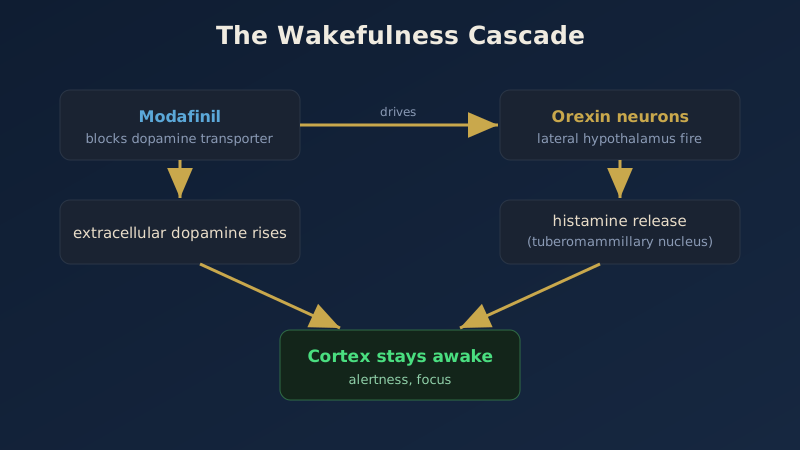
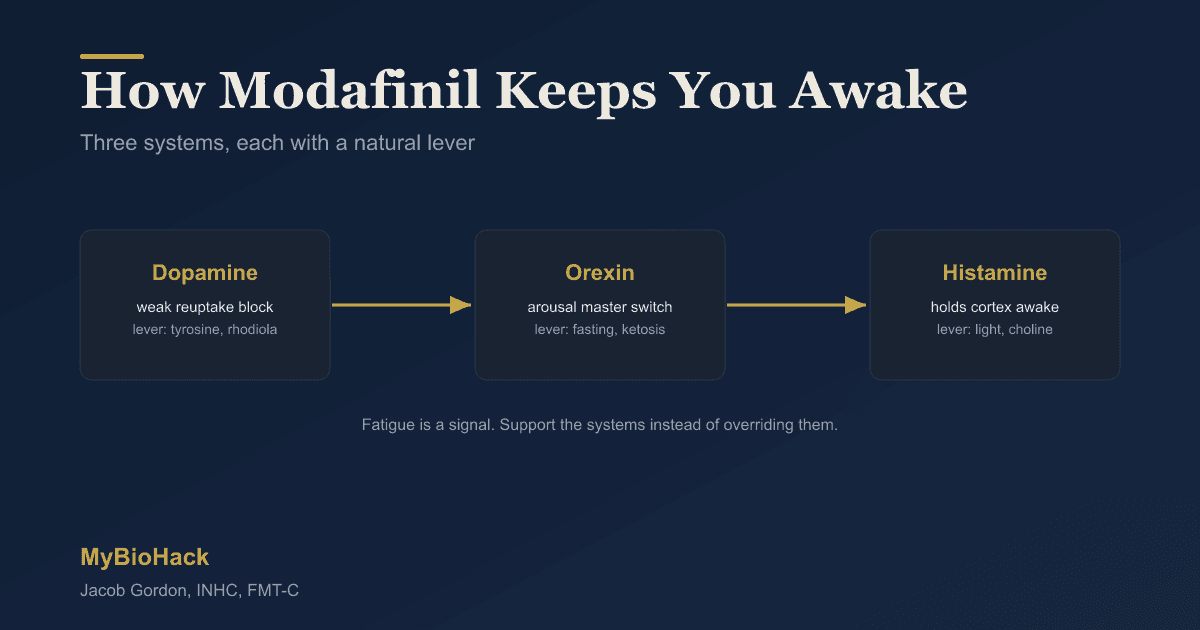
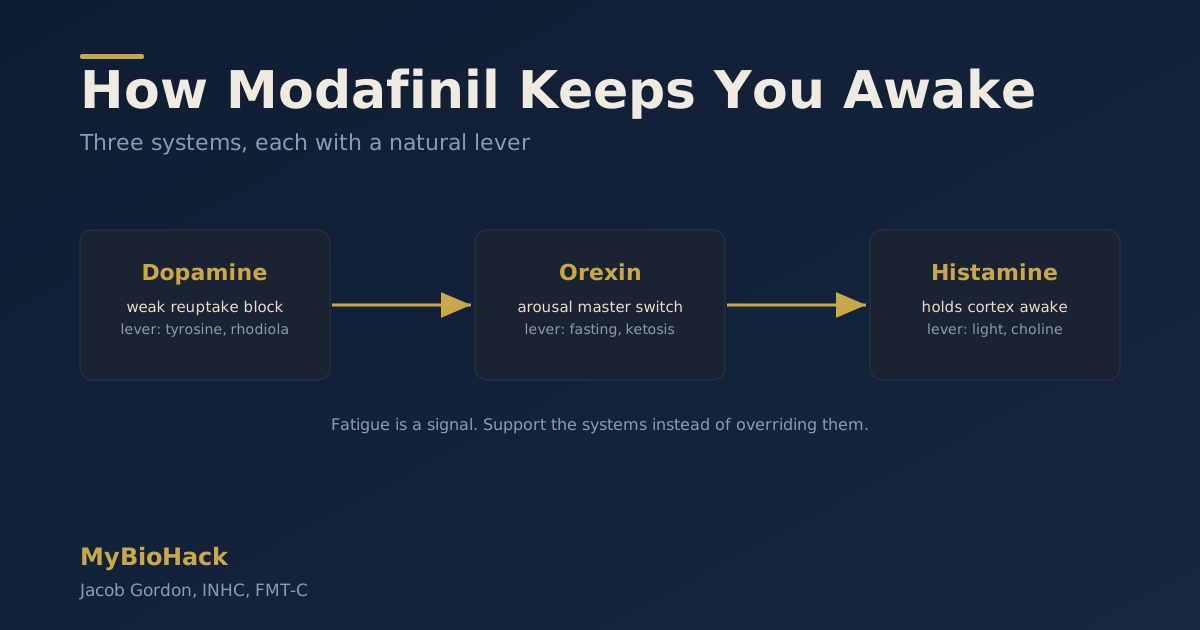
Modafinil's wake-promoting effect comes from several overlapping brain systems, and dopamine is the primary one, not the "non-dopaminergic atypical stimulant" framing it is often given in nootropic writing.
Dopamine: The Primary Mechanism
Modafinil binds the dopamine transporter (DAT) and blocks dopamine reuptake, raising extracellular dopamine, the same basic mechanism shared by cocaine and amphetamines, though far weaker in potency. R
PET imaging confirmed this DAT occupancy directly in the human brain, which is part of why modafinil is scheduled at all despite its comparatively mild subjective effects. R
Modafinil's arousal effect is abolished in animals lacking functional dopamine D1 and D2 receptors, which confirms dopamine signaling is central to the drug's wakefulness effect, not incidental to it. R
A comprehensive neurochemical review concluded that modafinil's broader effects on catecholamines, glutamate, GABA, orexin, and histamine appear to occur largely secondary to its catecholamine action, which undercuts the popular claim that modafinil works through a fundamentally separate, non-dopaminergic pathway. R
Orexin And Hypocretin
The second system is orexin, also called hypocretin, a neuropeptide made by a small cluster of lateral hypothalamic neurons that functions as one of the master switches for stable wakefulness.
Modafinil does not bind orexin receptors directly, but dosing it activates orexin neurons and the tuberomammillary nucleus, shown by increased neuronal activity markers in both regions after modafinil administration. R
Orexin neurons are metabolically sensitive, and prepro-orexin expression rises under fasting, which is part of why food timing is one of the natural levers covered later in this post. R
Histamine
The third system is histamine, released from the tuberomammillary nucleus, one of the classic arousal-promoting neurotransmitters, and part of why sedating antihistamines cause drowsiness.
For years the working model was that modafinil's histamine release sat strictly downstream of orexin activation, but a study that genetically ablated histamine neurons found histamine contributes to modafinil's wake-promoting effect independently, and ablating orexin neurons instead of histamine neurons did not eliminate the effect and even increased sensitivity to modafinil in mice. R
That is a genuinely unresolved point in the literature, so I am presenting it honestly as a "big MAYBE" rather than a clean linear cascade: dopamine, orexin, and histamine act as overlapping arousal systems modafinil engages, not a strict one-directional chain from one to the next.
Noradrenergic Effects
Modafinil also weakly affects noradrenergic transmission, and its effects on the waking EEG differ in character from D-amphetamine's, which implicates additional circuitry beyond pure dopamine release. R
Most reviewers still treat this noradrenergic piece as secondary to the catecholamine action described above rather than an independent, equally weighted mechanism. R
The Glutamate And GABA Shift
Modafinil shifts the excitatory-inhibitory balance in arousal-relevant brain regions, increasing extracellular glutamate and decreasing GABA in the medial preoptic area and posterior hypothalamus, an effect that is blocked locally by GABA-A receptor antagonism. R
A related study found modafinil also increases glutamate release in the thalamus and hippocampus, regions tied to attention and memory consolidation rather than pure arousal. R
R- Versus S-Enantiomer, And Why Armodafinil Exists
Modafinil is sold as a racemic mixture of two mirror-image molecules, R-modafinil and S-modafinil, and the two enantiomers clear from the body at very different rates.
The R-isomer has a plasma half-life of roughly 15 hours while the S-isomer clears in about 4 to 5 hours, which is the pharmacological basis for armodafinil, a purified R-enantiomer product marketed as Nuvigil. R
Head-to-head pharmacokinetic testing found armodafinil and racemic modafinil actually end up with similar measured terminal half-lives, roughly 16.5 versus 14.4 hours, so the practical difference is not really half-life at all. R
What differs is a slower time to peak concentration and steadier afternoon plasma levels with armodafinil, which is the real basis for its "longer-lasting" reputation, not a dramatically longer elimination half-life. R
CYP3A4 Induction And The Contraceptive Interaction
Modafinil and armodafinil both induce the CYP3A4 enzyme, and armodafinil is also a moderate inhibitor of CYP2C19, which sets up a range of drug interactions most enhancement-focused content skips entirely. R
The interaction that gets the least communication is the one with hormonal contraceptives.
A pharmacokinetic study found modafinil produced only a modest reduction in ethinyl estradiol exposure directly, smaller than its more dramatic reduction of triazolam, another CYP3A4 substrate tested in the same subjects. R
That modest measured effect is still enough that product labeling recommends an additional or alternative non-hormonal method of contraception during modafinil use and for a month after stopping, because unpredictable breakthrough failure, not the average pharmacokinetic shift, is the real-world risk.
If you are on a hormonal contraceptive and starting or stopping modafinil or armodafinil, this is worth a direct conversation with your prescriber rather than an assumption that it is a minor footnote.
CYP2C19 Inhibition And Other Interactions
Modafinil's inhibition of CYP2C19 in human liver microsomes raises blood levels of drugs that rely on that enzyme for clearance, including certain SSRIs, some benzodiazepines, and phenytoin. R
Any new medication should be checked against this interaction profile specifically, not just the contraceptive one, since CYP2C19 substrates are common across psychiatric and anticonvulsant prescribing.
The Honest Efficacy Picture
The strongest, most consistent evidence for modafinil sits exactly where it was built to work: acutely sleep-deprived people who need to sustain performance.
In sustained-operations research, modafinil reliably preserves alertness and objective task performance that would otherwise degrade with sleep loss, though the subjective feeling of alertness and the actual performance data do not always move together. R
The evidence in narcolepsy is also robust, with placebo-controlled crossover trials showing clear, objectively measured reductions in daytime sleepiness. R
Narcolepsy patients also show measurable real-world functional gains, including improved driving performance on modafinil compared to placebo. R
The picture gets much more modest once you move to healthy, rested people using modafinil purely for enhancement, which is the population actually driving most of its off-label popularity.
A systematic review of modafinil in healthy, non-sleep-deprived adults found the clearest signal on more complex tasks involving executive function and learning, while results for simple attention and memory tests were inconsistent and depended heavily on how demanding the specific test was. R
One randomized trial testing creativity specifically found modafinil's effects on both convergent and divergent thinking were inconsistent and did not reach statistical significance, which does not support the idea that it reliably sharpens creative problem-solving the way it appears to sharpen sustained, effortful cognitive tasks. R
There is also a real overconfidence signal worth taking seriously.
Earlier work found that higher-dose modafinil under sleep deprivation produced measurable overconfidence relative to actual performance, and a follow-up study in non-sleep-deprived subjects found the same directional tendency, though it was weaker and not statistically significant at the group level. R
Real but modest cognitive benefit paired with a tendency toward inflated self-assessment is a combination worth sitting with before treating modafinil as a clean performance multiplier.
Tolerance, Dependence, And Withdrawal
Modafinil is generally described as having low abuse potential compared to classical stimulants, and one evidence-based review found no confirmed cases of dependence reported in the literature, though it noted the theoretical potential exists given the drug's DAT-binding mechanism. R
"Low" is not "zero," and the same DAT mechanism it shares with drugs of abuse is exactly why it remains a Schedule IV controlled substance rather than unscheduled. R
Even in short clinical trials, nervousness shows up as a reported adverse effect often enough to signal that the same dopaminergic and adrenergic activation underlying the wakefulness effect can tip into overstimulation for some people. R
Side Effects And Serious Risks
Common side effects include headache, nausea, anxiety, insomnia, and elevated heart rate, and these are frequent enough that they should be expected as a real possibility rather than dismissed as rare. R
The more serious risk, and the one most cognitive-enhancement content leaves out entirely, is severe skin reaction.
During the pivotal pediatric ADHD trials, at least one case of possible erythema multiforme or Stevens-Johnson syndrome occurred, serious enough that regulators requested additional safety studies before any pediatric approval could move forward. R
Modafinil has never been FDA-approved for ADHD in children or adults, in part specifically because of this dermatological toxicity signal. R
This is not a pediatric-only concern: a published adult case report documented drug reaction with eosinophilia and systemic symptoms (DRESS) following modafinil exposure, and both Stevens-Johnson syndrome and rare severe skin reactions are recognized risks in adult prescribing information. R R
Any new or spreading rash while on modafinil warrants stopping the drug and seeking medical evaluation rather than waiting to see if it resolves on its own.
Why It Is Not A Root-Cause Fix
Modafinil is generally well tolerated for its approved uses, but there are no long-term safety studies in the population actually driving most off-label use, despite its reputation as a clean stimulant.
Sleep researchers have found that modafinil preferentially disrupts the brain's homeostatic wind-down of the waking drive, which is a more precise way of saying it interferes with the pressure that normally builds toward sleep rather than simply adding energy from nowhere. R
Under extended sleep deprivation, subjective alertness and objective performance can dissociate on stimulants, meaning you can feel fine while your actual capability is still degraded. R
The deeper problem is that fatigue is a signal, not a disease.
If you are reaching for a wakefulness drug every day, the dopamine, orexin, and mitochondrial systems underneath are usually depleted for a reason, and masking that signal does not repair it.
The goal for the rest of this post is to support the same systems modafinil targets while you actually fix what drained them.
What Is Actually Driving Your Fatigue
Chronic daytime fatigue almost always has an identifiable driver, and it is worth ruling these out before reaching for any stimulant, prescription or natural.
- Anemia and ferritin (low iron stores impair fatigue even before hemoglobin drops into an anemic range): meta-analysis of iron deficiency without anemia found it a plausible cause of fatigue on its own, and a systematic review of iron repletion in non-anemic, iron-deficient adults found it improved fatigue outcomes in a meaningful share of trials. R R Low brain iron also has a direct dopaminergic fatigue mechanism I cover in my post on the restless leg syndrome, iron, and dopamine connection.
- Blood sugar instability (glucose swings, whether reactive hypoglycemia or undiagnosed insulin resistance, directly suppress the same glucose-sensing orexin neurons modafinil indirectly activates): I cover the mechanistic and dietary side of this in my post on berberine, AMPK, and blood sugar.
- Dysautonomia and POTS (orthostatic intolerance and blood-flow dysregulation produce a specific, exertion-sensitive fatigue that is frequently misread as simple tiredness): fatigue is one of the most consistently reported symptoms in postural orthostatic tachycardia syndrome. R I cover root causes and reversal strategies in my post on POTS.
- Post-viral fatigue (chronic immune activation after an infection can keep fatigue circuitry switched on long after the original illness resolves): single-cell work in COVID-19 patients found the rate-limiting enzyme IDO1 upregulated in circulating monocytes, correlating with interferon signaling and shifting tryptophan metabolism toward neurotoxic kynurenine metabolites. R Jacob's hypothesis is that this same immune activation is part of the broader Junction Dysfunction (JD) picture, where chronic vascular and glycocalyx injury sustains the tryptophan and kynurenine shunt that starves the brain of the serotonin, melatonin, and NAD+ precursors it needs for stable energy. I write about pacing and practical energy management for this pattern in my post on ME/CFS and long COVID pacing, and about the broader picture in Epstein-Barr virus reactivation and chronic fatigue.
- Sleep-disordered breathing (obstructive sleep apnea and upper airway resistance syndrome are chronically underdiagnosed causes of daytime sleepiness that should be ruled out before anything else): sleep apnea affects roughly one in five adults, and an estimated 90 percent of cases go undiagnosed. R I cover the root causes beyond CPAP in my post on sleep apnea and UARS.
- Thyroid dysfunction (both overt and subclinical hypothyroidism reliably produce nonspecific fatigue that gets missed when only TSH is checked, or checked at the wrong reference range): fatigue is one of the most consistently reported symptoms even in subclinical disease. R I cover the autoimmune root cause in my post on Hashimoto's thyroiditis.
- Vitamin B12 and folate (deficiency in either directly impairs neurotransmitter synthesis and methylation, both of which are load-bearing for stable energy and mood): a meta-analysis found B12 supplementation improved fatigue outcomes across pooled trials. R I cover the broader methylation picture in my post on homocysteine and B vitamins.
The Interventions With Real Evidence
Once the causes above are ruled out or being actively treated, these are the tools with the strongest evidence for supporting the same dopamine, orexin, and energy systems modafinil targets.
1. Caffeine Plus L-Theanine
Caffeine alone raises alertness but can bring jitteriness and a rebound crash, and pairing it with L-theanine smooths that curve.
Two separate randomized, placebo-controlled trials found the caffeine and L-theanine combination improved cognitive performance and subjective alertness more consistently than caffeine alone. R R
Caffeine: the most-studied stimulant on earth, effective on its own but noticeably smoother paired with theanine.
L-Theanine: supports acetylcholine and alpha-wave activity, and takes the edge off caffeine's overstimulation without blunting the alertness.
For the full picture on this amino acid, see my post on L-theanine.
2. Creatine For Sleep-Deprived Cognition
Creatine's benefit for cognition under sleep loss is specific and well-replicated: it buffers the brain's rapid ATP-recycling system, which is exactly what gets taxed during extended wakefulness.
A single dose of creatine measurably improved cognitive performance and shifted cerebral high-energy phosphate levels during acute sleep deprivation. R
An earlier trial combining creatine with mild exercise during sleep deprivation found similar cognitive and mood benefits alongside favorable changes in catecholamines and cortisol. R
Creatine Monohydrate: the best-studied form, useful for brain energy buffering specifically during periods of poor sleep.
See my full post on creatine's benefits and dosing for the broader picture beyond sleep loss.
3. Rhodiola For Stress-Related Fatigue
Rhodiola's evidence base is specifically for stress-related and shift-work fatigue rather than general cognitive enhancement, which is a meaningful distinction.
A randomized, placebo-controlled trial of a standardized Rhodiola extract found significant improvement in subjects with stress-related fatigue over four weeks. R
An earlier crossover study in physicians working night shifts found low-dose Rhodiola improved mental performance during the fatigue of night duty specifically. R
Rhodiola Rosea: an adaptogen with the clearest evidence for shift-work and stress-driven fatigue rather than baseline cognitive performance.
See my full post on Rhodiola rosea and Rhodiola crenulata for dosing and mechanism detail.
4. Ashwagandha For Stress And Recovery
Ashwagandha's fatigue evidence overlaps with its stress and cortisol data rather than standing as a separate cognitive-enhancement claim.
A randomized, double-blind, placebo-controlled trial of a standardized ashwagandha extract found improvement in both stress and fatigue outcomes in adults reporting high baseline stress. R
A separate trial in healthy athletic adults found ashwagandha improved cardiorespiratory endurance and recovery, which is a physical-fatigue rather than cognitive-fatigue endpoint worth distinguishing. R
Ashwagandha: best evidenced for stress-driven fatigue and recovery rather than acute wakefulness.
See my full post on ashwagandha's benefits and mechanisms for the complete evidence picture.
5. Panax Ginseng And Cordyceps For Cellular Fatigue
These two are grouped together because both work primarily at the level of cellular energy and mitochondrial capacity rather than direct neurotransmitter action.
A randomized, placebo-controlled trial of Panax ginseng in adults with idiopathic chronic fatigue found significant improvement in mental fatigue scores over four weeks. R
A separate randomized trial of an American ginseng species (Panax quinquefolius, a related but distinct species from Asian Panax ginseng) found benefit for cancer-related fatigue, which broadens the evidence base for the genus even though the two species are not identical. R
For cordyceps, a randomized trial of a standardized cordyceps mycelium extract found measurable anti-fatigue effects, and separate research in cyclists found cordyceps combined with rhodiola improved muscle tissue oxygen saturation during exercise to fatigue. R R
Panax Ginseng: supports orexinergic tone and cellular energy, with the clearest human data in people who already have chronic fatigue rather than in the fully healthy.
Cordyceps: supports mitochondrial energy production and oxygen utilization during exertion.
6. Tyrosine Under Acute Stress Or Sleep Loss
Tyrosine is the direct amino acid precursor to dopamine and norepinephrine, and its evidence is specifically strongest under acute stress or sleep loss rather than as a baseline daily nootropic.
In aviators performing continuous overnight work with one night of sleep loss, tyrosine supplementation improved cognitive performance measures compared to placebo. R
A separate sleep-deprivation trial found tyrosine reduced performance deficits relative to placebo, though it was less effective than D-amphetamine on the same measures. R
L-Tyrosine: most useful specifically under acute stress or sleep restriction, when catecholamine demand outpaces supply.
See my post on ways to increase tyrosine hydroxylase and the complete rundown in 256+ ways to increase dopamine naturally for the broader dopamine picture.
7. Light Exposure Timing And CBT-I: The Actual First-Line Answers
For chronic daytime fatigue that traces back to poor sleep rather than an acute deficit, light timing and behavioral treatment outperform any supplement on this list, and this is not a controversial claim.
Morning bright light exposure has a well-established phase-shifting effect on human circadian rhythms, and it remains one of the most effective non-drug tools for correcting a delayed or misaligned sleep-wake schedule. R
Later work confirmed that sleep-onset problems tied to a delayed circadian rhythm respond specifically to morning bright light treatment. R
For chronic insomnia itself, the current European sleep medicine guideline recommends cognitive behavioral therapy for insomnia (CBT-I) as the first-line treatment for adults of any age, ahead of medication. R
Bright Light Therapy Lamp: a 10,000-lux device used within an hour of waking is the cheapest and best-evidenced circadian anchor available.
Red Light Therapy Panel: a separate tool from morning bright light, used in the evening for a different purpose, and one that has its own dose ceiling I cover in my post on red light therapy's dose ceiling.
See my post on zeitgebers and circadian rhythm for the complete list of circadian cues beyond light, and my sleep supplements guide if the issue is falling or staying asleep rather than daytime alertness.
What To Stay Away From
- Daily caffeine stacking on top of an empty tank (it borrows alertness from a system that is already depleted rather than restoring it)
- High-glycemic breakfasts (the glucose spike directly suppresses the glucose-sensing orexin neurons covered above and brings on the mid-morning crash)
- Sedating antihistamines during the day (they block the same histamine wakefulness pathway modafinil amplifies)
- Sourcing modafinil without a prescription (skipping medical evaluation means skipping the interaction and contraindication screening covered in this post, which is not a minor step)
- Stimulants as a substitute for sleep (no wake-promoting compound, prescription or natural, repairs the damage of chronic sleep loss)
Testing
If you regularly need a wakefulness aid to function, the question worth answering is what drained the underlying systems.
Mitochondria And Neurotransmitters
I use the Cellular Zoomer (Vibrant Wellness) to assess organic acids, mitochondrial function, and neurotransmitter metabolites that reveal where cellular energy production is failing.
Nutrient Cofactors
I use the Nutrient Zoomer (Vibrant Wellness) to assess the B vitamins, amino acids, and minerals that dopamine and mitochondrial pathways depend on.
Anemia And Iron Status
I use the Foundation Zoomer (Vibrant Wellness) as a first-pass CBC and immune baseline screen for anemia before drilling into ferritin and iron studies specifically.
Thyroid
I use the Thyroid Panel (Quest Diagnostics via Fullscript) to assess TSH, T3, and T4, since fatigue from subclinical hypothyroidism is easy to miss with TSH alone.
B12, Folate, And Homocysteine
I use the Homocysteine, B12, And Folate Panel (Quest Diagnostics via Fullscript) to assess methylation status and rule out a deficiency-driven fatigue pattern.
Blood Sugar And Insulin
I use the Insulin Resistance Panel With Score (Quest Diagnostics via Fullscript) to assess whether glycemic instability is the driver behind the glucose-sensitive orexin suppression covered earlier.
Hormones And Cortisol
I use the Hormone Zoomer (Vibrant Wellness) to assess the cortisol rhythm, since a flipped or flattened curve is a common driver of daytime fatigue.
Mechanisms Of Action
Simple:
- Modafinil keeps dopamine around a little longer in the brain, which is the main reason it makes you feel alert.
- It also switches on the brain's orexin neurons and histamine neurons, two other systems that hold the cortex in an awake state.
- Its interactions matter as much as its main effect, since it changes how your liver clears certain hormones and medications.
- You can push all three of the systems it targets, dopamine, orexin, and histamine, with food timing, light, and a handful of well-evidenced natural compounds.
Advanced:
- Atypical DAT inhibition Modafinil binds the dopamine transporter and raises synaptic dopamine, with arousal dependent on intact D1 and D2 receptor signaling, which argues against the popular framing of modafinil as a fundamentally non-dopaminergic drug. R R
- Orexin and histamine as parallel, not strictly sequential, systems Modafinil activates orexin neurons and the tuberomammillary nucleus, but histamine-neuron ablation studies show the histaminergic contribution is at least partly independent of orexin signaling. R R
- Glucose-gated orexin firing Orexin neurons increase prepro-orexin expression under fasting, which is the mechanistic basis for fasting-induced wakefulness and why high-glycemic meals blunt alertness. R
- CYP3A4 induction and CYP2C19 inhibition Modafinil and armodafinil induce hepatic and gastrointestinal CYP3A4 while inhibiting CYP2C19, altering clearance of hormonal contraceptives, several SSRIs, and phenytoin. R R
Genetics
COMT
COMT encodes the enzyme that clears dopamine from the synapse.
rs4680 (Val158Met) changes how quickly dopamine is broken down, which affects both baseline alertness and how strongly someone responds to dopaminergic tools like tyrosine or caffeine.
The Met/Met "worrier" genotype clears dopamine slowly and often needs less dopaminergic support, while the Val/Val "warrior" genotype clears it fast and tends to benefit more from dopaminergic stacking.
BDNF
BDNF supports the synaptic plasticity that sustained focus depends on.
rs6265 (Val66Met) reduces activity-dependent BDNF release and is associated with differences in cognitive performance specifically under stress and sleep restriction, the same conditions where tyrosine and creatine show their clearest benefit. R
ADORA2A
ADORA2A encodes the adenosine A2A receptor, which caffeine blocks to produce its stimulant effect.
rs5751876 predicts individual sensitivity to caffeine's effects on sleep, meaning carriers of certain genotypes experience more sleep disruption from the same caffeine dose, which matters directly for the caffeine plus theanine protocol above. R
More Research
- A 2025 randomized trial linked higher orexin-A during ketogenic and intermittent-fasting interventions to improvements in metabolism and lean mass, supporting food timing as a genuine orexin lever rather than a folk claim. R
- A published case report of modafinil-induced DRESS syndrome in an adult is a useful reminder that severe cutaneous drug reactions are not a pediatric-only signal, even though they were first flagged in pediatric trials. R
- Objective sleep-deprivation research shows subjective alertness and actual task performance can dissociate under any stimulant, meaning feeling awake is not the same as functioning at full capacity. R
- Undiagnosed obstructive sleep apnea is common enough, roughly one in five adults with about 90 percent undiagnosed, that it should be the first thing ruled out in anyone reaching for a wakefulness aid on a regular basis. R
- Single-cell transcriptomic data showing IDO1 upregulation in COVID-19 patients gives mechanistic weight to the post-viral fatigue and kynurenine shunt connection referenced in the causes section above, though this remains an active area of research rather than settled clinical guidance. R
If your fatigue is tied to a post-viral picture, the Junction Dysfunction guide covers the orexin, kynurenine, and mitochondrial mechanisms in far more depth, and the Biohacking Bot can help you map the right starting point for your specific case.
Jacob Gordon
INHC, FMT-C
Integrative Nutrition Health Coach
I cover mold illness, post-viral recovery, methylation, and complex chronic disease, drawing on ten years of clinical research, work inside a functional medicine clinic, and my own recovery from all of it. Every claim here is cited.
Book a ConsultationRelated Protocols & Supplements
Deep-dive chapters and recommended supplements for this topic
Lion's Mane
1000mg/day
Omega-3 (DHA)
2g/day
Phosphatidylserine
100mg 3x/day