SS-31 / Elamipretide: The Mitochondrial Peptide That Protects Cardiolipin
By Jacob Gordon, INHC, FMT-CThis article contains affiliate links. As an Amazon Associate, MyBioHack earns from qualifying purchases at no extra cost to you. We only link products we research and stand behind.
SS-31, also called elamipretide, is a mitochondria-targeted peptide built to protect a single molecule, cardiolipin, and it has more marketing hype behind it than delivered clinical endpoints.
In this post, we will discuss the chemistry that lets SS-31 concentrate in the inner mitochondrial membrane without a transporter, why cardiolipin is the actual target rather than a general antioxidant effect, the honest clinical trial record including its failures, why it is an investigational drug and not a supplement, what has real human evidence for the same goal, and the genetics that determine who is most affected by cardiolipin dysfunction in the first place.

What Is SS-31 / Elamipretide
Elamipretide (SS-31, also known by the research names MTP-131 and Bendavia) is a synthetic aromatic-cationic tetrapeptide with the sequence D-Arg-dimethylTyr-Lys-Phe-NH2. R
The dimethylTyr residue, formally 2',6'-dimethyltyrosine, alternates with cationic and aromatic side chains to give the whole molecule a net charge of roughly +3 at physiological pH. R
That alternating pattern is the entire point of the design.
Most drugs need a dedicated transporter or channel to get into the mitochondrial matrix, but SS-31 does not.
Its positive charge is drawn electrostatically toward the negatively charged phosphate head groups of cardiolipin, and its aromatic rings insert hydrophobically into the acyl chains of the same lipid, so the molecule partitions directly into the inner mitochondrial membrane wherever cardiolipin is concentrated, which happens to be nowhere else in the cell in meaningful quantities. R
This is why I describe SS-31 as a cardiolipin-stabilizing peptide rather than a mitochondrial antioxidant, even though it is frequently marketed as the latter.
Its downstream antioxidant-like effects (less lipid peroxidation, less electron leak) are a consequence of stabilizing cardiolipin's structure, not a direct free-radical scavenging action the way something like glutathione or NAC works. R
In September 2025, the FDA granted accelerated approval to elamipretide hydrochloride, marketed as Forzinity, for improving muscle strength in Barth syndrome patients weighing at least 30 kg, the first approved treatment for that disease.
That single approval, for one ultra-rare genetic disease, is the entirety of SS-31's regulatory track record after roughly two decades of development, which matters a great deal for how the rest of this article should be read.
Cardiolipin Is The Actual Target
Cardiolipin is a phospholipid found almost exclusively in the inner mitochondrial membrane, where it makes up roughly 15 to 20 percent of total membrane phospholipid mass. R
Unlike most membrane phospholipids, cardiolipin has four acyl chains instead of two, which gives it a conical rather than cylindrical molecular shape.
That cone shape is what allows cardiolipin to induce and stabilize the extreme membrane curvature at the tips and edges of mitochondrial cristae, the folded inner-membrane structures that give mitochondria most of their internal surface area. R
Cristae shape is not cosmetic.
The respiratory chain complexes (Complex I, III, and IV) physically associate into larger assemblies called supercomplexes, and cardiolipin is required for this association, for stabilizing the assembled supercomplex, and for keeping it functioning efficiently. R
Supercomplex assembly improves electron channeling between complexes and reduces electron leak, which is the main source of reactive oxygen species (ROS) generation at Complex I and Complex III under normal conditions. R
Cristae remodeling and supercomplex organization respond dynamically to metabolic state, and disruption of either one is now recognized as a shared feature across a wide range of mitochondrial diseases. R
Cardiolipin also has a second, darker job.
When mitochondria are stressed, cytochrome c (normally a simple electron shuttle between Complex III and Complex IV) binds cardiolipin and its structure changes so that it gains peroxidase activity, oxidizing cardiolipin itself. R
This cardiolipin oxidation is now understood as an early, gating step in the intrinsic apoptosis pathway, occurring before the mitochondrial permeability transition pore (mPTP) opens and before cytochrome c is released into the cytosol to trigger caspase activation. R
Oxidized cytochrome c bound to cardiolipin can go on to form actual pores in cardiolipin-containing membranes, which is a distinct mechanism from the canonical mPTP. R
SS-31 sits directly on top of this whole system.
By binding cardiolipin and stabilizing its structure, SS-31 raises the threshold for cardiolipin peroxidation, which is the proposed reason it delays mPTP opening and reduces apoptotic signaling in stressed mitochondria across nearly every model system it has been tested in. R
That is a genuinely elegant mechanism.
Whether an elegant mechanism at the bench translates into a meaningful clinical benefit is a separate question, and it is the one I care about most as a clinician, which is why the trial section below does not soften the answer.
Mitochondria, Hypoxia, And Junction Dysfunction
I see chronically hypoxic, chronically fatigued clients in my practice constantly, and mitochondrial dysfunction is nearly always somewhere in the picture in long COVID, ME/CFS, and post-viral illness generally.
Jacob's hypothesis, laid out in the Junction Dysfunction framework, is that Transient Capillary Leak Syndrome (TCLS) disrupts mitochondrial saltatory mechanisms directly, on top of triggering the hypoxia-response genes (HIF1a/HIF2a) that push cells toward anaerobic metabolism in the first place.
Chronic low-grade endotoxemia, which Jacob's framework calls Micro-Sepsis (MSS), compounds this by driving sustained innate immune activation.
That framing is his clinical explanation for why fatigue in these clients tracks with inflammatory load rather than deconditioning alone, a connection I explore further in Mitochondrial Psychobiology.
I go into the mitochondria-mast cell-hypoxia relationship in far more depth in Mitochondria and Mast Cells in Hypoxia, and I want to be clear that this is Jacob's clinical framing, not an established mechanism for SS-31 specifically.
No published trial has tested elamipretide in long COVID, ME/CFS, or POTS as of this writing.
I bring up the JD framing here because it explains why a peptide this narrowly targeted at cardiolipin generates so much interest in the chronic illness community, not because there is direct trial evidence to support using it for those conditions.
The Clinical Trial Record
This is the section most SS-31 content online skips, and it is the one I think matters most.
Barth Syndrome: The One Approval
Barth syndrome is caused by mutations in the TAZ gene, which impairs cardiolipin remodeling and leaves mitochondria running on structurally abnormal cardiolipin. R
The pivotal TAZPOWER trial ran a 12-week, randomized, double-blind, placebo-controlled phase followed by an open-label extension, and the 12-week controlled phase did not meet its primary or secondary endpoints. R
It was only in the open-label extension, after 36 to 168 weeks of continuous treatment, that meaningful improvements showed up: a 95.9-meter (25 percent) improvement in six-minute walk distance, reduced fatigue scores, improved muscle strength on dynamometry, and a sustained improvement in left ventricular stroke volume. R
That is a real signal, but it is a slow-building, open-label signal in a genetically defined ultra-rare population of roughly 150 people in the United States, not a fast, blinded, placebo-controlled one. R
The FDA approval letter reflects exactly that nuance: continued approval is contingent on verifying clinical benefit in a confirmatory trial.
Primary Mitochondrial Myopathy: A Real Failure
The MMPOWER-3 trial tested elamipretide in 218 adults with primary mitochondrial myopathy over 24 weeks, and it failed to separate from placebo on both co-primary endpoints, six-minute walk distance and the fatigue domain of the Primary Mitochondrial Myopathy Symptom Assessment. R
This was a well-powered, well-designed phase 3 trial in the exact patient population the drug's mechanism should theoretically help most, and it did not work.
A post hoc, genotype-specific reanalysis found that the subgroup with nuclear DNA (nDNA) pathogenic variants (about a quarter of participants) showed six-minute walk improvement, while the larger mtDNA-variant subgroup showed none, which is a hypothesis-generating finding, not a replicated one. R
I want to be direct about this: primary mitochondrial myopathy is the single condition where SS-31's proposed mechanism should have the clearest shot at working, and the pivotal trial missed.
Dry AMD And Geographic Atrophy: A Partial, Contested Win
The ReCLAIM-2 phase 2 trial randomized 176 patients with geographic atrophy from dry age-related macular degeneration to daily subcutaneous elamipretide or placebo for 48 weeks. R
The primary endpoint, reduction in geographic atrophy lesion growth, was not met. R
A prespecified secondary analysis found a statistically significant reduction in ellipsoid zone attenuation (the mitochondria-dense photoreceptor layer visible on OCT imaging) and a greater than two-line improvement in low-luminance visual acuity in a subset of patients, and this improvement correlated with the ellipsoid zone preservation. R
An earlier phase 1 study (ReCLAIM NCGA) had already flagged this ellipsoid zone signal, which is at least internally consistent across two trials even though neither hit its primary endpoint. R
Injection site reactions were common and more frequent on drug than placebo (60 percent versus 27 percent), which is worth knowing given daily subcutaneous dosing is the only route these trials have used. R
Heart Failure: Two Negative Trials
In heart failure with reduced ejection fraction, the PROGRESS-HF phase 2 trial found that neither the 4 mg nor 40 mg dose of elamipretide changed left ventricular end-systolic volume compared to placebo at four weeks. R
In heart failure with preserved ejection fraction (HFpEF), a more recent trial found that elamipretide improved measurable myocardial bioenergetics on cardiac MRI spectroscopy but this did not translate into functional or symptomatic benefit. R
That bioenergetics-without-function gap is, in my view, the single most important pattern across the entire SS-31 dataset, and it shows up again in the aging data below.
Aging And Skeletal Muscle: Preclinical Only
In aged mice, elamipretide partially reversed age-related skeletal muscle weakness and cardiac dysfunction without detectable changes in tissue epigenetic or transcriptomic age, meaning the functional improvement did not correspond to the animal becoming biologically younger by those measures. R
An earlier study found that intermittent (not continuous) elamipretide dosing preserved exercise tolerance in aged female mice better than continuous dosing did. R
Human trials in age-related muscle decline have not been completed, so anyone selling SS-31 for anti-aging in humans is extrapolating from mouse data.
Regulatory Status And Sourcing Risk
I want to be unambiguous here because this is where I see the most risk of harm.
Elamipretide is an investigational drug, not a dietary supplement, with exactly one narrow FDA-approved indication (Barth syndrome, at least 30 kg body weight, prescription-only through a specialty pharmacy).
Every other use discussed in this article, heart failure, dry AMD, mitochondrial myopathy, general aging, is either a failed or an unfinished clinical program.
There is no legitimate over-the-counter or consumer version of SS-31.
What is widely available online is grey-market "research peptide" powder sold explicitly outside FDA oversight, which is not reviewed for identity, potency, sterility, or purity, and independent testing of this class of products has repeatedly found gaps between label claims and actual contents, along with contamination risks.
Self-administering an unapproved, unmonitored peptide injected daily is a materially different risk profile than taking an oral supplement, and I do not recommend it.
For that reason I am deliberately not linking an Amazon listing for SS-31 anywhere in this article, because there is no legitimate consumer product to link.
If you want to support the same cardiolipin-cristae-ATP system that SS-31 targets, the next section covers what actually has accessible human evidence.
What Has Real Human Evidence Today
None of the following directly binds cardiolipin the way SS-31 does, so I am not claiming equivalence.
What they share is a plausible, at least partially human-tested mechanism for supporting the same downstream system: electron transport chain function and ATP output.
- CoQ10 is an obligatory electron carrier between Complex I/II and Complex III, and a meta-analysis of statin-associated myopathy trials (where CoQ10 depletion is well documented) found a significant reduction in muscle pain with supplementation, though the mitochondrial-marker data within those same trials was mixed. R
- Magnesium is a required cofactor for ATP synthase itself, since ATP is only biologically active as a magnesium-ATP complex, and intracellular magnesium deficiency has been described as a bioenergetic checkpoint that stalls mitochondrial output regardless of how much substrate is available. R
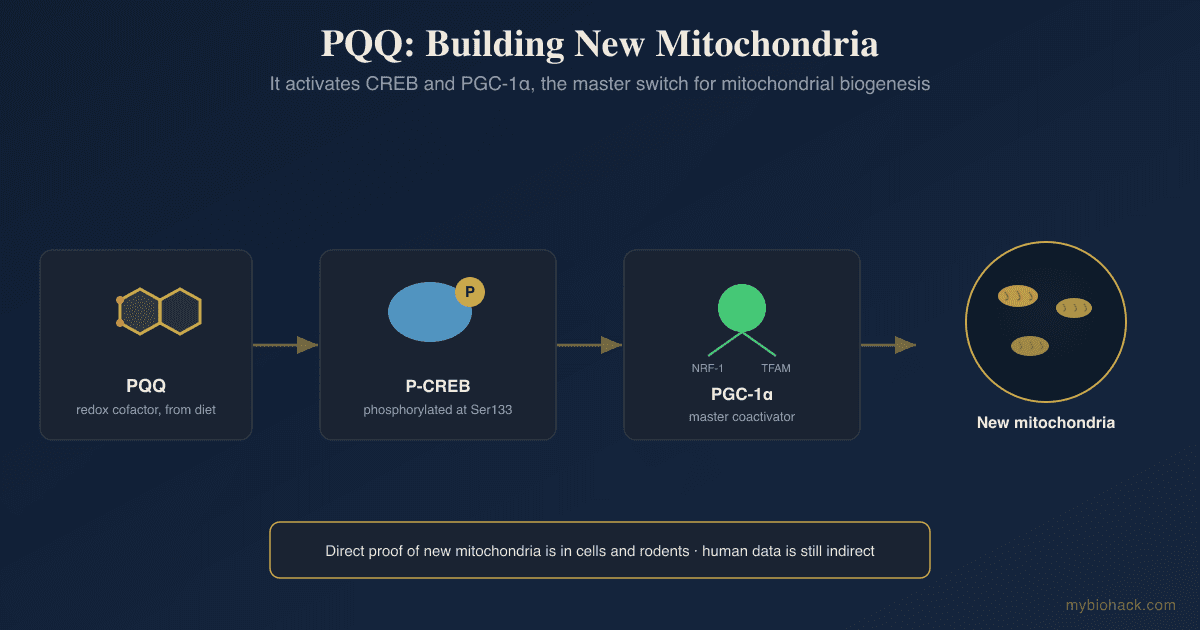
- PQQ (Pyrroloquinoline Quinone) activates CREB phosphorylation and increases PGC-1alpha expression, the same transcriptional pathway responsible for building new mitochondria, though this mechanism is best established in cell and rodent models rather than large human trials. R
I cover PQQ's mitochondrial biogenesis evidence in far more depth in 8+ Benefits of PQQ For Mitochondrial Biogenesis.
Exercise itself has by far the strongest human evidence in this entire article.
A single bout of endurance exercise produces a 10 to 40-fold transient increase in PGC-1alpha transcription in human skeletal muscle, which is a larger and better-replicated effect on mitochondrial biogenesis signaling than any single supplement discussed here. R
I recognize that "go exercise" is not useful advice for someone with post-exertional malaise, which is exactly why pacing has to come before any mitochondrial-support protocol in that population, not after it.
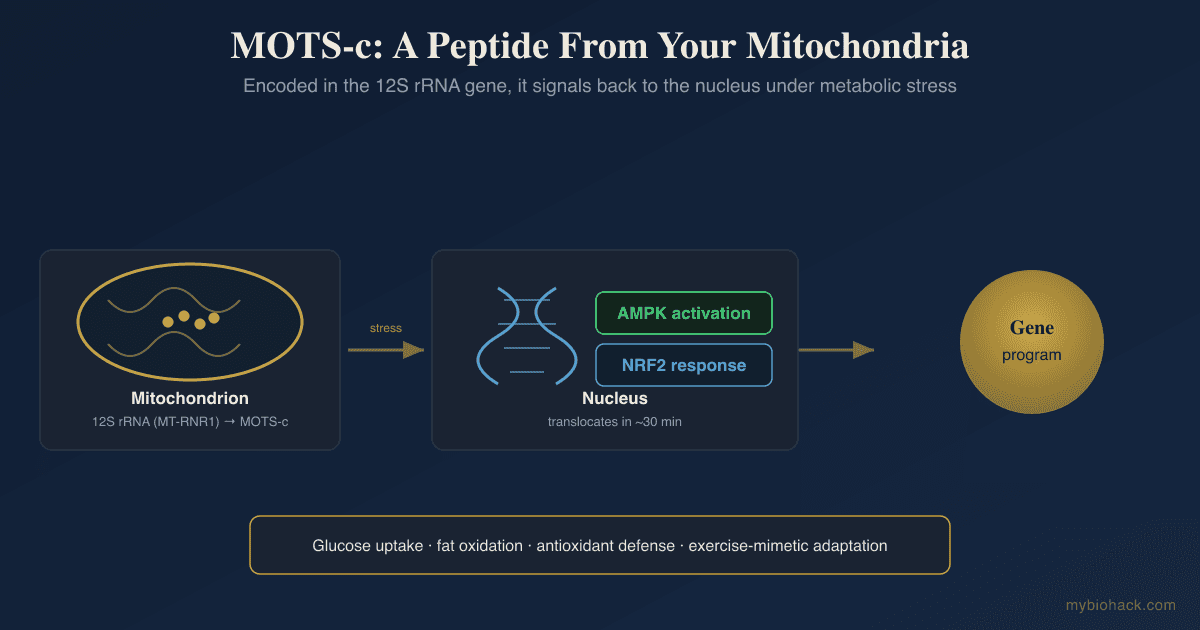
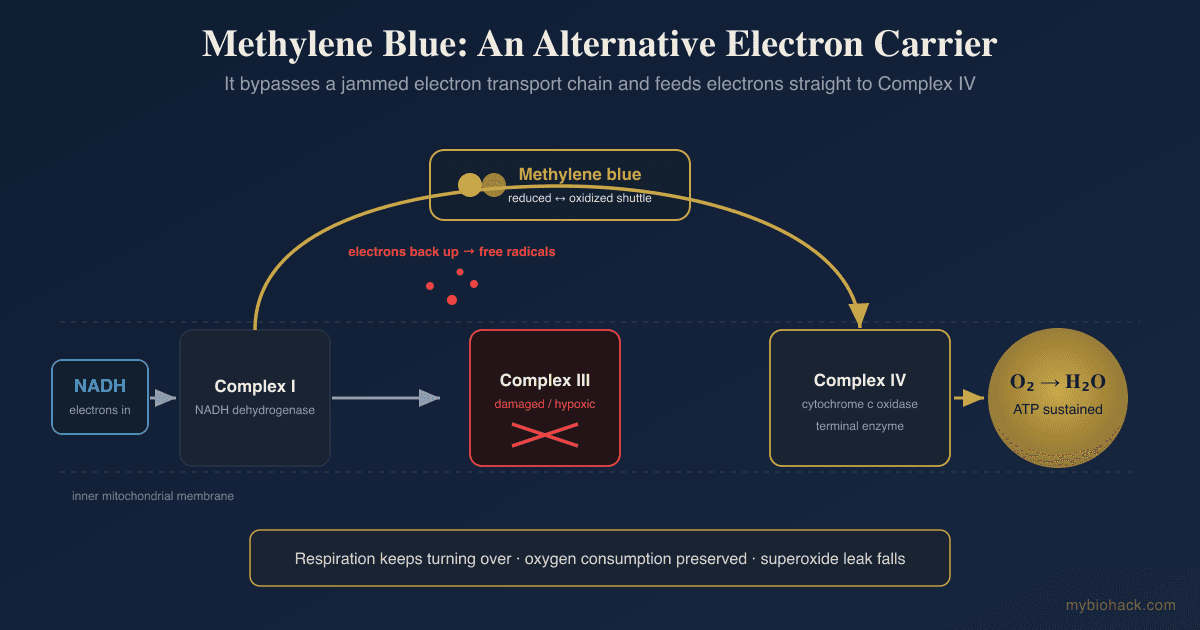
For readers pursuing mitochondrial peptides more broadly, MOTS-c and Humanin are mitochondrial-derived peptides with a meaningfully different (and in Humanin's case, orally administered in some trials) profile than SS-31, and methylene blue acts as an alternative electron carrier rather than a cardiolipin stabilizer.
Testing
I do not order a test specifically "for SS-31 response" because there is not one, but I do test the upstream oxidative stress and mitochondrial output markers that predict who is likely to be dealing with cardiolipin-level dysfunction in the first place.
I use the Organic Acids Test (Mosaic Diagnostics) to look at Krebs cycle intermediates, electron transport chain-related organic acids, and markers of oxidative damage, which is my first-line functional window into mitochondrial output.
I use the Cellular Health Zoomer (Vibrant Wellness) to assess organic acids, mitochondrial function markers, oxidative stress, and methylation status together in one panel.
I use the Oxidative Stress Profile (Genova Diagnostics) to look directly at lipid peroxidation and antioxidant reserve capacity, since cardiolipin peroxidation is the exact process SS-31 is proposed to slow.
I use 8-OHdG (DNA/RNA Oxidative Damage) (Doctor's Data) as a urinary marker of oxidative damage to nucleic acids, which correlates with the same overall oxidative burden that drives mitochondrial membrane damage.
I use the Micronutrient and Antioxidant Panel (Quest Diagnostics) to check actual CoQ10, glutathione, and antioxidant vitamin status before recommending any of the accessible alternatives above, since supplementing blind is a waste of money if the level was never low.
I use the Foundation Zoomer (Vibrant Wellness) and the Comprehensive Metabolic Panel (Quest Diagnostics) as baseline liver, kidney, electrolyte, and metabolic screens before starting any mitochondrial support protocol, because magnesium and CoQ10 dosing decisions depend on baseline renal function and electrolytes.
Mechanisms Of Action
Simple:
- SS-31 is drawn electrically and physically into the one lipid, cardiolipin, that gives mitochondria their internal folded structure.
- By stabilizing cardiolipin, it helps keep the electron transport chain's components properly assembled.
- This reduces electron leak, lowers reactive oxygen species production, and delays the point at which a stressed mitochondrion tips into cell death signaling.
Advanced:
- Electrostatic and hydrophobic cardiolipin binding. SS-31's alternating cationic (D-Arg, Lys) and aromatic (dimethylTyr, Phe) residues bind cardiolipin through simultaneous electrostatic attraction to its anionic phosphate head groups and hydrophobic insertion into its four acyl chains. R
- Cristae and supercomplex stabilization. Because cardiolipin's conical shape is required for both cristae curvature and the physical association of respiratory Complexes I, III, and IV into supercomplexes, stabilizing cardiolipin preserves supercomplex assembly under oxidative or ischemic stress. R
- Delayed mitochondrial permeability transition pore opening. SS-31 raises the oxidative threshold required for cardiolipin peroxidation by cytochrome c's peroxidase activity, which is an early, gating step for mPTP opening and cytochrome c release into the cytosol. R
- Reduced Complex I and Complex III electron leak. Preserved supercomplex organization channels electrons more efficiently between complexes, reducing the fraction that leaks out and reacts directly with oxygen to form superoxide. R
- No dedicated transporter required. Unlike most mitochondria-targeted compounds, SS-31 accumulates in the inner mitochondrial membrane through its intrinsic charge and lipid affinity rather than through any active transport mechanism, which is part of why it can be delivered systemically via subcutaneous injection at low doses. R
Genetics
TAZ
TAZ encodes tafazzin, a monolysocardiolipin transacylase that remodels newly synthesized cardiolipin into its mature, functional form by transferring linoleic acid onto it. R
Loss-of-function TAZ mutations are the cause of Barth syndrome and result in abnormal, monolyso-cardiolipin-accumulated mitochondrial membranes with severe oxidative stress and blocked mitophagy, the same clearance pathway I cover in Neuropeptides and Autophagy. R
This is currently the only gene for which a cardiolipin-targeted peptide has an FDA-approved indication.
ALCAT1 (LCLAT1)
ALCAT1 is an acyltransferase that catalyzes a pathological, hypoxia-inducible remodeling of cardiolipin distinct from tafazzin's normal remodeling pathway.
In mouse models of myocardial infarction, ALCAT1 upregulation under hypoxia depleted tetralinoleoyl cardiolipin and directly linked hypoxic stress to coronary artery disease progression through mitochondrial dysfunction. R
ALCAT1-driven cardiolipin remodeling has also been implicated in the mitochondrial dysfunction seen in Parkinson's disease models. R
mtDNA Haplogroups
Mitochondrial DNA haplogroups (inherited maternally, in blocks) influence baseline respiratory chain assembly efficiency and the propensity to generate free radicals, independent of any single nuclear gene.
Haplogroup K carries an independently elevated risk of cerebral ischemic events, while showing no comparable association with coronary events, illustrating that haplogroup effects can be tissue-specific rather than uniform across the whole body. R70083-1/fulltext)
POLG
POLG encodes the catalytic subunit of DNA polymerase gamma, the only DNA polymerase that operates inside human mitochondria and is responsible for replicating and repairing mtDNA.
Pathogenic POLG variants (over 160 have been catalogued) cause a spectrum of mitochondrial disease ranging from Alpers-Huttenlocher syndrome to adult-onset mitochondrial encephalomyopathy with lactic acidosis and stroke-like episodes (MELAS), reflecting how much clinical variability a single gene's dysfunction can produce depending on which tissues accumulate the most mtDNA damage. R
OPA1
OPA1 encodes a mitochondrial dynamin-related GTPase required for both mitochondrial outer membrane fusion and cristae formation, working alongside cardiolipin to shape the inner membrane.
Disease-causing OPA1 mutations impair oxidative phosphorylation and mitochondrial fusion and are the leading genetic cause of autosomal dominant optic atrophy. R
SOD2 rs4880 (Ala16Val)
SOD2 encodes manganese superoxide dismutase, the primary enzyme that neutralizes the superoxide generated as a byproduct of electron transport chain activity, positioning it directly downstream of the same electron leak that cardiolipin dysfunction worsens.
The Ala16Val variant changes the secondary structure of SOD2's mitochondrial targeting sequence, reducing import efficiency into the mitochondrial matrix and lowering overall enzyme processing compared to the ancestral allele. R
Jacob notes rs4880 as one of the most common variants he sees in clients with redox imbalances in his clinical practice, and he carries it himself, which is a clinical observation rather than a published finding.
More Research
- Ischemia-reperfusion injury beyond the heart. SS-31 reduces liver damage in ischemia-reperfusion models partly by shifting macrophage polarization toward a less inflammatory phenotype, suggesting its cardiolipin-protective mechanism generalizes across organs, not just cardiac or retinal tissue. R
- Dosing route is a real limitation. Every clinical trial to date has used daily subcutaneous injection, and injection-site reactions were the most common adverse event across the Barth syndrome, AMD, and heart failure programs, which is a meaningful practical burden for a chronic-use drug. R
- Intermittent dosing may outperform continuous dosing. The finding that intermittent elamipretide preserved exercise tolerance in aged mice better than continuous dosing raises the open question of whether current human trial dosing regimens are actually optimal, or just the ones that were easiest to design. R
- The bioenergetics-without-function gap is the pattern to watch. Both the HFpEF trial and the aging mouse data show measurable improvements in mitochondrial bioenergetics that do not reliably convert into functional or symptomatic benefit, which is the central unresolved question for this entire drug class. R
- Anti-mitochondrial antibodies are a different topic entirely. Anti-Mitochondrial Antibodies (AMA-M2) target a different mitochondrial membrane protein and reflect immune cleanup of damaged tissue in Jacob's framing, not the cardiolipin-cristae structural axis SS-31 works on, and the two should not be confused just because both involve "mitochondrial membrane."
- No published data exists in long COVID, ME/CFS, or POTS. Given how often SS-31 comes up in chronic illness communities, it is worth restating plainly that this is extrapolation from mechanism, not from trial data in those populations.
Jacob Gordon
INHC, FMT-C
Integrative Nutrition Health Coach
I cover mold illness, post-viral recovery, methylation, and complex chronic disease, drawing on ten years of clinical research, work inside a functional medicine clinic, and my own recovery from all of it. Every claim here is cited.
Book a ConsultationRelated Protocols & Supplements
Deep-dive chapters and recommended supplements for this topic
Quercetin
500mg 2x/day
Vitamin D3 + K2
5000 IU + 200mcg/day
Magnesium Glycinate
400mg at bedtime