The Sun Diet (Food as Sunscreen)
By Jacob Gordon, INHC, FMT-CThis article contains affiliate links. As an Amazon Associate, MyBioHack earns from qualifying purchases at no extra cost to you. We only link products we research and stand behind.
This post explains the diet that helps protect the skin against the damaging effects of the sun.
Basics
We need the sun for many biological processes.
The sun produces ultraviolet (UV) radiation.
UV can cause free radicals in skin cells and this is what causes skin cancer, wrinkles, photo-aging, and sunburns.
This diet will help protect the skin against the damaging effects of UV, without the need for conventional sunscreens.
Dangers Of Regular Sunscreens
Conventional sunscreens do have their place, but this post is focused on how to get around using them.
There are two typical types of regular sunscreens - chemical and physical. R
A chemical sunscreen absorbs the UV rays. R
Examples of this are oxybenzone, sulisobenzone, and octylmethoxycinnamate. R
The physical sunscreen reflects the harmful rays away from the skin like a temporary coat of armor. R
Zinc oxide and titanium dioxide both provide broad-spectrum UVA and UVB protection. R
They also can cause a “whitening” phenomenon when they are applied to the skin. R
Here is a quick recap of the problems with sunscreen:
- Sunscreens may have estrogenics in them that can activate estrogen receptors.
- They may also have chemcials that cause adverse skin reactions when activated by UV. R
- The long term effects of these chemicals need further evaluation, before being deemed as safe for long-term use in humans. R
What Is Sun Damage?
Photoaging and damage to the skin are caused by DNA mutations by UVA or UVB. R
There is also an increase in pro-inflammatory cytokines (via the NF-kB pathway inducing IL-6, TNF-a and VEGF). R
Too much UV can decrease collagen and decrease the expression of retinoic acid receptors, both which are necessary for healthy elastic skin. R
A sunburn is essentially an increase to heat sensitivity (because of TRPV1 activation, which causes the overproduction of CXCL5) which activates nerve fibers. R
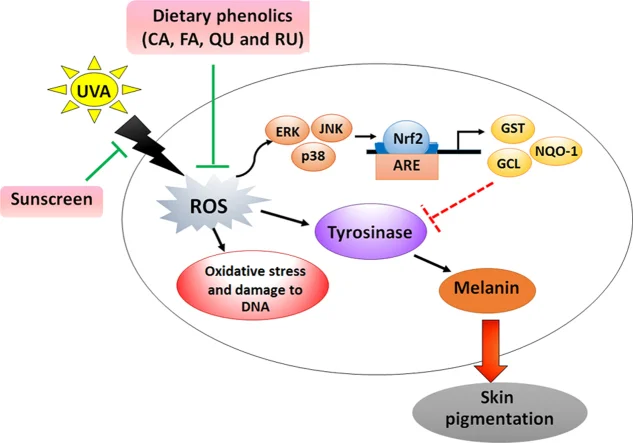
You can see the whole mechanism and effects of UV here.
Building up melanin can help prevent sun damage and sunburns as well.
A Diet That Protects Against Sun Damage
Here are a few concepts before we get into the actual food:
- Caloric restriction may protect the skin from damage (increasing skin depth and health). R
- Foods that are high in natural antioxidants (such as anthocyanidins, pelargonidins, cyandins, delphindins, proanthrocyandin) help protect against skin damage from UV. R R R
- This mainly is because these antioxidants prevent reactive oxygen species (ROS) from damaging keratinocytes (skin cells) among other (anti-aging, increased healing, etc) pathways. R R
- Extracts of these can be supplemented as well.
Fats:
Fruits:
- Aloe Vera
- Apple
- Bananas
- Blackberries R
- Bilberries
- Black Currant
- Blackberry
- Blackjack Oak
- Blueberries
- Cherries
- Cranberries
- Eggplant
- Elderberries
- Figs
- Gojiberries R
- Gooseberries
- Grapefruit R
- Grapes
- Hawthorn
- Jackfruit R
- Lemon
- Mango R
- Oranges R
- Passionfruit R
- Peaches
- Pears
- Plums
- Pomegranates R
- Red Grapes
- Starfruit R
- Strawberries
- Tomatoes R
- Wine
Grains:
- Barley
- Oats R
Fungi:
Nuts and Seeds:
- Bean Hulls
- Chocolate
- Flaxseeds R
- Grape Seeds
- Horse Chestnut
- Peanuts
- Pumpkin
- Sesame
- Soybeans R
- Sunflower
- Walnuts
Protein:
Spices and Herbs:
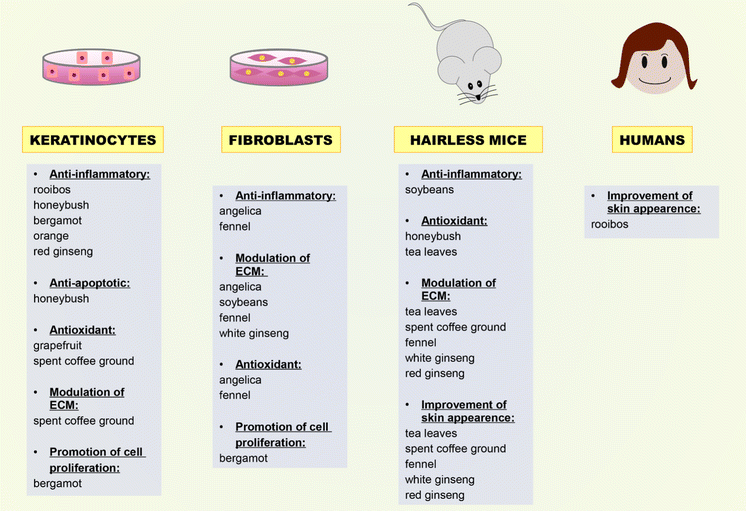
- Black Tea R
- Coffee R
- Coriander R R
- Chamomile Tea
- Cumin
- Fennel R
- Ginger R R
- Green Tea (can be taken topically for sunburns as well) R
- Honeybush R R
- Horestail
- Licorice R
- Mayapple
- Milk Thistle
- Neem
- Paprika R
- Peppermint
- Rooibos R
- Rose Hips
- Rosemary R
- Sage R
- Turmeric
- Witch Hazel
Vegetables:
Supplements That Protect The Skin And Eyes From The Sun
Hormones and Vitamins:
- Melatonin R
- Retinoic Acid R
- Vitamin C (can also be applied topically) R
- Vitamin D R R
- Vitamin E (can also be applied topically) R
Plant Extracts and Herbs:
- Arctiin R
- Astragalus R
- Baicalin (Skullcap) R R
- Berberine - avoid topically R
- Bilberry R
- Blackberry R
- Bokbunja (Rubus coreanus) R
- Buckwheat R
- Clematis R
- Damiana R
- Dandelion R
- Echinacea
- Elderberry
- Eucommia Ulmoides (Du Zhong) R
- Fernblock (Polypodium leucotomos) R R R
- Foti R
- Fucoidan R
- Genistein R R
- Ginkgo Biloba (Egb-761) R
- Gooseberry R
- Haritaki (Terminalia chebula) R
- Honokiol (Magnolia) R R R
- Japanese Knotweed (Polygonum cuspidatum)
- Longevity Spinach (Gynura procumbens) R
- Korean Mint (Agastache rugosa) R
- Korean Panax Ginseng R R
- Milk Thistle (can also be taken topically) R R
- Pine Bark R
- Sauchinone (Saururus chinensis) R
- Saussurea (Tridactyla) R
- Selfheal (Prunella vulgaris) R
- Shiso (Perilla frutescens) R
- Siegesbeckia (Xi Xian Cao) R
- Schizandra R
- Toki (Angelica acutiloba) R
- Wild Chrysanthemum R
- White Pine R
Prebiotics and Probiotics:
- Bifidobacterium breve (B-3 and Yakult) R R
- Galacto-oligosaccharides (GOS) R
- Kefir R
- Lactobacillus johnsonii (NCC 533) R R R
- Lactobacillus paracasei (NCC2461) R
- Lactobacillus plantarum (HY7714) R R
- Lactobacillus rhamnosus (GG) R
Supplements:
- Anthocyanidin R
- Apigenin R
- Astaxanthin R R
- Betaine R
- Bile (Biliverdin) R
- Caffeic Acid (derivatives) and Caffeine R R R R R
- Chitosan R
- Chlorella R
- Chlorophyll
- CoQ10 R
- Curcumin
- Cyanidin
- Delphinidin R R
- Ferulic Acid R R
- Fisetin R
- Fish Oil (and topically has a SPF of 5)
- EGCG R
- Gallic Acid R
- Glucosamine R
- Glycyrrhizic Acid (Licorice) R
- Grape Seed Extract R
- Linoleic Acid R
- Linolenic Acid R
- Lutein R
- Lycopene R
- Naringin R
- Niacin and Nicotinamide (NAD) R R
- OPCs
- Porphyra
- Phosphatidylserine R
- Piceatannol R
- Red Orange R
- Resveratrol (can also be applied topically)
- Rhodiola Rosea R
- Royal Jelly R R
- Rutin R
- Selenium R
- Sodium Benzoate R
- Spirulina
- Quercetin R
Other:
- 5,7-Dimethoxyflavone R
- Artocarpin R
- Astilbe R
- Botox R
- Brazilin (Caesalpinia sappan) R
- Breadfruit (Artocarpus altilis) R
- Cefradine R
- Cilostazol R
- CopA3 R
- Coumarin R
- Coumestrol R
- Decursin (Angelica gigas) R
- Derinat R
- Devilweed (Sargassum horneri) R
- Disporum Sessile R
- Djulis (Chenopodium formosanum) R
- Fructose-1,6-diphosphate R
- Galla Chinensis (Wu Bei Zi) R
- Glycolic Acid R
- Gmelin (Gracilaria bursa-pastoris) R
- Gromwell (Lithospermum erythrorhizon) R
- Isosakuranetin R
- Ixerisoside A R
- Japanese Wireweed (Sargassum Muticum) R R
- Lichens (can be toxic so do your research on edible ones) R
- Malvidin
- MHY884 R
- Mukdenia (Aceriphyllum rossii) R
- Mycrosporine-like amino acids (MAAs) R
- Pelrgonidin
- Penta-O-Galloyl-β-DGlucose R
- Petunidin
- Phloretin R
- Radix Angelica Sinensis (Danggui) R
- Rosiglitazone R
- S-Methylmethionine sulfonium R
- Sasa (Sasa senanensis Rehder) R
- Tectroside R
- Triolein R
- Walter's Dogwood (Cornus walteri) R
- Youngia (Crepidiastrum denticulatum) R
- Zeatin R
Alternative Topical Sun Blockers
Oils And Topicals:
- Adzuki Bean R
- Almond Oil R
- Aloe Vera R
- Avocado Oil
- Bergamot R
- Borage Oil
- Brown Sugar R
- Essential Oils (Rosemary, Hibiscus, Lavender, Sage) R R R R
- Caper R
- Coconut Oil (blocks 20% of UV rays) R
- Comfrey (Allantoin) - is also naturally occurring in the body
- Cottonseed (blocks 20% of UV rays) R
- Evening Primrose Oil
- Hinokitiol (Thujaplicin) R
- Indian-almond (Terminalia catappa) R
- Ishige R
- Olive Oil (Squalane)
- Oyster Thief (Codium fragile) R
- Patchouli Oil R
- Peanut Oil (blocks 20% of UV rays) R
- Pomegranate R R
- Propolis (SPF of around 10) R
- Red Clover Oil R
- Rosewood (Dalbergia odorifera) R
- Sesame Oil (blocks 30% of UV rays) R
- Soybean Oil R
- Tea Tree Oil
- Walnut Oil R
Other:
Pathways And Devices To Stop Sun Damage
Mechanisms Of The Diet
Anthrocyanidins (and the derivatives) are powerful antioxidants. R
- Cyanidin is 4 times more powerful as an antioxidant than vitamin E. R
- They also protect cell membranes from oxidation. R
- Pelargonidin protects the tyrosine from the highly reactive oxidant peroxynitrite. R
- Nasunin protects against the dangers from the hydroxyl radical-generating system. R
- They neutralize enzymes that destroy connective tissue and repair damaged proteins in the blood-vessel walls. R
Apigenin occurs naturally in most herbs, fruits, veggies, and some beverages.
Careotenoids accumulate in skin and help against skin protection. R
- It improves skin thickness, density, roughness, and scaling. R
Curcumin is the yellow pigment in turmeric.
- It is an anti-inflammatory, anti-tumor, and antioxidant. R
- It protects the epidermis from UVA-induced ornithine decarboxylase ornithine decarboxylase (ODC) activity. R
- It also prevents excess reactive oxygen (ROS) species in the skin from UV radiation. R
Proanthocyanidin (OPC) works as a DNA mutation inhibitor. R
- OPCs block elastase, maintaining the integrity of elastin in the skin and act synergistically with both vitamin C and vitamin E, protect and replenish them. R
- They also recycle the inactive form of vitamin E into active form of vitamin E. R
- Grape seed proanthocyanidins (GSP) are strong antioxidants/free radical scavengers. R
- GSP prevents UV-induced immunosuppression. R
- It also increases tumor cell death. R
Quercetin is the most common flavanoid in the diet. R
- It is an antioxidant, anti-inflammatory, and immunomodulator. R
- Quercetin along with rutin (topically and ingested) inhibits skin cancer and protects against UVA and UVB damage. R R
Resveratrol (stilbenes) is a naturally occurring polyphenolic phytoalexin. R
- It is an antioxidant, antimutagen, anti-inflammatory, and protects against skin cancer. R
Silymarin (milk thistle) consists of the following three phytochemicals: silybin, silidianin, and silicristin, which are strong phytochemicals. R R
- Topical silymarin has antitumor effects, protecting against UVB damage by 92% (via antioxidant effects). R
- It also prevents sunburn, cell death, and immunosupression. R
Vitamin C is a powerful intracellular and extracellular antioxidant. R
- It increases synthesis of collagen and photoprotection (via inhibition of MMP-1) which decreases wrinkles. R
- It works on tyrosinase helping with pigmentaiton. R
Vitamin D has numerous physiologic functions including immune response, release of inflammatory cytokines and regulation of growth and differentiation in normal and malignant tissues. R
- Vitamin D3 protects human skin cells from UV-induced cell death and apoptosis, inhibits the activation fo stress-activated protein kinases, and suppresses IL-6 (as well as other inflammtory cytokines). R R
Vitamin E (α-tocopherol) protects cell membranes against light-induced damage. R
Genetics
CTLA4
- rs3087243 - GG genotype was associated with decreased odds for basal cell carcinoma (BCC) and squamous cell carcinoma (SCC). R
ERCC2 (XPD)
- rs13181 - Lys/Lys had the least sensitive strata of sunburn severity. R
- rs1799793 - Asp/Asn or Asn/Asn had half risk of developing skin lesions from sunburn. R
IL10
- rs1800871 - GC haplotypes were associated with increased risk of both BCC and SCC. R
IRF4
- rs12203592 - T/C stronger association to sun sensitivity as well as freckles, hair color and eye color. R
MC1R
- rs1805007 - have less melanin and have higher sensitivity to UV-induced DNA damage. R
- rs1805009 - have less melanin and have higher sensitivity to UV-induced DNA damage. R
- rs1805008 - have less melanin and have higher sensitivity to UV-induced DNA damage. R
- rs1805006 - have less melanin and have higher sensitivity to UV-induced DNA damage. R
MTHFR
- rs1801133 (C677T) - TT allele had higher rate of SCC risk. R
UVSSA (KIAA1530)
- Unknown SNPs - polymorphisms in this gene cause UV-sensitive syndrome. R
VDR
- rs1544410 - BB genotype was significantly associated with an increased SCC risk. R
XRCC1
- R399Q - A allele had increased risk of SCC. R
XRCC3
- T241M - T allele had protective effects against non-melanoma skin cancer (NMSC) and BCC. R
More Research
- Pain from the sun is induced by UVB activating epidermal TRPV4 ion channels and triggering endothelin-1 signaling. R
Jacob Gordon
INHC, FMT-C
Integrative Nutrition Health Coach
I cover mold illness, post-viral recovery, methylation, and complex chronic disease, drawing on ten years of clinical research, work inside a functional medicine clinic, and my own recovery from all of it. Every claim here is cited.
Book a ConsultationRelated Protocols & Supplements
Deep-dive chapters and recommended supplements for this topic
Electrolyte Complex
1 scoop/day
CoQ10
200mg/day
Magnesium Glycinate
400mg at bedtime