Boron: The Trace Mineral For Bone, Hormones, And Joint Health
By Jacob Gordon, INHC, FMT-CThis article contains affiliate links. As an Amazon Associate, MyBioHack earns from qualifying purchases at no extra cost to you. We only link products we research and stand behind.
Boron is an ultra-trace mineral that quietly sits at the intersection of bone metabolism, vitamin D activation, and sex hormone regulation, yet it is left out of most multivitamins.
In this post, we will discuss what boron actually does in the body, the honest evidence behind its bone, hormone, and joint claims, where to get it from food, and how to dose it safely.
What Is Boron
Boron is a naturally occurring metalloid that plants take up from soil and concentrate in fruits, vegetables, nuts, and legumes.
It is not classified as an officially essential nutrient for humans, meaning no formal Recommended Dietary Allowance exists, but the accumulated evidence for a biological role is strong enough that many researchers now argue it should be. R R
In the body it exists almost entirely as boric acid, a small uncharged molecule that is absorbed nearly completely (over 90%) and cleared mostly through the kidneys. R
Its most documented effects cluster around bone development, the metabolism of vitamin D and sex steroids, and the handling of calcium and magnesium. R
Boron is best understood as a metabolic integrator, a mineral that modifies how other nutrients behave rather than one with a single dramatic function of its own.
Benefits Of Boron
The evidence base is a mix of solid mechanistic and epidemiologic data on bone and joints, and smaller, more preliminary human trials on hormones.
I have tried to flag which is which throughout, because boron is one of the more oversold minerals in the testosterone marketing world.
1. It Supports Bone Mineral Density
Boron influences nearly every input that goes into building and maintaining bone, including calcium, magnesium, vitamin D, and estrogen. R
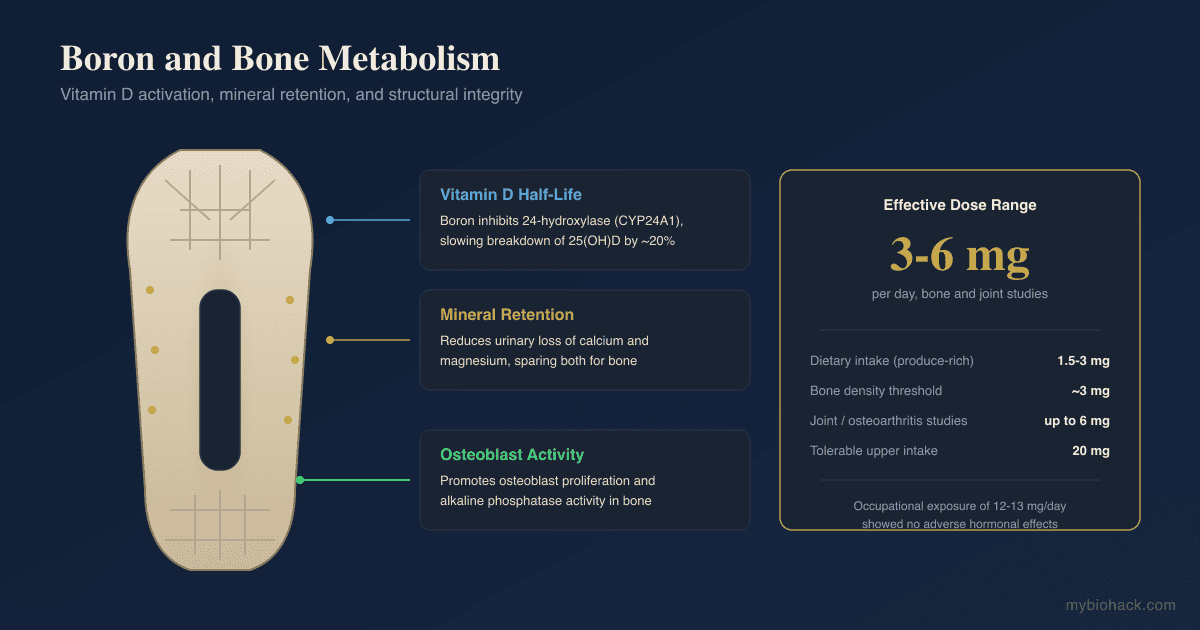
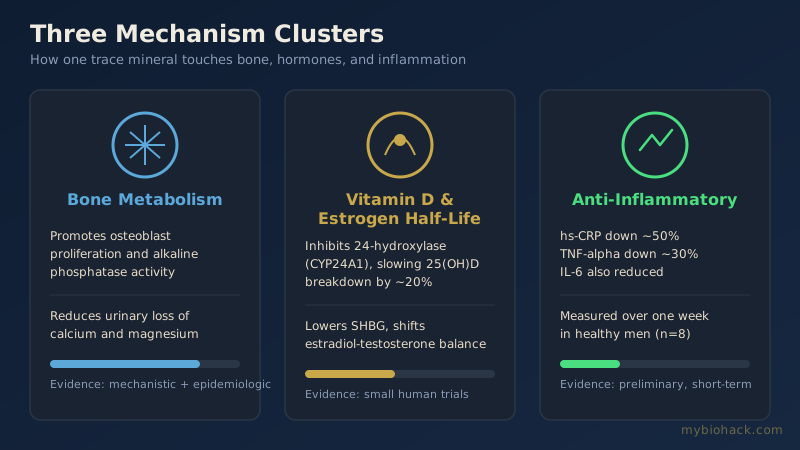
In cell and animal work it promotes osteoblast proliferation and alkaline phosphatase activity, both markers of active bone formation. R
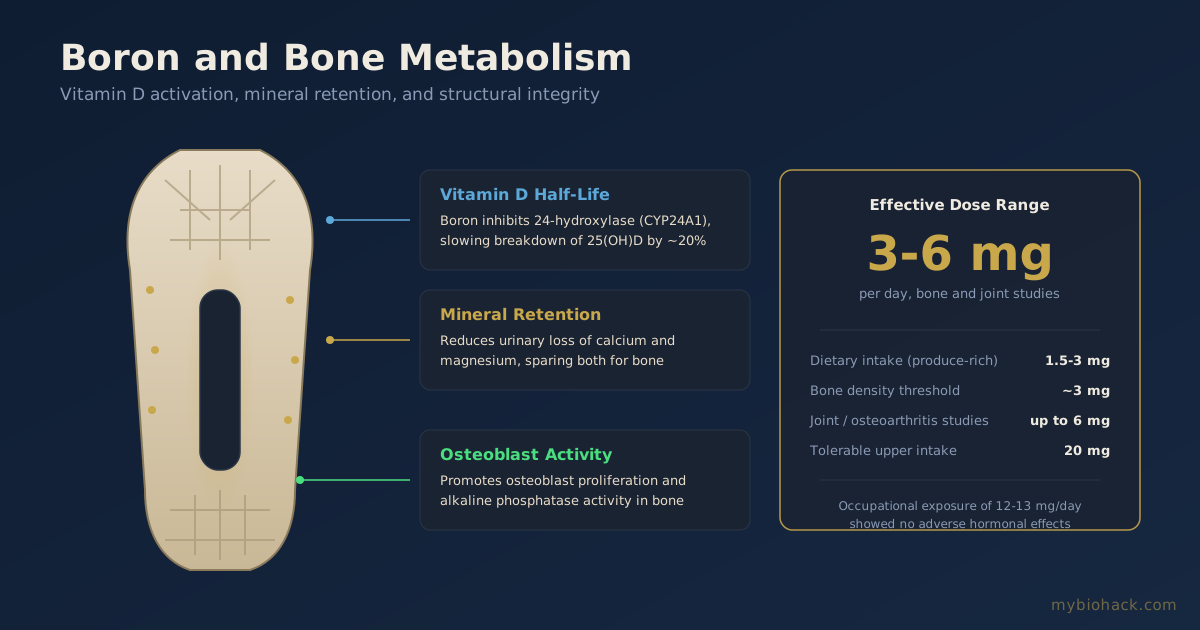
The practical takeaway from the bone literature is that roughly 3 mg per day appears to be the threshold where boron measurably supports bone health, and benefits below that dose are hard to detect. R
A controlled feeding study in female athletes found that boron supplementation shifted phosphorus and magnesium handling and was associated with a modest gain in bone mineral density, while the unsupplemented group slightly declined. R
Animal work points the same way, with boron supplementation improving bone strength and structural measures in diabetic mice (animal model only). R
2. It Extends The Half-Life Of Vitamin D
Boron slows the breakdown of vitamin D and raises circulating 25-hydroxyvitamin D, the storage form measured on lab panels. R
In one supplementation study, vitamin-D-deficient people taking 3 mg per day for about 7 weeks raised their 25-hydroxyvitamin D by roughly 20%. R
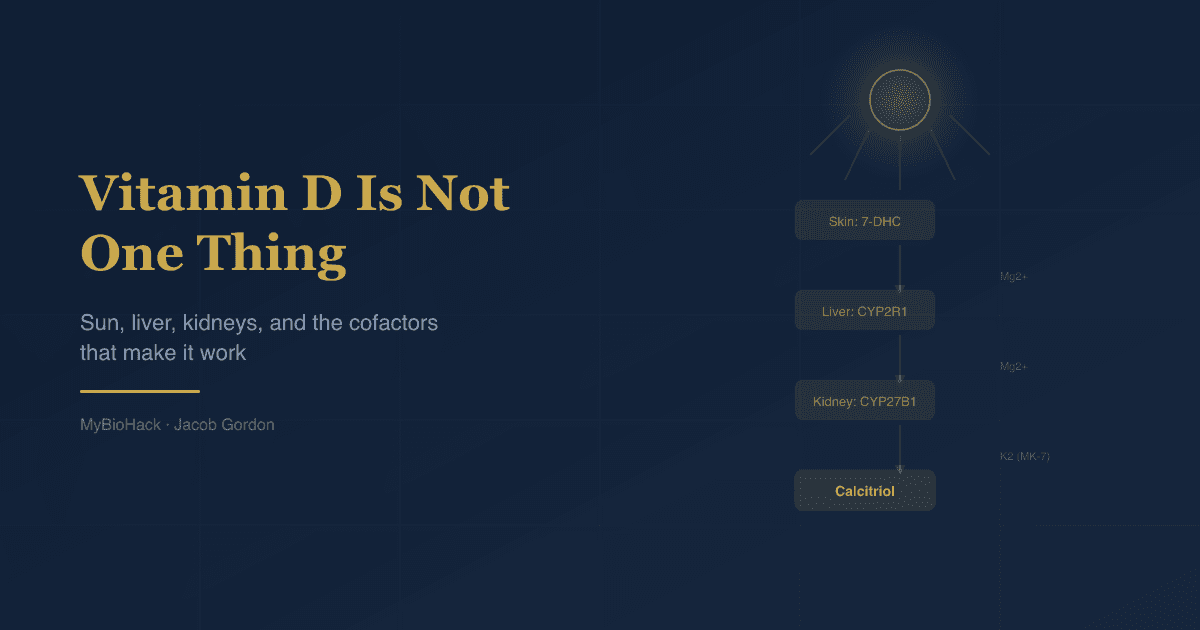
This matters because getting adequate active vitamin D depends on more than just the dose you swallow, and boron is one of several vitamin D conversion cofactors that shape how much you actually keep.
3. It Improves Calcium And Magnesium Retention
Boron reduces the urinary loss of both calcium and magnesium, so the minerals you eat stay in the body longer. R
In postmenopausal women, 3 mg per day cut daily urinary calcium excretion substantially, with the largest effect when dietary magnesium was low. R
Reviews of the human data treat boron and magnesium status as codependent inputs to bone mineral density, which is why this mineral-sparing effect matters most when magnesium is also adequate. R
This mineral-sparing effect is part of why boron fits into a broader mineral balancing approach rather than being taken in isolation.
4. It Can Modestly Raise Free Testosterone (Small Trials)
This is the claim boron is famous for, and it is also the one most exaggerated by supplement marketing.
In a study of 8 healthy men, one week of boron raised mean free testosterone from 11.83 to 15.18 pg/mL and lowered estradiol, alongside a drop in sex hormone binding globulin. R
That is a real and measurable shift, but it comes from a single very small trial in already-healthy men, not a large or long-term study, so treat it as promising rather than proven. R
A separate 7-week trial in male bodybuilders taking 2.5 mg per day found no significant effect on total or free testosterone, strength, or lean mass, which is exactly why the one positive result should not be oversold. R
There is a big MAYBE here, and anyone promising dramatic testosterone gains from boron is going well beyond what the data support.
5. It Raises Estradiol In Postmenopausal Women
Boron does not simply push hormones in a "male" direction, and its effect depends on the person.
In postmenopausal women on a low-boron diet, adding 3 mg per day raised serum 17-beta-estradiol and testosterone, with the effect most pronounced when magnesium was low. R
The honest interpretation is that boron appears to help normalize steroid hormone metabolism rather than reliably raise one specific hormone in everyone.
6. It Lowers Inflammatory Markers
In the same small trial of healthy men, boron lowered several inflammatory markers over the week. R
High-sensitivity C-reactive protein (hs-CRP) fell by roughly 50%, tumor necrosis factor alpha (TNF-alpha) by about 30%, and interleukin 6 also dropped. R
These are short-term biomarker changes in a handful of people, so the anti-inflammatory story is biologically plausible but far from settled. R
7. It Improves Joint Comfort And Osteoarthritis Symptoms
Boron has one of the older and more consistent bodies of evidence for joint health.
Epidemiologic work found that in regions where daily boron intake is 1 mg or less, arthritis rates run 20 to 70%, while in regions with 3 to 10 mg per day arthritis rates fall to 0 to 10%. R

In a double-blind trial using a boron-based compound (calcium fructoborate), people with knee discomfort saw meaningful improvements in pain scores versus placebo. R
A separate placebo-controlled study found that the same compound reduced inflammatory and lipid markers in people with osteoarthritis. R
8. It Supports Wound Healing And Tissue Repair
Boron activates a cellular transporter that feeds into growth and repair signaling, which is discussed in the mechanisms section below. R
Boron compounds have a documented role in wound healing, and the mineral is enriched in tissues undergoing active repair. R
A comprehensive review of boron in wound healing describes roles in angiogenesis, fibroblast proliferation, and collagen turnover that plausibly speed tissue repair. R
Mechanistic work in fibroblasts found that boron alters the activity of repair enzymes such as collagenase and cathepsin, consistent with a direct role in tissue remodeling. R
In an animal model of heart attack, boron improved cardiac contractility and reduced fibrotic scarring, hinting at a broader repair role (animal model only). R
Natural Sources
Boron is abundant in a plant-rich diet, which is the main reason most people are not as deficient as supplement marketing implies.
A varied diet heavy in produce, nuts, and legumes typically supplies somewhere around 1.5 to 3 mg per day. R
The following foods are among the richest dietary sources (not an exclusive list):
- Almonds and other tree nuts
- Avocado (one of the single densest sources)
- Chickpeas and other legumes
- Dried plums (prunes) and prune juice
- Peanuts and peanut butter
- Raisins and grapes
- Red wine, grape juice, and cider (in modest amounts)
Because coffee and milk are consumed in large volumes, they can also contribute a surprising share of daily intake despite being lower in concentration. R
The upshot is simple: if you eat a produce-heavy diet, you are probably already getting a functional amount of boron.
Dosage And Safety
Most human benefit studies cluster around 3 mg per day, and that is a reasonable target for a supplement if you choose to use one. R
Joint and osteoarthritis studies have used up to 6 mg per day, often as boron glycinate, citrate, or as calcium fructoborate. R
The tolerable upper intake level for adults is 20 mg per day, which is well above any dose used for supplementation. R
For reference, boric acid factory workers with chronic occupational exposure averaging around 12 to 13 mg per day showed no adverse reproductive or hormonal effects. R
A supplementation study in healthy men similarly reported no adverse changes in cardiovascular risk markers at intakes well above what a normal diet provides. R
There is no benefit to megadosing boron, and more is not better here, so staying in the 3 to 6 mg range keeps you comfortably inside the evidence.
What To Watch Out For
Boron is generally very well tolerated, but a few situations warrant caution.
Because boron is cleared through the kidneys, people with significant kidney impairment can accumulate it and should be cautious. R
Very high doses (far above supplemental levels) can cause nausea and gastrointestinal upset, which is another reason to stay near 3 to 6 mg. R
Boron shifts sex hormone levels, so anyone on hormone therapy or managing a hormone-sensitive condition should treat it as an active compound and coordinate with their clinician.
Boron works alongside magnesium and calcium rather than replacing them, so it is not a substitute for correcting an underlying mineral balancing problem.
Mechanisms Of Action
Simple:
- Boron slows how fast the body breaks down vitamin D and estrogen, so more of each stays active for longer.
- It helps the kidneys hold onto calcium and magnesium instead of flushing them out, which supports bone.
- It flips on a cellular transporter that nudges growth and repair signaling inside cells.
Advanced:
- Vitamin D catabolism. Boron is thought to inhibit 24-hydroxylase (the enzyme encoded by CYP24A1 that inactivates vitamin D), reducing the breakdown of 25-hydroxyvitamin D and its active form 1,25-dihydroxyvitamin D3, which extends their biological half-life and downstream calcium-absorptive signaling. R
- Steroid hormone metabolism. Boron appears to modulate the enzymes and binding proteins governing sex steroids, lowering sex hormone binding globulin and shifting the estradiol-to-testosterone balance, though the precise enzymatic targets in humans remain incompletely mapped. R
- Borate transport and MAPK signaling. The transporter NaBC1 (encoded by SLC4A11) is a ubiquitous sodium-coupled borate transporter that, at low borate concentrations, activates the mitogen-activated protein kinase (MAPK) pathway to stimulate cell growth and proliferation, linking boron status to tissue repair and mechanotransduction. R
- Boron-diol chemistry. Boric acid forms reversible complexes with the cis-hydroxyl groups found on ribose, NAD+, and other biomolecules, which is the leading chemical explanation for how a single simple molecule can influence so many enzymatic and hormonal pathways at once. R
Genetics
SLC4A11
SLC4A11 encodes NaBC1, the sodium-coupled borate transporter that controls how cells take up and respond to boron. R
Loss-of-function mutations in this gene do not cause a boron-deficiency syndrome but instead cause inherited corneal endothelial dystrophies, underscoring how tightly cellular boron handling is tied to tissue integrity. R
CYP24A1
CYP24A1 encodes 24-hydroxylase, the enzyme that inactivates vitamin D and the proposed target boron inhibits to extend vitamin D's half-life. R
rs6013897 in this gene has been associated with lower vitamin-D-related status and bone mineral density, so people carrying vitamin-D-thrifty variants may care more about cofactors like boron that spare active vitamin D. R
VDR
VDR encodes the vitamin D receptor that translates vitamin D signaling into bone-building gene expression.
Common variants including rs2228570 (FokI) and rs1544410 (BsmI) have been linked to differences in bone mineral density and osteoporosis risk, meaning the downstream payoff of any vitamin-D-sparing effect from boron partly depends on receptor genotype. R
More Research
Boron sits alongside copper, zinc, and other trace elements where the dose window matters more than the raw amount, which is why a whole-diet view like zinc, copper, and ceruloplasmin balance is more useful than chasing any single mineral.
Calcium fructoborate is the most-studied supplemental form for joints and appears to carry boron plus a fructose-borate complex that may have its own signaling effects, so joint-focused trials do not always translate cleanly to plain boron salts. R
Cognitive and psychomotor performance has improved with adequate boron intake in small human studies, but this evidence is preliminary and should not be oversold. R R
Long-term controlled trials in humans are the major gap, since most hormone and inflammation data come from studies of 8 to 18 people over days to weeks rather than months. R
The strongest, most consistent case for boron remains bone and joint health, where mechanistic, epidemiologic, and interventional data all point the same direction, while the testosterone story is real but small and easily exaggerated. R
Because boron modifies oxidative and antioxidant handling at the cellular level, it plausibly interacts with the broader detox and longevity machinery discussed in the paraoxonase (PON1) literature, though direct human data on that link are lacking.
Jacob Gordon
INHC, FMT-C
Integrative Nutrition Health Coach
I cover mold illness, post-viral recovery, methylation, and complex chronic disease, drawing on ten years of clinical research, work inside a functional medicine clinic, and my own recovery from all of it. Every claim here is cited.
Book a ConsultationRelated Protocols & Supplements
Deep-dive chapters and recommended supplements for this topic
Ashwagandha (KSM-66)
600mg/day
Vitamin D3 + K2
5000 IU + 200mcg/day
Zinc
30mg/day with food