Vasohibin-2 (VASH2): A Key Player In Cancer And Chemoresistance
By Jacob Gordon, INHC, FMT-CThis article contains affiliate links. As an Amazon Associate, MyBioHack earns from qualifying purchases at no extra cost to you. We only link products we research and stand behind.

In this post, we will dicuss how vasohibin-2 (VASH2) plays a role cancer progression and chemoresistance.
Basics
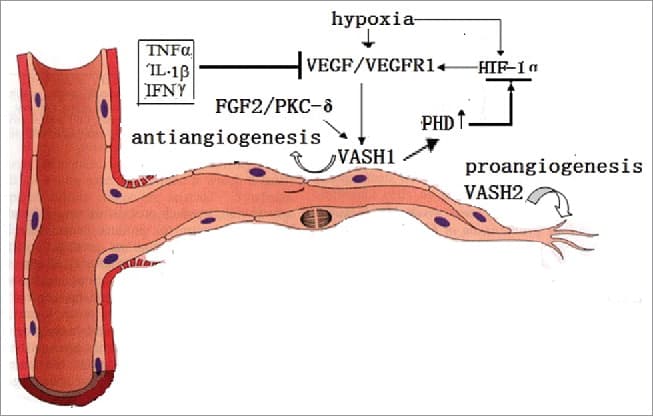
Vasohibin-2 (VASH2) is an angiogenesis promotor in the VASH family, along with vasohibin 1 (VASH1), and plays a role in tumor growth and chemotherapy resistance. R R
VASH1 plays the opposite role of VASH2 (inhibits angiogenesis) and is restricted to endothelial cells (ECs) and induced by the potent angiogenic factors VEGF and FGF-2. R R
Conditions With Increased VASH2 Activity
Downsides Of Increased Vasohibin-2
1. Increases Tumor Growth

VASH2 increases angiogenesis and proliferation of cancer cells. R R
VASH2 is important for the creation of new cancer stem cells (via TGF-beta signalling). R R
For example, in triple-negative breast cancer (TNBC), high levels of VASH2 can help predict the aggressiveness of the cancer. R
In cell models of ovarain cancer, VASH-2 upregulated cells had larger tumors than controls. R
Inhibiting VASH2 may limit tumor growth and enhance apoptosis in tumor cells. R
For example, VASH2 antibiodies (to inhibit VASH2 expression) injected into human cancer cell cultures were just effective at suppressing cancer as the chemotherapy drug bevacizmab. R
High VASH2 expression may produce worse outcomes in cancer compared to those showing low VASH2 expression. R
2. Contributes To Chemoresistance
By downregulating p53 and other regulatory genes, VASH2 activity can decrease tumor sensitivity to chemotherapy drugs (chemoresistance). R R
For example, in hepatocellular carcinoma (HCC), increased VASH2 activity was able to inhibit the anti-tumor effects of the chemotherapy drug Cisplatin. R
In pancreatic cancer, increased VASH2 can inhibit the effects of the chemotherapy drug gemcitabine. R
Inhibiting VASH2 can reverse this and enhance chemosensitivy. R
How To Decrease VASH2

What Pathways Increase VASH2?
Mechanism Of Action
Simple:
- Increases ABCC1 R
- Increases ALDH1A1 R
- Increases BCL-2 R
- Increases CXCR4 R
- Increases FGF-2 R R R
- Increases GATA3 R
- Increases GDF15 R
- Increases HIF1alpha (in cow hair cells) R
- Increases IGFBP3/6 R
- Increases JUN R
- Increases MMP2 R
- Increases Nanog R
- Increases Oct4 R
- Increases PAI-1 R
- Increases RRM2 R
- Increases Sox2 R
- Increases TGF-β1 (ALK5) R
- Increases VEGF R R
- Increases Vimentin R
- Increases ZEB1/2 R
- Reduces Bax R
- Reduces Caspase-3/6/9 R
- Reduces CC-3 R
- Reduces E-cadherin R
- Reduces P53 R
- Reduces VASH1 R
Advanced:
- VASH2 is expressed in infiltrating mononuclear cells enhancing angiogenesis (mobilized from bone marrow to promote angiogenesis). R R
- In the cell cycle, vuclear vasohibin-2 promotes cell proliferation by inducing G0/G1 to S phase progression. R
- In HCC, VASH2 overexpression downregulates p53, the pro-apoptotic protein BCL2-associated X protein (Bax), and cleaved caspase-3 (CC-3) after treatment by CDDP. R
- Induction of the Jun proto-oncogene (JUN) by VASH2 is responsible for upregulation of RRM2 expression. R
- VASH2 upregulates stem cell markers such as ALDH1A1, Sox2, Oct4, Nanog, which reinforces VASH2 promotion of stem cell proportion. R
- In breast cancer models, four growth factors activated by VASH2 were identified as follows: Fibroblast growth factor 2 (FGF2), growth/differentiation factor‑15 (GDF15), insulin‑like growth factor‑binding protein (IGFBP)3 and IGFBP6. R
- By increasing the transcription factor of ESR1, GATA-binding factor 3 (GATA3), VASH2 probably induces a shift towards TH2 response. R R
Genetics
More Research
- VASH2 is higher after pregnancy in cows. R
Jacob Gordon
INHC, FMT-C
Integrative Nutrition Health Coach
I cover mold illness, post-viral recovery, methylation, and complex chronic disease, drawing on ten years of clinical research, work inside a functional medicine clinic, and my own recovery from all of it. Every claim here is cited.
Book a ConsultationRelated Protocols & Supplements
Deep-dive chapters and recommended supplements for this topic
Electrolyte Complex
1 scoop/day
CoQ10
200mg/day
Magnesium Glycinate
400mg at bedtime