Vasohibin-1 (VASH1) Fights Cancer And Senescence
By Jacob Gordon, INHC, FMT-C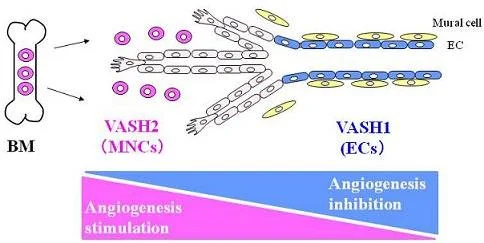
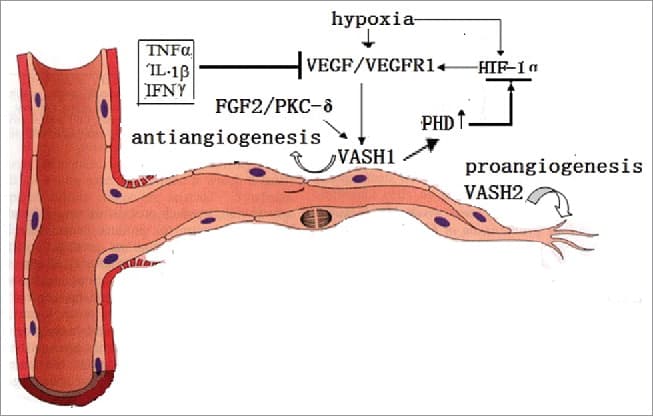
Vasohibin-1 (VASH1) is an anti-angiogenic protein that may have benefits in cancer and longevity.
In this post, we will discuss conditions associated with VASH1 activity, its benefits, downsides, and ways to change its expression.
Basics Of Vasohibin-1
Conditions Associated With VASH1 Activity
Roles Of VASH1 In The Body
For example, in cell cultures of ovarian cancer, VASH1 is able to suppress insulin-like growth factor 1 (IGF-1) expression and suppress its angiogenic effects. R
In animal models with lung cancer, VASH1 was able to inhibit tumor growth. R
VASH1 expression can stop the spread of cancer (metastasis) as VASH1 can tighten the endothelial barrier and makes tumor vessels resistant to cancer. R
For example, in models of renal cancer, VASH1 over-expression is able to inhibit tumor growth by arresting the cell cycle in the G0/G1 phase and promote apoptosis. R
VASH1 has activity in:
- Bladder Cancer R
- Breast Cancer R
- Colon Cancer R
- Esophageal Cancer R
- Head and Neck Cancer R
- Liver Cancer R
- Lung Cancer R R R
- Ovarian Cancer R R
- Pancreatic Cancer R
- Prostate Cancer R
- Renal Cancer R R
- Urinary tract urothelial Cancer (UTUC) R
Increased VASH1 expression can make tumor cells more sensitive to chemotherapy. R
Although higher levels of VASH1 have been associated with worse prognosis in some cancers, it may be because VASH1 is acting to suppress angiogenesic factors (ie VEGF, FGF-2, and VASH2). R R R R
This may explain why cancer cells suppress VASH1 activity, but VASH1 activity may be different in different cancers. R
For example, in models of esophageal cancer, VASH1 levels were positively correlated with increased overall survival and disease-free survival. R
2. Longevity, Insulin Resistance, And Cellular Stress
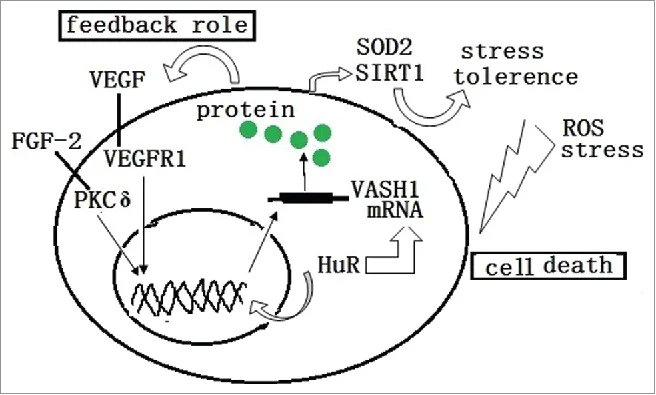
VASH1 expression can increase cell's stress tolerance and promote their survival against oxidative stress. R R
For example, overexpression of VASH1 can make cells resistant to premature senescence (aging) and stress-induced cell death as VASH1 is able to increase superoxide dismutase 2 (SOD2) and sirtuin 1 (Sirt1). R
Interestingly, suppression of VASH1 expression in mice improved healthy aging by reducing expression of insulin receptor (insr), insulin receptor substrate 1 (irs-1), and insulin receptor substrate 2 (irs-2). R
This caused mild insulin resistance in fat tissue, but without the development of diabetes. R
Decreased insulin signaling in fat is commonly associated with increased longevity and may explain some of VASH1's effects on longevity. R R R R
3. Fibrosis And Lungs
VASH1 expression may improve other lung-related conditions such as chronic obstructive pulmonary diseases (COPD), pulmonary hypertension, and the post-reperfusion injury of transplanted lungs. R
Increased VASH1 expression can help with lung fibrosis. R
VASH1 may help reduce organ fibrosis. R
For example, VASH1 is able to inhibit antibiotic-induced scarring in the lungs. R
4. Kidneys And Diabetes
VASH1 can protect the kidneys from oxidative stress. R
For example, in models of diabetes, VASH1 expression can protect the kidneys from hyperglycemia and high levels of albumin. R R
High levels of urinary VASH1 is associated with worse kidney disease outcomes. R
5. Atherosclerosis, Stroke, And Blood Pressure
VASH1 may act as a predictor arteriosclerosis and ischemic stroke. R
For example, neointima formation can create thickening and damage to the artery walls (atherosclerosis). R
By inhibiting angiogensis, vasohibin-1 can prevent the progression of arterial neointima. R
Plasma VASH1 levels go down with age and low levels are associated with higher blood pressure. R R
6. Ocular Health And Hypoxia

What Increases VASH1?
What Decreases VASH1?
Mechanism Of Action
Simple:
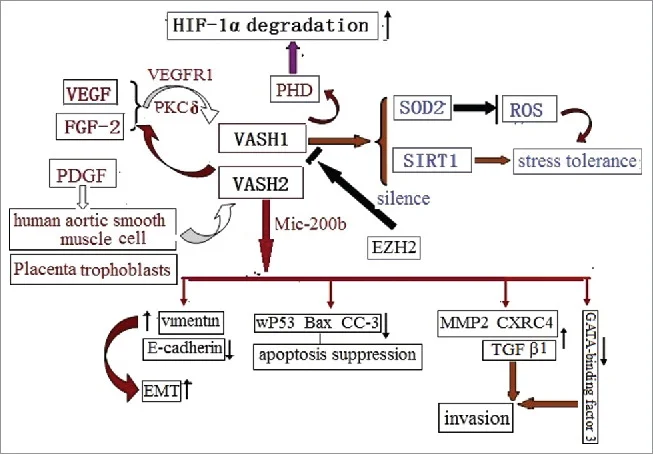
- Increases BTG2 R
- Increases FAM78A R
- Increases FLT4 R
- Increases MTSS1 R
- Increases PHD R
- Increases PPAR-alpha R
- Increases PTX3 R
- Increases SIRT1 R
- Increases SOD2 R
- Increases SOX18 R
- Reduces Angiopoietin-1 R
- Reduces BDNF R
- Reduces HIF-1alpha R
- Reduces IGF1 R
- Reduces MCP-1/CCL2 R
- Reduces MIP-2 R
- Reduces Nephrin R
- Reduces PDGF R
- Reduces RAGE R
- Reduces SLC7A2 R
- Reduces TGF-beta1 R
- Reduces TNF-a R
- Reduces VASH-2 R
- Reduces VEGFR-2 R
- Reduces ZO-1 R
Advanced:
- VASH1 protein is released extracellularly, assisted by a small vasohibin-binding protein which is the only known VASH1-interacting protein. R
- VASH1 is expressed in endothelial cells in zones (stopping angiogenesis) and haematopoietic (stem) cells, but VASH2 is expressed in infiltrating mononuclear cells at the sprouting front (increasing angiogenesis). R R
- VASH1 is probably activated by a calcium-dependent activation mechanism called calcium binding residue in LapG protease (LapG-D139). R
More Research
- VASH1 may play a role in Epstein-Barr Virus (EBV) induced lymphoblasts. R
Jacob Gordon
INHC, FMT-C
Integrative Nutrition Health Coach
I cover mold illness, post-viral recovery, methylation, and complex chronic disease, drawing on ten years of clinical research, work inside a functional medicine clinic, and my own recovery from all of it. Every claim here is cited.
Book a ConsultationRelated Protocols & Supplements
Deep-dive chapters and recommended supplements for this topic
Electrolyte Complex
1 scoop/day
CoQ10
200mg/day
Magnesium Glycinate
400mg at bedtime