Red Tide Algal Blooms From Red Algae (Brevetoxins, Saxitoxins, and Other Toxic Marine Toxins)
By Jacob Gordon, INHC, FMT-CThis article contains affiliate links. As an Amazon Associate, MyBioHack earns from qualifying purchases at no extra cost to you. We only link products we research and stand behind.

Right now there is a toxic red algal bloom occurring where I live.
It is common to have this type of bloom during this kind of weather, especially in Florida, but the presence of this on the east coast is pretty rare.
According the Miami Herald, the start of the bloom occurred during the weekend of September 2018 and I’ve definitely noticed it affecting my respiratory system. R
Today, were going to talk about red tides, how they happen and some of the main neurotoxins’ effects on human biology.
What Causes Red Tides?
Red tides in Florida are caused by algal blooms of dinoflagellate with one of the most dominant ones called Karenia brevis.
They produce brevetoxins (PbTx) which can be ingested (via 1. seafood, predominantly marine fish and shellfish and 2. runoff byproducts, such as corn) or aerosolized (through bubbles formed on the ocean's surface and travel via wind). R
Some other species with their toxins: R
Gonyaulax - yessotoxins (YTXs) (altering calcium homeostasis and causes ribotoxic stress) R R
Gymnodinium - gonyautoxin, saxitoxin, and neosaxitoxin R
Dinophysis - okadaic acid, dinophysistoxins, and pectenotoxins, (inhibit protein phosphatase) R
Noctiluca scintillans - ammonia (not as toxic as others, but can add to neurotoxicity of other blooms) R
Chattonella - also produce brevetoxins R
Amoebophyra
Brevetoxin Overview
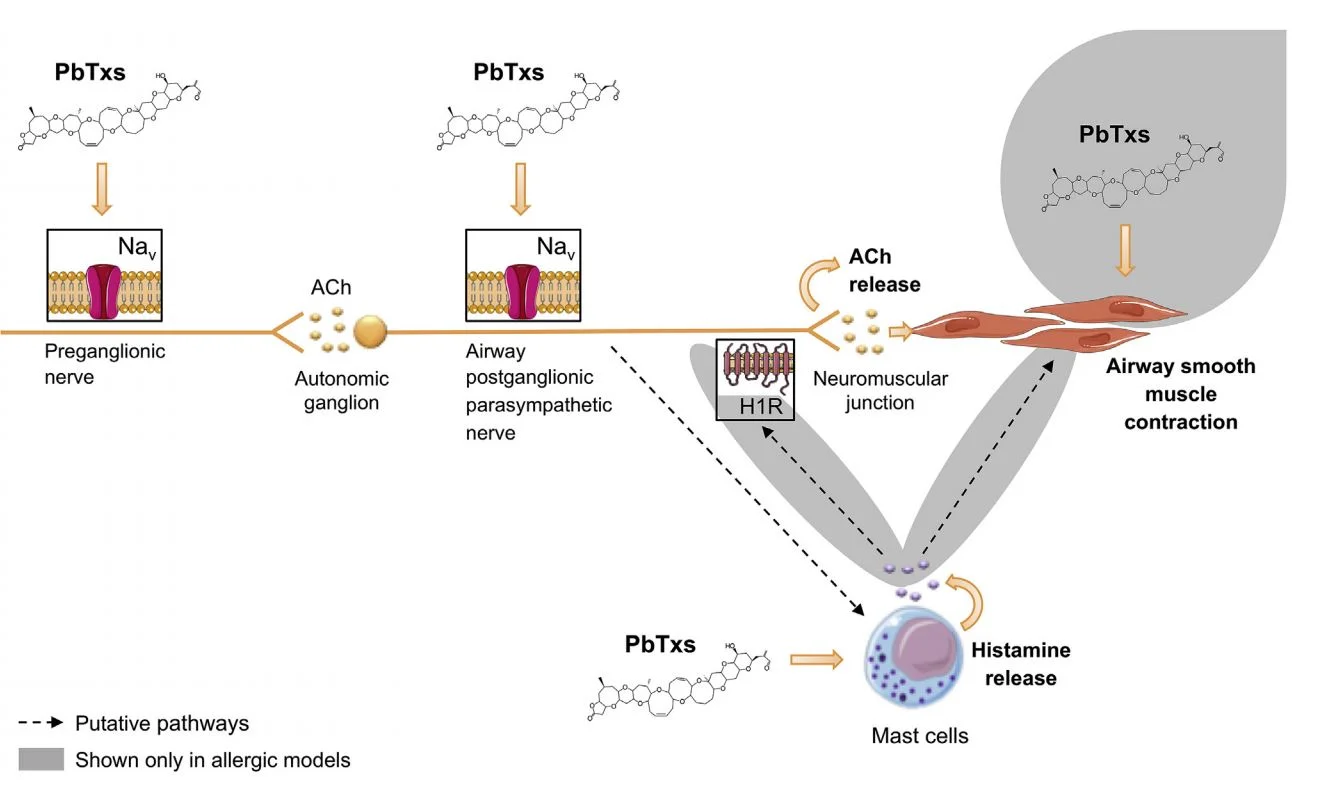
Brevetoxins affects a various amounts of systems, but their effects are highly dependent on whether they are ingested or inhaled. (technical - PbTx acts on voltage-gated sodium channels in mammals causing depolarization of nerve cells) R R R
Usual symptoms from ingestion: neurotoxic shellfish poisoning (nausea and vomiting, paresthesias of the mouth, lips and tongue as well as distal paresthesias, ataxia, slurred speech and dizziness). R
Usual symptoms from inhalation: stinging eyes and nose, dry choking cough and onset of asthmatic attack (these symptoms do no regularly reproduce in healthy subjects, but in asthmatic patients can last up for days). R R R R

Severe allergic reactions can also occur.
Brevetoxins can bioaccumulate in tissue. R R
Dead carcasses that have bioaccumulated brevetoxins can aerosolize the brevetoxin naturally though the decay process. R
Aerosolized brevetoxins can be measured at least 4.2 kilometers (2.6mi) from the beach and/or 1.6 km (1mi) from the coastal shoreline. R
Brevetoxins can also persist in sediment and seagrass post-algal bloom. R
Downsides To Brevetoxin
Activates Mast Cell degranulation and production of IL-6 R
Antimicrobial - preliminary evidence has shown brevetoxin to kill certain bacterial populations,) while enhancing others (such as Alphaproteobacteria), although there needs to be research conducted on how it affects the nasal and gut microbiome R
Cancer R
Disturbs Neurotransmitter Signalling (via AChE, MAO, mAChR, and NMDAR) R
DNA damage/apoptosis R
Inflammation (Increased Albumin and alpha-2 Macroglobulin) R
Lung inflammation (via Acetylcholine dependent parasympatheitc postgangliionic nerve terminals) R
Methylation changes (Increased Thiopurine methyltransferase) R
Oxidative Stress (Increased ROS/RNS and higher need to produce SOD) R R
Saxitoxin Overview
Saxitoxin can be ingested (from marine life), inhaled, or enter open wounds (when swimming) (technical - acts as a selective sodium channel blocker so sodium ions don't get into the cel) R
Common symptoms of saxitoxin when ingested: Paralytic shellfish poisoning (PSP) - nausea, vomiting, diarrhea, abdominal pain, tingling or burning lips, gums, tongue, face, neck, arms, legs, and toes, shortness of breath, dry mouth, a choking feeling, confused or slurred speech, and loss of coordination R
Saxitoxin is so powerful that it has been used in chemical warfare by the US military, CIA, and spies. R R R
Downsides To Saxitoxins
Brain Cancer R
Chronic exposure may increase liver damage (serum bilirubin, γ-glutamyltransferase (GGT) and aspartate aminotransferase (AST)) and reduce food intake/body weight. R
Chronic low dose exposure has shown to reduce neurite outgrowth (mouse model). R
Decreases spatial memory performance R
Increases oxidative stress in the brain (via GSH, SOD, CAT, GR, GPX) R
Lipid peroxidation of neural cells (in vitro) R
Reduces antioxidants in the brain (ie GST) R
How Do Red Tides Correlate With CIRS?
Chronic Inflammatory Response Syndrome (CIRS) may be a result of red tides via MHC Class II:
There is an increase in blood levels of inflammatory and antiinflammatory mediators (from brevetoxin) with an increased relative risk for certain variants of MHC class II molecules in cases compared to controls R
Correlation of gene expression indicative of activated inflammatory pathways in genetic variants of the HLA-TCR axis between cases and controls R
In dolphins exposed to brevetoxin, similar MHC class II loci in (as found in CIRS) are correlated with dolphin survival R
Testing
What To Do About It
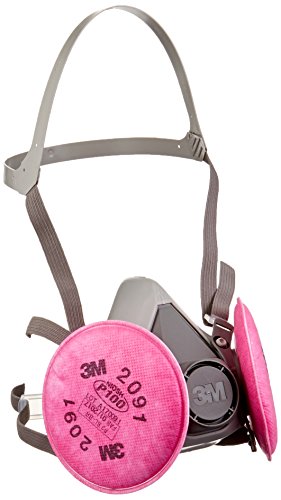
Stay away from the beach or wear a particle mask if you must go near the beach - Do not go swimming and cover up any open wounds
Stay inside during rain storms during an algal bloom as storms may help transport toxins R
Brevenal - reverses main neurotoxic effects of brevetoxin (found in trace amounts in brevetoxin air, while there is a lot more in water) R R
Biosensors to evaluate the water R
Prevent Oil Spills R
4-aminopyridine reverses a lot of the symptoms from saxitoxin (in mammals) R
Mechanism Of Action
Jacob Gordon
INHC, FMT-C
Integrative Nutrition Health Coach
I cover mold illness, post-viral recovery, methylation, and complex chronic disease, drawing on ten years of clinical research, work inside a functional medicine clinic, and my own recovery from all of it. Every claim here is cited.
Book a ConsultationRelated Protocols & Supplements
Deep-dive chapters and recommended supplements for this topic
Glutathione (Liposomal)
500mg 2x/day
Activated Charcoal
500mg away from food/meds
NAC
600mg 2x/day