How To Improve Your Glymphatic System And AQP4: Brain Waste Clearance Biohacks
By Jacob Gordon, INHC, FMT-CThis article contains affiliate links. As an Amazon Associate, MyBioHack earns from qualifying purchases at no extra cost to you. We only link products we research and stand behind.
The glymphatic system is the brain's overnight waste-removal pump, and when it slows down, metabolic waste, used metabolites, and neurotoxic proteins accumulate in the tissue.
In this post, we will discuss what controls glymphatic flow, why the AQP4 water channel matters so much, and the specific biohacks, supplements, and drugs studied to improve brain waste clearance.
Basics Of The Glymphatic System And AQP4
The brain has no classical lymphatic vessels running through its tissue, so it evolved a different way to take out the trash.
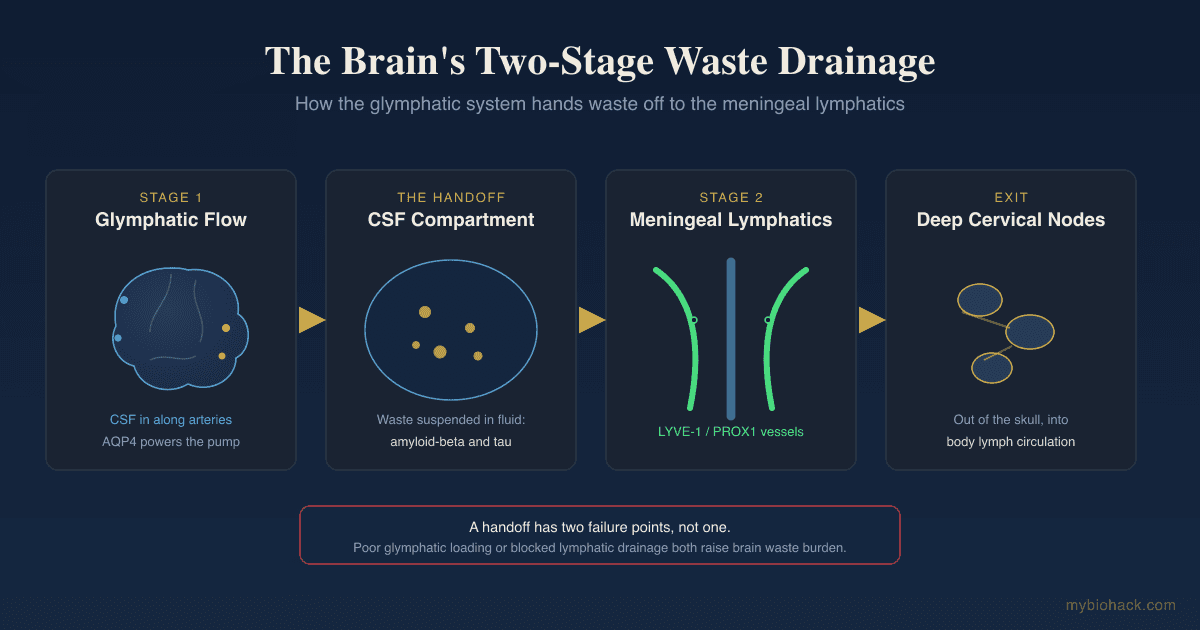
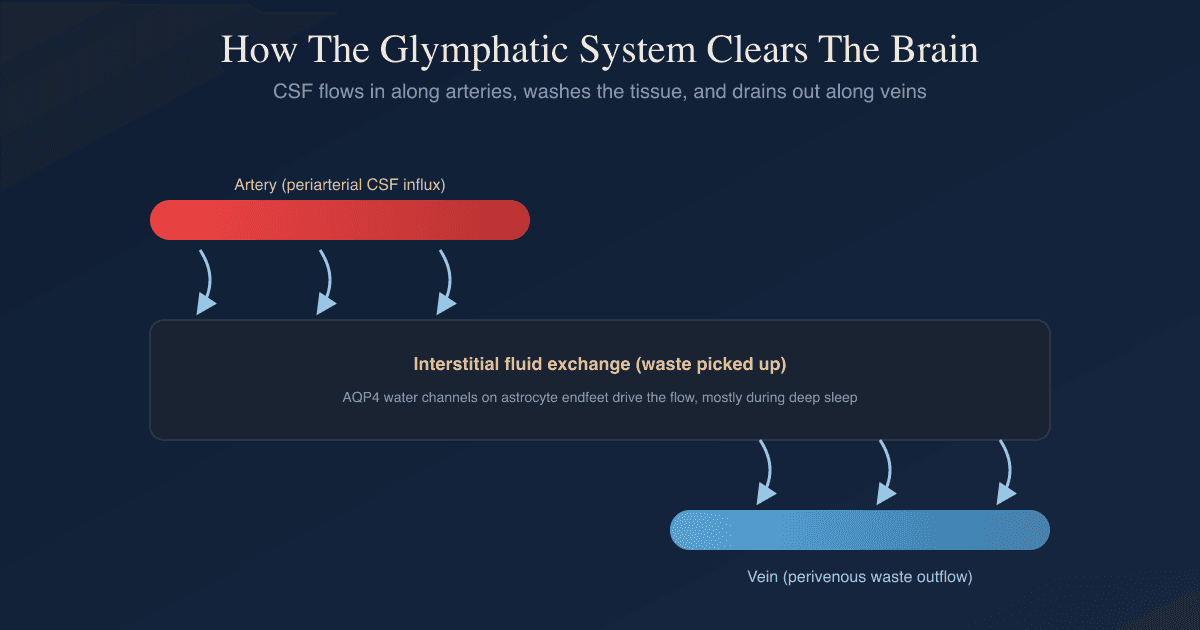
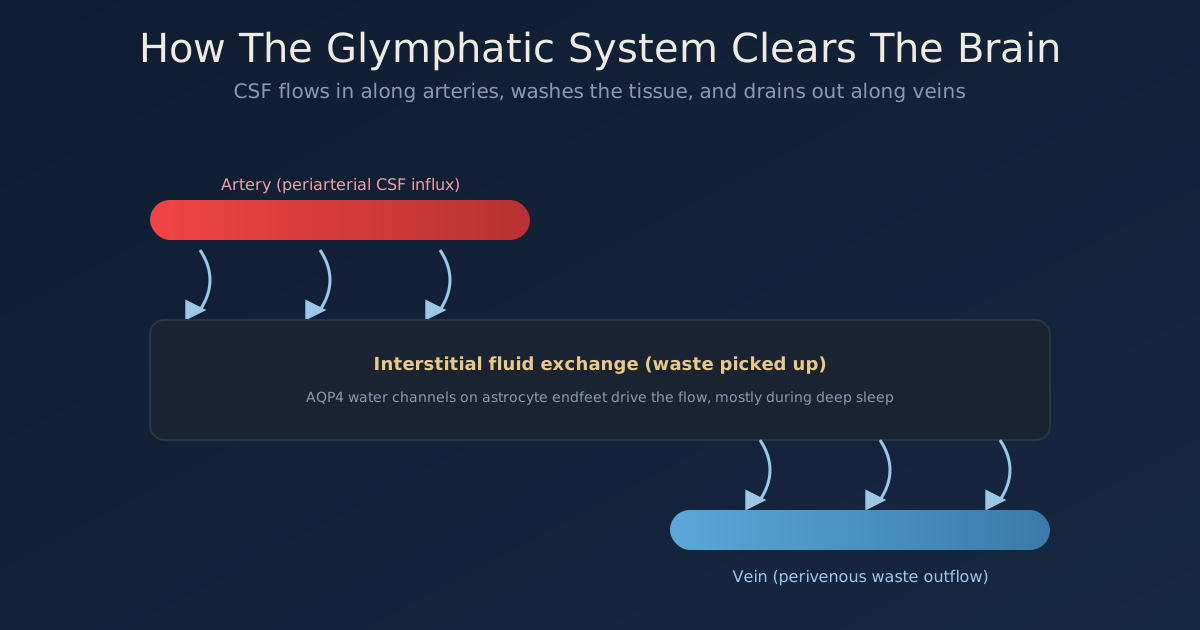
The glymphatic system moves cerebrospinal fluid (CSF) into the brain along the spaces surrounding arteries, mixes it with interstitial fluid, picks up waste, and drains it out along the spaces surrounding veins. R
The original 2012 work established this paravascular pathway and showed it clears interstitial solutes, including amyloid-beta. R
The pump is gated by sleep.
The landmark finding is that sleep drives metabolite clearance, with the interstitial space expanding during sleep so fluid can wash through far more effectively than during waking. R
The engine running it is aquaporin-4 (AQP4), a water channel concentrated on the endfeet of astrocytes where they wrap around blood vessels.
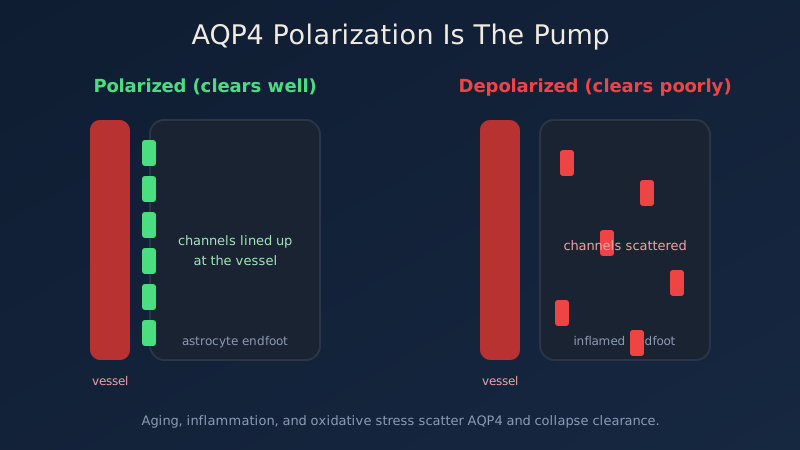
AQP4 is roughly ten times more concentrated at these perivascular endfeet than elsewhere on the astrocyte, and that concentration, called AQP4 polarization, is what makes directional water transport possible. R
When AQP4 loses its polarized arrangement, perivascular water transport collapses and clearance fails. R
So two things matter most: the nightly sleep window that opens the system, and the polarized AQP4 that physically moves the water.
For the deeper anatomy of perivascular spaces and the AQP4-Notch relationship, see there is more to lymph than detoxing.
What Slows Glymphatic Flow
Factors that impair glymphatic clearance: (not exclusive list)
- Aging (AQP4 becomes less polarized and CSF flow slows with age) R
- Chronically elevated norepinephrine (sustained high NE flattens the slow oscillation that pumps CSF) R
- Disrupted or shortened deep sleep (slow-wave sleep is when the system runs) R
- Neuroinflammation (cytokines and oxidative stress damage astrocyte endfeet and depolarize AQP4) R
- Poor sleep quality measured objectively (lower perivascular diffusivity in people with disrupted sleep) R
- Sleep deprivation (even one disrupted night reduces clearance of amyloid-beta and tau)
- Vascular stiffness and low arterial pulsatility (the arterial pulse is part of what drives flow)
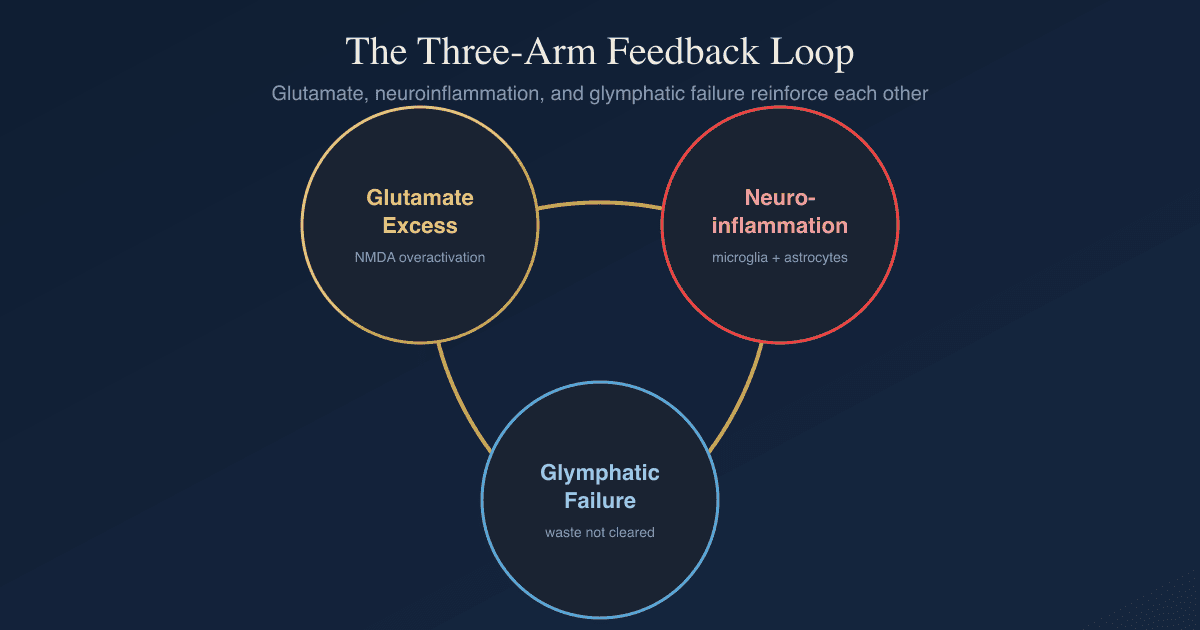
Notice that neuroinflammation appears on this list, and that clearance failure then worsens inflammation.
That bidirectional relationship, inflammation degrades clearance and poor clearance worsens inflammation, is now described directly in the literature as a vicious cycle, and the glymphatic system is increasingly framed as a gateway for neuroinflammation. R R
This is the same loop covered in the glutamate, neuroinflammation, and glymphatic feedback loop post, viewed from the clearance side.
How To Improve Glymphatic Clearance
The levers fall into three buckets: protect the nightly window, let norepinephrine oscillate, and physically support the pump and the AQP4 channel.
1. Protect Deep Slow-Wave Sleep
This is the single highest-leverage intervention, because the system mostly runs during deep NREM sleep. R
Glymphatic inflow during slow-wave sleep correlates with delta wave activity, so the goal is not just hours in bed, it is depth. R
Anything that fragments deep sleep, alcohol, late meals, late screens, an overheated room, directly steals clearance time.
My full approach is in my sleep experiments and how I get deep sleep.
2. Let Norepinephrine Oscillate Instead Of Sitting High
The pump is driven by slow rhythmic oscillations of norepinephrine, not by constant high tone. R
Sustained high norepinephrine at night, from late caffeine, stimulants, or stress arousal, flattens that oscillation and suppresses clearance. R
This is why winding down is not soft advice, it is mechanical: you are letting NE fall so it can begin oscillating.
Theanine: promotes calm without sedation and takes the edge off evening adrenergic tone, see the theanine post.
Magnesium Glycinate: supports parasympathetic tone and sleep depth.
3. Sleep On Your Side
Body position changes how efficiently CSF moves through the brain.
Glymphatic transport is most efficient in the lateral (side) position compared to sleeping on your back or stomach, and side-sleepers also show more slow-wave sleep. R
This is close to free, so it is worth defaulting to side-sleeping.
Body Pillow: the simplest way to hold a lateral position through the night.
If you share a bed, that can help too.
In polysomnography studies, bed-sharing couples showed roughly 10% more REM sleep and notably less fragmented sleep than the same people sleeping alone, and an earlier pilot found more slow-wave sleep as well. R
Because glymphatic clearance runs best during deep, uninterrupted sleep, fewer awakenings across the night work in its favor.
Supplements and herbs studied for their effect on AQP4: a handful of compounds act on the AQP4 water channel that drives glymphatic flow.
Most of this evidence is from animal models, and the aim is healthy AQP4 polarization at the astrocyte endfeet, not simply more AQP4.
- Omega-3 (DHA): maintains AQP4 polarity at astrocyte endfeet, and omega-3 driven clearance of amyloid-beta is AQP4-dependent in mice (covered in more detail below). R
- Ginkgo biloba (ginkgolide B): protected AQP4 polarization and improved glymphatic clearance of inflammatory mediators in a neuropathy model. R
- Korean red ginseng (ginsenoside Rb1): normalized pathological AQP4 over-expression through Nrf2 signaling in a cerebral ischemia model. R
- Curcumin: reduced the AQP4 over-expression and depolarization that drive brain swelling after injury, which is relevant in edema states rather than as a daily glymphatic booster. R
4. Aerobic Exercise
Physical exercise enhances glymphatic function through several mechanisms at once: increased CSF influx, improved perivascular clearance, better AQP4 polarization, reduced systemic inflammation, and improved sleep quality. R
The vascular benefit matters because healthy, rhythmic arterial pulsation is part of what drives flow.
5. Omega-3 (High DHA) For AQP4 Polarization
This is the most direct nutritional lever on the AQP4 channel itself.
DHA helps maintain the polarity and expression of AQP4 at astrocyte endfeet, omega-3 driven clearance of amyloid-beta has been shown to be AQP4-dependent in animal work, and polyunsaturated fatty acid supplementation protected both the cerebrovascular and glymphatic systems in a depression-related cognitive dysfunction model. R R
Omega-3 (High DHA): prioritize a product with a high DHA fraction, not just total fish oil.
6. Melatonin
Melatonin supports the sleep architecture the system depends on, and in animal models it restores the circadian rhythm of AQP4 polarization, which is the exact channel arrangement clearance depends on. R R
Melatonin: start low, 0.3 to 1 mg, because the goal is restoring rhythm, not heavy sedation, see the melatonin post.
7. Heat And Sauna (Cautious)
Raising core temperature increases interstitial fluid movement, and sauna use carries a strong epidemiological association with lower dementia risk, though the direct human glymphatic evidence is still early. R
Treat this as supportive and rehydrate aggressively afterward, the mechanism overlaps with heat shock protein activation covered in the molecular chaperones and heat shock proteins post.
Infrared Sauna: a home option for consistent heat exposure.
8. Hydration And Electrolytes
The system moves water, so chronic dehydration works against it, and heat exposure compounds fluid loss.
Rehydrate with sodium and minerals rather than plain water alone, especially around sauna or exercise.
Drugs Studied For Glymphatic Enhancement
This section answers the common question directly: which drugs are being studied to improve glymphatic clearance.
These are prescription agents, included here for mechanistic understanding, not as recommendations, and none should be used off-label without a physician.
Prazosin is an alpha-1 adrenergic blocker that reduces noradrenergic tone, and chronic prazosin has enhanced glymphatic function in animal models, with interest in clearing tau, alpha-synuclein, and TDP-43. R
The logic fits the biology: lowering excessive adrenergic tone may restore the oscillation the pump needs. R
Dexmedetomidine is an alpha-2 agonist that produces a sleep-like state with preserved slow oscillations, and it has been proposed as a repurposed glymphatic enhancer. R
There is a real nuance here worth stating plainly.
The same noradrenergic system can cut both ways: too much sustained norepinephrine suppresses the pump, but a complete absence of oscillation is not the goal either, since the slow rise and fall of NE is itself the driving rhythm. R
This is also why some sleep drugs backfire: the Z-hypnotic zolpidem suppressed the noradrenergic oscillations and reduced glymphatic inflow despite producing sleep. R
A drug can put you to sleep and still impair the cleaning.
What To Stay Away From
Habits and agents that work against glymphatic clearance: (not exclusive list)
- Alcohol before bed (fragments slow-wave sleep and impairs clearance)
- Chronic dehydration (the system moves water)
- Late caffeine and stimulants (sustained norepinephrine flattens the driving oscillation) R
- Some sleep drugs that suppress slow oscillations (sleep is produced but clearance is not, as shown with zolpidem) R
- Untreated sleep apnea (repeated arousals destroy the deep-sleep window)
Mechanisms Of Action
Simple:
- The brain cleans itself mostly while you are in deep sleep.
- The cleaning works by washing fluid through the brain along the outsides of blood vessels.
- A water channel called AQP4 on brain support cells is what physically moves that water.
- Slow waves of the alertness chemical norepinephrine act like a pump, so you want it to rise and fall, not stay high all night.
- Side-sleeping, exercise, omega-3, and deep sleep all help the pump work, while alcohol, dehydration, and late stimulants slow it down.
Advanced:
- AQP4 polarization Directional CSF-ISF exchange depends on AQP4 being concentrated at perivascular astrocytic endfeet, and depolarization or mislocalization (from aging, inflammation, or genetic variation) collapses perivascular water flux and solute clearance. R
- Norepinephrine-driven vasomotion Locus coeruleus norepinephrine generates slow oscillations in vascular tone during NREM sleep that act as a pump for CSF influx, and pharmacologic flattening or sustained elevation of NE suppresses this clearance. R R
- Sleep-dependent interstitial expansion During sleep the interstitial space expands substantially, reducing resistance to convective fluid flow and increasing metabolite clearance relative to wakefulness. R
- Inflammation-clearance vicious cycle Neuroinflammation and oxidative stress damage astrocytic endfeet and depolarize AQP4, impairing clearance, while impaired clearance leaves inflammatory mediators in the tissue, perpetuating the cycle. R
- Omega-3 AQP4 support DHA maintains AQP4 expression and polarization at astrocyte endfeet, and omega-3 mediated amyloid-beta clearance is AQP4-dependent. R
Genetics
AQP4
AQP4 encodes the dominant water channel of the central nervous system, expressed on astrocytic endfeet.
Its polarized distribution at perivascular endfeet is required for efficient glymphatic transport, and loss of polarization, whether from aging, inflammation, or genetic variation in AQP4 and its anchoring complex, reduces clearance. R
Variants affecting AQP4 expression and localization have been studied in the context of sleep and neurodegenerative risk, which is part of why the same lifestyle levers do not work equally well for everyone.
More Research
- Sleep can be deliberately targeted to modulate glymphatic clearance, meaning the nightly window is an intervention point rather than a fixed trait. R
- Glymphatic function as measured by perivascular diffusivity is protective against age-related cognitive decline, and lower function tracks with cognitive impairment and amyloid deposition. R R
- Reduced glymphatic function has now been documented in autistic children on diffusion imaging, consistent with the high rates of sleep disturbance and neuroinflammation in autism. R R
- Glymphatic dysfunction and choroid plexus enlargement track with systemic inflammation and oxidative stress in depression, reinforcing the inflammation-clearance link as a treatment target. R
- A 2025 review argues for a glymphatic-oriented paradigm in psychiatry, prioritizing slow-wave sleep, AQP4 and astrocyte health, vascular pulsatility, and circadian dosing as the levers most likely to improve clearance and outcomes. R
There is no validated consumer test for glymphatic function yet, as the research measure is a specialized MRI metric called the ALPS index.
What you can measure is the systemic inflammation and oxidative stress that degrade clearance, and for that I use the Cellular Zoomer to assess oxidative stress and mitochondrial markers, alongside the Neural Zoomer when blood-brain barrier integrity is in question.
If your clearance problem is downstream of a complex sleep, medication, or chronic inflammation picture, that is the kind of situation worth reviewing in a consultation rather than guessing at one lever at a time.
Jacob Gordon
INHC, FMT-C
Integrative Nutrition Health Coach
I cover mold illness, post-viral recovery, methylation, and complex chronic disease, drawing on ten years of clinical research, work inside a functional medicine clinic, and my own recovery from all of it. Every claim here is cited.
Book a ConsultationRelated Protocols & Supplements
Deep-dive chapters and recommended supplements for this topic
Lion's Mane
1000mg/day
Omega-3 (DHA)
2g/day
Phosphatidylserine
100mg 3x/day