191+ Ways To Combat Herpes (Inhibit HSV1 and HSV2)
By Jacob Gordon, INHC, FMT-CThis article contains affiliate links. As an Amazon Associate, MyBioHack earns from qualifying purchases at no extra cost to you. We only link products we research and stand behind.

Herpes is one of the most common sexually transmitted diseases which can affect multiple organ systems including the lips and genitals.
In this post, we will discuss herpes (HSV-1 and HSV-2), how it affects the body, and the best ways to counteract/prevent infection.
Basics Of Herpes
There are eight human herpes viruses (HHVs): R
Herpes simplex virus type 1 (HSV-1)
Herpes simplex virus type 2 (HSV-2)
Varicella-zoster virus (VZV)
Epstein-Barr virus (EBV or HHV-4)
Cytomegalovirus (CMV or HHV-5)
HHV-6
HHV-7
HHV-8 [Kaposi sarcoma (KS) herpesvirus]
This post is focused on the first two and future posts will discuss protocols towards the other viruses.
HSV is very common:
CDC: 1 out of every 6 people carry HSV (~12% of people have HSV-2 infection in US and >12% HSV-1). R
WHO: 3.7 billion people under age 50 (67%) have HSV-1 infection globally and 417 million people aged 15-49 (11%) worldwide have HSV-2 infection. R
Herpes Simplex Virus Type 1 (HSV-1)
This usually causes oral sores. R
Herpes Simplex Virus Type 2 (HSV-2)
This usually causes sores on the genitals. R
Diseases And Downsides Associated With HSV

Anemias R
Aseptic Meningitis R
Atherosclerosis R
Autism R
Behcet’s syndrome R
Blindness (if in eye) R
Bipolar R
Cervical Cancer R
Cyclic neutropenia R
Encephalitis and Meningoencephalitis R
Liver Impairment (in children) R
Low Thyroid Gormones - reduces T3 R
Magic syndrome R
Memory Impairment R
Myelitis R
Neonatal herpes R
Parsonage-Turner Syndrome (rare) R
PFAPA R
Radiculopathy R
Reactive arthritis R
Seizures R
Sweet’s syndrome R
Telomere Damage R
Viral Encephalitis - if gets into CSF R
Types Of Transmission And How To Reduce Spread
Testing For HSV
To confirm herpes simplex virus-1 or -2, one must have a positive viral culture (via PCR) via blood or CSF. R
Ways To Combat HSV
Lifestyle/Supplements For HSV-1:
African geranium (Pelargonium sidoides) - 99% inhibition of hsv1 (better prevention than treatment) R
Alamanda (Alamanda schottii) - Inhibition of HSV‐1 replication R
Alfavaca (Ocimum campechianum) - Linalool, eugenol inhibits hsv1 R
Almond Skin - block the production of infectious HSV-1 particles R
Arginine - this one is risky, herpes can be activated by the arginine pathway, although arginine has shown in studies to initially suppress hsv1, but after ~8ish hours it may enhance virus multiplication R R
Ashwaganda - reduces hsv1 in cell culture R
Astragalus - inhibits hsv1 via TLR3/NF-κB R R
Avishan (Thymus kotschyanus) - in vitro R
Baccharis (Baccharis erioclada) - Inhibition of CPE of HSV-1 R
Blackberry (Rhododendron ferrugineum) - inhibit HSV-1 infection R
Blackcurrant (Ribes nigrum) - Kurokarin extract inhibited herpes simplex virus type 1 attachment on the cell membrane completely at a 100-fold dilution R
Black-Jack (Bidens pilosa) - blocked the binding of virus to host cells and viral cell penetration R
Black Peppermint (Eucalyptus amygdalina) - in vitro R
Black Tea - theaflavins can reduce or block the production of infectious HSV-1 virions R
Bifidobacterium adolescentis (SPM 0214) - in vitro reduction of hsv1 R
Bushmint (Hyptis mutabilis) - α-Phellandrene, p-cymene, E-caryophyllene inhibit hsv1 R
Caffeic acid - inhibits HSV-1 multiplication mainly before the completion of viral DNA replication, but not thereafter R
Caffeine/Coffee - Contrary to popular belief, caffeine can inhibit the replication of hsv1, but it can increase stress hormones which may reduce immune function. R
Carissa edulis - oral dose of 250 mg/kg significantly delayed the onset of HSV infections by over 50% R
Cat's Claw - more effective in reducing symptoms such as swelling, skin reddening, and pain compared to acv R
Catuaba - high virucidal effect and high ability to inhibit viral adsorption R
Chirata (Swertia chirata) - Inhibition of HSV‐1 plaque formation R
Chitosan - significantly increased the frequencies of CD4+ T-cells R
Creatine - cyclocreatine inhibits the replication of hsv and reduces morbidity and mortality in mice R
Crownvetch (Securigera securidaca) R
Daphne genkwa - enhanced resistance to HSV-1 infection via NK activation R
Echinacea - antiviral activity against HSV 1 in vitro exposed to visible / UV-A light R R
Emodin - increased the survival rate of animals infected with high efficacy of HSV elimination from brain, heart, liver and ganglion with antiviral activity equivalent to that of acyclovir in vivo R
Foxglove (Digitalis lanata) - glucoevatromonoside alters electrochemical gradient and blocks HSV-1 propagation in cells R
Fragrant suma (Rhus aromatica) - reduces by 50% for HSV-1 R
Gallic Acid - GA and pentyl gallate cause inhibition of virus attachment to and penetration into cells R
Garlic - ajoene > allicin > allyl methyl thiosulfinate > methyl allyl thiosulfinate = have antiviral effects on hsv (in vitro) R R
Ginseng - prophylactically regulates vaginal and systemic HSV infectivity / also stimulates immune system to help overcome HSV infection R R
Glechon marifolia and Glechon spathulata - β-Caryophyllene, bicyclogermacrene inhibit hsv1 R
Glutamine - mice that received glutamine were less likely to have HSV-1 reactivation than those that did not R
Glutathione - GSH dramatically reduced the number of extracellular and intracytoplasmic virus particles (in vitro); inhibit > 99% the replication of HSV-1 (in vitro); in vivo effects of supplementation with S-GSH or GSH on HSV-1-induced mortality; inhibits virus replication by interfering with protein folding and maturation of viral particles R R R R
Gotu Kola (Centella asiatica) - inhibits hsv1 in vitro R R R
Guso (Eucheuma seaweed) - impeding early HSV-1 infection and inhibiting viral RNA and DNA syntheses R
Hops - xanthohumol has a weak to moderate antiviral activity against HSV-1 R
Huang Bai (Phellodendron amurense) - has antiviral effect on HSV-1, prevents recurrence R R R
Hypericum connatum - helps with healing of oral lesions R
Kura Amluki (Phyllanthus amarus) - Inhibition of HSV‐1 replication R
Lactoferrin - reduces infection spread and replication R R
Lepechinia salviifolia - Germacrene D inhibits hsv1 R
Licorice (glycyrrhizin) - reduces HSV-1 replication in brain R
Lithium - consistent reduction in the mean number of episodes/month, the average duration of each episode, the total number of infection days/month, and the maximum symptom severity. R
Longevity Spinach (Gynura procumbens) - decrease of infected patients from 48.7% to 7.69% in treated group R
Love-in-a-Mist (Nigella damascena) - source of dolabellane diterpenes with antiviral capability against hsv1 R
Lysine - less HSV infections, symptoms significantly diminished in severity and healing time was significantly reduced R R R
Macela (Achyrocline satureioides) - antiviral topical treatment (luteolin helps) R
Mekabu (Undaria pinnatifida) - fucoidan showed potent antiviral activities against herpes R
Mexican oregano (Lippia graveolens) - carvacrol somewhat (very little) inhibits hsv1 in vitro R
Muña (Minthostachys mollis) - α-Pinene and estragole inhibit hsv-1 R
Mung Bean Sprouts - somewhat comparable effects to Acyclovir R
Neem (Azadirachta indica) - blocked HSV-1 entry into cells R
Norwegian Angelica (Angelica archangelica) - imperatorin and phellopterin reduce HSV-1 replication R
Peppermint oil (Mentha piperita) - active against an acyclovir resistant strain of HSV-1, can reduce HSV1 by 82% R
Persian Oak (Quercus brantii) - high inhibitory effect against HSV-1 replication R
Pregnenolone - inhibitory effect on HSV-1 spread on wild type and ACV-resistant strains R
Propolis (different forms) - prevents viral replication, similar to acyclovir (in vitro), for hsv1 takes up to 24 hrs R R
Quercetin - lowered HSV infectivity, inhibited the expressions of HSV proteins and genes R
Red Algae (Osmundaria obtusiloba) - potent antiviral activity against HSV-1 and HSV-2 R
Red Feathers (Echium Amoenum) - in vitro R
Regel's Threewingnut (Tripterygium hypoglaucum) - reduced hsv1 plaque formation similar to acv R
Reishi (Ganoderma Lucidum/Ling Zhi)- ganodermadiol is active against HSV1 R
Resurrection Plant (Myrothamnus flabellifolia) - inhibits hsv1 viral adsorption and penetration R
Resveratrol - Inhibition of HSV1 replication through ROS generation and NFkb, weak for hsv2 R R
Sandalwood - able to inhibit acyclovir-resistant HSV-1 R
Shilajit - dose-dependent inhibitory activity against HSV-1 in vitro R
Sorrel (Rumex acetosa) - abolished virus entry into the host cell by blocking attachment to the cell surface/reduced viral spread R
Spirulina - calcium spirulan inhibited HSV-1 infection in vitro with a potency at least comparable to that of acyclovir by blocking viral attachment and penetration into host cells R R
Spurge (Euphorbia spinidens) - Antiviral activity on HSV‐1 most likely due to the inhibition of viral replication R
Stonebreaker (Phyllanthus urinaria) - contains hippomanin A, geraniin - inhibits HSV‐1 R
Sulforophane/Broccoli Sprouts - reduced neuroinflammation via a decrease in brain-infiltrating leukocytes, macrophage- and neutrophil-produced ROS, and MHCII-positive, activated microglia R
Sunlight (UV in moderation) - stimulates PBMC cytolysis of leukemic cells, partly via Toll-like receptor-2/protein kinase C/nuclear factor-κB signaling, and potently stimulates expression of CD69, degranulation, migration, and cytokine production in natural killer (NK) cells. R
Sweet basil (Ocimum basilicum) - Inhibition of HSV multiplication R
Uridine - if P-536 was present from the beginning of infection, HSV-1 replication was blocked at an early step and the infected cells continued to synthesize cellular proteins for long periods R
Vitamin C - oxidized vitamin C (dehydroascorbic acid) inhibits HSV-1 multiplication after the completion of viral DNA replication R
Vitamin D (25 and 1,25) - acts as prophalactic, downregulates viral titer and TLR2 mRNA during the intial phase of infection R
White/Grey Mangrove (Avicenna marina) R
Wild mint (Mentha arvensis) - Inhibition of HSV‐1 replication R
Wormwood (Artemisia arborescens) - β-Thujone, linalool, myrcene, carvacrol inhibit hsv1 R
Yin Chen Hao Tang - direct inactivation of the virus infectivity in vitro R
Zataria - in vitro - in vitro R
Zinc - nanoparticles trap the virions; using zinc oxide or zinc sulfate as a prophylactic when in the sun may be beneficial R R
Lifestyle/Supplements For HSV-2:
African geranium (Pelargonium sidoides) - 99% inhibition of hsv2 (better prevention than treatment) R
Almond Skin - causes peripheral blood mononuclear cells (PBMCs) to release IFN-α, IFN-γ and IL-4 in cellular supernatants R
Arabic gum (Vachellia nilotica) - topically inhibits hsv2; also active against an acyclovir-resistant HSV-2 R
Arginine - directly inactivates HSV2 (in vagina), but prolongs incubation time R
Asian lizard's tail (Saururus chinensis) - can inhibit HSV-2 virus replication in vitro via nfkb R
Blackcurrant (Ribes nigrum) - Kurokarin extract inhibited plaque formation of hsv2 R
Black-Jack (Bidens pilosa) - blocked the binding of virus to host cells and viral cell penetration R
Burdock - caffeic acid and chlorogenic acid have strong inhibitory effect on hsv2 R
Bushmint (Hyptis mutabilis) - α-Phellandrene, p-cymene, E-caryophyllene inhibit hsv2 R
Capers (Capparis spinosa) - inhibits extracellular virus release upregulating their production of IL-12, IFN-gamma and TNF-alpha R
Carissa edulis - oral dose of 250 mg/kg significantly delayed the onset of HSV infections by over 50% R
Chameleon plant (Houttuynia cordata) - Houttuynoids block HSV-2 infection through inhibition of NF-κB activation (strong than it's effects on hsv1) R R
Chinaberry (Melia azedarach) - Meliacine stimulate tumor necrosis factor-alpha (TNF-α) and IFN-g production, and reduce HSV-2 shedding with improvement of virus-induced pathogenesis in a mouse vaginal model of herpetic infection R
Chitosan - cream with chitosan can be used for vaginal hsv-2 prevention R
Creatine - cyclocreatine inhibits the replication of hsv and reduces morbidity and mortality in mice R
Crownvetch (Securigera securidaca) R
Copaiba - interfering with viral cell attachment and entry and was more effective in vivo only when combined with Horsetail R
Curcumin (turmeric) - curcumin treatment resulted in significantly decreased HSV-2 replication in chronically infected primary genital epithelial cells R
Devil's Backbone (Pedilanthus tithymaloides) - with luteolin inhibits HSV-2 replication R
Emodin - increased the survival rate of animals infected with high efficacy of HSV elimination from brain, heart, liver and ganglion with antiviral activity equivalent to that of acyclovir in vivo R
Euphorbia jolkini - Putranjivain A has antiviral activity, inhibits hsv attachment and penetration, and interfers with late stage viral replication R
Foxglove (Digitalis lanata) - glucoevatromonoside alters electrochemical gradient and blocks HSV-2 propagation in cells R
Fragrant suma (Rhus aromatica) - moderate reduction for HSV-2 R
Gallic Acid - GA and pentyl gallate cause partial inhibition of the virus attachment to cells and its subsequent cell-to-cell spread activity (best for topical) R
Garlic - ajoene > allicin > allyl methyl thiosulfinate > methyl allyl thiosulfinate = have antiviral effects on hsv (in vitro) R R
Giant Horsetail (Equisetum giganteum) - could prevent HSV-2 disease development when administered together with virus in a mouse model R
Ginseng - Notoginsenoside ST-4 inhibits hsv2 penetration in vitro R
Glutamine - guinea pigs that received glutamine were less likely to have recurrent outbreaks of HSV-2 than those that did not receive the supplement R
Grateloupia filicina - the amylose in it has antiviral activity against hsv2 in vitro R
Gotu Kola (Centella asiatica) - inhibits hsv2 in vitro R R R
Hops - xanthohumol has a weak to moderate antiviral activity against HSV-2 R
Java cassia (Cassia javanica) - suppresses hsv2 multiplication, disturbs virus attachment but inhibitory effect is minor R
Kura Amluki (Phyllanthus amarus) - Inhibition of HSV‐II replication R
Lactoferrin - reduces infection spread and replication, synergizes with acv R R
Lemon Balm (Melissa officinalis) - Myrcene, linalool, camphor, citronellal, β-caryophyllene, caryophyllene oxide, citral have properties that inhibit HSV-2 R R R
Lingonberry (Vaccinium vitis) - proanthocyanidin A‐1 suppressed HSV‐2 infection in vitro R
Lithium - consistent reduction in the mean number of episodes/month, the average duration of each episode, the total number of infection days/month, and the maximum symptom severity. R
Longdanxiegan (tan)- LDXGFG corrected the abnormal expression of TLR pathway genes in hsv2 infection in vivo R R
Longevity Spinach (Gynura procumbens) - decrease of infected patients from 48.7% to 7.69% in treated group R
Mekabu (Undaria pinnatifida) - fucoidan showed potent antiviral activities against herpes R
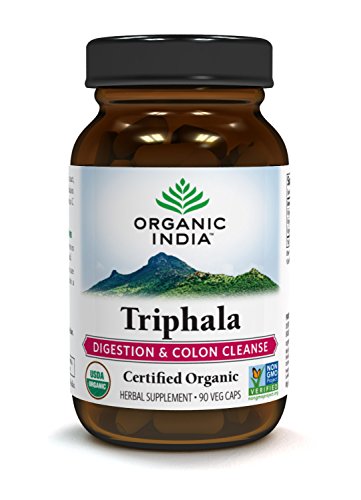
Myrobalan (Triphala - Terminalia chebula) - chebulagic acid and punicalagin have higher direct antiviral activity against HSV-2 and efficacy to inhibit virus attachment and penetration to the host cells as compared to acyclovir R
Peppermint oil (Mentha piperita) - reduces HSV2 by 92% R
Pomegranate (Punica granatum) - tannins inhibit HSV-2 replication, show stronger effects of killing virus and blocking its absorption to cells R
Propolis (different forms) - prevents viral replication, similar to acyclovir (in vitro), for hsv2 takes up to 48 hrs R R
Red Algae (Osmundaria obtusiloba) - potent antiviral activity against HSV-1 and HSV-2 R
Sacred Fig (Ficus religiosa) - inhibits viral attachment and entry and limits the production of viral progeny even against acyclovir-resistant hsv2 R
Shilajit - dose-dependent inhibitory activity against HSV-2 in vitro R
Solomon's seal (Polygonatum cyrtonema) - inhibits hsv2 in vitro R
Stonebreaker (Phyllanthus urinaria) - Inhibition of HSV‐2 infectivity R
Sweet basil (Ocimum basilicum) - Inhibition of HSV multiplication R
Syrian Rue (Peganum harmala) - harmine works similarly and synergistically to ACV R
Thunder God Vine (Tripterygium wilfordii) - weak to moderate inhibition against hsv2 in vitro R
Tulsi/Holy Basil - inhibited hsv2 in cell culture R
Turkish sage (Salvia cedronella) - Inhibition of HSV‐2 replication R
White/Grey Mangrove (Avicenna marina) - in vitro R
Yin Chen Hao Tang - direct inactivation of the virus infectivity in vitro R
Devices:
LLLT - 870nm and 1072mm reduced the length of recovery time and pain severity faster than treatment with acyclovir cream R R
Drugs:
Cidofovir - strong, long half-life, helps with drug resistance against ACV R
Docosanol - n-docosanol targets at cell membrane R
Famciclovir / Penciclovir - rapidly metabolized to the highly bioavailable antiviral compound penciclovir R
Foscarnet - inhibiting the action of the viral polymerase, but nephrotoxic R
Ganciclovir - homolog of ACV; broad-spectrum anti-viral for cytomegalovirus (CMV), HSV, and Epstein-Barr virus (EBV) as well R
Heparin - reduces semen enhancement of transmission R
Para-Aminobenzoic Acid (PABA) - goes well with ACV R
Squaric Acid - incite a T-cell response and to induce the killing of virally infected cells by cytotoxic lymphocytes R
Valcyclovir / Acyclovir - oral valaciclovir enhances the bioavailability of ACV to levels three-to-five fold higher than that obtained with oral ACV; incorporation of ACV-triphosphate into the growing viral DNA chain forces the termination R R R
See ref for time/dosage of drugs -> R
Pathways:

CD4+ Th1 cells - help clear viral infection (adaptive) R
IGF-1 - increases NK cells and T cells R
IL-15 R
IL-17c R
Increase Natural Killer (NK) Cells - kill infected cells R R R
TGF-beta R
TLR2/9 activation - activate NK cells independent of dendritic cells on p38 MAPK pathway R
Other:
Anti-3-OS HS peptides R
Antrodia camphorata - inhibits HSV replication at a very low concentration R
Certain lectins - I'd use caution for this, although they can be great antivirals R R
CV-N - inhibit DNA replication R
Griffithsin (lectin) + Carrageenan R
Human neutrophil peptides (HNP 1–3) suppress HSV in vaginal secretions
Methyl beta-cyclodextrin R
Myosin light chain kinase inhibitors R
RAFIs - inhibit viral fusion but does not impair complete attachment R
Retrocyclin 2 (RC-2) - theta defensin R
Vaccine - ref with ideas for future R
What Makes HSV Worse?
ApoE4 - apoE4 intensifies virus latency (helps facilitate hsv1 into brain easier vs E3) and is associated with increased oxidative damage of the central nervous system R R
BET Inhibitors R
Cortisol - higher circulating cortisol is seen in those with infection, while GH/IGF1 axis suppresses GH R R
Fasting (in glioblastoma though) R
Food sensitivities - such as chocolate, coffee, peanuts, cereals, almonds, strawberries, cheese, tomatoes, and wheat flour (containing gluten); milk proteins from high immunoglobulin A (IgA), IgG and IgE antibodies in cow R
Forskolin R
HDAC inhibitors - butyrate, vorinostat, etc - although they enhance antiviral cytotoxicity R R R R
Heparanase - inhibitors may be useful R
HLA-DR2 and HLA-A*01 have increased frequency, while HLA-A*26, HLA-C*01, and HLA-DQB1*0106 have decreased lesions R R
IFN-gamma R
K-Y Warming Jelly R
NK cell deficiency R
Nutritional Deficiency - such as anemias (iron, serum ferritin) and vitamins B1, B2, and/or B6 R
Progesterone (in females) - increases susceptibility R
Skin trauma R
Smoking R
Some drugs (sodium hypochlorite – piroxicam – phenobarbital – phenindione - niflumic acid – nicorandil - gold salts - captopril) and NSAIDs R
Sunlight / UV - too much UV/sun can cause immunosuppression and reactivation R
Stress (ie lack of sleep, ROS) - oxidative stress is a big inducer of reactivation for herpes; for example, hsv1 can feed on H2O2 (via CAT) R R R R R R
Regulatory T cells (Tregs) - attenuate lesion severity and disease after, but increase the severity of recurrent skin lesions by limiting CD8+T cell responses in the ganglia R
Vitamin E Deficiency - lack causes reduction in “neuroprotective” CD8+IFN-γ+ T cells and increase in Tregs R R
Mechanism Of Action

Simple:
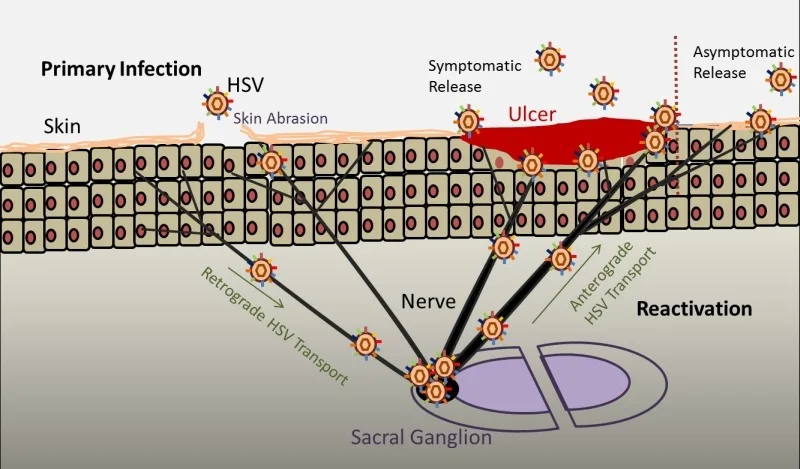
HSV infects the host at mucocutaneous surfaces including the cornea, mouth, genital tract and skin R
It invades the local sensory nerves by propagating via neurons R
It establishes lifelong latency in the neuron bodies of sensory ganglia (sacral ganglion [SG] for genital herpes and trigeminal ganglia for ocular and oral herpes) R
Advanced:
HSV1
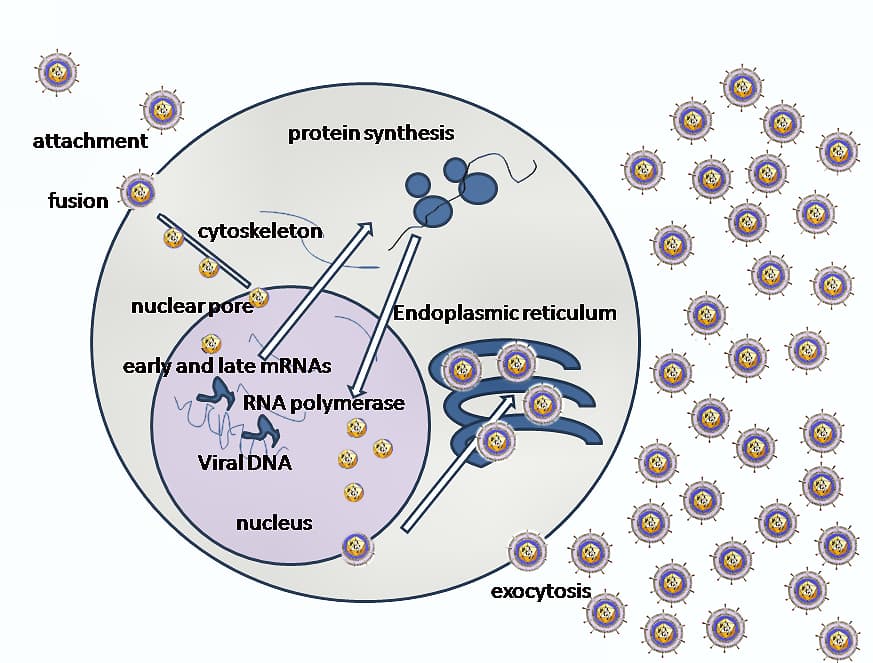
(see pic above) - HSV-1 entry into cells is a multistep process that can be grouped into two glycoprotein-mediated phases, viral attachment and viral fusion. The two membranes fuse and the viral capsid is able to enter the cell:
gD binding to one of its host cell receptors, herpes virus entry mediator (HVEM) or nectin-1
gD-host-cell-receptor complex to interact with the heterodimer complex of gH/gL. gH/gL is able to then assume a form whereby it can bind to gB, allowing gB to bring the viral and host cell membrane together.
Lytic replication is initiated by recruitment of seven essential viral proteins that include an origin binding protein, UL9; a helicase-primase heterotrimer containing UL5, UL8, and UL 52; a single-stranded–DNA-binding protein, ICP8 (or UL29); a viral DNA polymerase, UL30, and a polymerase accessory protein, UL42. The formation of a scaffold consisting of UL5, UL8, UL52, and UL9 promotes the recruitment of IPC8. UL9 and ICP8 are necessary to distort the immediate origin in an ATP-independent manner and then in an ATP-dependent mechanism, are able to facilitate unwinding of the origin. Additionally, together, these five proteins – UL5, UL8, UL52, UL9, and ICP8 - create a platform for UL42 to recruit viral DNA polymerase (UL30), the enzyme necessary to initiate the synthesis of a new DNA strand. The important role in viral DNA synthesis of HSV-1 DNA polymerase has made the enzyme an ideal target for the development of antiviral drugs. Its close interactions with a polymerase accessory protein, UL42, helps establish the rate of DNA synthesis during an infection. R
More about innate and adaptive immunity in response to hsv1 here -> R
HSV2
After infection of skin there's an upregulation of a series of cytokines including early-induced antiviral cytokines as interferons α, β (IFN-α, β), tumor necrosis factor α (TNF-α), colony stimulating factors (CSFs) as G-CSF, GM-CSF, interleukin 3 (IL-3), growth factors (EGF, KGF, and IGF-β1), defensins, selectins, leukocyte function-associated antigens (LFAs,) and toll-like receptors (TLR-2, 3, 4, and 9). R R
HSV2 can downregulate hla-c to render hsv-2 infected dc susceptible to nk cell killing. R
Jacob Gordon
INHC, FMT-C
Integrative Nutrition Health Coach
I cover mold illness, post-viral recovery, methylation, and complex chronic disease, drawing on ten years of clinical research, work inside a functional medicine clinic, and my own recovery from all of it. Every claim here is cited.
Book a ConsultationRelated Protocols & Supplements
Deep-dive chapters and recommended supplements for this topic
Electrolyte Complex
1 scoop/day
CoQ10
200mg/day
Magnesium Glycinate
400mg at bedtime