How Cadmium Damages Mitochondria And What To Do About It
By Jacob Gordon, INHC, FMT-CThis article contains affiliate links. As an Amazon Associate, MyBioHack earns from qualifying purchases at no extra cost to you. We only link products we research and stand behind.

In western society, cadmium (Cd) is found in our everyday environment.
It causes toxic effects to the whole body, including the cells and mitochondria.
In this post, we will discuss how cadmium affects the body and what you can do to protect yourself.
Basics
Cadmium (Cd) is a toxic metal, targeting the kidneys, liver, lungs, pancreas, testes, placenta, brain and bones. R
An estimated 30,000 tons of Cd are released into the environment each year, coming from exposure in the air, water, and diet, R R
Cd is toxic, party for its ability to mimic calcium and zinc in the body. R
How Cadmium Affects The Body
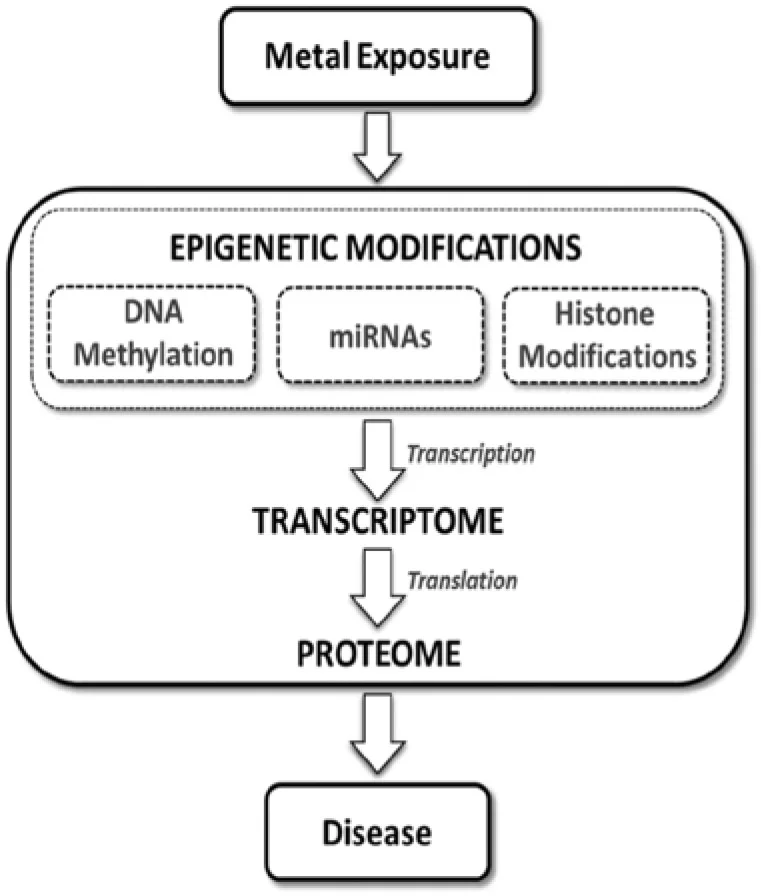
Cd is a known carcinogenic (causes cancer) heavy metal. R R R
It is classified by the International Agency of Research on Cancer (IARC) as a Group 1 human carcinogen. R
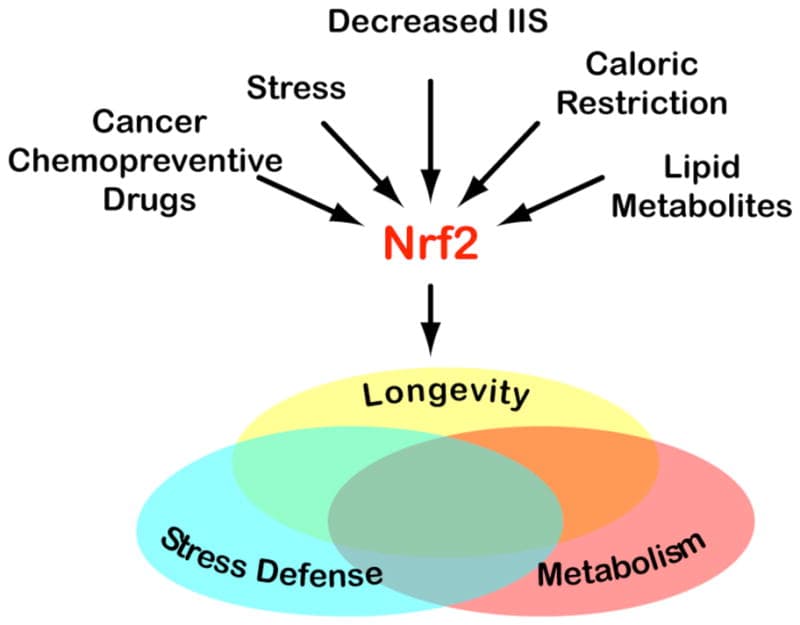
This is because Cd can overactivate the transcription factor NRF2, decrease the tumor suppressor P53 and can inhibit methylation. R R R R R
Cd is genotoxic (damages DNA) as well and reduces DNA repair, although its toxicity on DNA not as strong as other carcinogenic metals. R R
Cd has shown to cause/contribute to:
Bladder Cancer R
Bone Cancer R
Breast Cancer (although is not significantly associated with increased risk) R R
Kidney Cancer R
Liver Cancer R
Pancreatic Cancer R
Testicular Cancer R
3. Causes Bone And Muscle Loss
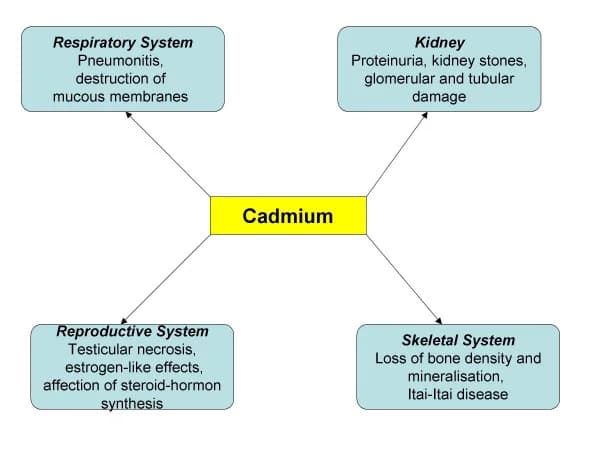
Cd disturbs bone metabolism and weakens the bones, leading to lower bone mass density (BMD). R R
This may increase the risk of osteoporosis, osteomalacia, and bone fractures. R R
Cd also causes free radical damage to muscle tissue. R
4. Damages Cells And Mitochondria
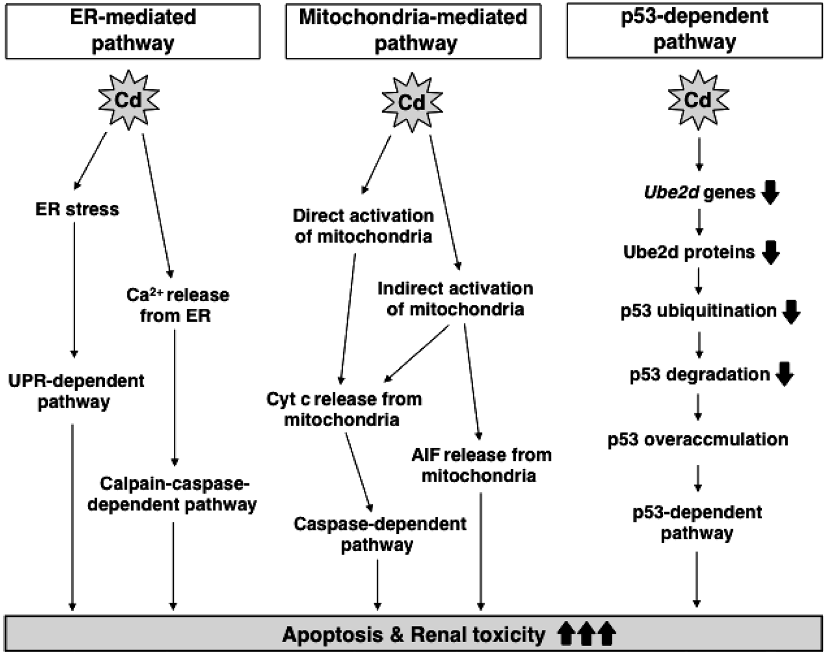
Cd can cause cells to die (necrosis). R
Cd puts so much stress (oxidation) on the cell that if it doesn't die, then it can directly destroy mitochondria (mitophagy) as it depletes cells of antioxidants (like glutathione). R R R
5. Destroys The Immune System
Cd is immunotoxic (toxic to the immune system). R R
For example, Cd can cause destruction to the spleen (play a role in filtering the blood via the immune system). R
Cd increases pro-inflammatory cytokines (such as IL-1b, IL-6, IL-8, and MMP9). R R
N-Acetyl-L-Cysteine (NAC) may prevent the immunomodulatory effect protects against Cd toxicity. R
6. Attacks The Kidneys
Cd can cause nephrotoxicity (damage to the kidneys). R
Garlic and Onion extracts may help prevent this damage. R
Although Cd causes damage to the kidneys, it is unlikely to be the only factor for Chronic Kidney Disease (CKD). R
7. Alters Sex Organs And Hormones
Cd may cause infertility. R
This is because Cd can cause direct damage (irreversible) to the testicles and sperm, causing reduced sperm count. R R
Flavanoids (such as Quercetin) and Resveratrol may help protect against Cd-induced sperm damage. R R R R
Cd can also cause damage to the ovaries. R
Green Tea may be able to prevent some damage to the ovaries by Cd. R
As a metalloestrogen, Cd has estrogenic effects, although it does not bind to the estrogen receptor, it can still cause hormone dysregulation of they HPA-axis. R R R R
For example, Cd can alter the natural production of the hormones:
Cd can also change the circadian rhythm release of hormones by the hypothalamus, specifically altering Norepinephrine (NE) release and testosterone. R
8. Worsens Lung Conditions
In the lungs, Cd can reduce delta-aminolevulinate dehydratase (delta-ALA-D) activity, an enzyme necessary for preventing metal toxicity. R
Cd increases inflammation in the lungs and may cause emphysema (air sacs of the lungs are damaged and enlarged, causing breathlessness) and asthma. R R R
9. Damages The Liver And Pancreas
Cd may increase the risk of developing liver disease (such as NAFLD and NASH). R R
This risk is more prominent in men than women. R
Moringa can reduce Cd's effects on liver enzymes (AST and ALT). R
A lifetime exposure to cadmium is associated with pre-diabetes and diabetes. R
BH4 may reduce the damage of Cd on the pancreas. R
10. Worsens The Vascular System
Cd may contribute to high blood pressure. R
Curcumin and Losartan may attenuate Cd's effects on the vascular system. R R
Although Cd exposure has been associated with heart disease, stroke, and peripheral arterial disease, the significance isn't that strong. R
11. Has Neurotoxic Effects
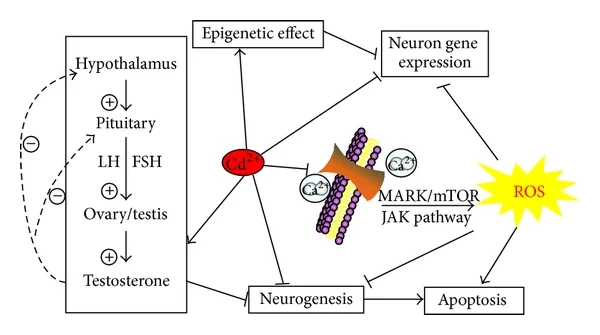
Cd is neurotoxic (toxic to the nervous system). R
Cd can be taken into the body via the nose (mucosa or olfactory) and reach into the peripheral and central neurons. R
Cd can increase the blood brain barrier (BBB) permeability. R
Exposure to Cd also severely affects the function of the nervous system causing:
Brain Atrophy R
Dyslexia R
Learning disabilities R
Headaches R
Olfactory dysfunction R
Parkinsonian-like symptoms R
Peripheral neuropathy R
Reduced sociability R
Slowing of vasomotor functioning R
Tau Tangles (seen in Alzheimer's Disease) R
Vertigo and decreased equilibrium R
Theanine can inhibit cadmium-induced neurotoxicity (via inhibition of tau tangle formation). R
Neuropathic pain from Cd can be attenuated by Zinc. R
Chronic exposure to Cd can reduce the neurotransmitter Acetylcholine (ACh) in the brain (cortex, hypothalamus, and cerebellum). R R
It can also cause excitotoxicty in the brain by dysregulating ACh and glutamate. R R
Cd may decreases neurogenesis (the growth of new brain cells and neuronal development). R R
12. Affects Development And IQ
Cd exposure during pregnancy decreases fetus size of the child in the womb and IQ/cognition later in life. R R R R R
Cd's effect on birth is only significant in girls. R R
Selenium may counteract Cd's effect on birth weight. R
Cd exposure during pregnancy may cause preeclampasia (high blood pressure to the baby) in the womb. R
During childhood, Cd may cause dysregulation of dopamine. R
Cd in air pollution has been associated with the development of Autism Spectrum Disorders (ASD). R
High Cd body burden in children is also related to impaired intelligence and lowered school achievement. R
13. May Cause Dysbiosis And Leaky Gut
Cd can lower levels of short-chain fatty acids (SCFAs) produced by the gut microbiome. R
Cd can decrease levels of Lactobacillus and Bifidobacterium, while reducing Bacteroidetes:Firmicutes ratio. R
Cd can also break tight junctions in the gut, which is the major pathology to Leaky Gut. R
Lactobacillus plantarum is able to reverse Cd's effects on tight junctions. R
Levels And Testing
Cadmium (Cd) levels should be <2.5 mcg/L.
What You Can Do To Protect Your Body
Intermittent low level exposure to metals may actually protect the body from Cd (via hormesis), while chronic exposure (even low levels) or acute (large levels) of Cd causes a majority of the problems from Cd. R
Cd is also found in higher levels in vegetables (very high in the grain rice) than in meat, although heavy metals have been found in animal feed. R R R R
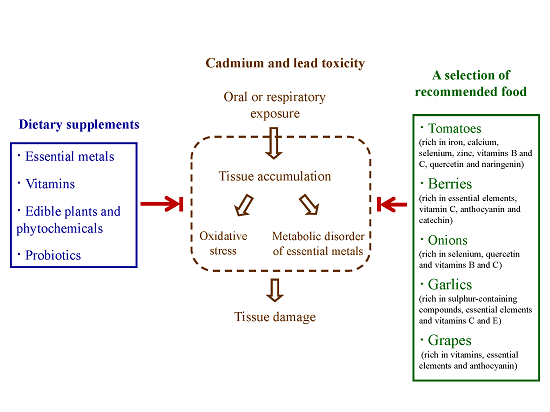
Lifestyle Modifications That Protect Against Cadmium:
Cold Exposure (helps with mitochondrial damage from Cd) R R
Eat Organic R
High Fiber Diet (including flaxseed, wheat bran, etc) R R R
Reduce Cigarette Smoke Exposure R
Sauna (heat shock proteins and sweating help against Cd) R R
Supplements That Protect Against Cadmium:
Acetyl-L-Carnitine (ALCAR) R
Bifidobacterium lactis (Bb12) R
Bifidobacterium longum (46) R
Chokeberries (Aronia) R R R
Lactobacillus amylovorus R
Lactobacillus casei (Shirota) R R
Lactobacillus dextrinicus R
Lactobacillus fermentum (ME3) R
Lactobacillus johnsonii (Lj1) R
Lactobacillus plantarum (CCFM8610, L67 and ID9263) R R R
Lactobacillus reuteri (Cd70-13 and Pb71-1) R
Lactococcus lactis (subsp. lactis) R
N-Acetyl-L-Cysteine (NAC) R R R R
Pathways:
Other:
Cadmium chelators (via MT, GSH, and PC) R
Cobalt R
Dexamethasone R
EDTA (be cautious) R
Monoisoamyl DMSA (MiADMSA) R
Penicillamine (works on body but not brain levels of Cd) R
Pyruvate R
Spermine R
What Makes Cadmium Worse?
Alcohol R
Heat (It should be noted that Cd toxicity is positively correlated with temperature, although sweating and heat shock proteins from sauna can help remove Cd from the body) R R
Nickel R
Uranium R
Mechanism Of Action
Simple:
Increases AHR R
Increases ALT R
Increases AP-1 R
Increases AST R
Increases Bcl-2/xL/w R
Increases Caspase-3 R
Increases Caspase-9 R
Increases COX-2 R
Increases CRP/hs-CRP R
Increases Erk1/2 R
Increases GH R
Increases Glutamate R
Increases HIF-1alpha R
Increases ICAM-1 R
Increases IL-1b R
Increases IL-6 R
Increases JNK R
Increases MAPK R
Increases MIP-2 R
Increases MMP2 R
Increases MMP9 R
Increases MPO R
Increases mTOR R
Increases NF-kb R
Increases PARP R
Increases PGE2 R
Increases PINK1 R
Increases PPAR-alpha R
Increases Prolactin R
Increases ROS R
Increases TIMP-2 R
Increases TNF-α R
Increases TSH R
Increases VCAM-1 R
Increases VEGF R
Reduces AIF1 (possibly) R
Reduces ALAD R
Reduces ATP R
Reduces DMT1 R
Reduces E2 R
Reduces FSH R
Reduces GSH R
Reduces HSP70 R
Reduces IL-2 R
Reduces IL-4 R
Reduces IL-10 R
Reduces IFN-γ R
Reduces LH R
Reduces neuroD R
Reduces ngn1 R
Reduces Parkin R
Reduces PECAM-1 (first increases then after 48hrs decreases) R
Reduces P4 R
Reduces p53 R
Reduces Trx R
Reduces VE-cadherins R
Reduces 5-HIAA R
Reduces 5-HT R
Advanced:
Cadmium has a long half-life in humans; specifically 10–30 years in the kidney, which is the main target organ of cadmium toxicity in response to chronic dietary exposure. R
Cd2+ has ionic mimicry which is defined by the replacement of elements like calcium (Ca2+) and trace elements like zinc, this can lead to protein mis- or unfolding and malfunction and eventually cause endoplasmic reticulum (ER) stress and cell death. R R
Cd open mitochondrial permeability transition pore (mPTP), thus releasing cytochrome C and leading to apoptosis. R
Cd is not a redox active metal, through the depletion of the cells’ major antioxidants and direct interference with active centers of the electron transport chain. R R R
Cd is not able to produce radicals in Fenton type chemistry, but still increases free radicals such as ROS, damaging mitochondria. R R
Metallothioneins (MT1-4) are protective mechanisms against Cd-induced neurotoxicity, and Cd may cause their dysregulation. R
In development, Cd causes epigenetic changes in methylation. R
More specifically in the cells, Cd epigenetically changes (blocks) histone modifications, upregulates the expression of miR-101 and miR-144, and increases DNA hypermethylation (when chronic exposure). R
The internal cadmium dose is generally higher in women than in men, due to a higher gastrointestinal absorption at low iron stores. R
Effects of Cd on olfactory, serotonergic, and cholinergic pathways indicate potentially broad neuroendocrine disruption in the lung. R
Genetics
DNMT1
The association between urinary cadmium and decreased LINE-1 methylation was stronger among carriers of the rare alleles of DNMT1 rs10854076 and rs2228611, indicating that cadmium effects can vary according to DNMT1 polymorphisms. R
More Research
Jacob Gordon
INHC, FMT-C
Integrative Nutrition Health Coach
I cover mold illness, post-viral recovery, methylation, and complex chronic disease, drawing on ten years of clinical research, work inside a functional medicine clinic, and my own recovery from all of it. Every claim here is cited.
Book a ConsultationRelated Protocols & Supplements
Deep-dive chapters and recommended supplements for this topic
Electrolyte Complex
1 scoop/day
CoQ10
200mg/day
Magnesium Glycinate
400mg at bedtime