Table of Contents
Chapter 19
Chapter 19 of 47

3 min readPro Guide

Red Blood Cells

Every red blood cell carries around 1 billion molecules of oxygen through 60,000 miles of blood vessels. R

Zeta Potentials
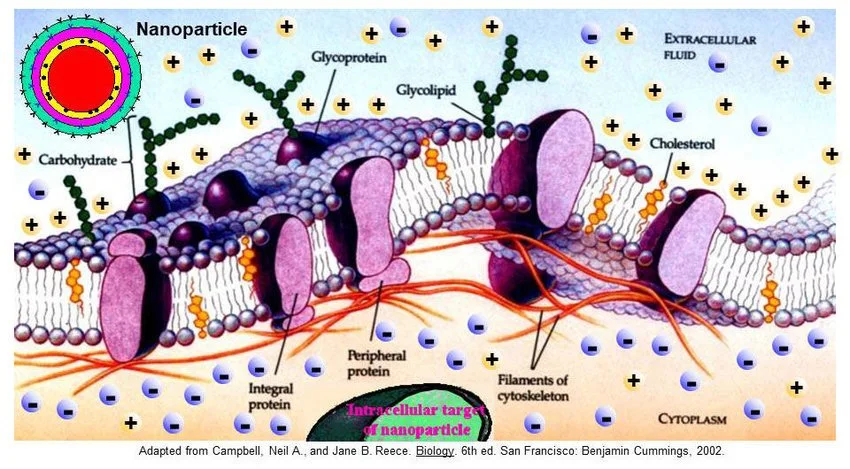
Zeta potential (also known as van der Waals Forces) is the degree of negative charge on the surface of a cell. R

All cell membranes have negative charges (zeta potential) which makes it difficult for two cells to come close together. R

Negativity is a good thing

In simpler terms, zeta potential is basically how easily tiny particles suspended in a liquid move around. R

Imagine a cloud of dust particles floating in the air. If the particles all have the same electrical charge, they will repel each other and stay separate. R

This is similar to how particles with high zeta potential behave in a liquid. R

They repel each other and stay suspended. R

On the other hand, if the dust particles have no charge, they will clump together. R

This is what happens to particles with low zeta potential in a liquid - they attract each other and clump together. R

Zeta potential is an important property because it affects how stable a mixture is. R

For example, if a mixture has particles with high zeta potential, the particles will be well dispersed and the mixture will be stable. R

On the other hand, if a mixture has particles with low zeta potential, the particles will clump together and the mixture will be unstable. R


Opsonins and Zeta Potential


All cell membranes have negative charges (such as the glycocalyx on the endothelium or cholesterol sulfate on Red Blood Cells) which makes it difficult for two cells to come close together. R

When opsonins (more discussed about opsonins in the antibodies post) bind to their targets they boost the ability for macrophages to eat by favoring cells to bind to those opsonins easily. R

This overrides the negative charges from cell membranes. R

What Messes With Your Negativity?

Mostly toxins or pathogens downstream effect of creating ROS or RNS. R

The oxidative stress can rip apart (and quench) charges. R

Many pathogens are able to create repelling charges (as opsonins) to keep the immune system from tagging it and that’s how things like parasites can go undetected or one way antibiotic resistance works.

When opsonins bind to their targets they boost the kinetics of phagocytosis by favoring interaction between the opsonin and cell surface receptors on immune cells. R

This overrides the negative charges from cell membranes. R

Later we will discuss opsonins in detail, so you can see how they mess with your negative charges. R

Proteolytic Enzymes and Zeta Potential

For a cell to bind to an antigen, the antigen needs to be positively charged (less zeta potential). R


Proteolytic enzymes like bromelain or papain work by reducing the zeta potential of antigens, thus helping cells agglutinate. R

What this means is that enzymes make blood flow easier as it breaks clumps of blood apart.

End of Chapter 19
Up Next
Unlock with Pro